A Burst of Joy

He looked an awful lot like Andrew Jackson. A long, craggy, narrow face, a shock of white brushy hair, and an irascible temperament. That was my paternal grandfather, Kurtz Olson. Despite his throwback, no-nonsense, narrow persona I found him endlessly interesting and somehow quite endearing. 

The youngest of seven children to Swedish immigrants Peter and Matilda Olson, Kurtz was born in Wing River, Minnesota in 1905. Though I don’t know much about his early Minnesota upbringing, I do know that he had a mercurial temperament, no attention span, and restless feet. Grandpa frequently uprooted his family, first moving house to house, then state to state, reaching the Pacific coast.

During the worst of the Depression years Grandpa worked as a welder, and scrap metal dealer. My dad like to remind us that with so many people jobless, Kurtz had lots of work repairing and parting out junked automobiles. One of my favorite snapshots from his early years is Grandpa and another man posing with axle grease below their noses. The two were making sport of Hitler, who in the 1930’s was still viewed as an object of jest. Grandpa Kurtz is smirking, knowing he’s naughty, and thoroughly enjoying himself. 

During the Second World War, he and my grandmother moved the family to Tacoma, Washington. With the “Arsenal of Democracy” in full swing, Kurtz had plenty of metal work on the coast. After 1945, he again uprooted and moved his family to Spokane, Washington, where cheap hydro power had opened plenty of post-war employment. 

Still, Minnesota remained the holy land. Always impulsive, Grandpa would hop in his truck and make sudden pilgrimages home, blowing straight through Montana and North Dakota, usually 24 hours or so to reach the open arms of his Minnesota family.

For Kurtz it was as if traveling from Paris to Versailles, but a hell of lot further. 

Unlike my immediate family, where I was the only girl, Kurtz lived in a decidedly female home. My aunt and grandmother typically sat for hours at the kitchen table, reading the Enquirer and movie magazines while talking shit about nearly everyone else in the family. Poor old Grandpa. Those two women tied that poor man into knots, riling him up with nonsense and fantom outrage.

It wasn’t that my Grandfather was unkind by nature, but he was easy to wind up, perceiving the world in black and white, dictated by those two judges presiding at the kitchen table.

Fortunately, despite those women bad-mouthing me, my brothers and the rest of the extended family he liked me. And I liked him.

In a fleeting, incomplete memory I see him waiting under street lights at the Spokane Greyhound bus depot. We all must have been meeting a relative from Minnesota or Seattle. In a burst of joy I remember shouting “Grandpa,” as I sprinted to him, where he scooped me up into a hug. Another vivid moment I recall was his truck pulling up in front of our house, and Kurtz coming to the door wearing nothing but that smirk, and bright red long johns, with laced Red Wing boots. What a character.

Speaking in a NorthAmerican Scandinavian cadence (yah, you betcha) made some of his comments worth remembering.

“First they call it yam, and then they called it yelly, now they call it pree-serfse.”

And Kurtz always had a dog. There had been Corky, Powder and Puff, Samantha, and Cindy among many others. Samantha was an especially smart Border Collie. After finding herself thrown on the floor of Grandpa’s truck one too many times, she figured out how to brace herself on the dashboard. He would roar up to yellow traffic lights, then stand on the brakes to avoid a red light. My god it was perpetual. My guess is he needed a new clutch about every three months, casualties of his Mr Magoo style of driving. At any rate, Samantha his wise co-pilot learned to watch the traffic lights and prepare for impact. 

Pulling up to his house on some forgotten errand I saw my grandpa splitting wood in the backyard. Across the fence, next door, a neighbor dog set up a ruckus barking my way. I called out, “You be quiet over there,” to which my grandfather observed, “He doessent underschand you. It’s a Cherman Shepard.” Then he laughed, and so did I.

My children didn’t know Kurtz. And for that I’m sorry. They missed a true original. I suppose that is my job, and the job of all of us Boomers to share these kind of stories. We bridge the years between that Depression-era, World War Two generation to our Millennial children and our grandkids. They won’t know if we don’t tell the story. And since it’s December, I’ll sign off with this Kurtz Olson Christmas anecdote.

On Christmas Eve in about 1936-37, my grandpa packed up the family for an evening service at the Lutheran Church. Being good Swedes they had placed traditional candles balanced on the boughs of their live Christmas tree. Somehow in the bustle they left some candles lit. By the time they returned the house was gone replaced by a fully engulfed fire lighting up the night.

They lost everything. In an ironic twist my grandfather the welder somehow overlooked the flames of his yule-tree. That incident remained an inflection point in Olson family lore.

Now he’s long gone, as is my dad and other family members. But through the written word he remains as vivid as his humor, his voice, and his presence in my memory.

Merry Christmas. 

Gail Chumbley is the author of the two-part memoir, “River of January,” and “River of January: Figure Eight” three plays on history topics, and a screenplay based on her books.

Set Their Feet On The Firm And Stable Earth

“Princes’ don’t immigrate” opined the 19th Century American magazine, Puck. The subject of the quote concerned the multitudes of immigrants flooding both American coastlines. Newcomers hailing from Asia and Southern Europe had alarmed American Nativists who considered the influx as nothing more than riffraff, and a danger to good order. Unfortunately this view of the foreign-born still endures today.

News footage over the last few years has chronicled the plight of the dispossessed amassing along southern tiers of both Europe and the US. Frequently victims of repressive governments, criminals, and crippling poverty, risk dangerous journeys, refugee camps, and even cages to escape hardships.

The earliest immigrants to American shores shared similar pressures, escaping the unacceptable familiar for an unknowable future. A brief look at the American Colonial period illustrates this enduring dynamic.

16th and 17th Century England targeted dissident groups in much the same way; exiling nonconformists, petty criminals, while others were lured by the hope of riches and a fresh start.

These emigres shared one common thread-remaining in England was not an option.

Religious challenges to the Catholic Church set in motion a veritable exodus of refugees fleeing England. As the Protestant Reformation blazed from Europe to the British Isles, the bloody transformation of the English Church began. In the 1535 English Reformation, King Henry VIII cut ties with the Vatican, naming himself as the new head of the English Church. This decision triggered a religious earthquake.

The Church still closely resembled Catholicism, and the disaffected pressed for deeper reforms, earning the title, “Puritans.” Ensuing religious struggles were long, bloody, and complicated. Ultimately the discord culminated in the violent repression of Puritans.

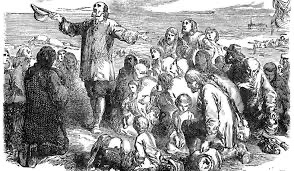
Two phases of reformed believers departed Great Britain for the New World. First was a small sect of Separatists led by William Bradford. These Protestants believed England to be damned beyond redemption. This band of the faithful washed their hands entirely of the mother country. Settling first in Holland, Bradford and other leaders solicited funding for a journey to Massachusetts Bay. Americans remember these religious refugees as Pilgrims.

Nearly a decade later another, larger faction of Puritans followed, making landfall near Boston. More a tsunami than a wave, the Great Puritan Migration, brought thousands across the Atlantic, nearly all seeking sanctuary in New England.

Lord Baltimore was granted a haven for persecuted English Catholics when that faith fell under the ever swinging pendulum of religious clashes. Maryland aimed for religious toleration and diversity, though that ideal failed in practice.

The Society of Friends, or Quakers, made up another sect hounded out of England. Britain’s enforcement of social deference, and class distinction, ran counter to this group’s simple belief in divine equality. Quakers, for example, refused to fight for the crown, nor swear oaths, or remove hats encountering their ‘betters.’ That impudence made the faith an unacceptable challenge to the status quo.

William Penn (Jr.) became a believer in Ireland, and determined the Crown’s treatment of Quakers unjust. After a series of internal struggles, King Charles II removed this group by granting Penn a large tract of land in the New World. Settling in the 1660’s, “Penn’s Woods,” or Pennsylvania settled the colony upon the egalitarian principles of Quakerism.

Scot settlers, known as Scots-Irish had resisted British hegemony for . . ., for . . ., well forever. (Think of Mel Gibson in Braveheart.) First taking refuge in Ireland, this collection of hardy individualists, made their way to America. Not the most sociable, or friendly bunch, these refugees ventured inland, settling along the length of the Appalachian Mountains. Tough and single-minded, this group transformed from British outcasts to self-reliant backcountry folk.

Virginia, the earliest chartered colony, advanced in a two-fold way; as an outpost against Spanish and French incursions, and to make money. At first a decidedly male society cultivated tobacco, rewarding adventurers and their patrons back home by generating enormous profits. Ships sailed up the James and York Rivers depositing scores of indentured servants, not only to empty debtors prisons, but to alleviate poverty and crime prevalent in English cities.

Transporting criminals across the Atlantic grew popular. The Crown issued a proprietary charter to James Oglethorpe, for Georgia. Oglethorpe, a social reformer, envisioned a haven for criminals to rehabilitate themselves, and begin anew.

All of these migrants risked dangerous Atlantic crossings for the same reason. Parliament and the Crown considered the Colonies as a giant flushing toilet. England’s solution to socially unacceptable populations, was expulsion to the New World.

Caution ought to guide current politicians eager to vilify and frame immigrants as sinister and disruptive. No one lightly pulls up roots, leaving behind all that is familiar. (Consider the human drama on April 1, 2021 where two toddlers were dropped over a border wall from the Mexican side).

Americans today view our 17th Century forebears as larger than life heroes, but their oppressors saw these same people as vermin–as dispensable troublemakers who threatened good social order. This human condition remains timeless, and loose talking politicians and opportunists must bear in mind the story of the nation they wish to govern.

*The Middle Passage was the glaring exception of those wishing to emigrate.

Gail Chumbley is the author of the two-part memoir, River of January, and River of January: Figure Eight. Both titles available on Kindle.

gailchumbley@gmail.com

Steal This Letter

If you feel like contacting your Republican Senators copy and paste this one. Tweak it for your own state and issues.

Senator,

Donald Trump’s stubborn refusal to face the reality of his election loss is as dangerous an assault on our nation as 911, and much more damaging than Pearl Harbor.

This election fiasco flies in the face of American traditions. General Washington sacrificed much of his personal happiness to found our nation. As America’s first president, he placed our republic above any personal comfort, and Washington’s legacy bears that out. When his officers suggested he take the reins of power, the general declined and went home to Mt Vernon.

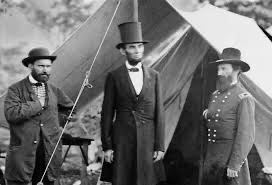
In 1860 Abraham Lincoln preserved what Washington had begun, our Union. And though it cost him his life, the United States was Lincoln’s primary concern.

Both men, a founding father, and the savior of the Union, counted their interests as secondary, because America mattered more than any one man. Now, through a series of events, that responsibility has fallen to you. The GOP majority in the Senate can end this assault on our heritage, and you can make that happen. 

Your forebears would be proud.

The Republican Party came into being on a noble, decent premise. It is the Party of Lincoln, not a lout from Queens.

*Please don’t patronize me with excuses.

Gail Chumbley is the author of the two-part memoir, “River of January,” and “River of January: Figure Eight.

gailchumbley@gmail.com

The Unforgivable Curse

Many of us have read JK Rowling’s Harry Potter books and/or watched the films. The author created a wondrous world of spells, incantations, and even included law and order via three unforgivable curses. 

There are guardrails in this tale, and a bit of a messiah storyline. Harry willingly sacrifices himself, as had his parents and many others before. However, the “Boy Who Lived,” does, and returns to fight and vanquish wickedness. 

Love, too, permeates the storyline, and the righteous power of good over evil. 

But that’s not my take.

As a career History educator I came to a different conclusion; Harry Potter told me that failing to understand our shared past can be lethal. And that was the metaphor I preached to my History students.

Harry rises to the threat and defends all that is good and valuable in his world. If he didn’t, Harry could have been killed and his world destroyed.

It’s so apropos at this moment in our history to grasp our collective story as Americans.

Honest differences within the confines of our beliefs is one thing. Obliterating the tenants of democracy is quite another. 

Americans cannot surrender our country to this would-be dictator, the things that have cost our people so dearly. Freezing soldiers at Valley Forge did not languish to enable DJT to trademark his brand to hotels, steaks or a failed university. The fallen at Gettysburg, and the suffering in Battle of the Bulge was not to pave the way for DJT to get us all killed from a ravaging plague. The girls who perished in the Triangle Shirtwaist Fire, the miners murdered in the Ludlow Massacre, or humiliated Civil Rights workers beaten at the Woolworth’s lunch counter was not for Donald Trump to validate racism and sexism and undo labor laws. 

He doesn’t know our nation’s history, and as George Santayana warned us, we are condemned to sacrifice all over again. 

Vote. 

Gail Chumbley is the author of the two-part memoir, “River of January,” and “River of January: Figure Eight.

gailchumbley@gmail.com

A Break In The Cover

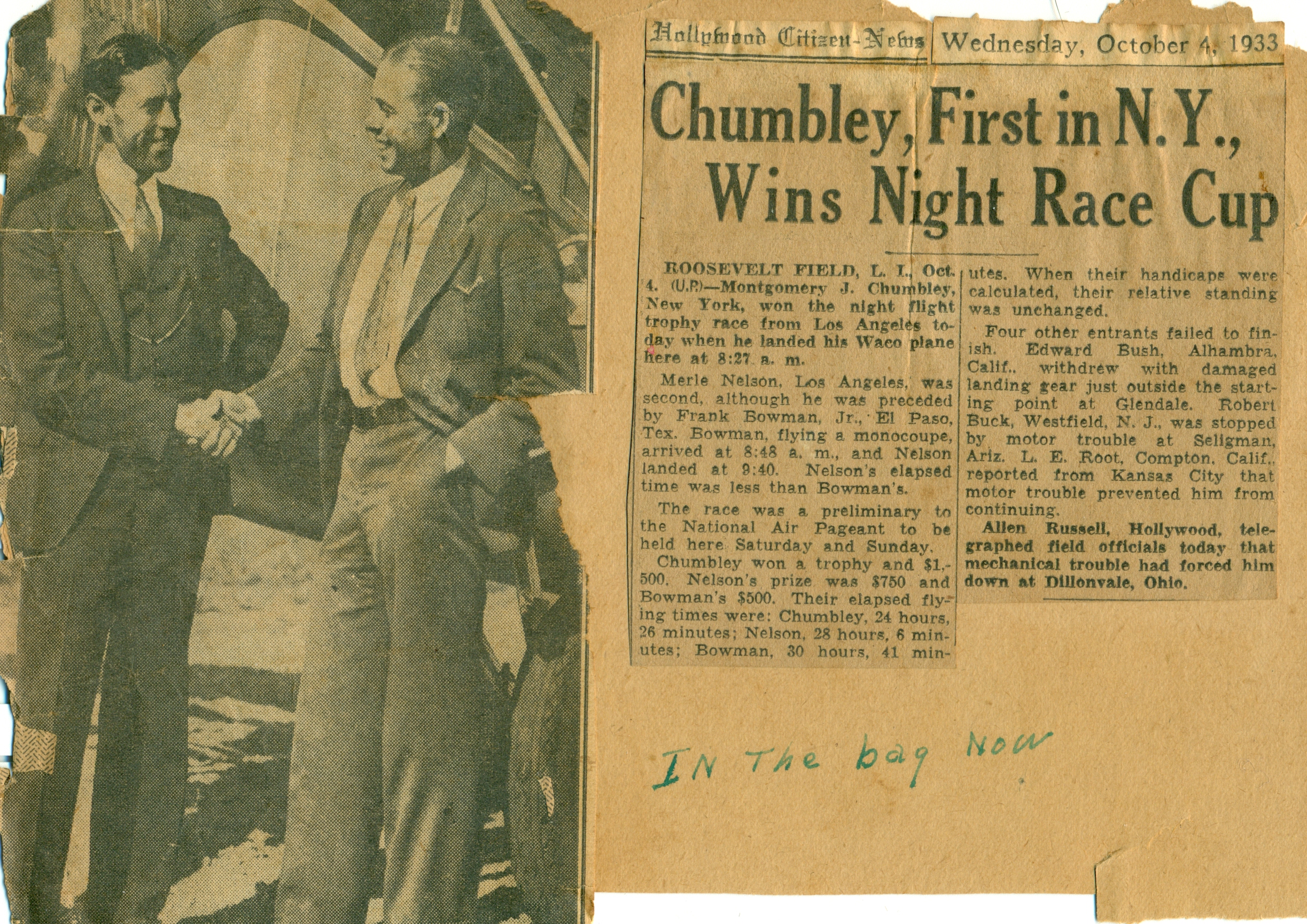
Chum, Derby Winner.

Cloud cover continued to dog the exhausted flyer. Though dawn light saturated the sky, visibility hadn’t improved. 

Whirring through the gauzy gray, he weighed his options. If the weather didn’t improve, he would navigate out over open ocean and look for a break in the misty gloom. This contingency plan set, Chum streamed eastward, nervously checking and rechecking his wristwatch. 

From the corner of his eye, he spied a shifting break in the cover, and Chum didn’t hesitate. He pushed the yoke and slipped through the sudden gap.

A panorama of chalk-gray spindles greeted him. Automobiles the size of insects, inched along among the spires.The Waco soared above the Manhattan skyline.

Exhilarated and exhausted, Chum beelined over the East River, and on to Roosevelt Field.

Thundering down landing strip number 1, Chum slowed his Waco to a full stop, tired but satisfied he had prevailed. 

But the race had not ended.

Officials rushed the tarmac, urgently shouting and waving. Concerned about the commotion, he reached to turn the throttle off, and that was when he heard a chorus of NO above the din. Frantic hands pointed in the direction to another landing strip. If he shut down the motor he would be disqualified. Without a word, Chum promptly taxied to landing strip number 2, then shut down his biplane.

He had won.

Seven planes had ascended into darkening California skies. Of the seven only three found their way to Roosevelt Field. Chum’s Waco cabin had journeyed above the sleeping nation in 24 hours and 26 minutes; two minutes added by his last minute dash across the field. His victory award-$1,500, enough to reimburse the stock broker, and pay off his airplane. Not bad for a young man struggling through the worst year of the Great Depression.

Gail Chumbley is the author of the two-pat memoir, “River of January,” and “River of January: Figure Eight.” Both titles available on Kindle.

gailchumbley@gmail.com

Peer Review #4

Just My Imagination, Running Away With Me.

*Whitfield & Strong

The President fumed, crushing buttons on his cell phone, as if each tab detonated an explosion. On the big screen Wolf Blitzer, voice flat and controlled, droned on how the President continued to lag in the polls. 

“Fake news,” he muttered out of habit, and switched the channel.

Perched on the edge of an upholstered armchair, he clutched his remote in one hand, and his cellphone in the other, seething at the unfairness of the coverage.The broadcast cut to a political commercial; a carefully spliced montage of his public faux pas, ending with an endorsement from his adversary. 

“Ukraine,” he muttered, “Got to talk to Mitch and Kevin about a new Ukraine investigation.” 

“You cannot coerce them, you know.” The voice came from behind. “The people. They cannot all be manipulated, much as you might try. Most are not fools, and any goodwill must be earned.”

Not accustomed to direct insolence, the President twisted around in his chair snapping, “Just who the hell are . . .,” then trailed off. A tall, painfully angular man stood near a richly paneled door. Attired in a long black coat with tails, the visitor sported whiskers along his jawline.

“And they will never all love you. Ever. Such is the raucous nature of American democracy.”

The apparition paused a long moment. “Sowing divisions through fear and vitriol is not governing, and you shall surely fail.” The visitor stepped closer as he spoke, prompting the President to spring out of his chair, phone and remote forgotten on the carpet. 

“I recognize you . . .,” the President sputtered.

“We, all of us, sought this office fueled with purpose and ambition,” the visitor continued in a prairie twang. “However, once under oath, the campaign is over. A president faces the duty of serving all Americans, a challenge in the best of circumstances.

From the flickering screen a news anchor admonished, “Aides have confirmed that the President knew of the virus as early as February.” 

“It’s those hacks,” the President stabbed his finger accusingly at the big screen. The press is out to. . .”

His visitor laughed without humor. “Criticism of elected officials is as natural as the sun rising, and as perpetual. ‘Baboon’ was the nicest insult slung my way . . .by a serving general, no less. Then he up and ran against me in 1864.” The visitor chuckled lightly. “Still, the truth is we are all better with free speech than without. In our differing views we discover our deepest truths.”

By now the President began tuning out much of what the visitor was saying, his irritation making him bold. “You need to leave,” he snapped. “I have a busy schedule.” 

Unruffled, the unwelcome guest studied the President intently. “In my time an entire section of the nation disputed the results of my election.”

“You lost the popular vote, but won the Electoral?” The President couldn’t help but ask.

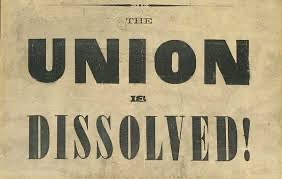
“Indeed. Eleven southern states chose the battlefield over a peaceful transfer of power.” 

“What did you do?” 

“I defended the Republic.”

His visitor continued sadly. “However the butcher’s bill for this unity came dearly; 700,000 American lives.” The visitor heaved a weary sigh. “And that delicate balance has endured through all national crises, preserved only through considerable effort and executive leadership. A unity you undermine at every opportunity. ” 

“Wrong, wrong, wrong. My supporters all love me. You should see the crowds at my rallies.”

“And the rest of America?” The visitor peered intently at the President. “Remember sir, we are friends, not enemies. We must not be enemies.” His voice quietly trailed off in an echo, and he was gone.

Gail Chumbley is the author of the two-part memoir, “River of January,” and “River of January: Figure Eight.” Both titles are available on Kindle.

gailchumbley@gmail.com

Gratuitous Harms

“The earth is the mother of all people, and all people should have equal rights upon it.” Chief Joseph of the Nez Perce

Hopefully a majority of Americans agree that the time has come to change administrations in Washington. Joe Biden and Kamala Harris will usher in a presidency of competence and dignity. Howard University, where Harris did her undergraduate work, is proud of her selection as Joe Biden’s running mate, and Howard alumni are bursting with pride. This ticket is honestly historic.

Still . . .

I am troubled by the trumpeting of Senator Harris’ connection to Howard University as positive while other historic figures are dismissed for living their lives within the constraints of their time. Please don’t misunderstand. A number of “dead white guys,” from the past have it coming, committing gratuitous harms beyond the scope of humanity and justice. Slavery was and is such an abomination, but not America’s only sin. 

That is where General Oliver Otis Howard comes in. A Civil War general, a recipient of the Congressional Medal of Honor, and one-time president and namesake of Howard University.   

Born and bred in Maine, Oliver Otis Howard opposed slavery as did many Americans north of the Mason-Dixon Line. A West Point graduate, Howard entered the Civil War commanding a volunteer unit from his home state— leading his men from the First Bull Run, to Antietam, to Gettysburg, and on to Sherman’s March Through Georgia.

His work with aiding newly emancipated blacks after the war brought attention to Howard’s concern for civil rights, leading to Howard’s appointment as Commissioner of the Freedman’s Bureau, and later President of Howard University, a traditionally black institution.

However . . .

By 1874 this same General, O.O. Howard returned to the regular Army, where he was sent out West as the Commander of the Department of the Columbia. That was where General Howard who, in 1877, set out to vanquish the Nez Perce in what is today Central Idaho. 

The General doggedly pursued Chief Joseph and his 250 followers through what is now western Montana. Joseph succeeded in evading Howard and his forces for nearly eleven hundred miles, where the Nez Perce were finally stopped within 40 miles of freedom across the Canadian border. Exhausted, the Nez Perce were forced onto the reservation in Idaho. 

Following the Nez Perce episode Howard set out to apprehend the Bannock and Piute nations further south.

Why was this actively Christian man and abolitionist kind to newly freed blacks, and a killer of Natives? The answer is simple-Indians had land to confiscate, and freedmen had nothing. 

It is perilous to celebrate or reject historic figures outright for one facet of their lives. Not one of us can pass scrutiny based on the moment of our worst actions. While General Howard showed admirable humanity with one underclass of Americans, that behavior did not transfer to another.

Gail Chumbley is the author of the two-part memoir “River of January,” and “River of January: Figure Eight.” Both titles are available on Kindle.

gailchumbley@gmail.com

New Name Same Party

Unknown-1.jpeg

On Twitter, Senator Ted Cruz, R-Texas, and Congressman Louis Gohmert, R-Texas have been been busy disseminating political fiction.

Both have tweeted on the Democratic Party as the perpetrators of the Civil War, racism, and other misleading accusations.

Were these two guilty of sleeping through their history classes, or purposefully spreading propaganda to other former classroom snoozers? 

The Democratic Party evolved from Thomas Jefferson’s opposition to the US Constitution. Jefferson had been abroad during the Constitutional Convention and upon his return quickly made his objections known. A planter and slave master, this “natural aristocrat” resisted any higher form of government that checked his own authority.

Jefferson rejected the notion that a distant power knew better than he, the master of Monticello. He favored a small, disinterested government that coordinated foreign affairs, trade, and not much more. Men such as himself could better govern localities than any distant political power.

As America’s third president, Jefferson envisioned a Republic of “farmers,” like himself, running their own fiefdoms across the continent. (That is until he bought Louisiana, where he stretched the Constitution plenty).

That’s about it. That was the essence of the 18th, and early 19th Century philosophy supporting the Democratic Party. Oh, and the party shuffled names over that time, as well, though never wavering from the belief that local government served democracy best.

First, called Antifederalists, for opposing the Constitution, then Jeffersonian-Republicans, opposing Hamilton’s Federalists. Later, after the War of 1812, the name became Democratic-Republicans, then simply Democrats under Andrew Jackson. Still the philosophy endured; curb centralized economic, and other domestic investments and maintain local control.

The late 20th Century’s Civil Rights movement and the Vietnam War brought about yet another rebranding of the party. Ronald Reagan’s election moved the Solid South from Democratic to Republican.

Reagan’s famously asserted that big government wasn’t the solution, but the problem. And that suited former southern Democrats just fine. Less government, less in taxes, and more local control. Relaxing economic regulations, and starving domestic programs rounded out the 1980 agenda. 

When Ted Cruz and Louis Gohmert spout off on the villainy of the Democratic Party, don’t be fooled. Remember that these sons of the South embrace the same old Jeffersonian ideology today, neatly packaged under the now-eroding GOP.  

Gail Chumbley is the author of the two-part memoir, “River of January,” and “River of January: Figure Eight.” Both titles are available on Kindle.

gailchumbley@gmail.com

Endurance

14e7ea2b2fd17c16e45990ee1dd21a8edb4ddd40.jpeg


Three early American documents are often lumped together in our collective memory, though each is quite different from the others; The Declaration of IndependenceThe Articles of Confederation, and the enduring US Constitution. Citizens generally know something of the Declaration due to a certain celebration we observe each summer. The Articles of Confederation are a bit more elusive, and not nearly as recognized. The third, the US Constitution is revered, but its beginnings, and purpose is also shrouded in time. 

Here is a quick explanation of each missive, particularly the sequence, and the significance of each.

The Declaration of Independence: July 4, 1776. A product of the Second Continental Congress, this revolutionary document was ratified as an instrument of rebellion, after all other measures to avoid war with England had failed. In reality, the shooting had begun a year earlier in Lexington, Massachusetts, but the Declaration formalized hostilities. Debated and delayed, this document was finally adopted in July of that year. Congress made crystal clear their reasons and resolve to free themselves from King George’s arbitrary rule. Penned by Thomas Jefferson, the Declaration began with a guiding statement about “Natural Right’s” shared by all humanity, and that people had the obligation to free themselves from unjust tyranny. The rest of the epistle read as a legal document condemning the King and his despotism. This document is the first of the three in forging the United States of America. 

The Articles of Confederation: September, 1777. The Articles provided America’s first national charter of government. Approved by the same Second Continental Congress in 1777, the Articles attempted to unify the original states under one government. Through this document, Congress sent diplomats abroad, including Benjamin Franklin and John Adams, to (beg) obtain financial support from European powers. However, at home, this framework failed miserably. More a Confederation of independent principalities, Congress had to plead for money and men from each state, who often said no. There was no power to tax, no centralized currency, and the Articles weren’t even ratified by all 13 states until a month before the war ended at Yorktown. Each state jealously guarded its own interests over any unified cooperation. Congress could do next to nothing to aid General Washington and his army. Chaos ensued after the war ended, as well. Trade wars flared, disagreements among the states spilled over into violence, and rebellions within states promised more turbulence. The ability of America to govern itself appeared doomed. The English were sure America’s failure was imminent, and they could, once again, swoop in.

The United States Constitution: May to September, 1787. Born from an earlier 1786 meeting between Alexander Hamilton and James Madison in Annapolis, MD, the Constitutional Convention was organized and slated for Philadelphia in May. Both founders understood that without persuading Washington to attend this new Convention, any success was remote. Washington, tending his home at Mount Vernon, was hesitant, and tired. However, when news reached the General of an uprising in Western Massachusetts, (Shays Rebellion), Washington agreed to attend. Fifty-five delegates from all the states except Rhode Island, reported to the Pennsylvania Statehouse in Philadelphia. Most were lawyers, sprinkled with many Southern slave holders. Virginian, James Madison came prepared with a plan to replace the feeble Articles of Confederation. Much of Madison’s Virginia Plan became the basis of the Constitution. Designed for endurance, this new charter vested authority in the Central government, and the states. Termed Federalism, powers under this frame of government are shared between both authorities simultaneously. The tooling of the document, employing separation of powers, and checks and balances is brilliant, and worked well until 2016.

Gail Chumbley is the author of the two-part memoir, “River of January,” and “River of January: Figure Eight,” both on Kindle.

gailchumbley@gmail.com

My Rock, My Refuge, My Library

It wasn’t yet 10:00am, but parking spaces were filling up fast. The library would open soon.

Be-bopping up the sidewalk, dressed completely in black, ear buds stuffed under his knitted cap, came the happiest Goth in high-tops. A young mother followed behind, a stack of books awkwardly balanced under one arm, and a wiggly baby in the other. The time was 9:58.

Older folks, hipsters, Lexus drivers, the tattooed poor–all queued together for their morning stop at the public library. How remarkably American.

When the doors finally did slide open, this society of seekers disappeared inside, striding with purpose to stake their domain. A no-nonsense aura filled the air as each card holder claimed their chair, booth, or computer to commence their business.

If ever there existed a reflection of perfect democracy it is America’s neighborhood library.

Visits make a lot sense. The facility is clean, climate controlled and the interior is well lit for reading and research.

More, public libraries offer a multitude of services for the community. The unemployed  gets out of the house, and can search job openings on the internet, maybe check out a DVD or two at no cost. For the housing insecure, the interior offers sanctuary, a chance to safely close one’s eyes or relax and catch up on some reading. Mothers toting little ones make use of programs such as story-time, organized games and crafts, providing a diversion from hours at home.

My own elderly parents used to check out their book limit every two weeks. The librarian knew them well, suggested titles, and bagged up their books. They, too, waited in the parking lot. When those doors glided apart, canes in hand, they hobbled inside, joining the democratic wave claiming library privileges.

It was Benjamin Franklin who modeled this fixture in America’s beginnings. Franklin knew national longevity demanded literacy, and in that spirit he established the first lending library in Colonial Philadelphia. A true visionary, Dr. Franklin set the course for public good by founding these centers of learning. If he could see what I saw in that library parking lot, Franklin would rest a gratified patriot.

Next to public schools, a library card is the ultimate equalizer–from the richest to the poorest among us. No amount of status or money can elbow us out. My access is equal to yours.

To politicians fearful of books on the shelf, you strike a blow not only against the First Amendment, but to all the connecting tissue of American society. A misguided, self-righteous streak exposes a dark agenda which should give us all pause. Attacking libraries attacks us all. 

Gail Chumbley is the author of two books, “River of January,” and “River of January: Figure Eight.” Both titles available on Kindle. Chumbley has also authored two stage plays, “Clay,” and “Wolf By The Ears.”

gailchumbley@gmail.com