The Little Things

If you love . . .

Protecting a dim-witted, would-be dictator from legal consequences,

Suppressing a woman’s right to self-actuation and privacy,

Expediting white, unqualified patriarchs to the Supreme Court,

Rendering the US Senate inert,

Legislating so the wealthy have no tax burden,

The open targeting of Americans of color to brutality and murder,

The whole-sale destruction of the planet, and the rape of natural resources 

Abetting political misinformation and conspiracies through social media,

Targeting those of differing sexuality 

Pushing religion into American government,

Aligning apportionment and voter suppression to disenfranchise the poor, and people of color,

Withholding health care to the few with means,

The wholesale flood of firearms into civilian hands,

Cruelty dispensed upon desperate immigrants,

Coddling of white offenders over those of color,

Predatory treatment of consumers,

Blocking legislation to meet the dangers of the above list, and otherwise accomplishing nothing,

Vote for today’s Republican Party

Gail Chumbley, frustrated American History Educator.

The Long Haul

After the 1929 Market Crash the world fell into regional, nearly feudal isolation, and international trade quickly dried up. America, too, focused inward largely due to the nation’s earlier participation in the Great War in Europe.

Across the Pacific the Japanese Empire aimed to take advantage of global disinterest promoting its own national interests. Sold to other Asian countries as the “Co-prosperity Sphere,” hyper-nationalistic Japan intended to expand across the region, especially toward vulnerable, resource rich China.

Great Britain as well, struggled alone in a financial malaise, as did the French across the channel; both nations saddled with debt to American banks from the previous war. Germany, the defeated nation struggled with their own war debt demanded by the British and French.

The shroud of economic depression hung like a millstone over Europe and the rest of the world.

As the financial, and political fallout grew wildly unstable, regimes hunkered down and hoped for better times. However the climate instead became chaotic, bringing anti-democratic demagogues to power.

The Italians were first, producing a Fascist strongman, Benito Mussolini. El Duce, as he was known suppressed political diversity, harnessed economic efficiency, and soon, like the Japanese, pursued colonial inroads into Libya, and later the conquest of Ethiopia.

Germany soon flirted with its own style of fascism, with a meaner, violent credo. In a reaction to impossible debts, and national pride, Adolf Hitler, a feckless dreamer, stood on beer hall tables, and passionately spoke of national betrayal. Hitler revealed his malicious intentions by blaming Bolsheviks, Capitalists, and Jews for the hated Armistice of 1918, and war debt owed to the Allies.

Yet America, unlike the rest of the world, clung with all their might to the national system of Constitutional norms. At the same time Germany elected Hitler in 1932, the U.S. found their champion in Franklin Roosevelt. 

A popular Roosevelt Coalition steered the country through those hard years holding America together. FDR’s New Deal and Fireside Chats broadcasts kept at bay the fears of a nation. That’s not to say there weren’t kooks, to borrow Lindsay Graham’s phrase, but Americans faced the long haul together, believing better days had to be ahead.

The current President is no Franklin Roosevelt. And his autocratic tendencies, strongly echo those in the 1930’s.

In Project 2025 Trump aims to raise tariffs, shut down borders, all done to economically and politically isolate America. Using the same playbook of past despots specific groups are targeted as the problem. The guilty include immigrants, the LGBTQ community, liberals, educators, women, and the rule of law all in the crosshairs. All done to divert and distract while he lines his pockets.

And his tactics, so far have succeeded making half of the electorate real mean.

So, here is the question. Can America survive?

Can Americans remain bound to the framework of our 238 year old republic as it did in the Great Depression? Or will this nation forsake our financial, social, and political traditions and turn to petty retribution and scapegoating?

Will we, as a nation withdraw from the world and exchange our democracy for a strong man who insists he has all the answers?

The signs are clear. When this national crisis has passed will there be enough of us left who stood resolute for our democracy? That is the question of this historic moment. 

Gail Chumbley is a writer and history educator.

Why We Try

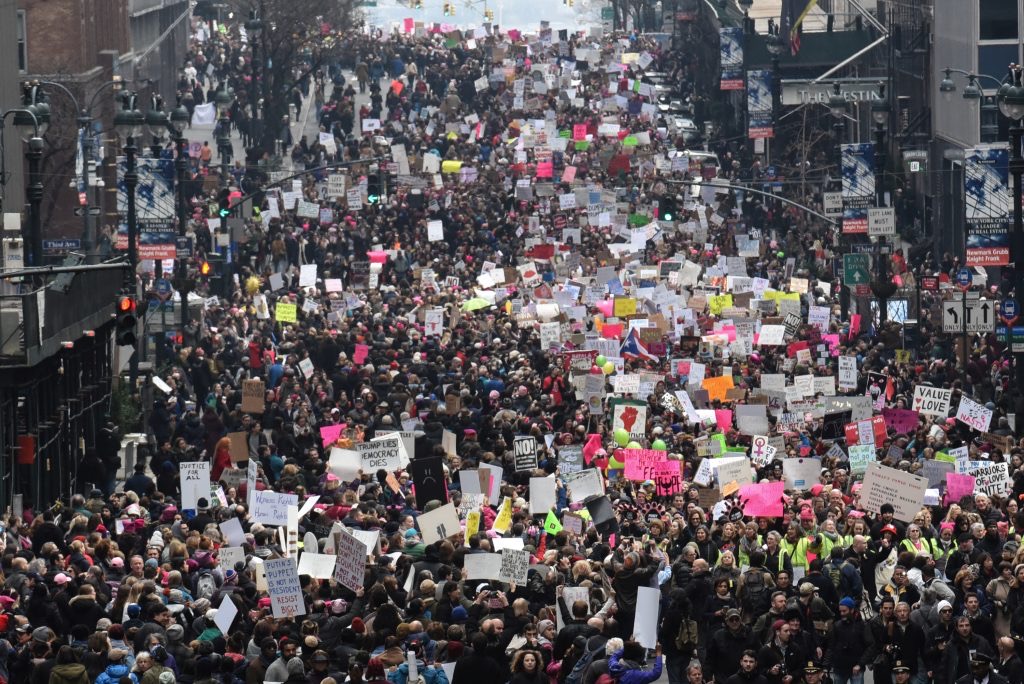
2017 Women’s March

When I first began this essay it ripened to nearly five hundred words to share one idea. Why I am a life-long Democrat. 

The original essay discussed the New Deal, the creation of the United Nations, the Marshall Plan, the GI Bill, and how strengthening Labor Unions evoked a sense of common purpose; how the economy boomed, and the middle class flourished.

Now all I want to impart is that Ronald Reagan was wrong. Big government is not the problem. Big government checked by regulations works remarkably well. 

I am a Democrat because with all its flaws, we stand equal in the eyes of Constitutional Law.* People made the Constitution, and we must preserve it. In general, States’ Rights is no more than a distraction perpetrated by selfish insiders who legislate their own interests. Residents are convinced through a wink and a nod, that the enemy (Big Government) must be defied, using catch phrases like “our values,” and “real conservative.”

In truth, the Federal Government can do more for all of us than any individual state, or any individual citizen can do for themselves. As I write, Idaho’s governor has asked for, and been granted federal funds for drought aid. Talk about biting the hand that feeds the State.

I am a Democrat because I’m inspired by the nobility of America’s past champions; the persistence of General George Washington, the compassion of Abraham Lincoln, the purpose of Alice Paul, and the articulate vision of Barack Obama. I am a Democrat because James Madison instructed us to create “A More Perfect Union.” Without that persistence, compassion, purpose, and vision America cannot continue as “the world’s last best hope,” as Lincoln also described us.

At bottom I am a Democrat because I know not one of us is perfect. We just keep trying. 

*Just heard the headline regarding the reversing of the Roe decision. Time to gather 4,600,00 of my best friends (2017 Women’s March) and organize.

First Teacher

Chief Joseph

The front door opened and promptly slammed. The timing was expected, as the kids were getting home from school. Trooping through the door didn’t seem unusual-but that slamming of the front door sounded emotional. In the hallway I encountered my little fourth grader, my girl, who wouldn’t catch my eye or respond to “how was your day.”  She stomped into her bedroom, pushing her door closed. And then the crying began.

I waited a moment, finally tapping and entering her room. She didn’t want to explain, didn’t want to talk to me at all. Concerned, I sat on her bed and rubbed her back while she sobbed. After a while my girl composed herself and began her story.

In Idaho schools Fourth Grade Social Studies covers state history. From memorizing all the names of counties, to mapping locations, to learning “Here We Have Idaho,” the state song; 9-years-olds learned it all. On that day the lesson covered Native American tribes in the state. 

The teacher read Chief Joseph’s “I Will Fight No More Forever,” speech, the one Joseph declared when his people, the Nez Perce, surrendered to the Army just short of the Canadian border. 

My little girl understood, perhaps for the first time, the power of compassion and of tragedy. Watching as her heart absorbed a tough, American injustice, my heart filled as well. This kid sensed something deep, an empathy that still alludes many. In that moment we shared a thoughtful, teachable chapter in American History.

I didn’t accost the principal, nor complain to the school board. To those who do, railing to  ban books, or challenge curriculum, remember that your children are watching. Honest concerns are one matter, but raising hell in public meetings frightens your grade schoolers, confuses your middle schoolers, and mortifies your high schoolers.

Besides, as a child’s first teacher, parents are demonstrating that raging and bullying in public is acceptable as a means to solve disagreements.

Leave schools alone, leave libraries alone. Get to know the teachers, volunteer in the classroom. You’ll find American schools do a tremendous job, much better than we could do ourselves. 

As for Chief Joseph, my daughter grew from that experience. Maybe parents should do likewise.

Gail Chumbley is the author of the two-part memoir, “River of January,” and “River of January: Figure Eight.” Chumbley has also written two plays, “Clay,” about the life of Henry Clay, and “Wolf By The Ears,” examining the beginnings of American slavery.

gailchumbley@gmail.com

King of the Hill

General Washington had not yet been appointed commander of the Continental Army. Nonetheless, the conflict against Great Britain, though running hot after Lexington and Concord, remained an informal, isolated brushfire in the eyes of the Crown. Still, the very presence of soldiers grated Bostonians, enough that outraged patriots plotted retaliation.

June 16th, after dark, these Sons of Liberty acted, digging in on Breeds Hill located near Bunker Hill, north of the city in Charles Town. All that night these newly minted Minutemen stacked preloaded-muskets, entrenched, and waited for sunrise. At first light, the startled Redcoats scrambled to form lines and launch an offensive against the rebels. Though holding the line through three assaults, the Bostonians, low on gunpowder, were forced to melt away into the surrounding area. The shocked Brits decided to call the contest a victory.

But as one royal officer candidly admitted, “if we win anymore like this, we’ll lose this war.”

That is the lesson of Bunker Hill, hold the high ground, and draw the fight uphill to a well-defended position.

General George Washington arrived in Boston the next month, taking command of the motley Continental Army. Positioning his inexperienced troops on the heights surrounding the city, Washington bluffed his military strengths. When actual heavy guns finally reached Washington, the Redcoats had had enough, and on March 17, 1776, all the King’s men evacuated to Canada.

Two philosophers on warfare, China’s Sun Tzu, and Prussian, Carl von Clauswitz had committed to paper their respective views on the value of the high ground. Sun Tzu in the 6th Century, and Clausewitz in the early 19th Century argued its significance. Much like that game, “King of the Hill,” we played as kids, the advantage belongs to the person on top. That essentially defines both tacticians principles.

Yet, physically holding a hill doesn’t go far enough. Both philosophers argued that a moral high ground is equally essential, an armed force must be clad with a virtuous cause. 

A higher moral purpose fills the sails to victory.

In 1860, Republican candidate Abraham Lincoln won the presidency, becoming America’s 16th President. That moment weighed with foreboding, as Southern States, one by one, chose to secede from the United States. The new President viewed this idea as impossible–statehood was not a revolving door. In his inaugural address. Lincoln spoke plainly, “In your hands, my dissatisfied fellow-countrymen, and not in mine, is the momentous issue of civil war.”

Then Lincoln, and the the rest of the nation watched and waited. On April 12, 1861 guns thundered from Charleston, South Carolina, smashing into Fort Sumter, a federal installation in the harbor.

Boom, done and done.

The Rebs drew first blood, and Lincoln, by default, seized the moral high ground. After a duration of four long, bloody years, the rebellion collapsed, and slavery ended.

Both the attack on Pearl Harbor in December 1941, and the terrorist attack on September 11, 2001, elevated America’s retaliation as morally justified, drawing the nation into both World War Two, and the War on Terror.

Everyone around the world is watching the Ukrainian people standing tall against a mystifying invasion by Russia. Ukrainian President Zelensky has brilliantly executed the lessons of Sun Tzu and von Clausewitz. His articulate, moral leadership, and courage has more than won the moral high ground test. In contrast, Vladimir Putin has proven his lack of preparation, and barbarity, assuring the Russian President an international pariah.

These principles are timeless and universal, not only in America, but in past conflicts like Thermopylae in the 5th Century, and the Warsaw Ghetto uprising in 1940.

Whether the Ukrainian President, is aware or not, he has benefitted from the teachings of Sun Tzu and von Clausewitz, and this is Ukraine’s finest hour.

The possession of high ground may decide a battle, war or the fate of a nation.

Carl von Clausewitz

Gail Chumbley is a history educator, and writer.

gailchumbley@chumbleg

Rebellions

The Republican Party emerged in 1854 as a voice for liberty, and of opportunity. Forged in sectional controversy, members dedicated themselves to one overriding priority, no slavery in America’s western territories. On that point the fledgling party stood firm.

A lawyer in Springfield, Abraham Lincoln, joined the growing party early concerned, as were others, with escalating tensions between the North and South.

In 1860, Lincoln threw his very tall hat into the ring, and declared his candidacy for President. Defying considerable odds, Lincoln prevailed over other, more prominent Republicans at the GOP Convention in Chicago. Lincoln grasped the nomination. 

The South responded as one. If Lincoln won the Presidency, they would bolt the Union. He did win, and tried to reason with Southern States through his inaugural address. “In your hands, my dissatisfied fellow-countrymen, and not in mine, is the momentous issue of civil war.”

The sticking point of course, slavery. 

By the time Lincoln took the oath of office, eight Southern States had voted to secede from the Union. This president understood the fears of the South, and knew what drove the secessionists. He didn’t hate them, he did not want them punished. During the last year of the war Lincoln, in his second inaugural address gently offered an olive branch stating, “With malice toward none; with charity for all.”

Lincoln’s lasting legacy held that the Civil War meant more than reunification of the states. His  “new birth of freedom” implied a higher ideal, the turmoil meant something more honorable, and timeless: the cause of humanity. The Emancipation Proclamation came first, then the 13th Amendment, forever freeing those held in bondage. This president took no credit for prevailing over the Rebels, hoping only to heal the divisions that fueled the rage.

His martyrdom on April 15,1865 left the GOP imprinted with Lincoln’s goodness, modesty, and nobility. This first Republican President endured four years of national hell, and never forgot his mission.

Lincoln met the Rebellion, and vanquished it.

America today hears no soaring rhetoric from the GOP, nor elegant prose, only hate speech and bellyaching. The GOP has severed the cords of duty to country, replacing patriotic obligation with an unapologetic lust for power, and self interest. 

For four years the taxpayers have been fleeced, and minorities targeted, the kind of intolerance Lincoln abhorred. Long standing alliances were cast aside as a self-serving dunce cozied up to America’s enemies. The Republican members of Congress have forsaken their obligation to country first, pretending and excusing that all was normal in the turbulent White House. 

The greatest harm perpetrated by, and enabled by the current GOP, is the violent attack on the heart of our democracy: the United States Capitol on January 6, 2021.

The irony is rich. As the Republican Party grew from a rebellion, it will now perish from another.

Two Witnesses

“I began to think that all was not right. He said that with two hundred men he could drive congress, with the president at its head, into the river Potomac, . . .and he said with five hundred men he could take possession of New York….”

Colonel John Morgan, written testimony, 1807, the Burr Conspiracy

In grade school we watched a film titled, “The Man Without A Country.” Taken from a story by Edward Everett Hale, the tale tells of an American soldier named Philip Nolan. Nolan, a fictitious character had been arrested as a conspirator in a scheme to seize a chunk of the Louisiana Purchase and secede from the Union. At his trial an angry Nolan pitched a fit and shouted “Damn the United States! I wish I may never hear of the United States again!”

The presiding judge agreed with Nolan’s outburst and sentenced him to never hear of, nor set foot in the United States again. Serving his time, Nolan spends the rest of his days transferred from one Naval vessel to another, never permitted to see the shoreline again. By the end of this sad tale, Nolan grieves his error, and Hale has him express his regrets, and the majesty of our democracy.

Though just a little kid, that film struck me as a nightmare, a true horror story. (I was a history-geek before I knew I was a history-geek). The sadness remains with me now.

Hale set his patriotic tale against an actual event, the Burr Conspiracy, (1805-1807). Aaron Burr, Thomas Jefferson’s rival and Vice President had killed Alexander Hamilton in 1804, and resigned as Vice President in 1805. Heading west beyond the Appalachians, Burr allegedly hatched a plot to capture a southern piece of the Louisiana Purchase, and Mexican Texas. It was said Burr planned to install himself as a sovereign of a new nation, with New Orleans as his capital. A co-conspirator, General James Wilkinson, turned on Burr, and spilled the beans to President Jefferson. The outraged President promptly dispatched soldiers to apprehend Colonel Burr.

In a Virginia court Burr was indicted for treason, and soon put on trial in Richmond. The Judge, Chief Justice John Marshall presided. 

Burr remained serene throughout the trial, and denied the charges against him. Jefferson, meanwhile breathed fire, demanding Justice Marshall convict. Marshall, a brilliant student of American Law, subpoenaed the President to testify, and that pissed off Jefferson even more. 

In a letter to the court Jefferson insisted British Common Law sufficed for conviction. That advice would place Burr in the vicinity of a seditious act, and lead to a quick guilty verdict. Marshall, however, relied on the recent Constitutional definition.

Article III, Section 3, Clause 1,

Treason against the United States, shall consist only in levying War against them, or in adhering to the Enemies, giving them Aid and Comfort. No Person shall be convicted of Treason unless on the testimony of two Witnesses to the same overt Act, or on Confession in open Court.

At the end of this saga Burr was acquitted, Jefferson’s opinion irrelevant to US Law. Without fear nor favor Marshall abided by the Constitution. Lacking eyewitness testimony to the act, Burr walked. Neither Wilkinson’s nor Colonel Morgan’s letters proved relevant.

This case, complicated, and circumstantial, tested the new Constitution, and the Constitution prevailed. Fictitious Nolan should perhaps have held his temper in check, but then there wouldn’t be a story.

For MAGA insurrectionists, inculpatory evidence is stacking up. We all  bore  witness to the ransacking of the Capitol, and the rest of the plot is coming to light. Archival documents, emails, phone conversations, sticky notes, fake electoral papers, and incompetent lawyers litter the January 6 landscape. 

This time, under the language of Article III, there is no doubt of treason. 

As Philip Nolan lay dying aboard a Navy vessel, he tells his comforter “Here, you see, I have a country!” A map of the United States is pinned to a wall at the foot of his bed. Nolan begs his visitor to draw in new states admitted since his long ago trial. A tragic yarn of regret to be sure.

In the end Aaron Burr faded into the fog of time. Due to a certain Broadway musical he has resurfaced. Did Burr engaged in treason? We’ll never know for certain. That he faded is important. America is more resilient than any one of us.

Though Philip Nolan is a character of fiction, and Burr an enduring mystery, the January 6th hoard will not fade. You aided another would-be tyrant, and you failed. Like Pearl Harbor, and 911, your treason will live in infamy, to borrow a phrase. 

Gail Chumbley is the author of the two-part memoir, “River of January,” and “River of January: Figure Eight. Both titles are available on Kindle. Chumbley has also penned two plays, “Clay,” regarding the life of Senator Henry Clay, and “Wolf By The Ears” a look at American slavery and it beginnings.

chumbleg.blog

Redundant

The last five years bear proof that voting is a precious right, made real through two centuries of courage, and bloody violence. The extension of the vote, the collective voice of our political will, did not expand without difficulty or sacrifice. 

In the early days of the Republic, the founders struggled to strike a balance between their own political interests, and those of the public. The founders considered citizens as too mercurial, too easily swayed, to be trusted with the vote. Only men of standing, knowledge, and property were qualified to cast ballots.

As populations moved westward, new states allowed all white males voting rights. Making use of “poll taxes,” farmers and tradesmen paid a fee to participate in elections. The money indicated that the voter had some means, and a stake in the community. Still, voting at that time was a boisterous affair, as men publicly announced their choices to officials. That practice, combined with hard liquor guaranteed election day ended with a bloody fight or two.

Political machines, like New York’s Tammany Hall, lined up voters like soldiers each election day. Bosses such as William Marcy “Boss” Tweed maintained power manipulating elections like clockwork, assuring outcomes before the votes were ever counted.

Women labored long and fruitlessly for the vote. Seeking rights of citizenship, women wanted not only the franchise, but the equal legal standing before the law. The forces of inertia and sexism held fast, believing ladies must stay home where they “belonged.” Politics was seen as too complex an issue for the female brain, as they were smaller, (I kid you not). More custom than written law, the practice of “coverture” considered the call for women’s suffrage as redundant. Women, as dependents, like their children, were legally “covered” by their husbands’ vote. He, as head of the family voted for the entire household.

Not until 1919, after a century of ridicule and abuse, did women earn the right to vote. And even then just barely. Once the 19th Amendment reached the Tennessee legislature for ratification, the bill passed by a single representative’s vote, making the state the 36th and last state to approve.

The path to black suffrage provides the most perilous story. Considered property in antebellum America, branded 3/5’s of a human being in the Constitution, these people faced impossible hurdles after the Civil War. While Union soldiers remained in the South as occupiers, black men voted, per the 13th, 14th, and 15th Amendments. However, once the blue coats with their bayonets left, that moment of possibilities passed.

Black codes, a carryover from pre-war slave codes, and violence at the hands of homegrown terrorist (KKK, and the Knights of the White Camelia), a black man risked his life attempting to cast a ballot. After 1876, marking the end of Reconstruction, Southern society returned to “normal” with blacks clutching the lowest rung.

It took a World War to breathe life into the Civil Rights Movement. Even then white resistance pushed back against the movement. Through the courts, the NAACP argued that case law favored black suffrage. Falling back on the 14th and 15th Amendments, attorneys like Thurgood Marshall jousted against white supremacy at all levels of society. In 1964, Freedom Summer introduced a massive voter registration drive, garnering enough leverage to pass the 1965 Voting Rights Act.

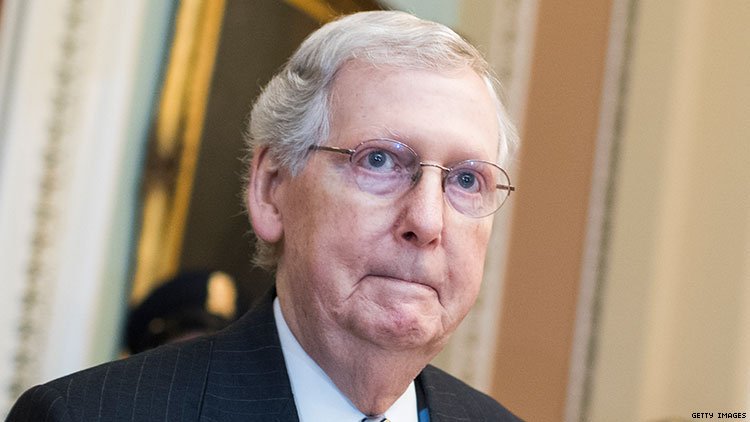
Old school Redeemers, like today’s Senator Mitch McConnell watched and waited to gut the law after the election of President Obama. McConnell argued with a black president, no need remained for the ’65 Act.

So where does that leave black and brown Americans today? Outraged. States, largely in the South are once again purging black voters from precinct rosters. Why? Because white supremacists in the South still feel they must suppress those voters to maintain white power.

Now that is redundant.

Gail Chumbley is the author of “River of January,” and “River of January: Figure Eight.” Both titles are available on Kindle. Chumbley also penned two history plays, “Clay” and “Wolf By The Ears.”

gailchumbley@gmail.com

Jenkins Hill

For teachers who are poor, but like to travel, nothing is better than hosting student tours. Truth is these trips are a lot of fun. Really. The kids make it fun. I led a number of tours over the years and still hold wonderful memories of the historic sites, our numerous guides, the bus drivers, my students, and the bustling itineraries that delivered us everywhere.

Out of the classroom, and away from home, students encountered much of what we had covered in history class, up close. On one stop at the US Capitol a guide opened a small door off a corridor revealing a narrow, circular stairway. Bygone soot and some damage remained down that steep passage, evidence of the War of 1812, when invading Brits set fire to the building. Our docent elaborated. A redcoat on horseback had urged his horse up those cramped stairs, only to be shot by American defenders waiting at the top. That anecdote caused a bit of a stir, as we all absorbed the horror.

Peeking into the Old Senate chamber, (much smaller than today’s grand affair) prompted another story of another clash, from another era. In this original legislative hall Massachusetts Senator, Charles Sumner had suffered a severe beating at the hands of a furious South Carolina Congressman. At issue, the fiery debate over the spread of slavery.

Bus drivers sometimes got into act, and added a few gems of their own. Before leaving the Capitol, he grabbed the microphone and shared a story.

George Washington had been inaugurated as America’s first president in New York City. But a site for a permanent national capitol had been selected. And it was President Washington, himself who laid the first cornerstone for the structure on a rise called Jenkins Hill. Why, the driver asked, did Washington turn the first spade, and set that brick of sandstone? Of course we all thought the honor went to Washington as the President. Wrong.

The President had been asked to set the stone, because he was a stone mason.

Who’d a thought!

On the bus we loudly debriefed, the chatter sounding much like gossiping about Justin Bieber, or the Kardashians. The narrative may have been a century or two old, but still very much alive–resurrected by students in the Twenty-first Century.

There are many such stories of American school kids touching our collective past, and many adults who made that happen. Somehow we all came away better people. Perhaps we’re all reminded we are part of a much bigger picture, and we all fit somewhere within the frame.

On January 6, 2021, Americans across the nation watched domestic terrorists violate the inner sanctum of democracy. I wondered what thoughts crossed the minds of those same former students to witness this tarnishing of democratic majesty.

Not everyone can afford to send their kids on trips like these. I couldn’t. But understand this, every public school in the country teaches American History. The public must understand this story tells of a unique nation, and democracy grows fragile when ignorance rules the times.

Gail Chumbley is the author of the two-part memoir “River of January,” and “River of January: Figure Eight.” Both titles are available on Kindle. Chumbley has written two historic plays, “Clay,” “Wolf By The Ears,” and “Peer Review.”