Distraction By Design

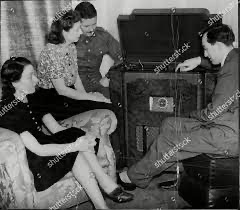
On October 30, 1938, radio listeners tuned into Mercury Theater on the Air, a CBS radio program.  The broadcast, scripted and narrated by actor Orson Welles, dramatically detailed a moment by moment invasion of Earth by Martians. To the folks who tuned in late to the program the events were construed as real, that indeed the planet had been attacked, followed with authentic panic erupting onto American streets.

Welles, and Mercury Theater producers intended the script to sound like breaking news, and real it had been received. Bedlam broke out, threaded through with stories of injury, and of suicides. The whole episode left Welles and his producers with a lot of explaining to do.

The following day, CBS Radio and young Welles, (23 at the time) made an on-air apology for the chaos. Eventually the story died down, relegated to an interesting moment of Depression-era America.

Much like October, 1938, mass hysteria has again let-loose upon the country. Only this time the  alarm, and distraction is by design, jolting anew on a 24-hour news cycle. Cannibals, sex trafficking politicians, lizard people among royal families of Europe, and poisonous contrails find gullible believers who hang on every fearful word. 

And the heaviest assault is lobbed directly at main stream media.

How? Don’t believe any of what you see and hear, unless endorsed by the Right-wing echo chamber. In a real world of Covid, climate change, and other pressing issues, the blaring noise of the propaganda machine has sabotaged progress creating more avoidable problems.

Unlike Orson Welles, the profitable rot pumped continually through cable, books and the internet is disseminated without a self conscience blush, let alone any apologies for damages done and lives lost. American consumption of news has degraded far below any sort of accuracy or structured analysis.

Sadly, a large segment of society cannot separate the wheat from the chaff. Consider those who died consuming ivermectin, hydroxychloroquine, and even bleach. Misinformation and fear is lethal.

As the unvaccinated “do their own research,” and die, the insanity refuels every second across media platforms. Makes one long again for a time when truth and responsibility mattered, and mass-hysteria with all its dangers was to be avoided. 

Gail Chumbley is the author of the two-part memoir, “River of January,” and “River of January: Figure Eight.” Both titles are available on Kindle. In addition Gail has also penned two stage plays, “Clay” on the life of Senator Henry Clay, and “Wolf By The Ears,” examining the normalization of racism in America.

gailchumbley@gmail.com

If you liked this, share.

Don’t Sit Down

In the political world there are two definitions for the term filibuster. The most common understanding concerns talking bills to death in the Senate, and the other is an unsanctioned invasion of a country to take it over. What both meanings share is a determination to wear out the opposition until the matter is settled. A siege of sorts—never giving up.

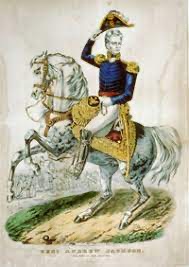
Famous uses of the filibuster include Andrew Jackson’s 1818 foray into Spanish Florida. Playing a little loose with his orders, Jackson entered the poorly defended territory, claiming to hunt down runaway slaves, and thump the Seminoles who provided sanctuary.

This extra legal foray caused an international incident. An American general, invading a weaker  target, under questionable authority. In the end, this filibuster paid off. Washington informed Madrid they supported Jackson’s invasion and the US took control of the peninsula from Spain. Done and done. 

The moral to this filibuster story is—never blink, never give up, never excuse.

In 1957, and in 1964, Southern Democrats, made use of the filibuster to talk Civil Rights legislation to death. In the ’57 debate South Carolina Senator, Strom Thurmond nattered on for 24 hours, and 18 minutes, still a standing record. And again in 1964, with Senator Robert C. Byrd of West Virginia, who droned on for 14 hours and 13 minutes. Despite obstructionist resolve, both bills did squeak through with assistance of compromising northern Republicans.

What America is facing at his very moment is a Trump-style filibuster, containing both meanings. His insufferable, boorish delaying tactics, unblinking lies, and frivolous lawsuits have characterized this nincompoop’s newest version. He is certain he can hold out against America.

And I am tired— we all are tired, sometimes to the point of despair. But, friends this struggle against malignant arrogance, greed, and hate is a filibuster we cannot lose. Not only for a place called America, but for the enlightened spirit of our country. Our legal traditions must be protected from this fallible, flawed, would-be autocrat.

Trump has filibustered his whole life for something he’s never found nor earned—blind adoration. And that doesn’t meet our traditions or expectations for elected leaders. They work for us. In a real sense our country has suffered an unauthorized invasion of our government, a hostile take over, and the man’s filibuster continues, unabated.

Poet, Langston Hughes speaks to our moment in a portion of his 1922 poem, Mother To Son.

“So boy, don’t you turn back;
Don’t you sit down on the steps, 
’Cause you finds it’s kinder hard;
Don’t you fall now— 

And Hughes is right. We can not fall. We must stay vigilant and wait this immediate threat out.

Gail Chumbley is the author of the two-part memoir, “River of January,” and “River of January: Figure Eight.”

gailchumbley@chumbleg

Cannon of Extremism

I often exit the FaceBook expressway because of the absurd misuse of the American past. And it’s not just history. Politics have abscessed into a free for all, and scientific/medical reality into FaceBook insanity. This verbal dysentery is loaded into into a cannon of extremism, where the unschooled righteously blast irrational conclusions. 

Case in point, an old friend of my husband’s posted, “Those who would give up liberty for security deserve neither.” It’s Benjamin Franklin’s sentiment, but incomplete. Franklin wrote, “Those who would give up essential Liberty, to purchase a little temporary safety, deserve neither liberty nor safety.” 

The quote is from a 1775 letter written by Dr. Franklin on behalf of the Pennsylvania Assembly. He addressed this (very long) correspondence to the Deputy Governor at the time, Robert Hunter Morris. Governor Morris had irritated the Assembly by demanding new militia for protecting western land from the Shawnee and Delaware Natives who, according to rumor were attacking settlers. To keep this episode simple, Morris wanted the lands of wealthy landowners protected, but the rest of the colony to cover the costs. Exempt were the Proprietary landowners who were earning rents from settlers, with a kickback percentage figured in for the deputy governor.

Franklin essentially called Morris out for an egregious conflict of interest, and the Assembly wasn’t financing graft. This was, by the way, four months after Lexington and Concord, and relations between colonials and redcoats tense.

What this misquoted post implied on FaceBook, defended refusing the Covid vaccine. So apparently it’s virtuous somehow to be a cyber Paul Revere spouting Franklin, calling for vaccine resistance in a pandemic. 

The irony of playing fast and loose with the past, is presuming Dr. Franklin would agree with this nonsense. Every founder did what they did for the gravest of reasons; not some oppositional hype to reject public health interests, in bumper-sticker brevity. 

The irony of the post lay with the man. By faith, Franklin counted himself a Deist–that God was the creator of a precise universe; to discover that precision is to find God. In pursuit of those truths, Franklin took on the life of an empirical, data-driven scientist. (Remember his kite-electricity experiment?)

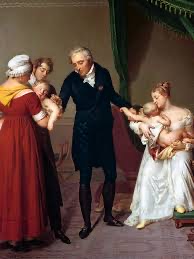
“God Helps Those Who Help Themselves,” is another quote that ought to be repeated on FaceBook and everywhere else. When his child, Francis Folger Franklin died of small pox at age four, Dr. Franklin made an enlightened decision—he inoculated himself and his family from that deadly disease. And an inoculation was no easy nor guaranteed procedure. But as a man of science, he had the sense to take a reasonable path.

Remembering Dr. Franklin means to further our understanding of this moment in time, and follow his example of open minded curiosity, and trust in empirical solutions. Today, that task has been muddied by the misguided, destabilizing all that is good in our America.

Franklin worked hard to make the United States an opened-minded conduit of democracy, not of electronically delivered bedlam.

As Dr. Franklin reminded us, (And I mean us) “Avoid extremes; forbear resenting injuries so much as you think they deserve.” And this gem, “Never go to excess, but let moderation be your guide.”

Gail Chumbley is the author of the two-part memoir, “River of January,” and “River of January: Figure Eight.” Both titles are available on Kindle.

gailchumbley@gmail.com

A Dreamer

You may say I’m a dreamer, but I’m not the only one, I hope someday you’ll join us, and the world will live as one.

John Lennon

A professor of History and Government, President Woodrow Wilson fervently believed America could fulfill its promise as the world’s beacon of democracy, a “City Upon a Hill.” After WWI, this President aimed to reform old monarchial Europe, and lead the world to a new, enlightened destiny. But perhaps his ambitions were too lofty to be realized in a cynical world of power and greed.

Participants convened at the Bourbon Palace of Versailles on June 28th, 1919 to design a new future for . . . really the entire world. Wilson attended in person, which for an American President was a first. He posed, all smiles with the French president, Georges Clemenceau, the English Prime Minister, David Lloyd George, and Italy’s, Vittorio Orlando.

Considering the devastation from the recent war, these leaders had their work cut out for them.

After the Armistice had been signed the previous year, Wilson prepared for his journey by completing a new framework to rebuild a better world. Titled the Fourteen Point Plan, the President outlined a path to enduring peace. The intent was clear: Freedom for all. Free trade, self-government, transparency in treaties, a reduction in weaponry, and most importantly, an international peace-keeping body, The League of Nations. This proposed League had been crafted to resolve international conflicts through open diplomacy. For Wilson, mechanized warfare had proven pointless, so much so, that modern warfare had become a zero sum game.

Naturally many attendees were self-appointed representatives from oppressed ethnic groups around the globe. All had gathered to endorse the American President’s call for free governments, freely chosen.

The Chinese, for example, lobbied for colonial possessions formally held by Germany be returned. China was ignored. Young Ho Chi Minh, a student in Paris, attempted to see President Wilson to discuss the liberation of his home, French Indochina, (Vietnam). But Ho never got trough the gilt doors of Versailles.

The multitudes under British colonial rule, clamored for freedom, as well. Egyptian, East Indian, and Muslim peoples embraced Wilson’s vision of self determination. Zionists, Palestinians, even the Sinn Fein in Ireland looked for release from British subjugation.

Returning home to the White House, the President received a cable that his deputy remaining at Versailles, a Colonel Edward House, had agreed, in Wilson’s absence, to drop the League provision. Wilson flipped his wig and back he sailed, to resurrect his League as a non-negotiable part of the final agreement.

And though the League of Nations was indeed established, the US never joined. After all the horse-trading with his counterparts in Paris, Wilson could not convinced Republican Senators to ratify his treaty. Stunned, the President took his crusade to the American people, via a whistle stop tour. Exhausted by exertion and poor health, Wilson finally collapsed, followed quickly by a massive stroke.

Without the United States participation the League invariably failed. And a broken Woodrow Wilson died shortly after leaving office.

Perhaps President Wilson was foolish to think old world autocrats would give up any power and authority to colonial possessions. Clemenceau and others had viewed him as hopelessly naive. And maybe Wilson’s critics were correct. The man had a stubborn, self-righteous streak, that ultimately was his undoing.

Open government, free elections, and international commitment to fair play. Was Wilson merely a dreamer?

Gail Chumbley is the author of the two-part memoir, “River of January,” and “River of January: Figure Eight.” Both titles are available on Kindle.

gailchumbley@gmail.com


Armageddon

Univac

Remember that episode on Star Trek, “A Taste of Armageddon?” The crew of the Enterprise encounter two planets at war, waged virtually by computer. Simulated clashes determine, by mutual treaty, real fatalities in execution chambers.

That one aired in 1967. 

Technical advancements, devices to improve life, can make tasks so much easier; and these same advancements can just as easily evolve into weapons of destruction. Glidden’s barbed wire made for cheap fencing for farmers. Carnegie’s steel provided the ribs for building upward in cities, and outward on rail tracks. Rockefeller’s oil meant cheap kerosene for lamps to light up the dark. However, these same improvements found new uses when converted to weaponry:concertina wire draped across trenches, heavy armaments, explosives, and gasoline powered vehicles. World War One demonstrated both the might, and bloody futility of modern, industrialized warfare.

The nature of Twentieth Century warfare had literally been forged from 19th Century industry, which in turn gave rise to an assembly line of annihilation.  

How does weaponized technology apply to now? 

The world depends on computers. From Univac, to Commodore 64, to the MacBook, we rely on computers much as we rely on air. The benefits of cyber technology keep us linked together through social media, and new apps that innovate daily. But the dark side of this ever-evolving technology, poses significant danger, and has been weaponized effectively to undermine the stability of America.

As I write, misinformation, via the internet, has contributed to the deaths of nearly one million Americans, and climbing. Troll farms in Russia ruthlessly still hack away, under the guidance of former KGB agent, Vladimir Putin. Russian meddling in our 2016 presidential election, spewed misleading propaganda enough to tip the scales in the outcome. Though developed through advanced mathematics, and supported by other hard sciences, cyber criminals have succeeded in convincing some Americans not to believe in scientific facts. What an irony.

Our enemies have found their way in, a means to weaken and destroy the country from the inside. Through misinformation campaigns and network infiltration, criminals shut down Colonial Pipeline last May, and universities, government agencies, infrastructure systems, and businesses who are under constant threat of being held hostage–paying millions in ransom to rescue their business organizations.

The indispensable nature of computers, like this one in my lap, is a useful, vital tool. But like the technical innovations of the 20th Century, these advances foreshadow danger; cyber space as deadly as a machine gun, and as real as poison gas. Factor in nations around the globe still vying to destabilize America—especially chief competitors, Russia, and the China. 

Nothing has changed since 1914, aside from more sophisticated weaponry. Fifty-four years after Star Trek aired “Armageddon,” computer-generated death is as real as the death toll in the trenches. Threatening fingers typing the right strokes on a keyboard produces chaos and harm from those who wish us ill.  

The Die was Cast

The threat of disunion appeared long before either the Civil War, or the insurrection on January 6, 2021. The architects laying the chaotic cornerstone? President John Adams, and his Vice President, Thomas Jefferson.

David McCullough in his celebrated biography, John Adams, portrayed this Founding Father as a brilliant man, and that is true. However, his self righteous streak succeeded in undercutting his talent and better judgement. As the second president of the United States, John Adams, proved to be a prickly, and thin-skinned chief executive. A dour Yankee, Adams could not tolerate public criticism, and as many later presidents, came to view the press as an adversary—enemies of the government.

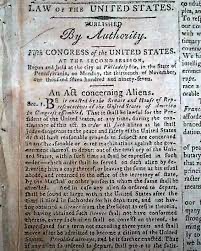
In a rage over newspapers excoriating his administration, Adams shepherded the Sedition Act through Congress in 1798. Opposition editors soon found themselves in the President’s cross hairs, and some were actually jailed. The Alien Act, also passed in 1798, aimed to delay new voters, by lengthening time for naturalization, as immigrants were certain to vote against Adams and his Federalist Party. (Hmm. The press, immigrants, and voting rights. Imagine that).

Jefferson, (still Adams’ Vice President), promptly took action to counter Adams’ wrong-headed legislation.

Launching a full out, but anonymous denunciation of the Adams Administration, Vice President Jefferson published tracts vilifying Adams, and emphasized the sovereignty of the states guaranteed under 10th Amendment.

Returning from France, where he had served as American ambassador, Jefferson had been appalled by the powerful Federal Constitution created in his absence. As a ‘natural aristocrat,’ and slave master, Jefferson was unwilling to cede power to any higher authority than himself, and his fellow patricians. Instead the “Sage of Monticello,” asserted the right of states not to obey laws they didn’t like.

Two state legislatures agreed to debate Jefferson’s counter measures, Virginia and Kentucky. Penned secretly by Jefferson, and Madison, these resolutions insisted the states were the final arbiters of what was legally binding. A new term emerged from this controversy—Nullification.

The die was cast, the seeds of disunion sown. In the years following, nullification intensified, fertilized particularly in 1832 by John C. Calhoun, a South Carolina Senator. That that state became the first to secede in 1861, sparking the US Civil War, is no coincidence.

The traitors who invaded the halls of Congress last January took their cue from Jefferson, as if they, too, battled the evils of John Adams. Scapegoating the media, immigrants and the Federal government has left a long, bloody stain on American history. As I write, the States of Georgia, and Texas among others, are attempting to limit voting rights once again. Texas has also taken a nullifying stance, limiting a woman’s right to her own body, despite Federal protections.                        

No government has a self-destruct button, none. John Adam’s pique, and Thomas Jefferson’s reaction stamped an incompatibility that still, today, inflames American politics. 

Gail Chumbley is the author of the two-part memoir, “River of January,” and “River of January: Figure Eight.”

gailchumbley@gmail.com

Anyway Anyhow Anywhere

The deal is, coming out victorious World War Two, the certainty of America’s omnipotence shaped foreign policy. The US armed forces proved they could expertly parachute behind enemy lines, storm contested beaches, and plant the flag of American freedom at the close of every engagement. US pride meant we only mobilized decent men, and armed them with top notch war materiel, and enough Hershey Bars to treat the world. 

Those lessons of the 1940’s mislead later military planners. The assumption that Americans could do no wrong, and intervening into other nations, an imperative. However, what worked in one moment wasn’t necessarily viable later. America’s entrance had saved the world, but that particular episode ended in September, 1945, and the US moved forward looking backward.

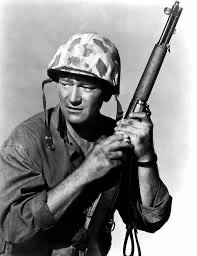
Five years later the Korean conflict exploded, and after three years of fighting, ended where it began, the 38th parallel. That stalemate ought to have signaled a reassessment of America’s role abroad, but the Sergeant Stryker school of war had engrained itself too deeply into foreign poIicy.

I am a child of the Vietnam era. In my head the kaleidoscope of Lucy’s eyes plays, and televised images of soldiers knee deep in rice paddies, flicker in black and white. Protesting students with raised fists, black armbands affixed, occupying college offices, all to the soundtrack of kick ass rock and roll. In fact, the most enduring feature of the Sixties, for this boomer, is that pulsating electric guitar played by the hands of masters.

From 1959 to 1975 Washington dispatched advisers, munitions, and finally by ’65 ground forces to Vietnam. The French had failed to hold their Indochinese possession against the Communists, as they had failed against the Germans in 1940. America would bail them out once again.

But our intervention was premised on dated strategies. Vietnam was not a stand and fight war.

What Vietnam taught policy makers, (for a millisecond) is that patience is a most powerful foe. The NVA and Vietcong played the waiting game with grit and timeless certainty. 

the Our nation was not the first on the scene in Saigon, but certainly the last western power. As for Afghanistan, the dynamic remains. Leaving 10 years ago, or 10 days ago, the outcome would have been the same. The post-911 Middle Eastern conflicts were truly good for the people of those nations, but not for the United States.

Just check with the Brits and Russians. They left too.

Gail Chumbley is the author of the two-part memoir, “River of January,” and “River of January: Figure Eight.” Both titles are available on Kindle.

gailchumbley@gmail.com

Smiling in Their Graves

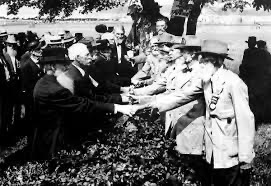
As the fog of war lifted and an uncertain peace settled over the defeated Confederacy, anxiety grew among the vanquished as to what lay ahead. Abandoned plantations withered in disarray, and a popular idea gathered momentum it should go to the newly freed. “Forty Acres and a Mule,” became an expectation that, in the end never materialized. Instead Southern landholders who had fled, slowly returned to reclaim their estates and continue their lives. 

Outside of Freedman Bureau schools, and temporary bluecoated occupiers, no meaningful assistance for Freedmen materialized.

At the same time, three categories of defeated Southerners turned their attention to meeting the new reality. Military leaders, like Robert E Lee, and James Longstreet accepted defeat, and encouraged fellow veterans to follow suit. In fact, Longstreet, an old army friend of Ulysses Grant, cooperated with the Republican occupiers, earning the pejorative of “Scalawag,” a Confederate who collaborated with the enemy.

Outraged citizens who could not accept defeat were called “Fire Eaters.” Foremost among these was Jefferson Davis, incarcerated president of the Confederacy, Lee’s wife, Mary Custis Lee, who lost her ancestral home in Arlington, where Union forces buried their dead, and politician Edmund Ruffin. So enraged was Ruffin that when news of the defeat at Appomattox Courthouse reached him, Ruffin blew his brains out. 

Redeemers made up the balance of Southern Whites who were dangerously patient. These community leaders played their cards carefully, drifting into the Fire Eater lane at times, and back to deadly quiet redemption. Nathan Bedford Forrest was a great example of men who waited. Founding the Ku Klux Klan soon after the war ended, nightriders terrorized freedmen, discouraging blacks from enjoying their new guarantees as citizens. Other terms fit well into this particular era. Share Cropping, and the Crop Lien System invisibly chained blacks to the land that still bound them. Black Codes, and Vagrancy Laws sentenced laborers to the same bondage as before Fort Sumter. No serving on juries, no testifying against whites, Poll Taxes and Literacy Tests limited access to the ballot box. As Federal oversight declined over time, the Redeemers reasserted direct control.

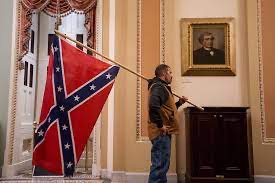
Case law does remain on the books to protect minority voters but without vigilance and resolve remain fragile. These people, these Redeemers are still dangerously patient, and can shift to Fire Eater on a dime. In light of January 6, these zealots have demonstrated they still are quite lethal.  

By crafting misleading, banal language in new voting laws, the modern GOP has taken a page from that old Reconstruction playbook. Ironically, it was the Republican Party who protected Freedmen after the Civil War, but now play the part of oppressor, inserting bad legislation to cut off Federal influence. 

The old Redeemers must surely be smiling in their graves.

Gail Chumbley is the author of the two-part memoir, “River of January,” and “River of January: Figure Eight.” Both titles are available on Kindle.

gailchumbley@gmail.com

The Spirit of the Age

We’re that little guy

In the post-Civil War era. John D Rockefeller, Andrew Carnegie, JP Morgan and others rose to wield unparalleled financial power. Emerging industries in oil, steel, and mining had grown into monolithic trusts, using innovative banking practices that fed an explosion of wealth. Titled “The Gilded Age,” these and other industrial giants earned another moniker “Robber Barons,” for not only the fortunes they built, but the ruthless practices that bred those millions.

The American public both admired and loathed these magnates. Critics argued the nature of such concentrated treasure was damaging to the lower rungs of American society. In pushback, journalists and economists lay bare the cruel tactics these industrialists utilized. Notable critics included Ida Tarbell, who investigated Rockefeller’s shady dealings in creating Standard Oil, Upton Sinclair did much the same through his novel, “The Jungle,” leaving readers both outraged and nauseous. And social reformer, essayist, Henry George, argued Carnegie had in no way improved the quality of American life, despite Carnegie’s philanthropic efforts. 

President Theodore Roosevelt found no friendship on either side. “Muckrakers,” he called these journalists, while still pursuing legal action against the excesses of what he termed the “wealthy criminal class.” 

In response, Andrew Carnegie published a work titled, “The Gospel of Wealth.” Centered upon the principles of 18th Century economist, Adam Smith, Carnegie argued that his success was no more than God’s will, and a gift to mankind. To Carnegie’s way of thinking, the Almighty himself, had conferred upon each certain gifts, and Mr Carnegie’s talent lay in getting rich. Left unmentioned were the unmet talents of those condemned to labor in the fiery pits of Carnegie Steel, and other factories. 

Confident in his beliefs, the tycoon believed he stood in God’s favor. And Americans swallowed the Gospel of Wealth, hook, line, and sinker, rendering reforms nearly impossible. 

After World War One America went on an unfettered spending spree. Throughout the Twenties President Coolidge rejected T. Roosevelt’s moral crusade, holding firm that “The Business of America is Business.” Then in October, 1929, at the beginning of Herbert Hoover’s administration the bottom fell out of the New York Stock Market. 

And somehow the rich no longer seemed quite as godly.

The 1932 Presidential Election issued a mandate for a “New Deal.” Desperate Americans were struggling, going hungry, losing their homes, writing the Franklin Roosevelt administration pleading for a hand up. And FDR acted quickly. Harnessing the power of the Federal Government, the President championed deficit spending, stimulating buying power to the underclasses. No longer would Americans tolerate the unregulated thievery of the past. By the 1960’s Lyndon Johnson’s “Great Society,” extended aid even further, so regular people could tap into the financial support to get ahead. 

By 1980 the pendulum had swung to the right once again, regulation falling into disfavor. Laissez faire policies returned under Ronald Reagan. In turn, deficits blossomed, and the market crashed again in 1987 under the weight of the DotCom boom, and savings and loan scandals. Under GW Bush a scarier crash occurred in 2008, following the fallout of the mortgage market. 

American laws, passed in the heart of crises, need to be remembered and embraced, not discarded during better times.

Much like America during and after World War Two, private, public, and global financial institutions cooperated for just and equitable progress. Enlightened self-interest with carefully crafted guardrails enhance prosperity, and promotes financial stability.

Those lessons in economic policy made the 20th Century, America’s Century. This isn’t a lesson we have to relearn, the path has been paved.

The Final Straw

The September 11th attacks in 2001 got our school year off to a strange start. There was, of course, the horror, and a lot of unplanned discussion about the Middle East. The course I taught covered Early American History through Reconstruction, and I couldn’t afford to take a lot of time to debrief. Nonetheless, the events of that day provided useful lessons that surfaced later in the year. 

By the following Spring the curriculum arrived to the series of calamities that led to the Civil War. The last compromises crumbled, and blood had spilled at Harpers Ferry. The story then turned to John Brown, God’s Avenging Angel, determined to slay slavery. 

Brown is a complicated figure, believing he had been chosen by the Great Jehovah, to draw the sword of mighty justice.

And a debatable issue offered itself.

The link to Brown and 911 suspect, a French-Moroccan terrorist, Zacarias Moussaoui, centered on jail time. Moussaoui’s trial was underway and came up in class discussion.

John Brown had been captured in Harpers Ferry, after a standoff with Marines under the command of Colonel Robert E Lee. Intending to spark a slave insurrection, Brown and his raiders, including his sons had occupied the Federal arsenal in that river town. But once the military arrived the old man subsequently surrendered. 

As Brown awaited trial in Charles Town Virginia, the Governor, Henry Wise permitted reporters from Northern papers to interview Old Brown. To the press, Brown passionately defended his cause, insisting it was the work of righteousness. Newspaper readers throughout the North responded with support and compassion, gathering disciples for the cause of freedom.

However, in the South, the old man’s name was reviled. Viewed as a criminal below the Mason-Dixon, Brown was vilified as evil incarnate, hell bent on inciting slaves to murder their masters. Military training increased across the South, in preparation to defend their “peculiar institution.”

John Brown’s raid is often seen as one of the final straws, aside from Lincoln’s election the next year, leading to secession and a force of arms.

Prior to of horror of 911, Zacarias Moussaoui was detained in Minnesota. His immigration status apparently had irregularities, and his flight school enrollment tripped some security wires. At his trial, Moussaoui put on a noisy show, acting as his own attorney, and pitching frequent temper tantrums in the courtroom for all to see, including journalists. Initially the accused insisted he was innocent, then later confessed. Quite the circus.

During and following the conviction of the terrorist, Moussaoui demanded the judge permit him access to the press. The French terrorist had his side of the story, and he wanted to air his grievances on a national and international platform.

The judge said no. And Moussaoui today is a lifer, quietly incarcerated at Super Max in Florence, Colorado, and barely a footnote in history.

The significance of this complicated, and controversial comparison? Surely the Civil War would have transpired regardless of Brown; slavery was inconsistent in a nation that professed liberty.

But that fifteen minutes of notoriety can produce real dangerous blowback.  

In light of the events on January 6th, thank the Lord DJT is grounded from social media.

Gail Chumbley is a history educator and author of the two-part memoir, “River of January,” and “River of January: Figure Eight. Both titles on Kindle.