My computer was on the blink, and a friend came over to fix it. Sitting around the table, waiting for some curative program to download, we got to talking about all the world’s problems. Soon enough the discussion moved to kids and education. Frustrated, he had just left a math position at an alternative high school, while I had just retired after a long career in public schools. We found we agreed on many, many points. In particular he still felt exasperated by the constant refrain of, “I’ll never use this (Algebra) again. Why should I have to learn it?
Now believe me, there was a time that I would have joined the ranks of complainers, because math was not, and has never been my strong suit. Today however, I’ve changed my mind about this age old gripe, realizing it wasn’t about math at all. With new eyes I looked at my math-computer friend and answered, “You were simply trying to teach him how to think–how to use steps to problem solve.”
And that, in my humble opinion, is the essential purpose of educating young people in all disciplines.
I spent over half of my career, before retirement, teaching AP US History, and Sophomore Honors History. This accelerated teaching assignment changed my approach and my philosophy of education almost at once. Rather than listing a fountain of facts to little test takers, I instead became a trainer of thinkers.
Embracing a new sense of purpose, classroom instruction no longer meant listing chronologies of events and dates, (though these have a place in coursework) but on how to synthesis those facts into a broader, deeper, meaning. Students were required to sort through diverse pieces of information, measuring facts into a larger coherent idea, a political viewpoint, an economic trend, or an emerging social movement. Let me illustrate.
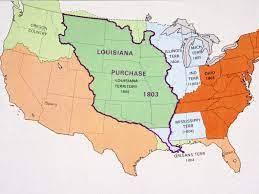
In a simple compare/contrast question the kids had to examine the expansionist policies of Presidents Thomas Jefferson, and James K. Polk. Jefferson doubled the size of America in 1803, while Polk stretched the nation to the Pacific coast by 1848.
With a line down the middle of a piece of paper, students listed every fact concerning both presidential policies. Next they examined those facts: Louisiana Purchase through a treaty with France . . . Lewis and Clark Expedition . . . War with Mexico . . . land acquisitions of the Mexican Cession . . . opening of California, the Oregon Territory, etc . . . With all that listing and sorting of facts, the students drew conclusions from the historic record.
If done properly learners were able to make some solid observations regarding Jefferson’s diplomacy in his negotiated French real estate deal, versus Polk’s use of military force with Mexico. In this exercise students also developed a competent writing style, finding a distinctive voice while crafting conclusions; a literary flair.
Eventually, kids would find both presidents wanted the same thing—western land. But they realized Jefferson’s approach was more peaceful, or more principled, and France was too powerful to provoke, while later President Polk cast aside negotiations, opting for war against a weaker foe, (or something like that).
The art of teaching critical thinking, and expository writing takes lots of discipline, dedication and tons of practice. And to be honest, some kids simply weren’t willing to take that risk, resistant to that advanced coursework. Some parents balked, believing that teachers shouldn’t ask so much of their young ones, and GPA’s were too valuable to imperil with such a tough class. I understood the hesitation; critical thinking takes a bit acquire.
And I, too, often worried and stewed over my students’ progress, often perceiving poor performance as a personal failure. I sometimes considered lowering my standards so everyone would get an “A,” and I would be their favorite teacher.
There were many tears throughout the school year, a fair share of grumbling, and resentment to the rigor. Still, by June the majority of my students had persevered, becoming accomplished independent thinkers. They had bravely risked a relentless “boot camp” curriculum, and prevailed.
To drive home their achievements, I’d ask the kids to read some of their first essays from fall quarter, and compare the writing to more recent pieces. They were pretty proud of themselves, satisfied they could take on the world. From the beginning of the year to the end, these students never realized how accomplished they could, and eventually did become.
The point is that, we, as teachers, and also as parents, must expect more from our kids beyond showing up to class, and staying awake. Young people must stretch themselves to reach those aspirations. Frankly, if we expect nothing from our students, that is what we’ll get, nothing.
As one student later confessed, “I learned my education is my responsibility.”
Gail Chumbley is the author of River of January and River of January: Figure Eight. Both books available on Kindle. Chumbley has also authored the stage play, “Clay,” and “Wolf By The Ears.”
gailchumbley@gmail.com
 Gail Chumbley