A Meeting

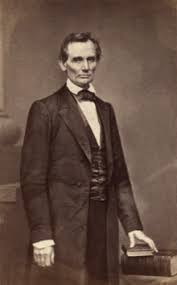
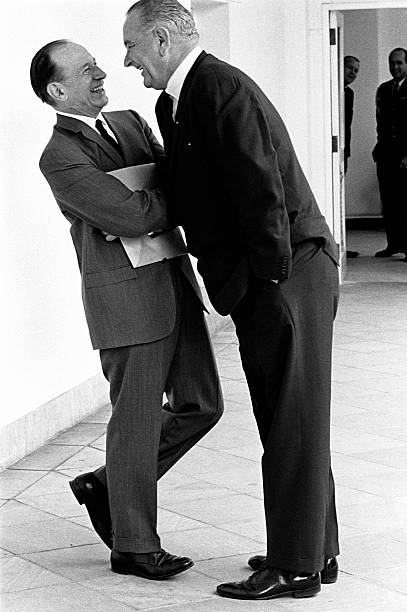
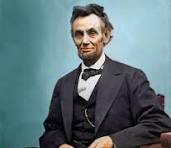
The following is an excerpt from “Peer Review” a play. The setting is a home in Gettysburg Pennsylvania. The 47th president meets the 16th.

THE TALL MAN

We have all noticed your obsession with political enemies. Mr. Nixon has kept a

particularly close watch on this activity.

DJT

Nixon’s dead, and I don’t care. Look if people aren’t nice to me I’m not nice back. They

all think they’re so much smarter than me. Obama, the Clinton’s, that Puerto Rican chick

from New York. All jerks.

THE TALL MAN

Ha. The Army of the Potomac had generals who thought the same of me. (Pauses)That

reminds me of a time when a client came to my Springfield law office and hired me for a

patent case. The fellow paid a retainer, and I began research on the legal particulars.

Oddly enough I never heard another word about it. Later the newspaper said the trial had

been moved to Cincinnati, Ohio.

DJT crosses his arms pouting. The Tall Man

merely smiles.

THE TALL MAN

Well sir, I made the journey by train to attend that proceeding. To my surprise a new lead

attorney sat at the courtroom table, and pointedly ignored me. Later I learned he had

dismissed me as a long-lanked creature in a dirty coat. Of course my feelings were more

than a little wounded. However I remained in Cincinnati and observed the court

proceedings. There is always something to learn. That attorney, Edwin Stanton, made a

fine job of it, and I later made him my Secretary of War.

DJT

What the hell is wrong with you! All you dead guys are morons. Made him a Cabinet

Secretary. I would have made up a name, you know, like Pocahontas or Shifty Schiff and

never stopped hounding him. I’da ruined the guy.

THE TALL MAN

And that would have proven a mistake. Secretary Stanton proved a wise choice for his

management of the Union Army. Besides, in the words of Mr. Lyndon Johnson, again, it

is “Better to have your enemies inside the tent pissing out, than outside the tent pissing

in.”

The Tall Man laughs and slaps his leg.

THE TALL MAN

Stanton merited the post, as did most members of my cabinet, Seward at State, Chase at

Treasury, Blair as Postmaster General. They had been my competitors for the presidency,

and I appointed these men knowing full well they resented my election.

DJT

You’re crazy. I wouldn’t have let them in the White House. I’m still gonna get even with

the scumbags who stood in my way, DeSantis and Nikki Haley. May not be today, but I

will destroy them. I never forget.

THE TALL MAN

I required sound advice in a difficult time, and that these men were the best, except for

Simon Cameron. There was a scandal and he was undone. Deceivers like Cameron and

Floyd undo themselves. You could learn from their errors.

The Tall Man looks again at his writing, as DJT

speaks.

DJT

Who needs a cabinet anyway. Fill it with dopes who will do as I say. I’m in charge now.

THE TALL MAN

Americans are a free thinking people. Never will they all revere you as does a minority at

this particular moment. You, me, all of us have but a brief time in office. The American

people possess a truth beyond momentary and shifting opinions. Beyond a name on a

map America embraces noble ideals and accomplishes great things.

DJT

Just what I thought, a Rino. You liberals are what’s wrong with America.

THE TALL MAN

Ha. You foolish man. The whole idea of America is Liberal. This nation is the product of

the best political thinking of the 18th Century. It is the sovereignty of the people!

The Tall Man taps the pen on the desk top.

Mr. Madison crafted the Constitution and his Bill of Rights upon the rights of free people.

DJT

America doesn’t care about that anymore. Times have changed. I have changed it. They

want a strong man who gets shit done. Blacks, women, immigrants put back in their

place.

THE TALL MAN

You are mistaken. Only the people are the rightful masters . . .

Gail Chumbley is the author of the two-part memoir “River of January,” and “River of January: Figure Eight,” co-writer of the screenplay, “Dancing On Air” based own those books. She has penned three stage plays on history topics, “Clay” on the life of Senator Henry Clay, “Wolf By The Ears” examining the beginnings of American slavery, and “Peer Review” where 47 is confronted by specters of four past presidents.

Symmetry

This reactionary-looking gent is Marylander Roger Brooks Taney, an Andrew Jackson appointee to the Supreme Court. History remembers Justice Taney as the author of the Court’s most infamous ruling in Scott V Sandford (1857).  

Before his rise to the Court, Taney had made no secret of his opinion on slavery and citizenship, insisting that blacks in the country had no rights white men were bound to respect. A free black had requested documents for overseas travel that Roger Taney, as then US Attorney General, rejected. Taney declared his view that blacks were not citizens, and never would be. Travel documents for this man of color were denied.

Another important element in this story concerns the Missouri Compromise of 1820. Settled eight years prior to the election of Andrew Jackson, this legislation directed that, with the exception of the new state itself, slavery would be forbidden westward along Missouri’s southern border. Most Americans hoped that this Compromise Line would endure forever, clearly delineating for posterity new slave states from free.

By the time the Scott case wound its way to the highest court, violence and bloodshed had erupted on those very western lands, on the Kansas prairie. Emigrants raced from both northern and southern states, dead set to vote upon the status of slavery in the new state’s pending constitution. A volatile mix of invading, pro-slave Missouri Ruffians assaulted Free-State Jayhawkers near Lawrence, sparking deadly violence across the region. Unrepentant slaveholders demanded their 5th Amendment property rights (meaning slaves) be allowed any place slaveholders settled. At the same time, equally fervent opponents contended the “peculiar institution” would remain only where it existed, never to pollute new territories, or America’s future.

Justice Taney, as Chief Justice, took umbrage at these incessant attacks, and at those Northern rabble rousers who would not obey the law. When the Dred Scott case entered deliberations it appears Taney intended to settle the question for all time, silencing forever those interfering, and self-righteous Yankees. When the Court finally issued its ruling in 1857, Justice Taney’s opinion rang out with certainty, and finality.

Taney wrote

I Despite Dred Scott once residing in free territory with his master, he was still a slave.

II As a slave, Dred Scott was not a citizen and had no standing in court.

With those two main points established, Taney could have ended his decree, but the Chief Justice had some personal venom to add.

III Congress had exceeded its authority in legislating the Missouri Compromise in 1820, and the 1820 law was unconstitutional. 

IV Movable property, (slaves) could not be restricted by boundary lines or by popular vote. Property was protected by law.

Believing he had settled the dispute, Justice Taney had, in fact, only stoked a more massive inferno.

Indeed the Civil War exploded within four years of Taney’s ruling, and blazed for four bloody years. In the aftermath, an interesting turn of symmetry, the Fourteenth Amendment was submitted for adoption, flipping all of Taney’s arguments, provision by provision. 

I By virtue of birth in the United States, one was a citizen. 

II As a citizen a person was due all rights and immunities, with equal protection under the law. 

This amendment reads as if the Scott Decision acted as a template for reversal.

Fast forward to 2008. 

President-Elect, Barack Obama, in a conscious effort to mirror the sequence of fellow Illinoisan, Abraham Lincoln’s inaugural, deliberately followed the 1861 Lincoln festivities. The Obamas rode the same train route as had the Lincoln’s, breakfasted on the same meal inauguration day, and when the moment came for the swearing in, President Obama chose the same Bible as touched by Abraham Lincoln’s right hand in 1861.

In this last twist of symmetry that Bible belonged to Justice Roger B Taney, the man who decreed blacks were not citizens and never would be. A very satisfying turn, indeed.

Gail Chumbley is the author of the two-part memoir, “River of January,” and “River of January: Figure Eight.” Both are available on Kindle. Chumbley has also penned three stage plays, “Clay,” “Wolf By The Ears,” and “Peer Review.” She has cowritten “Dancing On Air,” a film script.

gailchumbley@ymail.com

A Bright Side

Donald Trump, without a doubt has answered the centuries old question of the worst president in American history. His standing as the biggest moron lends Harding, Buchanan, Pierce, and other lackluster presidents a step up from the cellar. 

Is there a bright side to the bedlam unleashed by 45’s insanity? I believe so. Americans have witnessed how not to preside over our democracy in real time. Now that’s a powerful civics lesson. 

Once misunderstood, most American’s were reminded how the Electoral College functions—a big deal demonstrating how a candidate can win the Electoral College, but not the popular vote. From irregularities identified in the 2016 race, shocked citizens across the country wonder if this election procedure has a purpose in the 21st Century. 

The legal tradition of checks and balances took a rough bruising with Congressmen and Senators scurrying to the Oval Office to kiss the ring of their messiah. Two clearly illegal actions by the President; pressing Volodymyr Zelensky of Ukraine to open an inquiry on Hunter Biden, and Trump would offer an invitation to Washington.The second came after the January 6th insurrection using violence to disrupt the ceremonial certification of Electoral College. The House impeached both times, and the Senate refused to convict. The moral of that story? The Executive Branch went rogue and the upper chamber of the Legislative Branch failed in their duty. However, both branches somehow remained intact and horrified voters learned what they didn’t want. 

That elections and voting truly matter may be the most profound lesson of the Trump years. The right to vote is power, and denying citizens of that power became the GOP’s endgame. Even now, the far right longs to deprive many of us, especially minorities from exercising that power. The lawsuits are still flying to undermine our most sacred right under the law.

Another teachable moment touched on the Supreme Court. The 2020 death of Ruth Bader Ginsburg, and the retirement of Anthony Kennedy in 2018 shed light on manipulating the Judiciary. Senate Majority Leader, Mitch McConnell lobbed the first volley through the customary practice of filling Supreme Court vacancies. Before 2016 the sitting president had the privilege to put forth judicial nominees. That had been a long tradition. But the sitting President happened to be Barack Obama. So of course McConnell blew that up. Obama’s choice for the court was Merrick Garland, and McConnell would not hear of it.

Following the 2016 election that tradition resumed. Trump put forth Amy Coney Barrett, and later Brett Kavanaugh. Both lied in hearings to the Senate Judiciary Committee, Barrett testified she would allow Roe to remain, and Kavanaugh was a reputed date raper. The clause allowing lifetime terms for judges added gravity to Trump and McConnell’s shenanigans. 

Perhaps the Trump fiasco holds a silver lining. Americans have become more aware of the workings of our democracy, what functions under the hood, so to speak. Perhaps democracy is indeed fragile, but our near collapse into tyranny has forced us all to wake up and pay attention.

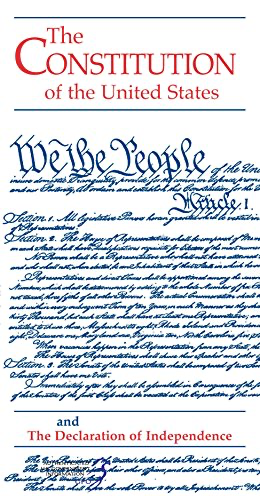
PS contact your Representative in Congress. Request a hand pamphlet of the Constitution like the one above. They have them in their DC office or their home office. We’ll show ’em.

Gail Chumbley is the author of the two-part memoir River of January, and River of January: Figure Eight. Chumbley has written two plays, Clay about 19th Century Statesman Henry Clay, and Wolf By The Ears exploring the genesis of racism and slavery in America.


The only thing new in the world is the history you don’t know

Harry Truman

Fighting Bees

Young Abraham Lincoln came of age, politically speaking, during the administration of Andrew Jackson. And the rough, aspiring frontier politician did not approve of the Democratic Party and their blind, cult-like dedication to “Old Hickory.” Speaking first in New Salem, Illinois, then in Springfield, Lincoln held forth on the subject of Jackson’s arbitrary and autocratic style compared to his man, Senator Henry Clay of Kentucky.

Young Mr. Lincoln viewed Henry Clay as a true statesman. He admired Senator Clay for his rational, stable economic plans to nurture a growing America bursting with potential.

Central to Clay’s program was a bank, a central depository to finance new infrastructure projects like roads, canals, and railroads. Senator Clay championed the Federal Government as the best instrument to plan and carry out public works, improving commercial activity across the young nation.

To Lincoln scratching out a life in a muddy, stump-ridden western wilderness, Clay’s American System of improvements was welcome. Clay’s platform would bring order, jobs, prosperity, and hope to Lincoln’s own rough-hewn region.

Young Lincoln also shared Clay’s conviction that slavery did not belong in new western territories. All Lincoln wanted was a fair chance for all Americans, and that slavery impeded human talent, and he believed, like Clay, that slavery also devalued free labor. Free market capitalism and slavery could not co-exist.

To Lincoln, President Jackson’s mercurial style of leadership did not serve America’s future either. Jackson not only vetoed many improvement bills, arguing one state benefiting from federal funds was unfair to others, he in one instance vetoed a road bill because the project lay entirely in Kentucky, Henry Clay’s home state.

Excessive emotional discord in politics caused more problems than it remedied, and impeded national growth. Nation building wasn’t a sectional competition, a personal challenge, nor a game to pit political egos.

At the time of Jackson a religious revival burned hot across the country. Known today as the Second Great Awakening this movement, foaming over with emotion, had drenched politics as well, with candidates often taking on an evangelical, absolute tones.

Lincoln’s once joked he didn’t much like these stump orators unless they looked like they were “fighting bees.” To Lincoln, such emotional public displays had no value in advancing America.

So what did Lincoln believe? In the founders ideals of the United States of America. Embracing presidents as religious, messianic manifestations had no purpose, and produced only the tainted fruit of extremism.

Lincoln was, above all else, a moderate, logical, and measured man. His inspiration, his convictions, centered on a secular faith in the ideals of America.

Mr. Lincoln like to think of the Declaration of Independence as a golden apple, (equality and rights) set in the silver frame of the Constitution (the law). In other words certain inalienable rights protected by We the People.

Former President Obama exemplified Lincoln’s America in so many ways; relying on his cabinet, advisors, or his own formidable intellect to govern. And Lincoln’s Jackson nightmare repeated when a dumber version of Old Hickory proclaimed America is a terrible place.

Today the United States’ perpetual election cycle keeps emotions raw, but accomplishes little else. Mr. Lincoln would take a dim view of today’s constant political turmoil, arguing that we need to keep our wits about us and vote with our heads.

More infrastructure needs attention as well as national security, civil rights, and climate change. Instead a thin-skinned ego maniac welcomes billionaires to pilfer and taint good government. And the computer age has presented a complicated network neither Lincoln nor Clay could have imagined. We rely on those cooler heads to prevail, making policy, and conducting the people’s business, or we end up paying homage to wannabe dictator who is as arbitrary as he is vacuous.

Today, at this moment, in a country full of pointless Jacksons, be a thoughtful Lincoln. There is no need to fight bees all of the time, over and over, when the real work of America needs to be done.

Gail Chumbley is the author of “River of January,” and “River of January: Figure Eight.” Chumbley also penned two stage plays, “Clay,” examining the life of Senator Henry Clay, and “Wolf By The Ears,” a study of racism and slavery in America. Currently Chumbley is working on “Peer Review.” This piece is a cross of Dickens A Christmas Carol converges with presidential history.

chumbleg.blog

Fight Club

A biography of Lyndon B. Johnson, (by Robert A. Caro) presents an in-depth look at LBJ’s Senate career. Aptly titled “Master of the Senate,” Caro describes the future president’s considerable ability to push bills he championed through the US Senate.

Using his boundless energy to cajole, intimidate, and hound opponents, Senator Johnson proved remarkably effective. When candidate John F Kennedy selected LBJ to serve as his running mate, Johnson’s reputation as a political wheeler dealer sealed his selection. 

A look at the backgrounds of all 46 American Presidents, only one-third rose from Congress’s upper chamber. From 1900 to today only seven Chief Executives began in the Senate. Perhaps as candidates, these politicians carry controversial voting records, or personal foibles leaving too much baggage for a successful run. In spite of inherent liabilities, most modern Senators-turned-President, bring an effective array of skills to the White House.

For both Truman with his Fair Deal, and John F Kennedy’s New Frontier, legislative wins were scarce. Truman did enjoy a moment with passage of the Marshall Plan to rebuilt war-torn Europe, and Kennedy with the ratification of the Nuclear Test Ban Treaty in 1963.

Following JFK’s murder Lyndon Johnson seized that tragic moment initiating his Great Society program, and then showed America how to get things done. Public Television, highway beautification, Medicare, Medicaid, and both the Civil Rights Act of 1964, and the Voting Rights Act of 1965. Johnson’s achievements were many, and important. 

Richard Nixon served in the Senate, as well. Once President, Nixon promoted the Environmental Protection Agency, and the passage of Title IX for women in sports. It wasn’t all evil in that White House, the guy had skills.

In 2010, single-term Senator from Illinois, turned President, Barack Obama signed into law The Affordable Care Act. Standing near, watching was Obama’s Vice-President, Joe Biden, himself a 36 year veteran of the Senate. 

The thing is Mitch McConnell lobbed every counterpunch in the rules to stop Obamacare. But he failed in the face of three wily tacticians, Barack Obama, Nancy Pelosi in the House, and, of course, Joe Biden.

Now Joe has entered the White House in his own right.

The supposition that legislative cunning ensures a successful presidency is only an interesting thought. But Truman did see reelection, while LBJ collapsed under the weight of Vietnam, not his legislative magic. Nixon sabotaged himself, but the Biden presidency appears to be chugging along on a steady course. 

In the Senate since 1973, this 46th President cut his political teeth on Capitol Hill. Senate rules, cloture, floor privileges, and more are some of the lethal weapons in his political arsenal. For example, when Senator Manchin suddenly came on board with the Inflation Reduction Act, Mitch McConnell, another sly dog, staggered, blindsided.

The point remains. There is a lot more to Joe Biden than meets the eye. This is not a President to dismiss for superficial reasons, like his grandpa appearance, and folksy demeanor. If anything, Biden’s Senate career has forged him into a political shark. The Infrastructure package, Covid Relief, and College Debt Forgiveness have largely passed, allowing his opponents no time to breathe.

And Joe’s VP? She’s a former Senator, too.

Gail Chumbley is the author of the two-part memoir “River of January,” and “River of January: Figure Eight.” Both titles are on Kindle. Chumbley has written two historical plays, “Clay” regarding the life of Senator Henry Clay, and “Wolf By The Ears,” an exploration of American racism and slavery.

Only Good News

I attended college in the mid-1970’s, starting around the end of the Vietnam War, and Nixon’s resignation. A restless atmosphere permeated campus as antiwar radicalism faded, leaving time to address other pressing dangers.

Newspaper headlines told the story. Ohio’s Cuyahoga River had caught fire, the blaze feeding upon nothing more than sewage laced with flammable sludge. Developers in upstate New York broke ground for a planned community over a topsoil-covered chemical waste dump. Later the “Love Canal” housing project reported residents dying from leukemia in alarming numbers. A nuclear plant chemist in Oklahoma, Karen Silkwood, turned whistleblower, testifying before the Atomic Energy Commission, regarding the dangerous levels and exposure of radiation at the facility.

Silkwood later died in a suspicious car accident.

As Americans focused on ending the war in Southeast Asia, sustainable life visibly deteriorated in America. As we protested the effects of Agent Orange in Vietnam, we missed the incessant dumping of chemical runoff into Florida’s Everglades. Car exhaust, and acid rain doused the “Rust Belt” region surrounding the Great Lakes. 

Some politicians stepped up to the moment, like Georgia Governor, Jimmy Carter. Carter, a Democrat, ran for and won the 1976 Presidential Election. For many, Carter presented a serious, intelligent and incorruptible problem-solver. Grasping the petroleum bull by the horns, President Carter prioritized America’s need to conserve energy. He pointed out that domestic transportation literally depended on the whims of Middle Eastern cartels who bore no love for the United States. Addressing the crisis, Carter appeared on prime time, wearing a sweater, imploring the country to turn down the heat to 65 degrees, and cut back on driving.

Though he was right, Carter served only one turbulent term, replaced by smiling Ronald Reagan. The Reagan campaign understood Americans wanted to hear only good news, and how exceptional Americans inherently were.

This changing guard had no love for Federal bureaucracy, quickly dispensing with environmental restrictions. James Watt served as Interior Secretary, and Anne Buford Gorsuch at the EPA. Both ignored Congressional environmental statutes, slashing budgets, cutting staff, and relaxing regulations on private logging rights and clean water standards.   

In the 1990’s another voice rose to school Americans on the reality of environmental decay; former Vice President, Al Gore. In his 2006 film, “An Inconvenient Truth” Gore presented a compelling case highlighting the ravages of climate change, and global warming. At the end of the film the Vice President adopted an encouraging tone. Now that American’s understood this impending threat, we would act as one to save our home planet.

For his stance, George H.W. Bush anointed Al Gore “Captain Ozone.” Pappy Bush was, after all, an oil man from Texas.

The kicker is that we knew in the 1970’s which way this story would end. 

Today Lake Mead hosts more dead bodies than boaters, while vast catastrophic fires incinerate the Red Woods. Endless 100 degree-plus days extend longer every summer, and floods flow through the arroyos of the Desert Southwest. In the highest latitudes polar ice shelves calve mountains of glaciers raising the ocean levels globally. 

If the purpose of politics is to nurture dim, aggrieved consumers, the GOP has accomplished that, in spades. But the crisis is real, and the GOP is not helping.

In point of fact, the Trump Administration referred to global warming as a hoax. The US formally withdrew from the Paris Climate Agreement, ratified during the Obama years. According to the Washington Post, under Trump’s watch, over 125 Obama era protections were reversed, loosening regulations on endangered species and oil spills.

For those of us of a certain age, we have watched this crisis evolve over fifty years. Buck passing, unfettered capitalism, combined with political postering renders this moment impossible to fix. If pursuit of wealth and hubris outweighs preservation, greed is our undoing.

Gail Chumbley is the author of the two-part memoir “River of January,” and “River of January: Figure Eight.” Chumbley has also written two plays. “Clay” deals with the life of Senator Henry Clay of Kentucky, and “Wolf By The Ears,” explores the beginnings of racism and slavery.

gailchumbley@gmail.com

Symmetry

This is one of my favorite twists in American history.

Gail Chumbley is the author of the two-part memoir “River of January,” and “River of January: Figure Eight.” Chumbley has penned two plays, as well. “Clay” on the life of Senator Henry Clay, and “Wolf By The Ears,” exploring the beginnings of racism and slavery.

The Past Isn’t Past

The above diagram, or other similar images frequently pop up in American history textbooks. The purpose of the image is to represent Southern society in the years up to the Civil War. A quick look reveals that this system was top down and not in any way democratic.

Small scale farmers and poor whites near the bottom pose some interesting questions regarding antebellum (before the war) social class interactions. How much authority did small farmers actually wield in this ordered system? How did customs and rules shape relations between poor whites and slaves? The most pressing question asks why would lower class whites risk all to do battle for the lofty Planter class? After all, these same aristocrats strictly associated within their own circle, and would not give the time of day to any social inferiors.

So again why did the lower rungs answer the call to battle?

One explanation must touch upon race and identity. Small land holders and poor whites, as hard as they struggled to survive somehow believed or wanted to believe they shared more in common with the aristocrats at the top. Identifying with the enslaved below, despite living in similar adversity was unthinkable.

And these sons of the South fought hard. Some 300,000 Confederate soldiers died of shot, disease, or returned home maimed to preserve a culture that held them down.

Let’s put a pin there.

Keeping in mind the above image fast forward to the 2008 victory of Barack Obama. For many of us the election of our first black president marked a high point in racial history, seemingly proof that America had finally faced and redeemed the violent legacy of injustice.

And despite President Obama’s two successful terms in office, (Obama is somewhere among the top ten presidents of all time) the persistent legacy of racial hatred roared back to life as virulent as any year in old Dixie.

Like demons summoned from the dead, the ugly ghosts of white supremacy rose, once again fueled by a latter day white aristocracy. America is witnessing in real time DJT and his plutocrats purposely riling up lower class whites to again man their battle fronts.

A black president, a very popular and effective black president united malicious forces of hubris, greed, and malignant hate.

This toxic furnace of racism has honestly emerged as something of a shock. For those of us who bore witness to the Civil Rights movement, applauded affirmative action policies, and celebrated landmark legislation in housing and voting rights, led us to believe a A More Perfect Union was underway. But we were wrong.

Stunningly wrong.

47”s first administration emboldened a Klan-style march in Charlottesville, where he remarked there were “good people on both sides.” Left unmentioned was the fate of Heather Heyer, a counter protestor, who was deliberately targeted and killed in the melee. In 2021 47 groomed his working class foot soldiers to “stand back and stand by.” When the order came, these emboldened thugs sacked the US Capitol toting Confederate and Nazi flags. Neither Robert E Lee or Hitler ever got that close to our center of government.

In both cases MAGA militia in red caps waving blue flags proved that America has made no racial progress at all. Hate, especially racial hate has been simmering all along. Forget that 47 and his GOP are gutting social safety nets and services (Medicaid and FEMA come to mind) that support many of his minions (and the rest of us). Effectively manipulated MAGA enthusiasts proudly, defiantly, swill the poison of grievance.

Planter society would easily recognize this tried and true method of cultural conditioning. Working class whites once again believe they share the same interests as the ruling elite. After all they are all white. However, that same elite has no further use for those who elected them. And this resurrected aristocracy doesn’t think much of democracy either. Utah Senator Mike Lee publicly said as much.

The 21st Century rallying cry echoes that of an earlier century. The worst white man is still better than the best man of color. (And I don’t mean Joe Biden.)

And that is how those with little to nothing are schooled to preserve those who have everything.

Gail Chumbley is the author of the two-part memoir River of January, and River of January; Figure Eight. Chumbley has authored three stage plays, Clay, a look at the life of Henry Clay, Wolf By The Ears, an examination of racism and slavery, and Peer Review, where Donald Trump meets four former presidents.

gailchumbley@ymail.com