
Still looking for that right gift for that special person on your list?
Order River of January, a historical memoir as a perfect present, today.
Also available on Amazon.com
Still looking for that right gift for that special person on your list?
Order River of January, a historical memoir as a perfect present, today.
Also available on Amazon.com
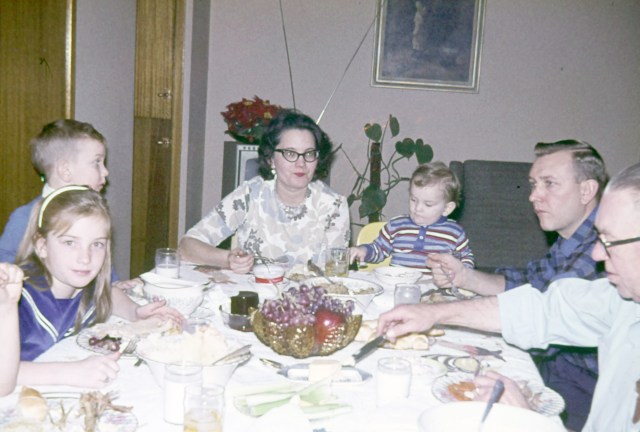
Christmas, 1965, I’m the sailor girl, he’s in blue plaid
We sat at the dining room table, my father having cleared a corner where we could both work. Agreeing to combine our efforts, we decided to write out both his and my Christmas cards in one fell swoop. These days, my visits to the folks come around more frequently—either flying or driving the three hundred miles to spend a few days back in my childhood home. And I didn’t mind addressing that stack of cards, especially with my dad sitting faithfully next to me making the job that much more special.
It’s my brothers who do the heavy lifting around the old homestead. My middle brother, in particular, visits nearly every day, pruning the shrubs, cutting the lawn, shoveling winter snow, and answering those midnight calls for transportation to the hospital which are also growing more frequent.
My youngest brother passes his weekend visits with on-sight, live-in chores. Heavy furniture moved, manure bags hauled, and removing and returning Mom’s giant window box cover, an aluminum contraption, some eight feet long. When those chores are finished, number three son whisks my father off to look at cars, both vintage, and new because they both like cars . . . a lot.
They take it easy on me when it comes to manual labor. My main job is to hang out with the folks and just go with the flow. On one earlier stay my Mom decided we should head out to the local mall. Happy to make the foray into retail-land, I wrestled her wheeled walker into the car, jockeyed for entrance onto the freeway, and we spend the afternoon simply looking around the stores, making time for a little overpriced coffee at the mall coffee spot. On this trip her sudden impulse for fun surprised me. All three of us sped the opposite direction on Interstate 90, to the Coeur de Alene Indian Casino, for some noisy, smoky, slot machine therapy.
If Caesar Milan is the Dog Whisperer, then my mother is the Slot Machine Whisperer. Stooped and round-shouldered, that little dynamo of a woman, cane in hand, cruises through islands of blinking, ringing machines, moving as smoothly as R2D2, but with more tenacity. She says ripe machines beckon to her, and damn if it isn’t true. As I sit beside her, losing my mortgage payment (at an identical machine) Mom turns ten bucks into a sweet fifty in a heartbeat. And she can get an awfully cocky for an old lady.
Bending over my work, back at the table, my Dad and I subtly figure out a production line. I copy last year’s addresses from a stack of cards, one by one, jotting them onto fresh envelopes. Stuffing this year’s card inside, I scribble into a spiral notebook each recipient for his records. My father then presses both the return address sticker and postage stamp on to the envelope corners and seals them up. This system is efficient and should have processed smoothly, except that my parents are now eighty-three, and their friends and close relatives are getting up there, too.
“This one is wrong. He’s in assisted living now. Oh, and he died just before Thanksgiving, poor guy. Say, can you put a line through that first address, and write in the new one?”
“Sure. It will still get where it’s going,” I assure him.
“She died a few months ago.” He sighs. “I’d better look at those envelopes,” he reaches for last year’s batch, “and I’ll get my address book.” Dad didn’t want to waste any more stationary. So by the time we were done with his cards, the final number had thinned down considerably, and he looked a little sad.
Despite that bitter-sweet atmosphere of sorrow mixed with holiday cheer, I found our time huddled at the end of that table somehow uplifting. Clearly our effort underscored that our lives can be measured as a series of losses. The loss of youth, of extraordinary moments too quickly expired, of dear friends, beloved pets, and the dearest of family members who leave us far too soon.
Still there was really no place I’d rather have been at that moment. I’m sixty years old and still I got to sit with my sweet, lovable, ever-constant dad, at a table we’ve shared since I was a little girl.
A precious gift indeed, in this season of joy.
Gail Chumbley is the author of the memoir, River of January also available on Kindle

“We must entertain each other in brotherly affection. We must be willing to abridge ourselves of our superfluities, for the supply of others necessities. We must uphold a familiar commerce together in all meekness, gentleness, patience, and liberality. We must delight in each other; make others conditions our own; rejoice together, mourn together, labor and suffer together, always having before our eyes our commission and community in the work of the same body. So shall we keep the unity of the spirit in the bond of peace.”
Governor John Winthrop, Massachusetts Bay Colony 1630
Happy Thanksgiving.
Gail Chumbley is the author of River of January available on Kindle and at River of January
So it’s only four minutes of fame. I’ll take it.
GC

Eighty two years ago today Helen and Chum married in Manhattan. Vows were exchanged at the “Little Church Around the Corner,” on East 29th and 5th Avenue. Formally known as The Church of the Transfiguration, this congregation opened its doors to show people, a group commonly shunned by other, more proper, churches in the city.
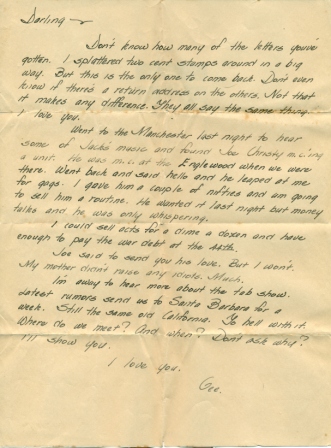
Peppered through the vast family archive used in the writing of River of January, exist three special sets of letters. Though largely filled with conventional chatter and sentimental superlatives, these documents also provide a fascinating peek into another time and place–of a nation suffering through economic free fall, and perched on the threshold of war.
The letters frequently mention the turbulent state of international affairs, from fascist Italy, to the Spanish Civil War; episodes that eventually and inevitably led to the Second World War. Even more ink is expended discussing the difficult economic situation stemming from the fallout of the Stock Market Crash–securing theater bookings, closing business contracts, and aviation training in a downsized Navy. Still, aside from the monumental, most of the content reported simple day to day life, shared with humor and concise observations. From their correspondence these men clearly promoted themselves, vibrantly rising from the faded and yellowing paper.
The first are a series of letters mailed from a Hollywood address, composed by comedy writer, Grant Garrett. (See above). The second collection, posted almost exclusively from Europe, came from the hand of a 28-year-old Belgian entrepreneur, Elie Gelaki. Serious and painfully formal, Elie’s letter reveal a methodical mind, clearly continental in manner with a determined nature. Finally, the last, and largest collection came from Mont Chumbley, Virginia farm boy turned aviator, who looms largest in the memoir. His writing reveals a practical, warm, and straightforward young man who expressed himself in plain language.
Despite definite differences in style, these three writers did share many qualities. All were deeply ambitious, establishing successful careers in the particularly difficult years of the Great Depression. They were clearly literate and educated, in a time when many (at least in America) did not regularly attend nor graduate from secondary school. These letters rise from the ordinary, written with distinctive originality, candor, and technical accuracy.
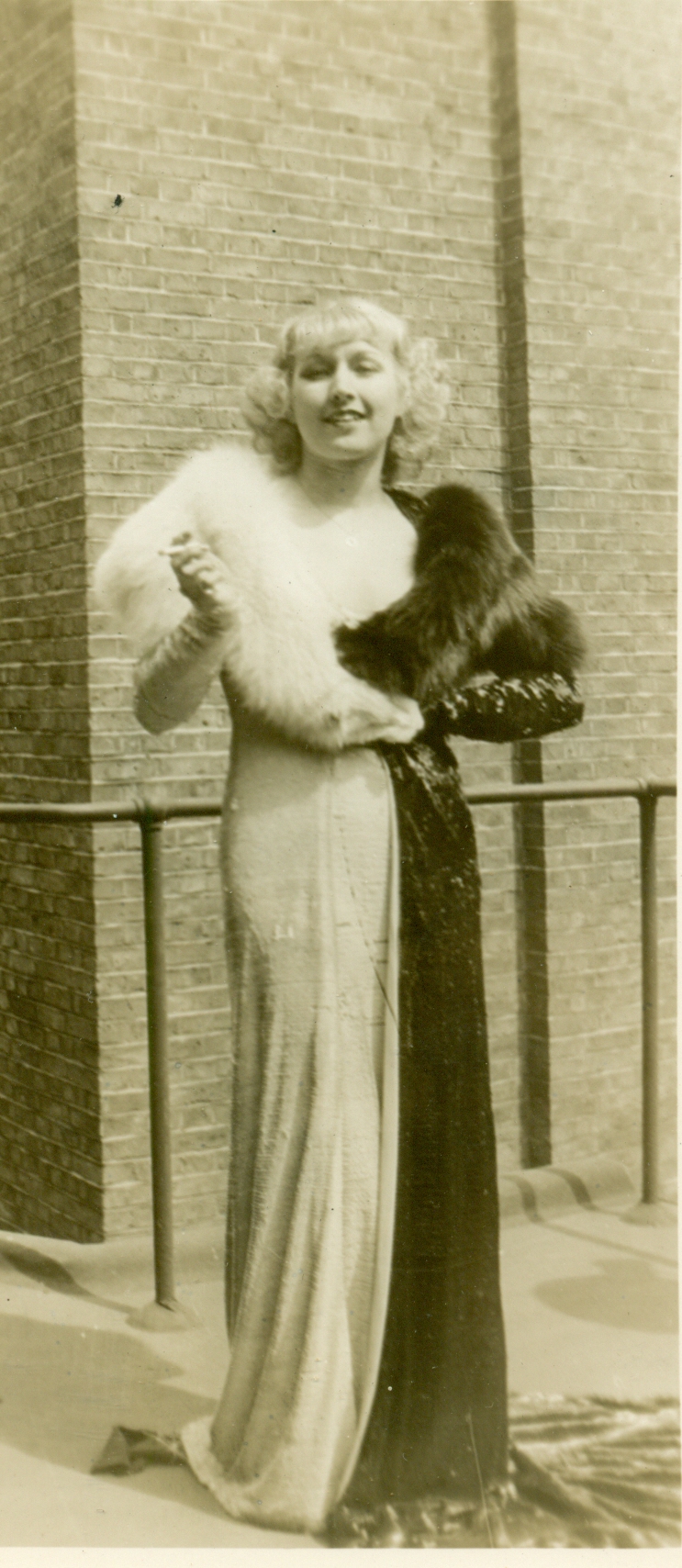
The link that tied this portion of the archive together was the beautiful New York dancer who received each letter, and preserved them all, Helen Thompson.
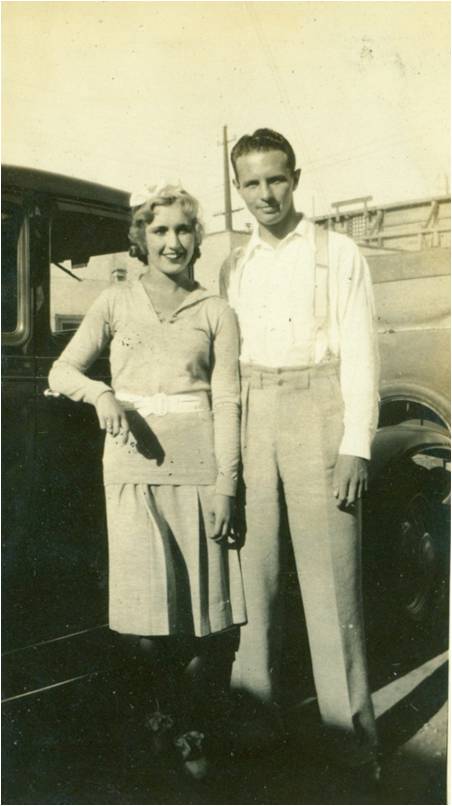
Grant Garrett became Helen’s first heartthrob. A native of Los Angeles, Garrett was a regular script contributor to radio shows and vaudeville acts. A talented singer and dancer in his own right, he interviewed Helen to partner with him for an upcoming tour across the country in 1931. After their junket ended, she returned to New York, and he returned to Hollywood. Now in love, the couple exchanged a series of clandestine letters, (her mother forbade Helen to see him again) with only Grant’s compositions still surviving today.
For a nineteen-year-old girl, Grant was hard to resist. Moody, smart, and funny . . . he was the essence of the tortured poet, a perfect combination of beauty, pain and passion. Of her suitors, Grant was the only one who shared her profession, and their time together forged a strong, and influential bond. Helen’s association with Grant provided something of a professional finishing school for her. From Grant she learned to laugh through tough times, and push through adversity because “the show must go on.”
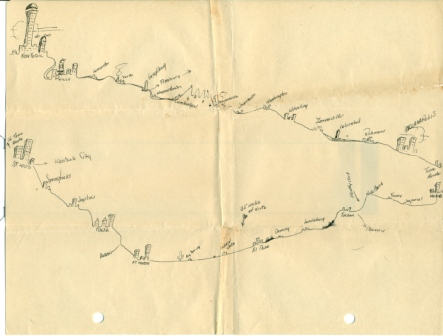
Grant’s whimsical map of a planned Garrett & Thompson reunion tour.
Next time, Belgian, Elie Gelaki.
Read more about Grant Garrett, Elie, and Mont Chumbley in River of January, available in hard copy and on Kindle.


 Gail Chumbley