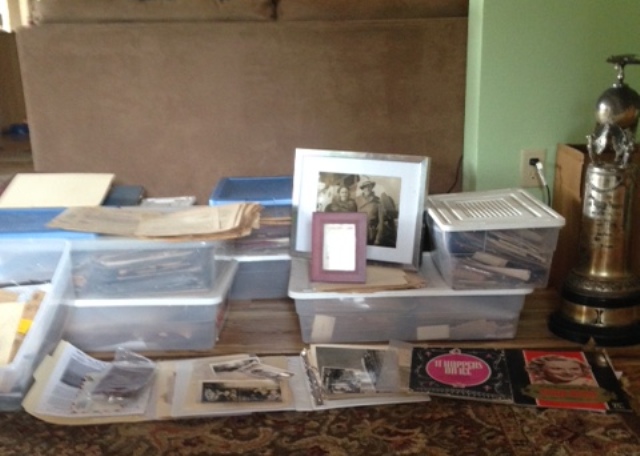
A portion of the archive behind River of January
A portion of the archive behind River of January
“A politician looks forward to the next election cycle, while a statesman looks forward to the next generation.” This admirable sentiment has been attributed to a number of speakers including Thomas Jefferson and the 19th Century Reverend James Freeman Clarke. But I heard the quote attached to President Gerald Ford. Whoever uttered these words has my full endorsement.
This morning began well. I awoke from a dream-filled sleep of taking roll, presenting lessons, and interacting with my students. They were all mixed up, hailing from a multitude of graduating classes, but still they were all my kids. I knew them well. In point of fact, most of my nights pass in a flowing narrative of teacher dreams, and I’ve gotten fairly used to this regular occurrence. The joke since retiring is, “I work so hard at night I should still be on the payroll.”
At any rate, after waking up, my mood remained jovial, still dialed in to happy. Tapping on my iPhone a picture appeared of a former student, now in a military uniform singing with three other soldiers. He and his brothers-in-arms were performing a rendition of the National Anthem at a public event. In another post a young lady, newly attending college revealed her fears about losing interest in reading for pleasure—a concern she happily resolved by opening a new book. Scrolling down the wall a bit, a wonderful family picture appeared of one of the kindest student’s I’ve had the pleasure to know. She posed before a Christmas tree with her three little boys, the youngest only two months old. Her husband’s caption clearly revealed his love for her and his boys. These posts are just, well, just so cool!
Not all teaching reminders and memories are as bright as those that I experienced this morning. Still, I wouldn’t have missed my time with these young people for a king’s ransom. Magic occurred in those classrooms; pure joy a guaranteed bi-product of the learning process.
I discovered over the years, that basic to the art of teaching and learning, is a faith in the future, a tangible something waiting ahead for every individual—a realized dream. All the hours of classroom preparation devoted to listening and thinking skills, observation, and problem-solving, were simply a training ground for young people to eventually find their place in the larger world.
While grappling with today’s incessant demands, it is far too easy to gloss over thoughts of the future. Caught up in the crowded moments that make up the present, many lose sight of the certainty of tomorrow. Teachers, however, are not permitted the luxury of settling in the moment. We must skip ahead of the “now,” planning and adjusting, then planning further. Intrinsic to our professional calling is the absolute assurance of a looming future, and we have to get our kids ready.
Perhaps stake holders could gain some perspective by casting aside trivial, momentary agendas—the noisy culture wars taking place across media battlegrounds, jousting in never ending finger pointing. Those distractions impede the progress available to our students, who are rapidly passing through the system. These kids are here today and gone tomorrow, quite literally.
When I assessed my students in class, I often envisioned them as adults, figuring out their individual niche. With that objective as my guide, I tried to design the best methods available to reach practical benchmarks. Even so, in the end, I had to let each class move on, a natural continuation forward to meet their futures, hopefully carrying my small contribution. An act of faith.
With our eyes vigilantly fixed on the countless tomorrows yet to come, would teachers be considered President Ford’s definition of statesmen? I’d like to think so.
Gail Chumbley is a retired educator and author of River of January. Also available on Kindle. Watch for “River of January: Figure Eight” this Fall.
The Silver Fleet in a Golden Age!
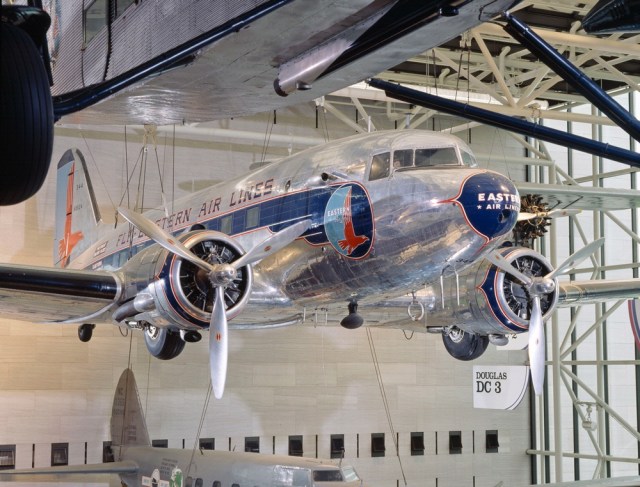
This photo is a DC3, part of Eastern Airlines “Great Silver Fleet” of passenger liners. The plane is on display in the Air and Space Museum at the Smithsonian. We had suspected that Chum had flown this aircraft, but weren’t quite certain. Finally, I had the chance to look over his logbooks and matched the tail number to this plane. Chum captained this particular aircraft in February, 1946, six months after the war ended. If you find yourself on the National Mall, you can duck into the Air and Space, where you’ll find this beauty still on exhibit.
It wasn’t yet 10:00am, but parking spaces were filling up fast. The library would open soon.
Be-bopping up the sidewalk, dressed completely in black, ear buds stuffed under his knitted cap, came the happiest Goth in high-tops. A young mother followed behind, a stack of books awkwardly balanced under one arm, and a wiggly baby in the other. The time was 9:58.
Older folks, hipsters, Lexus drivers, the tattooed poor–all queued together for their morning stop at the public library. How remarkably American.
When the doors finally did slide open, this society of seekers disappeared inside, striding with purpose to stake their domain. A no-nonsense aura filled the air as each card holder claimed their chair, booth, or computer to commence their business.
If ever there existed a reflection of perfect democracy it is America’s neighborhood library.
Visits make a lot sense. The facility is clean, climate controlled and the interior is well lit for reading and research.
More, public libraries offer a multitude of services for the community. The unemployed gets out of the house, and can search job openings on the internet, maybe check out a DVD or two at no cost. For the housing insecure, the interior offers sanctuary, a chance to safely close one’s eyes or relax and catch up on some reading. Mothers toting little ones make use of programs such as story-time, organized games and crafts, providing a diversion from hours at home.
My own elderly parents used to check out their book limit every two weeks. The librarian knew them well, suggested titles, and bagged up their books. They, too, waited in the parking lot. When those doors glided apart, canes in hand, they hobbled inside, joining the democratic wave claiming library privileges.
It was Benjamin Franklin who modeled this fixture in America’s beginnings. Franklin knew national longevity demanded literacy, and in that spirit he established the first lending library in Colonial Philadelphia. A true visionary, Dr. Franklin set the course for public good by founding these centers of learning. If he could see what I saw in that library parking lot, Franklin would rest a gratified patriot.
Next to public schools, a library card is the ultimate equalizer–from the richest to the poorest among us. No amount of status or money can elbow us out. My access is equal to yours.
To politicians fearful of books on the shelf, you strike a blow not only against the First Amendment, but to all the connecting tissue of American society. A misguided, self-righteous streak exposes a dark agenda which should give us all pause. Attacking libraries attacks us all.
Gail Chumbley is the author of two books, “River of January,” and “River of January: Figure Eight.” Both titles available on Kindle. Chumbley has also authored two stage plays, “Clay,” and “Wolf By The Ears.”
gailchumbley@gmail.com

Right now, in classrooms across America, and overseas, thousands 17-year-olds are preparing for the AP US History exam. They, and their instructors are obsessed with cause and effect, analyzing, and determining the impact of events on the course of America’s story. Moreover, they are crazed beyond their usual teen-angst, buried deep in prep books, on-line quizzes, and flashcards. As a recovering AP teacher, myself, I can admit that I was as nuts as my students, my thin lank hair shot upward from constant fussing.
My hair fell out too, embedding in combs and brushes, as I speculated on essay prompts, that one ringer multiple choice question, and wracking my brains for review strategies. The only significance the month of April held was driving intensity, drilling kids on historic dates; Lexington and Concord, the firing on Fort Sumter, the surrender at Appomattox Courthouse, President Wilson’s Declaration of War in 1917, the battle of Okinawa, MLK’s murder, and the Oklahoma City bombing, That was what April meant in April.
To quote John Lennon, “and now my life has changed, in oh so many ways.” Today April holds a whole new definition. My husband rises first in the morning, putters in the kitchen, fetches coffee, tends to the dog, and is back in bed, back to sleep. Big plans for my morning include writing this blog, making some calls related to book talks, a three mile walk through the Idaho mountains, then working on Figure Eight, the second installment of River of January. What a difference! Nowadays, getting manic and crazy is optional. My hair has grown back in, standing up only in the morning, and the only brush with AP US History occurs in my dreams; the responsibility passed on into other capable hands.
This month, at least here in the high country, has been especially beautiful. We have already enjoyed a few 70 plus degree days, and the green is returning to the flora. Our sweet deer neighbors are no longer a mangy grey, emerging from the trees wearing a warm honey coat. With a little snow still on the peaks, the sky an ultra blue, and the pines deep green and rugged, I think sometimes this must be Eden.
My years as a possessed, percolating history instructor provided a gift of passionate purpose that enriched me more than depleted. But, now . . . I wouldn’t trade this new phase of my life for all the historic dates in April.
Gail Chumbley is the author of River of January also available on Kindle.
It was the night of February 9, 1964, a Sunday, when my older brother and I had to make a crucial decision. We were both over stimulated, frantic, not one of our four feet remaining long on the floor. The house vibrated with our excitement and the weight of our impossible dilemma. For starters our birthday was the following day–the 10th, (though we’re not twins–he’s a year older). Still, that pre-birthday fuse had already ignited and by the 9th the two of us were banking off the walls.
The quandary we faced that Sunday night was whether to watch “Davy Crockett at the Alamo,” starring Fess Parker on Disney (The Alamo!), or the Beatles on Ed Sullivan. This was that first historic Beatles broadcast, live on American television, and we agonized between the two choices.
In 1964 there were no video players, no DVD players, no home computers, or dvr’s, in fact televisions were the size of Volkswagen’s and transmitted in glorious, flickering black and white. This difficult decision counted because there was no rewind, there were no do-overs. One gain meant one loss.
We liked Davy Crockett an awful lot. We had watched all the previous episodes, and Davy biting the dust in San Antonio was the much anticipated grand finale. But, oh, the Beatles! And the adoration was real, palpable, an injection of adrenaline without the needle. We worshiped at the warmth of our bedroom radios, perpetually tuned in to our local AM radio station. Reverent silence accompanied replays of “She Loves You,” and “I Want To Hold Your Hand.”
What could two grade schoolers, sick with anticipation do with such a weighty conundrum? It was 1964 and we had to choose.
Before the proliferation of electronic media, this little girl of the 1960’s viewed momentous events as they beamed across the screen. MLK’s elocution at the Lincoln Memorial, President Kennedy’s inaugural address, his assassination, and the escalating war in Southeast Asia–all experienced as reported at that moment.
In an earlier era, when Chum flew in his air race, and Helen danced in Rio at the Copacabana, there were no camcorders or Iphones. His signature landing and Helen’s near disastrous opening night grew silent as the applause subsided, then faded in time. Much like my brother and myself in 1964, they lived life forward, one opportunity at a time.
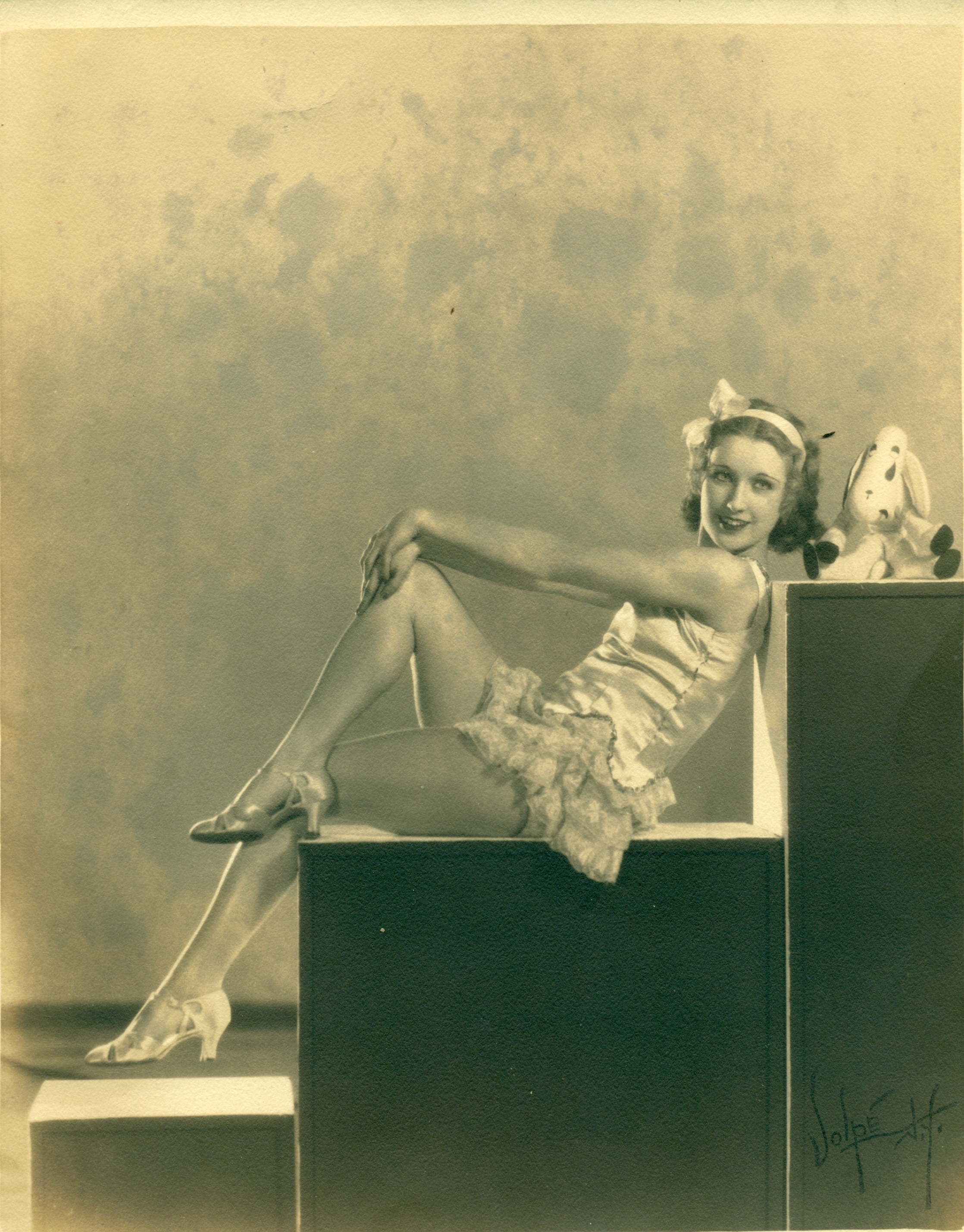
Silent photos and written records are all that remain verifying Chum’s aerial dash through darkened skies, and Helen’s energetic dance routines. They lived life forward, embracing events as they unfolded–experienced once, then gone. I would love to see footage of Chum’s Waco airplane lifting off at dusk, or watch Helen spring across the stage. But those wishes are pipe dreams, never to happen. No vintage film or recording, (except one I found by accident) exist in the historic record. The best I can do for myself, and for readers, is try to recreate the magic of the first time around in the pages of my River of January.
Oh, by the way, I’ve never seen “Davy Crockett at the Alamo.”
 Gail Chumbley is the author of the memoir, River of January. Also available on Kindle.

Rereading the original draft of my book, River of January, I reviewed the back story that propelled the book’s creation. An impossible crisis pushed me to write the work, but that narrative was cut out of the main manuscript due to length. But I still believe that the story behind the published story is important to share.
The Intensive Care Unit was the largest department on the third floor of the hospital. Reflecting back I never did figure out which direction the ward faced. Was it north toward Boise’s golden foothills or south over the blue turf of the football stadium? Someone needed to open the blinds.
The floor plan in the ward ovaled around like a carpeted arena, anchored by a nurses’ station in the infield. Three quarters of the broad ring had been segmented into tiny stalls–narrow spaces housing mechanical beds. My husband’s particular nook, squeezed into a curved corner, remained either open or sealed by simply sliding a glass door and a privacy curtain. Each morning I instinctively gauged his condition by the disposition of that entrance. Coding patients were afforded some semblance of privacy.
The sparse decor inside clearly signaled “no nonsense.” Two chairs flanked the entrance, with one small footstool. I once tried pulling out that stool to attempt a nap, but sleeping was reserved for the critical only; the nursing staff’s frenzied laps around his bed made sleep impossible.
Unconscious, bloated, with a swollen torso and bulging arms, my husband lingered on the crinkly mattress. Tubes protruded from nearly every square inch of his upper body, pumping in liquid meds and below, pumping out liquid waste material. Attached monitors loudly measured his heart and pulse rates, racketing in a relentless beeping. I was afraid to ask the meaning of the numbers blinking on the monitor, the din adding to my fatigue. Eventually, I inquired what a normal cardio reading looked like, and the answer wasn’t reassuring. I froze in that nondescript chair, dazed, almost hypnotized, willing his numbers to improve. Still indifferent, that monitor shifted erratically, frequently setting off an alarm drawing in medical reinforcements.
The cocktail of fluids pumped into his arms overnight had left him bloated to the point that his nose had flattened across his full, stretched cheeks. Fingers that had earlier held my hand from the stretcher now swelled to the size of cooked kielbasa—triggering thoughts of his wedding ring and his watch. My next random reflection recalled both pieces being handed to me the night before, and hopefully safe in my purse. It was a dreamy recollection.
The worst feature of his bare torso was the ragged, opened split from his naval to his groin, sealed by a stiff grey foam substance, and a thin membrane of clear film covering the diagonal wound. I was told his body was so contaminated in septic debris that the stitches closing the incision would have healed before the toxic substances beneath had cleansed. So this vacuum packed dressing over his wound kept the area draining and that tube, too had an attached little box, stowed under the bed that beeped and flashed.
He looked too rubbery and inflated to be real, but with the aid of artificial ventilation forcing his breath, I could clearly hear his intake of air.
Clinging to these subtle signs I began the litany of phone calls that had to be made to the rest of the family. His son, my parents, his siblings . . . I hated to upset them all, but knew these relatives had to be kept in the loop. Listening quietly on the phone, my 78-year-old father finally spoke; he and my mom would pack up and come down to Boise from Spokane. I wasn’t prepared for that offer, and asked them to give me a little time. I still wasn’t convinced my husband was going to live. At that moment I had no energy for company, all my focus concentrated on watching his vital signs.
Desperation is a funny emotion. The intensity of it burns on the inside, and we fool ourselves in believing the conjured up power somehow changes reality. Maybe the instinct to inflict mental suffering on ourselves is a primal manifestation of empathy for our loved ones. He bore the physical wounds, while mine lashed and scorched my insides. Over the course of his lengthy critical care, and his slow road to recovery, I had to do something with all the bile stuffed into my psyche. Out of this pain came the healing therapy of River of January and my own recovery through writing.
Gail Chumbley is the author of the memoir River of January

She is bent over a small Mercury outboard, hoisting the little motor in and out of the water. Her hair is wrapped in a kerchief, much as it had been when she wired mine sweepers at the Bremerton shipyards during the war. Ailene has a cigarette in her pressed lips, Humphrey Bogart style. Her black and white knit shirt has a small pocket on the left sleeve, over her bicep, and tucked inside is a pack of cigarettes–her brand, Kent. At the end of her day on the lake, my grandmother regularly downed a couple of high balls of Canadian Club, on the rocks.
My life with my grandmother has aided tremendously with the writing of River of January. and the sequel, The Figure Eight. She, like Helen and Chum held lifetime memberships in the “Greatest Generation,” so her attitudes, word choices, and music preferences shape my thinking while I write. Sadly she died in January, 1990, of lung cancer no less, taking a piece of me with her.
As for smoking and drinking, Chum appears as one of the few alum from that era who tended to nurse a beer, rather than chug, and chewed his cigar more than drawing a lung full. Helen, however, much like my grandmother, relished her bourbon every evening, garnished by a lit Chesterfield, and proceeded to enjoy a whale of a good evening.
Smoking and drinking blended into American culture in the 20th Century, unlike the prior or later era’s that demonized the practices. As I researched River, sifting through voluminous piles of documents, I encountered alcohol and tobacco ads placed next to those for baby formula and Ivory Soap, among other consumer goods. Liquor ads filled theater playbills on both sides of the Atlantic, nearly always featuring a shiny, sleek bottle bearing some stylish label. The message rang clear, drinking and smoking represented the height of sophistication, glamor, and sex appeal. Both my grandmother and Helen’s mementos, verified the truth that the party never stopped.
Casablanca, the celebrated 1942 film has struck me as the epitome of romantic culture in the late 30’s on into the war years. The gowns, the cosmopolitan style of understated and clipped dialog, and a perennial sense of righteous duty embraces that era. Americans lived hard and played hard, performing extraordinary feats while hungover at the least, or still intoxicated. These remarkable Americans handled drill presses, explosives, welding equipment, and other heavy industrial machinery, not to forget the operating end of an M1 rifle in a fox hole.
Out dancing, working a graveyard shift, partying, or fighting–all done with a cigarette resting, smoldering on virtuous, patriotic lips.
Gail Chumbley is the author of River of January, a memoir. Also available on Kindle.

 Gail Chumbley