What If?

th

My students loved to play “what if,” following lessons on monumental events in my history classes. For example; what if Washington had been captured–or worse–by the British Army during the Revolution? What if the Senate had ratified the “Treaty of Versailles” at the end of World War One? Would there have been a World War Two? Or what if FDR hadn’t contracted polio? Would a walking FDR been as affective? And so on. Following these bird walks into conjecture they would look to me for some definitive answer on alternate outcomes. But I wasn’t much help. Teaching what actually happened was tough enough for this history instructor,

Still, on the 150th anniversary of President Lincoln’s death, “what if’s” might have a place . . . might provide some insight into what might have been.

We all know the story. President Lincoln, in an especially festive mood, joined his wife at Ford’s Theater for a performance of “Our American Cousin.” The nightmare of Civil War had essentially been settled with General Lee’s surrender, a week before, at Appomattox Courthouse, Virginia. The Union had been preserved, and the President had much to celebrate. Plus as many “Lincolnistas” know, our 16th president loved the theater. Stage productions became a place where a troubled Lincoln became so absorbed in performances, others couldn’t catch his attention. (As a Lincoln-lover myself, I hope “Our American Cousin” so captivated the President that he never felt a thing in his final hours).

Wilkes Booth, the pea-brained zealot who murdered Lincoln had no idea he had also killed the South’s best defender against a vengeful Congress. Had this lunatic-actor paid attention to anything besides the insanity in his head, Booth would have recognized the President as a moderate–a leader who yearned for true national unity with “Charity for all, Malice toward none.”

So, what if Lincoln, this moderate, had survived, or better yet, never been harmed? What would post-bellum America have looked like with President Lincoln at the helm? Tough to judge, but a closer look at the political situation on April 14, 1865, could provide some direction.

First of all, America would have been spared the accession of Andrew Johnson to the presidency. Bum luck for the nation to say the least. Johnson had been selected as Lincoln’s running mate in 1864 because he was a Southerner from Tennessee  who had remained loyal to the Union. Essentially a small minded, white-trash bigot, Johnson despised both the rebellious planter-elite but also newly freed slaves. On the one hand, he wanted former masters to grovel at his feet for presidential pardons, and simultaneously opposed any law that provided aid to former slaves. Where most Americans had come to trust Lincoln in varying degrees, informed Southern leaders like Alexander Stephens, freed slaves, and reluctantly, the Republican leadership in Congress, Andrew Johnson in short order alienated the whole lot.

To be fair, Lincoln was in trouble himself, with his party by 1865. But he did have some momentum going his way after General Grant’s success in Virginia. And though he pocket-vetoed a bill backed by vindictive Radical Republicans in the House and Senate, Lincoln recognized he had some compromises ahead, to settle down his critics. But, of course Lincoln died at the hands of a Southerner, unleashing zealotry on all sides.

Had Lincoln lived, harsh avenging laws aimed at punishing the South, may have taken a lighter tone. The Military Reconstruction Act, that established a military occupation of the South, the 14th and 15th Amendments may have been less forceful and strident. As an astute politician, Lincoln certainly would have avoided the ordeal of impeachment endured by Johnson at the hands of the Radicals.

Yet, there is still  much to say about the legacy of Abraham Lincoln and the “what if’s” of history. He died on Good Friday, as had Jesus, a point that wasn’t lost on the American public in 1865. Lincoln died for the cause of freedom. He died for the virtuous notion that “All Men are Created Equal.” Lincoln was crucified for the goodness in all of us, his “Better Angels of our Nature.” However, without Lincoln’s martyrdom later legislation may not have found a place in Constitutional law. The Radicals ran roughshod over Andrew Johnson’s stubborn resistance, overriding presidential vetoes that resulted in the 14th Amendment and it’s definition of citizenship with equal protection, and the Fifteenth Amendment’s guarantee of male suffrage.

Unfortunately, these amendments and other less enduring pieces of legislation were often ignored by unrepentant rebels who exacted their own punishment on freedmen. Still the body of law existed and found enforcement one hundred years later. And this same body of law came into existence because Lincoln died on Good Friday, 1865.

So perhaps the “what if” game ought to be left alone. The course of events that actually transpired built an articulate foundation of freedom, premised on human rights, that could have been otherwise absent from our nation’s history. Much as President Garfield’s murder in 1881 brought about Civil Service Reform, and JFK’s murder brought about the Civil Rights Acts of 1964 and 1965, Mr. Lincoln’s death truly gave America a “New Birth of Freedom.”

Gail Chumbley is the author of River of January available at www.river-of-january.com

I Wouldn’t Change A Thing

th


One of my earliest recollections is kneeling on the cold basement floor in our Spokane house, lining up plastic Yankee infantry against an equal number of plastic Confederates. My brother would narrate the battle that was about to break loose, building up the suspense and drama that was destined to follow. But the art and beauty of the exercise was in the meticulous preparations, lines crafted and lovingly placed by my brother, an expression of his deep reverence for the past. And our fascination wasn’t limited to the basement, but rose upstairs to the rest of the house.
Our childhood dinners consisted of meals cooked for quantity, not quality, my mother bending over backward to please her crew of picky eaters. One brother only liked tomatoes, no lettuce. Another wouldn’t eat onions, and I wouldn’t eat potatoes, (I’ll get fat!). My mother should have tossed a loaf of white bread and peanut butter on the table and said to hell with us. But in truth, our dinners weren’t ever about the cuisine. That table was a place of interaction, debate and information. And we, my parents and three brothers talked about all sorts of topics; politics, swing music, classical music, FDR, and JFK. My mother knew every actor and singer ever filmed or recorded, so popular culture also had a rich review over those dry, bland hamburgers. My younger brothers typically listened and chewed, passively soaking up the banter as a normal dinner conversation.
My childhood memories are mainly a potpourri of All-American road trips. Slides of Montana’s Lewis and Clark Caverns, the Little Bighorn Battlefield, Yellowstone Park, and Wall Drug, flash on the screen of my memory. These destinations were of such value to my folks; that they packed up a station wagon, replaced later by a truck and camper, crammed in their four noisy kids, and made many magical history tours. I especially remember standing on Calhoun Hill near Hardin, Montana, wondering how Custer missed the massive Sioux and Cheyenne encampments. Constructed in 1805 on the Pacific coast, Fort Clatsop, Oregon sheltered the Lewis and Clark Expedition. Visiting the site permitted me to physically touch this stockaded sanctuary of another time.
Wonder became permanently hotwired into my temperament.
A degree in American History came as no surprise to anyone. As in medical families, military families, or law enforcement families I followed my childhood path, nurtured in a family that treasured our nation’s history. As though I had been handed Diogenes lamp, illuminating past events became my present-day pursuit. I had to share this passion with others. This journey of discovery was not a solitary enterprise. So earning a secondary teaching certificate set my future into motion, allowing a way to disseminate the fire I felt for the past.
What a ride! I am now at the other end of my teaching career, and can honestly say that I even loved the tough days. I made a living out of being myself, constantly reinforced with a sense of liberation, and vindication. Magic happened after that tardy bell rang. And I knew then as I know now, that there was no cooler place to work than in my classroom. Who needed Hogwarts, I had Lincoln! Service projects came to life behind that door, efforts such as the Veterans Oral History Project in conjunction with the Library of Congress—fund raising for the World War Two Memorial—donations to support local history museums, and the yearly spray of flowers for the Vietnam Memorial each Memorial weekend.
And most gratifying of all was the connection students made to an earlier America. They grew beyond what they could see, feel and touch. They became more than just themselves. I can recall an essay on Richard Nixon where a girl ruled his desire to win at all costs, cost Nixon his place in history. Another student who pointed out that after Washington’s humiliation at the 1754 Battle of Fort Necessity near present-day Pittsburgh, later foreshadowed the President’s crack down on the 1794 Whiskey Rebels in the same location. The student pointed out that Washington would not be made a fool twice in the same place forty years later. Brilliant, brilliant, brilliant.
Those voila moments transcend the past to a present relevance. How Washington used his few military strengths to undermine the military strengths of the British in the Revolution. How Ho Chi Minh used those same strengths to undermine the same American efforts in Vietnam. Likewise how British violation of American trade lead the US into the War of 1812. And later how German violation of American trade lead the US into World War One. The examples are vast and instructive, processed with the same reverence and regard as my brother and his toy soldiers.
Now, in retirement, an entire archive of historic primary sources have fallen into my lap. An original story has come my way detailing a young ambitious couple who challenged the Twentieth Century and left a notable trail. I have been handed a micro-history narrative, to add to the larger picture of America. What an unexpected gift for this history addict!
Writing River of January has fed my soul. It turns out that Chum, my main character, rubbed shoulders with aviators Howard Hughes, and Amelia Earhart, and even actress Kathryn Hepburn. And from his words and records, he barely took notice of their celebrity. Helen, the other main character, knew “Red Hot Mama,” Sophie Tucker, the dashing Frenchman Maurice Chevalier, and a very young Humphrey Bogart in his first film. Those people were her peers and she rolled with that crowd on an equal footing.
This story grips my heart. I’ve was groomed from my parents dinner table to craft such a book. This Saturday missive is perhaps my long overdue expression of gratitude. I am thankful for my hardwired passion for earlier times, and how vital a role the past eternally plays. I am grateful that I value ideals, ideas and vibrant lives over material possessions . . . I will never be poor. I thank the Lord my heart is enriched by remembering what came before.

Gail Chumbley is the author of the creative non-fiction work, River of January

AP History: Learning to Think


My computer was on the blink, and a friend came over to fix it. Sitting around the table, waiting for some curative program to download, we got to talking about all the world’s problems. Soon enough the discussion moved to kids and education. Frustrated, he had just left a math position at an alternative high school, while I had just retired after a long career in public schools. We found we agreed on many, many points. In particular he still felt exasperated by the constant refrain of, “I’ll never use this (Algebra) again. Why should I have to learn it?

Now believe me, there was a time that I would have joined the ranks of complainers, because math was not, and has never been my strong suit. Today however, I’ve changed my mind about this age old gripe, realizing it wasn’t about math at all. With new eyes I looked at my math-computer friend and answered, “You were simply trying to teach him how to think–how to use steps to problem solve.”

And that, in my humble opinion, is the essential purpose of educating young people in all disciplines.

I spent over half of my career, before retirement, teaching AP US History, and Sophomore Honors History. This accelerated teaching assignment changed my approach and my philosophy of education almost at once. Rather than listing a fountain of facts to little test takers, I instead became a trainer of thinkers.

Embracing a new sense of purpose, classroom instruction no longer meant listing chronologies of events and dates, (though these have a place in coursework) but on how to synthesis those facts into a broader, deeper, meaning. Students were required to sort through diverse pieces of information, measuring facts into a larger coherent idea, a political viewpoint, an economic trend, or an emerging social movement. Let me illustrate.

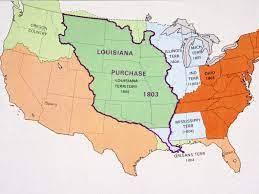
In a simple compare/contrast question the kids had to examine the expansionist policies of Presidents Thomas Jefferson, and James K. Polk. Jefferson doubled the size of America in 1803, while Polk stretched the nation to the Pacific coast by 1848.

With a line down the middle of a piece of paper, students listed every fact concerning both presidential policies. Next they examined those facts: Louisiana Purchase through a treaty with France . . . Lewis and Clark Expedition . . . War with Mexico . . . land acquisitions of the Mexican Cession . . . opening of California, the Oregon Territory, etc . . . With all that listing and sorting of facts, the students drew conclusions from the historic record.

If done properly learners were able to make some solid observations regarding Jefferson’s diplomacy in his negotiated French real estate deal, versus Polk’s use of military force with Mexico. In this exercise students also developed a competent writing style, finding a distinctive voice while crafting conclusions; a literary flair.

Eventually, kids would find both presidents wanted the same thing—western land. But they realized Jefferson’s approach was more peaceful, or more principled, and France was too powerful to provoke, while later President Polk cast aside negotiations, opting for war against a weaker foe, (or something like that).

The art of teaching critical thinking, and expository writing takes lots of discipline, dedication and tons of practice. And to be honest, some kids simply weren’t willing to take that risk, resistant to that advanced coursework. Some parents balked, believing that teachers shouldn’t ask so much of their young ones, and GPA’s were too valuable to imperil with such a tough class. I understood the hesitation; critical thinking takes a bit acquire.

And I, too, often worried and stewed over my students’ progress, often perceiving poor performance as a personal failure. I sometimes considered lowering my standards so everyone would get an “A,” and I would be their favorite teacher. 

There were many tears throughout the school year, a fair share of grumbling, and resentment to the rigor. Still, by June the majority of my students had persevered, becoming accomplished independent thinkers. They had bravely risked a relentless “boot camp” curriculum, and prevailed.

To drive home their achievements, I’d ask the kids to read some of their first essays from fall quarter, and compare the writing to more recent pieces. They were pretty proud of themselves, satisfied they could take on the world. From the beginning of the year to the end, these students never realized how accomplished they could, and eventually did become.

The point is that, we, as teachers, and also as parents, must expect more from our kids beyond showing up to class, and staying awake. Young people must stretch themselves to reach those aspirations. Frankly, if we expect nothing from our students, that is what we’ll get, nothing.

As one student later confessed, “I learned my education is my responsibility.”

Gail Chumbley is the author of River of January and River of January: Figure Eight. Both books available on Kindle. Chumbley has also authored the stage play, “Clay,” and “Wolf By The Ears.”

gailchumbley@gmail.com

Head and Heart

th


“Believing with you that religion is a matter which lies solely between man & his god, that he owes account to none other for his faith or his worship, that the legitimate powers of government reach actions only, and not opinions, I contemplate with sovereign reverence that act of the whole American people which declared that their legislature should make no law respecting an establishment of religion, or prohibiting the free exercise thereof, thus building a wall of separation between church and state.” Thomas Jefferson, January 1, 1802

President Jefferson did not mince his words. He drew a clear distinction between what is personal and sacred, and what remained secular and public. History had taught Jefferson that invoking the Almighty usually ended in bloody holy wars, rendering effective civil government unworkable. Of all the founders, President Jefferson grasped the importance of detaching faith from law.

If you follow my blog you already know I’m not a big fan of Jefferson. His actions, as well as his writings on race alone, provide a legacy of duplicitous thinking. For example the practice of beating young slaves daily was of no matter to the master of Monticello. But on the issue of natural rights, his Lockean take on the social contract– Jefferson’s views ring with authority.

This morning the Idaho Legislature killed a bill in committee that would “Add the Words,” (protecting the LGBT community) to the Human Rights Act in Idaho. Following three days of impassioned testimony from supporters and detractors, HB2 fell in a 13-4 vote. A significant amount of testimony came from various churches on both sides of the issue. The fearful tended toward the shrill, impassioned by their emotions. One fellow, in particular, ranted that his wife shouldn’t have to share a public bathroom with a transgender individual. He was so riled up the committee chair admonished him to control himself. His answer, “Well Praise the Lord.”

Now the Gay community in Idaho didn’t seek this fight. These folks have done their best get along in society. The term ‘closeted’ comes to mind here. The threat of eviction, job termination, and outright violence has demanded a covenant of silence. However, over time, the preponderance of social, economic, and political mistreatment has galvanized this movement for simple justice. These citizens have had enough. They ask for equal protection under the law in explicit, measurable language to deter the countless harms endured, that were so eloquently enumerated in this week’s testimony.

As a student of American History I understand this disconnect between contending factions. We are a nation founded under the tenants of the Enlightenment. Jefferson actually lifted John Locke’s language when he described ‘natural rights’ which he articulated as ‘certain unalienable rights.’ And at the same time America is one of the most religious nations in the world. Always has been. The trick is remembering to separate these two competing voices of law and of faith. Even my debate students were taught to keep God out of the tournaments. Once invoked, the open exchange of ideas is over. God has spoken.

For the longevity of the American Creed, our law makers must use their heads when shaping legislation. When kneeling to pray, worship with all of your  heart. I do.

But please leave those competing, conflicting, diverse, religious convictions at the door of the halls of law. Contending voices achieve nothing but a counter productive cacophony of discord.

And next time . . . Add the Words.

Gail Chumbley is a retired history teacher and the author of the nonfiction work, River of January

Hear Me For My Cause

th


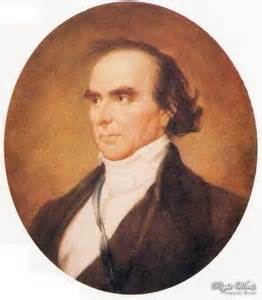
I wish to speak to-day, not as a Massachusetts man, nor as a Northern man, but as an American, and a member of the Senate of the United States. It is fortunate that there is a Senate of the United States; a body not yet moved from its propriety, not lost to a just sense of its own dignity and its own high responsibilities, and a body to which the country looks, with confidence, for wise, moderate, patriotic, and healing counsels. It is not to be denied that we live in the midst of strong agitations, and are surrounded by very considerable dangers to our institutions and our government. The imprisoned winds are let loose.

The above words were powerfully delivered by Senator Daniel Webster on the 7th of March, 1850. The occasion concerned the Fugitive Slave Act, a piece of explosive legislation forcing the return of runaway slaves to the South. Webster truly fell on a political sword to keep our nation whole. Notable in his grand eloquence was his specific reverence, and deference to the chamber Webster addressed, the august United States Senate.

I found myself quite uncomfortable viewing the State of the Union on Tuesday night. Each year, this duty is clearly defined for America’s Chief Executive. Article 2, Section 3 of the U.S. Constitution mandates that the President shall . . . give to Congress Information on the of the State of the Union . . . The word is “shall,” not “may.” So it was with personal distress, that we all witnessed such bad behavior from the right side of the aisle.

Beginning with the President’s first State of the Union message in 2009, and the appalling “you lie” heckler, conduct from the opposition has deteriorated. Senator Webster’s expressions of propriety and dignity have been replaced by frat boy behavior, apparently condoned by party leadership. Texting, chatting, applauding inappropriately is, well, just embarrassing to this student of America’s distinctive political legacy.

As a teacher, that blatant disruptive rudeness would have sent you to the hall. And speaking of classrooms, why should any student show respect for any institution when elected role models behave so badly, so publicly. I’ve seen you at 16, you’re the boneheads in the back row, working overtime to shift the attention from the focus of the lesson to your own self important, corrosive conduct. To validate the lowest kind of public behavior is the last example our students need in this divisive era. Demonstrate honorable behavior, show some restraint, if only for the great legislative leaders who served and sacrificed before you. Conduct yourselves with the dignity your office represents.

If, indeed, the majority party aspires to national leadership you must be a party worth following. Last night represented and celebrated the best thinking on the part of our nation’s Framers. This condoned pack mentality to publicly belittle the sitting President, does not serve your future aims.

As the first president, elected in 1860 from your emerging party once stated,  “All members of Congress swear their support to the whole Constitution—to this provision as much as to any other. “

In his 7th of March Speech, Webster explained to his listeners the urgency of his words. The Senator continued,

I speak to preserve the Union.
Hear me for my cause

Gail Chumbley is a retired History educator, and author of River of January. Available on Amazon

The Working End of Tomorrow

815528365b25248630140a659ad44ffa


“A politician looks forward to the next election cycle, while a statesman looks forward to the next generation.” This admirable sentiment has been attributed to a number of speakers including Thomas Jefferson and the 19th Century Reverend James Freeman Clarke. But I heard the quote attached to President Gerald Ford. Whoever uttered these words has my full endorsement.

This morning began well. I awoke from a dream-filled sleep of taking roll, presenting lessons, and interacting with my students. They were all mixed up, hailing from a multitude of graduating classes, but still they were all my kids. I knew them well. In point of fact, most of my nights pass in a flowing narrative of teacher dreams, and I’ve gotten fairly used to this regular occurrence. The joke since retiring is, “I work so hard at night I should still be on the payroll.”

At any rate, after waking up, my mood remained jovial, still dialed in to happy. Tapping on my iPhone a picture appeared of a former student, now in a military uniform singing with three other soldiers. He and his brothers-in-arms were performing a rendition of the National Anthem at a public event. In another post a young lady, newly attending college revealed her fears about losing interest in reading for pleasure—a concern she happily resolved by opening a new book. Scrolling down the wall a bit, a wonderful family picture appeared of one of the kindest student’s I’ve had the pleasure to know. She posed before a Christmas tree with her three little boys, the youngest only two months old. Her husband’s caption clearly revealed his love for her and his boys. These posts are just, well, just so cool!

Not all teaching reminders and memories are as bright as those that I experienced this morning. Still, I wouldn’t have missed my time with these young people for a king’s ransom. Magic occurred in those classrooms; pure joy a guaranteed bi-product of the learning process.

I discovered over the years, that basic to the art of teaching and learning, is a faith in the future, a tangible something waiting ahead for every individual—a realized dream. All the hours of classroom preparation devoted to listening and thinking skills, observation, and problem-solving, were simply a training ground for young people to eventually find their place in the larger world.

While grappling with today’s incessant demands, it is far too easy to gloss over thoughts of the future. Caught up in the crowded moments that make up the present, many lose sight of the certainty of tomorrow. Teachers, however, are not permitted the luxury of settling in the moment. We must skip ahead of the “now,” planning and adjusting, then planning further. Intrinsic to our professional calling is the absolute assurance of a looming future, and we have to get our kids ready.

Perhaps stake holders could gain some perspective by casting aside trivial, momentary agendas—the noisy culture wars taking place across media battlegrounds, jousting in never ending finger pointing. Those distractions impede the progress available to our students, who are rapidly passing through the system. These kids are here today and gone tomorrow, quite literally.

When I assessed my students in class, I often envisioned them as adults, figuring out their individual niche. With that objective as my guide, I tried to design the best methods available to reach practical benchmarks. Even so, in the end, I had to let each class move on, a natural continuation forward to meet their futures, hopefully carrying my small contribution. An act of faith.

With our eyes vigilantly fixed on the countless tomorrows yet to come, would teachers be considered President Ford’s definition of statesmen? I’d like to think so.

Gail Chumbley is a retired educator and author of River of January. Also available on Kindle. Watch for “River of January: Figure Eight” this Fall.

Blame Jefferson

imagesIn the film A More Perfect Union, James Madison, played by actor Craig Wasson asks Benjamin Franklin, (Fredd Wayne) if the Commonwealth of Pennsylvania had good government. Franklin barely takes a breath before replying, “Alas no. It is controlled by one faction or another.” That line–whether authentic or not, seems to resonate in the historic record.

The bloody struggle over slavery, followed later by the violence of the civil rights movement, provides the clearest examples of state governments hiding agendas behind the 10th Amendment, and it’s political progeny–the States’ Rights doctrine.

How did this misunderstanding begin? And why so quickly after the ratification of the tightly-scrutinized Constitution in 1787?  How did controversy emerge almost at once challenging the authority of the Federal Government in relation to the state?

The answer lies in the industrious pen of Virginia Planter, Thomas Jefferson.

Now, whether Mr. Jefferson intended to condemn the nation to perennial disarray is open to debate, as we only have his letters and other writings to peer into his 18th Century thoughts. But the fact that he was serving as ambassador to the French Court during the productive Philadelphia Constitutional Convention speaks volumes to his resentment for being left out of the monumental proceedings. The final document, had  Jefferson been in attendance, would have read much differently, if finished at all.

Once the American ambassador returned to America from his overseas post, he got busy undermining the newly established sovereignty of the Federal Government. As his philosophy took shape, Jefferson emerged the outspoken defender of states’ rights, heading an alliance of like-minded political leaders, forming America’s first opposition party: the Democratic Republicans. The essential philosophy of these primarily Southern Planters was to challenge the role of the new central government in their internal affairs. As a sectional ruling class these planters had no intention of taking orders from any entity beyond their local legislatures (which these men dominated). Sadly this states’ rights ethos born in the late 18th Century has surfaced for better than two centuries. Local power has protected itself at all costs, and this sophistry finds vilifying the Federal government useful.

In my home state the cry has once more raised in support of the 10th Amendment and States’ Rights. Why again have shrill voices denounced the role and power of the Federal Government? (and certainly the Feds are not perfect, red tape, outright mistakes, and conflicting policies have certainly made Washington look bad). Yet, there is a sense that the Government of the United States is inherently bad, and that local government just isn’t.

We as American citizens and residents of our states should question the motivation behind thickly spread political propaganda. Are local pubahs so in love with their political rhetoric they can’t work within the federal system? Is insider cronyism and privilege driving legislative decisions? Are those locally elected too limited in their understanding of the federal system, and too steeped in their political theories to develop sound state policies?

Here in Idaho, the itch to develop public lands for grazing, lumber or mining rights runs high. Rural folk, possessing scant understanding that public lands near their homes belongs to all of us and agitate for less restricted use. Unfortunately these demands for local control usually means gaining access to federally regulated resources on those public lands, with cattle, cross cutting, and excavating for various ores. The U.S. government, at the same time has the obligation to manage those resources, with an eye to safeguard the land for future generations.

Jeffersonian philosophy runs close to the surface out here, and rose loudly with the election of Barack Obama. Outraged disapproval grew clear when school districts around the state asked teachers not to broadcast President Obama’s message to students. Idaho’s kids didn’t need to hear from this mistake of a president! Even our Congressional delegation has to keep up the anti-government charade, and these politicians ran to serve in Washington DC–the highest level of government! Talk about compartmentalized thinking!

This divisive States’ Rights doctrine doesn’t work well for “We The People.” Local community and political leaders can too easily blur what they want, over what is best for the people of the state. Idaho has cut funding to Medicare and Medicaid, while losing one federal court challenge after another, paying thousands of dollars to stop Gay Marriage, Obamacare, and an unconstitutional Ag-Gag law to stifle farm animal abuse. That money could better be channeled to improving education, overcrowded prisons, and mental health support. Sometimes I think political leaders here forget what this state would lose in aid if not for the rest of America’s tax dollars. It’s like they’re glad to open the checks but feel no reciprocal responsibility to America.

The ideal of localized power favored by Jefferson’s theoretical reasoning just hasn’t worked out in reality, not even for him. Following the purchase of Louisiana in 1803, members of his own party lambasted the President for using powers the Chief Executive did not legally possess.

As for me? I’ll take the collective wisdom of the nationalistic framers of the Constitution, which included George Washington. Those 40 men understood what kind of union they intended to shape. Article IV of the the document couldn’t be much clearer;

This Constitution, and the Laws of the United States which shall be made in Pursuance thereof; and all Treaties made, or which shall be made, under the Authority of the United States, shall be the supreme Law of the Land; and the Judges in every State shall be bound thereby, any Thing in the Constitution or Laws of any State to the Contrary notwithstanding..


The New Old Oregon Trail

WesternUSMigrationRoutes

My intention in the classroom was to make my lessons in history pertinent to today. And it actually wasn’t that hard because geographic places don’t change location, just the cobwebs of time cloud the human story.

The high school where I worked sat on the north alternate of the Old Oregon Trail. In fact the highway down a couple blocks from the building was the asphalted remnant of the actual Trail. I would ask the kids to raise their feet still sitting in their desks, then stomp down, (bet the classroom below liked that) explaining they were sitting atop the Oregon Trail, the topic for the day.

I began this western migration unit by paying homage to those inhabitants of the west who never asked for conquest. Some effort was made in acknowledging the rich role played by native peoples who had once populated the far reaches of the American West. I described what a wagon contained, that most emigrants walked, and what supplies were necessary for success. We would talk hardships; accidents, disease and death, and speculated if our school might have ghosts like in the movie, Poltergeist.

I projected a map on the wall of other trails west—California, Mormon, Santa Fe, etc . . . I continued by explaining that the Panic of 1837, another of countless bank failures had forced people from their secure homes to face an unknown future, and pointed out western areas of settlement founded by those emigrants who survived the trek.

“Who in here was born in Idaho?” I would suddenly ask. A small number of hands would go up, and we’d chat about native Idahoans for a moment. “Out of state?” I followed up quickly after. This time the majority of students waved excitedly, anxious to tell of their own 21st Century emigration story. “Where is your family from? What brought you here?” And around the classroom we traveled with tales from Massachusetts, Florida, and Texas. “My dad lost his job when the economy crashed—or my mother was promoted. Lo and behold the ageless push and pull of human migration remarkably mirrored those of 1837.

“How did you travel to southern Idaho?” “I-15 to I-84,” says one kid. “I-84 over the Blue Mountains from Portland,” offers another. “Interstate 5, then over Donner Pass. It took us forever.” I refer back to the trails map of the old west, and we reexamine the freeways and highways of today. A moment of epiphany, as time is momentarily frozen.

That is the story of Southern Idaho. Populations come from all around our land-locked state, and “home” for most inhabitants does not mean Boise. And I have observed over the years that there are three major umbilical cords tying residents to places outside the region.

The first home, (and the group where I belong) lies up, in the Pacific Northwest. Somehow, over the years, the Oregon Trail shifted backward into reverse bringing many to the Gem State. Living and working in the Treasure Valley folks hail from Roseburg, Oregon, to Bellingham, Washington, and east to Spokane. (In that mix are sprinkled a few newcomers from Alaska as well.) Holiday flights for this group means PDX, SEA, GEG, but all taking off from BOI. This crowd conceptualizes home as a place with a chilly surf, dripping madrona trees, and plenty of slugs oozing through wet moss.

The next category is made up of Californians. This group has found a region and climate similar to what they left behind, sans the overpopulation and crime. These people are notoriously disliked in Idaho as opportunistic trespassers. Perceived as “carpetbaggers,” Californians are on record as selling their Orange County, or Marin County homes for bundles, then invading Idaho to reinvest. This crowd is vilified for running up the price of local real estate, leaving poor Idahoans further marginalized. I’m not so sure that these gloom and doom charges are valid, but as a historian I do find some humor in this generalization. I’ve read The Grapes of Wrath, and those destitute Okies received no warmer California welcome back  in the 1930’s.
Needless to say the glorious landscape of the Golden State is home for many transplanted Boiseans. I do recall the empty desks on Thanksgiving Wednesday for families driving over Donner Pass to see grandma in the warmer climes of the gentle southwest.

The last major group, makes up by far, the largest portion of Boiseans with roots outside the state. These are LDS residents who might have been born in Idaho, but more often than not, came into the world in Utah. This faction is formidable in size because the Wasatch Valley is the point of origin for their Mormon faith. For example even if a student was born in Boise, and graduated from high school along the Snake River basin, they will, more often than not, seek higher education in Utah. Those same young people usually marry and have their own children in the Beehive State, but may return to Idaho later to expand and raise their families. Home for the Mormon faithful is identical to those back in Utah. Life centers around their Ward, their Stake House, the Temple–all rich with historic traditions, rites, and the stress on community passed down from the earliest days of Deseret.

All of these visions of “home” remain powerful in my area. The idea of belonging stretches out of Boise in all directions, much like the wooden spokes on an old wagon wheel.

When a Boisean says “I’m going home,” it is very likely doesn’t mean a house in town.

Happy New Year

images

This is my second fall since retirement from the classroom, and though I am content with my decision to leave, I am feeling a little nostalgic.

From the portal of my computer I have watched teacher friends psych themselves up for their annual migration back to school. Pristine, empty classroom pics are gleefully posted online, arranged with care for the students to arrive. Posters are tacked up on the green cinder block walls, desks neatly arranged, and books organized on shelves. (By the way, the day before the kids came was the only time of the year that my room looked that orderly).

Believe me, the night before classes start feels electric. No “60 Minutes,” or “Sunday Night Football” can dampen the anticipation for the following morning–we are restless horses pushed into the gate. For the one and only time of the year, I actually would iron my clothes, set up the coffee on a timer, and review my plans for the morning. If I slept at all, it was only for a couple of crazy dream-filled hours. This was big stuff, life was starting over again, the possibilities seemed limitless.

I cannot speak for other departments, but mine was terrific. We all authentically liked and respected one another. And even better we laughed a lot. I think that is the part of starting up the new year that I miss the most. I weathered more seminars, speakers, and other “professional development” drudgery than I like to recall, but nothing ever restored my spirits quicker than a good laugh with my colleagues.

As I reminisce about school, I’m reminded that members of my department didn’t approach their teaching duties at all  the same way, but still effectively reached their students.

One colleague tried so hard to seem stern and exacting, really wanted to be seen as a disciplined guy. He demanded punctuality, meted out consequences according to the student handbook, but it was no use. The kids saw through his pretense, and many went out of their way to express their amusement with his charade. Kids waited for him at his door to harass him with shoulder bumps, jokes, razzing. They loved him and knew he felt likewise.

Another teacher was a completely different character. Meticulous to a fault, his classroom and teacher desk always in perfect order, his lesson plans exact and centered on the desktop. In the front of the room lay needed supplies, seating charts, sharpened pencils . . .the whole deal. And though it sounds like he ran a regimented show, his kids too, adored him, thriving in a well-planned and secure environment. Though they didn’t bounce him around, he wasn’t the type, the kids hollered greetings down the hall, waving excitedly to get his attention.

Then there was the guy next door. His style was just as different as any two sets of fingerprints. My neighbor maintained a strong boundary between himself and his students. His magic came through with his classroom instruction. Walking past his door revealed students busily delving into the subject matter through the medium of cardboard, music, duct tape and research for presentations. This teacher presided over a carefully managed laboratory, empowering students with his experiential style. Those kids learned self management.

I know that those outside education have a hard time understanding why we do it. We make so little, are so pushed around–by politicians, administrative dictates, and from parents rescuing their kids from one thing or another. In the end I believe we teach because we are determined optimists. We believe deeply in the rightness of our calling. We know that we can quietly do more good for our country than any other occupation. We model knowledge, compassion, fairness, enthusiasm, humor, and hope for the future.

We teach ourselves. Happy New Year.