How Many Presidents Are You?

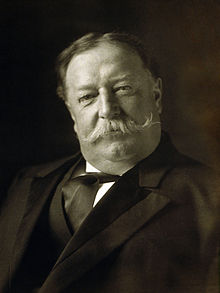
220px-William_Howard_Taft_1909

A life can be measured in a variety of ways. Most customary are calendar years, but except for birthdays, Driver’s Licenses, Voting, Social Security, and Medicare that approach is hardly an increment that shapes all people. Haphazard events, personal, national, or global can chisel changes as permanent, and indelible as any wrinkle or gray hair.

In River of January my central characters celebrated long lives filled with extraordinary adventures. Montgomery “Chum” Chumbley came of age in an uncertain world of rural isolation. His was a harsh environment of feast or famine, drought or flood, butchering livestock for food, and cruel, sweaty labor. His life offered narrow and limited opportunities–still trapped in the unchanging mold of the 19th Century.

William Howard Taft presided over the White House the year Chum was born. There were no niceties like electricity or indoor plumbing in his world. In fact the White House itself had barely installed electricity, running water, or a shelter for automobiles. Yet, by the time of Chum’s death in 2006, George W. Bush had ordered spying satellites and drones over Iraq, and NASA’s Space Shuttle program was headed into retirement. The last years of his life, Chum used a computer to keep up with his friends, and along with his television, he was current on world affairs.

Taft to Bush, seventeen presidents. He lived seventeen presidents. I’ve only lived through eleven. My parents thirteen so far, and my  own kids, five.

How old are you in president years?

You Will Use It Every Day

images

My computer was on the blink, and a friend came over to fix it. We are lucky to have such a friend because this guy is an IT guru as well as a great neighbor. While waiting for some data to load we got to talking about all the world’s problems, and the discussion moved to kids and education. He had just left a math position at an alternative high school, and I had just retired after a long career in the classroom. We found we agreed on many, many points.

In particular he became exasperated by the constant line, “I’ll never use this (Algebra) again. Why should I have to learn it? Now believe me, there was a time that I would have joined the complaining ranks, because math was not, and has never been my thing. Today however, I’ve changed my mind about the age old gripe, realizing it wasn’t about the subject matter. With new eyes I looked at my math-computer friend and replied, “You were simply trying to teach him how to think–how to problem solve.”

And that is the purpose of educating young people. To nurture cognitive growth, skills and insights in order to progress into purposeful adulthood. If we as teachers and parents don’t expect anything from our kids beyond showing up to class, staying awake, and complying with instructions, how can a young person stretch themselves and mature. If we expect nothing from our kids, that is what we’ll get. Nothing.

I spent half of my career, before retirement, teaching AP US History, and Sophomore Honors History. My teaching assignment began to change my philosophy of education almost at once. It no longer meant a chronology of facts, not that those aren’t vital. The facts were something like bricks, or lego, or whatever, and students were required to line those up and draw conclusions. Let me illustrate. In a simple compare/contrast question the kids had to examine the expansionist policies of Jefferson and James K. Polk.

First of all they pre-wrote every fact about both presidents in a T-square. Next they looked at those facts: Louisiana Purchase through a treaty with France, Lewis and Clark Expedition, War with Mexico, land acquisitions of the Mexican Cession, opening of California, etc . . . With all that unloading the kids should have been able to make some assumptions from the historic record. After some analysis they could make some observations regarding Jefferson’s diplomacy in his negotiated real estate deal, versus Polk’s blatant military aggression. Also they should have added a personal opinion in there somehow for analytic flair– both presidents wanted the same thing, land, but Jefferson’s approach was more peaceful or principled (or something like that).

Now that process takes discipline and tons of practice. And some kids simply wouldn’t push themselves, and their grades reflected that lack of  effort. Some parents balked, believing we teachers shouldn’t ask that much of their young ones. But most students truly grew after getting the hang of connecting these dots.

I was, in reality teaching the same thing as my friend, the Algebra teacher. We were both trying to show the kids how to process information and formulate conclusions. In a sense there are no “A’s” in this approach to education. How can one grade intellectual depth? Instead the aim was to foster a sense of self-agency and autonomy, skills useful in a democratic society and a purposeful life. If our young people can think, and teach their kids to think, the Republic is secure.

Meet The New Boss, Same As The Old Boss

images

There was a documentary years ago titled “Blood and Belonging.” It was an examination of primarily Eastern European ethnic groups, and the power of splinter nationalities. According to the film these groups, from Bosnians to Ukrainians hold their identities above any other affiliation–above any other allegiance. There was some discussion of group history, persecution, and twentieth century experiences from WWI to the present.

Now all of these people and their mini-revolutions appear virtuous on the surface, and members of these factions sound as justified as redneck Obama haters after their fourth beer. And there is no doubt that harms and war crimes have been committed against these same minorities. One only has to look to the Armenians during the First World War, or the Kurds under Saddam Hussein. In the recent past the Balkan Wars have provided the most harrowing of modern day slaughters, not to forget Rwanda or other such atrocities. Genocide carried out in the name of freedom fighting.

Here’s the problem. These numerous brush fires, these countless struggles are now prosecuted in a much smaller world. A world with heat-seeking missiles, smart bombs, and gulp . . . atomic weapons. Localized grievances can explode, literally, targeting disinterested victims who just happened to fly over a particular airspace. But to these subgroups on the ground, (because they are inherently good) violent ends more than justify the murderous means.

Somehow sectarian or religious splintering doesn’t appear too healthy for the rest of us. Suit wearing warlords, gang leaders, thugs, inflaming heavily armed followers simply puts the rest of us in more peril by insuring more violence.

President Wilson referred to such strong arm leadership as “criminal.” And I think I’m with Old Woodrow on this one.

Sharing Stories

Image


We spent Saturday and Sunday under a white tent at our local mountain golf course. The setting was an annual Art & Wine Festival and many attendees came by to talk about and purchase River of January.

Now this community, at first glance, seems sparse and hidden among the trees and peaks. But promote a fun public event, sell some food and drink, cooperative weather of blue alpine skies, and the crowds materialize. I recognized more people–more than I ever believed I knew here, swapping a story or two and catching up from last time we spoke. Some who passed by shared epic stories of their own about their family members or friends from the past. So many of us have memories that need only a spark to reignite.

It occurs to me that meaningful bonds are forged by shared experiences. One fellow who came by our display has become a real ally in promotion of “River.” We first met him when we moved up from the city in 2007 when we knew no one. My husband and I agreed to host a party for this gentleman at our new cabin, as he was running for public office. Now, between his earlier political campaign and my book, we are friends, we share a past.

Another passerby was a woman I worked with in education, and she was great. She stood under the tent and just beamed at me, repeating, “I’m so proud of you. So proud.” We indeed go way back, fighting the good fight for eradicating ignorance among the young. There is no need to explain, or promote, or sell her on anything, we know each other. She and I are on the same team.

Clearly a shared past binds people together, without the fuss of selling oneself. Sharing a previous experience gives us all a basis to reconnect in a real way. That is why I think family is great. That history is deep and transcends words or behaviors–the family unit goes way back. No explanations, no rationalizing, diapers have been changed here.

America was founded on a shared story. Colonies, Revolution, Constitution, Slavery, Civil War, etc. . . Actually in Lincoln’s first inaugural he appealed to Southerners to recall that shared history with the Union. “Mystic chords of memory,” were the words the new president selected. And perhaps that is the central issue that divides Americans as I write this blog. We struggle to find a common narrative of who we are. Which story is the common connection that brings the American public together? Is it next week on the Fourth? Does that holiday mean the same thing to each American? Or has a common past become too remote and too brittle to bind Americans together as a people?

My book “River” is an attempt to remember. The work is a celebration of Helen and Chum extraordinary story. Even my own family keeps a narrative of who we are which comes up regularly when we gather. I believe we are strengthened and revitalized as individuals when we find our place among others–with family, with friends, and as citizens.

It’s the common stories that gifts to us our perspective, proportion, and place.

Read River of January.


The Power of Wonder

Image

This morning we jumped out of bed at o-stupid thirty for a book talk in town. It was for a Rotary Club’s weekly sunrise breakfast gathering. The meeting quickly came to order, beginning with the Pledge, a brief prayer and a Rotary song. Then the agenda moved quickly to business.

These people seem to pursue all sorts of public service endeavors: literacy programs, charity work, and supporting community health projects. It was quite impressive to think that these folks could have stayed in bed an hour longer, and not involve themselves in public service, but they choose otherwise to make a difference.

When my slot came up in the program, my husband pressed the power button on the projector, and the show kicked off with alacrity. You see, I love not only talking about the book, River of January, but the process behind the writing, as well. On this occasion, I shared the story of Helen’s father writing and producing a comedy, “Where’s Your Wife,” at the “Punch and Judy” Theater in New York. Now I knew from family records that Floyd Thompson had indeed written and produced the work, but still felt a shot of adrenalin when an internet site for the now-defunct “Punch and Judy” verified the production’s debut in 1919. That one moment of outside validation was thrilling, and I couldn’t help but gush to this group my still bubbling reaction, and with many other, similar discoveries.

I suppose much of my willingness to tell the tale of River to anyone, anytime, anywhere, stems from the hours of piecing through materials, and squaring family mementos to well known events of the past. Wonder doesn’t begin to describe the sensation when family incidents fitted neatly into the historic record.

Another example was an extremely fragile clipping of Helen and her sister in a publicity photo for some Universal Studio musical. I have yet to locate the film, but in my hunt for the unknown movie, I accidentally found another glossy of Helen in another film! She really was there, in Hollywood around 1930, and made more film appearances than we initially believed.

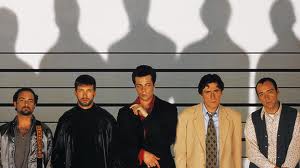
I can only describe my reaction to these revelations as that portrayed by Chazz Palmenteri in “The Usual Suspects.” If you have seen the film you may recall the ending when the police detective has his moment of epiphany. After questioning and releasing a primary suspect, the cop looks around his office casually, (at first) reading the names and labels of his room furnishings. Catching on, the policeman comprehends that the now-released suspect used those same names to weave a big pile of phony information. The look on the duped detective’s face reflects utter astonishment. The power of this clarity leaves him momentarily stunned, as if hit over the head by a sledge hammer–then running in pursuit.

Certainly my moments were more celebratory than the cop’s, but my astonishment, over and over, was just as powerful. There is nothing like unearthing and revealing a true story, with all the names and places falling into place, leaving a much clearer, and ultimately more fascinating story.

River of January is available at www.river-of-january.comAmazon.com   and Ebay 

A New April

Image

Right now, in classrooms across America, and overseas, thousands 17-year-olds are preparing for the AP US History exam. They, and their instructors are obsessed with cause and effect, analyzing, and determining the impact of events on the course of America’s story.  Moreover, they are crazed beyond their usual teen-angst, buried deep in prep books, on-line quizzes, and flashcards. As a recovering AP teacher, myself, I can admit that I was as nuts as my students, my thin lank hair shot upward from constant fussing.

My hair fell out too, embedding in combs and brushes, as I speculated on essay prompts, that one ringer multiple choice question, and wracking my brains for review strategies. The only significance the month of April held was driving intensity, drilling kids on historic dates; Lexington and Concord, the firing on Fort Sumter, the surrender at Appomattox Courthouse, President Wilson’s Declaration of War in 1917, the battle of Okinawa, MLK’s murder, and the Oklahoma City bombing, That was what April meant in April.

To quote John Lennon, “and now my life has changed, in oh so many ways.”  Today April holds a whole new definition. My husband rises first in the morning, putters in the kitchen, fetches coffee, tends to the dog, and is back in bed, back to sleep. Big plans for my morning include writing this blog, making some calls related to book talks, a three mile walk through the Idaho mountains, then working on Figure Eight, the second installment of River of January. What a difference!  Nowadays, getting manic and crazy is optional. My hair has grown back in, standing up only in the morning, and the only brush with AP US History occurs in my dreams; the responsibility passed on into other capable hands.

This month, at least here in the high country, has been especially beautiful. We have already enjoyed a few 70 plus degree days, and the green is returning to the flora. Our sweet deer neighbors are no longer a mangy grey, emerging from the trees wearing a warm honey coat. With a little snow still on the peaks, the sky an ultra blue, and the pines deep green and rugged, I think sometimes this must be Eden.

My years as a possessed, percolating history instructor provided a gift of passionate purpose that enriched me more than depleted.  But, now . . . I wouldn’t trade this new phase of my life for all the historic dates in April.

Gail Chumbley is the author of River of January also available on Kindle.

The Free Market of Ideas

Image


I belonged to the National Education Association for nearly the entire run of my teaching career. At first, when I started work in the classroom, two considerations drove my membership: potential lawsuits from parents, and because I came from a union household.

Born and raised in the second half of the twentieth century–I came of age during the halcyon days of blue collar workers across the United States. The burgeoning middle class had grown profoundly, sparked by the break-neck industrial production of World War Two. My father, in particular, was a steelworker, laboring over pots of bubbling aluminum alloys, a dangerous task, but made safe by mutual negotiations between labor and management. 

Teaching is a different kind of work, yet still requires extraordinary vigilance and management skills to ward off problems. The public can be brutal to teachers, especially when they believe their kids are mislead, or mistreated. For example, in my very first year in the classroom a parent called me out for teaching that the Electoral College actually elects the president. This father accused me of being a liar. Stunned, the episode taught me a more powerful lesson–simply because adults produce children, that does not guarantee worldly wisdom. So I joined the union for academic protection.

My only fear in the three-plus decades I worked with teenagers was censorship. That one day my principal would walk into my classroom and say, “Gail, you can’t talk about that.  Parents are complaining.” Smothering truth, glossing over unsavory events, or avoiding topics altogether is a sobering prospect. At best this renders schools no more than fast food joints, where you can “have it your way.” At worst censorship is an Orwellian nightmare where truth is subjugated for political reasons.

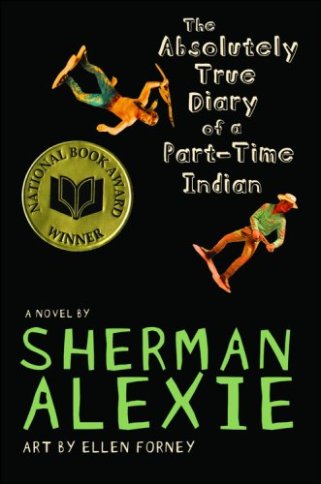
Last night the board of my old district voted to ban a book. In a split vote the board ruled for a full removal of the novel from a sophomore elective reading list. A grandmother did not like the “f-bomb” used in the manuscript, nor the sexual elements in the work.  She cried for the cameras. Now all of the Sophomores, (thousands of them) in the district are denied the benefit of learning this author’s thoughts and ideas, a chance to empathize with the writer’s struggle. Because a grandmother doesn’t like the content of the book. What power.

The kicker is that one can’t kill ideas. And valid ideas, well written and heartfelt, are enormously powerful too. (Maybe more powerful than a weeping grandmother.) No one individual should be able to make that decision for the vast numbers of students whose parents want their children well-rounded and compassionate.

The notion that a miniscule voice can leverage wide-reaching censorship chills me to my core. As a new writer, I must express my truth as I have experienced it. If a person, such as a grandmother doesn’t like my message, or any other writers, don’t read the book. Don’t let your kids read the book. There is more harm inflicted on society, when in the free market of ideas, the tough ones are oppressed.

Identity

ImagePBS ran a series called “Finding Your Roots.”  It was hosted by historian Dr. Robert Louis Gates and focused on celebrities and their genealogy.  Yo Yo Ma, Meryl Streep, Eva Longoria, etc . . . were featured on the program. The show quickly transitioned beyond the begats of family trees when Dr. Gates added revealing blood tests concerning ethnic group composition.  One guest, an African American professor, found that she was actually Caucasian, with little African makeup.  The woman looked visibly shaken as she absorbed the news, clearly at a loss to define herself in this new light.  It felt almost cruel to watch her grapple with the science.

Identity can be a slippery concept.  For thirty three years I was known as teacher.  Along with wife and mother, teacher constituted the third leg of my reality.  Family concerns and lesson plans ran equally through my thoughts.  I listened to my husband’s work problems, worried about  classwork my own two had to complete, and prepared for my own lectures.  That was my life and my identity.

Any travel, reading, or discussion usually had a connection to history.  I attended seminars at Gettysburg, along the Oregon Trail, and touring the grounds at Mt. Vernon, Virginia.  After years of historic pursuits, I retired and turned to writing.

The people I am meeting now, while promoting “River of January,” think that I am a writer.  A WRITER!  I am not settled yet with that new moniker, it feels pretentious to presume the role of author.  Does taking a story that fell into my lap, experimenting with sentences to tell the story, adding pictures and a cover make me a writer?  This new definition of Gail is going to take a while to break in, like new shoes, or a pair of jeans fresh out of the dryer.

Identity is a funny concept.  When exactly does it happen?  When does an occupation become an identity?  The professor featured on PBS taught African-American studies, considered herself black and then bloodwork betrayed her foundations of reality.  What has she done with that new information?  Who is she now?

And that reminds me–I hated Metaphysical Philosophy in college.  I wasn’t too thrilled with Voltaire, Montesquieu, or the rest of those dudes, either

 At our most essential level who are we as people?  If another looks to me as a writer, am I indeed what they see?  I can counter that notion with thousands of kids who passed through my classroom and see only teacher.