Great Things

My America is a place of perpetual greatness, not this dark moment of greed and misconduct. G.C.

Remarks at Gettysburg, 1889

“In great deeds something abides. On great fields something stays.

Forms change and pass; bodies disappear, but spirits linger, to

consecrate ground for the vision-place of souls. And reverent men and

women from afar, and generations that know us not and that we know

not of, heart-drawn to see where and by whom great things were

suffered and done for them, shall come to this deathless field to

ponder and dream; And lo! the shadow of a mighty presence shall

wrap them in its bosom, and the power of the vision pass into their

souls.”

Joshua Lawrence Chamberlain

Gail Chumbley is the author of the two-part memoir River Of January and River Of January: Figure Eight. Chumbley has authored three historical plays, Clay about Senator Henry Clay, Wolf By The Ears, an examination of American slavery, and Peer Review, where 47 meets presidents from the past. Additionally, Chumbley has co-authored Dancing On Air, a screenplay depicting the true adventures of an aviator and showgirl.

Peer Review Excerpt 2

This post comes from a full stage play titled Peer Review. It was composed during DJT’s first term and serves to illuminate the contrast to earlier presidencies.

SCENE TWO

The stage lightens in a mix of gold and white. A bed and two arm chairs made in the same colors sit center stage, The New York City skyline is projected on the back curtain. The sound of papparazzi and cameras snapping is heard offstage. An elevator dings. After a moment the President enters stage right with two men in suits wearing earpieces. The men walk around the area and bed. The President turns and speaks.

THE PRESIDENT
Call maintenance, that damn elevator shouldn’t stall between floors. That was a good ten minutes, dammit. I’m gone a few weeks and the building goes to hell. There’s nothing in here. Get out.

The men exit. The President removes his jacket, and walks to the dresser. He peers down in a drawer, then finds what he is looking for. A file of yellow and red.

Except this little gem and it’s really something.

He lies on the bed reading and chuckles happily. His cell phone plays “Hail To The Chief.” The President answers.

Where are you? I just got here, great crowd outside. Yeah, I’ll get it done. Hey, I said I’d do it. What do you mean you don’t trust me? Give me a break, That whole Stormy Daniels garbage is . . . No. Don’t hang up. We’ll sit down with the lawyers and renegotiate the whole deal. But then you will join me in DC, and the boy, too. This staying in New York is no good, makes me look bad to the country. Yeah, yeah, I’ll get Reince on it today. Hey, I said I will.

He tosses the phone on the bed and resumes reading.
Huh. Erdogan didn’t tell me this. How does the CIA find this crap out? I need some Putin-Ukraine stuff. Who woul’da thought I’d read something?

He chuckles, and soon grows sleepy. The President drops the open file and closes his eyes. After a moment a spot rises on a figure entering the stage.

He is tall, wearing a 18th Century blue and buff military uniform, knee breeches, white stockings and carries a sheathed saber. His white hair is combed back, and tied with a black ribbon at the nape of his neck. Standing near the bed, he speaks slowly with elegance.

THE GENERAL
I am very fond of New York City. During the War for Independence I maintained camp nearby for much of the duration.

The President sits upright, and reaches for a pillow to shield himself. He squeaks.

THE PRESIDENT

Shit!

THE GENERAL
Congress had directed me to burn Manhattan ahead of invading British Regulars. You see, Congress wished to leave nothing of use for the Redcoats. Destroying the city left me conflicted, and alas, that order I could not obey. As fate would have it, a fire did erupt in the chaos, demolishing vast tracts of the city. A very regrettable situation.

The General poses regally, glancing at the president. He continues.

Sometime later I returned to serve as President here in New York.

He gestures with his saber to the skyline.

Concerning the demands made upon me as I served those first critical years, none resolved easily, nor without great cost. But our fledgling nation teetered on dissolution and we, as the first government under new Constitution, had to stand resolute.

The President lowers his pillow to speak in a forced, but faltering menacing tone.

THE PRESIDENT
I don’t know who you are, or how you got in here, but this is my room, and my 30,000 square foot apartment, in my extremely valuable building. So clear out!

The General appears not to hear, serenely seating himself in an arm chair. He levels his gaze at The President.

THE GENERAL
My colleague said you were tiresome, however, I am staying.

THE PRESIDENT
Who said that? What colleague . . .oh, jeez, him. Well I’m important NOW. So you and that other fossil can beat it back to central casting.

THE GENERAL (Untroubled)

I, too struggled with grandiosity. In my youth I pined for the advantages of wealth and status that surrounded me. Stately mansions dotted the inlets and vast river systems of Tidewater Virginia, the place of my birth. I longed for a life of importance, gentility, and of wealth. I would be an English gentleman residing in elegance upon his landed estate.

THE PRESIDENT
The English are wusses, and you’ve blah blah’d enough. I’m in New York to get away from all that history garbage. That old dump where I have to stay is filled with that crap. So goodbye Rambo.

The General waits, then rises and un-sheaths his blade. The President again grasps his pillow. The General resumes his story.

THE GENERAL
Born the first son of a second family, I fell heir to nothing but my father’s name. Augustine and Lawrence, my older brothers, received all the honors of a gentleman’s life. I loved them, idolized them, especially dear Lawrence, and begrudged him nothing of his inheritance. However, I cannot deny the depth of my anguish as a second class Virginian.

THE PRESIDENT (To himself)

When my Father died I stuck it to my brother. He couldn’t handle money, the guy was a drunk.

THE GENERAL
Another temptation concerned a young matron, the wife of my best friend. Sally was her name, and I loved her very much. Our correspondence, especially while I served in the war against the French was perhaps too forward, and flirtatious. I longed for Sally, but she was not, nor ever could be mine.

The General sighs, deep in thought.

THE PRESIDENT
I never let any marriage license stop me. Mine or any available broad. That’s all they’re good for, arm candy and a roll.

THE GENERAL
We are all too aware of your misogyny, and absence of propriety. Even Mr. Kennedy said he attempted more discretion in his dalliances. I’m reminded of a letter from the Marquis de Lafayette informing me of his wife’s passion for me. Amused, I replied youthful women are inclined to youthful men, not those of graying hair. And still it is so.

The president sits up with his pillow on his lap.

THE PRESIDENT
Younger women love me. They really do. I’ve dated some beauties, too. You should see some of the pageant contestants I’ve bagged-and Playboy bunnies, too.

From the wing a soldier in Continental uniform approaches the General handing him a dispatch. The General reads the parchment, and marks it with a quill pen. The soldier leaves.

THE GENERAL
Sir, I do not believe ‘love’ is quite the term for what you’re describing. unbridled debauchery perhaps is more precise?

THE PRESIDENT

What the hell? How did he . . .?

THE GENERAL
It is the disciplined man who owns his passions. Decorum is what separates us from animals, wouldn’t you agree?

The president sits mouth agape at the soldier. The General continues.

THE GENERAL
Elegant balls were quite popular venues for young people to meet. I don’t mind saying that I may have been one of the finer dancers in the Tidewater. Those evenings were grand; dinners, music, and refinement in abundance. Oh, how I yearned to rise in social rank.

THE PRESIDENT
I hear ya. Those Manhattan snobs, that artsy-fartsy Met crowd, boxed me out. Treat my kids that way, too. Jerks.

THE GENERAL
Envy did little to further my integrity as a gentleman. In the war against the French the royal governor entrusted me to offer land patents to volunteers willing to join the Virginia militia. Over the course of the conflict I made many of those acres my own. You see land was the mark of a gentleman, but I was an imposter. That villainy has troubled me for an eternity. I pray my service to my nation has polished away some of the tarnish.

THE PRESIDENT
Don’t sweat it, business is business. Regulations are a pain in the ass. If you have an opening take it. Never hesitate. I’d a done the same thing.

The soldier-courier again appears on stage carrying more documents and a feather pen. The general agains peruses the contents, and marks the paper. The president raises his hands in a questioning gesture. The courier disappears.

THE PRESIDENT
There is a squadron of Secret Service out in that living room! How does that guy just walk in here?

THE GENERAL
Colonel Hamilton? He is a very clever young man. A great mind, that one. (Pauses) I disagree with your assessment of regulations. Had it not been for the rigor used to organize the army, particularly at Valley Forge, America would not exist. Good order was the key to eventual victory.

THE PRESIDENT
But you were the boss, right? You made the rules. Everyone I brought in has stabbed me in the back, didn’t follow my rules. Bunch of lowlife. Tillerson, Bolton, Mulvaney.

THE GENERAL
Perhaps those staff members possessed standards and realized you were not a leader worth following.

The president stands up outraged, the general stares him back down.

THE GENERAL
Those of my staff earned positions through merit. Tallmadge, Knox, and Hamilton, here, were gentlemen I trusted with my life. The hangers-on, the men who conspired for my command eventually revealed their ineptitude, and villainy. Those characters fell by the wayside.

THE PRESIDENT
A lot of people don’t realize this, but I don’t know American history. How did you win that war?

THE GENERAL
I never confronted the Regulars unless I had an advantage, like at Trenton, though I detested avoiding any fight. (Pauses) I kept the Continental Army together, and out of British hands. I knew the King could not fight forever. And I knew history was watching our every move, and we owed the future to never give up.

THE PRESIDENT
What the hell does that even mean? History watching! I could care less what happened before me, or when I go out.

THE GENERAL
And I am sorry for that, as will be your grandchildren. The family name is disgraced for all time. The rest of us, those whom I am representing, all understand this. Each chief executive found inspiration in taking part in something greater than ourselves. This, (he gestures toward the window) the United States of America has never been attempted before, a people’s government. The world is housed with predictable despots stealing from, and brutalizing the powerless.

THE PRESIDENT
Oh, come on, give me a break, everybody cheats and steals. Especially here in America.

THE GENERAL
Indeed. But we try to be better. We all have tried. President Chester Arthur felt you ought to know that he, too, served the monied interest. But once president, Mr. Arthur left the grift behind. Like the rest of us he found humility understanding all citizens, for all time would weigh his executive stewardship. He treasured America more than money and power.

The president slumps into a chair. He jabs a finger at the general, changes his mind and lowers his hand.

THE PRESIDENT
I didn’t take a salary. My people liked that, makes me look like a good guy.

THE GENERAL
All the while, behind the scenes, you pilfer on a grand scale. (The General glares) The Continental Army did not suffer want and cold at Valley Forge and Morristown for you to overcharge the federal government for lodging Secret Service at your resorts. Nor did they starve so guests at your Washington hotel could be egregiously overcharged.

The general continues to glare for a long moment and slowly cools down.

THE GENERAL
After Yorktown, and the surrender of Lord Cornwallis, hostilities slowly began to quiet. Royal ships, loaded with Redcoats set sail for England and our land stood liberated. Many difficulties remained such as discharging soldiers, and securing their long overdue pay for services nobly rendered.

The general again looks out at the New York skyline.

THE GENERAL
Word arrived that officers, also unpaid, had set into motion a plot to overthrow the slow-moving Congress and make me king. The ring leaders, encamped north of here in Newburg, awaited my arrival to complete the conspiracy.

THE PRESIDENT

King, huh? I like the sound of that.

THE GENERAL
As I had hoped the plot came to nothing, and that is when I resigned my commission and returned home to Mount Vernon.

THE PRESIDENT
Resigned? Went home! What is wrong with you? You had the whole deal on a plate!

THE GENERAL
Why? Because I am an American. We have no need of kings here, and I longed for home, longed for my wife and family. I’d been away for seven years and I yearned for my farm.

THE PRESIDENT
You could’a had the whole country at your feet and you went home to your farm? Gave up power for cowpies and dirt?

THE GENERAL
“’Tis not in mortals to command success. But we’ll do more, Sempronius, we’ll deserve it. When vice prevails, and impious men bear sway, the post of honor is a private station.”

The general sits down on the edge of the bed. The president, in his bed again clutches his pillow closer.

THE GENERAL
It’s a quote from my favorite stage play, Addison’s “Cato.” As Julius Caesar amassed growing power in the Roman empire, Cato the Younger, a lover of Republican virtue, stood in opposition to Caesar’s tyrannical grasp. When Cato could not accept life under extravagance and corruption he took his own life rather than submit to depravity.

The president stifles a yawn, shakes his head to clear it then speaks.

THE PRESIDENT

I liked the musical, “Cats.”

THE GENERAL
This work had a deep impact upon me and upon my generation. Patrick Henry’s “Give me liberty” quote reflects lines from the play, as does poor Nathan Hale’s last words regretting to have “only one life to give for his country.” During our miserable winter camp at Valley Forge I saw to it the play was performed for the men. We too, were confronting an extravagant and tyrannical empire.

The general rises and returns to the window.

THE GENERAL
And that is why I returned home. My duty had been fulfilled, and my services were no longer required.

The courier returns, this time in civilian garb, the general removes his hat, pistol, and sword. He examines the paperwork, scribbles, and the courier departs. The president stands, holding his pillow, watching the courier, then shrugs. He moves back to his bed.

THE PRESIDENT
Now just hold on. You, I mean, you’re the guy who became president, right? The first one?

THE GENERAL

Yes.

THE PRESIDENT
You should’a just grabbed power in the first place. People wouldn’t have cared. I can say or do anything, and my people love me for it. They’re a sad bunch of losers, really.

THE GENERAL
America did not, and does not now, need a king. I only returned to the public arena because my country called. An uprising in Western Massachusetts pitted war veterans against the state legislature in Boston. Vessels exchanged gunfire on rivers over navigation rights-Americans were battling Americans, again.

The general approaches the president who places his pillow over his face.

THE GENERAL
In Philadelphia a convention was set by Mr. Madison, and Colonel Hamilton to strengthen the national government. Though I was weary, short of funds, and reluctant to leave Mount Vernon, I eventually consented to join the assemblage.

The president lowers his pillow and speaks.

THE PRESIDENT

That sounds boring. But farming sounds boring, too.

THE GENERAL
America’s future rested upon what you term as boring. (He pauses) Though stifling hot that Philadelphia summer, with tempers running high, all members resolved to see the convention through. Unrest across this new country lent a sense of urgency, and we could not fail.

The president appears to not listen, fusses with his hair, staring at the ceiling.

THE GENERAL
Listen when I am speaking. Incorrigible halfwit. Leadership requires listening.

THE PRESIDENT
I’m listening. I give myself an A+ on listening. By the way, do you put powder or something on your hair? I worry mine doesn’t look natural in some light.

THE GENERAL
Addle pated oaf! Colonel Roosevelt cautioned me of your conceit. But I will not depart until I have spoken my piece. The Constitutional Convention labored from May, 1787 until September, and in all those sessions only one day concerned the role of the president, Article Two to be precise. And the reason so little time was allocated to this subject? Because I was, whether I wished it or not, the model for the chief executive.

THE PRESIDENT

One day?

THE GENERAL

One day.

The general pauses, then steps over to the bed. He leans over the intimidated president.

Delegates determined the age requirement, the rule for candidates being native born, with four year terms.

THE PRESIDENT

One day, huh. How come so short?

THE GENERAL
Please listen the first time! Because the office was designed for me. I gave up rank, and returned to civilian life, I could be trusted with power. My successor, later wrote, “May none but Honest and Wise Men ever rule under This Roof.” Since that blessing, with one exception, men of political restraint have served as Commander In Chief. Until you. A greedy, self-deluded dunce. Your infamy will never be forgotten, becoming instead a catchphrase for colossal incompetence.

The general rises, adjusts his hat, retrieves his gun and sword, then turns to the president.

THE GENERAL

When my dearest Martha died after my own passing, she was interred beside me, not in a New Jersey sporting green for a tax deduction.

As the general steps offstage an elevator ding is heard again, then a knock on the president’s door. A voice calls out.

SECRECT SERVICEMAN

The elevator issue is fixed, sir. We can go now.

The president adjusts his hair, and straightens his tie. He rushes off stage. A moment later a spotlight catches him hurrying back, picking up the security file, and placing it under his jacket, and again scurries offstage.

The stage goes dark.

END OF SCENE

Gail Chumbley is the author of the two part memoir River of January, and River of January: Figure Eight. She has also authored three stage plays, Clay, Wolf By The Ears, and Peer Review. Chumbley is the co-writer of Dancing On Air a screenplay based on her River books.

If interested in developing any of these pieces reach out at chumbleg.blog
The Business of America

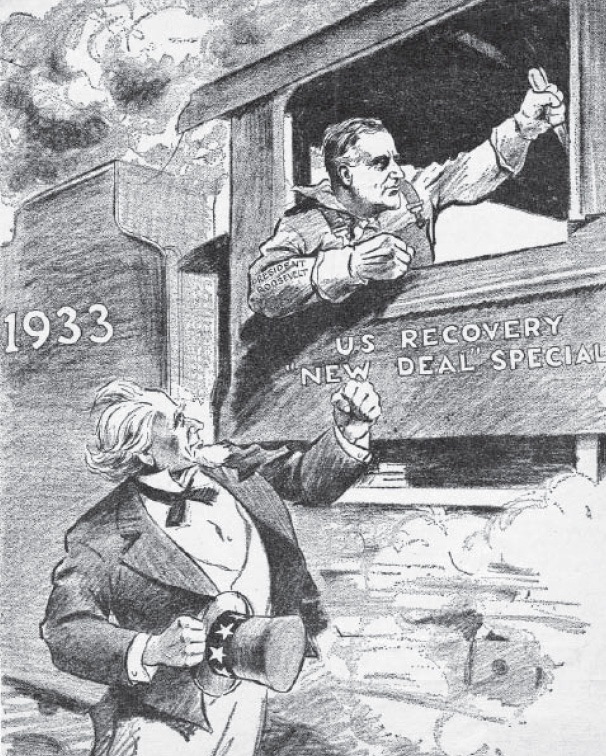
President Calvin Coolidge once famously proclaimed “The business of America is business,” which meant his administration would pursue a “hands off” approach toward the business sector over the interests of the American people. In office from 1923 to 1929 President Coolidge kept to his pro-business principles that, in turn charged the roar into the Roaring Twenties.

By the end of October 1929, six months into the new Hoover Administration, Coolidge’s lax policies came due dropping the Dow Jones Industrial into free fall. This financial catastrophe capped off a decade of easy money made through frenzied and unregulated trades, not only by wealthy holders, but by regular folks taking stock tips from friends or newspapers.

A large portion of these everyday newbies purchased shares “on-margin,” meaning 10% down with 90% on credit, usually borrowed from private banks. The only collateral required was the promise of certain and endless gains. And why not? The market had grown at an astounding rate from $27 billion in the mid-1920’s to $87 billion by 1929. 

Coolidge’s free-market detachment produced a carnival atmosphere with everyday people hot in the market game.

By 1932 the party was over. The now suffering nation had had enough of hands off and predatory money practices. Massive unemployment, thousands of bank failures, hunger, homelessness, and a Dust Bowl in the heartland brought America to its knees, and Democrat Franklin Delano Roosevelt to the White House.

Seeing nothing beneficial for the American people in catering only to the rich, FDR brought an end to GOP policies. His administration instead offered a New Deal for economic revival. Through a massive legislative agenda Roosevelt and Congress intended to not only meet the emergency, but restore economic growth, and eliminate the conduct that led to the Depression in the first place.

One of the most popular New Deal relief programs was the Civilian Conservation Corps. Unemployed young men were put to work throughout the nation building trails and campsites in forests like the Great Smokey Mountain National Park, and urban building projects like the River Walk in San Antonio, Texas. (Consider that idle young men in Germany at the same time donned Black and Brown Shirts and broke heads for Hitler.)

Addressing the chaotic banking system FDR proposed systematic changes. Some 6000 banks had failed between 1930 and 1933 before the new president took office. Panicked depositors waited in long lines to demand their money until banks simply ran out of cash and locked their doors. Confidence collapsed. 

In his first days Mr Roosevelt announced a Bank Holiday where banks closed for four days to stop panic withdrawals. Auditors then inspected banking institutions across the country and surprisingly many banks were deemed solvent and reopened. Not finished with banking, FDR also took to the radio to explain the banking system, and with his cheerful confidence encouraged the public to take cash out of their mattresses, coffee cans, and backyard holes and return deposits to local banks. Thousands did just that. 

In order to prevent another such economic catastrophe the Glass-Steagall Act (1933), was passed by Congress to protect the public from high risk banking practices. One piece of the law was the Federal Deposit Insurance Corporation, FDIC, which is still in effect today. Depositors had the backing of the federal government to protect their funds from any loss. Moreover the Roosevelt Administration was determined to keep people in their homes, many of whom were facing foreclosure. The Home Owners Refinancing Act provided federal assistance to those who had paid their mortgages in good faith, but now faced eviction. 

In the first hundred days of Roosevelt’s New Deal 77 laws in total were passed by Congress, all aimed at restoring the health of the country. To the majority of Americans it felt like this president truly cared about their wellbeing. Roosevelt’s ascendency to the White House, next to Abraham Lincoln’s certainly stands as the most consequential in America’s continuing experiment in self government.

On a side note Franklin Roosevelt suffered from polio and could not walk, though he believed he’d walk again. FDR never gave up. And the truth of the matter is it took a man in a wheelchair to put the United States back on its feet. Franklin Roosevelt, unlike his predecessors knew that the business of America is “We The People.”

Gail Chumbley is a history educator, author, and playwright. Her work includes River of January, River of January: Figure Eight, both available on Kindle, plays Clay on the life of Senator Henry Clay, Wolf By The Ears a study of American slavery, and Peer Review where Donald Trump meets four past presidents.

If you like, please share this on social media.

The People Who Own It

And that — that brings me to the second mode of civil disobedience. There’s a time when the operation of the machine becomes so odious, makes you so sick at heart that you can’t take part! You can’t even passively take part! And you’ve got to put your bodies upon the gears and upon the wheels, upon the levers, upon all the apparatus — and you’ve got to make it stop! And you’ve got to indicate to the people who run it, to the people who own it — that unless you’re free the machine will be prevented from working at all!!

Mario Savio, December 2, 1964

The GOP no longer pretends to care about the American people. Icons of wealth and raw power, along with compliant political figures parade in and out of Mar-a-Lago without a self-conscious blush. Former Trump critics now kiss his ring out of fear of disfavor and losing access to power. Many in the press are fearful of Trump as well, evident in the resignation of Ann Tenaes from the Washington Post over the paper’s censoring a critical Bezos cartoon, while NBC has threatened to jettison its progressive sister MSNBC.

At least smiling Ronald Reagan tried to demonstrate some kind of fidelity to American principles as his administration catered to the same rich and powerful.

This incoming crowd isn’t even trying to fake concern.

While America drowns in floods and burns in fire, both symptoms of advanced climate change, Mr. Musk has purchased access to Trump so Tesla can bring in cheaper, skilled technicians for his business operations. Not alone in his subservience, Mr. Zuckerberg too, along with Mr. Bezos, and Sam Altman, have made significant donations to Trump’s campaign while the world drowns and burns. These 21st Century tycoons intend to purchase the vain new president’s favor and clear the way for less public responsibility, and garner even more profits.

You see, in MAGA-world Trump is never wrong. Wrong doesn’t exist. The title “felon” carries no shame among supporters, nor rape, fraud, insurrection, or theft of sensitive US intelligence. Trump’s malfeasance is more a badge of honor with his supporters than a deal breaker.

American propriety and concern for the United States are sentiments of another, past era. Statesmanship, decency, and integrity are long gone. In the last days of the 2024 campaign Donald Trump mimed oral sex with his microphone, and no one at the rally appeared offended, not even so-called Christians. In any reality would President Carter had done such a thing? Would President Bush? Moreover, MAGA supporters self-righteously wrap themselves in neo-fascist certainty, nurtured by a steady diet of propaganda and misinformation. There is no longer a bottom.

Overseas enemies are delighted. Putin and Xi have waited a lifetime to overrun the United States. That simple fact should give us all pause on the political state of the nation. The Kremlin and Beijing are reveling in the certainty of easy access to the inner sanctum of American security.

And why wouldn’t they be?

Facebook CEO Mark Zuckerberg has made known he will no longer fact check posts plastered across his site. This is the same Mark Zuckerberg who threw Trump off Facebook not so long ago for disseminating misinformation. That Zuckerberg seemed to care about the country that has made his fortune. Adding insult to injury this same 21st Century robber baron announced the company will no longer practice diversity in hiring Facebook employees.

His decisions are unacceptable and unAmerican.

Though it certainly makes no difference in the larger scheme, I have decided to take a tiny seed of action by closing my Facebook account. As a writer, Facebook is a convenient way to publish my work as it appears also on Threads and Instagram. However, as Mario Savio so eloquently stated in 1964, I can no longer participate. My spirit is thoroughly sick and outraged with the alarming direction the Republican Party has eagerly chosen to sell out our nation for their 30 pieces of silver.

Though the gears and wheels have been replaced by motherboards, and circuits, the principle holds. The machine requires the public to participate, to provide the metaphoric oxygen for it to survive. And it is down to us alone, the American people. We must demand fair play and decency from the powerful.

If you feel the same please share this post, I know I can’t be alone in my objections.

Gail Chumbley is the author of the two-part memoir River of January and River of January: Figure Eight. Chumbley has also written three plays, Clay, Wolf By The Ears, and Peer Review, exploring the life of Henry Clay, the advent of chattel slavery, and four visits to DJT from past presidents.

chumbleg.blog

Connecting the Dots

Political polls have waned in recent years as reliable measures of public sentiment. The complex world of cyber communications has rendered accurate assessments nearly impossible to measure. Apart from the unexpected twists and turns of daily events, the American public seems to have decided their choices well before election day. The 2024 choice for chief executive began in the fall of 2016 with the release of the Hollywood Access clip between host, Billy Bush and guest, Donald Trump.

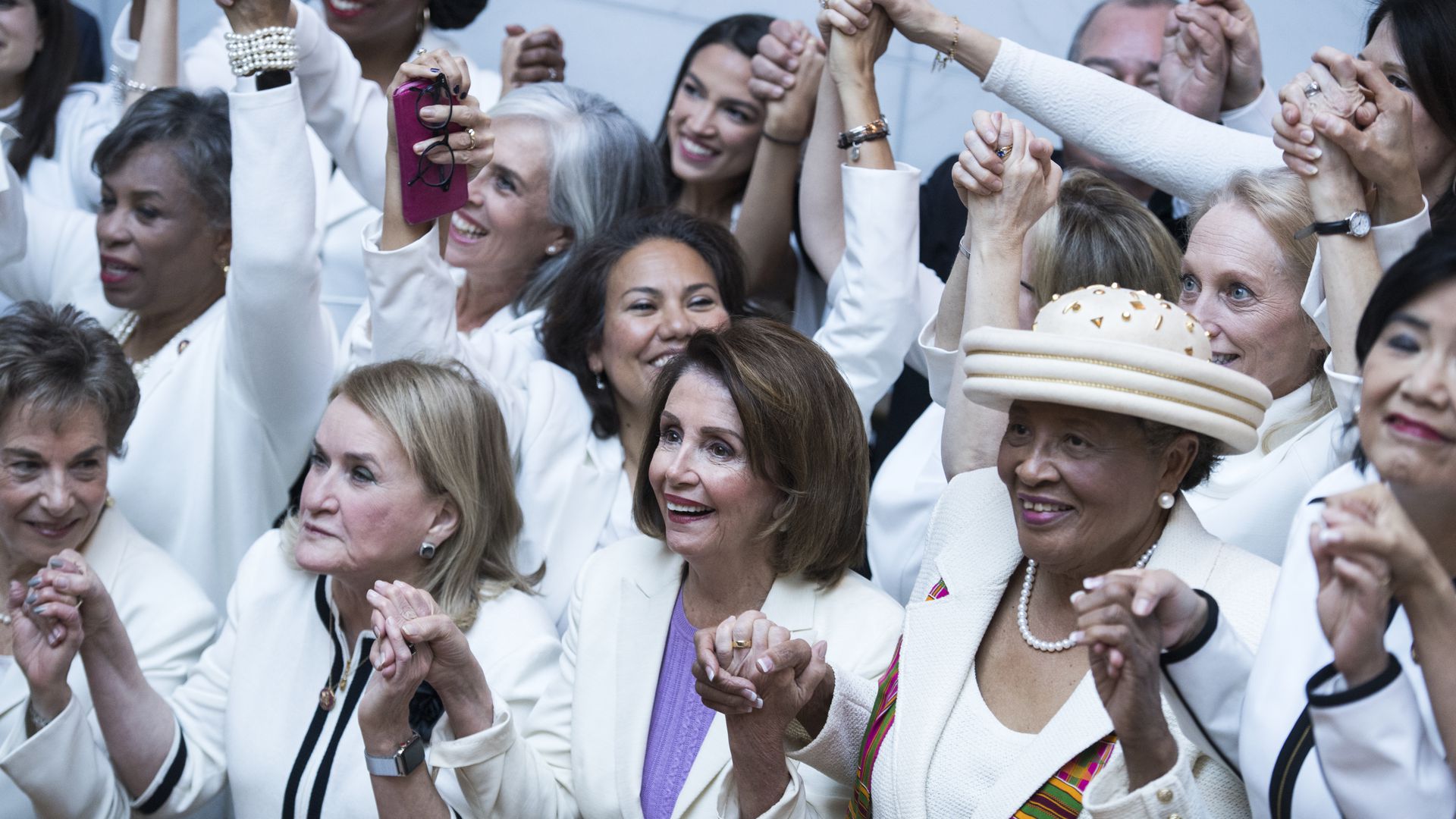
The vulgar misogyny revealed in that tape offended every thinking woman across the country. Following Trump’s surprise victory outrage spilled over as women from every point across the nation protested that an unfit and unacceptable man had reached the highest office in the land. Two months later approximately 500,000 women traveled to Washington DC to protest Trump’s ascendence to office, while sister marches gathered across all 50 states, with more around the world, numbering somewhere around 4 million women.

Not long after this historic march the “Me Too” movement gathered momentum. From prominent celebrities such as Mira Sorvino and Ashley Judd, to everyday women, all shared their #MeToo story across the internet. Clearly sexism and predatory male behavior had touched all of our lives, at one point or another, and women were through with bad behavior.

A flurry of political activity followed the March as well. According to Time Magazine women seeking elected office jumped to a 350% increase from 2016, with many winning seats in state legislatures, governorships, and federal offices. Vice President Harris was not the first woman to seek the vice presidency, but she is the first elected to office. Other women came forward with stories directly linked to Trump. E. Jean Carrol, and Stephanie Clifford, among others, spoke out to expose the neanderthal behavior of the 45th president. From their courage Mr. Trump has been convicted of sexual assault and financial fraud.

Not long after his election Trump packed the Supreme Court with inexperienced and disingenuous judges who overturned hard-won medical protections for American women. In 2022’s Dobbs V Jackson Women’s Health Organization fifty years of reproductive rights were gone almost at once. Roe V Wade died, along with an increased number of women and girls, especially in those states with new draconian medical restrictions. The viability of fetuses, life threatening complications for the mother, and victims of incest and rape found no physician willing to risk medical assistance.

More than Trump’s kissing up to tyrants like Putin, more than the January 6th coup attempt, more than inflation or immigration, or his serious legal problems, none have impacted more Americans than predatory male offenses and the right for a woman to direct her own life.

No poll can measure the deep-seated outrage women collectively feel at this moment, two days before the 2024 presidential election. To examine each episode separately from 2016 to now doesn’t fit a pollster’s brief questionnaire—but linking them together over a period of time does, much like connecting the dots on paper reveals a persuasive picture. 

Outside of some fluke or other Trump antics, Kamala Harris will prevail on Tuesday.

Postscript, 11/9/24. Little did we realize the number of women suffering from Stockholm syndrome across America.

Gail Chumbley is a history educator and writer.

A Good Deal

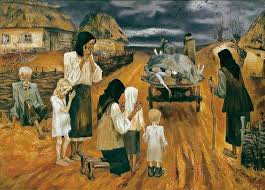
A painting by Valeriy Franchuk, “Harvest of famine” (2000)

A Reblog.

NBC news recently ran a piece on Trump meeting with Ukrainian President Volodymir Zelenskyy. In a video clip Mr. Trump announced that he had spoken with Zelenskyy about opening talks with Vladimir Putin to end the conflict between the two countries. Trump stated to the cameras that Russian President Vladimir Putin would give Ukraine a “good deal.”

Mr. Trump does not know nor does he care about Ukrainian history. If he did, the president would understand that negotiating with the Russian leader is unthinkable, a non-starter. To understand why is to look not only into Ukraine’s recent past but back into the 1930’s.

Putin’s first attempted assassination targeted Ukrainian President Viktor Yushchenko. In 2004 Yushchenko narrowly escaped death after surviving dioxin poisoning, a combination of toxic chemicals which left him weakened and permanently disfigured.

Putin, as a former KGB operative is a master of murder, and why the International Criminal Court has an arrest warrant for him.

An impulsive hustler by nature Trump shows little interest in the crimes of Vladimir Putin. After the recent meeting in Alaska, Trump again called on Zelenskyy to make a deal with Putin. That the Russian has targeted Zelenskyy in numerous assassination attempts on multiple occasions, including three failed hits in one week is of no consequence.

However this narrative reaches back further to the early Twentieth Century, when another strongman, Josef Stalin rose to power.

Following the 1924 death of Bolshevik leader Vladimir Lenin, Stalin coldly and efficiently murdered his own rivals consolidating his power as an absolute despot.

Launching his Five Year Plan, Stalin’s vision for economic prosperity, he ordered collectivization of Ukrainian farms, seizing land and harvests for Russia’s consumption. Calling farmers Kulaks, a pejorative name, Stalin justified his actions by fabricating enemies, complete with mass arrests, show trials, executions, and deporting thousands to Siberia. In that period alone thousands of Ukrainians perished in freezing rail cars, or worked to death in frigid Siberian work camps.

The total number of transportation deaths remains unknown.

However transport was not the worst weapon employed by Stalin. Ukrainian Communist party workers not only stole seasonal harvests but also the seed for future planting.

A genocide followed.

From 1930 through 1933 millions of Ukrainians starved to death or resorted to cannibalism due to Stalin’s disastrous Five Year Plan. Production dropped under the forced collective effort, and the Communist leader had to find scapegoats for the disaster, so he pinned blame on the farmers. Kulaks were dying in massive numbers on purpose to undermine the Kremin’s economic plan.

Stalin insisted he was the victim of treachery.

Called the Holodomor, (death by hunger) as it is remembered, cost the lives of somewhere between 3.5 to 5 million Ukrainians. Adding that number to those deported to Siberian gulags it is safe to say that the Ukrainian people suffered a monstrous horror.

Ukrainian memories and justifiable outrage remain vivid.

As for that ‘good deal’ with Vladimir Putin, President Zelenskyy is not interested. The Ukrainian President has no faith in Russian promises, and is not impressed by Mr. Trump and his previous effort to shake Zelenskyy down for corrupt political ends.

Today thousands more Ukrainian soldiers and civilians have lost their lives fighting this Putin-engineered war, but with national memory to guide them Ukrainians will not back down. Ever.

Independence from Russian oppression is relatively new and very fragile, and that nation will never surrender on Trump’s assurances of a ‘good deal.’ The people of that battered nation know better.

So should we.

This is the web site of the Ukrainian Embassy in DC if you’d like to make a contribution.

https://www.ukrainehouse.us/

Gail Chumbley is a history educator and writer.