Anyway Anyhow Anywhere

The deal is, coming out victorious World War Two, the certainty of America’s omnipotence shaped foreign policy. The US armed forces proved they could expertly parachute behind enemy lines, storm contested beaches, and plant the flag of American freedom at the close of every engagement. US pride meant we only mobilized decent men, and armed them with top notch war materiel, and enough Hershey Bars to treat the world. 

Those lessons of the 1940’s mislead later military planners. The assumption that Americans could do no wrong, and intervening into other nations, an imperative. However, what worked in one moment wasn’t necessarily viable later. America’s entrance had saved the world, but that particular episode ended in September, 1945, and the US moved forward looking backward.

Five years later the Korean conflict exploded, and after three years of fighting, ended where it began, the 38th parallel. That stalemate ought to have signaled a reassessment of America’s role abroad, but the Sergeant Stryker school of war had engrained itself too deeply into foreign poIicy.

I am a child of the Vietnam era. In my head the kaleidoscope of Lucy’s eyes plays, and televised images of soldiers knee deep in rice paddies, flicker in black and white. Protesting students with raised fists, black armbands affixed, occupying college offices, all to the soundtrack of kick ass rock and roll. In fact, the most enduring feature of the Sixties, for this boomer, is that pulsating electric guitar played by the hands of masters.

From 1959 to 1975 Washington dispatched advisers, munitions, and finally by ’65 ground forces to Vietnam. The French had failed to hold their Indochinese possession against the Communists, as they had failed against the Germans in 1940. America would bail them out once again.

But our intervention was premised on dated strategies. Vietnam was not a stand and fight war.

What Vietnam taught policy makers, (for a millisecond) is that patience is a most powerful foe. The NVA and Vietcong played the waiting game with grit and timeless certainty. 

the Our nation was not the first on the scene in Saigon, but certainly the last western power. As for Afghanistan, the dynamic remains. Leaving 10 years ago, or 10 days ago, the outcome would have been the same. The post-911 Middle Eastern conflicts were truly good for the people of those nations, but not for the United States.

Just check with the Brits and Russians. They left too.

Gail Chumbley is the author of the two-part memoir, “River of January,” and “River of January: Figure Eight.” Both titles are available on Kindle.

gailchumbley@gmail.com

Don’t They Realize?

A debt we owe and can never repay.

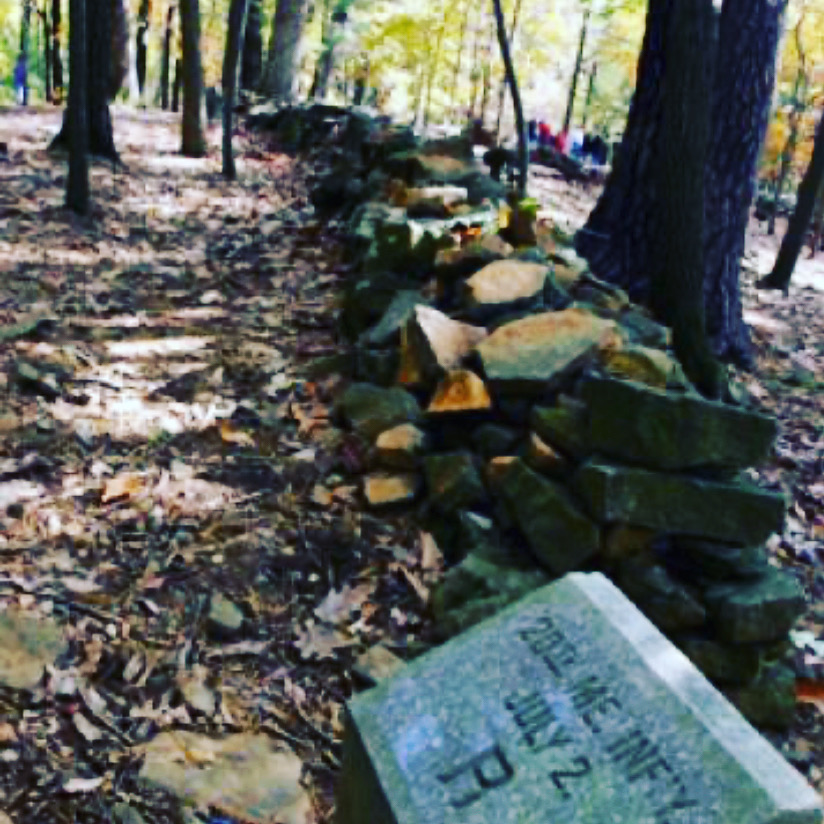
The attack did not come until almost 5:00pm on July 2, 1863. The Yankees under the command of General George Meade held on to both Cemetery Hill, and Cemetery Ridge, south of the town of Gettysburg. Situated across an open ground of boulders, orchards, wheat and corn fields, waited invading Confederates commanded by Robert E Lee.

Issued vague orders the day before by General Lee the boys in grey had failed to capture the vital high ground on the northern end of the Union lines, and were forced to deploy upon less desirable ground called Seminary Ridge. Imagine an irregular stadium from north to south, with foes facing one another across a lethal killing zone.

On that second day, Lee had ordered fresh assaults on the southern end of the Yankee lines. Fierce fighting commenced in the Wheat Field, and upon the boulders of Devil’s Den, culminating in a main assault on a rise called Little Round Top.

The lower of two southern summits, Little Round Top appeared vulnerable to the Rebs massing below. Alabamians were ordered to angle around to their right, and cut to the rear of Union lines. However, their movements were detected by Union Colonel Strong Vincent, and Vincent acted at once.

Issuing orders boys from Pennsylvania, New York, Michigan, and Maine units were to double-quick to defend rubble-strewn, steep, Little Round Top. Holding the end of that hastily formed line stood Colonel Joshua Lawrence Chamberlain and his 20th Maine. And as many readers know, Colonel Chamberlain held off three assaults by the Alabamians scrambling up the steep terrain. Finally out of ammunition, Colonel Chamberlain in desperation ordered a bayonet charge, sweeping down the hill against another attack. And miraculously that bladed downhill charge worked. 

A less known story concerns the Yankee soldiers assigned to guard that hard-won hill that night. Under orders to detect any further Confederate threats, these sentries could hear the moans and piteous cries of their brothers wounded and dying below them in the darkness.

Distressed by the audible suffering and with no way to help, the guards kept to their orders. Somewhere in that endless night one sentry was said to have cried, “Don’t they know they saved the country today?”

And those words echo to us today, on this July 2.

Those of us who serve honorably in public office we stand for America.

Those of us who get involved in community action, or contribute to candidates and causes stand for America.

Those of us who rally for freedom in good and bad weather stand for America.

Those of us who believe in fair play and government by the people stand for America.

To those of us that will never submit to authoritarianism stand for America.

And we will save our country.

Gail Chumbley is the author of the two-volume memoir, “River of January,” and “River of January: Figure Eight.” Both titles are available on Kindle. Chumbley has also written three stage plays. “Clay” regarding the life of statesman Henry Clay, “Wolf By The Ears” a study of slavery and racism, and “Peer Review” where 47 converses with four past presidents. In addition Chumbley has co-authored a screenplay, “Dancing on Air,” based on her two books.

gailchumbley@ymail.com

Cocolalla

73115959-SLD-004-0017

We had two cabins on a small lake in Northern Idaho.

Located between Lake Coeur de Alene, and the Pend Oreille, our little acre overlooked tiny Cocolalla, with large windows where we could watch the waves lap up on the beach. The original structure we astutely named the Little Cabin, later followed by the larger Big Cabin. This bigger cottage had been built with all the amenities of home; running water–hot and cold, a tub and toilet, a full kitchen, and electric heat.

Those early weekends in the Little Cabin hold many good memories. All of us crammed into that tiny wood box, the unfinished walls festooned with a lifetime of greeting cards, a big enameled wood stove, and a porcelain basin for washing dishes. Grandpa got his hands on a tall steel milk can and commandeered it for enough drinking water to get us through the weekend. As for entertainment, Grandma had an old radio that blasted the most impressive static, interspersed with Roy Orbison or Andy Williams fading in and out.

Once the Big Cabin was completed and my grandparents moved in, the smaller cabin was demoted to storage. It also housed a set of bunk beds, a fold-down couch, and one double bed; useful for my brothers who were just getting bigger. Now, in addition to greeting cards, the cabin stored every variety of water equipment. Fishing poles, life jackets, oars, and an outboard motor clamped to a metal barrel, with stacks of beach towels the size of blankets.

As I recall, a constant grit of sand coated the linoleum floor.

The property was my grandparents retirement dream, but a dream they happily shared with the rest of us. I knew, even then, that I was always welcome, always.

My grandpa was an early riser, a product of a lifetime as a mailman. He didn’t want to tiptoe around a little kid sleeping on his sofa at five in the  morning. At bedtime my grandmother and I made our way to the Little Cabin in the dark by flashlight. Under the covers of  the double bed, I would chafe my feet deep under the sheets to warm my toes. As we grew settled and peaceful she would begin to reminisce, talking to me for hours in that darkness. I learned of her life in those moments, warm in that cozy bed, listening to her voice, breathing the scent of the evergreen forest.

She told me of my biological grandfather, her first husband, who had left her bereft and penniless after my mother had been born. Despite the Depression, he liked to gamble away their money. My Grandma had to leave him and she struggled to find work as few jobs existed. Forced to farm out her daughter, my mother, in various homes, her the guilt still haunted her. Clearly it still broke Grandma’s heart that she was forced to separate from her little girl for months at a time. I could hear a wound that could never heal.

As the night grew deep, crickets and bullfrogs began to chorus. Flanked next to her, and pressed against some greeting cards, I prayed I wouldn’t spoil the magic by having to go potty. She kept, beneath the bed, a Chase and Sanborn coffee can that I hated to use. It felt cold and left rings on my little bottom. Still, considering options, the can was more appealing than a journey to the outhouse. Using that creepy outhouse in the daytime was bad enough, but at night unthinkable.

Finally poking her lightly, I would tell her. And she never hesitated. Showing no impatience at all, Grandma seemed to make my problem her own, reaching for the flashlight and finding that rusty can. She held the light on me so I could aim properly, then back into the warm bed. No recriminations.

She loved me.

I loved her.

Today my husband and I live in the woods. We don’t have a lake, but a river runs near and we can hear it on very quiet nights. I relax in my cozy bed in the darkness and listen to the crickets and bullfrogs, while breathing in a scent of pine. A sense of complete security, of love, of acceptance returns, synonymous with the love of my grandmother. She was home for me, and though gone these many years, my mountain cabin still echoes with her voice.

Gail Chumbley is the author of the two-part memoir “River of January,” and “River of January: Figure Eight.” Both are available at http://www.river-of-january.com and on Kindle.

gailchumbley@gmail.com

Smiling in Their Graves

As the fog of war lifted and an uncertain peace settled over the defeated Confederacy, anxiety grew among the vanquished as to what lay ahead. Abandoned plantations withered in disarray, and a popular idea gathered momentum it should go to the newly freed. “Forty Acres and a Mule,” became an expectation that, in the end never materialized. Instead Southern landholders who had fled, slowly returned to reclaim their estates and continue their lives. 

Outside of Freedman Bureau schools, and temporary bluecoated occupiers, no meaningful assistance for Freedmen materialized.

At the same time, three categories of defeated Southerners turned their attention to meeting the new reality. Military leaders, like Robert E Lee, and James Longstreet accepted defeat, and encouraged fellow veterans to follow suit. In fact, Longstreet, an old army friend of Ulysses Grant, cooperated with the Republican occupiers, earning the pejorative of “Scalawag,” a Confederate who collaborated with the enemy.

Outraged citizens who could not accept defeat were called “Fire Eaters.” Foremost among these was Jefferson Davis, incarcerated president of the Confederacy, Lee’s wife, Mary Custis Lee, who lost her ancestral home in Arlington, where Union forces buried their dead, and politician Edmund Ruffin. So enraged was Ruffin that when news of the defeat at Appomattox Courthouse reached him, Ruffin blew his brains out. 

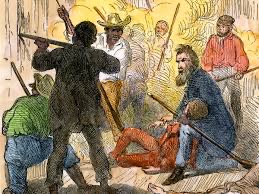
Redeemers made up the balance of Southern Whites who were dangerously patient. These community leaders played their cards carefully, drifting into the Fire Eater lane at times, and back to deadly quiet redemption. Nathan Bedford Forrest was a great example of men who waited. Founding the Ku Klux Klan soon after the war ended, nightriders terrorized freedmen, discouraging blacks from enjoying their new guarantees as citizens. Other terms fit well into this particular era. Share Cropping, and the Crop Lien System invisibly chained blacks to the land that still bound them. Black Codes, and Vagrancy Laws sentenced laborers to the same bondage as before Fort Sumter. No serving on juries, no testifying against whites, Poll Taxes and Literacy Tests limited access to the ballot box. As Federal oversight declined over time, the Redeemers reasserted direct control.

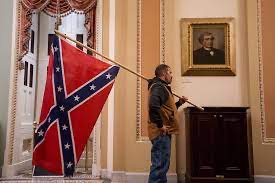
Case law does remain on the books to protect minority voters but without vigilance and resolve remain fragile. These people, these Redeemers are still dangerously patient, and can shift to Fire Eater on a dime. In light of January 6, these zealots have demonstrated they still are quite lethal.  

By crafting misleading, banal language in new voting laws, the modern GOP has taken a page from that old Reconstruction playbook. Ironically, it was the Republican Party who protected Freedmen after the Civil War, but now play the part of oppressor, inserting bad legislation to cut off Federal influence. 

The old Redeemers must surely be smiling in their graves.

Gail Chumbley is the author of the two-part memoir, “River of January,” and “River of January: Figure Eight.” Both titles are available on Kindle.

gailchumbley@gmail.com

The Final Straw

The September 11th attacks in 2001 got our school year off to a strange start. There was, of course, the horror, and a lot of unplanned discussion about the Middle East. The course I taught covered Early American History through Reconstruction, and I couldn’t afford to take a lot of time to debrief. Nonetheless, the events of that day provided useful lessons that surfaced later in the year. 

By the following Spring the curriculum arrived to the series of calamities that led to the Civil War. The last compromises crumbled, and blood had spilled at Harpers Ferry. The story then turned to John Brown, God’s Avenging Angel, determined to slay slavery. 

Brown is a complicated figure, believing he had been chosen by the Great Jehovah, to draw the sword of mighty justice.

And a debatable issue offered itself.

The link to Brown and 911 suspect, a French-Moroccan terrorist, Zacarias Moussaoui, centered on jail time. Moussaoui’s trial was underway and came up in class discussion.

John Brown had been captured in Harpers Ferry, after a standoff with Marines under the command of Colonel Robert E Lee. Intending to spark a slave insurrection, Brown and his raiders, including his sons had occupied the Federal arsenal in that river town. But once the military arrived the old man subsequently surrendered. 

As Brown awaited trial in Charles Town Virginia, the Governor, Henry Wise permitted reporters from Northern papers to interview Old Brown. To the press, Brown passionately defended his cause, insisting it was the work of righteousness. Newspaper readers throughout the North responded with support and compassion, gathering disciples for the cause of freedom.

However, in the South, the old man’s name was reviled. Viewed as a criminal below the Mason-Dixon, Brown was vilified as evil incarnate, hell bent on inciting slaves to murder their masters. Military training increased across the South, in preparation to defend their “peculiar institution.”

John Brown’s raid is often seen as one of the final straws, aside from Lincoln’s election the next year, leading to secession and a force of arms.

Prior to of horror of 911, Zacarias Moussaoui was detained in Minnesota. His immigration status apparently had irregularities, and his flight school enrollment tripped some security wires. At his trial, Moussaoui put on a noisy show, acting as his own attorney, and pitching frequent temper tantrums in the courtroom for all to see, including journalists. Initially the accused insisted he was innocent, then later confessed. Quite the circus.

During and following the conviction of the terrorist, Moussaoui demanded the judge permit him access to the press. The French terrorist had his side of the story, and he wanted to air his grievances on a national and international platform.

The judge said no. And Moussaoui today is a lifer, quietly incarcerated at Super Max in Florence, Colorado, and barely a footnote in history.

The significance of this complicated, and controversial comparison? Surely the Civil War would have transpired regardless of Brown; slavery was inconsistent in a nation that professed liberty.

But that fifteen minutes of notoriety can produce real dangerous blowback.  

In light of the events on January 6th, thank the Lord DJT is grounded from social media.

Gail Chumbley is a history educator and author of the two-part memoir, “River of January,” and “River of January: Figure Eight. Both titles on Kindle.

Choked Me Up

 In case anyone else is interested, here’s a little editorial piece I wrote about Critical Race Theory for my community. Gail Olson Chumbley, I didn’t expect it to go where it did, but I mean every word of that last part – but I’m sure you already know that because all of us students already do pastedGraphic.png😉

I would like to share something that’s been on my mind a lot lately, and I am hoping that those who are interested can engage in a way that promotes understanding on all sides as well as help dispel concerns. The topic is Critical Race Theory and what it means to have it “taught in schools.”

First, I am a teacher, though not in Kalama school district. I say this because I want to be transparent as well as reassure you that, if you do not agree with what I have to say, I also have no control over what is taught to your children either. I’m just here to chat. I also have my PhD in Educational Leadership and administration license.

——-

So, what is Critical Race Theory? Well, We need to understand what each of these words means in their original context, which is a widely accepted (non-controversial) area of scholarship, specifically legal scholars and practitioners:

Critical = Ask questions and analyze. It doesn’t mean to criticize, but rather is used in the same sense as teaching “critical thinking skills” and encouraging youth to think for themselves – even if their conclusions are different than our own.

Race = People who receive benefits or disadvantages due to race or ethnicity. This is not limited to black and white and does not villainize anyone. Rather, it’s looking at the factors that race MAY play in the way benefits are distributed through different communities.

Theory = A perspective. It isn’t about whether this is an idea, but rather one way of looking at things. Scholars, experts, and practitioners usually use multiple perspectives (theories) to analyze (critical analysis) certain phenomena. Essentially, theories are a framework for asking questions and understanding phenomena, not a conclusion in and of itself.

So, Critical Race theory, in a sentence, is a perspective for considering history, including the systems such as government and legal systems that were built in the context of our history, in a way that asks “What role might race have played here, and how does that inform issues we face today?” It is an intentional effort to ask those questions and seek out answers based on historical events and research.

———

What does this mean for teachers?

For teachers, this is nothing new. Understanding issues of equity is something that is covered in the most basic educator preparation courses, which includes understanding how to help ALL children access equitable learning opportunities regardless of location, income, disability, language, race, gender, orientation, etc. This is a basic and constitutionally guaranteed right (WA state constitution, Article 9, Sections 1 and 2; this is what “without distinction or preference on account of race, color, caste, or sex” and “general and uniform system of public schools” means). I attended a Nazarene university in a very, very conservative area and we were talking about these issues 10 years ago and continue to do so today. I promise you, this is not a new or left-leaning movement.

———-

What does this mean for school districts?

While the State can establish general standards, the actual curriculum and practices are determined at the local district level. Curriculum adoption involves the teachers in that subject area getting together with the district office to look at a variety of curricula and analyze which ones best fit their school’s needs. They then make a recommendation to the school board (including their analysis of the curriculum and why they chose it) who then votes on whether or not to approve the recommended curriculum. You, as citizens, get involved in this process by showing up to school boards (and voting for board members in the first place!) and letting them know how you feel about the curriculum. In sum, ALL stakeholders (students, parents, teachers, community members, board members, administration) have a voice and a part to play when it comes to adopting the curriculum. The ultimate decision, though, lies with the school board on whether or not to adopt a particular curriculum.

Of course, then, individual decisions about how to teach the curriculum, including what to focus on, how to focus on it, and what students are asked to do, are largely in control of the teacher. Teachers do have rights in making these decisions, though you are always welcome to voice any concerns. It is ideal to talk to the teacher first, then the principal or counselor if the issue doesn’t get resolved, and you can also contact the district. The district will then follow through with due process to ensure the rights of parents, students, and teachers are all protected.

————-

What does this mean for students?

Students in classrooms where Critical Race Theory is taught (largely social studies) will learn about history in a way that intentionally includes parts of history that have often been left out. They are NOT told what to think about it by the teacher (or at least shouldn’t be told – that would be grounds for a complaint), but rather would be encouraged to analyze the information and come to their own conclusions. Discourse is an important part of these topics, so they would likely be encouraged to discuss these topics with their peers (and with guidance by their teachers to ensure the class stays productive, on topic, and prevent hostility).

This is a TALL order, especially in classrooms with 30+ opinionated students, so not all teachers will get it right, especially if this is new for them. For many, though, it isn’t – again, I grew up in a conservative area and I feel as though I was exposed to this by my favorite teacher of all time BECAUSE she encouraged us to explore and think for ourselves. She never once told us what to believe, but rather taught us to ask questions, seek out facts to inform our opinions, and then develop and defend our opinions, regardless of what those opinions might have been. My sister and I both had her as a teacher and, 20 years later, we have opposite opinions on just about everything, especially politics. But the one thing we can agree on is that this teacher changed our lives and inspired us both to become teachers ourselves. Countless students across all beliefs and perspectives have named her as their most influential teacher. I truly believe that this type of teaching made us better people as we learned to consider perspectives that may be different from our own, ask questions, and seek out answers that we can defend with solid evidence. Here’s to you Mrs. Chumbley, who students affectionately referred to as “Chumbledore” because she was just that magical for literally generations of students

gailchumbley@gmail.com
Pickaxe To Nerve Agent

Josef Stalin was the embodiment of evil. Moreover, if one figure set the standard for Russian despots, it was Stalin. His reign of domestic brutality and foreign terror set the tone for a long, dangerous Cold War. Czarist Russia had set a particularly high bar for authoritarianism, but Uncle Joe inflicted monstrosities that would make Ivan the Terrible cringe.

After Russia withdrew from WWI, through a series of moves, the Bolsheviks, headed by Vladimir Lenin prevailed in gripping the reins of power. Through the aid of Leon Trotsky, a brilliant intellectual, and Josef Stalin a seasoned street fighter, the Bolsheviks founded a peoples state, loosely framed around the teachings of Marx.

During the next few years The US provided relief to the starving of Europe from Great Britain to Vladivostok. But aid made no difference to Lenin. In 1919 the Comintern was established in Moscow, professing the aim of Communist takeover of the world.

In 1924 Lenin died, and a fresh struggle for power ensued. When the snow storm settled Stalin was in command and Trotsky exiled.* Conditions in Stalin’s USSR flowed a crimson red. The Kremlin’s secret police cracked down on the people, through arrests, murders, and spying. By 1934 the NKVD began a purge that included the liquidation of middle class Ukrainian farmers resulting in the deaths of millions.

And those policies were domestic.

At the same time, spying took center stage in Stalin’s foreign policy. English and American assets were turned including left-leaning Americans disillusioned by the Depression, and England’s Cambridge Five, headed by Kim Philby. Philby held a high clearance in British intelligence. The use of such double agents allowed Stalin to essentially shoot fish in a barrel.

Atomic weaponry literally mushroomed on the scene, raising the stakes in East West relations. America lost it’s mind in the Red Scare, and Soviet agents burrowed deeper undercover.

That was then. But it is also now. Excluding reformer, Mikhail Gorbachev, Russian leadership emulates the tone set by Josef Stalin. Infiltrating the National Rifle Association, political misinformation, cyber hacking, and buying off scoundrels with generous loans, Vladimir Putin is an apt pupil of old Uncle Joe.

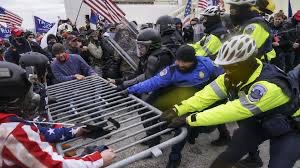
On January 6, 2021 as white supremacists broke past Capitol barriers, vandalizing and assaulting law enforcement, the winner of that moment was Vladimir Putin. Destabilizing America has been the object of the struggle since the Russian Revolution. 

Dear GOP, you are indeed Putin’s puppets.  

*Trotsky was murdered in August, 1940. An operative bludgeoned him to death outside Mexico City with a pickaxe. Putin critic, Alexei Navalny is currently in a Russian jail, weakened by a nerve agent that was meant to silence him.

Gail Chumbley is an author, and history educator. Her two-part memoir, “River of January,” and “River of January: Figure Eight,” are both available on Kindle.

gailchumbley@gmail.com

A Rare Topic

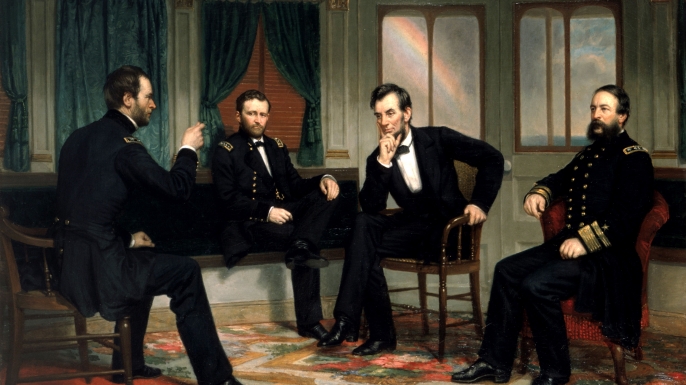
Lincoln, Grant, Sherman, and Gideon Wells aboard the River Queen, 1865

Watching a news host and guest discuss the topic of America’s Reconstruction era, my ears perked up, so rare is this matter presented. 

First of all, Reconstruction was the difficult period following the Civil War. The battles had ended, and the victorious president dead at the hands of an assassin. A new Battle Royale between Congress and the new President, Andrew Johnson, erupted over who would direct the aftermath. 

The thrust of the cable conversation centered on how important this time period remains, and that schools need to teach it. Much like Flo in the insurance ads, I started yelling at the television that I did cover that period, dammit. We all did in my department.

President Lincoln, before his death, had considered the role of newly freed persons as a moral imperative. Subsequent to the Emancipation, he had pushed for passage of the 13th Amendment, as dramatized in the film, “Lincoln.” Throughout the last months of the war Lincoln had revealed his vision of restoring Southern States. Based on the 1860 election records, when 10 percent in the rebellious states swore a loyalty oath, each state could reform their constitutions recognizing the abolition of slavery. President Lincoln believed he possessed the power to pardon, and he would make full use of that Constitutional power. 

Legally speaking, President Lincoln viewed secession as an attempt to leave the Union, and that attempt had failed. The Chief Executive would pardon the ring leaders, and move on to rebuild the nation. But his political opponents, the Radical Republicans, under the leadership of Congressman Thaddeus Stevens, and Senator Charles Sumner, saw the situation differently. 

For these abolitionists punishment was the order of the day. The 1864 Wade-Davis Bill mandated 50% plus of 1860 election rosters took that loyalty oath. To Stevens, Sumner and the like, these Rebel states had committed political suicide. Only after that majority swore the oath, including recognition of the 13th Amendment, would Congress consider readmitting each, as if new states. 

A political fight was brewing as to which branch held the reins to mend the nation, and deal with the lot of Freedmen.

The short answer is Lincoln’s death derailed any compromise. The Radicals held the day, and Southern whites would suffer. And Andrew Johnson was no match for an angry, determined Congress. In 1867 Federal forces occupied the South in political districts. Soon after, the Legislative Branch attempted to impeach the hapless new president. 

Though the 14th Amendment guaranteed citizenship to the newly freed, and the 15th guaranteed the vote, northern opinion drifted into apathy. Enforcing the rights of Freedmen lost popularity, and dropped from the headlines.

The Old South reasserted traditional apartheid rules.

The cost for the newly freed? Desperate people wandered back to the old master. With no protection, lynching became common as domestic terrorists spread fear. Rights of citizenship went unenforced, with sharecropping and the crop lien system replacing legal bondage. 

Perpetual debt chained workers to the land as effectively as if slavery remained legal. 

Poll taxes, vagrancy laws, and literacy tests tyrannized the newly freed, as did threats of violence from the Klan, and the Knights of the White Camelia.

In 1876, Republican Rutherford B Hayes barely won the presidency in a tight election. His campaign officials cut a deal with three Southern electoral delegations. Florida, (of course) South Carolina, and Louisiana. These states agreed to direct their electors to vote Republican, and in return the Hayes people promised to withdraw the bluecoats. Free Blacks were abandoned.

All in all, the promise of liberty lay in ashes.

When the moment arrived for equal justice, the cause died due to a lack of interest.

The cable host and his guest were right.

Gail Chumbley is a history educator and author of the two-part memoir, “River of January” and “River of January: Figure Eight.”

gailchumbley@gmail.com

The Bloody Shirt

Principled soldiers of conscience, the victorious army knew they had served well, defending the Constitution to the last full measure.

May of 1865 witnessed Washington’s Grand Review of the Union Army. Smartly uniformed soldiers filed past crowds, in a river of Union blue. The guns had silenced a mere month earlier at Appomattox, Virginia; the Republic preserved.

A brilliant sun glinted off polished bayonets, and the parade route decorated with miles of silk banners, tattered company colors and patriotic bunting. Rejoicing greeted the passing soldiers in shouts and fluttering handkerchiefs. Flower petals rained down in a fragrant carpet of gratitude. 

The bloody war finally, truly, had ended. 

One year later, near Springfield, Illinois, a group of veterans established a fraternal association, the Grand Army of the Republic. The idea caught fire nationally as other veterans founded their own local chapters; a place men could remember, share, and grieve for lost friends. Soon these war horses got busy extending their service to those they had defended.

First, survivors lent aid to disabled fellow veterans, assistance to widows and their dependents, and orphan homes. Soon preserving battle sites added to the group’s outreach. Before long members began seeking electoral office to further serve the nation.

A story has it General Benjamin Butler, now a Congressman, grew extremely agitated while speechifying, and produced a torn, and bloody shirt he claimed came from the battlefield. Soon the practice of “waving the bloody shirt,” invoking war credentials, became customary for candidates. The saying “vote the way you shot,” launched the careers of numerous politicians. 

Presidents from Ulysses Grant, (1868-1876) through William McKinley (1896-1901) had faced the rebels on the battlefield.*

War memorials and monuments mushroomed, funded with GAR donations. Reunions, benevolent societies, veterans homes, and hospitals kept local chapters busy. In fact, much of GAR efforts were eventually assumed by the Federal Government, particularly pensions for those who had served.

Over time survivors of the Civil War dwindled in number. However, the organization soldiered on until 1956 when it finally faded. Loosely related, though more a coincidence, our last five star general was serving as president when the GAR closed its doors. President Dwight David Eisenhower, who kept a farm in Gettysburg, happened to occupy the White House.

This brotherhood, this Grand Army of the Republic, rose to defend our democracy in the mid-19th Century. This model of valor, and sacrifice shaped the character of the military for years to come. 

But one truth is quite clear, no officer ever advocated for a coup, and there was not one sucker or loser in their ranks.

In 2021 we can do no less.

*Chester Arthur served in the New York Militia, Grover Cleveland did not serve.

Gail Chumbley is a history educator, author and playwright. Her two-part memoir, “River of January,” and “River of January: Figure Eight,” are both available on Kindle.

gailchumbley@gmail.com

Divisions

Balkanize: Division of a place or country into several small political units, often unfriendly to one another.

America’s founders meant education to flourish, as a vital part of our country’s longevity. 

Designed to advance literacy, American public schools also curbed the rougher aspects of an expanding country. Since the earliest days of the Republic, centers of learning not only taught content, but other lessons like cooperation, and self control. Ultimately schools have instilled in all of us a shared baseline of behavior, supported by foundational facts necessary to find consensus.  

Today, technology and social media have endangered our ability to reach common ground. The distracting noise of extremists, splintering, and Balkanizing our nation threatens American institutions. Elections, government agencies, city and state government, and yes, schools are all targeted. Navigating through a culturally diverse society is inevitably stormy, and a closed American mind isn’t helpful.

Public education has traditionally been one of the ligaments that bind us all together as one people. Years ago a president encouraged us to ask “what (we) can do for (our) country,” but that’s over. Today it’s “Sorry losers and haters, but my IQ is one of the highest – and you all know it!”

Patriotism and literacy evolved together hand in hand. In 1787 Congress, under the Articles of Confederation, passed an Ordinance for settling western land. This law devised a survey system, to organize states around the Great Lakes region. This is important because sales of one plat of the survey, (you guessed it,) funded public schools. 

Thomas Jefferson affirmed the practice by insisting, ”Educate and inform the whole mass of the people… They are the only sure reliance for the preservation of our liberty.”

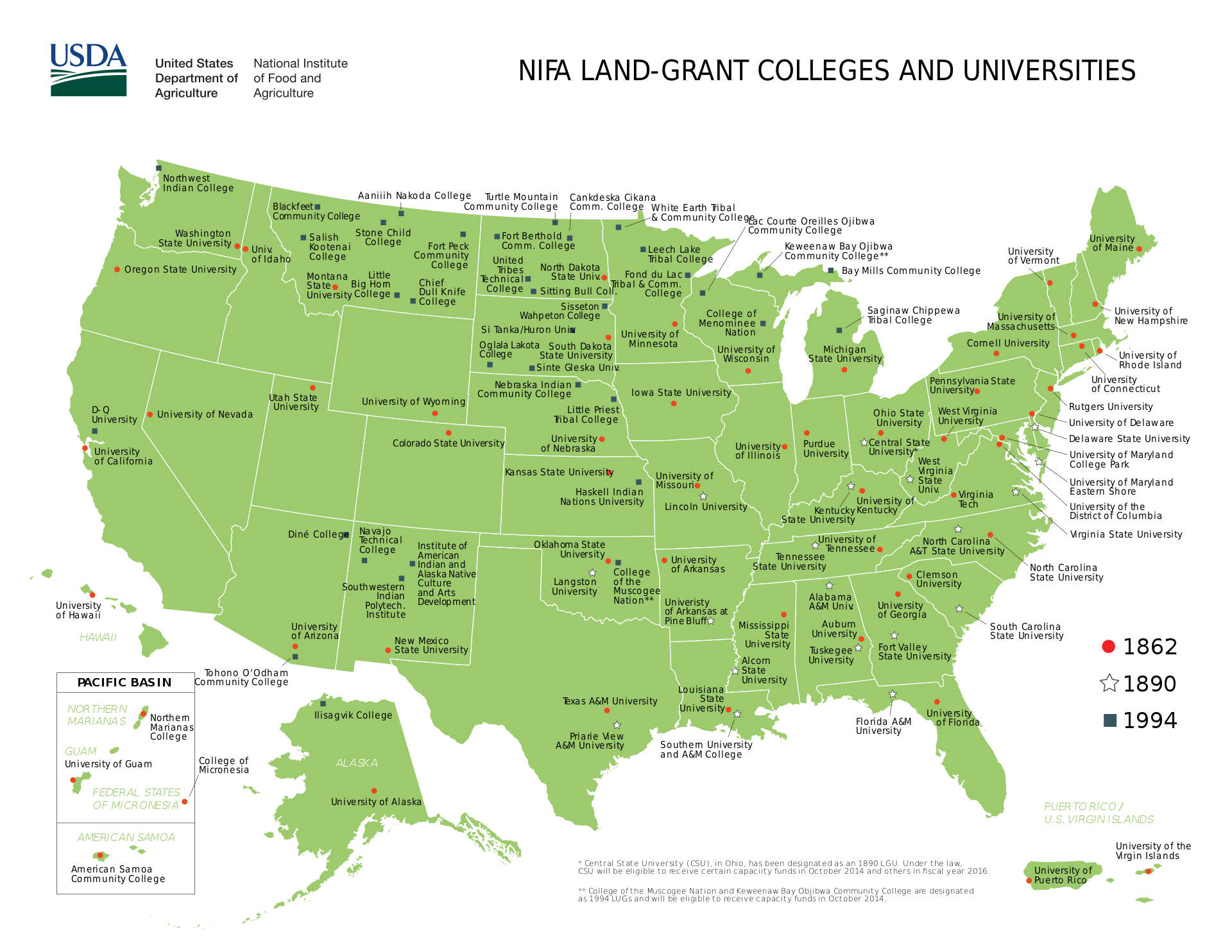
President Lincoln, a figure who deeply lamented his own lack of formal education, pushed to establish land grant universities across the growing nation. The 1862 Morrill Land Grant Act, in particular, financed colleges through Federal funding.These universities today are located in every state of the Union. 

America’s erosion of unity is tied directly to the erosion of public education. Our kids are increasingly sequestered into alternative settings; online, magnet, charter, home, and private schools. Missing is the opportunity to experience democracy at its most basic. Students grow familiar with each other, softening our own edges, renewing the energy and optimism of the nation’s promise. 

We are all taxpayers, but your local public school isn’t supposed to be Burger King, where every citizen can have it “their way.” We have a system that, regardless of money, race, ability, and social class, all have a seat at the table of democracy.

Gail Chumbley is a history instructor and author. Her two-part memoir, “River of January,” and “River of January: Figure Eight,” are available on Kindle.

gailchumbley@gmail.com