The Outside World

My mom took a job in the early sixties with the US Postal Service. At first it was part-time, mostly needed at Christmas, but by 1966 she hired on full time. 

There were four kids, a house, and a yard, and Mom probably was pretty overwhelmed—something today I fully understand. For help my parents decided to host a student each term who attended a secretarial school in Spokane, called Kinman Business University. Lord knows what kind of credential awaited these young ladies after completion, but students did acquire skills such as shorthand, typing, filing, and other tasks.

The first girl who who came to stay with us was named Corrine. I can’t remember exactly the year, most likely around 1965 or 1966. I was in fourth grade. 

Corrine came to us from Alaska, and I remember she told me she was part Filipino or Native American, or both. I thought that pretty cool, Corrine to me symbolized the wonder of the outside world. 

Our house was constantly in a state of chaos, with quarrels, messes, a blaring TV, with people coming and going—chaos. But to walk into Corrine’s small quarters felt like a completely different world. All of her things were neatly stowed away, her bed carefully made, and the space even smelled differently than the rest of the house. I loved visiting her room, as it felt like an oasis of tranquility in a sea of crazy disarray. And it was in her little sanctuary that serene Corrine shared her life with me just a little.

A picture sat on her dresser of a boy. When I asked who he was, she told me his name was Ty, and that they planned on getting married in a few years. Married! I never knew a girl who had plans to get married! The only people I knew who were married were parents, and they were boring. 

He was called Ty, short for Tyrone, and he was visiting Spokane soon. Ty had received his draft notice and following basic training in the Army, he would ship out to a country called Vietnam. Corrine clearly missed him very much, and was anxious to see Ty before he flew to Southeast Asia.

My memories of his first visit are a little vague. I do recall that they sat on the couch in our living room and held hands in front of my parents. That moment struck me as fascinatingly real. 

Looking back I am sure that there were much deeper emotions at play, but whatever vibes filled the room zoomed over my 10-year-old radar.

And then Ty was gone.

The school term ended, and Corrine packed up most of her things and returned to Cordova for the summer. I’m not sure of the details or decisions, but she did return to us the next fall. Once again her room became that wonderful respite from the anarchy of the rest of the house. Ty’s picture again graced her dresser. 

Letters began to arrive to our house written on onion-skin parchment, marked AIR MAIL, bearing Corrine’s name. I’d never seen stationary like that, and she explained that was the cheapest way she and Ty could exchange letters. The paper was light blue, and felt like stiff tissue, but held its shape without creasing. Corrine had stacks of it, both fresh and received—the only sign of clutter in her neat little world.

Finally Ty came back to our house, and this visit was very different from the first meeting. The couple did not sit on the couch and hold hands. Not this time. My pre-teen sensibilities were shocked to see a grown man lying across her lap on the couch sobbing like his heart had broken. 

Poor Corrine! She, too, was dissolved in tears; red, puffy eyes behind her glasses. Ty couldn’t seem to help himself,  or compose himself, and he wouldn’t let go of her. The whole situation felt very surreal. I didn’t understand. How could this orderly girl, and her once orderly fiancé come apart like this, and in front of all of us?

That chapter occurred a very long time ago. My mother still worked, and there were other girls we housed. Still sweet Corrine and Ty live on in my memory as if only yesterday.

I grew up, went away to college, earned a degree in American History, becoming a teacher. 

For years and years I taught a unit on the Vietnam War to high school juniors. I recited the facts surrounding America’s entrance into that long, long, conflict. But in all my experience with those lesson plans, the veterans who visited my class describing their personal war, the analysis by historians we studied, nothing affected me more than the tragic transformation of that broken young man from Alaska.

Gail Chumbley is the author of the two-part memoir “River of January,” and “River of January: Figure Eight.”

Chumbley has also authored two stage plays, “Clay” on the life of Statesman Henry Clay, and “Wolf By The Ears” an exploration of American racism and slavery.

gailchumbley@gmail.com
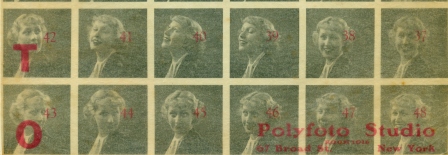
Polyphoto International

Polyphoto2

While composing “River of January,” I spent much of my time searching and analyzing family papers. These letters, pictures, and news clippings, along with other souvenirs, make up an enormous archive which spans over seventy years of the twentieth century. Along with Chum and Helen, many secondary individuals are mentioned in the papers, and when I stumbled upon those names, curiosity sent me on the hunt for more information. One of the characters who rose from the stacks was a proper young Belgian named Elie Gelaki.

Elie made quite an entrance into Helen’s life, and subsequently into the pages of “River of January.” His romantic introduction into the story is reminiscent of a 1930’s Hollywood musical. While taking in the premier of “Voila Paris,” at the Palace Theater in Brussels, Elie spotted the girl of his dreams gracing the stage in a solo act. Apparently the smitten young gent quickly scanned the playbill and decided that the girl must be the dancer named Lillian. In an impulse of ardent infatuation Elie sends a note back stage to Lillian inviting her to meet him after the show. Alas, Lillian doesn’t respond and fails to appear at Elie’s appointed location.

The following night the resilient young man again attends the production. Again he watches, thoroughly enchanted, by the vision that is, he thinks, Lillian, Insistent in his attentions, Elie, this night sends flowers and a typed letter composed earlier that day. Again he implores the dancer to rendezvous at a preselected spot. And happily for Elie, this time she materializes out of the dark snowy night.

The girl seems, Elie notices, amused somehow by his attentions. Then he finds out why. The dancer he believed was Lillian in fact was Helen, and that Lillian had a boyfriend back home, in New York. He is embarrassed by the mix up, but more than that, Elie is charmed by the American girl. After drinks at a late night cafe, he asks to see Helen the following day. And so began the courtship of Elie Gelaki with the breathtaking blonde from New York.

Bringing light to this man, lost to anonymity was an true pleasure. Searching through the volumes of primary sources and the internet, I discovered Elie was born in 1906 in Palestine. Further research, this time reading his avalanche of correspondence (to Helen) revealed that he supported two sisters and a mother in Brussels. Elie proudly shared with Helen his deepest ambition as a businessman, founding a company he intended to expand around the world. He had named the firm, “Polyphoto International,” and confidently assured her that the unique processes he developed would change professional photography forever.

I have thought a lot about this enamored young man, (he was only 28 when they met) and I have ransacked the archive many, many times looking for any picture that might be this steadfast suitor. I’ve never found one. His letters were so loving, so personal, that I had to ask myself why Helen, who kept every other slip of paper had no picture of Elie.

He actually complained about this scarcity as well.

In 1936, four years after they met in Europe, Elie writes Helen in New York begging her for an updated photo. He laments, “If it weren’t for the one (picture) you gave me Brussels, I would have forgotten what you looked like.” Apparently the shortage went both ways.

I had to ask myself why? Why would Helen go out of her way to omit “Elie pictures” from her vast collection of mementos? Then I chanced upon a letter Helen sent to her mother in the middle of her 1932-33, European tour. She goes out of her way to assure her mother that she would never marry a Jew. Now this might sound harsh to modern ears, but I think that Helen felt torn by her denial and his Jewish heritage. From current family members who knew Helen, she once admitted she had a “thing” for Elie, using the word “heartthrob.”

At the time she met the young man, antisemitism was on the up tick, and not only in Europe–but in America as well. What I believe pressured Helen to write such things, was placating her mother. Any single girl worth her salt knows what to say to mother when it comes to “boys.” For Helen, at that time and that place, a rejection was much easier than the truth. And her words belie her actions. She must have given the young man reason enough to continue his amorous pursuit for four long years. He pursued Helen across the world . . .  and by the end of the book, across two oceans.

This continental gentleman, this Elie Gelaki, carefully, and thoughtfully laid out his future. He aimed to achieve financial success in the business world, and he aimed to make the American girl his wife. He wrote her constantly and sailed over the Atlantic to see her when he could. In “River of January” the last readers hear from Elie is in a letter from Kobe, Japan, dated 1936. He explains to Helen that “I hope to conduct Polyphoto business in this city, (Kobe).” And that is it, he is gone. Elie just vanishes.

I know, and readers understand, that all of his plans and dreams and hopes and ambitions mattered not a bit. A war is coming. A war of explosive magnitude, fueled by hate and violence and war crimes. A war against the Jews. Elie’s individualism, his personal ambitions, his entire world was devastated in the massive cataclysm of World War Two.

Uncovering this young man left me troubled. I felt as if Helen had been compromised, as were so many others, to sacrifice her natural regard for the young man in order to conform to conventional thought. Though only an episode in the bigger picture of “River,” this ardent suitor, this diligent businessman, deserves the dignity of recognition and remembrance.

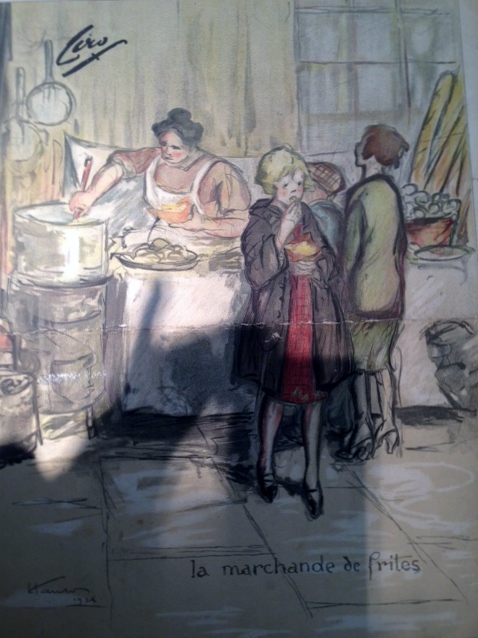
La marchande de frites

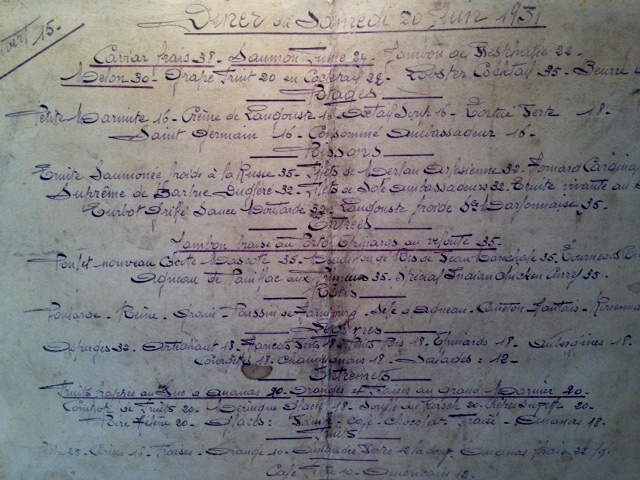
la marchande de fritesThe time was August, 1932. The place was Monte Carlo. This little gem is a menu from an eatery patronized by Helen and her fellow ballerinas, the “American Beauties.” Though the cover is a print, the interior meal selections were meticulously   penned in an ultraviolet flourish.

Helen collected a dozen or so such menus on her year-long excursion; pocketed from bistro’s, pubs, and cafe’s across Europe.  It is hard to say if management frowned upon this custom, or offered menus willingly for advertising purposes. Regardless, the simple beauty of the artwork and flowing cursive recalls a commitment to elegance and style long since abandoned.


la marchand menu

Gail Chumbley is the author of River of January, a non-fiction memoir.


Signposts

Chevalier0001

In Barry Levinson’s nostalgic film, Avalon, the central character, Sam, an old, old man shares a personal existential crisis. He tells his grandson of a walk he took around his old Baltimore neighborhood, and how he sadly found nothing he remembered, nothing familiar, no landmarks from the past. He explained that his distress was finally lessened when he found his now-deceased wife’s childhood home, and the old place was still standing. Sam admitted that until finding that old house, he worried for a moment that he never existed.

On Tuesday I led a book talk on River of January. The setting for this presentation was an assisted living facility, with an  older group of listeners. At first my audience stiffly withheld their reaction to the story, clearly reserving their judgement. This audience quietly measured my credibility, waiting politely before offering any encouragement. Lucky for me, as the story progressed, the weather in the room shifted dramatically. Tossing out an Ethel Merman reference here, and a Bela Lugosi picture there, knowing smiles and nods rippled across the room. Adding a Howard Hughes anecdote for good measure, the listeners and I became one–kindred spirits–celebrating the names and cultural references of another era’s childhood. Their earlier caution was cast aside as memories surfaced, validated in story and song.

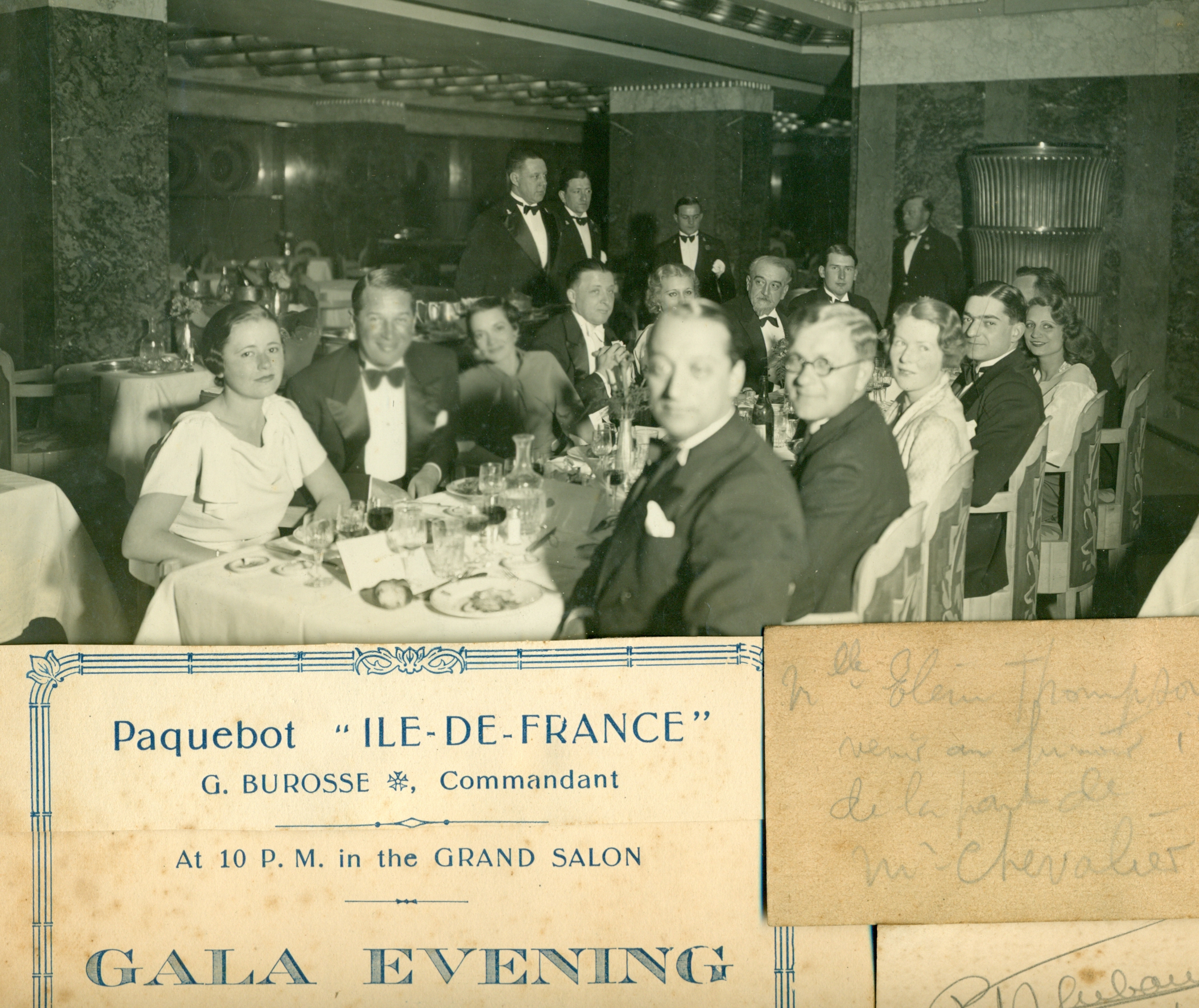
I’ve delivered the River of January talk to many groups in the last year; service clubs, libraries, and book stores. But senior facilities are fast becoming a favorite venue. The slide show and period music especially draws the older crowd enthusiastically into the story. On one particular slide, for example, a handsome man sits in the foreground, smiling directly into the camera. I like to point out this individual, identifying him as the young French actor, Maurice Chevalier. The ohs and ah’s are audible from the seats. It funny, but in other settings, projecting this same slide, the reactions are markedly different. Blank expressions seem to say “Should I know this guy?” So it is with great pleasure that I can validate this historic story with people culturally moored to the time period.

Drawing references to the past, both visually and with music means something tangible to elders. Satisfied faces momentarily lose age, wrinkles and graying hair. A child’s wonder shines from bright, animated eyes, as we share together the journey back in time to the world of Helen and Chum.

By the end of the presentation my friends at the assisted living facility treated me as an insider. These folks were in no hurry to leave and lingered long afterward to share their own reflections of years gone by. They talked of their experience using terms they believed I would understand. “Goody Goody” wafted from my cd player, serenading and livening the closing clean up. My husband tended to the packing, because I had people to visit, and stories to hear. In the glow of the presentation, accompanied by the melodies of another era, joy colored our personal exchanges, as these seniors beamed in the knowledge that indeed they, and their times are remembered.

Gail Chumbley is the author of River of January, available at www.river-of-january.com and on Amazon.


I Wouldn’t Change A Thing

th


One of my earliest recollections is kneeling on the cold basement floor in our Spokane house, lining up plastic Yankee infantry against an equal number of plastic Confederates. My brother would narrate the battle that was about to break loose, building up the suspense and drama that was destined to follow. But the art and beauty of the exercise was in the meticulous preparations, lines crafted and lovingly placed by my brother, an expression of his deep reverence for the past. And our fascination wasn’t limited to the basement, but rose upstairs to the rest of the house.
Our childhood dinners consisted of meals cooked for quantity, not quality, my mother bending over backward to please her crew of picky eaters. One brother only liked tomatoes, no lettuce. Another wouldn’t eat onions, and I wouldn’t eat potatoes, (I’ll get fat!). My mother should have tossed a loaf of white bread and peanut butter on the table and said to hell with us. But in truth, our dinners weren’t ever about the cuisine. That table was a place of interaction, debate and information. And we, my parents and three brothers talked about all sorts of topics; politics, swing music, classical music, FDR, and JFK. My mother knew every actor and singer ever filmed or recorded, so popular culture also had a rich review over those dry, bland hamburgers. My younger brothers typically listened and chewed, passively soaking up the banter as a normal dinner conversation.
My childhood memories are mainly a potpourri of All-American road trips. Slides of Montana’s Lewis and Clark Caverns, the Little Bighorn Battlefield, Yellowstone Park, and Wall Drug, flash on the screen of my memory. These destinations were of such value to my folks; that they packed up a station wagon, replaced later by a truck and camper, crammed in their four noisy kids, and made many magical history tours. I especially remember standing on Calhoun Hill near Hardin, Montana, wondering how Custer missed the massive Sioux and Cheyenne encampments. Constructed in 1805 on the Pacific coast, Fort Clatsop, Oregon sheltered the Lewis and Clark Expedition. Visiting the site permitted me to physically touch this stockaded sanctuary of another time.
Wonder became permanently hotwired into my temperament.
A degree in American History came as no surprise to anyone. As in medical families, military families, or law enforcement families I followed my childhood path, nurtured in a family that treasured our nation’s history. As though I had been handed Diogenes lamp, illuminating past events became my present-day pursuit. I had to share this passion with others. This journey of discovery was not a solitary enterprise. So earning a secondary teaching certificate set my future into motion, allowing a way to disseminate the fire I felt for the past.
What a ride! I am now at the other end of my teaching career, and can honestly say that I even loved the tough days. I made a living out of being myself, constantly reinforced with a sense of liberation, and vindication. Magic happened after that tardy bell rang. And I knew then as I know now, that there was no cooler place to work than in my classroom. Who needed Hogwarts, I had Lincoln! Service projects came to life behind that door, efforts such as the Veterans Oral History Project in conjunction with the Library of Congress—fund raising for the World War Two Memorial—donations to support local history museums, and the yearly spray of flowers for the Vietnam Memorial each Memorial weekend.
And most gratifying of all was the connection students made to an earlier America. They grew beyond what they could see, feel and touch. They became more than just themselves. I can recall an essay on Richard Nixon where a girl ruled his desire to win at all costs, cost Nixon his place in history. Another student who pointed out that after Washington’s humiliation at the 1754 Battle of Fort Necessity near present-day Pittsburgh, later foreshadowed the President’s crack down on the 1794 Whiskey Rebels in the same location. The student pointed out that Washington would not be made a fool twice in the same place forty years later. Brilliant, brilliant, brilliant.
Those voila moments transcend the past to a present relevance. How Washington used his few military strengths to undermine the military strengths of the British in the Revolution. How Ho Chi Minh used those same strengths to undermine the same American efforts in Vietnam. Likewise how British violation of American trade lead the US into the War of 1812. And later how German violation of American trade lead the US into World War One. The examples are vast and instructive, processed with the same reverence and regard as my brother and his toy soldiers.
Now, in retirement, an entire archive of historic primary sources have fallen into my lap. An original story has come my way detailing a young ambitious couple who challenged the Twentieth Century and left a notable trail. I have been handed a micro-history narrative, to add to the larger picture of America. What an unexpected gift for this history addict!
Writing River of January has fed my soul. It turns out that Chum, my main character, rubbed shoulders with aviators Howard Hughes, and Amelia Earhart, and even actress Kathryn Hepburn. And from his words and records, he barely took notice of their celebrity. Helen, the other main character, knew “Red Hot Mama,” Sophie Tucker, the dashing Frenchman Maurice Chevalier, and a very young Humphrey Bogart in his first film. Those people were her peers and she rolled with that crowd on an equal footing.
This story grips my heart. I’ve was groomed from my parents dinner table to craft such a book. This Saturday missive is perhaps my long overdue expression of gratitude. I am thankful for my hardwired passion for earlier times, and how vital a role the past eternally plays. I am grateful that I value ideals, ideas and vibrant lives over material possessions . . . I will never be poor. I thank the Lord my heart is enriched by remembering what came before.

Gail Chumbley is the author of the creative non-fiction work, River of January

West Palm Beach

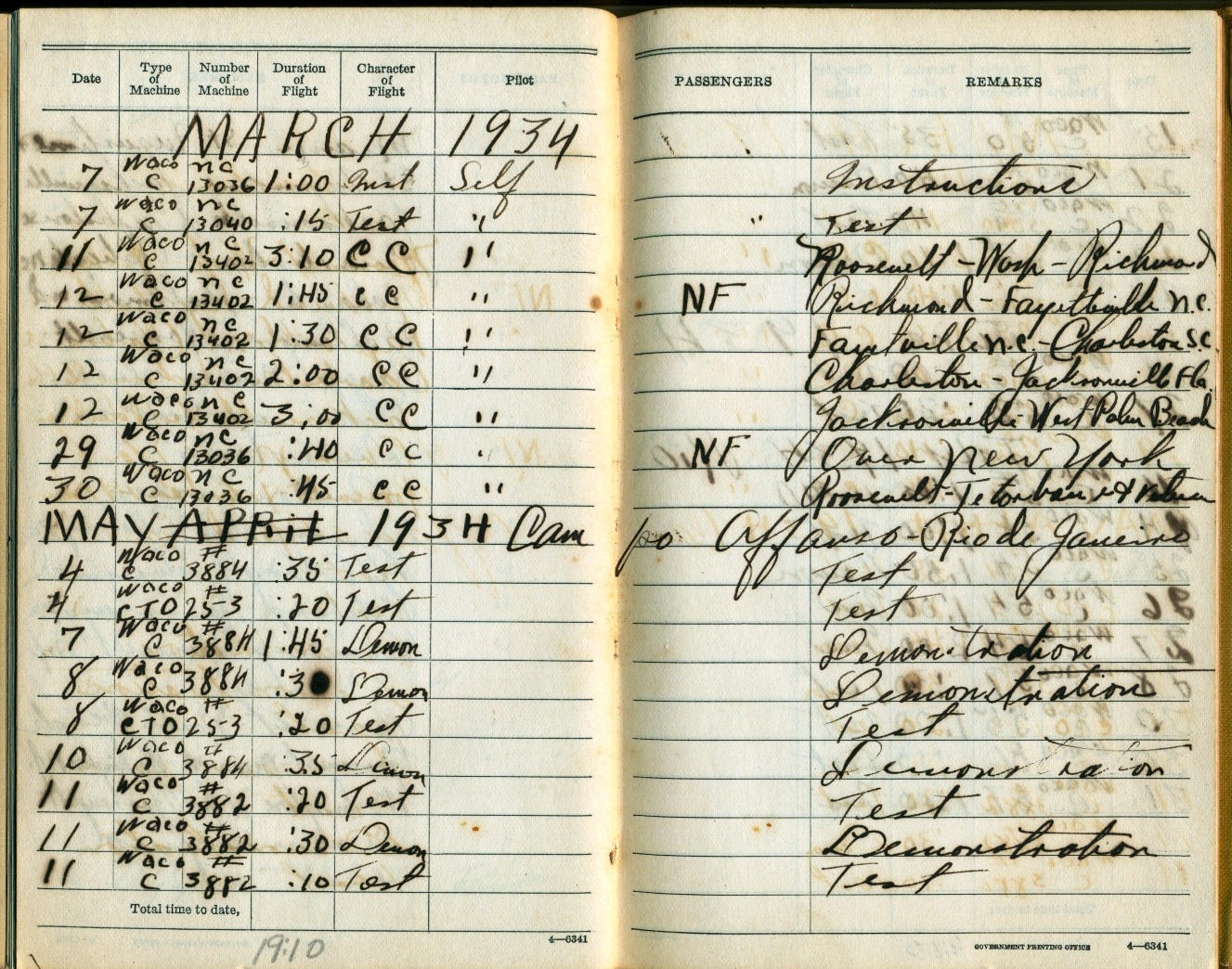
logbook2An excerpt from River of January for your Sunday evening.
At first he told himself that Howard Hughes’ good wages kept him in West Palm Beach. But Chum also knew his curiosity played a big part in remaining at the field. The famous tycoon was already a legend in aviation, as well as in motion pictures, and the young pilot had long admired self-made men. And though he looked forward to his new job, he was just as eager to watch the millionaire up close.
Over the next few weeks, Chum noticed that Hughes followed the same pattern each day. His driver motored up to the hangar in a Cadillac LaSalle, closely shadowed by another large Oldsmobile. The famed pilot stepped from the backseat, unfolding all six foot four inches of him. At same time, an entourage of followers poured out of the second car, casually circling the celebrity.
Chum also noticed that the aviator only spoke to his head mechanic, nodding frequently while he smoked a cigarette. Then Hughes and company inspected the rest of the facility—the tall tycoon facing the ground, continuing to acknowledge his lead man’s comments.
If he looked up, Hughes sometimes nodded to Chum or to the other men in the hangar. Then with this morning ritual finished, Mr. Hughes and his retinue returned to their waiting cars and drove off to other unknown destinations.
On one especially stifling afternoon, Hughes unexpectedly turned up at the steamy buggy hangar, departing from his usual routine. Caught off guard, the crew quickly picked up their tools and bustled around, appearing busy. Hughes seemed not to notice.
Instead the famed pilot looked at his head mechanic and loudly announced, “These gentlemen and I,” pointing to his cohorts, “are leaving for Los Angeles. Since that plane,” Hughes stuck his thumb toward the Waco still on the tarmac, “was used, we will travel by rail.” A few of the boys glanced Chum’s way.
“Yes, sir, don’t worry about a thing here, sir,” the foreman answered. Hughes nodded again, and he and his associates left the field in a caravan of black autos.
“Wonder which beautiful actress Hughes is meeting.” A young grease monkey sighed as he twirled a ratchet around his finger.
“Jean Harlow, you think?” said a kid still staring out the hangar doors.
“My money is on Paulette Goddard,” added another, plunking coins into a soda machine.
“Back to work, boys.” The head mechanic laughed. “We’re not going anywhere.”
Chum smiled. Just the phrase, “back to work,” began to amuse him. As far as he could see the commotion was all “make work” instead of real industry. He was becoming restless from boredom.
After Hughes’ dramatic exit, the crew mostly loitered around the hangar, sweating in the muggy heat—listening to the radio, smoking, sipping cokes, and playing cribbage. After a week of this meaningless inactivity, the young pilot, staring blankly into an immaculate engine, abruptly resolved, “As soon as I’m paid, I’m gone.”
Three monotonous days later, Hughes and his party surprisingly reappeared at the field. The aviator had apparently changed his plans at the rail switching station in Jacksonville and never turned west. Still, Hughes’ return made no noticeable impact, and the days continued to drag on: Cokes, cigarettes, cribbage, and heat.
While he was perched on a ladder examining another pristine Lycoming engine, Chum heard his name from across the facility.
“Over here,” Chum called back, “Up on the ladder.”
“Telephone call, buddy,” a mechanic hollered. “In the hangar office.”
“Thanks, JJ,” he yelled, climbing down.
The voice on the line hollered, “Chum? That you, sport?”
Chum paused, trying to place the echoing but familiar voice. “It’s me, boy, Hugh Perry.”
Recognition lit Chum’s eyes,
“Hey Mr. Perry, good to hear your voice. How are things up north?” Perry worked as the executive of sales for Waco Aircraft in Troy, Ohio, the company that manufactured his airplane.
“Well, now, I’m real good Chum, and business is pretty good. In fact, that’s what I’m calling about.”
Chum felt his pulse quicken. “What can I do for you sir?”
“You know, you did so damn good in that race and, well, would you be interested in working for us, Chum?”
Feeling his spirits begin to soar, Chum had to ask, “What would the job entail, Mr. Perry? Would you want me in Troy?”
“No, no, wouldn’t do that to you, Chum, Troy is no place for a dapper gent like you,” Perry chuckled. “We have this new model and there is some interest for it in South America. Smiling, Chum sensed the skies were opening and the archangels were tuning up a hallelujah chorus.
“That sounds real attractive, Mr. Perry. I think I would be interested in a job like that,” even his voice smiled.
“And here I thought you would be all star-struck, slumming it with Howard Hughes,” Perry laughed. “But when this position came up, your name was the first to come to mind. I thought I would give you first refusal.”
“I’m glad you did Mr. Perry, and your timing is pretty good, I was thinking about a change anyway. Guess I miss my Waco,” Chum laughed. But before hanging up, the young pilot suddenly wondered, “Mr. Perry, what equipment are the South Americans interested in?”
“Keeping up with our new aircraft are you, kid?” Perry sounded pleased.
“I guess I have, sir.”
“Well, the Brazilians are very eager about a new fighter plane we’ve developed.”
“A fighter?” Chum repeated, baffled.
“I know, I know—don’t understand what they would need it for either.”
Chum quieted in thought, wondering who could possibly threaten Brazil. “You still there, kid?”
“Yeah, Mr. Perry, I’m here. Just strange to imagine any South American trouble that would require machine gun strafing.”
Shaking off that concern, Chum again became enthused. “You shipping the demo model to Roosevelt Field?”
“At the moment the plane’s with the Navy. They want to test it, too,” Perry explained. “Our agreement was three months for those flyboys to check it out. We’ll ship it down to Rio de Janeiro after the military is done with it.”
Chum hung up the office telephone, and stood motionless, absorbing this implausible change of fortune. Chum slowly walked out of the office, stopping to appraise the entire, immense working space.
Mechanics continued to poke around the equipment, the lead man in the far corner looked over a clipboard, a cigarette, ash dangerously angled, wedged between his right hand fingers. Silently, the young pilot made his decision and headed out the open hangar door, leaving behind Ailor’s Waco Cabin, still parked to the side of the facility, and away from Howard Hughes and his West Palm interests. With a sense of elation, he cheerfully hiked the three miles to his hotel, collected his belongings, and caught a taxi to the train depot.
Restored, and back in control for the first time since the air race, Chum looked forward to returning to New York.

Gail Chumbley is the author of River of January. The book is available at www.river-of-january and on Amazon.com


The Crazy Gang

IMG_0340HPalladium0001

Excerpt from River of January

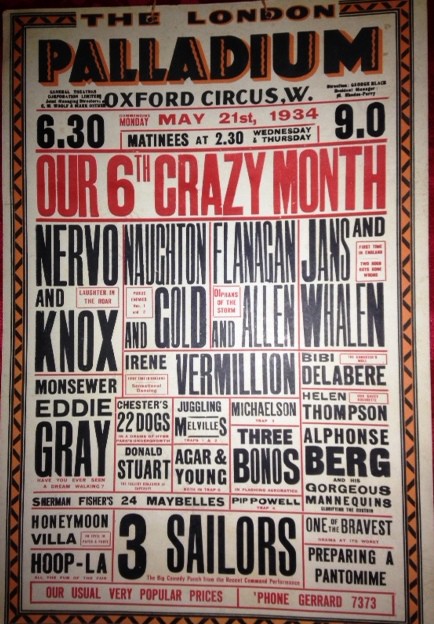
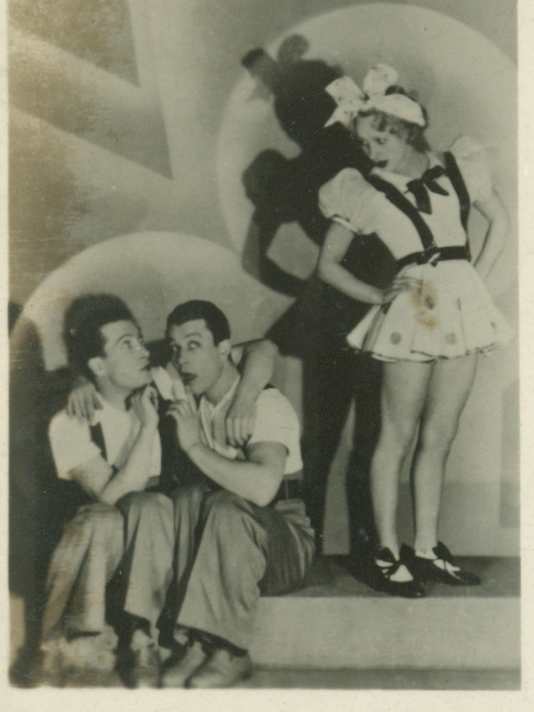
. . . “We made our first trip to the Palladium, they lettered my name on the billboard “Helen Thompson, Our Saucy Soubrette” whatever that means. I thought it was cute. Anyhow, we entered the theater through the back entrance and met a lot of the cast. Such nice people, too. They told us that “The Crazy Show,” that’s what they call it, has been coming back to the Palladium for years. This group of comedians is known, together, as the “Crazy Gang” and made us feel very welcome. They explained that the same crowds return each season to see their old friends in the show. We felt pretty excited opening night when Jans and Whalen took the stage after the all-cast extravaganza and began their routine. Harry Jans told the one about the soldier who had survived mustard gas and pepper spray becoming a seasoned veteran. No one laughed. The audience hated them. No one booed, and they clapped a little when Jans played and sang, “Miss Porkington Would Like Creampuffs.” Remember that silly song? Other than that polite response, not a snicker sounded in the whole house. Then I went on stage and performed a widow comedy monologue; black gown, the whole bit, and I bombed too. With all those spotlights trained on me, if it hadn’t been for the coughing and murmuring I would have thought the theater empty. It was horrible— nauseating— I couldn’t believe how miserably we failed. WE LAID AN EGG!

After the show some of the regulars took us out for drinks. I wanted to run back to the hotel and hide. They led us to a nice pub, but I felt so shook up I could hardly light my cigarette. They explained that English audiences often don’t understand American humor. In particular, my widow act seemed more offensive than funny. “Too many widows after the Great War,” one comedian named Eddie Gray told me. “Not funny to families with loved ones who died in the trenches.”

River of January is available at www.river-of-january.com or at Amazon.com