A French Legend

Miss2

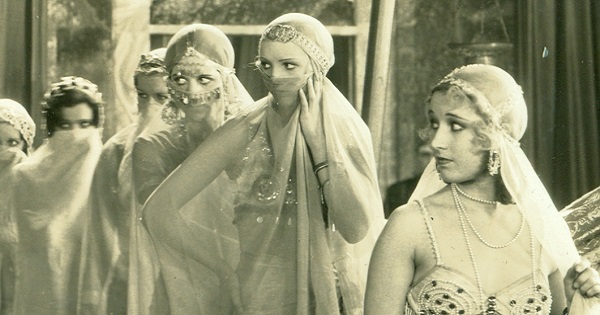
“Rumor has it that Mistinguett served as a spy for the French government during the Great War while she was dancing across the continent. They may be watching her again because of that new leader in Germany,” Lillian remarked as the company sunned themselves on exclusive Larvotto Beach.
“Who told you such a thing, Lillian?” Una, another dancer, asked skeptically.
“Didier, the older stage manager at the Terminus—he seems to know all about Miss.”
Charlotte’s eyes grew large. “How thrilling!”
“And she’s had many affairs with younger men,” Lillian continued, enjoying the attention. “You’re familiar with Maurice Chevalier?”
“Of course.”
“Supposedly they shared a passionate, very public romance. Miss launched his career when she plucked him from a music hall chorus line and cast him into his first film, La Valse Renversante.”
“No!” Charlotte blurted.
“Oh, yes!”
“Isn’t he a lot younger?”
“Thirteen years, according to Didier.”
“Lucky woman!” Charlotte said. The rest of the girl’s laughed at her response.

Page 75, River of January

Talk Back Wednesday

rojcover10

You’ve read the book, now share your reflections or questions.

Finish this sentence, ‘Chum’s greatest personal asset had to be . . . ‘

or

‘Helen traveled across the US and around the Atlantic world because?’

Post your responses and we’ll talk.

I would love to hear from you,

Gail

“River of January,” Oregon City Edition

Women600whelenhayes600w

             Hellooo Portanders!

Gail Chumbley presents her new work, “River of January,” Thursday, August 20th, 7:00 PM at the Oregon City Library.

Description OREGON CITY OREGON CARNEGIE LIBRARY copy.jpg

606 John Adams Street

Be grand to see you there!

Much Obliged

Peacock0002

Thank you for taking part in “River of January’s” free Kindle Weekend! Enjoy the story with my compliments.

Stay in touch. As you finish the book, drop me a line, add a review on Amazon.com, and be sure to tell a friend.

For more, visit the photo gallery at www.river-of-january.com

Book Two, “The Figure Eight” is in progress.

This Week, 1935

IMG_0191

The old pilot’s time with us grew to mean a great deal to me, personally, but made it that much harder to let him go at the end.

Chum’s last years brought him out west to Boise. It was much easier for my husband to care for him than the semi-regular flights to Miami, sorting out some kind of preventable crisis. Once his father settled in here, they were together every day at the assisted living facility. I believe their time together gave both of them a lot of comfort.

As for Me? I just loved to sit and talk to my father-in-law. If he had felt more spry I would have dragged him into my history class for my own version of “Show & Tell.” I mean, really! William Howard Taft was in the White House the year Chum was born! His life was a damn book. (see River of January)

On one particular Sunday we drove over for a visit, and brought him Mexican food . . . Chum’s favorite. I was anxious to talk to him because we had rented “The Aviator” the night before, the film about Howard Hughes, and Chum had worked for the millionaire at one time.

Me: So we watched a movie about your old buddy, last night–Howard Hughes.

Chum: Ha. He kept the Kleenex business in the black.

Me: (Oh, geez! How could he know that?) And your old girl friend, Kathryn Hepburn.

Chum: Yeah. Katy. She was a nice girl.

Me:(Katy? A nice girl?)

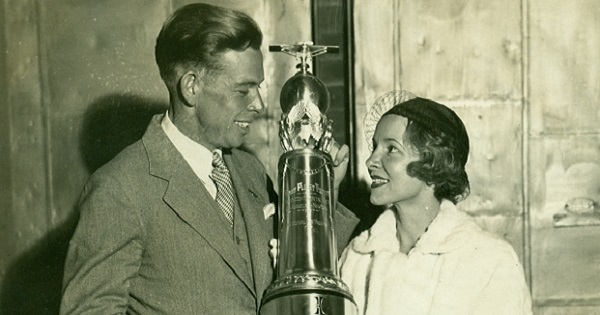
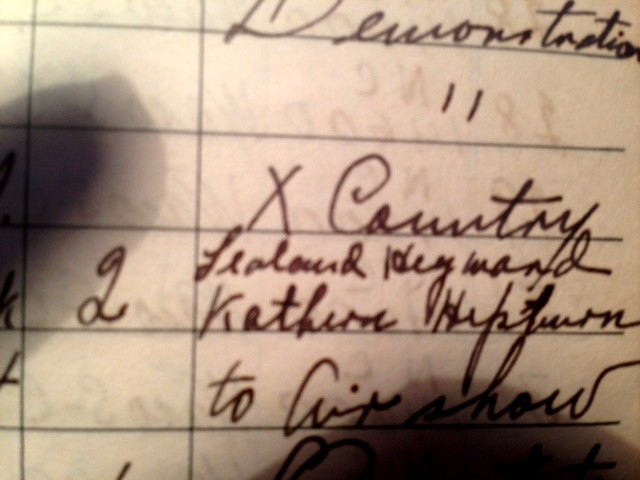
Chum: Her boyfriend, that theater producer, Leland Hayward–I taught him flying lessons, and she came along.

Me: Yeah. (Yeah)

And here it is folks, if you didn’t see at the top. The old history student has to whip out the proof. Have a nice weekend.

  IMG_0192

Gail Chumbley is the author of River of January. Available on Amazon.

The Meat Grinder

7804d740-1a8d-3515-a0cb-5ba757515e12

101 years ago today, Serb teenager, Gavrilo Princip shot and killed the heir to the Austro-Hungarian throne, on the heir’s fateful visit to Sarajevo. That one deadly act, carried out over a century ago, set into motion a series of events which ultimately resulted in the unimaginable bloodbath of World War One.

Last Wednesday while presenting my memoir, “River of January,” to a library group, an unexpected gasp came from a listener in the seats. My brain flew into immediate damage control “What I had said, (did I cuss?) Was the projector working behind me? Were my pants zipped? After only a heartbeat the cause dawned on me.

It was a 1928 snapshot of Mont Chumbley, the story’s central figure, beaming across the screen. He was uniformed in the garb of a Navy Seaman Recruit, proudly shouldering his rifle. He looks dignified in his pose, pleased at successfully becoming a part of the United States Navy—but his achievement had also left his family back on the Virginia farm in deep crisis.

Young Mont, “Chum” had required his father’s permission to join up, and the father had adamantly refused to go along with the idea. To modern ears, such as the listener Wednesday night, this obstruction seemed unpatriotic, a father ought to be proud; a military career today is considered noble and honorable. But not back in 1928.

The line that earned that unexpected gasp came after a direct quote from Chum. “Back then, in Norfolk there were signs in the parks saying, ‘Dogs And Sailors Keep Off The Grass’.”

We forget, but after the 1918 Armistice, America was truly sorry it had committed to war against Germany. The universal feeling was fighting in Europe had been a monumental mistake, and one that would never, ever be repeated. The country doggedly pursued isolation for twenty years until Japanese Zeros hit the Pacific fleet at Pearl Harbor in 1941. Between 1919 and 1941 military budgets were annually slashed, recruitment limited, and the military faced near elimination by a nation and Congress bent on going it alone.

The Treaty of Versailles that officially ended the war, along with its League of Nations was soundly defeated by a non cooperative US Senate. The Washington Naval Treaty of 1921 strictly limited the number of ships each maritime nation could possess, and the Kellogg-Briand Pact, an agreement between the US and France literally outlawed war. The public also grew convinced that American bankers and arms producers had only pushed for war to increase their profits. Companies like Dupont Chemical, and the banking House of Morgan were dubbed “Merchants of Death.”

Internationalism was dead, Fortress America was born.

That was the political climate surrounding Mont Chumbley’s ambition to join the Navy and learn to fly airplanes. Understandably his family fervently opposed this decision, and his father did all he could to block his son’s hopes for a military career. Mont’s aunt said it best, “The military is a refuge for scoundrels.”

And even after enlisting, young Mont learned his chances of getting into a cockpit were slim to none in light of draconian budget cuts inflicted on the Navy.

America’s enthusiasm for foreign involvement, the military, and war had fallen into fanatical disfavor. The meat grinder that had been World War One left our nation outraged and remorseful . . . America would never make that same mistake again.

New York, 1933

HOWARD-AILOR HOWARD-AILOR-SALES-CORP

“So you’ve been to see all the big boys, eh?” commented a sales representative from Long Island who was seated behind a battered old desk. Airplane distributor Howard Ailor of Waco Aircraft studied the young man’s face. “And by the looks of you they all turned you down.”
“That is about right, Mr. Ailor.” Chum responded, trying to look confident. “I was hoping you might know of something out here, maybe something at Roosevelt Field.”
“I don’t know you, son, but let me give you some advice. Don’t dawdle around hoping for that phone call. This is no economy to sit by and wait for miracles. You’ll starve first. Push your way into the air business with your own equipment, that‘s what I say, and I can help you with that. We have some beauties right here on site.”
Chum listened to the silver-tongued salesman, surprised that he agreed with all Ailor had to say.
Chum also realized that he had returned to an America deep in the throes of financial depression.
Economic life in the 1920s had played out as a frenzied, unregulated party. By all appearances the country had embraced infinite prosperity. Insider trading and other shady practices reigned on Wall Street, where market manipulators pooled cash and bought up stock, artificially driving up values. Regular folk, believing they were on to something big, bought these tainted stocks as crooked investors dumped them, reaping fabulous profits.
Indiscriminate buying, using easy credit, pumped the overblown Dow Jones to ballooning artificial heights. Even private banks joined the frenzy, wagering the savings of their account holders to increase their own bottom line.
This facade of spreading affluence ensured the “hands off” economic policies accepted in Washington. Then the market imploded. On October 29, 1929, “Black Tuesday,” the savings of a nation disappeared with the steepest financial crash in American history. Thousands upon thousands of people were ruined and the enterprise of a nation dried up.
Young Mont Chumbley had resigned from the Navy without another job, and now found there were none. The pilot’s only and best assets were his optimism, his pluck, and an old Chevy.
“Over here,” Ailor directed Chum, as they walked toward a hangar housing a red-with-black-trim Waco cabin biplane. “This baby’s a real beauty, right? We can take it up for a spin, if you like, but you can’t have this one—it’s spoken for. Still cough up a down payment and we’ll order you a new one. It’d be here in only six weeks.
“I came here looking for a job—and you want to sell me an airplane?” Chum blurted in disbelief.
Ailor continued to rattle on as though the pilot had not spoken. “Hell! I’m feeling generous. I’ll even let you rent office space right here on Roosevelt Field for a percentage of whatever you earn as you get your footing.”
Chum realized he had never encountered such a smooth operator. Ailor finally faced the boy. “Look, you can’t negotiate with reality, son. And the reality is that there are no jobs. The country’s flat busted.”
Chum knew his mouth hung open in reaction to the salesman’s bald audacity. But he also knew he agreed. Ailor was absolutely right.
Chum needed to find a way to buy that airplane. It appeared to be the only real option open to him. With little money left from his dwindling resources, he found a Western Union office and cabled his mother in Pulaski for help. He hadn’t written or visited much since joining the service and felt badly his note only asked her for money. However, Martha didn’t complain or hesitate.
“I’ll run down to our bank in town—still solvent, doors open,” she wired him right away. “A thousand, Mont? Is that enough? Where should I wire it?” Martha would still do anything to help her boy.

River of January by Gail Chumbley available at www.river-of-january.com and Amazon.com

Roxy’s Friend

Maria GambarelliThis lovely lady is Maria Gambarelli, prima ballerina. Miss Gambarelli was well known to New York audiences in the 1930’s for her dazzling performances at the Roxy Theater. In addition, she regularly appeared on Roxy Rothafel’s popular radio program, “Roxy’s Friends.” In 1932 the dancer organized a troupe of New York ballerinas for a grand tour of European cities, to promote America’s cultural image. Helen auditioned for Miss Gambarelli and won a part in the production.

Arriving in Paris the company, christened the “American Beauties,” opened at the exclusive “Le Ambassadeurs” dinner theater to favorable reviews. However, in a contract dispute with the William Morris Agency in New York, in association with the Lartique Agency in Paris, Miss Gambarelli abruptly quit. The eleven American ballerinas were left abandoned, facing an uncertain future on the continent.

For more of the story read River of January, available at www.river-of-january.com

The Outside World

My mom took a job in the early sixties with the US Postal Service. At first it was part-time, mostly needed at Christmas, but by 1966 she hired on full time. 

There were four kids, a house, and a yard, and Mom probably was pretty overwhelmed—something today I fully understand. For help my parents decided to host a student each term who attended a secretarial school in Spokane, called Kinman Business University. Lord knows what kind of credential awaited these young ladies after completion, but students did acquire skills such as shorthand, typing, filing, and other tasks.

The first girl who who came to stay with us was named Corrine. I can’t remember exactly the year, most likely around 1965 or 1966. I was in fourth grade. 

Corrine came to us from Alaska, and I remember she told me she was part Filipino or Native American, or both. I thought that pretty cool, Corrine to me symbolized the wonder of the outside world. 

Our house was constantly in a state of chaos, with quarrels, messes, a blaring TV, with people coming and going—chaos. But to walk into Corrine’s small quarters felt like a completely different world. All of her things were neatly stowed away, her bed carefully made, and the space even smelled differently than the rest of the house. I loved visiting her room, as it felt like an oasis of tranquility in a sea of crazy disarray. And it was in her little sanctuary that serene Corrine shared her life with me just a little.

A picture sat on her dresser of a boy. When I asked who he was, she told me his name was Ty, and that they planned on getting married in a few years. Married! I never knew a girl who had plans to get married! The only people I knew who were married were parents, and they were boring. 

He was called Ty, short for Tyrone, and he was visiting Spokane soon. Ty had received his draft notice and following basic training in the Army, he would ship out to a country called Vietnam. Corrine clearly missed him very much, and was anxious to see Ty before he flew to Southeast Asia.

My memories of his first visit are a little vague. I do recall that they sat on the couch in our living room and held hands in front of my parents. That moment struck me as fascinatingly real. 

Looking back I am sure that there were much deeper emotions at play, but whatever vibes filled the room zoomed over my 10-year-old radar.

And then Ty was gone.

The school term ended, and Corrine packed up most of her things and returned to Cordova for the summer. I’m not sure of the details or decisions, but she did return to us the next fall. Once again her room became that wonderful respite from the anarchy of the rest of the house. Ty’s picture again graced her dresser. 

Letters began to arrive to our house written on onion-skin parchment, marked AIR MAIL, bearing Corrine’s name. I’d never seen stationary like that, and she explained that was the cheapest way she and Ty could exchange letters. The paper was light blue, and felt like stiff tissue, but held its shape without creasing. Corrine had stacks of it, both fresh and received—the only sign of clutter in her neat little world.

Finally Ty came back to our house, and this visit was very different from the first meeting. The couple did not sit on the couch and hold hands. Not this time. My pre-teen sensibilities were shocked to see a grown man lying across her lap on the couch sobbing like his heart had broken. 

Poor Corrine! She, too, was dissolved in tears; red, puffy eyes behind her glasses. Ty couldn’t seem to help himself,  or compose himself, and he wouldn’t let go of her. The whole situation felt very surreal. I didn’t understand. How could this orderly girl, and her once orderly fiancé come apart like this, and in front of all of us?

That chapter occurred a very long time ago. My mother still worked, and there were other girls we housed. Still sweet Corrine and Ty live on in my memory as if only yesterday.

I grew up, went away to college, earned a degree in American History, becoming a teacher. 

For years and years I taught a unit on the Vietnam War to high school juniors. I recited the facts surrounding America’s entrance into that long, long, conflict. But in all my experience with those lesson plans, the veterans who visited my class describing their personal war, the analysis by historians we studied, nothing affected me more than the tragic transformation of that broken young man from Alaska.

Gail Chumbley is the author of the two-part memoir “River of January,” and “River of January: Figure Eight.”

Chumbley has also authored two stage plays, “Clay” on the life of Statesman Henry Clay, and “Wolf By The Ears” an exploration of American racism and slavery.

gailchumbley@gmail.com