Sharing Our Truth

Image

I retired from teaching last May after more years in the classroom than I care to admit.  No longer constrained by rules, rules, and more rules, I began friend-ing my former students on Facebook.  What once was ethically frowned upon, is now my link to my past career.  That being established, I have enjoyed viewing the posts the kids have put up since graduating high school.  In something akin to an educational diaspora, these 18 year- old’s are encountering their first experiences away from home.  Of course that includes washing one’s own laundry, filling up on starchy food, and getting out of bed for class without mom.

The pictures are charming.  Girls, arm in arm, who only a month ago were strangers, now glow, linked together in this new adventure as best friends.  The boys seem less inclined to pose.  Instead they splay across the floor of a dorm room, stuffing pizza and chips into their smiling mouths.

Still the experiences behind those photos may be the most profound in life.  Whether the setting is a dorm, or an apartment, or a cave, the ritual remains the same.

I remember best, parked on the bathroom floor in my dorm room, talking earnestly and laughing many late nights.  In my new family of girls, we revealed our essence to one another, creating a link that I cannot replicate today with new acquaintances.  Established when I was naively open, without those worldly defenses I have perfected over time, those friendships have endured.  Fertilized only with an occasional Christmas card, or a stray email–when we get together, we pick right up where we left off.

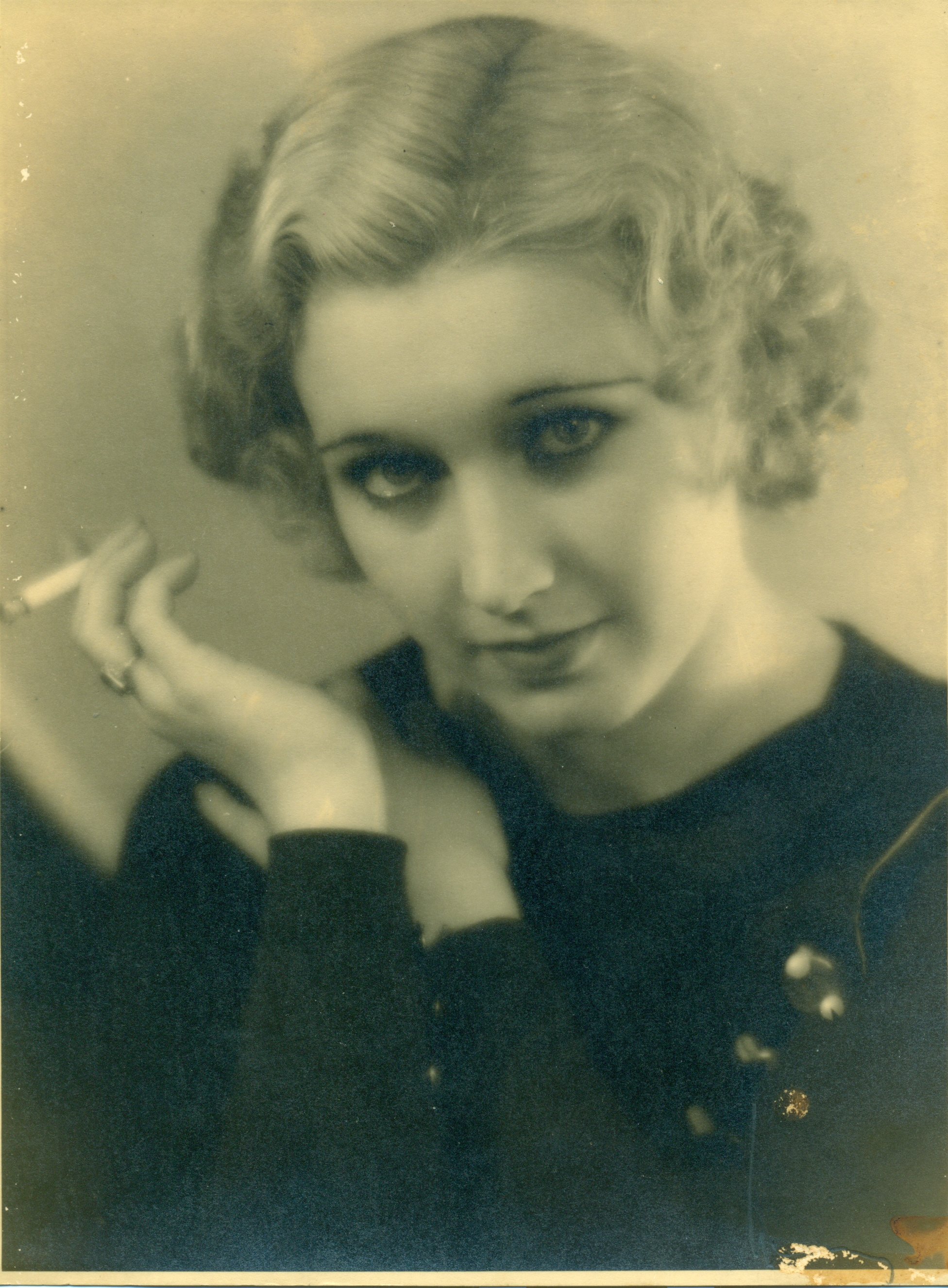
Helen, with no opportunity for college, shared a similar bonding experience with her “new” friends touring Europe.  As discussed in my book, River of January, she danced in a ballet company called, “The American Beauties,” who together performed first in Paris, and traveled as far as Algiers from 1932 to 1933.  In fact, the girl and her fellow dancers patched together their own version of a Christmas celebration at a hotel in Islamic North Africa.  She too, relished the late night yakking sessions, the joy of carrying out pranks, such as the night a group of them short-sheeted the bed of two other, unsuspecting dancers.  The picture above is a charming example of Helen purely celebrating life.

Later, these women remained some of the best friends Helen ever had.  Traveling to her home in Miami from Los Angeles or New York, the old girls sat around Helen’s little kitchen table, enjoying drinks, reminiscing and laughing.  For a short moment, seated at that tiny white table, they again were the same young dancers who had reveled in an extraordinary and memorable learning experience of their own.

Smoke Gets in Your Eyes

th

She is bent over a small Mercury outboard, hoisting the little motor in and out of the water. Her hair is wrapped in a kerchief, much as it had been when she wired mine sweepers at the Bremerton shipyards during the war. Ailene has a cigarette in her pressed lips, Humphrey Bogart style. Her black and white knit shirt has a small pocket on the left sleeve, over her bicep, and tucked inside is a pack of cigarettes–her brand, Kent. At the end of her day on the lake, my grandmother regularly downed a couple of high balls of Canadian Club, on the rocks.

My life with my grandmother has aided tremendously with the writing of River of January.  and the sequel, The Figure Eight. She, like Helen and Chum held lifetime memberships in the “Greatest Generation,” so her attitudes, word choices, and music preferences shape my thinking while I write.  Sadly she died in January, 1990, of lung cancer no less, taking a piece of me with her.

As for smoking and drinking, Chum appears as one of the few alum from that era who tended to nurse a beer, rather than chug, and chewed his cigar more than drawing a lung full. Helen, however, much like my grandmother, relished her bourbon every evening, garnished by a lit Chesterfield, and proceeded to enjoy a whale of a good evening.

Smoking and drinking blended into American culture in the 20th Century, unlike the prior or later era’s that demonized the practices. As I researched River, sifting through voluminous piles of documents, I encountered alcohol and tobacco ads placed next to those for baby formula and Ivory Soap, among other consumer goods. Liquor ads filled theater playbills on both sides of the Atlantic, nearly always featuring a shiny, sleek bottle bearing some stylish label. The message rang clear, drinking and smoking represented the height of sophistication, glamor, and sex appeal. Both my grandmother and Helen’s mementos, verified the truth that the party never stopped.

Casablanca, the celebrated 1942 film has struck me as the epitome of romantic culture in the late 30’s on into the war years. The gowns, the cosmopolitan style of understated and clipped dialog, and a perennial sense of righteous duty embraces that era. Americans lived hard and played hard, performing extraordinary feats while hungover at the least, or still intoxicated. These remarkable Americans handled drill presses, explosives, welding equipment, and other heavy industrial machinery, not to forget the operating end of an M1 rifle in a fox hole.

Out dancing, working a graveyard shift, partying, or fighting–all done with a cigarette resting, smoldering on virtuous, patriotic lips.

Gail Chumbley is the author of River of January, a memoir. Also available on Kindle.

Amelia Earhart?

Image

Piecing this story together didn’t come easily.  Though I have had the benefit of volumes of letters, telegrams, and pictures, among other sources, I still have struggled to get the story right.  The picture posted today provides an example of the most exciting finds I’ve made, but still shrouded with some doubt.

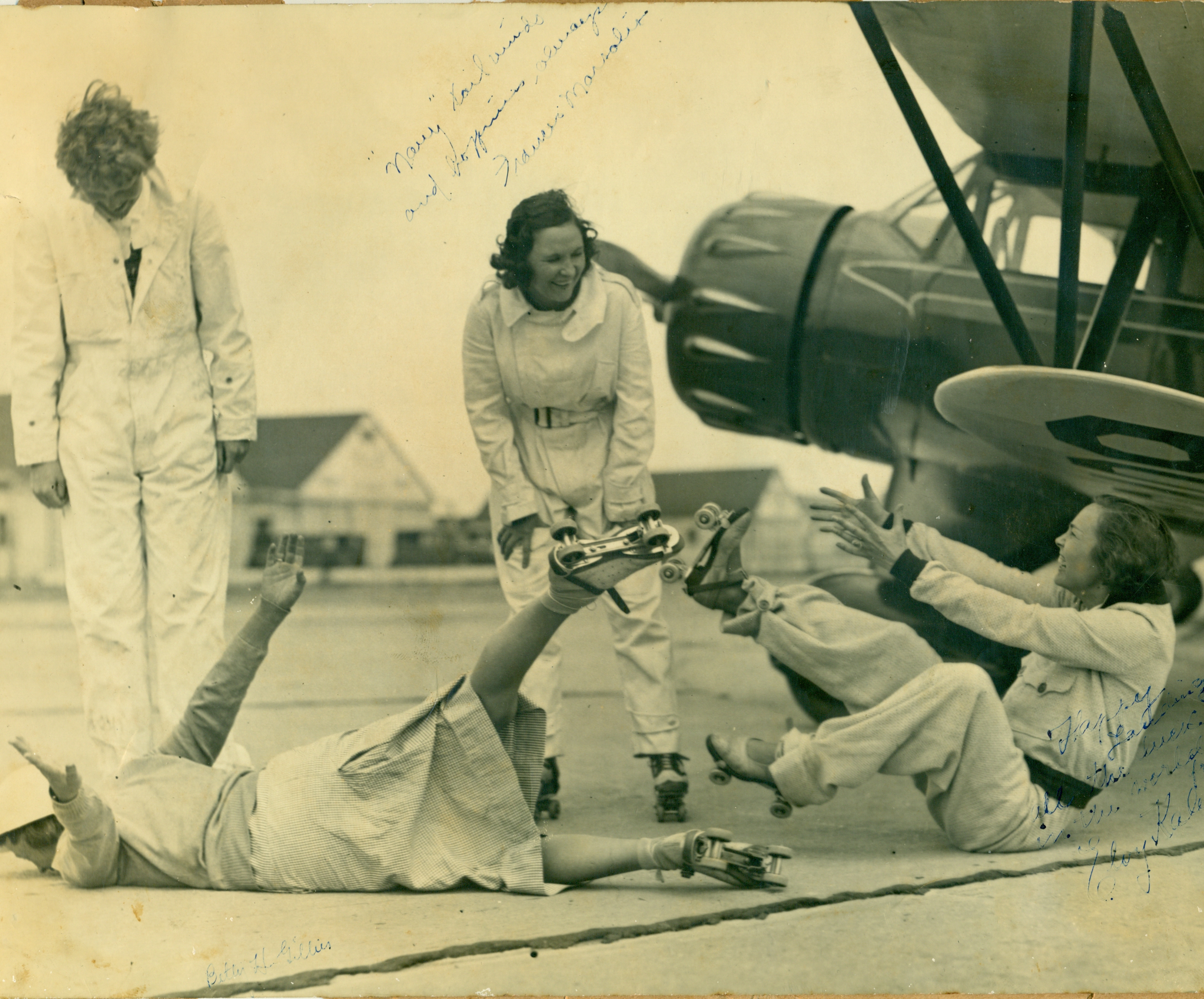
The girl in the center, in front of the Waco airplane, is Francis Marsalis Harrell.  From Chum’s thick scrapbook and an interview I conducted with him, I know her to have been his girlfriend.  They dated for a about a year after he left the Navy, and I believe he cared deeply for this young lady.  What brought me to that conclusion was piecework and conjecture.  First, during my interview sessions with Chum he lightly mentioned that his girlfriend used to time his trips into Manhattan from Long Island, but only when he drove female flight students into the city.  Second, when he looked through his ancient scrapbook, coming across her picture, he had to get up and walk around on his old legs, getting water from the kitchen and using the bathroom, before we could begin taping again.  I remember that clearly.

While researching my book, River of January, I gained a brief education in early aviation history.  I learned that there was a group of women who closely gathered in a league known as the “Ninety-Nines.”  This association of female aviators was a tight-knit assemblage, drawn together to survive in the male dominated world of flight.  These women resolutely broke ground for future generations of women to find their place in the cockpit.   These girls were enthusiastic and fearless pioneers.

Returning to the picture again, I found that three of these women pilots, all horsing around on roller-skates signed the photo.  Francis signed it “To Navy,” her pet name for Chum. The girl on her belly and the other one on her rear end are Betty Gilles and Elvy Kalep, other Ninety-Niners.  So the question for me has been, who is the fourth girl wearing her mechanic’s togs?

One morning, staring at this picture for the millionth time, the scales fell from my eyes and I saw Amelia Earhart.  You might see her clearly too and wonder how I missed the obvious, or think I’m nuts for believing it’s her.  So I ask myself, “Is the time right?  Is the place right? Are there other pictures from this publicity shot?”

The answers are all yeses.

This picture came from a google search of Elvy Kalep.

In the effort to reconstruct the past there exists uncertainty and conjecture.  However, thank goodness, also there exists logic and probability.

Boy, this has been fun.

Gail Chumbley is the author of the memoir, River of January. Also available on Kindle

Horizons

I was waiting for a flight to Portland yesterday, at the airport.  Watching my surroundings at the gate, I began to muse about the flight aspect of my book, River of January.  In the narrative, Chum left the Navy in 1933 finding there were only a handful of disparate companies that handled air cargo.  These businesses had  tried their hand at passenger travel in the 20’s, but costly overhead expenses put an end to that option.

Then Congress stepped in, underwriting airmail flights, and consolidating routes, that ended in the creation of the Federal Aviation Administration by the late 1950’s.  Travel after that boost, was best characterized by glamor and style.  People enjoyed spacious seating, formal dining on small white tablecloths, glass plates and silverware.  The food was fresh and hot–served by attentive stewardesses.

Now, I watch an over sized middle aged biker, sporting a wormy little ponytail pounding a pinball machine in an alcove.  He is clad in a loose, black t-shirt with the sleeves cut off, and his jeans riding on his butt crack.  Another woman is chattering loudly on her cell phone with great enthusiasm.  She’s clearly an open, affable lady.  Most of the other few folks booked on this flight are eating cold food, purchased from overpriced vendors dotted beyond the security gate.  The area feels more like a bus depot.

Then abruptly, out of the floor to ceiling windows, a small canary yellow biplane soars across the glass, piloted by a loan aviator.

It’s nice to know that for some, like Mont Chumbley, the wonder of flight has remained timeless.

Blind Dates

If I were to pick up the thread that eventually led to River of January and retrace the steps, the book actually began with a blind date.

A good friend of mine, a fellow teacher, introduced me to my husband.  She was originally from Miami and had moved west to get away from the crime and congestion.  My husband-to-be had followed them out on a visit and it was during that visit that we got together.

He came to my house with stories of his parents and their adventures.  Mostly he talked of his father, Mont Chumbley and “Chum’s” exploits in flight.  From his wallet my gentleman caller produced a couple of pictures proving his claims.  Next he told of his mother and her career as a dancer before and during WWII.   He knew less of her story, but shared it with the same enthusiasm as Chum’s.  My beau was careful to add that his father was still alive and that I would enjoy meeting him. (And that part was true, I did meet him and was charmed.)

Each time we met, following that first date, he brought more and more mementos to show me.  Photo stills of a handsome man posing proudly before his airplane, and of a girl with smoky mascara-smudged eyes, smoking a cigarette.  I grew increasingly curious with each new find.

Eventually, we married and his father, Chum, died.  By that time I had a large closet filled to capacity with his family mementos.  All of those letters, pictures, playbills, air show programs, were saved, in my opinion, for a reason, and perhaps that was to piece them all together into a book.

My husband courted me, a history teacher with historic materials, and sifting through those stacks made the decision to write obvious.  The responsibility fell to me and hopefully I have done their fascinating lives justice.

“Clubbing vs. Hitting the Bars”

A noteworthy feature emerged researching my book, River of January.  Helen and Chum’s mementos, particularly the photos, depict style and class–a sense of decorum and politeness that seems as faded as the old pictures.  I can’t help but wonder what happened to end the sense of self control and refinement in our social interactions.  And the sad conclusion points the damning finger at my generation.   We Boomers ushered in a coarsening of manners.

I won’t go into the brutality of the Vietnam experience, or the duplicity of Nixon’s Watergate escapades, but the era not only shaped my generation, but beat the hell out of us in the process.  Contrary didn’t cover my resistance to conventional expectations during my formative years.  If something was only done one way, I found another means.  I can’t help but remember the old bumper sticker that read, Question Authority.

At twenty, Helen wore fitted suits, wool or linen, silk stockings, fashionable hats, netting on the front, and stylish heels.  When she went on a rare date, (between her protective mother and working, her nights were busy,) the girl enjoyed going out clubbing.  Her drink was bourbon, and she smoked cigarettes from a silver case.  Her music was glamorous jazz, and her dances consisted of prescribed steps, face to face, and romantic.

I wore jeans.  I wore sweaters from thrift stores, or flannel shirts from my dad’s closet.  I liked Red Wing logging boots, and drank beer.  I loved Bobby Kennedy and the Beatles. The lead guitar, especially in the magic hands of Hendrix, to me was the summit of music.  And I hated conformity.

At the movies, my world changed when I witnessed a man cut in half in a scene from Catch 22.  Our evenings out consisted of beer at the drive-in, and dancing at country-rock taverns.  We hit the bars.  We closed the bars down.  Vonnegut was the visionary, and Lennon McCartney supplied the soundtrack. 

I believe that the youth movement made the effort to right wrongs in America, but Helen and Chum’s time actually accomplished more, enduring economic depression and defeating Fascism.  All the while looking and sounding, and behaving with grace.

Angels

Image

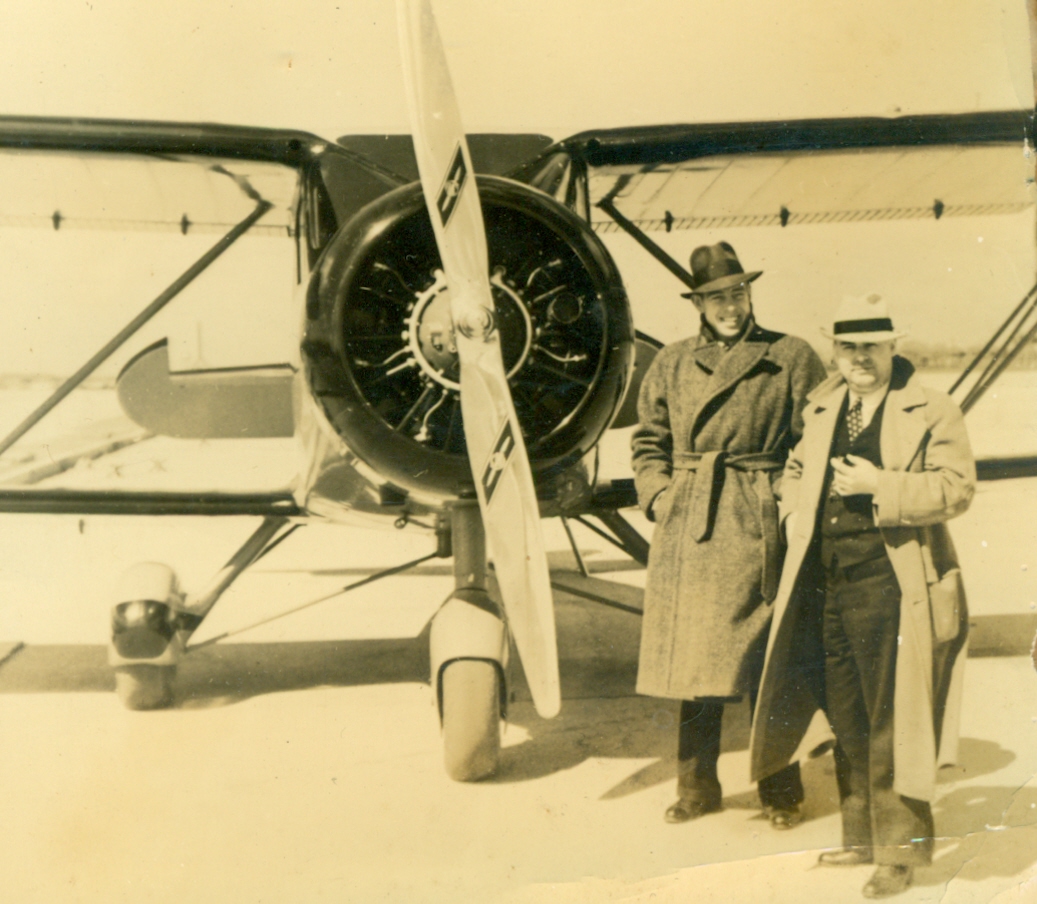
Today is Chum’s turn.  He’s the smiling, handsome fellow.  The man he is standing with is Howard Ailor, the New York distributor for Waco Aircraft Company, out of Troy, Ohio.  I chose to post this picture because of Ailor’s important role in young Mont’s start.

Some believe we all have angels who arrive when we need them, and set us in our life’s direction.  Howard Ailor was just such a man for Chum.

Following Chum’s discharge from the Navy in 1933, little opportunity–actually no opportunity beckoned in Depression-era New York City.  Enter Howard Ailor.  After making the rounds of all the existing air carriers in the city, Chum paid his last call out at Roosevelt Field, on Long Island.  A smiling, all-knowing, Ailor took one look at the young pilot and told him he’d have to make his own luck.  America was fresh out.

Crazy at it may seem, Howard convinced Chum to buy his own plane, start his own business, and for good measure moved stuff around in the Waco office, so the young man could have office space, too.  And that act of kindness made all the difference in Mont Chumbley’s life.

When I was a kid we played “Blind Man’s Bluff,” a game that began by spinning the person who was “IT.”  Blindfolded, the kid had to find everyone scattered around without looking.  In that same vein, Chum couldn’t see.  He was blinded by his uncertainty, a devastated economy, and no network of friends.  Howard Ailor stopped the spinning and sent the young man into the right direction.

Plastics

One-Word-Plastics

In Mike Nichols classic, The Graduate, Dustin Hoffman’s character is the guest of honor at his own graduation party.  Shaking hands, thanking well-wishers, one attendee herds him outside and says, “One word.  Plastics.”  There is no context or warning for the advice, and the exchange is well timed–very funny.

Turns out that the recommendation from the film was sage advice.

My husband was diagnosed with throat cancer back in the spring of 2010.  Following seven weeks of daily radiation, and powerful opiates, combined with a freighter load of other drugs, his colon ruptured by August.  Simultaneous to the colon perforation, chaos erupted as well.  The next twelve fateful hours involved a life-flight trip on a helicopter over the mountains, life and death surgery, followed by eight harrowing days in the hospital ICU.  In summary his recovery took better than three years, as he was literally coming back from the dead.

My husband’s body, initially ravaged by potent cancer drugs now pulsed lethal septic contamination . . . his mortality dangerously uncertain.

In a miniscule corner room, a broad aluminum apparatus, looking a bit like a spinning skeletal umbrella dropped from the ceiling. Numerous hooks dangled from this suspended fixture, but apparently not enough to treat his severe condition.  Hatstand-style steel poles were wheeled in, circling the raised, mechanical bed.  Every hook bore multicolored plastic bags, upside down, metering in good stuff while other plastic tubes, secreted beneath, drained out the bad stuff. The overall impression of the set up reminded me of an underwater documentary, featuring clouds of transparent jellyfish, crisscrossing uncountable tendrils. Easily fifty miles of plastic tubing splayed from above, inserted into all of his orifices-all of them.

When the medical staff ran out of natural holes, they manufactured more conduits using hypodermic needles. Blue and green plastic portals were punched into his wrists and upper arms. Threaded in were additional plastic tubes that pumped fluids, battling to purge his body of poison.

The liquids pushing through those tubes, out paced the liquids draining out, leaving his body strangely distorted.  Bloated, his eyes had swollen shut and his nose stretched broadly across his cheeks–fingers like frankfurters. As he hovered between life and death, his distended condition revealed the herculean battle against toxins within.

What my eyes could see in that little cubicle, my mind failed to process. This ordeal–his grim condition, the possibility of his death, the suddenness of the disaster became more that I could grasp.

I stopped eating, struggled to find sleep, and wandered through my days in a daze. The plastic lattice work draped over that distorted stranger removed any conscious balance of a normal life. When living in my own skin reached critical mass I realized my sanity had reached a breaking point. There was no solace to be found, no help, nothing but a mental abyss–and that couldn’t continue. I had a husband and family who needed me.

So I began writing my first memoir, River of January. I had idly contemplated starting this project for many years, telling myself that someday I’d commit the story of Helen and Chum to paper. Now, living in the middle of a nightmare, writing became a necessity, and the book began to take shape. And as dreadful as those early drafts were, I kept at it, white knuckling each word, sentence and paragraph. Somehow, in that silent struggle, I eventually began to recognize my face in the mirror again. I felt a little hungry and started to eat real food now and then.

Since that horrible episode in 2010, I can announce that he lived. I can also attest to the restorative powers of writing. (Therapeutic magic as far as I’m concerned).

But that creepy ‘suit’ portrayed in “The Graduate” offered up a great career tip. I think owning some hot plastic stocks might have covered the medical bills accrued from his difficult, extended stay. Hospitals go through plastic products like nothing I’ve ever witnessed. I can still see those icicle-like plastic bags and webs of tubes dangling in every direction from the ceiling, weaved across and under his bloated torso. A synthetic product that aided in saving a life.

Correction–saving two lives and creating a memoir.


Out of Bounds

Image

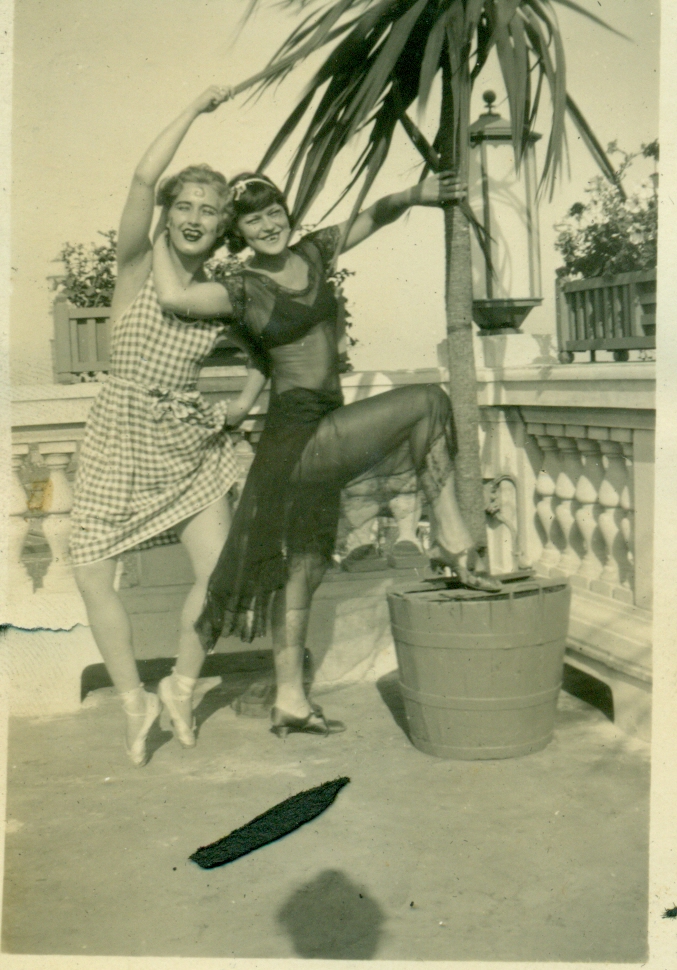
This beautiful girl is the subject of my new book, River of January.  Her name was Helen Thompson, and as is evident in the photo, she was a beauty.  As a little girl, Helen began dance lessons, specializing in ballet.  Her repertoire expanded over time, training professionally in tap, with acrobatic, and gymnastic embellishments.  

When she became the breadwinner, following her father’s death, her professional career grew to include performing on three continents with a stint in Hollywood.  The stage became her home, and she knew her business.  Helen was an artist and her canvas was the beauty expressed under the spotlights.  From what I have gathered in my research, she still respected auditions, and took no job for granted. 

However, it was off the stage that Helen faced her limits.

Some of her shortcomings were honest, for example she never learned to cook.  But many of her limits were imposed by others, especially her mother who wanted to keep her daughter dependent and needy, convincing the girl that she would never succeed at marriage, or any pursuit other than dancing.

If I had been told that I would write a book in three years, I would have answered, “A huh, on my voyage to Mars with Elvis.”  But unlike Helen, my family and friends could say nothing but wonderful, supportive things, encouraging me to spread my horizons. 

While her support system failed her for selfish agendas, mine has believed in my abilities outside of my career as a history instructor.

Helen was bound by her mother, while my dear one’s have kindly set no boundaries.

Folding Fitted Sheets


Folding fitted sheets is a pain.  Sometimes I can match those rounded corners fairly well and the rest of the sheet folds up reasonably.  Other wash days those stupid bottom sheets just bundle impossibly.  More than once I’ve settled for winding that cotton mess into a roll and stuffing it in the closet. 

I have spent over three years sweating over my manuscript, River of January, endeavoring to get the book right.   The first draft back in May of 2010 was, well, horrible.  I am aware that a few copies of that version are floating around, and the knowledge of those drafts out there makes me want to reach for a bag to put over my head. 

However, over time, with the help of some very nice and patient people–my family, friends and legions of my students who listened, helped my style improve. 

It will never be perfect.  The book will probably end up with some goofs that no one picks up on, until it is printed.  But I cannot rewrite forever, fit those corners to perfection.  The process has to move forward.