
River of January Kindle Sale is on!
Doors close tonight at 10:00 PM
So it’s only four minutes of fame. I’ll take it.
GC
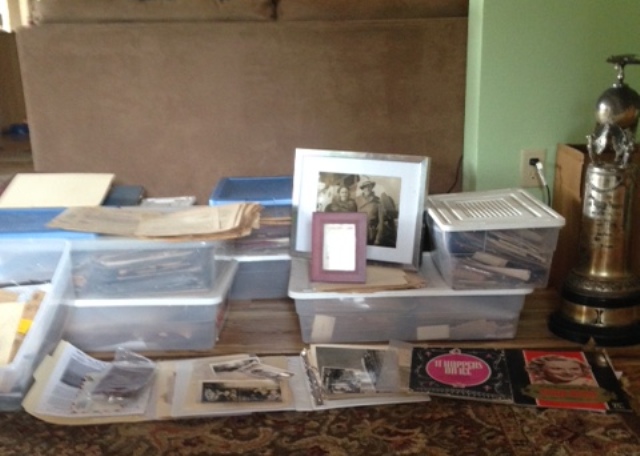
A portion of the archive behind River of January

Europe
1932
After Brussels, Elie visited nearly every town Helen played, frequently heralding his arrival with a spray of flowers waiting for her at each hotel.
“Please, please invite your friends to join us on our outing,” Elie cheerfully encouraged Helen.
In Paris, where Voila was performing, Elie motored a carload of Beauties to the countryside, stopping at the Bourbon Palace of Versailles. The American girls strolled amid the recovering gardens, the graceful flowing fountains, and grand buildings that had been severely neglected during the Great War, not so long before.
“Elie, this place is magical!” Helen exclaimed. “Have you been here before?”
“Only once,” the young man replied. “We—my mother, two sisters and I, traveled to Paris after the funeral of my father in northwest France. Perhaps I will take you up there another time.”
They toured the ornate grand salons including Marie Antoinette’s Petit Trianon, the queen’s palace. Helen lost herself, dazzled with the elaborate ivory and gold friezes along the walls and ceilings, and the gold-framed paintings hung in arched cornices.
Later, standing before a vast mirror in the Hall of Mirrors, the couple caught their reflection together—Elie smiling tenderly while Helen felt an inexplicable pang of regret.
In Strasbourg, on another day trip, the pair enjoyed a 12:00 tour of the town’s beautiful Gothic cathedral.
“Oh!” Helen exclaimed, captivated by the cathedral’s ornate astronomical clock inside the transept.
Elie whispered, “Wait my dear, it gets better.”
After only a few moments, small figurines emerged from above the blue and gold clock, within a square opening of the sandstone wall. The carvings represented the phases of life, holy saints, and culminated with statuettes of Jesus and his twelve apostles. While absorbed in the intricacy of the synchronized whirring, Helen felt a touch on her hand, as Elie took her arm. Together, the two silently contemplated this majestic tribute to the Almighty’s dominion over time.
On another stop Elie caught up with Helen by driving to Geneva. In the morning, before rehearsals, the Belgian escorted the dancer on a visit to the League of Nations.
“How did you manage passes, Elie? Charlotte and Grace were told they needed a sponsor to attend,” Helen whispered in the vast paneled halls, watching Elie retrieve the official cards from his pocket.
“I have a business contact here in the city who agreed to endorse us,” Elie quietly responded.
Finding their seats in the public gallery, Helen listened as one prominent gentleman after another eloquently spoke of a peaceful world. Moved by the solemn atmosphere in the chamber, the dignified proceedings, and the sincerity of all the delegates’ remarks, she whispered to her new friend, “These men sound determined to spare the world from another war.”
“My dearest girl, I truly hope they are successful,” Elie answered emotionally, gazing at the proceedings with brimming eyes.
*
Elie was in London on business, unable to attend Helen’s ballet performance in Erba, a town in northern Italy which was a holdover obligation from the Gambarelli contract. Mistinguett permitted the rest of the cast time off while the girls rehearsed for the somber ballet—Goethe’s Faust. This dark saga, a morality tale of the man who sold his soul to the devil for worldly power, puzzled the ballerinas.
“Ballet is a serious dance form, it’s true,” complained Una, “but this performance is so grim, I’ll bet there’s no belly laughs, or knee slappers in the aisles tonight.”
A murmur of assent echoed in the dressing room.
*
The cast party after the program proved to be anything but grim or serious. Accompanied by two Italian boys, Eddie and Nikko—young men the dancers had met earlier—the crowd left the theater in a cacophony of chatter and laughter.
Parading to a nearby café, the American girls swarmed around small tables on the stone terrace. Under a garland of dim light bulbs strung around the courtyard, clouds of rising blue cigarette smoke, laughter, and chinking glasses animated the softly lit oasis, the celebration flowing easily against the night.
“Have you tasted cognac, Miss Helene?” Nikko asked, in an innocent tone.
“No, Nikko. It’s bourbon for this girl.”
“My dear, cognac is the nectar of the heavens. You must try a sip.”
Helen reluctantly stared at the cognac the Italian pushed in front of her. She cautiously raised the snifter, appraised the aroma warily, and sipped. Choking a bit, she concluded, “This isn’t bad.”
Nikko, grinning, ordered another. The more cognac she consumed, the more earnestly the dancer explained how she was properly instructed to perform Ballet spotters back in New York.
Eddie sat, enchanted, listening to the pretty American girl. He suddenly asked, “Lovely Helene, would you permit me the privilege of observing your spotters?”
Nikko winked at his friend, and then added, “I have never seen a New York spotter.”
“Go on, Helen, show us how your Mr. Evans says it should be done,” egged on Grace, weaving unsteadily around the table to watch.
“New York spotters!” demanded several voices. Looking blearily around at her audience, Helen wobbled to her feet. The little crowd applauded.
“Hop up on the table, Helen. We can’t see your footwork from here,” shouted Carmen. Helen warily looked at the tabletop. She carefully placed her knee onto the edge, testing its strength, and satisfied it wouldn’t tip or collapse, awkwardly clambered up.
She clumsily rose to her toes. Lightheaded from the alcohol, the dancer tried to focus on a fixed spot, but just couldn’t pinpoint one. One rotation she turned, then another, and Helen began to gather speed. Inevitably, and all too soon, the girl tottered, losing her footing and equilibrium. Luckily for her, spectators surrounded the table and as she listed at a dangerous angle, the boys caught her before she hit the unforgiving flagstones.
Sick and sore the next morning, the no-longer-graceful ballerina retching in the bathroom, gasped, “Nectar for the gods? Tasted more like lighter fluid. I—hate—everyone.”
*
Elie caught up with the Mistinguett Company when Helen and her friends returned to Paris. Pleased to be reunited with the lovely American girl, he offered the group another afternoon tour in his Packard.
“I have my automobile, and you can decide our destination,” he invited.
“We’ve been to The Louvre.” Carmen mentioned.
“I loved the Mona Lisa, remember, Helen?” added Charlotte.
“The Winged Victory was wonderful, too. Plus we have visited the Arch de Triomphe and the Eiffel Tower,” Helen finished. “I think that today it’s your choice, Elie.”
The Belgian looked the girls over, gazing mostly at Helen. “I believe I have an idea. Climb in. We will motor north.”
The party journeyed under a cloudless blue sky to the northeast. Eventually, after passing through some small villages, Elie veered onto a narrow road, parking his Packard in a field.
“This is the battle area known as the Marne,” he announced soberly.
The girls quietly climbed out of his vehicle almost reverently at the familiar name of the legendary site. The young man guided the group over the ribbons of scarred landscape left by the many futile attacks that made up the Marne Campaign in the Great War.
“Was your father killed here, Elie?” Helen whispered.
“No, Helen, he died later, further northwest near the Somme River. That is where he is buried.”
It wasn’t a topic she gushed over in her letters to New York. That afternoon excursion made the wreckage of war too real for a dancer from faraway America.
*
Back in Paris Helen was astonished to find a letter postmarked from Los Angeles, California. Grant’s letter seemed from another world, another lifetime. Helen slowly opened the envelope and read,
My Dearest Little Nell
As you can see I am still residing in the City of Angels. Your silence took the starch out of a booking to South America and I took a pass. I am waiting patiently for my partner to return from her world travels. Shall play nary a date till you arrive… will continue to play my hunches instead… and never doubt me even when I am not with you.
Below his note, Grant had sketched a whimsical map of the routes he planned to book for her return.
He cleverly illustrated the stops with leaning snowy mountains in Denver, oversized, smiling cactus in Phoenix, and swaying skyscrapers back in New York.
“Oh Grant Garrett, you are a charmer, and I do miss you,” she murmured, feeling a little sentimental.
“Helen, did you say something?” Grace asked, glancing up from her bed.
“Oh—no. Sorry, Grace. I didn’t mean to wake you,” the girl murmered.
Lying back on her pillow she mused, I can hardly believe it, but Grant hasn’t crossed my mind since I sailed in April. The tour has been so fast and so thrilling. For now, she yawned, I’m just glad to be here. I’m far enough away from those who spend all of their time planning my life.
Gail Chumbley is the author of River of January
 Travel the globe on Labor Day Weekend!
River of January is $2.99 on Kindle!
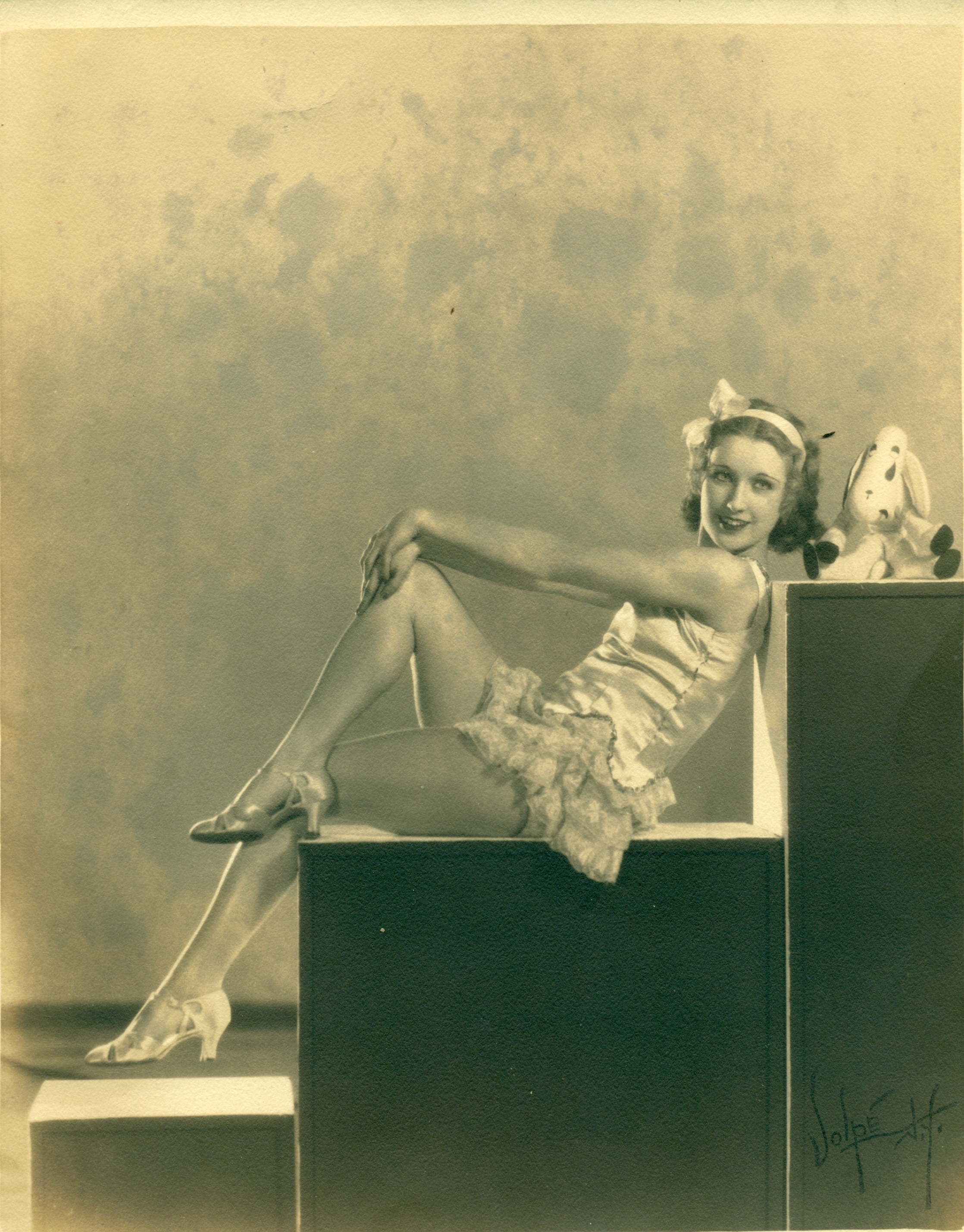
River of January is now on sale for $2.99 on Kindle. Enjoy the adventure at half the price!
Drop a review on Amazon, I’d love to hear from you.

“Rumor has it that Mistinguett served as a spy for the French government during the Great War while she was dancing across the continent. They may be watching her again because of that new leader in Germany,” Lillian remarked as the company sunned themselves on exclusive Larvotto Beach.
“Who told you such a thing, Lillian?” Una, another dancer, asked skeptically.
“Didier, the older stage manager at the Terminus—he seems to know all about Miss.”
Charlotte’s eyes grew large. “How thrilling!”
“And she’s had many affairs with younger men,” Lillian continued, enjoying the attention. “You’re familiar with Maurice Chevalier?”
“Of course.”
“Supposedly they shared a passionate, very public romance. Miss launched his career when she plucked him from a music hall chorus line and cast him into his first film, La Valse Renversante.”
“No!” Charlotte blurted.
“Oh, yes!”
“Isn’t he a lot younger?”
“Thirteen years, according to Didier.”
“Lucky woman!” Charlotte said. The rest of the girl’s laughed at her response.
Page 75, River of January
It was the night of February 9, 1964, a Sunday, when my older brother and I had to make a crucial decision. We were both over stimulated, frantic, not one of our four feet remaining long on the floor. The house vibrated with our excitement and the weight of our impossible dilemma. For starters our birthday was the following day–the 10th, (though we’re not twins–he’s a year older). Still, that pre-birthday fuse had already ignited and by the 9th the two of us were banking off the walls.
The quandary we faced that Sunday night was whether to watch “Davy Crockett at the Alamo,” starring Fess Parker on Disney (The Alamo!), or the Beatles on Ed Sullivan. This was that first historic Beatles broadcast, live on American television, and we agonized between the two choices.
In 1964 there were no video players, no DVD players, no home computers, or dvr’s, in fact televisions were the size of Volkswagen’s and transmitted in glorious, flickering black and white. This difficult decision counted because there was no rewind, there were no do-overs. One gain meant one loss.
We liked Davy Crockett an awful lot. We had watched all the previous episodes, and Davy biting the dust in San Antonio was the much anticipated grand finale. But, oh, the Beatles! And the adoration was real, palpable, an injection of adrenaline without the needle. We worshiped at the warmth of our bedroom radios, perpetually tuned in to our local AM radio station. Reverent silence accompanied replays of “She Loves You,” and “I Want To Hold Your Hand.”
What could two grade schoolers, sick with anticipation do with such a weighty conundrum? It was 1964 and we had to choose.
Before the proliferation of electronic media, this little girl of the 1960’s viewed momentous events as they beamed across the screen. MLK’s elocution at the Lincoln Memorial, President Kennedy’s inaugural address, his assassination, and the escalating war in Southeast Asia–all experienced as reported at that moment.
In an earlier era, when Chum flew in his air race, and Helen danced in Rio at the Copacabana, there were no camcorders or Iphones. His signature landing and Helen’s near disastrous opening night grew silent as the applause subsided, then faded in time. Much like my brother and myself in 1964, they lived life forward, one opportunity at a time.
Silent photos and written records are all that remain verifying Chum’s aerial dash through darkened skies, and Helen’s energetic dance routines. They lived life forward, embracing events as they unfolded–experienced once, then gone. I would love to see footage of Chum’s Waco airplane lifting off at dusk, or watch Helen spring across the stage. But those wishes are pipe dreams, never to happen. No vintage film or recording, (except one I found by accident) exist in the historic record. The best I can do for myself, and for readers, is try to recreate the magic of the first time around in the pages of my River of January.
Oh, by the way, I’ve never seen “Davy Crockett at the Alamo.”
Gail Chumbley is the author of the memoir, River of January. Also available on Kindle.

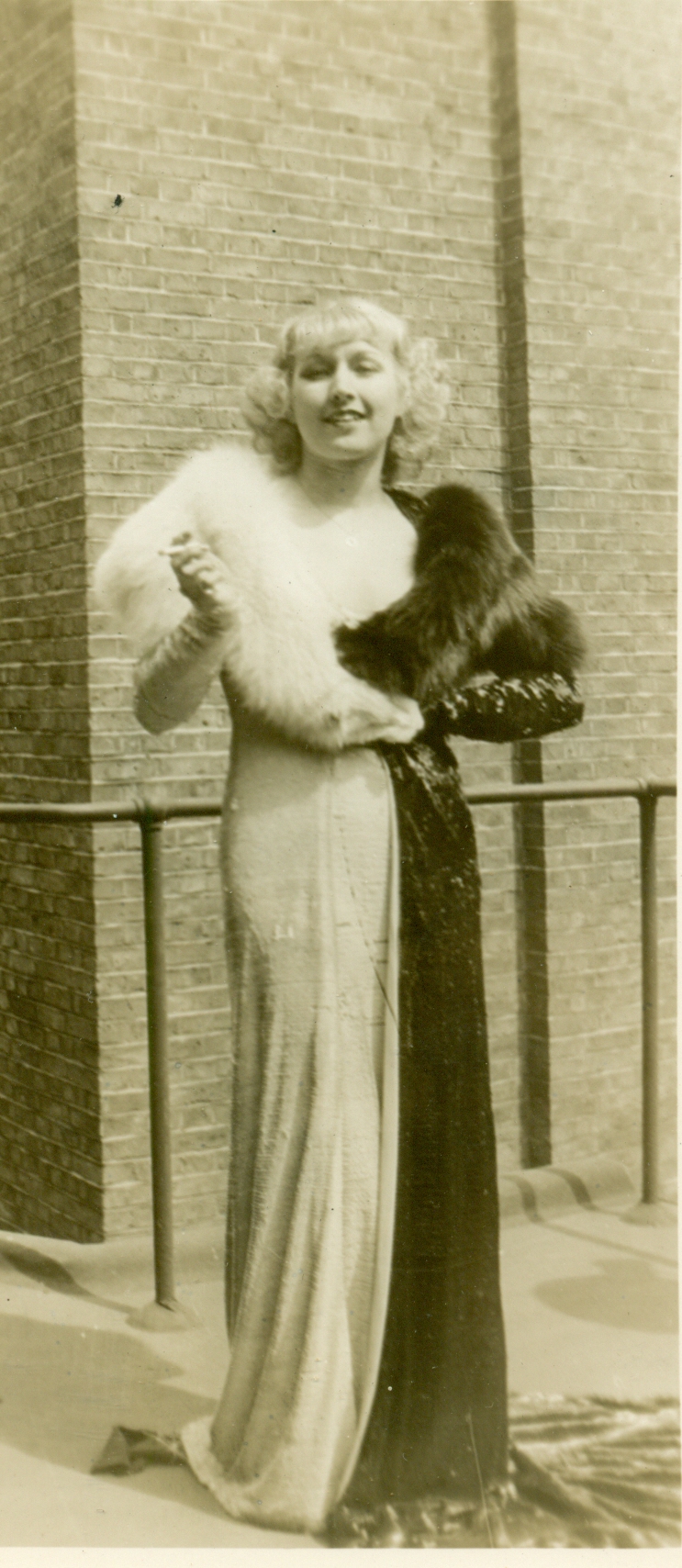
 Gail Chumbley