Peer Review One: A Play

Peer Review One

__________________________

10 Minute Play

By Gail Chumbley

SCENE 1

The stage lights rise. Two wingback chairs sit closely on the stage, and a table. Two men, both marines, stand on either side of the stage apron. The sounds of voices are heard off stage. The stage lights shift to blue as a man, The President, steps onstage. The Marines salute, and the president salutes impatiently. The guards disappear in darkness.

THE PRESIDENT
I can hear them. Tourists. Here to see where I, their President lives.

Three girls enter giggling and taking cell phone pictures. The president fusses with his hair.

THE PRESIDENT

And where are you girls from?

The girls move on without noticing him.
Wait! I’m here. Your president. I’m here.

A couple appear looking about, pointing toward “walls,” chatting quietly. The president straightens his tie, and again touches his hair.

THE PRESIDENT
Welcome to my White House. Wanna a picture with your President?

The couple murmurs quietly, indifferently looking around. They turn and stroll offstage. The president follows a few steps.

THE PRESIDENT

You people deaf? What is wrong with you? This is disgraceful. I’m President of the United States, for god’s sake.

A man appears on stage left. He wears a top hat, mustache, pince-nez spectacles and cutaway jacket with tails. He carries a cane. The man approaches the president from behind. He speaks in a patrician voice.

THE MAN

Am I to understand that you are a New Yorker?

The president startles.

THE PRESIDENT
Um, hello. Are you here with a tour group? Bet you want a picture with me, your president.

THE MAN
I ask a simple question, and you reply with a question. I understand you are a New Yorker. Are you or are you not?

The President attempts to walk to no avail. The man stands uncomfortably close.

THE PRESIDENT (Looking around)

I can’t move! My feet are frozen to the floor! Where is my security detail! Where are my marines?

THE MAN
We have all been watching you, and even Mr. Nixon is appalled. Once again, are you a New Yorker? Speak up when I’m addressing you.
THE PRESIDENT

Mr. Nixon? How did you get in here? Are you a re-enactor?

The muted sound of tourists continues off stage.

Yes. Yes. Everybody knows me. I made my fortune in New York real estate, if you must know. I’ve heard many people say I’m the best businessman ever . . .

The man begins to pace and speak at the same time.

THE MAN
From my understanding you are nothing beyond a scoundrel from the wealthy criminal class. I made a career of exposing popinjays like you.

THE PRESIDENT
Well, you’re a nasty piece of work. I am the President of the United States. I won the election by the biggest margin in American hist . . .

THE MAN
Poppycock! We have come to find that result came about due a mere tilt in the electoral count, and foreign interference. Russians, no less. After the revolutionary stirrings in 1905, I feared Russian unrest would spread to the United States. Conditions in mines, shops and factories here were inexcusable. Strikers shot down in the Pullman Rail Strike, vile conditions in Chicago’s meatpacking industry, sweatshops forcing 12 hour work days. Labor agitators pushed for reform, and I agreed. In Russia, Bolsheviks never did extend justice to the working class, only more oppression. They were not, and are not America’s friend, and intend only to destabilize this nation. Through your absence of character, and love of money they have succeeded.

THE PRESIDENT

You are wrong. That’s a lie. A lie.

THE MAN
You foolish pip. Inviting Russians into the West Wing? Unacceptable! Never should foreign adversaries be permitted to enter the inner sanctum, nor rioters in the Capitol. Mr. Lincoln will have more to say on that particular travesty.

The President appears shocked. He mouths “Lincoln.”
You have besmirched America before the world. I’d say you are a compromised pawn of foreign meddlers, and their graft. You give not one whit for America.

THE PRESIDENT
You can’t talk to me like that. My security will be back and you’ll be thrown out.

THE MAN

Sergey Witte.

THE PRESIDENT

What? Who? Just get out!

THE MAN

Hold your tongue! When you are in the presence of a gentlemen, behave accordingly. Witte was a Russian, so you will approve. The Japanese inflicted the most impressive defeats upon the Tsar’s navy in 1904-05. America then had no quarrel with Japan or Russia, however, I was asked to arbitrate peace negotiations. My view of the Russians changed with Witte. What a crude, unmannered man, unlike the thoroughly well- mannered Japanese delegation who comported themselves so gracefully! This so-called “diplomat” grew belligerent during peace talks insisting Russia be awarded more largess from the treaty. That villain stalled and argued for adding more claims, despite losing the war. I gave that knave a piece of my mind.

The man removes his top hat and sets it on a table, and checks his pocket watch.

Good I have time.

THE PRESIDENT
Time? Don’t stay on my account. I’m a busy man. Meetings, briefings.

THE MAN

Sit down this instant.

The president instantly sits. Looks alarmed.

Witte is the point! The Russians only look out for Russia, not you, the bankrupt fool who fell backward into the presidency.

THE PRESIDENT
I’m being pranked. Some a-hole is filming this. Where is the camera? I hate pranks. Meadows is going to hear about this.

The muffled sound of passersby continues. The president sits uncomfortably, and shuts his eyes.

I’m dreaming. That’s it, I’m asleep. When I open my eyes he’ll be gone.

To the man.

I’m opening my eyes now and you better not be here.

The man leans over the sitting president. He opens his eyes face to face with the man. The president startles again.

THE MAN

I am not finished.

The man again paces and speaks.
Bribery does not belong in foreign policy. And America still has a grand future on the world stage. We show strength through integrity–not by shaking down America’s allies for political favors.

THE PRESIDENT

Stop right there, that was a perfect phone call . . .

THE MAN
In foreign affairs we must make up our minds that we are a great people and must play a great part in the world. Nothing less.

The man turns toward an imaginary window. The president attempts to stand, but only succeeds in moving the chair a little. He utters a grunt.

THE PRESIDENT
I have great knowledge of foreign policy. And despite what some people say, I was always against the war in Iraq, and a lot of people weren’t.

The man shakes his head in disbelief. The President continues.
Look, Obama left a foreign policy of one disaster after another. We don’t win anymore. . .We’re going to win big now.

The man looks around the Blue Room.

THE MAN
Talleyrand, Napoleon’s minister once remarked that though President Jefferson loved France, he was still an American first. I do not believe you are first loyal to America, only to your feral, financial instincts.

THE PRESIDENT

TalleyWho? Everyone knows I am the greatest Americ. . .

The man sighs, and with a turn of his hand silences the President.

THE MAN
It appears you have no pets. Quite revealing that-regarding a man. We moved into this house with dogs, cats, and other pets, including a pony. How the boys loved their animals. Our pets were considered part of the family. They and the children’s presence made the White House feel like home.

The man returns his gaze to the president, and smiles.
I would play a bear, and my two youngest would hide under the bed. I pawed and growled, and they giggled and shrieked for joy.

The president is defensive. He speaks.

THE PRESIDENT
Kid’s. The hardest thing about raising kids is time. I know men who leave their businesses so they can spend more time with their children, and I say, ‘Gimme a break!’ My children couldn’t love me more if I spent fifteen times more time with them.

The man watches the president doubtfully.

THE MAN
No pets. Not even for your youngest. And it appears the boy and his mother live separate lives. Your adult children keep their distance, as well. You have squandered a man’s real treasure for an artificial image.

The president wiggle-walks his chair still stuck.

THE PRESIDENT
First of all, I would feel like a phony having a dog. I don’t like dogs. And, so you know, my children love me, and my wife, too. They are so proud of me, so proud. I’m President. And most Americans love me. Those liberals are the problem.

The man snaps, waving his cane.

THE MAN
Is that why thousands of migrant children were separated from their families? Caged? Liberals are not, as you say, the problem!

The man clears his throat, and quietly speaks.

President Grant requested I touch upon the subject of military service. My father did not serve in the War between the States, leaving me a confused boy. I could not understand why. For me soldiering is the highest service a patriot can perform.

THE PRESIDENT
And now you’re going to tell me how great the military is. I really don’t care. Look, Sean Hannity is calling my office.

THE MAN
His decision concerned my mother. Lovely woman, my mother, she hailed from Georgia, and her brothers were serving the Confederacy. You see, my father loved her–simply loved her. He hired a substitute in his place, and aided President Lincoln in other ways.

The man taps his cane and smiles.

Still. I idolized him. He believed so much in public service. He cared about children, orphans living on the streets. Father founded the Newsboys Lodge, the Children’s Aid Society, and the American Museum of Natural History. The last he did for me.

The man strokes his mustache lost in thought.

THE PRESIDENT

On Central Park West?

The man nods.
Been there. Your father had it built? Seems like a big waste of money to me. Bunch of bones and dead animals.

THE MAN
Serving others is our obligation to the less fortunate. To me bad trusts exploited the poor for profits. We regulated fair rail rates for farmers, passed the Meat Inspection Act, and the Pure Food and Drug Act, to make all Americans safer.

The president looks bewildered.

THE PRESIDENT

Why? There’s a lot of money in big pharma.

THE MAN

Not listening.
As president, I never made a decision without wondering what my father would think.

THE PRESIDENT

Yeah, me too.

The president chuckles. The man shakes his head.

THE PRESIDENT
Still, I don’t care. Times have changed. Gotta get what you can when you can.

The man whips around.

THE MAN

Which is why I am here.

The President’s smile disappears.

THE MAN
All four of my sons served in the Great War, and fulfilled their duty. We paid the ultimate cost-our youngest, Quentin, in an aerial fight over Germany. So difficult to lose such a dear, sweet boy.

The man draws close to the president.
And Quentin was neither a sucker nor a loser! He believed in America, they all believed. Quentin held fast to the tenets of our noble land and answered the call.

The man flashes disgust toward the President, then becomes thoughtful.
In 1898, I, too, served as soon as I could. President McKinley named me under-secretary in the Department of the Navy, until I resigned to join the war against Spain. That decision led me to assemble the Rough Riders and ship out to Cuba. Most exhilarating. My father would be proud, of that I’m certain.

THE PRESIDENT
I’d like to do my duty too. But the political establishment trying to stop us is the same swamp responsible for our disastrous foreign policies.

The man frowns, then and continues.

THE MAN
We were on foot in Cuba, a cavalry without horses. We lined up at the base of Kettle Hill, and charged. The moment jolted electric, and my crowded hour began. Lifting my carbine in the air, I rallied from the front, showing the men they had nothing to fear.

THE PRESIDENT
And see, that’s the problem. That is why the military is a chump’s game.

The man shakes his head.
And who needs soldiers? I can do foreign policy, it’s easy. I know because I have a very good brain. I am very rich, people admire me.

The man gives the President an incredulous glance.

THE MAN
Are you deranged? Tossing about words, making no sense? And as for rich, I understand your father earned the fortune, and you have frittered away much of it.

THE PRESIDENT

Wrong. Lies.

THE MAN
Nouveau riche, new money. Gaudy, vulgar, pretentious, and hungry for the validation and acceptance that you will never receive.

The president audibly snores. The man continues to speak over the noise.

When I held office I used my “bully pulpit” in the best sense of the term. Once I believed as you, that the natural world existed to enrich man. But that is false. In my administration Congress approved five new national parks, protected bird sanctuaries, and game preserves. The intrinsic value of our land cannot be found in stock indices or business transactions.

The president snorts
Nowhere else in any civilized country is there to be found such a tract of veritable wonderland made accessible to all visitors, not only the scenery, but wild creatures of the parks are scrupulously preserved.

THE PRESIDENT
Well mister tree hugger I have gutted much of your precious protection and opened land for logging, mining, and drilling. Say goodbye to the Grand Staircase in Utah, well, half of it, anyway. Roads are being cleared as we speak, and off-road vehicles are roaring in. And that goody two shoes, Barack Hussein Obama created the Bears Ears National Monument. I chopped it up for developers. Because that is profit. Profit is real.

THE MAN
You are nothing new, but the only plunderer to reach the presidency. New York City has produced a long line of blackguards such as yourself, criminals like Boss Tweed, and George Washington Plunkitt. Driven by greed and power these men fleeced the public.

The man walks around the chairs still looking about. He speaks.

For the benefit and enjoyment of the people.

THE PRESIDENT

I’d enjoy getting the hell out of here.

He snores louder

THE MAN
Quiet you insolent twit. Those words are inscribed on the arch at Yellowstone Park. Now you shall no longer interrupt.

The man gestures, watching the president who is now unable to speak.
I, too enjoyed a life of affluence. However, with that wealth came obligations to the less fortunate. Doors down from our home on 57th Street the poor struggled in wretched poverty. And much like my father I possessed a troubled conscience.

The man strolls with his cane, and continues.

As Commander in Chief, our charge is to work for the people. All the people. Withholding aid to states you did not carry is a dishonorable breach of that trust.

The man touches the president’s chest with his cane, then resumes his pacing.

My love of justice and fair play may sound naive to you. But your blatant cheating, while pretending you haven’t, is shameless.

The man strikes the president’s chair with his cane. The president sits straighter.
My administration was known as the “Square Deal,” and we, my cabinet and I, kept that promise.

The man taps his cane on the floor again.

My father once counseled me to look after my morals, my health, and my scholarship. And that, I did. And your father? Raised you to love money and value nothing. Had you not been desperate to become president, you might have continued to lead this predatory life of grift and debauchery.

The president fixes his eyes on the man. Angry.

Much like King Midas, or a Greek tragedy, this fatal flaw, your infinite vanity, will now cost you your liberty.

The president struggles, mutely hopping his chair a bit.
You should not have run for office, where dignity and tight scrutiny are the norm. Unable to resist the lure of power, you are the catalyst of your own downfall.

The man puts on his top hat, and gestures. The president bursts free from his chair.

It’s time for me to leave, the others will join you presently.

THE PRESIDENT

Others?

THE MAN
Most assuredly. And the name of that national park is pronounced Yo-sem-i-tee.

As the man stroll off in one direction, the President runs off the other. The stage goes dark.

The Dramatists Guild of America was established over 80 years ago, and is the only professional association which advances the interests of playwrights, composers and lyricists writing for the living stage. The Guild has over 6,000 members nationwide, from beginning writers to the most prominent authors represented on Broadway, Off-Broadway and in regional theaters. To learn more about the Dramatists Guild of America, please visit http://www.dramatistsguild.com

Gail Chumbley is the author of the two-part memoir, “River of January,” and “River of January: Figure Eight.” Both are available on Kindle. In addition Chumbley has written two full-length plays, “Clay,” and “Wolf By The Ears.”
Two Witnesses

“I began to think that all was not right. He said that with two hundred men he could drive congress, with the president at its head, into the river Potomac, . . .and he said with five hundred men he could take possession of New York….”

Colonel John Morgan, written testimony, 1807, the Burr Conspiracy

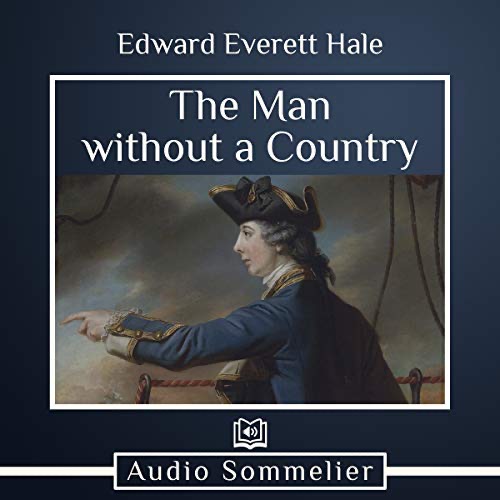
In grade school we watched a film titled, “The Man Without A Country.” Taken from a story by Edward Everett Hale, the tale tells of an American soldier named Philip Nolan. Nolan, a fictitious character had been arrested as a conspirator in a scheme to seize a chunk of the Louisiana Purchase and secede from the Union. At his trial an angry Nolan pitched a fit and shouted “Damn the United States! I wish I may never hear of the United States again!”

The presiding judge agreed with Nolan’s outburst and sentenced him to never hear of, nor set foot in the United States again. Serving his time, Nolan spends the rest of his days transferred from one Naval vessel to another, never permitted to see the shoreline again. By the end of this sad tale, Nolan grieves his error, and Hale has him express his regrets, and the majesty of our democracy.

Though just a little kid, that film struck me as a nightmare, a true horror story. (I was a history-geek before I knew I was a history-geek). The sadness remains with me now.

Hale set his patriotic tale against an actual event, the Burr Conspiracy, (1805-1807). Aaron Burr, Thomas Jefferson’s rival and Vice President had killed Alexander Hamilton in 1804, and resigned as Vice President in 1805. Heading west beyond the Appalachians, Burr allegedly hatched a plot to capture a southern piece of the Louisiana Purchase, and Mexican Texas. It was said Burr planned to install himself as a sovereign of a new nation, with New Orleans as his capital. A co-conspirator, General James Wilkinson, turned on Burr, and spilled the beans to President Jefferson. The outraged President promptly dispatched soldiers to apprehend Colonel Burr.

In a Virginia court Burr was indicted for treason, and soon put on trial in Richmond. The Judge, Chief Justice John Marshall presided. 

Burr remained serene throughout the trial, and denied the charges against him. Jefferson, meanwhile breathed fire, demanding Justice Marshall convict. Marshall, a brilliant student of American Law, subpoenaed the President to testify, and that pissed off Jefferson even more. 

In a letter to the court Jefferson insisted British Common Law sufficed for conviction. That advice would place Burr in the vicinity of a seditious act, and lead to a quick guilty verdict. Marshall, however, relied on the recent Constitutional definition.

Article III, Section 3, Clause 1,

Treason against the United States, shall consist only in levying War against them, or in adhering to the Enemies, giving them Aid and Comfort. No Person shall be convicted of Treason unless on the testimony of two Witnesses to the same overt Act, or on Confession in open Court.

At the end of this saga Burr was acquitted, Jefferson’s opinion irrelevant to US Law. Without fear nor favor Marshall abided by the Constitution. Lacking eyewitness testimony to the act, Burr walked. Neither Wilkinson’s nor Colonel Morgan’s letters proved relevant.

This case, complicated, and circumstantial, tested the new Constitution, and the Constitution prevailed. Fictitious Nolan should perhaps have held his temper in check, but then there wouldn’t be a story.

For MAGA insurrectionists, inculpatory evidence is stacking up. We all  bore  witness to the ransacking of the Capitol, and the rest of the plot is coming to light. Archival documents, emails, phone conversations, sticky notes, fake electoral papers, and incompetent lawyers litter the January 6 landscape. 

This time, under the language of Article III, there is no doubt of treason. 

As Philip Nolan lay dying aboard a Navy vessel, he tells his comforter “Here, you see, I have a country!” A map of the United States is pinned to a wall at the foot of his bed. Nolan begs his visitor to draw in new states admitted since his long ago trial. A tragic yarn of regret to be sure.

In the end Aaron Burr faded into the fog of time. Due to a certain Broadway musical he has resurfaced. Did Burr engaged in treason? We’ll never know for certain. That he faded is important. America is more resilient than any one of us.

Though Philip Nolan is a character of fiction, and Burr an enduring mystery, the January 6th hoard will not fade. You aided another would-be tyrant, and you failed. Like Pearl Harbor, and 911, your treason will live in infamy, to borrow a phrase. 

Gail Chumbley is the author of the two-part memoir, “River of January,” and “River of January: Figure Eight. Both titles are available on Kindle. Chumbley has also penned two plays, “Clay,” regarding the life of Senator Henry Clay, and “Wolf By The Ears” a look at American slavery and it beginnings.

gailchumbley@chumbleg

chumbleg.blog

Armageddon

Univac

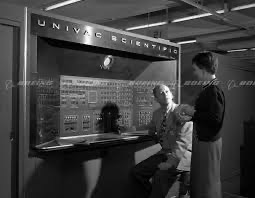
Remember that episode on Star Trek, “A Taste of Armageddon?” The crew of the Enterprise encounter two planets at war, waged virtually by computer. Simulated clashes determine, by mutual treaty, real fatalities in execution chambers.

That one aired in 1967. 

Technical advancements, devices to improve life, can make tasks so much easier; and these same advancements can just as easily evolve into weapons of destruction. Glidden’s barbed wire made for cheap fencing for farmers. Carnegie’s steel provided the ribs for building upward in cities, and outward on rail tracks. Rockefeller’s oil meant cheap kerosene for lamps to light up the dark. However, these same improvements found new uses when converted to weaponry:concertina wire draped across trenches, heavy armaments, explosives, and gasoline powered vehicles. World War One demonstrated both the might, and bloody futility of modern, industrialized warfare.

The nature of Twentieth Century warfare had literally been forged from 19th Century industry, which in turn gave rise to an assembly line of annihilation.  

How does weaponized technology apply to now? 

The world depends on computers. From Univac, to Commodore 64, to the MacBook, we rely on computers much as we rely on air. The benefits of cyber technology keep us linked together through social media, and new apps that innovate daily. But the dark side of this ever-evolving technology, poses significant danger, and has been weaponized effectively to undermine the stability of America.

As I write, misinformation, via the internet, has contributed to the deaths of nearly one million Americans, and climbing. Troll farms in Russia ruthlessly still hack away, under the guidance of former KGB agent, Vladimir Putin. Russian meddling in our 2016 presidential election, spewed misleading propaganda enough to tip the scales in the outcome. Though developed through advanced mathematics, and supported by other hard sciences, cyber criminals have succeeded in convincing some Americans not to believe in scientific facts. What an irony.

Our enemies have found their way in, a means to weaken and destroy the country from the inside. Through misinformation campaigns and network infiltration, criminals shut down Colonial Pipeline last May, and universities, government agencies, infrastructure systems, and businesses who are under constant threat of being held hostage–paying millions in ransom to rescue their business organizations.

The indispensable nature of computers, like this one in my lap, is a useful, vital tool. But like the technical innovations of the 20th Century, these advances foreshadow danger; cyber space as deadly as a machine gun, and as real as poison gas. Factor in nations around the globe still vying to destabilize America—especially chief competitors, Russia, and the China. 

Nothing has changed since 1914, aside from more sophisticated weaponry. Fifty-four years after Star Trek aired “Armageddon,” computer-generated death is as real as the death toll in the trenches. Threatening fingers typing the right strokes on a keyboard produces chaos and harm from those who wish us ill.  

Unexpected Inspiration

Dear Helen and Chum

I’ve neglected you since publishing your story, and I regret my doubt-inspired silence.

The delight of researching the both of you, made clear that you lived more life than I’ll ever see in mine. Risk, peril, glamor, and ambition. You put yourselves out there, and is the best story, ever.

I wrote those books wracked through with feelings of inadequacy. Possessing little experience as a writer, I took on both volumes largely on my own and finished them, impatiently pushing the story out to the world, mistakes and all.

Still, I’m not sorry to have narrated your journeys, it’s the most kick ass true story I’ve ever encountered. 

Fear and confusion froze this greenhorn in her tracks. I am guilty of getting in the way of sharing your adventures, and reliving your forever love story. Forgive me. I presumed this 20th century saga belonged to me, but that is not so. Truly, there would have been no books at all, without your daring and triumphs to inspire me.

These books were not a mistake. 

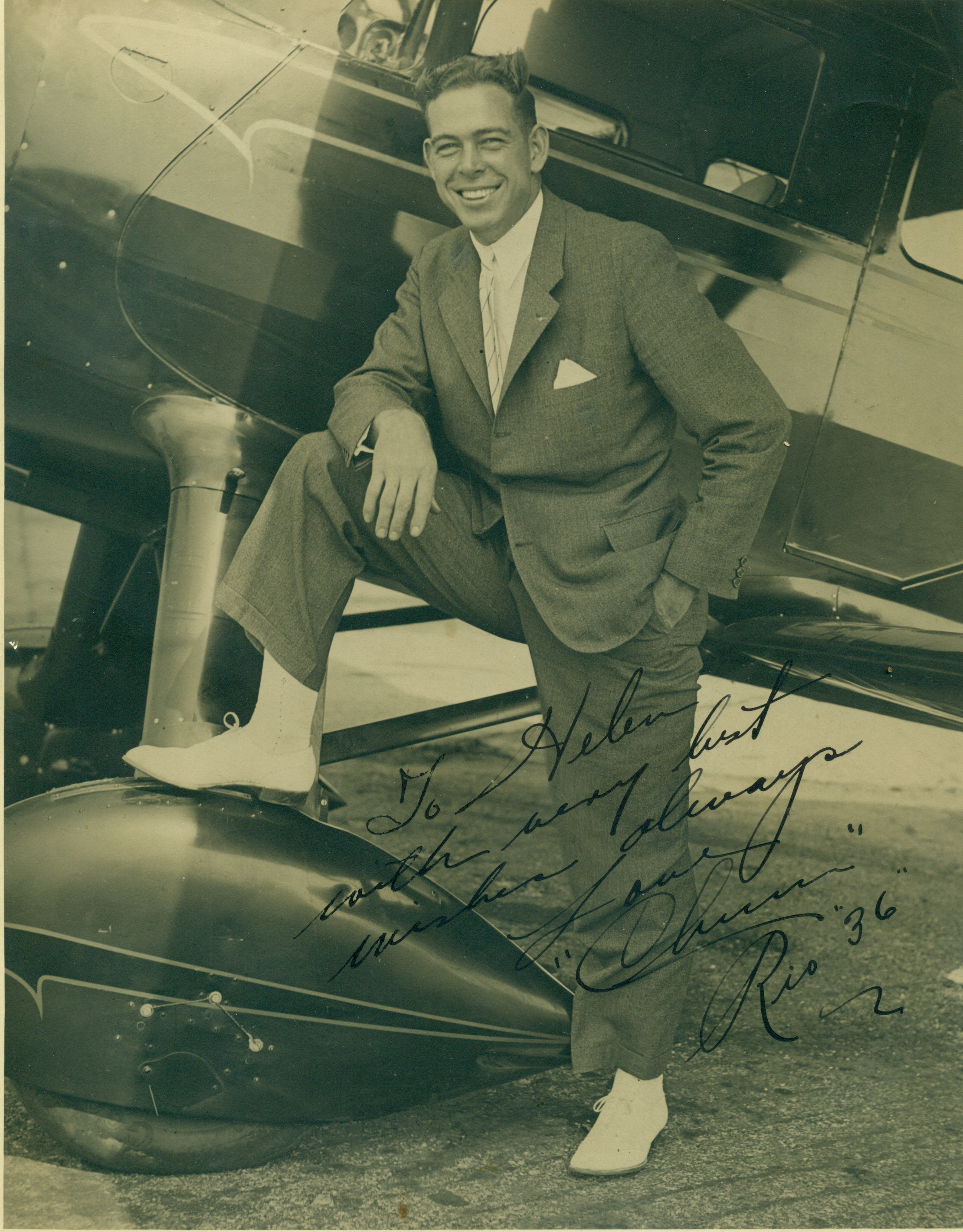
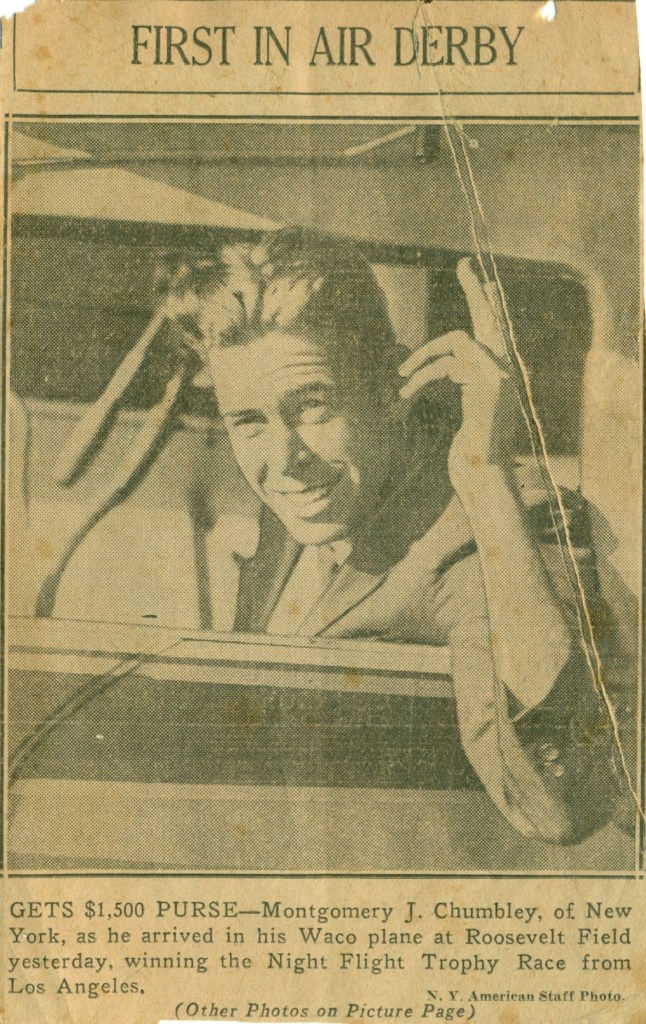
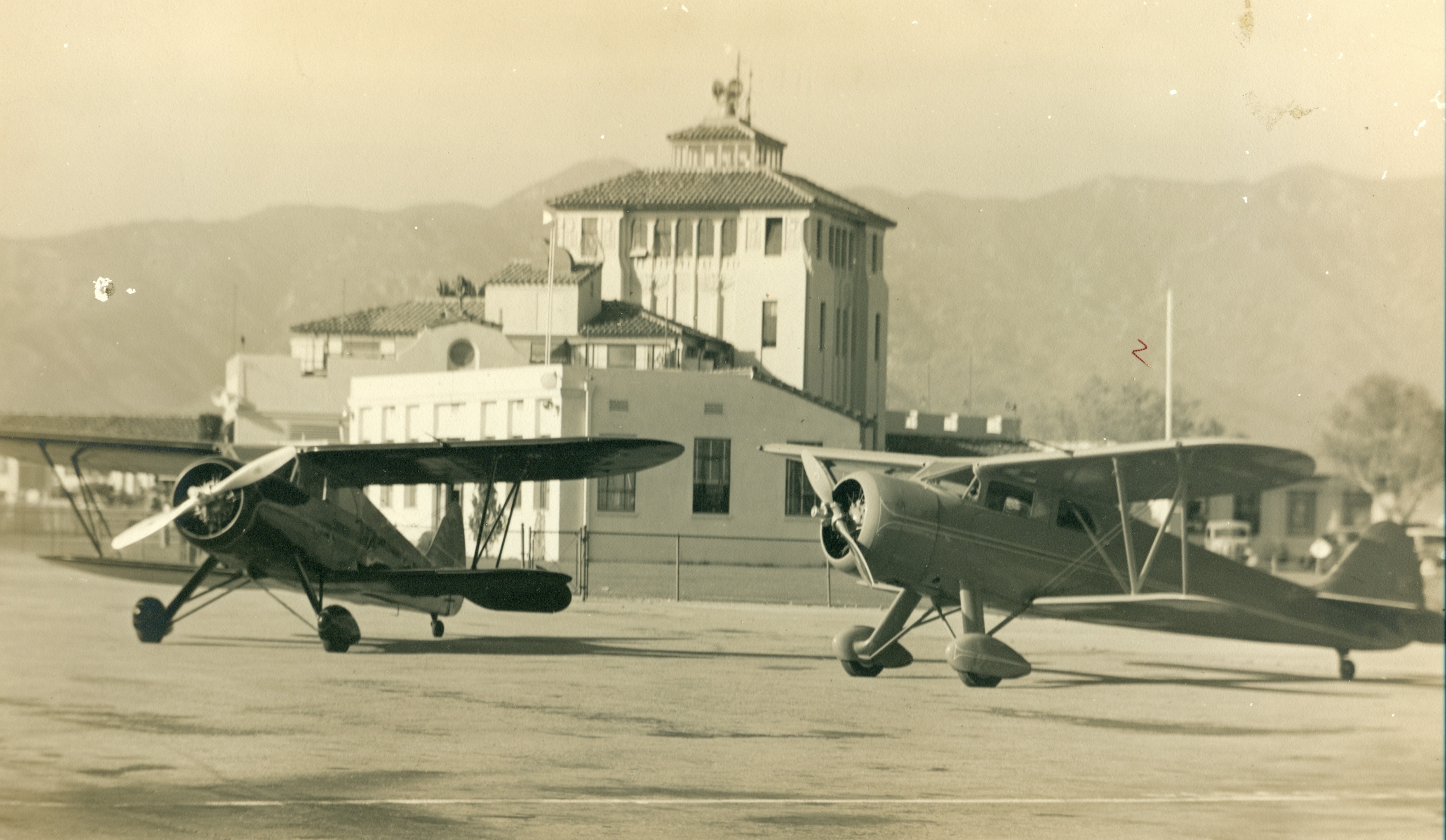
Chum, you squared your shoulders, took a deep breath and strapped into that cockpit, forging a career of monumental consequence. The victor of the 1933 Darkness Derby, you braved the night skies over a sleeping America. Flying your mighty Waco aircraft, you touched down at Roosevelt Field where Lindbergh and Earhart began their storied flights. Later, in defense of democracy, you piloted US invasion orders through a dangerous South Pacific typhoon, tossed and slammed by up and down drafts, to complete your mission.

And to you sweet Helen, though we never met in this life, you inspired the entire effort. It was that first visit to your Miami home when something stirred inside me. A unexpected inspiration. Remember that black and white glossy? The portrait of a sultry platinum blonde? You know the one. Chum had it up in his room until the end.

That photo triggered a spark, a slow burning fire I could not ignore. This story had to be shared. The European tours, dancing, dinner with Maurice Chevalier, cruises across the Atlantic on the SS I’le de France, vaudeville with comedians Jans & Whalen. Then off to Rio de Janeiro you sailed, opening at the Copa Cabana. And after your marriage to Chum, and the war broke out you took up ice skating, performing nightly for Sonja Henie’s productions at Rockefeller Center. My God! What a life.

“River of January” is done, as is the sequel, “River of January: Figure Eight.” Preserved in the pages is magic, whether in the sky, on the sea, under the footlights, and revolving across shimmering ice. This story crackles with your energy.

This won’t be neglected any longer. I’m getting out of your way.

With Love, and Eternal Admiration,

Gail

Gail Chumbley is the author of the two-part memoir “River of January,” and “River of January: Figure Eight.” Both titles are available on Kindle.

gailchumbley@gmail.com

A Heady Moment

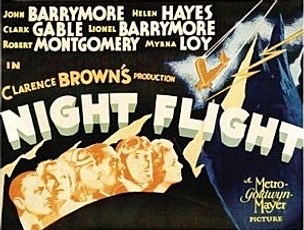
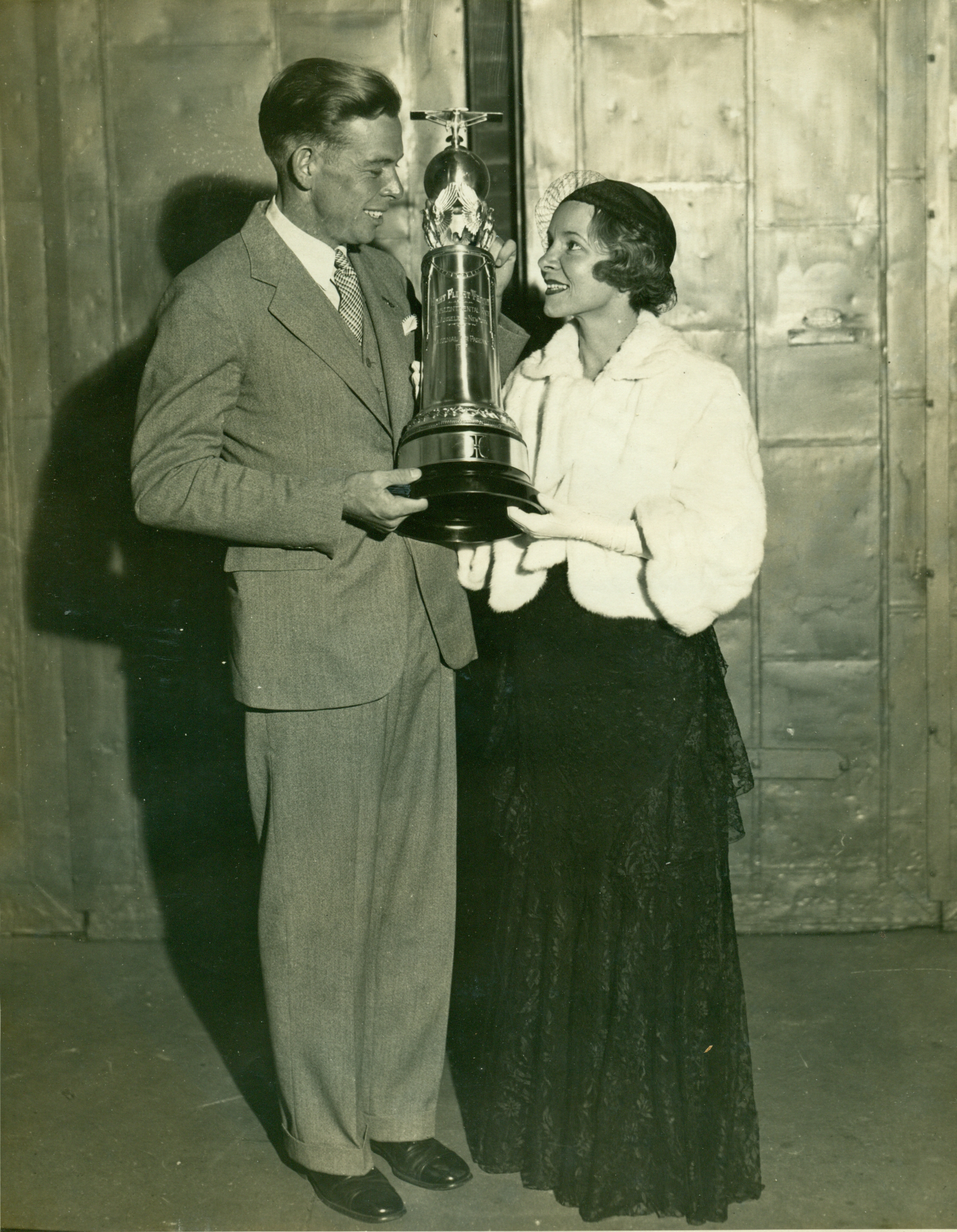
The night race kicked off “Roosevelt Field’s “National Air Pageant.” The event, chaired by First Lady, Eleanor Roosevelt, celebrated aviation and also raised funds for Mrs Roosevelt’s special charities. In addition, the Darkness Derby, competition, promoted “Night Flight” a new Metro Goldwyn Mayer film. The movie premiered at the Capitol Theater the following evening, and leading lady, Helen Hayes emceed the opening. And it was on the Capitol stage that Chum received his trophy from the actress. 

This 1933 Transcontinental Air Race/Darkness Derby/Air Pageant/Film Premier, combined to make the moment a heady one for 24-year-old Mont “Chum” Chumbley. Armed with new friends and clients, and other air enthusiasts from the City, a promising future in flight lay before him. 

Gail Chumbley is the author of the two-part memoir, “River of January,” and “River of January: Figure Eight.” Both titles available on Kindle.

gailchumbley@gmail.com

New York’s Lindbergh

Glendale California, October 1933

Building his own charter service at Roosevelt Field, Mont Chumbley got right to work building a clientele. Though 1933 marked the low point of the Great Depression, photographers and reporters from the Associated Press, United Press International, continued to work, beating a path from Manhattan to hire his Waco. Adding student-pilots to his schedule, plus weekends barnstorming around the countryside, Chum made ends meet. 

Friendships with other aviation boosters included Amelia Earhart, Broadway producer Leland Haywood, wealthy philanthropist Harry Guggenheim, and his first sweetheart, pilot Frances Harrel Marsalis. In a later interview Chum referred to a long ago passenger, Katharine Hepburn, as a ‘nice girl.’ 

By Autumn of 1933 Chum unexpectedly found himself a contender in a transcontinental night race, though it hadn’t been his idea. A prominent client who held a seat on the New York Stock Exchange believed Chum was New York’s answer to Lindbergh, funding needed modifications to his Waco C, if only the young man would enter. Chum, weighing his chances. finally agreed. 

His biplane soon readied, Chum winged his way from Long Island to Glendale, California, flying much of the trip west by moonlight for practice. Resting in Los Angeles much of October 2, 1933, Chum was told he was seeded third for take off, and finally lifted his Waco into dusky eastern skies. 

At his first stop, taxiing across a dark air field in Albuquerque, a fueler informed him another plane had already been and gone. A bit panicked, sure he was lagging behind, the young flyer hustled into the night sky, opening the throttle full bore to catch up. Just before dawn, the lights of Wichita appeared, where the spent pilot learned he was, in fact, the first entrant to arrive. 

Weary as Chum felt, he couldn’t sleep. Keyed up by the excitement, he had to wait on those planes yet to arrive. And by late morning only two aircraft had cleared Albuquerque, a Monocoupe and a Stinson. 

This night derby narrowed to a three-man contest.

Awarded 2 hours and 10 minutes for his first place in Wichita, Chum coaxed his Waco upward against the lengthening shadows of a Kansas sky. Hours later, at his last checkpoint in Indianapolis, Chum pushed on for New York. 

However, the weather wasn’t cooperative. 

Through western Pennsylvania, the bi-plane’s windshield began to pierce thickening clouds. Growing anxious, he thought he might be off course, or even worse, lost. But luck remained his co-pilot, when he glimpsed a small break in the inky mist. A lone light flickered below in the blackness, and he slipped down through the pocket.

Executing a bumpy landing on a farm field, the young flyer stumbled through darkness and dirt, making his way toward the light pole, and a modest farmhouse. Urgently thumping on the door, Chum roused a farmer and his wife, breathlessly apologizing for his intrusion. 

Explaining his predicament the bewildered couple kindly let him in. As the wife perked coffee, and laid out food, the farmer got out his maps and showed Chum his location. With heartfelt thanks, he apologized once again, then returned to the night sky, righting his direction toward New York and hopes for victory.

Gail Chumbley is the author of the two-part memoir, “River of January,” and “River of January: Figure Eight.” Both titles are available on Kindle.

gailchumbley@gmail.com

Becoming A Pilot 1

His was a storied life of potential and opportunity.

With damn good luck and perseverance Mont Chumbley forged a career in the earliest days of aviation. And that he became a pilot at all stood in stark contrast to his rustic, Virginia beginnings.

Born in 1909, young Mont spent his childhood on a farm more 19th Century than 20th. As the eldest son of the eldest son, Mont, as a matter of custom, was expected to follow his father as the next heir of the operation—as had scores of Chumbleys in prior generations. But to the patriarch’s displeasure, the son showed little interest in tending fields.

Instead young Mont discovered other passions; school, sports, girls, and the excitement of town. This lack of enthusiasm for farming generated enough animosity, that the boy had to run away from the farm in 1924.

Mont was 14.

Following a horrifying ordeal in the depths of a West Virginia coal mine, the shaken young teen caught a train back to Virginia, but not the farm. Rather he found sanctuary in his aunt’s opulent home in town. Grateful for his unexpected deliverance, Mont blossomed, graduating from Pulaski High School in 1927, lettering in football and class valedictorian.

Through his academic and athletic achievements, Mont’s opportunities appeared endless, and he knew exactly what he wanted.

While still a little tyke Mont had witnessed a barnstormer set down a biplane in nearby fields. Hearing the roar of the plane’s engine, glimpsing the spinning prop as the aircraft winged above the fields, Mont discovered his calling. Inspired with this childhood memory, Mont set his cap on entering the United States Naval Academy in 1928.

However, he couldn’t crack admission exams, so his hopes for Annapolis vanished, leaving Mont only one option–enlisting as a seaman recruit.

As straightforward as that path appeared, the young man ran into an immediate hurdle; his father had to sign his enlistment papers, and that the old man would not do. If the heir did not want to farm, the father would not help.

This family impasse did not resolve until Mont’s mother stepped in and threatened her husband with legal action. Mont’s mother, sure to her word hired a lawyer and prepared to seek consent from a judge. The father stunned by her defiance knew he was beat, and reluctantly endorsed his son’s enlistment papers, allowing Mont to enter the US Navy in 1928. 

A hardy boy, the rigors of Naval training proved no problem for Seaman Recruit Mont Chumbley. He easily adapted to drilling and training, initially pleased with the life he had chosen. What he didn’t expect was his first assignment below deck aboard a Navy collier, (coal-burning vessel). Shoveling endless black filth wasn’t what he had envisioned. Mont aimed for the sky.

The Navy of the 1920’s had no regulations excluding enlisted men from flight, but still the odds were daunting. How the young man earned a spot in Naval aviation beggars belief. Through a series of chance encounters, Mont soon served as a babysitter for the Commander of Schools at Norfolk Naval Station. Through tending this officer’s children, Mont developed a son-like attachment to the Commander, and felt courageous enough to ask for help. That single connection made all the difference, and Mont, now called “Chum” by his fellow enlistees, progressed to flight elimination exercises at Hampton Roads.

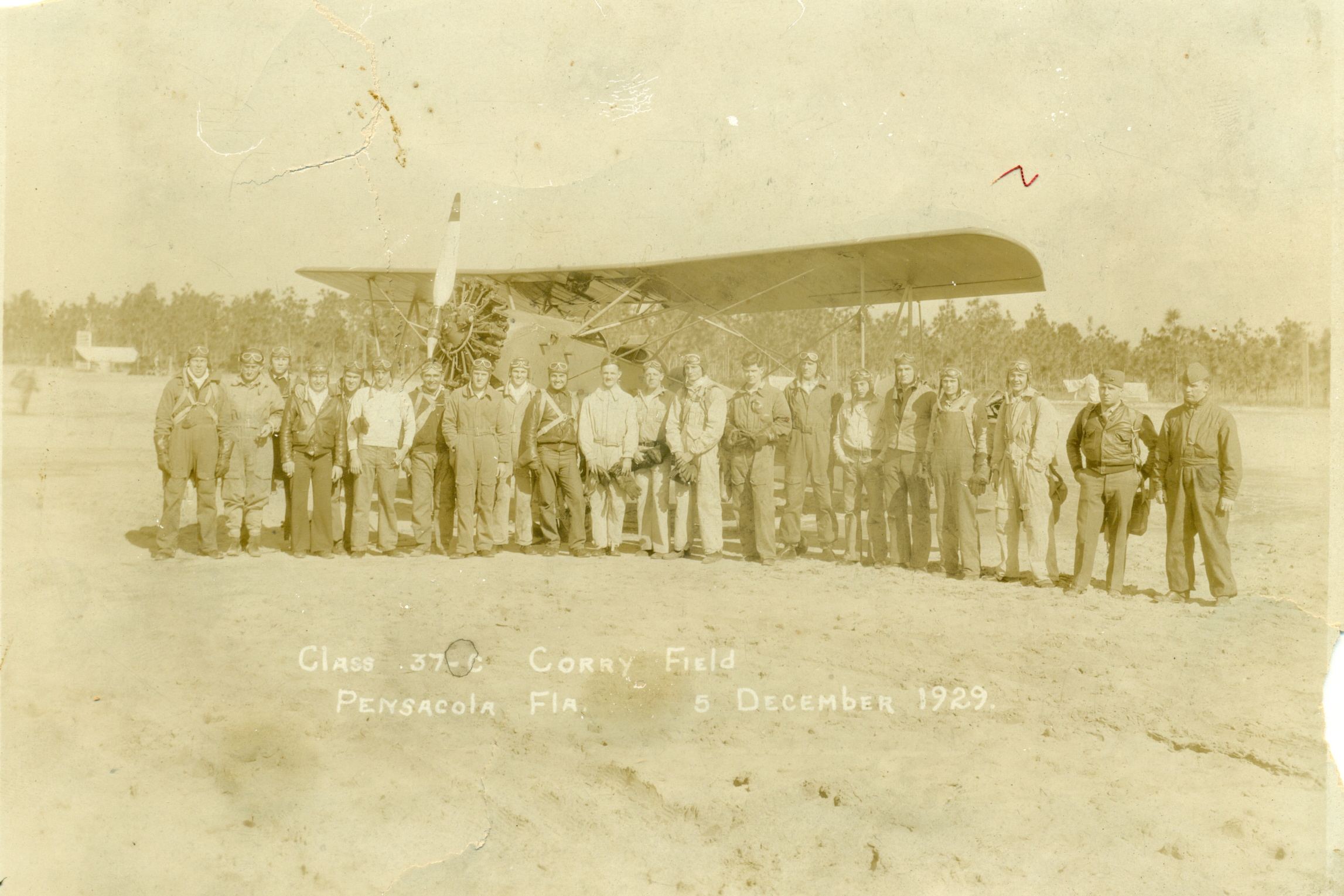
The short version of this tale is Chum survived flight-elimination trials competently handling amphibious Curtiss NC4’s. The next year, he and his compatriots, Class 37C, found themselves soaring over the Gulf in Pensacola, this time in wheeled aircraft. Later his class received their first assignment, shipping out to Coco Solo, Panama.

Life in the Canal Zone was a jungled universe of its own. Military bases dotted the nearly 50 mile stretch of canal, in a mix of both Naval and Army installations. Coco Solo, anchored by the Navy, commanded the Atlantic side, and trained largely in T3M’s, Martin Torpedo Bombers. In simulated war games, the pilots descended until parallel with the sea, then Chum and his fellow pilots would release virtual “payloads” into surface vessels.

In later interviews, an elderly Chum expressed his reservations about the maneuver as far too hazardous for aircraft.

Suddenly, in 1933, Chum up and decided to leave the Navy, though he remained in the Reserves. When asked why, after so much trouble to join, he admitted, “I didn’t much like taking orders.” 

Shipping an old Chevy he had purchased in Panama, Chum steamed into New York Harbor in May, 1933. Optimistic and eager to find work, he paid calls on various air carriers from Eastern Transport to National Airways. But no one was hiring. No one. The country and the world, deep in Depression had nothing to offer the young pilot.

Disappointed, Chum rumbled out to Roosevelt Field on Long Island, for a chance meeting with a figure who would change his life.

Howard Ailor, sales representative for Waco Aircraft, took a shine to the young pilot. Repeating the same gloomy job forecast Chum heard elsewhere, Ailor counseled him to make his own luck. The silver-tongued salesman, said what Chum needed was his own equipment, and talked him into buying a brand new Waco C cabin biplane. 

And that purchase transformed young Mont’s life.

Next time the Transcontinental Air Race.

Class 37-C, Mont Chumbley is on the far left

Gail Chumbley is the author of River of January, and River of January: Figure Eight. Both titles are available at http://www.river-of-january.com and on Kindle.

gailchumbley@gmail.com

Riding The Back Of The Tiger

At the start of the Kennedy administration, back in 1961, the story goes that JFK invited in a group of historians to the White House. The new president wanted to chat. What Kennedy asked these scholars was what elements insured a great presidency, and the answer from these learned gents was simple: a war.

Kennedy’s own war experiences in the South Pacific, and the ensuing menace of nuclear armageddon left JFK unconvinced. America’s situation on the world stage was just not as simple as war and peace. The lessons of  Nazi appeasement, especially by his own father, Joe Kennedy, compelled the new president to draw a hardline against Communism, and check its growth around the world. 

Caught in the eye of that dilemma; to appear tough, while preserving the lives of young Americans, Kennedy attempted a middle ground. Reluctant to fully commit US forces in Southeast Asia,  he also engaged in discreet negotiations with the Russians to settled the Cuban Missile Crisis. As a wounded veteran himself, JFK pursued a cautious and flexible foreign policy.

Not all presidencies have demonstrated such restraint.

President Madison succumbed to war cries after mediation with Great Britain looked to have collapsed, sparking the War of 1812. In reality the English had agreed to cease much of the abuse that brought about the war, before Madison’s declaration. Sadly news of accommodations from London did not arrive in time, and two futile years of warfare ensued. At the end of hostilities the United States made no measurable gains from the fight. The only red meat served came compliments of Andrew Jackson in his victory over the British in New Orleans. The war had been over two-weeks by the start of that battle. 

Most agree Madison is better remembered as the “Father of the Constitution,” than for his lackluster presidency.

“All of Mexico” resounded across young America in 1844. A toxic, but powerful combination of racism and hubris plunged America into another conflict-the Mexican American War. An unapologetic new president, James K. Polk, publicly stated in his campaign he would lead America into war, though he meant against Britain in his “54, 40, or Fight” slogan. Waged from 1846 to 1848  Polk ordered the invasion of Mexico, and defeat of the Mexican Army. 

A third war with the British never materialized, as the US opted to negotiate claims to Oregon. Though not gaining all of Mexico, America still claimed Texas to the Rio Grande, the southwest region known as the Mexican Cession, and all of California. In the aftermath of war, slave holders spilled westward in search of fertile new lands. In turn, national tensions escalated, both politically, and morally, erupting into Civil War by 1861. 

No other President extended American power, more than William McKinley, and no president was less eager to do so. As a young sergeant in the Civil War, McKinley had witnessed the truly  horrific bloodbath at Antietam Creek, surviving the bloodiest single day of the Civil War.  By the time of McKinley’s election in 1896, he faced a growing threat of a new war with Spain, this time over the Spanish possession of Cuba. Events careened out of control when a Navy gunboat, the USS Maine, sent by McKinley to protect American sugar interests, exploded in Havana Harbor in February, 1898. The disaster of The Maine forced the President’s hand, and he asked for a declaration of war from an enraged Congress. 

Though fought only from April to August, this conflict gave America island possessions from the Philippines to Puerto Rico. The United States had now officially entered the race to become an imperial power. This war extended fueling ports for the growing US Navy from across the Pacific, to the Caribbean. New markets and resources for American business opened up a fortune in profits. Filipinos, in particular, were left unhappy, switching from Spanish overlords to American authority. A bloody 3-year insurrection, fought in dank jungles, exploded, taking the lives of some 4,000 American combatants.

Sadly, in less than twenty years, the world-wide lust for colonies and riches brought America into the trenches of World War One. Decades-long rivalries for land and resources, particularly by Germany and Austro-Hungary, triggered a ruthless international competition that proved to history how industrialization could bleed young men. Not surprisingly this “war to end all wars” did not benefit Commander in Chief, Woodrow Wilson. In the end, the struggle killed him too.

As World War One ushered World War Two into being, World War Two led to the escalating tensions of the Cold War. First Truman in Korea, then Lyndon Johnson into Vietnam. Perhaps as stepchildren to Imperialism and the Cold War, GW Bush’s blunder into Iraq has assured his low position in history. 

The inescapable truth, Mr Trump, is that war does not make a presidency. With the exceptions of Abraham Lincoln, Franklin Roosevelt, and to some degree, Harry Truman, war has sullied more administrations than enhanced. Blind militarism may titillate your base, but you’re a damn fool to believe you can cheat history. Wars take on a life of their own, and as President Kennedy cautioned, “Those who foolishly sought power by riding the back of the tiger ended up inside.”

Gail Chumbley is the author the historic play, “Clay,” and the two-part memoir, River of January, and River of January: Figure Eight. Both books are available at http://www.river-of-january.com or on Kindle.

gailchumbley@gmail.com

The Almost Cable Guy

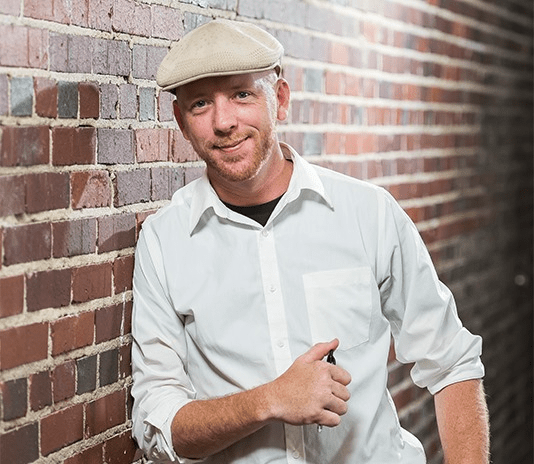
Some of you may know that we signed a film option a while back with Falls Park Entertainment in South Carolina. Brett Kanea, the executive producer, read our script, “Dancing On Air,” then my two books that inspired “Dancing.” Brett found it original and exciting and anticipated producing a successful film. Unexpectedly dear Brett died before any filming began. As you can see he from this pic, he was too young to leave us, and our hearts go out to his family and loved ones. 
The morning he first called to discuss the property I thought he was the cable guy expected later that morning. We laughed about that snafu for months after. 
Though our future in film is unclear, Brett’s warmth, humor, and confidence lingers on. 
Godspeed Brett, the almost cable guy.

Gail Chumbley is the author of the two-part memoir, “River of January,” and “River of January: Figure Eight.” Both are available on Kindle.

gailchumbley@gmail.com