Peer Review One: A Play

Peer Review One

__________________________

10 Minute Play

By Gail Chumbley

SCENE 1

The stage lights rise. Two wingback chairs sit closely on the stage, and a table. Two men, both marines, stand on either side of the stage apron. The sounds of voices are heard off stage. The stage lights shift to blue as a man, The President, steps onstage. The Marines salute, and the president salutes impatiently. The guards disappear in darkness.

THE PRESIDENT
I can hear them. Tourists. Here to see where I, their President lives.

Three girls enter giggling and taking cell phone pictures. The president fusses with his hair.

THE PRESIDENT

And where are you girls from?

The girls move on without noticing him.
Wait! I’m here. Your president. I’m here.

A couple appear looking about, pointing toward “walls,” chatting quietly. The president straightens his tie, and again touches his hair.

THE PRESIDENT
Welcome to my White House. Wanna a picture with your President?

The couple murmurs quietly, indifferently looking around. They turn and stroll offstage. The president follows a few steps.

THE PRESIDENT

You people deaf? What is wrong with you? This is disgraceful. I’m President of the United States, for god’s sake.

A man appears on stage left. He wears a top hat, mustache, pince-nez spectacles and cutaway jacket with tails. He carries a cane. The man approaches the president from behind. He speaks in a patrician voice.

THE MAN

Am I to understand that you are a New Yorker?

The president startles.

THE PRESIDENT
Um, hello. Are you here with a tour group? Bet you want a picture with me, your president.

THE MAN
I ask a simple question, and you reply with a question. I understand you are a New Yorker. Are you or are you not?

The President attempts to walk to no avail. The man stands uncomfortably close.

THE PRESIDENT (Looking around)

I can’t move! My feet are frozen to the floor! Where is my security detail! Where are my marines?

THE MAN
We have all been watching you, and even Mr. Nixon is appalled. Once again, are you a New Yorker? Speak up when I’m addressing you.
THE PRESIDENT

Mr. Nixon? How did you get in here? Are you a re-enactor?

The muted sound of tourists continues off stage.

Yes. Yes. Everybody knows me. I made my fortune in New York real estate, if you must know. I’ve heard many people say I’m the best businessman ever . . .

The man begins to pace and speak at the same time.

THE MAN
From my understanding you are nothing beyond a scoundrel from the wealthy criminal class. I made a career of exposing popinjays like you.

THE PRESIDENT
Well, you’re a nasty piece of work. I am the President of the United States. I won the election by the biggest margin in American hist . . .

THE MAN
Poppycock! We have come to find that result came about due a mere tilt in the electoral count, and foreign interference. Russians, no less. After the revolutionary stirrings in 1905, I feared Russian unrest would spread to the United States. Conditions in mines, shops and factories here were inexcusable. Strikers shot down in the Pullman Rail Strike, vile conditions in Chicago’s meatpacking industry, sweatshops forcing 12 hour work days. Labor agitators pushed for reform, and I agreed. In Russia, Bolsheviks never did extend justice to the working class, only more oppression. They were not, and are not America’s friend, and intend only to destabilize this nation. Through your absence of character, and love of money they have succeeded.

THE PRESIDENT

You are wrong. That’s a lie. A lie.

THE MAN
You foolish pip. Inviting Russians into the West Wing? Unacceptable! Never should foreign adversaries be permitted to enter the inner sanctum, nor rioters in the Capitol. Mr. Lincoln will have more to say on that particular travesty.

The President appears shocked. He mouths “Lincoln.”
You have besmirched America before the world. I’d say you are a compromised pawn of foreign meddlers, and their graft. You give not one whit for America.

THE PRESIDENT
You can’t talk to me like that. My security will be back and you’ll be thrown out.

THE MAN

Sergey Witte.

THE PRESIDENT

What? Who? Just get out!

THE MAN

Hold your tongue! When you are in the presence of a gentlemen, behave accordingly. Witte was a Russian, so you will approve. The Japanese inflicted the most impressive defeats upon the Tsar’s navy in 1904-05. America then had no quarrel with Japan or Russia, however, I was asked to arbitrate peace negotiations. My view of the Russians changed with Witte. What a crude, unmannered man, unlike the thoroughly well- mannered Japanese delegation who comported themselves so gracefully! This so-called “diplomat” grew belligerent during peace talks insisting Russia be awarded more largess from the treaty. That villain stalled and argued for adding more claims, despite losing the war. I gave that knave a piece of my mind.

The man removes his top hat and sets it on a table, and checks his pocket watch.

Good I have time.

THE PRESIDENT
Time? Don’t stay on my account. I’m a busy man. Meetings, briefings.

THE MAN

Sit down this instant.

The president instantly sits. Looks alarmed.

Witte is the point! The Russians only look out for Russia, not you, the bankrupt fool who fell backward into the presidency.

THE PRESIDENT
I’m being pranked. Some a-hole is filming this. Where is the camera? I hate pranks. Meadows is going to hear about this.

The muffled sound of passersby continues. The president sits uncomfortably, and shuts his eyes.

I’m dreaming. That’s it, I’m asleep. When I open my eyes he’ll be gone.

To the man.

I’m opening my eyes now and you better not be here.

The man leans over the sitting president. He opens his eyes face to face with the man. The president startles again.

THE MAN

I am not finished.

The man again paces and speaks.
Bribery does not belong in foreign policy. And America still has a grand future on the world stage. We show strength through integrity–not by shaking down America’s allies for political favors.

THE PRESIDENT

Stop right there, that was a perfect phone call . . .

THE MAN
In foreign affairs we must make up our minds that we are a great people and must play a great part in the world. Nothing less.

The man turns toward an imaginary window. The president attempts to stand, but only succeeds in moving the chair a little. He utters a grunt.

THE PRESIDENT
I have great knowledge of foreign policy. And despite what some people say, I was always against the war in Iraq, and a lot of people weren’t.

The man shakes his head in disbelief. The President continues.
Look, Obama left a foreign policy of one disaster after another. We don’t win anymore. . .We’re going to win big now.

The man looks around the Blue Room.

THE MAN
Talleyrand, Napoleon’s minister once remarked that though President Jefferson loved France, he was still an American first. I do not believe you are first loyal to America, only to your feral, financial instincts.

THE PRESIDENT

TalleyWho? Everyone knows I am the greatest Americ. . .

The man sighs, and with a turn of his hand silences the President.

THE MAN
It appears you have no pets. Quite revealing that-regarding a man. We moved into this house with dogs, cats, and other pets, including a pony. How the boys loved their animals. Our pets were considered part of the family. They and the children’s presence made the White House feel like home.

The man returns his gaze to the president, and smiles.
I would play a bear, and my two youngest would hide under the bed. I pawed and growled, and they giggled and shrieked for joy.

The president is defensive. He speaks.

THE PRESIDENT
Kid’s. The hardest thing about raising kids is time. I know men who leave their businesses so they can spend more time with their children, and I say, ‘Gimme a break!’ My children couldn’t love me more if I spent fifteen times more time with them.

The man watches the president doubtfully.

THE MAN
No pets. Not even for your youngest. And it appears the boy and his mother live separate lives. Your adult children keep their distance, as well. You have squandered a man’s real treasure for an artificial image.

The president wiggle-walks his chair still stuck.

THE PRESIDENT
First of all, I would feel like a phony having a dog. I don’t like dogs. And, so you know, my children love me, and my wife, too. They are so proud of me, so proud. I’m President. And most Americans love me. Those liberals are the problem.

The man snaps, waving his cane.

THE MAN
Is that why thousands of migrant children were separated from their families? Caged? Liberals are not, as you say, the problem!

The man clears his throat, and quietly speaks.

President Grant requested I touch upon the subject of military service. My father did not serve in the War between the States, leaving me a confused boy. I could not understand why. For me soldiering is the highest service a patriot can perform.

THE PRESIDENT
And now you’re going to tell me how great the military is. I really don’t care. Look, Sean Hannity is calling my office.

THE MAN
His decision concerned my mother. Lovely woman, my mother, she hailed from Georgia, and her brothers were serving the Confederacy. You see, my father loved her–simply loved her. He hired a substitute in his place, and aided President Lincoln in other ways.

The man taps his cane and smiles.

Still. I idolized him. He believed so much in public service. He cared about children, orphans living on the streets. Father founded the Newsboys Lodge, the Children’s Aid Society, and the American Museum of Natural History. The last he did for me.

The man strokes his mustache lost in thought.

THE PRESIDENT

On Central Park West?

The man nods.
Been there. Your father had it built? Seems like a big waste of money to me. Bunch of bones and dead animals.

THE MAN
Serving others is our obligation to the less fortunate. To me bad trusts exploited the poor for profits. We regulated fair rail rates for farmers, passed the Meat Inspection Act, and the Pure Food and Drug Act, to make all Americans safer.

The president looks bewildered.

THE PRESIDENT

Why? There’s a lot of money in big pharma.

THE MAN

Not listening.
As president, I never made a decision without wondering what my father would think.

THE PRESIDENT

Yeah, me too.

The president chuckles. The man shakes his head.

THE PRESIDENT
Still, I don’t care. Times have changed. Gotta get what you can when you can.

The man whips around.

THE MAN

Which is why I am here.

The President’s smile disappears.

THE MAN
All four of my sons served in the Great War, and fulfilled their duty. We paid the ultimate cost-our youngest, Quentin, in an aerial fight over Germany. So difficult to lose such a dear, sweet boy.

The man draws close to the president.
And Quentin was neither a sucker nor a loser! He believed in America, they all believed. Quentin held fast to the tenets of our noble land and answered the call.

The man flashes disgust toward the President, then becomes thoughtful.
In 1898, I, too, served as soon as I could. President McKinley named me under-secretary in the Department of the Navy, until I resigned to join the war against Spain. That decision led me to assemble the Rough Riders and ship out to Cuba. Most exhilarating. My father would be proud, of that I’m certain.

THE PRESIDENT
I’d like to do my duty too. But the political establishment trying to stop us is the same swamp responsible for our disastrous foreign policies.

The man frowns, then and continues.

THE MAN
We were on foot in Cuba, a cavalry without horses. We lined up at the base of Kettle Hill, and charged. The moment jolted electric, and my crowded hour began. Lifting my carbine in the air, I rallied from the front, showing the men they had nothing to fear.

THE PRESIDENT
And see, that’s the problem. That is why the military is a chump’s game.

The man shakes his head.
And who needs soldiers? I can do foreign policy, it’s easy. I know because I have a very good brain. I am very rich, people admire me.

The man gives the President an incredulous glance.

THE MAN
Are you deranged? Tossing about words, making no sense? And as for rich, I understand your father earned the fortune, and you have frittered away much of it.

THE PRESIDENT

Wrong. Lies.

THE MAN
Nouveau riche, new money. Gaudy, vulgar, pretentious, and hungry for the validation and acceptance that you will never receive.

The president audibly snores. The man continues to speak over the noise.

When I held office I used my “bully pulpit” in the best sense of the term. Once I believed as you, that the natural world existed to enrich man. But that is false. In my administration Congress approved five new national parks, protected bird sanctuaries, and game preserves. The intrinsic value of our land cannot be found in stock indices or business transactions.

The president snorts
Nowhere else in any civilized country is there to be found such a tract of veritable wonderland made accessible to all visitors, not only the scenery, but wild creatures of the parks are scrupulously preserved.

THE PRESIDENT
Well mister tree hugger I have gutted much of your precious protection and opened land for logging, mining, and drilling. Say goodbye to the Grand Staircase in Utah, well, half of it, anyway. Roads are being cleared as we speak, and off-road vehicles are roaring in. And that goody two shoes, Barack Hussein Obama created the Bears Ears National Monument. I chopped it up for developers. Because that is profit. Profit is real.

THE MAN
You are nothing new, but the only plunderer to reach the presidency. New York City has produced a long line of blackguards such as yourself, criminals like Boss Tweed, and George Washington Plunkitt. Driven by greed and power these men fleeced the public.

The man walks around the chairs still looking about. He speaks.

For the benefit and enjoyment of the people.

THE PRESIDENT

I’d enjoy getting the hell out of here.

He snores louder

THE MAN
Quiet you insolent twit. Those words are inscribed on the arch at Yellowstone Park. Now you shall no longer interrupt.

The man gestures, watching the president who is now unable to speak.
I, too enjoyed a life of affluence. However, with that wealth came obligations to the less fortunate. Doors down from our home on 57th Street the poor struggled in wretched poverty. And much like my father I possessed a troubled conscience.

The man strolls with his cane, and continues.

As Commander in Chief, our charge is to work for the people. All the people. Withholding aid to states you did not carry is a dishonorable breach of that trust.

The man touches the president’s chest with his cane, then resumes his pacing.

My love of justice and fair play may sound naive to you. But your blatant cheating, while pretending you haven’t, is shameless.

The man strikes the president’s chair with his cane. The president sits straighter.
My administration was known as the “Square Deal,” and we, my cabinet and I, kept that promise.

The man taps his cane on the floor again.

My father once counseled me to look after my morals, my health, and my scholarship. And that, I did. And your father? Raised you to love money and value nothing. Had you not been desperate to become president, you might have continued to lead this predatory life of grift and debauchery.

The president fixes his eyes on the man. Angry.

Much like King Midas, or a Greek tragedy, this fatal flaw, your infinite vanity, will now cost you your liberty.

The president struggles, mutely hopping his chair a bit.
You should not have run for office, where dignity and tight scrutiny are the norm. Unable to resist the lure of power, you are the catalyst of your own downfall.

The man puts on his top hat, and gestures. The president bursts free from his chair.

It’s time for me to leave, the others will join you presently.

THE PRESIDENT

Others?

THE MAN
Most assuredly. And the name of that national park is pronounced Yo-sem-i-tee.

As the man stroll off in one direction, the President runs off the other. The stage goes dark.

The Dramatists Guild of America was established over 80 years ago, and is the only professional association which advances the interests of playwrights, composers and lyricists writing for the living stage. The Guild has over 6,000 members nationwide, from beginning writers to the most prominent authors represented on Broadway, Off-Broadway and in regional theaters. To learn more about the Dramatists Guild of America, please visit http://www.dramatistsguild.com

Gail Chumbley is the author of the two-part memoir, “River of January,” and “River of January: Figure Eight.” Both are available on Kindle. In addition Chumbley has written two full-length plays, “Clay,” and “Wolf By The Ears.”

Atomic Toothpaste

The recent news concerning Republican reluctance to fund Ukraine’s defense against Vladimir Putin is a stunning turn of policy. More disconcerting is that reluctance has come from the party of once hardline cold warriors, the GOP. When asked, Margery Taylor Greene remarked, “Under Republicans, not another penny will go to Ukraine,” and “President Volodymyr Zelenskyy, who is Jewish, has a “Nazi army.”

WWII ended in Europe in May, 1945. Almost at once America shifted from Hitler’s defeat, to curtailing the Soviet Union. Figures like General George Patton insisted the Communist threat required serious attention. General, turned President, Dwight Eisenhower had no love for Stalin, nor his ultimate successor, Nikita Khrushchev. 

During the war Soviet operatives in the United States had collected sensitive intelligence regarding the A-Bomb, and later the Hydrogen Bomb. Though the United States had allied with Stalin during the war, he trusted no one, least of all the Americans.

Thus began the second Red Scare. (Yes, there was a first.) 

Senator Joe McCarthy of Wisconsin made his name in Washington as a fearless Commie fighter. Senator McCarthy (along with counsel Roy Cohn) accused the US Army of harboring Communists until his alcohol driven antics destroyed his career. 

Another Republican hardliner, Richard Nixon of California, joined the House UnAmerican Activities Committee (HUAC) exposing other suspected Liberals. Nixon gained national exposure sniffing out academics, artists and federal employees. This California representative sent Alger Hiss, a left leaning aide of FDR’s to jail. The Hollywood Ten were a subpoenaed to testify before the Committee regarding their political activities. Many had their careers and lives ruined as most ended up on a black list of actors and writers.

Russian aggression solidified the backdrop of my childhood, as well. The Cuban Missile Crisis in 1962 (I remember studying my saddle shoes in a crouched position) through the fall of the Soviet Union in 1991. Those were turbulent years of the Iron Curtain, the Berlin Airlift, and later the Soviet shooting down of the KAL Flight 007 over the northern Pacific. 

In 1991 the world celebrated the collapse of the Soviet regime hoping it would usher in a new era of amity, and peace. Republican Presidents Reagan and George HW Bush are credited with the downfall of Communist Russia.

The conflict unfortunately, had not ended.

The dangerous arms race that had pitted the United States and the Soviet Union still remained. Over the years of escalation has challenged our very existence. As stockpiles of nuclear arms increase in numbers and size the world is as vulnerable as ever. The atomic toothpaste is out of the tube. New terms have developed during the modern era, such as Mutually Assured Destruction, Nuclear Winter, Brinkmanship, and the chilling advent of the Doomsday Clock, all characterizing the uncertainty that still exists. 

And even now the arms race continues to intensify across the globe. 

A quick glance at the America’s arsenal looks to be somewhere around 4,000 warheads and bombs. In Russia the estimate is nearly 6,000. And remember these radioactive weapons are either stored or deployed, and that would be a catastrophe. The one-upmanship is clearly ongoing.

The stockpile is no longer limited to Russia and America. China, the UK, France, India, Pakistan, and North Korea all have or will have completed weapons of their own.

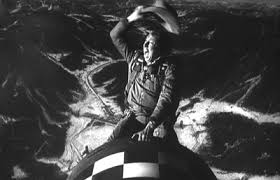
Proxy wars flamed up after World War Two, with large conflicts in Korea and Vietnam. Battling the Russians permeated American culture. Examples of this phenomena include bomb shelters, Dr Strangelove, duck and cover, James Bond films, and even Boris and Natasha. And there were spies, on both sides, the CIA’s Aldrich Ames, and Robert Hanssen of the FBI come to mind.

In my dad’s time the Korean War witnessed over 30,000 American deaths, and in Vietnam 58,000. Some of the best of my generation and before, stood up for America in freezing winters and insufferable jungles. The majority came home with physical and psychological disorders to serve us. We are obligated to remember and honor that sacrifice.   

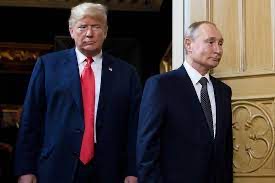
So understand the rest of us who lived through these perilous years. Watching clips of an American president cozying up to a Russian strongman in Helsinki, and pronounced that autocrat did not hack our elections, based on Putin’s denial, or when he invited a group of Russian operatives into the Oval Office to show off, is jarring to say the least, a real gob smack.

So the warm fuzzies Republican President Trump extended to the Russian President are shocking betrayal. First, in Langley, he whined to CIA operatives in a speech regarding, what else, himself. Later the old boy absconded with a library of national security documents and refused to relinquish them to the National Archives. 

The greatest and most egregious failure of the GOP is kneeling to an immoral Trump, as he kneels to serial murderer Putin. Richard Nixon remarked, “The Cold War isn’t thawing; it is burning with a deadly heat. Communism isn’t sleeping; it is, as always, plotting, scheming, working, fighting.”

The Republicans have forgotten what they stand for, and have become the betrayers.

Gail Chumbley is the author of a two-part memoir “River of January,” and “River of January: Figure Eight.” Chumbley has also penned two stage plays, “Clay” regarding the life of Statesman Henry Clay, and “Wolf By The Ears,” regarding slavery and racism.

Only Good News

I attended college in the mid-1970’s, starting around the end of the Vietnam War, and Nixon’s resignation. A restless atmosphere permeated campus as antiwar radicalism faded, leaving time to address other pressing dangers.

Newspaper headlines told the story. Ohio’s Cuyahoga River had caught fire, the blaze feeding upon nothing more than sewage laced with flammable sludge. Developers in upstate New York broke ground for a planned community over a topsoil-covered chemical waste dump. Later the “Love Canal” housing project reported residents dying from leukemia in alarming numbers. A nuclear plant chemist in Oklahoma, Karen Silkwood, turned whistleblower, testifying before the Atomic Energy Commission, regarding the dangerous levels and exposure of radiation at the facility.

Silkwood later died in a suspicious car accident.

As Americans focused on ending the war in Southeast Asia, sustainable life visibly deteriorated in America. As we protested the effects of Agent Orange in Vietnam, we missed the incessant dumping of chemical runoff into Florida’s Everglades. Car exhaust, and acid rain doused the “Rust Belt” region surrounding the Great Lakes. 

Some politicians stepped up to the moment, like Georgia Governor, Jimmy Carter. Carter, a Democrat, ran for and won the 1976 Presidential Election. For many, Carter presented a serious, intelligent and incorruptible problem-solver. Grasping the petroleum bull by the horns, President Carter prioritized America’s need to conserve energy. He pointed out that domestic transportation literally depended on the whims of Middle Eastern cartels who bore no love for the United States. Addressing the crisis, Carter appeared on prime time, wearing a sweater, imploring the country to turn down the heat to 65 degrees, and cut back on driving.

Though he was right, Carter served only one turbulent term, replaced by smiling Ronald Reagan. The Reagan campaign understood Americans wanted to hear only good news, and how exceptional Americans inherently were.

This changing guard had no love for Federal bureaucracy, quickly dispensing with environmental restrictions. James Watt served as Interior Secretary, and Anne Buford Gorsuch at the EPA. Both ignored Congressional environmental statutes, slashing budgets, cutting staff, and relaxing regulations on private logging rights and clean water standards.   

In the 1990’s another voice rose to school Americans on the reality of environmental decay; former Vice President, Al Gore. In his 2006 film, “An Inconvenient Truth” Gore presented a compelling case highlighting the ravages of climate change, and global warming. At the end of the film the Vice President adopted an encouraging tone. Now that American’s understood this impending threat, we would act as one to save our home planet.

For his stance, George H.W. Bush anointed Al Gore “Captain Ozone.” Pappy Bush was, after all, an oil man from Texas.

The kicker is that we knew in the 1970’s which way this story would end. 

Today Lake Mead hosts more dead bodies than boaters, while vast catastrophic fires incinerate the Red Woods. Endless 100 degree-plus days extend longer every summer, and floods flow through the arroyos of the Desert Southwest. In the highest latitudes polar ice shelves calve mountains of glaciers raising the ocean levels globally. 

If the purpose of politics is to nurture dim, aggrieved consumers, the GOP has accomplished that, in spades. But the crisis is real, and the GOP is not helping.

In point of fact, the Trump Administration referred to global warming as a hoax. The US formally withdrew from the Paris Climate Agreement, ratified during the Obama years. According to the Washington Post, under Trump’s watch, over 125 Obama era protections were reversed, loosening regulations on endangered species and oil spills.

For those of us of a certain age, we have watched this crisis evolve over fifty years. Buck passing, unfettered capitalism, combined with political postering renders this moment impossible to fix. If pursuit of wealth and hubris outweighs preservation, greed is our undoing.

Gail Chumbley is the author of the two-part memoir “River of January,” and “River of January: Figure Eight.” Chumbley has also written two plays. “Clay” deals with the life of Senator Henry Clay of Kentucky, and “Wolf By The Ears,” explores the beginnings of racism and slavery.

gailchumbley@gmail.com

A Scandalous Life

And I didn’t include GW Bush

A video blog. Forgive the quality, but the point is clear.

Gail Chumbley is the author of the two-part memoir “River of January,” and “River of January: Figure Eight.” Both titles available on Kindle. In addition Chumbley has complete two plays, “Clay,” on the life of Senator Henry Clay, and “Wolf By The Ears” exploring the beginnings of racism and slavery.

Masterpiece

Russia and the US didn’t have much contact in the 19th Century. A rumor had once circulated insisting presidential candidate, John Quincy Adams had procured American virgins for the Russian Czar when a young diplomat in Moscow. Not true, but there it is.

Still, the political tyranny of Russia has been widely understood in America as early as the 19th Century. When Abraham Lincoln condemned racism and intolerance stateside, he remarked that Russia’s oppression was, at least, less hypocritical than practiced in the United States. Lincoln’s Secretary of State, William Henry Seward later had his moment with the Czar when he negotiated the purchase of Alaska from Russia. Seward’s Ice Box, 1867 newspapers scoffed.

Some sixty years later, during World War One, revolutionaries deposed the Czar, and the last Romanov abdicated his throne. Bolsheviks arrested the former Czar, eventually shooting him, and the rest of the royal family in July, 1918. That same year President Wilson dispatched American forces to Archangel, to aid the White Russians to defeat Vladimir Lenin’s Bolsheviks, and stabilize democracy. The Whites failed, surrendering all of the vast Russian landmass into the hands of the Communists.

In the newly founded USSR, Premier Vladimir Lenin established the Comintern, the Communist International, publicly pronouncing the Soviet aim of exporting Communism worldwide, prompting in America our first domestic Red Scare.

In the following years, economic depression shrouded the globe, only dispelled by the horror of World War Two. Josef Stalin, Lenin’s cruel, and ruthless successor, struck a nonaggression pact with equally ruthless Adolf Hitler, dividing Poland as a buffer to buy time for both dictators. It comes as no surprise that neither trusted the other, and in 1941, Hitler launched Operation Barbarossa, invading the Soviet Union, bringing an abrupt, bloody end to that alliance.

After Pearl Harbor, the the Russians found themselves, by default, allied to Britain and the United States. Stalin trusted Washington about as much as he had Hitler, and in return Washington didn’t trust Stalin. Both Churchill and FDR remembered the Russians had cut and run during WWI, and the recent treaty with Hitler. Still, the two leaders went out of their way to appease their new Soviet ally.

In the last months of the European war, Stalin signaled his intentions to dominate by billeting the Red Army throughout Eastern Europe. Western allies acquiesced to Stalin’s aggression, and allowed Red forces to enter Berlin first, where the Communists didn’t leave until 1989.

A second Red Scare hit America much harder than the first. Stalin’s operatives managed to purloin atomic and hydrogen bomb intelligence, successfully delivering them to Soviet physicists to replicate. During the Kennedy Administration, the Berlin Wall sprouted up nearly overnight, and the entire Soviet Sphere of Influence made for an intense, dangerous Cold War. Conflict burned hot in America, the government attempting to flush out possible subversives, and ruining the lives of many innocent citizens. Julius and Ethel Rosenberg were executed for espionage, and Joe McCarthy accused the State Department and Army of harboring Communists. Soviet satellite Sputnik orbited the globe in 1957, the U2 spy plane crashed inside the Soviet Union in 1960, while at school we practiced ‘duck and cover’ drills. Proxy wars increased American foreign aid and deployed US forces to our allies across the free world, from Greece to Vietnam. 

Some of America’s greatest Cold Warriors included President Eisenhower, JFK, Richard Nixon, and Ronald Reagan. President Reagan, in particular, while speaking in Berlin, demanded the Soviets “tear down this wall.” These Chief Executives understood that any agreements with the Kremlin required stringent verification before any closure. America’s Soviet rivals were seasoned operatives, and were, in no way, friends of the west.

So where does this story leave us? Clearly the Kremlin has not changed. Spy networks, election hackers, and embedded operatives are perpetual threats. Maria Butina, the little Red darling of the NRA, and the GOP is an example of Russia’s recent relentless efforts. So, when an American President smiles and pays court to Vladimir Putin something serious is amiss.  

Update: At a Conway South Carolina campaign stop on February 10, 2024, Trump remarked concerning NATO, “”If we don’t pay and we’re attacked by Russia, will you protect us? No, I would not protect you. In fact, I would encourage them to do whatever the hell they want.”

The Russian government is patient, and that patience has appeared to pay off. Putin’s masterpiece? He elevated a Russian asset to the White House, and convinced GOP voters to look the other way. 

At this writing the entire Republican Party still remains steadfast to their Russian operative as he remains the presidential frontrunner for nomination.

Gail Chumbley is a history educator, and the author of the two-part memoir, “River of January,” and “River of January: Figure Eight,” Both available on Kindle. Chumbley has also penned three stage plays, “Clay,” “Wolf By The Ears, and “Peer Review.” In addition, Gail has co-written “Dancing on Air” a film script centered on a true 20th Century tale of Depression and War.

gailchumbley@gmail.com

Marking Time

2020.

Are the awful events of these last twelve months a once-off, bad patch of misfortune? Or is there a deeper explanation for the emergence of Trump, Covid, economic disaster, and civil unrest?

American History is steeped in a collection of pivotal moments, episodes that molded the nation’s continuing path. Can the events of 1776 stand alone as a turning point, or of 1865? 

A long metaphoric chain links one scenario to the next, marked by momentary decisions, government policies, or beliefs, that surface at one point in time, and voila, America’s story fleshes out to the future.

Add chance circumstances to the narrative and predictability flies out the window. 

Does 2020 stand alone as a singular event, or an inevitable outcome seeded somewhere in the past? Surely the march of history can be much like a chicken-egg proposition.

Mention 1776 and thoughts gravitate to the Continental Congress, the Declaration of Independence, and the emergence of General George Washington. But that struggle for freedom actually began at the end of the French and Indian War. 

As for 1865, when the guns silenced at Appomattox Courthouse, Robert E Lee’s surrender affirmed America as a nation-state. But thirty years earlier, President Andrew Jackson’s administration had sparked the eventual war over the issue of slavery. Thinly disguised as the doctrine of states’ rights, the intractable argument of slavery festered. The “Peculiar Institution” is, was, and always be the cause of that bloodbath. In point of fact the fury of one man, John C Calhoun, South Carolina Senator, and former vice president, lit the fuse of war thirty years before Fort Sumpter.

As to the folly of Trumpism, arguably the roots are deeply burrowed in America’s collective past. Author, and historian Bruce Catton, wrote about a “rowdyism” embedded in the American psyche. Though Catton used that term in the context of the Civil War, his sentiment still resonates in the 21st Century, i.e., Proud Boys, and the like. 

Closer to today, the Cold War seems to have honed much of the Far Right’s paranoia. The John Birch Society, for example, organized in the late 1950’s escalating anti-Communist agitation. Senator Joe McCarthy rode to fame on that same pall of fear, (with Roy Cohen at his elbow) only to fail when he went too far.

But the presidential election of 1964 seems to mark the most distinct shift toward the defiant opposition that fuels Trump-land.

Vietnam, in 1964 had not blown up yet. JFK had been murdered the previous fall, and his Vice President, turned successor, Lyndon Johnson was the choice of a grieving Democratic Party. The GOP fielded four major candidates in the primaries: three moderates and the ultra conservative, Barry Goldwater of Arizona. Senator Goldwater gained the nomination that summer with help from two men, conservative writer Richard Viguerie and actor Ronald Reagan.

Viguerie broke political ground through his use of direct mailing, and target advertising (what today is right wing news outlets). Reagan, once a New Deal Democrat, crossed the political divide and denounced big government in “The Speech,” delivered on behalf of Senator Goldwater. These two men believed Conservatism, and Laissez Faire Capitalism had been wrongly cast aside for liberal (lower d) democratic causes. 

Their efforts struck a cord with legions of white Americans who felt the same resentment. The Liberal Media and Big Government from the Roosevelt years were Socialistic and anti-capitalistic. No urban problem, or racial strife or poverty appeared in their culdesacs or country clubs. And taxes to support Federal programs squandered and wasted personal wealth.

So many other issues shaped the modern New Right. Communism, the Cold War, Civil Rights, Vietnam, and progressive politics alienated the wealthy class. 

But here’s the rub. Ultra conservative ideology is unworkable, an ideal that awards only a small, exclusive few, (today’s 1%). So 2020, and 2016 both have roots running deep in the core of the American experience. 

2020 isn’t about this moment, not really.  

Gail Chumbley is the author of “River of January,” and “River of January: Figure Eight,” a two-part memoir available at http://www.river-of-january.com and on Kindle. Also the stage plays, “Clay,” and “Wolf By The Ears” (the second in progress.)

gailchumbley@gmail.com

To Capture War

th

I came of age during the lengthy era of the Vietnam War.

This so called “police action” began quietly as a post-WWII policy challenging Communist expansion. Vietnam had been divided as had Germany, China, and Korea, leaving a divide of western leaning democracies pitted against Communist dominated systems. America’s commitment to the Vietnam conflict officially began in 1959, with US aid to the South, and officially ended with the Paris Peace Accords in 1973. Said another way, I was a preschooler when Ike dispatched advisers, and in my first year of college when Nixon ordered troops home.

Though almost moot today, opinions vary on why this war became so universally unpopular. One assessment claims the intense media coverage, particularly on American television, soured the public on the war, while others claim support declined when the draft expanded to middle class, college-bound sons. Not that it matters. In retrospect, whether soldiers were poor or affluent, the draft sent them hell in Southeast Asia.

The view that more affluent Americans across the country grew alienated, does hold some merit. the days, weeks, months, and years of guerrilla assaults, deadly fire fights in the jungle, and the daily tally of “body counts,”* drained public support for this sweltering nightmare.

I recall many evenings washing dishes from dinner, watching a little black and white Sony portable tv. The network didn’t seem to matter; Cronkite, Huntley-Brinkley, or Frank Reynolds, all showed the same harrowing footage. Sweating soldiers slogging through a blur of elephant grass, the wounded medevaced onto thundering Huey’s, then wrapping up with an updated casualty count.

The Vietnam War was not presented through paintings, photographs, or sanitized movie newsreels. Instead the American public, including this growing girl from Spokane, Washington, absorbed the unfolding drama as a grim reality program, years before that term was coined. And that little 10 inch window to the world told me, as young and unsophisticated as I was, that this war was awful. That war is altogether an awful ordeal.

Film crews exposed the jarring horror of  surgical personnel splattered with blood, fighting their own war to save lives. The desperate Marines being interviewed while under assault at a stone wall in the ancient Vietnamese capitol of Hue; the massacre at My Lai, all of it awful. Americans watched firsthand their native sons give what Lincoln called “the last full measure.”

So many years have passed, and this “little girl” is now officially a graying Grandmother. Yet, as I type, my  recollections of fifty years ago remains vivid. And I know that, at this very moment, young people in battle zones face the exact same hell as the lethal jungles of Vietnam. And current American commitments have dragged on far longer than my childhood.

Still, the human cost of war has not changed–not one bit. And though the the draft is inactive, and the American public distracted, the price of conflict remains the same for those young souls presently in harms way.

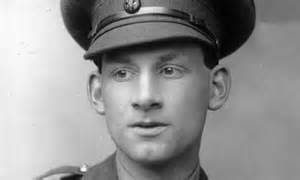
In the spirit of comforting the disturbed, and disturbing the comfortable, I would like to finish this piece by reprinting a poem by WWI soldier and poet, Siegfried Sassoon. With words alone, Sassoon captures the true degree of awful, using no film crew, photographer, or painter.

Dreamers

By Siegfried Sassoon

Soldiers are citizens of death’s grey land,
Drawing no dividend from time’s to-morrows.
In the great hour of destiny they stand,
Each with his feuds, and jealousies, and sorrows.
Soldiers are sworn to action; they must win
Some flaming, fatal climax with their lives.
Soldiers are dreamers; when the guns begin
They think of firelit homes, clean beds and wives.
I see them in foul dug-outs, gnawed by rats,
And in the ruined trenches, lashed with rain,
Dreaming of things they did with balls and bats,
And mocked by hopeless longing to regain
Bank-holidays, and picture shows, and spats,
And going to the office in the train.
 
*Covid 19 deaths are currently presented in the same visual manner. Grim statistics take a toll.
Gail Chumbley is the author of the two-part memoir, “River of January,” and “River of January: Figure Eight.” Both titles are available on Kindle.

A Special News Report

cvpz8vzwyaa7p-7

I won’t kid you, I was scared. We, my girlfriends and I, were watching ABC’s Saturday Night Movie in their basement when stiff slanted letters intruded on the flickering screen. A Special News Report. “We interrupt this broadcast to bring this breaking news,” explained Harry Reasoner in his musical voice.

“FBI agents have sealed the office of the Special Prosecutor Archibald Cox.”

I sat up from my prone position on the couch, trying to orient myself to the images on that black and white picture tube. The information didn’t make sense, Cox was the guy ferreting out the facts behind the Watergate scandal, and he should have been left alone to do his job. A sense of bewildered loss of gravity made me uneasy as I watched agents string crime tape across an office door, and around file cabinets.

I needed to go home; this movie could wait.

At the backdoor of my house, I could hear the television blaring. My parents were watching the reports, too. Good. Rounding the corner, there again appeared Harry Reasoner, sounding as confused as I felt. But my Dad knew right away something very shady was underway. He never liked Nixon, buying into that “Tricky Dicky” moniker coined back in the Fifties. So, he assumed the worst—and that was good enough for me.

The crisis deteriorated further. By the next morning, a Sunday, with all of America viewing, we found out Nixon ordered Archibald Cox fired, pronto. But the Attorney General wouldn’t do it, so Nixon fired him, instead. The second at the Justice Department wouldn’t carry out Nixon’s bidding either, opting to resign. The third in line, Robert Bork did fire Cox, and obeyed his President’s rather stunning orders.

I thought America was in the middle of a coup. Again, I was pretty scared.

The rest of this tragic tale is well documented, common knowledge. The public freaked, and the Nixon people freaked, and then the Nixon house of cards came a tumbling down. By August, 1974, less than a year after the “Saturday Night Massacre,” President Nixon resigned, the first chief executive to do so in our history.

The thing is, we all knew there was something dark about Richard Nixon. He looked like he was up to no good, and those who denied this quality were turning themselves inside out to deny it. Nixon always said the right things, “tough on crime,” “support our troops,” bleeding-heart Liberals,” pressing the correct conservative buttons. But he betrayed the trust of conservatives, and it took a man of quality, Gerald Ford, Nixon’s Vice President, to restore some kind of equilibrium to the GOP.

Today, Tuesday, January 10, 2017, some shady business is transpiring on Capitol Hill. Another hurried process to fast track Trump nominees for cabinet positions. We’ve got to ask ourselves, what’s the hurry? To whose benefit is the rush job.

And Trump isn’t about a Hundred Day Congress to aid the lives of Americans. Like Nixon, there is a darkness, and a craving for power that serves only one man. This plutocrat is all about buttressing his position, and ramming through his will as fast as possible. That should send up red flags across both houses of Congress and across the expanse of America.

I’m scared again. Watergate left us all reeling, and trust in government has never really returned. I don’t think any one person should have to endure two rancid presidencies in one lifetime.

The only solution is vigilance and persistence. Don’t listen to a word any of these characters utter. Instead watch what they do. Despots on their way up say what they must to get what they want. Watch what Trump and company actually do. Get your Senator on the phone, and press them with “what’s the rush?” We all want good government; government for all Americans.

If there appears to be an almighty hurry, history tells us it’s time to slow down. The Trump people are up to something.

We, the people and the press, need to insist on answers, and demand explanations for the big fat rush. Again, who gains from this fast tracking? And America doesn’t need another secret government.

Senate Switchboard (202) 224-3121, ask for your Senators office.

Idle Observations

Foreign oppression has, more than once, moved American policy makers at home to react with oppression. From the French Revolution to today, overseas upheavals frighten those in power enough, to prompt the same repression at home.

For example:

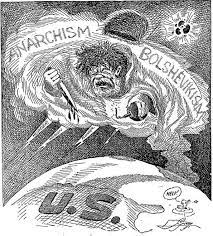
Immediately after World War One, the US endured a period of destabilizing fear–America’s first Red Scare. The U.S., bitter over entering the Great War, grew intolerant of unorthodox political views and worked to silence dissent. Radicals, both homegrown and immigrants from Europe, felt the wrath of political crackdowns. Anarchists, such as emigres, Emma Goldman, and Alexander Berkman, found themselves on trial, then deported back to Russia, while a home grown Socialist, Eugene V. Debs ended up in prison. Scores of other political agitators were targeted by the Justice Department for printing radical views, and voicing public opposition.

Why the oppression?

The reaction began following the bloody 1917 Revolution in Russia. The murder of the last Romanov Tsar, with his family, paved the way for the world’s first Marxist-Leninist government, the USSR. Vladimir Ilyich Ulyanov, (Lenin) seized the reins of the Bolshevik Party, and abolished all political opposition, outlining the aims of this new workers utopia, to overturn Capitalism worldwide.

The response in the U.S. came quick and harsh. Labor organizers, the leftest union, The Wobblies, and any other radical group deemed un-American was quashed. The U.S. government viewed dissent as treason, and Congress shaped specific legislation to silence protest. First passed and signed into law came The Espionage Act, in 1917, shortly followed by the Sedition Act the next year. No public speech, publications, nor use of the U.S. Mail to criticize government policy would be tolerated. Period.

In two test cases, the Supreme Court upheld the constitutionality of both laws. The majority ruled in the first case that nonconformists and draft-resistors presented a “clear and present danger” to the US. In the second opinion the Court ruled much the same, but this time with an important dissent. Justice Oliver Wendell Holmes, wrote, ” . . . the ultimate good desired is better reached by the free trade in ideas . . .”

Still, non-conformists and dissidents endured government suppression.

The courts, the government, and public opinion merged to outlaw what they feared–an all-powerful, biased social/economic system, much like the restraint simultaneously underway in the Soviet Union.

This was not over.

After Hitler’s death in April, 1945, and the ending of WWII in Europe, Soviet leader, Joseph Stalin kept his Red Army in East Germany and Eastern Europe, nixing a promised democratic Polish government in favor of his puppet Communist regime in Warsaw. And that was just for starters. A frightening Cold War ensued between the Soviets and the West, that by 1963 witnessed the construction of an actual partition, aka, an Iron Curtain. 

In America a political fever seethed, and Congress responded. Establishing HUAC, the House Un-American Activity Committee, to sniff out citizens who leaned to the left, ruining careers and lives in the process. This second Red Scare elevated the careers of Senator Joe McCarthy, and Congressman Richard Nixon.

This post originally intended to discuss the War on Terror. The objective to cast light on the American Taliban; those promoting God, Guns, and Gasoline. But now, with Russia up to its old tricks, all of us again, have a decision to make. Will Americans excuse Putin, grow complacent and emulate his corrupt oligarchy? That path is wide open, visited upon us via the former guy. He proudly rubbed shoulders with that murderer, and publicly praised Putin’s integrity. 

But, at this very moment, another, clearer choice stands before the American public. President Zelensky has conducted a master class on the real cost of freedom.  The Ukrainian people have lain down their lives to remind us we, are the original heirs of freedom.

In that spirit, this upheaval in the Ukraine is one we must emulate here at home. When Putin attacks Ukraine, he attacks us all. We are Americans, it’s time to take a stand for our liberty. This is not a drill.

Gail Chumbley is the author of “River of January,” and “River of January: Figure Eight.” Both titles are available on Kindle. Gail has authored two historic plays, “Clay,” concerning the life of Senator Henry Clay, and “Wolf By The Ears,” examining the foundation of American Slavery.

gailchumbley@gmail.com