Jenkins Hill

For teachers who are poor, but like to travel, nothing is better than hosting student tours. Truth is these trips are a lot of fun. Really. The kids make it fun. I led a number of tours over the years and still carry wonderful memories of the historic sites, our numerous guides, the bus drivers, my students, and the bustling itineraries that delivered us everywhere.

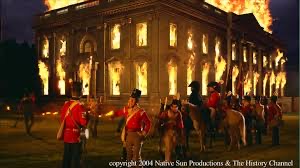
Out of the classroom, and away from home, students encountered much of what we had covered in history class, up close. On one stop at the US Capitol a guide opened a small door off a corridor revealing a narrow, circular stairway. Bygone soot and some damage remained down that steep passage, evidence of the War of 1812, when invading Brits set fire to the building. Our docent elaborated. A redcoat on horseback had urged his horse up those cramped stairs, only to be shot by American defenders waiting at the top. That anecdote caused a bit of a stir, as we all absorbed the horror.

Peeking into the Old Senate chamber, (much smaller than today’s grand affair) prompted another story of another clash, from another era. In this original legislative hall Massachusetts Senator, Charles Sumner had suffered a severe beating at the hands of a furious South Carolina Congressman. At issue, the fiery debate over the spread of slavery.

Bus drivers sometimes got into act, and added a few gems of their own. Before leaving the Capitol, he grabbed the microphone and shared a story.

George Washington had been inaugurated as America’s first president in New York City. But a site for a permanent national capitol had been selected. And it was President Washington, himself who laid the first cornerstone for the structure on a rise called Jenkins Hill. Why, the driver asked, did Washington turn the first spade, and set that brick of sandstone? Of course we all thought the honor went to Washington as the President. Wrong.

The President had been asked to set the stone, because he was a stone mason.

Who’d a thought!

On the bus we loudly debriefed, the chatter sounding much like gossiping about Justin Bieber, or the Kardashians. The narrative may have been a century or two old, but still very much alive–resurrected by students in the Twenty-first Century.

There are many such stories of American school kids touching our collective past, and many adults who made that happen. Somehow we all came away better people. Perhaps we’re all reminded we are part of a much bigger picture, and we all fit somewhere within the frame.

On January 6, 2021, Americans across the nation watched domestic terrorists violate the inner sanctum of democracy. I wondered what thoughts crossed the minds of those same former students to witness this tarnishing of democratic majesty.

Not everyone can afford to send their kids on trips like these. I couldn’t. But understand this, every public school in the country teaches American History. The public must understand this story tells of a unique nation, and democracy grows fragile when ignorance rules the times.

Gail Chumbley is the author of the two-part memoir “River of January,” and “River of January: Figure Eight.” Both titles are available on Kindle. Chumbley has written two historic plays, “Clay,” and “Wolf By The Ears.”

gailchumbley@gmail.com

Inheritance

Harry Truman understood the gravity of his duty right off. When FDR died in April, 1945, the newly installed Vice President got the word he was now president. And what a Herculean task he had before him. A world war to end, conferences abroad, shaping a new post-war world, and grappling with the human rights horrors in both Europe and in the Pacific. Add to all of that, he alone could order use of the newly completed Atomic Bomb.

On his White House desk, President Truman placed a sign, “The Buck Stops Here.” With that mission statement Harry Truman stepped up to his responsibilities despite the formidable challenges he faced.

Did Truman inherit the worst set of circumstances of any new president? Maybe? But it is open to debate.

America’s fourth President, James Madison, found himself  in one god-awful mess. His predecessor, Thomas Jefferson had tanked the US economy by closing American ports to all English and French trade. Those two powerful rivals had been at war a long time, and made a practice of interfering with America’s neutrality and transatlantic shipping. Despite Jefferson’s actions the issue of seizing US ships and kidnapping sailors never stopped. By 1812 President Madison asked for a declaration of war against England that, in the end accomplished nothing but a burned out White House and defaced Capitol.

Following the lackluster administrations of Franklin Pierce, then James Buchanan, Abraham Lincoln stepped into a firestorm of crisis. Divisions over the institution of slavery had reached critical mass, and Lincoln’s election was enough for Southern States to cut ties with the North. So hated was Lincoln, that his name did not appear on the ballot below the Mason-Dixon. And the fiery trial of war commenced.

The Election of 1932 became a referendum on Herbert Hoover, and the Republican presidents who had served since 1920. Poor Hoover happened to be in the White House when the economic music stopped, and the economy bottomed out. And that was that for Hoover. His name remained a pejorative until his death. 

Franklin Roosevelt prevailed that 1932 election, in fact won in a landslide victory. Somehow Roosevelt maintained his confident smile though he, too, faced one hell of a national disaster. 

In his inaugural address the new President reassured the public saying fear was all we had to fear. FDR then ordered a banking “holiday,” coating the dismal reality of bank failures in less menacing terms-a holiday. From his first hundred days the new President directed a bewildered Congress to approve his “New Deal.” 

The coming of the Second World War shifted domestic policies to foreign threats as the world fell into autocratic disarray. FDR shifted his attention to the coming war. When President Roosevelt died suddenly, poor Harry Truman was in the hot seat. But that is where I want to end the history lesson.

If any new President has had a disaster to confront, it is Joe Biden. Without fanfare or showboating Biden, too, has stepped up to the difficulties testing our nation. 

Much like Truman and Lincoln before, 46 is grappling with a world in chaos, and a divided people at home. In another ironic twist, like Madison, Biden witnessed, a second violent desecration of the US Capitol.

To his credit, though his predecessor left a long trail of rubble, Biden understands the traditional role of Chief Executive, while clearly many Americans have forgotten, or worse, rejected. Biden is addressing the issues testing our country, not only for those who elected him, but those who did not. An American President can do no less.

Gail Chumbley is the author of the two-part memoir “River of January,” and “River of January: Figure Eight.” Both titles are available on Kindle. She has completed her second play, “Wolf By The Ears.”

gailchumbley@gmail.com

Insulting The Past

The first time a parent challenged my teaching in history class, took place my first year. The topic concerned the creation of the Constitution, and the era of the Early Republic. I introduced the three branches, and separation of powers, census, representation, and that type of basic information. Definitely the bare bones of Civics.

During that lesson I explained how Electors were determined, and role the Electoral College played in choosing the president. End of lesson. The following day the topic moved to ratification and the addition of the Bill of Rights. From out of nowhere a hand shot up, and an upset student blurted, “My dad says you’re a liar!”

Yep, a liar. 

That was my baptism into the sliding scale of historic facts, and that initial chill of suppression stopped me in my tracks. Following that episode, censorship never strayed far from my thoughts. It was the beginning of a caution that lasted the whole of my career.

Fast forward 30 years in history education, when a similar event repeated.

The topic this time concerned the Reagan Revolution, and the events surrounding those years. 

Students learned about the Evil Empire, “Mr. Gorbachev, Tear Down This Wall,” Perestroika, Glasnost, Reaganomics, Laffer Curve, Trickle Down, etc . . .

Foreign policy topics covered Central America and the Middle East, particularly Nicaragua and Iran. Reagan officials were selling weapons to America’s enemy Iran, using the funds to put down a Marxist insurgency in Nicaragua. A privatized foreign policy if you will.

The calls came the following day. “How could I teach such nonsense in a public school! My student came home and shared her notes, textbook and graphs. This is not right, Ronald Reagan is the beloved champion of conservatism!”

The principal called me in and wanted to know what caused the dust-up. Flustered, I didn’t know where to start. Quickly I explained the general outline of the unit, and, well, he didn’t have the time to listen to the details. And he shouldn’t have. He hired me to do that job.

The episode sort of blew over, though that parent did call me at home a number of times over that summer. Weird behavior for sure, like the dad couldn’t let it go. 

For me the matter became philosophical; either educators prepare kids for the path, or parents attempt to manipulate that path for their kids.

Touchy parents revising America’s story to force their current politics on schools does nothing less than highjack education. Talented people leave the classroom endangering the US’s most essential institution. Worse, the exertions and sacrifice of those who came before, are papered over to suit today’s furor.

America’s lifeblood is our shared story, it’s what defines us as a distinct people. We must understand those central principles from our past to move forward as a healthy nation.

To those students whose parents challenged the historic record, it’s unfortunate they cannot let go just a little, and trust public education. This is our kids birthright.

And know this-I wasn’t lying.

Gail Chumbley is the author of the two-part memoir, “River of January,” and “River of January: Figure Eight.” Both titles are available on Kindle. Chumbley has also written three stage plays, “Clay,” regarding the life of Senator Henry Clay, “Wolf By The Ears,” an exploration into American slavery, and Peer Review where 47 meets four earlier presidents.

A Dreamer

You may say I’m a dreamer, but I’m not the only one, I hope someday you’ll join us, and the world will live as one.

John Lennon

A professor of History and Government, President Woodrow Wilson fervently believed America could fulfill its promise as the world’s beacon of democracy, a “City Upon a Hill.” After WWI, this President aimed to reform old monarchial Europe, and lead the world to a new, enlightened destiny. But perhaps his ambitions were too lofty to be realized in a cynical world of power and greed.

Participants convened at the Bourbon Palace of Versailles on June 28th, 1919 to design a new future for . . . really the entire world. Wilson attended in person, which for an American President was a first. He posed, all smiles with the French president, Georges Clemenceau, the English Prime Minister, David Lloyd George, and Italy’s, Vittorio Orlando.

Considering the devastation from the recent war, these leaders had their work cut out for them.

After the Armistice had been signed the previous year, Wilson prepared for his journey by completing a new framework to rebuild a better world. Titled the Fourteen Point Plan, the President outlined a path to enduring peace. The intent was clear: Freedom for all. Free trade, self-government, transparency in treaties, a reduction in weaponry, and most importantly, an international peace-keeping body, The League of Nations. This proposed League had been crafted to resolve international conflicts through open diplomacy. For Wilson, mechanized warfare had proven pointless, so much so, that modern warfare had become a zero sum game.

Naturally many attendees were self-appointed representatives from oppressed ethnic groups around the globe. All had gathered to endorse the American President’s call for free governments, freely chosen.

The Chinese, for example, lobbied for colonial possessions formally held by Germany be returned. China was ignored. Young Ho Chi Minh, a student in Paris, attempted to see President Wilson to discuss the liberation of his home, French Indochina, (Vietnam). But Ho never got trough the gilt doors of Versailles.

The multitudes under British colonial rule, clamored for freedom, as well. Egyptian, East Indian, and Muslim peoples embraced Wilson’s vision of self determination. Zionists, Palestinians, even the Sinn Fein in Ireland looked for release from British subjugation.

Returning home to the White House, the President received a cable that his deputy remaining at Versailles, a Colonel Edward House, had agreed, in Wilson’s absence, to drop the League provision. Wilson flipped his wig and back he sailed, to resurrect his League as a non-negotiable part of the final agreement.

And though the League of Nations was indeed established, the US never joined. After all the horse-trading with his counterparts in Paris, Wilson could not convinced Republican Senators to ratify his treaty. Stunned, the President took his crusade to the American people, via a whistle stop tour. Exhausted by exertion and poor health, Wilson finally collapsed, followed quickly by a massive stroke.

Without the United States participation the League invariably failed. And a broken Woodrow Wilson died shortly after leaving office.

Perhaps President Wilson was foolish to think old world autocrats would give up any power and authority to colonial possessions. Clemenceau and others had viewed him as hopelessly naive. And maybe Wilson’s critics were correct. The man had a stubborn, self-righteous streak, that ultimately was his undoing.

Open government, free elections, and international commitment to fair play. Was Wilson merely a dreamer?

Gail Chumbley is the author of the two-part memoir, “River of January,” and “River of January: Figure Eight.” Both titles are available on Kindle.

gailchumbley@gmail.com


The Die was Cast

The threat of disunion appeared long before either the Civil War, or the insurrection on January 6, 2021. The architects laying the chaotic cornerstone? President John Adams, and his Vice President, Thomas Jefferson.

David McCullough in his celebrated biography, John Adams, portrayed this Founding Father as a brilliant man, and that is true. However, his self righteous streak succeeded in undercutting his talent and better judgement. As the second president of the United States, John Adams, proved to be a prickly, and thin-skinned chief executive. A dour Yankee, Adams could not tolerate public criticism, and as many later presidents, came to view the press as an adversary—enemies of the government.

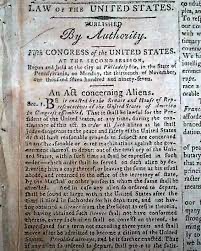
In a rage over newspapers excoriating his administration, Adams shepherded the Sedition Act through Congress in 1798. Opposition editors soon found themselves in the President’s cross hairs, and some were actually jailed. The Alien Act, also passed in 1798, aimed to delay new voters, by lengthening time for naturalization, as immigrants were certain to vote against Adams and his Federalist Party. (Hmm. The press, immigrants, and voting rights. Imagine that).

Jefferson, (still Adams’ Vice President), promptly took action to counter Adams’ wrong-headed legislation.

Launching a full out, but anonymous denunciation of the Adams Administration, Vice President Jefferson published tracts vilifying Adams, and emphasized the sovereignty of the states guaranteed under 10th Amendment.

Returning from France, where he had served as American ambassador, Jefferson had been appalled by the powerful Federal Constitution created in his absence. As a ‘natural aristocrat,’ and slave master, Jefferson was unwilling to cede power to any higher authority than himself, and his fellow patricians. Instead the “Sage of Monticello,” asserted the right of states not to obey laws they didn’t like.

Two state legislatures agreed to debate Jefferson’s counter measures, Virginia and Kentucky. Penned secretly by Jefferson, and Madison, these resolutions insisted the states were the final arbiters of what was legally binding. A new term emerged from this controversy—Nullification.

The die was cast, the seeds of disunion sown. In the years following, nullification intensified, fertilized particularly in 1832 by John C. Calhoun, a South Carolina Senator. That that state became the first to secede in 1861, sparking the US Civil War, is no coincidence.

The traitors who invaded the halls of Congress last January took their cue from Jefferson, as if they, too, battled the evils of John Adams. Scapegoating the media, immigrants and the Federal government has left a long, bloody stain on American history. As I write, the States of Georgia, and Texas among others, are attempting to limit voting rights once again. Texas has also taken a nullifying stance, limiting a woman’s right to her own body, despite Federal protections.                        

No government has a self-destruct button, none. John Adam’s pique, and Thomas Jefferson’s reaction stamped an incompatibility that still, today, inflames American politics. 

Gail Chumbley is the author of the two-part memoir, “River of January,” and “River of January: Figure Eight.”

gailchumbley@gmail.com

Don’t They Realize?

A debt we owe and can never repay.

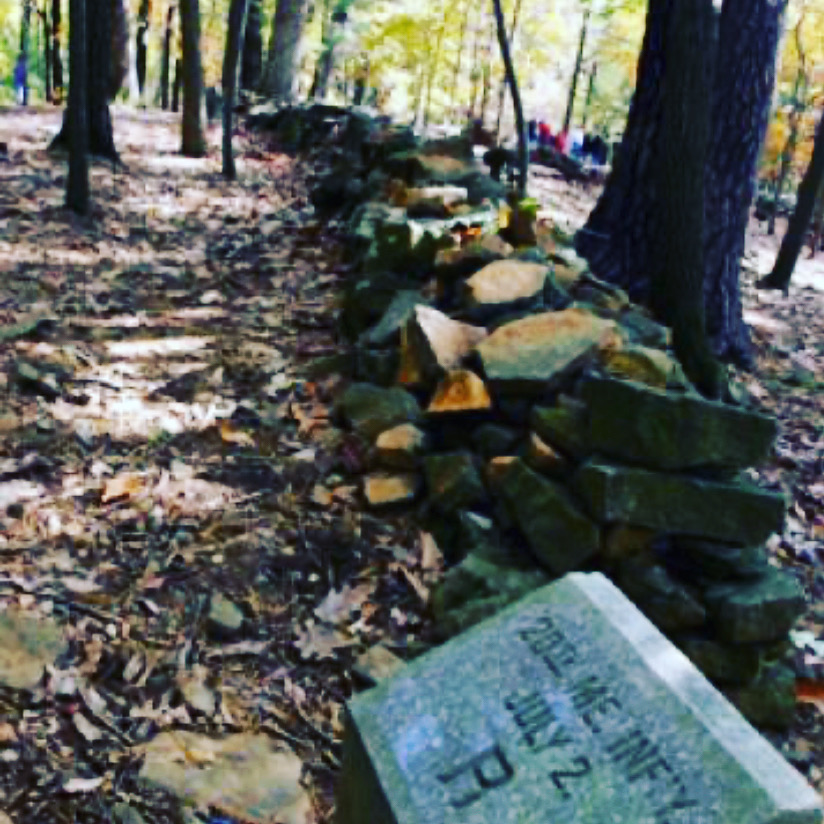
The attack did not come until almost 5:00pm on July 2, 1863. The Yankees under the command of General George Meade held on to both Cemetery Hill, and Cemetery Ridge, south of the town of Gettysburg. Situated across an open ground of boulders, orchards, wheat and corn fields, waited invading Confederates commanded by Robert E Lee.

Issued vague orders the day before by General Lee the boys in grey had failed to capture the vital high ground on the northern end of the Union lines, and were forced to deploy upon less desirable ground called Seminary Ridge. Imagine an irregular stadium from north to south, with foes facing one another across a lethal killing zone.

On that second day, Lee had ordered fresh assaults on the southern end of the Yankee lines. Fierce fighting commenced in the Wheat Field, and upon the boulders of Devil’s Den, culminating in a main assault on a rise called Little Round Top.

The lower of two southern summits, Little Round Top appeared vulnerable to the Rebs massing below. Alabamians were ordered to angle around to their right, and cut to the rear of Union lines. However, their movements were detected by Union Colonel Strong Vincent, and Vincent acted at once.

Issuing orders boys from Pennsylvania, New York, Michigan, and Maine units were to double-quick to defend rubble-strewn, steep, Little Round Top. Holding the end of that hastily formed line stood Colonel Joshua Lawrence Chamberlain and his 20th Maine. And as many readers know, Colonel Chamberlain held off three assaults by the Alabamians scrambling up the steep terrain. Finally out of ammunition, Colonel Chamberlain in desperation ordered a bayonet charge, sweeping down the hill against another attack. And miraculously that bladed downhill charge worked. 

A less known story concerns the Yankee soldiers assigned to guard that hard-won hill that night. Under orders to detect any further Confederate threats, these sentries could hear the moans and piteous cries of their brothers wounded and dying below them in the darkness.

Distressed by the audible suffering and with no way to help, the guards kept to their orders. Somewhere in that endless night one sentry was said to have cried, “Don’t they know they saved the country today?”

And those words echo to us today, on this July 2.

Those of us who serve honorably in public office we stand for America.

Those of us who get involved in community action, or contribute to candidates and causes stand for America.

Those of us who rally for freedom in good and bad weather stand for America.

Those of us who believe in fair play and government by the people stand for America.

To those of us that will never submit to authoritarianism stand for America.

And we will save our country.

Gail Chumbley is the author of the two-volume memoir, “River of January,” and “River of January: Figure Eight.” Both titles are available on Kindle. Chumbley has also written three stage plays. “Clay” regarding the life of statesman Henry Clay, “Wolf By The Ears” a study of slavery and racism, and “Peer Review” where 47 converses with four past presidents. In addition Chumbley has co-authored a screenplay, “Dancing on Air,” based on her two books.

gailchumbley@ymail.com

The Spirit of the Age

We’re that little guy

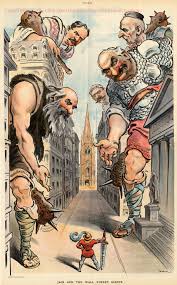
In the post-Civil War era. John D Rockefeller, Andrew Carnegie, JP Morgan and others rose to wield unparalleled financial power. Emerging industries in oil, steel, and mining had grown into monolithic trusts, using innovative banking practices that fed an explosion of wealth. Titled “The Gilded Age,” these and other industrial giants earned another moniker “Robber Barons,” for not only the fortunes they built, but the ruthless practices that bred those millions.

The American public both admired and loathed these magnates. Critics argued the nature of such concentrated treasure was damaging to the lower rungs of American society. In pushback, journalists and economists lay bare the cruel tactics these industrialists utilized. Notable critics included Ida Tarbell, who investigated Rockefeller’s shady dealings in creating Standard Oil, Upton Sinclair did much the same through his novel, “The Jungle,” leaving readers both outraged and nauseous. And social reformer, essayist, Henry George, argued Carnegie had in no way improved the quality of American life, despite Carnegie’s philanthropic efforts. 

President Theodore Roosevelt found no friendship on either side. “Muckrakers,” he called these journalists, while still pursuing legal action against the excesses of what he termed the “wealthy criminal class.” 

In response, Andrew Carnegie published a work titled, “The Gospel of Wealth.” Centered upon the principles of 18th Century economist, Adam Smith, Carnegie argued that his success was no more than God’s will, and a gift to mankind. To Carnegie’s way of thinking, the Almighty himself, had conferred upon each certain gifts, and Mr Carnegie’s talent lay in getting rich. Left unmentioned were the unmet talents of those condemned to labor in the fiery pits of Carnegie Steel, and other factories. 

Confident in his beliefs, the tycoon believed he stood in God’s favor. And Americans swallowed the Gospel of Wealth, hook, line, and sinker, rendering reforms nearly impossible. 

After World War One America went on an unfettered spending spree. Throughout the Twenties President Coolidge rejected T. Roosevelt’s moral crusade, holding firm that “The Business of America is Business.” Then in October, 1929, at the beginning of Herbert Hoover’s administration the bottom fell out of the New York Stock Market. 

And somehow the rich no longer seemed quite as godly.

The 1932 Presidential Election issued a mandate for a “New Deal.” Desperate Americans were struggling, going hungry, losing their homes, writing the Franklin Roosevelt administration pleading for a hand up. And FDR acted quickly. Harnessing the power of the Federal Government, the President championed deficit spending, stimulating buying power to the underclasses. No longer would Americans tolerate the unregulated thievery of the past. By the 1960’s Lyndon Johnson’s “Great Society,” extended aid even further, so regular people could tap into the financial support to get ahead. 

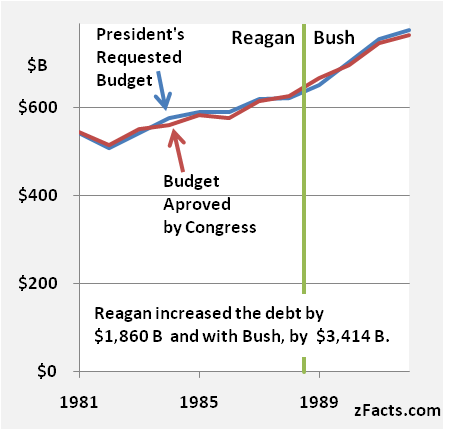
By 1980 the pendulum had swung to the right once again, regulation falling into disfavor. Laissez faire policies returned under Ronald Reagan. In turn, deficits blossomed, and the market crashed again in 1987 under the weight of the DotCom boom, and savings and loan scandals. Under GW Bush a scarier crash occurred in 2008, following the fallout of the mortgage market. 

American laws, passed in the heart of crises, need to be remembered and embraced, not discarded during better times.

Much like America during and after World War Two, private, public, and global financial institutions cooperated for just and equitable progress. Enlightened self-interest with carefully crafted guardrails enhance prosperity, and promotes financial stability.

Those lessons in economic policy made the 20th Century, America’s Century. This isn’t a lesson we have to relearn, the path has been paved.

The Bloody Shirt

Principled soldiers of conscience, the victorious army knew they had served well, defending the Constitution to the last full measure.

May of 1865 witnessed Washington’s Grand Review of the Union Army. Smartly uniformed soldiers filed past crowds, in a river of Union blue. The guns had silenced a mere month earlier at Appomattox, Virginia; the Republic preserved.

A brilliant sun glinted off polished bayonets, and the parade route decorated with miles of silk banners, tattered company colors and patriotic bunting. Rejoicing greeted the passing soldiers in shouts and fluttering handkerchiefs. Flower petals rained down in a fragrant carpet of gratitude. 

The bloody war finally, truly, had ended. 

One year later, near Springfield, Illinois, a group of veterans established a fraternal association, the Grand Army of the Republic. The idea caught fire nationally as other veterans founded their own local chapters; a place men could remember, share, and grieve for lost friends. Soon these war horses got busy extending their service to those they had defended.

First, survivors lent aid to disabled fellow veterans, assistance to widows and their dependents, and orphan homes. Soon preserving battle sites added to the group’s outreach. Before long members began seeking electoral office to further serve the nation.

A story has it General Benjamin Butler, now a Congressman, grew extremely agitated while speechifying, and produced a torn, and bloody shirt he claimed came from the battlefield. Soon the practice of “waving the bloody shirt,” invoking war credentials, became customary for candidates. The saying “vote the way you shot,” launched the careers of numerous politicians. 

Presidents from Ulysses Grant, (1868-1876) through William McKinley (1896-1901) had faced the rebels on the battlefield.*

War memorials and monuments mushroomed, funded with GAR donations. Reunions, benevolent societies, veterans homes, and hospitals kept local chapters busy. In fact, much of GAR efforts were eventually assumed by the Federal Government, particularly pensions for those who had served.

Over time survivors of the Civil War dwindled in number. However, the organization soldiered on until 1956 when it finally faded. Loosely related, though more a coincidence, our last five star general was serving as president when the GAR closed its doors. President Dwight David Eisenhower, who kept a farm in Gettysburg, happened to occupy the White House.

This brotherhood, this Grand Army of the Republic, rose to defend our democracy in the mid-19th Century. This model of valor, and sacrifice shaped the character of the military for years to come. 

But one truth is quite clear, no officer ever advocated for a coup, and there was not one sucker or loser in their ranks.

In 2021 we can do no less.

*Chester Arthur served in the New York Militia, Grover Cleveland did not serve.

Gail Chumbley is a history educator, author and playwright. Her two-part memoir, “River of January,” and “River of January: Figure Eight,” are both available on Kindle.

gailchumbley@gmail.com

Masterpiece

Russia and the US didn’t have much contact in the 19th Century. A rumor had once circulated insisting presidential candidate, John Quincy Adams had procured American virgins for the Russian Czar when a young diplomat in Moscow. Not true, but there it is.

Still, the political tyranny of Russia has been widely understood in America as early as the 19th Century. When Abraham Lincoln condemned racism and intolerance stateside, he remarked that Russia’s oppression was, at least, less hypocritical than practiced in the United States. Lincoln’s Secretary of State, William Henry Seward later had his moment with the Czar when he negotiated the purchase of Alaska from Russia. Seward’s Ice Box, 1867 newspapers scoffed.

Some sixty years later, during World War One, revolutionaries deposed the Czar, and the last Romanov abdicated his throne. Bolsheviks arrested the former Czar, eventually shooting him, and the rest of the royal family in July, 1918. That same year President Wilson dispatched American forces to Archangel, to aid the White Russians to defeat Vladimir Lenin’s Bolsheviks, and stabilize democracy. The Whites failed, surrendering all of the vast Russian landmass into the hands of the Communists.

In the newly founded USSR, Premier Vladimir Lenin established the Comintern, the Communist International, publicly pronouncing the Soviet aim of exporting Communism worldwide, prompting in America our first domestic Red Scare.

In the following years, economic depression shrouded the globe, only dispelled by the horror of World War Two. Josef Stalin, Lenin’s cruel, and ruthless successor, struck a nonaggression pact with equally ruthless Adolf Hitler, dividing Poland as a buffer to buy time for both dictators. It comes as no surprise that neither trusted the other, and in 1941, Hitler launched Operation Barbarossa, invading the Soviet Union, bringing an abrupt, bloody end to that alliance.

After Pearl Harbor, the the Russians found themselves, by default, allied to Britain and the United States. Stalin trusted Washington about as much as he had Hitler, and in return Washington didn’t trust Stalin. Both Churchill and FDR remembered the Russians had cut and run during WWI, and the recent treaty with Hitler. Still, the two leaders went out of their way to appease their new Soviet ally.

In the last months of the European war, Stalin signaled his intentions to dominate by billeting the Red Army throughout Eastern Europe. Western allies acquiesced to Stalin’s aggression, and allowed Red forces to enter Berlin first, where the Communists didn’t leave until 1989.

A second Red Scare hit America much harder than the first. Stalin’s operatives managed to purloin atomic and hydrogen bomb intelligence, successfully delivering them to Soviet physicists to replicate. During the Kennedy Administration, the Berlin Wall sprouted up nearly overnight, and the entire Soviet Sphere of Influence made for an intense, dangerous Cold War. Conflict burned hot in America, the government attempting to flush out possible subversives, and ruining the lives of many innocent citizens. Julius and Ethel Rosenberg were executed for espionage, and Joe McCarthy accused the State Department and Army of harboring Communists. Soviet satellite Sputnik orbited the globe in 1957, the U2 spy plane crashed inside the Soviet Union in 1960, while at school we practiced ‘duck and cover’ drills. Proxy wars increased American foreign aid and deployed US forces to our allies across the free world, from Greece to Vietnam. 

Some of America’s greatest Cold Warriors included President Eisenhower, JFK, Richard Nixon, and Ronald Reagan. President Reagan, in particular, while speaking in Berlin, demanded the Soviets “tear down this wall.” These Chief Executives understood that any agreements with the Kremlin required stringent verification before any closure. America’s Soviet rivals were seasoned operatives, and were, in no way, friends of the west.

So where does this story leave us? Clearly the Kremlin has not changed. Spy networks, election hackers, and embedded operatives are perpetual threats. Maria Butina, the little Red darling of the NRA, and the GOP is an example of Russia’s recent relentless efforts. So, when an American President smiles and pays court to Vladimir Putin something serious is amiss.  

Update: At a Conway South Carolina campaign stop on February 10, 2024, Trump remarked concerning NATO, “”If we don’t pay and we’re attacked by Russia, will you protect us? No, I would not protect you. In fact, I would encourage them to do whatever the hell they want.”

The Russian government is patient, and that patience has appeared to pay off. Putin’s masterpiece? He elevated a Russian asset to the White House, and convinced GOP voters to look the other way. 

At this writing the entire Republican Party still remains steadfast to their Russian operative as he remains the presidential frontrunner for nomination.

Gail Chumbley is a history educator, and the author of the two-part memoir, “River of January,” and “River of January: Figure Eight,” Both available on Kindle. Chumbley has also penned three stage plays, “Clay,” “Wolf By The Ears, and “Peer Review.” In addition, Gail has co-written “Dancing on Air” a film script centered on a true 20th Century tale of Depression and War.

gailchumbley@gmail.com