They Were Wrong

“Slave owners and white racists were afraid that the world they had always known was slipping away from them. Fear was a great motivator—fear of change, fear of losing power, fear being that they were wrong. The roots of white anxiety over threats to enslavement and to legalize white supremacy ran deep.”

John Meacham, And There was Light. Random House, 2022, page 55.

The power of this passage left me stunned. A whirlwind of thoughts rushed all at once, promptly crystallizing into one central truth; the power of privilege and racial superiority in America has not changed in 250 years. Not. One. Bit.

Meacham’s book, a biography of Lincoln, focuses on the shaping events that made Lincoln arguably America’s greatest President. However, those same circumstances left the Southern slave power deeply offended, seething with hate and lethally dangerous. The metastasizing rancor simmered and boiled until the hate ultimately exploded into Civil War, and to Lincoln’s 1865 murder.

An 1820 law, the Missouri Compromise, sounded the first alarm below the Mason-Dixon Line. That slavery could be limited through any federal legislative act left the ruling Planter class touchy and suspicious. Sensitive to any criticism of Southern honor  and way of life inspired bitterness and fury.

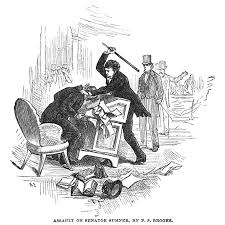
Congressmen and Senators frequently squared off years before the crack of gunfire and the clash of steel. A Massachusetts Senator, Charles Sumner, endured a severe beating on the Senate floor for a fiery anti-slavery address. So volatile became the rhetoric that the House chamber adopted a “gag rule” that prohibited any mention of slavery in any form. Censorship abounded in Dixie, as well. Any abolitionists tracts, or books, such as Uncle Tom’s Cabin quickly landed in the trash bin, tossed out by Southern postal officials.

As Northern abolitionists grew more strident, Southerners grew more militant. The right to oppress and engage in human trafficking was viewed as part of the Southern landscape, and auction blocks proceeded to conduct commerce in human flesh. For victims of this trade, violence, rape, and fear remained the unquestioned prerogative of the planter class.

For abolitionists and Southerners a flash of arms became only a matter of time.

The politics of slavery entered houses of worship where politicized clergy twisted the Bible inside out to condemn or justify the right to own another person. Today’s Southern Methodist and Southern Baptists churches are enduring relics of the ecclesiastical war before the shooting war.

After four bloody years, as the guns finally silenced, the era of Reconstruction began in the hopes for a new America. Emancipated freedmen under the protection of Yankee occupiers began exercising their right to vote, enter into civil marriage, attend schools through the Freedman’s Bureau, all through the efforts of the Federal Government. However, Southern whites, still simmered and bided their time, determined and unrepentant. The shooting may have stopped, but the war was not over.

To instill compliance a guerrilla campaign of terror suppressing former slaves emerged. The Ku Klux Klan, the Knights of the White Camelia, and the White League galloped through the night, masked and menacing. These former Confederates spread fear and committed murder against any person of color who dared claim the blessings of American Liberty. 

Today, in the 21st Century, strikingly similar dynamics have reemerged.

The moment in 2008 as Barack Obama became 44th President of the United States, white power interests again reared up.

For many of us this election appeared to be proof that America had turned a positive corner in race relations, But almost at once border state Senator, Mitch McConnell of Kentucky quickly reacted decreeing “The single most important thing we want to achieve is for President Obama to be a one-term president.”

Not long after Congressional Republicans sunsetted a vital clause in the 1965 Voting Rights Act. The provision protected black voters from acts of discrimination at the polls. McConnell’s handy work placed the onus, once again on the voter to prove they were illegally denied. (Much like the old Jim Crow poll taxes and literacy tests.)

Then Trumpism arrived.

This time the violence on Capitol Hill came in the form of a coup. On January 6, 2021 white supremacists stormed the halls of Congress to stop the counting of the 2020 Electoral Vote. Back in the 1860’s, during the Civil War, no such invasion took place because the Union North stood fast against rebellion.

Human trafficking once again is considered acceptable as long as conducted by rich and powerful whites. For example, Ghislaine Maxwell, a prolific procurer of young girls for the Epstein Pedophilia Ring quipped “these girls, they’re nothing,” so reminiscent of the 19th Century.

Christian Nationalism again warps American churches. Forgotten is the example set by Jesus, and the message of his life. These same “Christians” now take pleasure in the brutality and suppression of others, willfully turning a blind eye to racism, pedophilia and misogyny, as long as the rhetoric is that of white exceptionalism.

Fearing their alpha-position slipping away, white nationalists, too, are simmering and lethally dangerous. Though hate group names have changed, the mission remains the same: fear and suppression. Proud Boys, Oath Keepers, neo-Nazi’s, MAGA, and Christian Nationalists today gallop through cyber space, surfacing for violence as was done on January 6th. Federally sanctioned ICE agents, masked and anonymous, menace American cities day and night terrorizing the weak and vulnerable and violating due process and legally obtained warrants.

The same dynamics are in play, fear of a changing America, fear of being wrong, and fearful of losing control.

Those who witnessed the dissolution of the Union believed their blood-soaked sacrifice settled for all time the issue of race and power in America. But that is clearly false.

But then is now. Now is then. Eras are intricately and forever intertwined. This nation has remembered nothing and again fallen for the same old hate and boastful ignorance of their infamous forefathers.

And they are still wrong.

Chumbley is the author of the two-part memoir, River of January, and River of January: Figure Eight. She has penned two stage plays, “Clay,” exploring the life of Henry Clay, “Wolf By the Ears,” a study of racism in America, and “Peer Review,” where 47 is confronted by four past presidents.

Fighting Bees

Young Abraham Lincoln came of age, politically speaking, during the administration of Andrew Jackson. And the rough, aspiring frontier politician did not approve of the Democratic Party and their blind, cult-like dedication to “Old Hickory.” Speaking first in New Salem, Illinois, then in Springfield, Lincoln held forth on the subject of Jackson’s arbitrary and autocratic style compared to his man, Senator Henry Clay of Kentucky.

Young Mr. Lincoln viewed Henry Clay as a true statesman. He admired Senator Clay for his rational, stable economic plans to nurture a growing America bursting with potential.

Central to Clay’s program was a bank, a central depository to finance new infrastructure projects like roads, canals, and railroads. Senator Clay championed the Federal Government as the best instrument to plan and carry out public works, improving commercial activity across the young nation.

To Lincoln scratching out a life in a muddy, stump-ridden western wilderness, Clay’s American System of improvements was welcome. Clay’s platform would bring order, jobs, prosperity, and hope to Lincoln’s own rough-hewn region.

Young Lincoln also shared Clay’s conviction that slavery did not belong in new western territories. All Lincoln wanted was a fair chance for all Americans, and that slavery impeded human talent, and he believed, like Clay, that slavery also devalued free labor. Free market capitalism and slavery could not co-exist.

To Lincoln, President Jackson’s mercurial style of leadership did not serve America’s future either. Jackson not only vetoed many improvement bills, arguing one state benefiting from federal funds was unfair to others, he in one instance vetoed a road bill because the project lay entirely in Kentucky, Henry Clay’s home state.

Excessive emotional discord in politics caused more problems than it remedied, and impeded national growth. Nation building wasn’t a sectional competition, a personal challenge, nor a game to pit political egos.

At the time of Jackson a religious revival burned hot across the country. Known today as the Second Great Awakening this movement, foaming over with emotion, had drenched politics as well, with candidates often taking on an evangelical, absolute tones.

Lincoln’s once joked he didn’t much like these stump orators unless they looked like they were “fighting bees.” To Lincoln, such emotional public displays had no value in advancing America.

So what did Lincoln believe? In the founders ideals of the United States of America. Embracing presidents as religious, messianic manifestations had no purpose, and produced only the tainted fruit of extremism.

Lincoln was, above all else, a moderate, logical, and measured man. His inspiration, his convictions, centered on a secular faith in the ideals of America.

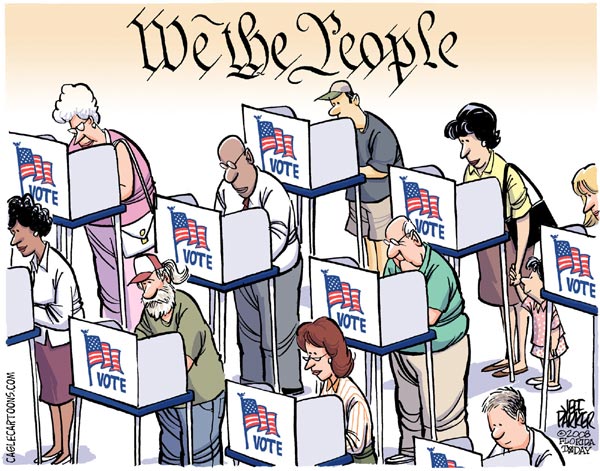
Mr. Lincoln like to think of the Declaration of Independence as a golden apple, (equality and rights) set in the silver frame of the Constitution (the law). In other words certain inalienable rights protected by We the People.

Former President Obama exemplified Lincoln’s America in so many ways; relying on his cabinet, advisors, or his own formidable intellect to govern. And Lincoln’s Jackson nightmare repeated when a dumber version of Old Hickory proclaimed America is a terrible place.

Today the United States’ perpetual election cycle keeps emotions raw, but accomplishes little else. Mr. Lincoln would take a dim view of today’s constant political turmoil, arguing that we need to keep our wits about us and vote with our heads.

More infrastructure needs attention as well as national security, civil rights, and climate change. Instead a thin-skinned ego maniac welcomes billionaires to pilfer and taint good government. And the computer age has presented a complicated network neither Lincoln nor Clay could have imagined. We rely on those cooler heads to prevail, making policy, and conducting the people’s business, or we end up paying homage to wannabe dictator who is as arbitrary as he is vacuous.

Today, at this moment, in a country full of pointless Jacksons, be a thoughtful Lincoln. There is no need to fight bees all of the time, over and over, when the real work of America needs to be done.

Gail Chumbley is the author of “River of January,” and “River of January: Figure Eight.” Chumbley also penned two stage plays, “Clay,” examining the life of Senator Henry Clay, and “Wolf By The Ears,” a study of racism and slavery in America. Currently Chumbley is working on “Peer Review.” This piece is a cross of Dickens A Christmas Carol converges with presidential history.

chumbleg.blog

A Theory

He proclaimed “it’s morning in America,” in a political commercial reassuring citizens the country’s best days still lay ahead. Responding to four gloomy years of oil shortages and the American hostage taking in Iran, the nation, in 1980, enthusiastically turned from Jimmy Carter’s malaise to genial Ronald Reagan’s magnetic smile.

Reagan had campaigned hard against what he viewed as an intrusive and bloated Federal bureaucracy. After his landslide victory in November of that year, President Reagan, repeated that theme in his inaugural address remarking, “it is no coincidence that our present troubles . . .are from . . .the growth of government.” The new president added that “government is not the solution to our problems, government is the problem.” Conservatives and Blue Dog Democrats were giddy to see federal entitlement programs cut, or at least significantly pared down. 

In the spirit of shrinking domestic spending, the Reagan Administration shepherded Congressional bills to cut services to poor and disabled Americans. Federal education programs went under the ax, as well as reductions of Medicaid, and Social Security. These entitlements suffered steep cuts by restricting eligibility, and removing many from the federal rolls. 

Mr. Reagan operated under the theory of “trickle down economics,” a belief that tax cuts for the rich would naturally benefit lower income brackets. New economic opportunities would emerge as reinvested wealth would find its way to employing the lower classes. Also known as “supply-side” economics, Reagan proceeded to slash not only taxes on the rich, but also loosened federal regulations on businesses, environmental protection, and opening federal lands to private interests. 

As Reagan’s personal hero, Calvin Coolidge, once stated, “the business of America is business.” And this President catered to business.

However cut and slash as he might, the anticipated economic outcomes didn’t quite pan out. Though social programs saw budgets diminished, military spending at the same time spiked, diverted to high ticket stealth technology development, and the fated Strategic Defense Initiative. The rich did become richer, but no benefit managed to trickle down.

With relaxed oversight the New York Stock Exchange finally crashed in 1987 through eased SEC regulations, and a myriad of shady practices that benefitted Wall Street insiders. One of the more egregious examples of this malfeasance concerned the Savings and Loan fiasco of 1986.

And the real cost for Americans? Middle class taxes bailed out insolvent, shady S&L’s, while at the same time reduced social programs inflicted real hardship upon the least among us. Congressional passage of the Mental Health Systems Act of 1981 was one such law. This bill mirrored one implemented earlier in California when Reagan served as governor of that state. The law essentially “streeted” mental health patients residing in psychiatric hospitals across the country. That type of direct care was not within the provenance of government support.

In explanation, the Reagan Administration argued that newer and better psychotropic drugs would offset the need for in-patient treatment, and those who still needed in-patient mental health care could be looked after by local communities and families.

However, that assumption never worked out as local communities and families did not, or could, not step up.

Today we see the fallout of the Mental Health Systems Act in real time. Among the homeless are those hardest hit by financial trouble, both the mentally ill, and the dispossessed. The victims collect throughout urban areas, housed in tent encampments, huddled under bridges, seeking refuge in hospital emergency rooms, or public buildings, or sleeping in parks and alleys. Many are veterans, addicts, and untreated victims of assorted psychiatric disorders.

Left uncomfortable and angry, America doesn’t seem able to understand how this massive uptick in homeless populations exploded across the nation.

In the richest country in the world citizens seem unable and/or unwilling to demand our political leaders find solutions. No one seems keen to fight the disdain, and stigma of permitting homeless shelters anywhere, particularly near residential areas. The failure is visible in every urban area in the nation. And if there is anyone to blame for this slow-motion humanitarian disaster, look no further than the so-called “Reagan Revolution.” 

The kicker is that the Reagan Administration did not save a cent despite entitlement cuts. Instead of reducing expenditures the federal deficit tripled from $930 billion in 1981 to $2.8 trillion by 1989.

So much for theories.

Gail Chumbley is the author of the two-part memoir, “River of January,” and “River of January: Figure Eight.” Both titles are available on Kindle. Chumbley also has written three historical plays: “Clay” exploring the life of Senator Henry Clay, “Wolf By The Ears” a study of American slavery and racism, and Peer Review, a fanciful piece where 47 converses with past presidents.

gailchumbley@ymail.com

Reading Tea Leaves

Elections belong to the people. It’s their decision.

Abraham Lincoln

From 1790 to now, American midterm elections have functioned as an effective gauge of public opinion. 

Despite southern secession, and the subsequent war of rebellion, President Lincoln viewed national elections as the indispensable foundation of a free government. There were dissenting voices calling for cancellation of the 1862 midterms due to the war, but Lincoln did not hold to that. 

After two years in office, Lincoln needed to know where he stood with the people. The Republican Party kept majorities in Congress, but a significant shift among unhappy voters surfaced. 

Democrats (those still in the Union) picked up 27 seats in the House. Though the Senate did remain in Republican hands, Lincoln understood the first two years of war had cost him plenty. Bloody defeats on the field of battle at Bull Run, the Peninsular Campaign, plus the massive casualties at Antietam had cost his administration.

In the Twentieth Century, the bi-election in 1934 delivered a powerful message of support to Franklin Roosevelt and his administration. Not only did the public approve of his New Deal, they added nine more members to the House majority, and an additional nine to the Senate. Clearly Roosevelt’s economic measures had grown in popularity across the stricken nation. Conversely, by 1938, Democrats lost 72 House seats with 81 gains for the GOP.  FDR took those results to heart changing course on some of his policies.

Harry Truman, FDR’s successor inherited a more divided America. The Democrats had enjoyed nearly fourteen years in power, but Truman’s presidency faced a shifting change. In the midterm election of 1946 the GOP secured majorities in both the House and the Senate. Fifty-five seats changed hands in the lower chamber, and seated twelve more in the Senate. The public did not view Harry Truman in the same light as his predecessor.

There are other illustrative bi-elections to examine. For example, 1982, where the Democrats picked up 26 seats in the House, and seven in the Senate after two years of the Reagan Administration. And in 1994 Newt Gingrich’s “Contract With America,” where the GOP picked up 54 House seats, and eights seats in the Senate. With that majority, Republicans worked to undermine the Clinton Administration. 

The midterms do act as a barometer of America’s political winds. A great deal is to be learned by analyzing voter turnout and the winners and losers. Political Parties can find where they stand with the people, and adjust accordingly.

In that light this last 2022 midterm spoke volumes as well. In a most unlikely scenario, where inflation and high gas prices, plus low poll numbers for our sitting president, the public rejected the GOP’s crazy MAGA’s. Yes a hand full of seats did shift the House, but barely. The former guy has clearly worn out his welcome, and voters have had enough of that sideshow. 

That he and his followers are oblivious to the temperament of the people makes no difference. The numbers don’t lie.

If this half-dozen, or so reelected extremists believe they have a mandate from the American people they are seriously mistaken. For next the two years the country will be forced to watch the same tiresome, noisy political antics they rejected at the polls.

You all are going to overplay your hands, and sink your party.

Don’t believe me? Just ask Newt Gingrich. He’s out of office and has time for your call.

Gail Chumbley is the author of the two-part memoir “River of January,” and “River of January: Figure Eight.” Chumbley has also penned two historical plays, “Clay” on the life of statesman, Henry Clay, and “Wolf By The Ears,” an exploration of racism and slavery in America.

Broken

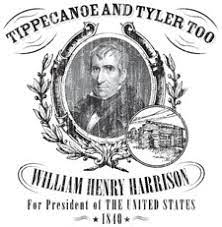
This was the situation in April, 1841. Newly inaugurated president, William Henry Harrison died after only a month in office. The 68-year-old Harrison apparently succumbed to pneumonia after delivering an exceptionally long inaugural address in foul weather. Harrison, the first Whig to win the presidency, was also the first chief executive to die in office, and the Constitutional protocol of succession had never before been exercised.

Harrison’s Vice President, John Tyler, moved quickly upon learning of the President’s demise. He located a judge to administer the oath of office, and moved into the Presidential Mansion (White House). When members of Harrison’s cabinet informed Tyler they would take care of the daily business of governing, he cooly responded that they could either cooperate, or resign.

Tyler had been an odd choice for Vice President. The Whig Party had gelled during the Jackson administration, proposing financial and internal developments over sectionalism and states rights. The Whigs further found slavery not only inconsistent with liberty, but also an obstacle to the growth of a modern economy.

Foremost among the Whigs was the Party’s greatest voice, Senator Henry Clay of Kentucky. Clay had first been a presidential candidate in 1824, and again in 1836. However, in 1840 when the Whigs met in Harrisburg, PA to nominate their candidate, Clay failed to gain the top spot, and then declined the offer of the vice-presidency. Clay later regretted his momentary pique.

Though John Tyler had been a Virginia Democrat, he had publicly broken with Andrew Jackson over Jackson’s misuse of presidential power. In particular, Tyler objected to Jackson’s threats against South Carolina in the Nullification Crisis, leading Tyler to forsake the Democrats, but not the philosophy of states’ rights, or the institution of slavery.

The Whigs decided that Tyler’s opposition to Jackson was good enough to offer him the second spot on the Whig ticket, and Tyler accepted. Then a month into his term, Harrison died, and this Southern Democrat, a wall-to-wall sectionalist assumed the presidency. 

From there, Whig policies quickly unraveled.

If the Whig’s aimed to realize their platform of national economic growth, their hopes died under President Tyler’s veto pen. Predictably, the Whig cabinet soon grew frustrated, then disgusted with presidential obstruction. Members began to resign. Only Secretary of State Daniel Webster hung on, as he was in the middle of Canadian boundary discussions with the British. Then he, too, submitted his resignation. Shortly after the cabinet fled, the Whigs formally expelled Tyler from the party.

To their credit the Whig leadership didn’t excuse Tyler, or defend his contrary actions. No one said ‘let Tyler be Tyler.’ They publicly broke and denounced the President’s antics, though the cost, for the Whigs, came due ten years later when they disbanded. 

Yet, the story doesn’t end with the demise of the Whigs, but begins anew with a stronger and more principled political movement. For from the ashes came the birth of the Republican Party, much like a rising phoenix.

But today that party has soured. No longer guided by principle the GOP has submerged their once decent name in the cesspool that is Trumpism. 

*This post appeared in 2019. And now, in 2022, the GOP has formally forsaken all that was decent in the Republican Party. They now publicly support a coup attempt through silence and excuses, abandoning leadership of their party to propagandized fanatics.  

Gail Chumbley is the author of the two-part memoir, “River of January,” and “River of January:Figure Eight,” “Clay,” a play chronicling the life of Senator Henry Clay, followed by another, “Wolf By The Ears,” a study of racism and slavery. “Peer Review” is her third work imagining 47 meeting four earlier presidents, and a screenplay, “Dancing on Air” based on her books.

gailchumbley@ymail

Fight Club

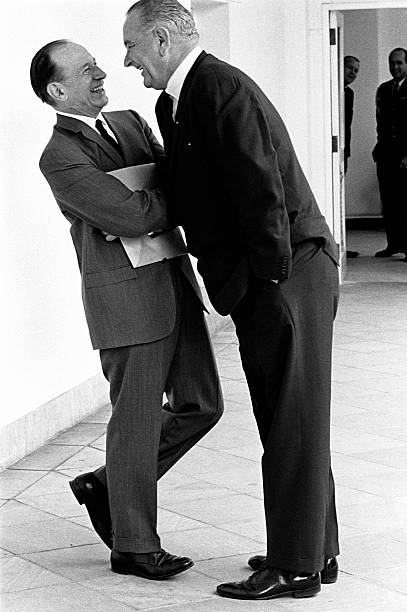
A biography of Lyndon B. Johnson, (by Robert A. Caro) presents an in-depth look at LBJ’s Senate career. Aptly titled “Master of the Senate,” Caro describes the future president’s considerable ability to push bills he championed through the US Senate.

Using his boundless energy to cajole, intimidate, and hound opponents, Senator Johnson proved remarkably effective. When candidate John F Kennedy selected LBJ to serve as his running mate, Johnson’s reputation as a political wheeler dealer sealed his selection. 

A look at the backgrounds of all 46 American Presidents, only one-third rose from Congress’s upper chamber. From 1900 to today only seven Chief Executives began in the Senate. Perhaps as candidates, these politicians carry controversial voting records, or personal foibles leaving too much baggage for a successful run. In spite of inherent liabilities, most modern Senators-turned-President, bring an effective array of skills to the White House.

For both Truman with his Fair Deal, and John F Kennedy’s New Frontier, legislative wins were scarce. Truman did enjoy a moment with passage of the Marshall Plan to rebuilt war-torn Europe, and Kennedy with the ratification of the Nuclear Test Ban Treaty in 1963.

Following JFK’s murder Lyndon Johnson seized that tragic moment initiating his Great Society program, and then showed America how to get things done. Public Television, highway beautification, Medicare, Medicaid, and both the Civil Rights Act of 1964, and the Voting Rights Act of 1965. Johnson’s achievements were many, and important. 

Richard Nixon served in the Senate, as well. Once President, Nixon promoted the Environmental Protection Agency, and the passage of Title IX for women in sports. It wasn’t all evil in that White House, the guy had skills.

In 2010, single-term Senator from Illinois, turned President, Barack Obama signed into law The Affordable Care Act. Standing near, watching was Obama’s Vice-President, Joe Biden, himself a 36 year veteran of the Senate. 

The thing is Mitch McConnell lobbed every counterpunch in the rules to stop Obamacare. But he failed in the face of three wily tacticians, Barack Obama, Nancy Pelosi in the House, and, of course, Joe Biden.

Now Joe has entered the White House in his own right.

The supposition that legislative cunning ensures a successful presidency is only an interesting thought. But Truman did see reelection, while LBJ collapsed under the weight of Vietnam, not his legislative magic. Nixon sabotaged himself, but the Biden presidency appears to be chugging along on a steady course. 

In the Senate since 1973, this 46th President cut his political teeth on Capitol Hill. Senate rules, cloture, floor privileges, and more are some of the lethal weapons in his political arsenal. For example, when Senator Manchin suddenly came on board with the Inflation Reduction Act, Mitch McConnell, another sly dog, staggered, blindsided.

The point remains. There is a lot more to Joe Biden than meets the eye. This is not a President to dismiss for superficial reasons, like his grandpa appearance, and folksy demeanor. If anything, Biden’s Senate career has forged him into a political shark. The Infrastructure package, Covid Relief, and College Debt Forgiveness have largely passed, allowing his opponents no time to breathe.

And Joe’s VP? She’s a former Senator, too.

Gail Chumbley is the author of the two-part memoir “River of January,” and “River of January: Figure Eight.” Both titles are on Kindle. Chumbley has written two historical plays, “Clay” regarding the life of Senator Henry Clay, and “Wolf By The Ears,” an exploration of American racism and slavery.

Catch Up

A radical change in imperial policy between Great Britain and her American Colonies marked the beginning of the Revolutionary Era.

Well before the American Revolution an amiable, and profitable arrangement existed between the Colonials and Parliament. This mutually profitable connection quickly terminated after the French and Indian War, 1754-1763. That conflict, though a victory for the British, had cost the Royal Treasury plenty, and the Crown abandoned friendly relations by coercing Americans to share in settling that war debt .

Parliament began by imposing a number of taxes, all designed to force Americans to pay up. The Sugar Act, Stamp Act, and Townshend Duties, among other measures, had been designed to force Americans to cover the royal debt. Once proud to be British, Colonials were shocked to realize the Crown viewed them as a source of revenue, and nothing more.

Colonials had a long running smuggling network, importing cheaper commodities from the French islands, thus evading British tariffs. Those caught and arrested found fast acquittal by colonial juries of their peers, as locals were also customers of the accused. In Boston, tensions soon turned to bloodshed, followed later with tea spilled into the Harbor. The Crown, not amused, soon forbade traditional trials, and transported accused Americans to military courts, in particular to Nova Scotia. Next, British Red Coats were deployed to the New England colonies to impose martial law, and Parliament decreed American’s had to house and feed their own oppressors.  

These matters were met with vehement dissent, Colonials protesting they had no representative in Parliament, and would not tolerate taxation without their consent. “No Taxation Without Representation” and “Resistance to Tyranny is Obedience to God,” rang throughout Colonial America.

Tensions ripened, finally coming to a bloody confrontation in April of 1775, and the rest we mostly remember from school. 

Tasked with scribing a Declaration of Independence at the Second Continental Congress, Thomas Jefferson vented American grievances through his quill. Working alone, Jefferson defended the violent actions carried out by Americans, and took pains to explain the radicalism. . . . “a decent respect to the opinions of mankind requires that they should declare the causes which impel them to the separation.” And for six years the Continental Army persevered.

In 1787, the subsequent creation and ratification of the U.S. Constitution set an enduring national blueprint of settled law. The Framers designed a government derived from the people, meaning we all are equal, and guaranteed representation in shaping law.

That brings this story to today. 

The election of a president from an opposing party is not a radical, nor sudden change of policy. Rather, this cyclic American ritual is as normal as the singing the Star Spangled Banner before a game. American voters have chosen our leaders in this manner since George Washington’s name first appeared on the ballot. 

To all of you who attacked our Capitol, it’s well past time for you to catch up. Put away those symbols of rebellion; of coiled snakes, hangmen gallows, and Viking horns. The Revolution ended two and a half centuries ago. The story of America is well underway.

In point of fact, those January 6th insurrectionists themselves attempted a radical change in American tradition. In pursuit of violence and chaos, these terrorists attempted a savage disruption of our deepest democratic traditions. Now that is unAmerican. In point of fact, we all have political representatives, and a right to a jury of our peers, and nary a soldier is found lounging on the couch.

Grow up and stand down.  

Gail Chumbley is the author of the two-part memoir “River of January” and “River of January: Figure Eight.”

Chumbley has also penned two plays, “Clay” exploring the life of Henry Clay, and “Wolf By The Ears,” an examination of American slavery and racism.

chumbleg.blog

A Scandalous Life

And I didn’t include GW Bush

A video blog. Forgive the quality, but the point is clear.

Gail Chumbley is the author of the two-part memoir “River of January,” and “River of January: Figure Eight.” Both titles available on Kindle. In addition Chumbley has complete two plays, “Clay,” on the life of Senator Henry Clay, and “Wolf By The Ears” exploring the beginnings of racism and slavery.

The Long Haul

After the 1929 Market Crash the world fell into regional, nearly feudal isolation, and international trade quickly dried up. America, too, focused inward largely due to the nation’s earlier participation in the Great War in Europe.

Across the Pacific the Japanese Empire aimed to take advantage of global disinterest promoting its own national interests. Sold to other Asian countries as the “Co-prosperity Sphere,” hyper-nationalistic Japan intended to expand across the region, especially toward vulnerable, resource rich China.

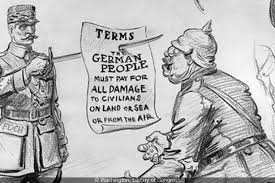
Great Britain as well, struggled alone in a financial malaise, as did the French across the channel; both nations saddled with debt to American banks from the previous war. Germany, the defeated nation struggled with their own war debt demanded by the British and French.

The shroud of economic depression hung like a millstone over Europe and the rest of the world.

As the financial, and political fallout grew wildly unstable, regimes hunkered down and hoped for better times. However the climate instead became chaotic, bringing anti-democratic demagogues to power.

The Italians were first, producing a Fascist strongman, Benito Mussolini. El Duce, as he was known suppressed political diversity, harnessed economic efficiency, and soon, like the Japanese, pursued colonial inroads into Libya, and later the conquest of Ethiopia.

Germany soon flirted with its own style of fascism, with a meaner, violent credo. In a reaction to impossible debts, and national pride, Adolf Hitler, a feckless dreamer, stood on beer hall tables, and passionately spoke of national betrayal. Hitler revealed his malicious intentions by blaming Bolsheviks, Capitalists, and Jews for the hated Armistice of 1918, and war debt owed to the Allies.

Yet America, unlike the rest of the world, clung with all their might to the national system of Constitutional norms. At the same time Germany elected Hitler in 1932, the U.S. found their champion in Franklin Roosevelt. 

A popular Roosevelt Coalition steered the country through those hard years holding America together. FDR’s New Deal and Fireside Chats broadcasts kept at bay the fears of a nation. That’s not to say there weren’t kooks, to borrow Lindsay Graham’s phrase, but Americans faced the long haul together, believing better days had to be ahead.

The current President is no Franklin Roosevelt. And his autocratic tendencies, strongly echo those in the 1930’s.

In Project 2025 Trump aims to raise tariffs, shut down borders, all done to economically and politically isolate America. Using the same playbook of past despots specific groups are targeted as the problem. The guilty include immigrants, the LGBTQ community, liberals, educators, women, and the rule of law all in the crosshairs. All done to divert and distract while he lines his pockets.

And his tactics, so far have succeeded making half of the electorate real mean.

So, here is the question. Can America survive?

Can Americans remain bound to the framework of our 238 year old republic as it did in the Great Depression? Or will this nation forsake our financial, social, and political traditions and turn to petty retribution and scapegoating?

Will we, as a nation withdraw from the world and exchange our democracy for a strong man who insists he has all the answers?

The signs are clear. When this national crisis has passed will there be enough of us left who stood resolute for our democracy? That is the question of this historic moment. 

Gail Chumbley is a writer and history educator.