Peer Review #4

Just My Imagination, Running Away With Me.

*Whitfield & Strong

The President fumed, crushing buttons on his cell phone, as if each tab detonated an explosion. On the big screen Wolf Blitzer, voice flat and controlled, droned on how the President continued to lag in the polls. 

“Fake news,” he muttered out of habit, and switched the channel.

Perched on the edge of an upholstered armchair, he clutched his remote in one hand, and his cellphone in the other, seething at the unfairness of the coverage.The broadcast cut to a political commercial; a carefully spliced montage of his public faux pas, ending with an endorsement from his adversary. 

“Ukraine,” he muttered, “Got to talk to Mitch and Kevin about a new Ukraine investigation.” 

“You cannot coerce them, you know.” The voice came from behind. “The people. They cannot all be manipulated, much as you might try. Most are not fools, and any goodwill must be earned.”

Not accustomed to direct insolence, the President twisted around in his chair snapping, “Just who the hell are . . .,” then trailed off. A tall, painfully angular man stood near a richly paneled door. Attired in a long black coat with tails, the visitor sported whiskers along his jawline.

“And they will never all love you. Ever. Such is the raucous nature of American democracy.”

The apparition paused a long moment. “Sowing divisions through fear and vitriol is not governing, and you shall surely fail.” The visitor stepped closer as he spoke, prompting the President to spring out of his chair, phone and remote forgotten on the carpet. 

“I recognize you . . .,” the President sputtered.

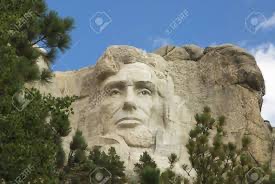
“We, all of us, sought this office fueled with purpose and ambition,” the visitor continued in a prairie twang. “However, once under oath, the campaign is over. A president faces the duty of serving all Americans, a challenge in the best of circumstances.

From the flickering screen a news anchor admonished, “Aides have confirmed that the President knew of the virus as early as February.” 

“It’s those hacks,” the President stabbed his finger accusingly at the big screen. The press is out to. . .”

His visitor laughed without humor. “Criticism of elected officials is as natural as the sun rising, and as perpetual. ‘Baboon’ was the nicest insult slung my way . . .by a serving general, no less. Then he up and ran against me in 1864.” The visitor chuckled lightly. “Still, the truth is we are all better with free speech than without. In our differing views we discover our deepest truths.”

By now the President began tuning out much of what the visitor was saying, his irritation making him bold. “You need to leave,” he snapped. “I have a busy schedule.” 

Unruffled, the unwelcome guest studied the President intently. “In my time an entire section of the nation disputed the results of my election.”

“You lost the popular vote, but won the Electoral?” The President couldn’t help but ask.

“Indeed. Eleven southern states chose the battlefield over a peaceful transfer of power.” 

“What did you do?” 

“I defended the Republic.”

His visitor continued sadly. “However the butcher’s bill for this unity came dearly; 700,000 American lives.” The visitor heaved a weary sigh. “And that delicate balance has endured through all national crises, preserved only through considerable effort and executive leadership. A unity you undermine at every opportunity. ” 

“Wrong, wrong, wrong. My supporters all love me. You should see the crowds at my rallies.”

“And the rest of America?” The visitor peered intently at the President. “Remember sir, we are friends, not enemies. We must not be enemies.” His voice quietly trailed off in an echo, and he was gone.

Gail Chumbley is the author of the two-part memoir, “River of January,” and “River of January: Figure Eight.” Both titles are available on Kindle.

gailchumbley@gmail.com

Joe In 170 Words

This is a letter of support recently send to newspapers across Idaho. With Kamala Harris named as Biden’s running mate today, it is clear good government awaits America in 2021.

Joe Biden has my enthusiastic support for president. Joe is humble, compassionate, and has dedicated his career to America. His experience in foreign affairs will fortify our country against unfriendly powers; those foes across the sea who would like to see the US collapse from within. 

Domestically, the VicePresident honors our legacy of rights, balanced with the courage to tell us when we must reach out for the common good. 

Biden’s experiences reflect our own. We have also lost loved ones, lived paycheck to paycheck, and most importantly he understands that America is about people, not just about racking up wealth. There is a proportion in Joe Biden’s character, and he listens in order to understand the difficult situations we all face. 

As our first President, George Washington knew he was no orator, nor a writer. But he was honest like Joe, and knew himself. Washington surrounded himself with the brightest; Hamilton, Jefferson, Henry Knox, and others, setting the nation we have today into motion. 

Joe Biden will restore it.

Gail Chumbley,

Garden Valley

No Guarantee

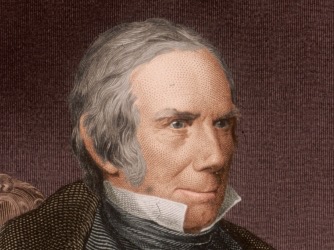
Henry-Clay-9250385-1-raw-res-AB.jpeg

SCENE FOUR

The lights rise on an empty stage. The back curtain ripples with an image of the American flag, circa 1824. “Hail to the Chief” plays in the background. Only a table and two chairs rest at stage left, with a liquor bottle and two glasses. Clay enters from the wings. As Clay speaks the image and music fades.

CLAY A festive atmosphere greeted the 1824 election season. And some apprehension, as well.

Clay pours a drink, leaning against the table.

CLAY Secretary of War John C. Calhoun hoped he might find enough political momentum to land the highest office, but discovered little, outside his home state. Though I never forged a warm friendship with Calhoun, we shared common cause promoting a protective tariff and investment in the American system.

He sips his drink.

CLAY As electioneering heated up, reports circulated in Washington City that the frontrunner, Georgia’s William Crawford, had fallen perilously ill. Initially, details were scarce, but in due order, a diagnosis arrived suggesting apoplexy. His allies vowed to continue the race, though Crawford’s prospects appeared dim.

Clay ponders a moment before continuing.

CLAY My old associate, John Quincy Adams, entered as well, with support from the whole of New England, including dispersed Yankees throughout the North. His supporters detested slavery, and as it happened, me, the slave holder. Resolving the Missouri crisis did nothing to gladden our fellow citizens of the North. Such is the thankless plight of public resolutions.

He smiles sadly, and sips. A melody, “My Old Kentucky Home,” increases in volume.

CLAY Despite my very public stance on gradual emancipation, the Adams people were not moved a whit. Their fierce intransigence gave me pause.

Clay stares a long moment. The music fades.

CLAY Then there was Andrew Jackson.

He issues a mirthless laugh.

CLAY As Jackson waited to enter the 1824 race, the Tennessee legislature elected “Old Hickory” to the United States Senate. Taking great pains to avoid any public positions, the honor must have horrified him. Jackson had to publicly commit to policy votes, and vote he did. Bills for the protective tariff, and for funding internal improvements. Hrrumph! But he had nothing to fear. Jackson’s reputation remained firm with his states rights’ proponents. I believe he could have shot someone in the lane and preserved his support.

Clay refreshes his drink while sitting at the table. He rises.

CLAY I too, craved the presidency. Forgive my repetition, but the so-called “American System” program was too vital to tolerate an ignoramus in the White House.

He pauses.

CLAY Celebrity is no guarantee of competence.

Gail Chumbley is the author of the two-part memoir, “River of January” and “River of January: Figure Eight.” She is also the writer of Clay, and 3-act play, and Scenes Of A Nation, in progress. Both books are available on Kindle.

gailchumbley@gmail.com

Endurance

14e7ea2b2fd17c16e45990ee1dd21a8edb4ddd40.jpeg


Three early American documents are often lumped together in our collective memory, though each is quite different from the others; The Declaration of IndependenceThe Articles of Confederation, and the enduring US Constitution. Citizens generally know something of the Declaration due to a certain celebration we observe each summer. The Articles of Confederation are a bit more elusive, and not nearly as recognized. The third, the US Constitution is revered, but its beginnings, and purpose is also shrouded in time. 

Here is a quick explanation of each missive, particularly the sequence, and the significance of each.

The Declaration of Independence: July 4, 1776. A product of the Second Continental Congress, this revolutionary document was ratified as an instrument of rebellion, after all other measures to avoid war with England had failed. In reality, the shooting had begun a year earlier in Lexington, Massachusetts, but the Declaration formalized hostilities. Debated and delayed, this document was finally adopted in July of that year. Congress made crystal clear their reasons and resolve to free themselves from King George’s arbitrary rule. Penned by Thomas Jefferson, the Declaration began with a guiding statement about “Natural Right’s” shared by all humanity, and that people had the obligation to free themselves from unjust tyranny. The rest of the epistle read as a legal document condemning the King and his despotism. This document is the first of the three in forging the United States of America. 

The Articles of Confederation: September, 1777. The Articles provided America’s first national charter of government. Approved by the same Second Continental Congress in 1777, the Articles attempted to unify the original states under one government. Through this document, Congress sent diplomats abroad, including Benjamin Franklin and John Adams, to (beg) obtain financial support from European powers. However, at home, this framework failed miserably. More a Confederation of independent principalities, Congress had to plead for money and men from each state, who often said no. There was no power to tax, no centralized currency, and the Articles weren’t even ratified by all 13 states until a month before the war ended at Yorktown. Each state jealously guarded its own interests over any unified cooperation. Congress could do next to nothing to aid General Washington and his army. Chaos ensued after the war ended, as well. Trade wars flared, disagreements among the states spilled over into violence, and rebellions within states promised more turbulence. The ability of America to govern itself appeared doomed. The English were sure America’s failure was imminent, and they could, once again, swoop in.

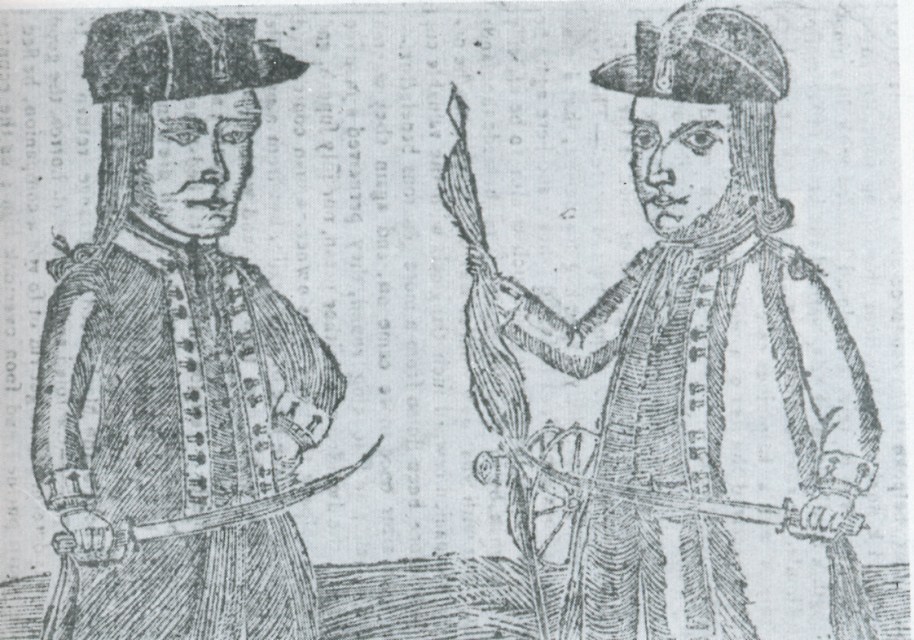
The United States Constitution: May to September, 1787. Born from an earlier 1786 meeting between Alexander Hamilton and James Madison in Annapolis, MD, the Constitutional Convention was organized and slated for Philadelphia in May. Both founders understood that without persuading Washington to attend this new Convention, any success was remote. Washington, tending his home at Mount Vernon, was hesitant, and tired. However, when news reached the General of an uprising in Western Massachusetts, (Shays Rebellion), Washington agreed to attend. Fifty-five delegates from all the states except Rhode Island, reported to the Pennsylvania Statehouse in Philadelphia. Most were lawyers, sprinkled with many Southern slave holders. Virginian, James Madison came prepared with a plan to replace the feeble Articles of Confederation. Much of Madison’s Virginia Plan became the basis of the Constitution. Designed for endurance, this new charter vested authority in the Central government, and the states. Termed Federalism, powers under this frame of government are shared between both authorities simultaneously. The tooling of the document, employing separation of powers, and checks and balances is brilliant, and worked well until 2016.

Gail Chumbley is the author of the two-part memoir, “River of January,” and “River of January: Figure Eight,” both on Kindle.

gailchumbley@gmail.com

Half-breeds, Stalwarts, and Mugwumps

His political career was none too stellar, except for that one moment he seized history.

This dapper-looking fellow is President Chester Alan Arthur, (1881-1885). Arthur was considered a dandy, pursuing an opulent lifestyle filled with fine food, drink, and expensive suits; largely paid for from the public trough.

Arthur came of political age in the post-Civil War Gilded Age, a world of political machines, graft and corruption. When a supporter helped their man get elected, position and profit rained down in return.

This dubious system functioned rather well for victorious elective candidates through countless election cycles. The political universe of Chet Arthur and his band of Republican cronies became expert skimmers from the public trough and the public trust. In the Republican Party this faction was christened Stalwarts, and Stalwarts liked their well-oiled approach to public service very much, indeed.

Arthur, himself, had been named Collector for the New York Customs House during the Grant Administration, and money from this lucrative Customs House flowed to Arthur’s friends and political operatives. His particular patron was the powerful New York Senator, Roscoe Conkling, a master in Senate handiwork.

Opposing this Old Guard of money changers were the crudely titled, Half-breeds. This oddly pejorative moniker (too common in that era) represented a growing group of reformers in the GOP who aimed to clean up the corrupt practice of patronage. Senator James G. Blaine of Maine believed government jobs should be based on merit, not connections, and Blaine promoted the use of Civil Service Exams. In other words, Half-breeds endorsed qualified government workers over payola for their friends. The Stalwarts were horrified.

In the 1880 Presidential Election the Republicans, in a heated convention, split the ticket with candidates of both wings. For President, James Garfield, a Half-breed, and for Vice President, Stalwart, Chester Arthur, crony of Sen. Conkling. The Party felt it had fused the differences between the two factions, and the fat cats believed they could continue to prey. Then came the Garfield assassination.

In July, 1881, President Garfield, a distinguished Union general, and a former member of the House of Representatives, appeared at the Baltimore and Potomac Rail Station in Washington DC. In the crowd waited Charles Guiteau, an unhinged, office-seeking Stalwart. Guiteau approached the President in the crowd, shooting him at close range. Garfield died two months later from his infected wounds.

Guiteau had shouted, after opening fire, that he was a Stalwart, and would now get a government job. He didn’t. In fact, all Guiteau received was a date with the hangman, carried out in June, 1882.

And what of Chester A. Arthur? He assumed the presidency in a charged atmosphere of national grief. So changed was Arthur, that he promoted passage of the Pendleton Act of 1883. This act created the Civil Service Commission, and mandated written exams for classes of government jobs. The Stalwarts were horrified, but politically could do nothing. Garfield had been made a martyr for reform, and Arthur took the high road, making that reform real.

Oh, and by the way, the Mugwumps were another reforming splinter of the GOP. So appalled by the legacy of bribery and corruption, they bolted the party in 1884 for Democrat, Grover Cleveland.

Wonder how the 2020 Election will reshape the current GOP?

Gail Chumbley is the author of the two-part memoir, “River of January,” and “River of January: Figure Eight.” Both books are available on Kindle.

gailchumbley@gmail.com


A Learning Curve


George Washington came of age immersed in the culture of Tidewater Virginia. To join the higher echelons of society there were set requirements, in particular vast property holdings.

This lust for land had crossed the Atlantic with the first ships from Great Britain. Only gentlemen of the highest social station possessed “parks” to use the British term; bucolic sanctuaries where aristocrats, and their guests could hunt, and fish, with enough acreage left for tenancy. Landed Cavaliers to Virginia immediately assumed a sense of equality to any aristocrat residing in Old England. (The “All Men Are Created Equal,” passage in the Declaration of Independence affirms Jefferson’s sentiment.)

Washington’s older, half-brother, Lawrence, the heir of their deceased father’s estate, had the land, the title, the rank, and the education that George could never realize. But, Lawrence did try to help the twenty-year-old establish himself. Lawrence first tried to secure a naval commission for his younger brother. But that didn’t work out.* With no money or prospects, young Washington settled on a career as a land surveyor, a noble calling for the time. 

Making use of his father’s instruments, and with  help from a neighbor, Lord Fairfax, George gained an appointment to the Virginia Militia, and a chance to put his vocation to use.

The year was 1754 and a fateful clash awaited the untested soldier-surveyor.

Virginia’s original charter claimed virtually all western lands, north by northwest of the colony, theoretically to the Pacific. At roughly the same time the French too, had staked claim to that same interior region. At a site known now as Jumonville Glen, in the Ohio River Valley, Washington and his party detected then attacked an encampment of French Canadiens. In the melee a Native scout with Washington, called Half King, killed a Frenchman, who, as it turned out was a diplomatic courier. That was, and still is, an international no-no. 

In retaliation soon after, French reinforcements from Fort Duquesne, (Pittsburgh) pressed down on Washington’s party, where the untested and panicked militia officer made a colossally poor decision. In the ensuing “Battle of Fort Necessity,” Washington was easily whipped and forced to surrender when his hastily erected stockade filled with rain, making defense impossible. 

Thoroughly humiliated, Washington surrendered to the French on July 4, 1754. In the capitulation treaty, young George unwittingly admitted he had allowed a French diplomat to be assassinated at Jumonville Glen. His lack of education was exposed. Washington couldn’t read French and didn’t know what he had signed. His humiliation was complete, his blunder igniting the French and Indian War. 

Fast forward forty years to 1794 and a return to the site of old Fort Duquesne, the scene of Washington’s infamous disgrace. For Washington much had changed. As Commander of the Continental Army, Washington had nobly defeated the British in the Revolutionary War, and became the first President of the United States.

The once awkward Virginian was fully redeemed in the eyes of the new nation. Despite his rough start, Washington had grown up. Still, his misadventures decades earlier still stung. Despite universal accolades, the nods and winks of those who remembered Jumonville Glen remained.

As for old Fort Duquesne? The settlement had become the growing commercial center of Pittsburgh. 

And it was in the proximity of Pittsburgh, near the site of his former humiliation, that President Washington faced a new conflict.

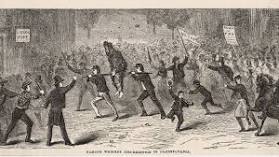
The new Congress has passed an excise bill on distillers of whiskey, as a means for the federal government to settle war debt. Secretary of the Treasury, Alexander Hamilton had proposed this tax on spirits as a way for the Treasury to settle its financial difficulties. But distillers around Pittsburgh stubbornly refused to pay. In fact Whiskey Rebels rose up, and attacked tax officials who attempted to collect. By summer of 1794, one collector had been tarred and feathered, and another was burned out of his home by a violent mob.

The Revolution was over, and President Washington had had enough. No more domestic violence, especially not from the Ohio Valley. He requested Congress to raise an army, placed Hamilton at the head, and sent them to the site of his earlier disgrace. These agitators melted away like snow in April.

Washington flexed federal power in what was the Constitution’s real first challenge. That Washington felt some sense of personal absolution, considering his military history is understandable.

And what does this episode mean to us in the long run? Don’t piss off George Washington? Maybe. But more importantly the new Constitution was the law, and as chief executive, he enforced that law.

Washington had grown up, and the country needed to do likewise.

*Washington’s mother said no.

Gail Chumbley is the author of the two-part memoir, “River of January” and “River of January: Figure Eight.” Both available on Kindle.
Riding The Back Of The Tiger

At the start of the Kennedy administration, back in 1961, the story goes that JFK invited in a group of historians to the White House. The new president wanted to chat. What Kennedy asked these scholars was what elements insured a great presidency, and the answer from these learned gents was simple: a war.

Kennedy’s own war experiences in the South Pacific, and the ensuing menace of nuclear armageddon left JFK unconvinced. America’s situation on the world stage was just not as simple as war and peace. The lessons of  Nazi appeasement, especially by his own father, Joe Kennedy, compelled the new president to draw a hardline against Communism, and check its growth around the world. 

Caught in the eye of that dilemma; to appear tough, while preserving the lives of young Americans, Kennedy attempted a middle ground. Reluctant to fully commit US forces in Southeast Asia,  he also engaged in discreet negotiations with the Russians to settled the Cuban Missile Crisis. As a wounded veteran himself, JFK pursued a cautious and flexible foreign policy.

Not all presidencies have demonstrated such restraint.

President Madison succumbed to war cries after mediation with Great Britain looked to have collapsed, sparking the War of 1812. In reality the English had agreed to cease much of the abuse that brought about the war, before Madison’s declaration. Sadly news of accommodations from London did not arrive in time, and two futile years of warfare ensued. At the end of hostilities the United States made no measurable gains from the fight. The only red meat served came compliments of Andrew Jackson in his victory over the British in New Orleans. The war had been over two-weeks by the start of that battle. 

Most agree Madison is better remembered as the “Father of the Constitution,” than for his lackluster presidency.

“All of Mexico” resounded across young America in 1844. A toxic, but powerful combination of racism and hubris plunged America into another conflict-the Mexican American War. An unapologetic new president, James K. Polk, publicly stated in his campaign he would lead America into war, though he meant against Britain in his “54, 40, or Fight” slogan. Waged from 1846 to 1848  Polk ordered the invasion of Mexico, and defeat of the Mexican Army. 

A third war with the British never materialized, as the US opted to negotiate claims to Oregon. Though not gaining all of Mexico, America still claimed Texas to the Rio Grande, the southwest region known as the Mexican Cession, and all of California. In the aftermath of war, slave holders spilled westward in search of fertile new lands. In turn, national tensions escalated, both politically, and morally, erupting into Civil War by 1861. 

No other President extended American power, more than William McKinley, and no president was less eager to do so. As a young sergeant in the Civil War, McKinley had witnessed the truly  horrific bloodbath at Antietam Creek, surviving the bloodiest single day of the Civil War.  By the time of McKinley’s election in 1896, he faced a growing threat of a new war with Spain, this time over the Spanish possession of Cuba. Events careened out of control when a Navy gunboat, the USS Maine, sent by McKinley to protect American sugar interests, exploded in Havana Harbor in February, 1898. The disaster of The Maine forced the President’s hand, and he asked for a declaration of war from an enraged Congress. 

Though fought only from April to August, this conflict gave America island possessions from the Philippines to Puerto Rico. The United States had now officially entered the race to become an imperial power. This war extended fueling ports for the growing US Navy from across the Pacific, to the Caribbean. New markets and resources for American business opened up a fortune in profits. Filipinos, in particular, were left unhappy, switching from Spanish overlords to American authority. A bloody 3-year insurrection, fought in dank jungles, exploded, taking the lives of some 4,000 American combatants.

Sadly, in less than twenty years, the world-wide lust for colonies and riches brought America into the trenches of World War One. Decades-long rivalries for land and resources, particularly by Germany and Austro-Hungary, triggered a ruthless international competition that proved to history how industrialization could bleed young men. Not surprisingly this “war to end all wars” did not benefit Commander in Chief, Woodrow Wilson. In the end, the struggle killed him too.

As World War One ushered World War Two into being, World War Two led to the escalating tensions of the Cold War. First Truman in Korea, then Lyndon Johnson into Vietnam. Perhaps as stepchildren to Imperialism and the Cold War, GW Bush’s blunder into Iraq has assured his low position in history. 

The inescapable truth, Mr Trump, is that war does not make a presidency. With the exceptions of Abraham Lincoln, Franklin Roosevelt, and to some degree, Harry Truman, war has sullied more administrations than enhanced. Blind militarism may titillate your base, but you’re a damn fool to believe you can cheat history. Wars take on a life of their own, and as President Kennedy cautioned, “Those who foolishly sought power by riding the back of the tiger ended up inside.”

Gail Chumbley is the author the historic play, “Clay,” and the two-part memoir, River of January, and River of January: Figure Eight. Both books are available at http://www.river-of-january.com or on Kindle.

gailchumbley@gmail.com

Publicly Broken

This was the situation in April, 1841. Newly inaugurated president, William Henry Harrison died after only a month in office. The 68-year-old Harrison apparently succumbed to pneumonia after delivering an exceptionally long inaugural address in foul weather. Harrison, the first Whig to win the presidency, was also the first chief executive to die in office, and the Constitutional protocol of succession had never before been exercised.

Harrison’s Vice President, John Tyler, moved quickly upon learning of the President’s demise. He located a judge to administer the oath of office, and moved into the White House. When members of Harrison’s cabinet informed Tyler they would take care of the daily business of governing, he cooly responded that they could either cooperate, or resign.

Tyler had been an odd choice for Vice President. The Whig Party had gelled during the Jackson administration, proposing financial and internal developments over sectionalism and states rights. The Whigs further found slavery not only inconsistent with liberty, but also an obstacle to the growth of a modern economy.

Foremost among the Whigs was the Party’s greatest voice, Senator Henry Clay of Kentucky. Clay had first been a presidential candidate in 1824, and again in 1836. However, in 1840 when the Whigs met in Harrisburg, PA to nominate their candidate, Clay failed to gain the top spot, and then declined the offer of the vice-presidency. Clay later regretted his momentary pique.

Though John Tyler had been a Virginia Democrat, he had publicly broken with Andrew Jackson over Jackson’s misuse of presidential power. In particular, Tyler objected to Jackson’s threats against South Carolina in the Nullification Crisis, leading Tyler to forsake the Democrats, but not the philosophy of states’ rights, or the institution of slavery.

The Whigs decided that Tyler’s opposition to Jackson was good enough to offer him the second spot on the Whig ticket, and Tyler accepted. Then a month into his term, Harrison died, and this Southern Democrat, a wall-to-wall sectionalist assumed the presidency. 

From there, Whig policies quickly unraveled.

If the Whig’s aimed to realize their platform of national economic growth, their hopes died under President Tyler’s veto pen. Predictably, the Whig cabinet soon grew frustrated, then disgusted with presidential obstruction. Members began to resign. Only Secretary of State Daniel Webster hung on, as he was in the middle of boundary discussions with the British. Then he, too, submitted his resignation. Shortly after the cabinet fled, and the Whigs formally expelled Tyler from the party.

To their credit the Whig leadership didn’t excuse Tyler, or defend his contrary actions. No one said ‘let Tyler be Tyler.’ They publicly broke and denounced the President’s antics, though the cost, for the Whigs, came due ten years later when they disbanded. 

Yet, the story doesn’t end with the demise of the Whigs, but begins anew with a stronger and more principled political movement. For, from the ashes came the birth of the Republican Party, much like a rising Phoenix. And that party still exists today, for now. That is, if they haven’t already submerged their once decent name in the cesspool of Trumpism. 

Gail Chumbley is the author of the two-part memoir, “River of January,” and “River of January:Figure Eight,” and “Clay,” a play in three acts. Books are available on Kindle and at http://www.river-of-january.com.

gailchumbley@gmail.com

Peer Review #3

The military choir filed out of the Entrance Hall in precise formation, trailed with a warm wave of applause. The President had enjoyed the evening performance, and bristled that no journalists had reported on the concert for his base. “This is the kind of story real Americans would like to see on the news,” he complained, as he shook hands and chatted with departing well-wishers. 

The grand chamber soon emptied and the White House staff swept in, quickly stacking chairs, breaking down risers, and disconnecting sound equipment. The President turned from the racket, and headed toward the white Doric columns separating the hall and staircase. And it was there, beside an alabaster column, that the President stumbled upon a most unexpected visitor.

Lounging against the smooth white marble leaned a tall, lanky gentleman dressed in an antiquated silk dressing gown, white hose, and embroidered slippers. The man cooly assessed the stunned President.

“Are you familiar with the story of John Peter Zenger” the intruder murmured in a soft drawl. 

“Why are you still here? The entertainment left that way,” the President snapped, thumbing toward the side entrance.

“Zenger, a German immigrant, edited and printed a newspaper in New York,” the visitor continued, calmly shifting his position against the pillar. “Zenger had published an unflattering appraisal of New York’s Colonial Governor, and the testy royal had the journalist jailed, charged with libel.”

The President, annoyed by the imposition, wanted to hurry up the stairs to his living quarters, but his legs remained stubbornly stuck in place. 

“Well, that Zenger character deserved it, he barked, unable to control his tongue. “Reporters need to watch what they write, and who they offend—like me. I’m the President, and they say terrible things about me, all lies and fake news.”

The tall figure crossed his arms and looked evenly at the President. “A jury of Zenger’s peers acquitted him, opining that if truth was stated, there is no libel,” the stranger subtly smiled. “That particular case established freedom of the press in this country, a principle I later insisted appear in the Bill of Rights.” 

“Do you understand how much I could accomplish if . . .”

The apparition spoke quietly over the President. “I, too criticized a president bent on stifling  free expression” the visitor thoughtfully paused. “President John Adams supported passage of the Sedition Act in 1798 to silence critical voices such as mine.” 

The oddly attired gentleman began drifting through the pillars into the Entrance Hall, as if floating on a sudden breeze. Unwillingly, the President followed. “I’m particularly fond of this room,” the visitor whispered, “it was the only finished room in my time.”

“The press wants to destroy my administration,” this time the President spoke over his visitor. “With their unlimited snooping, the constant leaks, and the treasonous things they say about me on cable tv.”

The apparition appeared indifferent to the President’s complaints. “A particular writer, James Callender, cast enough aspersions upon Mr. Hamilton and Mr. Adams, that he found himself jailed under the Sedition Act. Once I moved into this House, I pardoned Callender, and hired him to again take up his poison pen.” The spirit seemed sadly amused, “when I refused to appoint Callender to a government post, his pen turned full force upon me, exposing my deepest, most safeguarded secret.”

“The Sedition Act. I like that,” the President beamed, ignoring the visitor’s revelation. “What’s the matter with my lawyers. They never told me we have that law.”

Instantly the apparition jutted his face directly into the startled President’s. “You must not respond,” he breathed.  “You must ignore what is written and reported regarding your administration. Never, never challenge the freedom of the press, to do so diminishes the office of chief executive, exposing you as petty and small.”

“But the Sedition Act says . . .” the President squeaked, unnerved.

“Is unconstitutional,” the visitor finished the sentence. “I, too, resented what appeared in the press, besmirching my personal life, and my family. However, I resolutely remained aloof to the reports. And so must you.” 

The visitor began to sound weary, worn by the conversation. “I once stated that if I had to choose among the freedoms enumerated in the First Amendment, I would preserve Freedom of the Press. With that liberty secure, all others are assured.

As the visitor finished his statement, he lifted his eyes to some mysterious point above, and vanished. 

Dismayed, the President scrambled up the stairs.

Gail Chumbley is the author of the two-part memoir “River of January,” and “River of January: Figure Eight.” Both books available on Kindle, or at http://www.river-of-january.com.

gailchumbley@gmail.com

gailchumbley@gmail.com

Splendid Little War

1374687_orig.jpg

Precise beginnings to recognizable endings, that is how American wars are recorded and remembered. ‘The Shot Heard Round the World’ to Yorktown, Fort Sumter to Appomattox, Pearl Harbor to Hiroshima; all in sequential order from the opening salvos, to the tense calm of ceasefire. And this arrangement has worked well for classrooms, historical fiction, television documentaries, and films. Still this approach has its limits, failing to consider the intricate causes, and lingering effects that set the stage for the next war. Here is an example from the past that isn’t commonly recalled—The Spanish American War (1898).

The island of Cuba blazed in revolt. Throughout the 1890’s local freedom fighters, including Jose Marti and Maximo Gomez, struggled to end 400 years of Spanish conquest. Alleging atrocities at the hands of their colonial oppressors, of burning villages and starving civilians, rebels monopolized banner headlines across America. Enterprising publishers Joseph Pulitzer and William Randolph Hearst mobilized their own forces, dispatching droves of journalists to the war-torn island.

Reporters soon filed embellished, sensationalized stories, and circulation quickly boomed. Hearst illustrator, Frederick Remington sailed to Havana, promptly cabling his boss that he had found no war. Hearst famously, and cynically countered, “you furnish the pictures, I’ll provide the war.”

The resulting flood of salacious, skewed features gave birth to the “Yellow Press,” of tabloid journalism. Facts didn’t trouble these news editors, they were too busy raking in profits. American newspaperman also found assistance in the Cuban rebels themselves. Ensuring that America would intervene in the struggle, Cuban insurgents torched acres and acres of American-owned cane fields. Absentee-American sugar planters, losing revenues, railed for war, accosting McKinley to act. 

As the last US President to have experienced battle, William McKinley hesitated to draw America into another armed conflict. But, in the face of fiery Cuba, the pressure grew fierce. Jingoists like Theodore Roosevelt, impatient to flex American muscle, demanded immediate action.

Still McKinley hesitated, understanding, what the young could not. A veteran of the Civil War, the President grasped the real cost of war, measured in blood, treasure, and humanity. Nonetheless, following the sinking of the US gunboat “Maine,” moored in Havana harbor, the President relented, and the Spanish American War began.

In the years that followed, the President’s worst fears were more than realized.

Characterized as a “Splendid Little War,” this conflict, contested at the dawn of the 20th Century, reaped endless bounty for mainland business interests.

The US annexed: Puerto Rico in the Caribbean, Guam, and the Philippine Islands in the Pacific.

To many, this step into world affairs proved worth every penny and every drop of American blood. The pace of American factories to produce goods far outstripped domestic consumption. Overseas markets quickly absorbed stockpiled goods, and in turn secured further demand. Besides, it was argued at the time, if America didn’t move quickly Great Britain, Russia, Japan, or France would gladly take over.

However, expansionist quickly faced an unexpected moral and legal dilemma. Were the native people living in these newly-American owned possessions protected by Constitutional law? Should the US government follow mainland custom, and promise eventual statehood for these far flung islands? Prior Indian policy provided no guideline, as islanders were in the majority, not residing in small, isolated pockets. 

The Supreme Court soon obliged and settled this legal predicament. In a series of Court opinions beginning in 1901, the Insular Cases established a principle that despite America’s authority over island people, they could expect no civil protections. Essentially the Court ruled that “Rights don’t Follow the Flag.” 

In the aftermath, Pacific and Caribbean islands became US territories, but Cuba did not. After ‘liberating’ the island from Spain, decorum prevented an out and out American takeover. Still, the embattled island could not be set free–too much had been expended in the conflict, and Cuba was too valuable.

In 1898 the Teller Amendment established a US military installation at Guantanamo Bay, followed in 1901 with the Platt Amendment, authorizing extended American control of Cuban affairs.

In the far Pacific, the McKinley administration opted to annex the Philippine Islands, rather than granting Filipino independence. This decision backfired triggering a bloody, colonial uprising. American Marines hunted resolute guerrilla insurgents in sweltering Filipino jungles; both sides perpetrating horrific atrocities (six decades before a similar war in Vietnam). American businessmen had designs on nearby China, and the Philippines offered deep natural harbors for passing American Vessels. 

The US soon plunged into a world-wide race to carve up China. American business and political interests demanded an equal share of the Open Door to Chinese markets. By 1899 this multi national intrusion exploded into another bloody revolt, the Boxer Rebellion.

Young Chinese outraged by foreign exploitation; the trade in opium, the depletion of gold to pay for the opium, opium addiction, and western missionaries insisting on ‘saving’ the Chinese became too much. In the three year struggle 100,000 perished, foreign and Chinese.

In the end, there is no end. The hunger for colonies quickened into a global frenzy. An international arms race ensued, navies competing to outstrip their rivals for dominance. Countries with few colonies jumped into the fray scooping up whatever low fruit remained. Germany, Austro-Hungary, and Italy, relatively late on the imperial scene, headed into the Balkans and to Africa.

By 1914 the strain of fierce rivalry reached critical mass, engulfing first Europe, and then America into the horror of the First World War.

Beginnings and ends work in placing historic events, but with war there is only an endless sweeping pendulum.

Gail Chumbley is the author of the two part memoir, River of January and River of January: Figure Eight. Available at http://www.river-of-january.com and on Kindle.