I Want My GOP

This post originally appeared in early 2016. Cassandra award?

th

A divided national party . . . voices of extreme rhetoric . . . an ugly, contentious primary season. Does this spell doom for two-party system?

Sounds modern, doesn’t it? But the year was 1860, and the party in question was founded by Thomas Jefferson, and shaped in the image of Andrew Jackson: The antebellum Democratic Party.

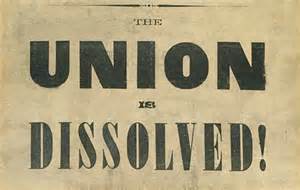
On the eve of Civil War, the future of the Union appeared in fatal doubt. Political leaders in the Deep South: South Carolina, Georgia, Alabama, Mississippi, and Florida had all but washed their hands of the centrally powerful United States. Adding to the precarious atmosphere, a faction of Democrats in the North promoted a policy to permit slavery into the western territories under the principle of Popular Sovereignty, or direct vote. Others voices in the northern branch of the Democratic Party believed the Southern States should depart the Union in peace. And these pro-secession advocates became the most worrisome threat for Senate leader, Stephen A. Douglas of Illinois, the leading Democratic candidate for the presidency in 1860.

Douglas found himself in a hell of a spot. He fervently burned to lead his party to the White House and save his nation, dangerously poised on the verge of civil war. As the principal heir to Senate leadership, Douglas had spent over twenty years in Congress working to stave off Southern secession, taking over when Kentucky Senator, Henry Clay, the “Great Compromiser” died. Clay had also spent most of his earlier career drawing up one concession after another in a noble attempt to preserve the Union. Eventually the effort wore him out, and Senator Douglas pick up the cause.

As far as Douglas was concerned, slavery wasn’t a moral issue, merely a bump in the road. The issue could easily be decided by the good folks migrating west. Douglas believed if settlers didn’t want slavery, they would decline to establish laws necessary for supporting the “peculiar institution.” But the Senator was wrong—dead wrong. Slavery had, by 1860 become an issue impossible to fix. And it was this miscalculation, underestimating the power of the slave issue, that the Illinois Senator imploded both his party, and his career.

The new Republican Party had organized six years earlier in Wisconsin, founded on one central principle—slavery would not extend into the western territories, period. And this new party spread quickly. Composed of splinter groups, this now fully unified alliance insisted that free labor was an integral component to a flourishing free market economy. The presence of slavery in sprouting regions of the West would devalue free labor, and undermine future commercial growth.

Now, don’t get me wrong, these Republicans did not sing Kumbaya or braid their hair. These men did not believe in equality between the races—they were not abolitionists. Economic principles drove their political platform, (Emancipation came later with the transformation of President Lincoln through the caldron of war).

For Stephen Douglas the approaching 1860 election meant vindication for his support of popular sovereignty, and reward for his faithful political service. And Douglas was no political hack. He fully understood the solvency of the Union lay in the delicate art of sectional balance, and his ascendancy to the White House as a Democrat would go a long way to placate the Southern hotheads. But this Illinois Senator failed, once again, to fully comprehend the temper of the nation, or of his own party. The era of seeking middle ground had passed—America’s course had been set toward industrial modernity with no place for an antiquated, barbaric labor system.

Charleston, South Carolina, was selected as the site of the 1860 Democratic convention. Chaos immediately broke loose on the convention floor. While Southern Democrats demanded strict, precise language guaranteeing the extension of slavery into the territories, Northern Democrats and those from California and Oregon pushed for Douglas’ popular sovereignty. This tense deadlock forced the latter faction to walk out and reconvene in Baltimore where party business could function.

Southern Democrats moved on without Douglas or his faction. In a separate, Richmond, Virginia convention, Southern Democrats proceeded to nominate Kentuckian John C. Breckinridge.

Back in Baltimore, Senator Douglas indeed gained the Democratic nomination, preserving his precious principle of local voters determining the western migration of slavery. Meanwhile, the Democrats in Richmond took a step further, adding the absolute protection of slavery to their platform. Middle ground had vanished.

Though a long shot, a third faction of the Democratic Party broke ranks with both Douglas supporters, and the Richmond faction. Calling themselves the “Constitutional Union Party,” this coalition nominated John Bell of Tennessee.

So what can we make of this 1860 fiasco today, in 2016? If I could attempt a bit of divination I would suggest that the political party that can present the most united front will prevail in the general election. If current Republican candidates continue to employ such wide-ranging, and scorching tones to their rhetoric, and stubbornly defend the innocence of their loose talk, the party may run head long into oblivion, as did the Democrats of 1860. If the roaring factions, currently represented by each GOP aspirant goes too far, the fabric of unity will shred, crippling the Republican’s ability to field serious candidates in the future.

Looking at the past as prelude much is at stake for the unity of the GOP. In 1860 party divisions nearly destroyed the Democrats, propelling the nation into a bloody civil war. And though Republicans at that time elected our greatest Chief Executive, Abraham Lincoln, the Democrats suffered for decades, marginalized as the party of rebellion. And even the best lessons left by the past are still forgotten in the heat of passion, by those who know better. (The Democrats shattered their party unity once again a hundred years later, splintered by the Vietnam War.) This is truly a cautionary tale for today’s turbulent Republican Party.

Zealots do not compromise, and leading GOP candidates are spouting some pretty divisive vitriol. Southern Democrats self righteously rejected their national party, certain it no longer represented them, and ultimately silenced the party of Jefferson and Jackson for decades. The lesson is clear for today’s Republicans. By tolerating demagoguery, extremism, and reckless fear-mongering in their field of contenders, the RNC may indeed face a similar demise.

Though it is true that no party can be all things to all citizens, malignant splinter groups should not run away with the party.

The American public demands measured and thoughtful candidates—and both parties are expected to field candidates of merit and substance.

We deserve leaders worth following.

As Senator Stephen Douglas refused to recognize that the political skies were falling around him, and his party, the modern Republican Party must not.

Gail Chumbley is the author of River of January, and River of January: Figure Eight a two-part memoir. Available on Kindle

Peer Review #1

Marines manned numerous doorways along the wide hallway, as clusters of tourists wandered through colorful rooms. Upstairs the President listened to the public commotion with satisfaction, not for the house, not for the job, which, in truth, had become tiresome, but for the knowledge he could drop down and set all their bourgeois hearts aflutter. 

After a moment, he made his decision, slipping down an interior stair case, stepping into the Blue Room.

As his hands automatically fluffed his hair, the President sidled up beside a class of wiggly school children snapping cell phone pictures.

“And where are you from?,” the president teased with pleasure, anticipating an excited response. He half closed his eyes, and paused, waiting for the gratifying answer.

But he heard nothing.

Bemused, the President opened one eye, then the other. The chatty children paid him no mind, in fact were moving away, following their guide into the hallway.

“Wait,” he found himself calling. “It’s me, your President. I’m here.”

He repeated, “The President of the United States.”

But the children didn’t hear. He remained alone in the Blue Room, his hair acceptably coiffed.

No further tourists entered, though dozens drifted past the doorway. He didn’t understand and he thought very hard, seeking a rational explanation.

It was at that moment that he heard a voice, quite close, and quite annoyed. 

“Am I to understand you are a New Yorker?” 

The President wheeled around toward the sound. Before him, no more than an arm’s length away stood a mustachioed gentleman, wearing pinz nez spectacles, sporting a shiny top hat. The man’s eyes blazed behind the thick round lenses, and the astonished President detected a trickle of cold sweat trace down the back of his thick neck.

“I say, are you, or are you not, a New Yorker?” The stern man spoke in a nasally, patrician voice.

“Ahh. How did you get in here,” the President stammered. “Where is my secret service protection?”

“Supercilious pup,” the man in the top hat snapped. “They tell me that YOU are from New York, and are president! A common side show huckster, President.”

The President, though alarmed, replied reflexively, “I’m in real estate. I . . .made my fortune in New York real estate.” Only the muffled din of passing tourists kept the President from panic.

“Real Estate!” The man in spectacles scornfully shouted. “I’d say you are just another scoundrel from the wealthy criminal class. In New York, swindlers like you are a dime a dozen. I made a career of exposing rascals like you.” 

The man, attired in a three-piece suit, a watch fob draping his ample waist, bore a deep scowl. “And you found your way into this office of trust. Intolerable.”

Though bewildered, the President, unaccustomed to such personal insults, felt his pique rising. “I was elected President by the largest margin in American Hist . . .”

“Poppycock,” the specter interrupted. “It is my understanding the decision rested upon a mere tilt in the Electoral system, and that outsiders interfered to make certain of your victory.” 

The strange visitor moved closer. “I’d say that you are a compromised pawn of foreign meddlers, and give not one damn for the American people.”

At this point the President had heard enough, and attempted to move his legs. He wanted very much to escape the Blue Room, but his feet remained rooted. 

“I have important things to do, you need to go,” the President’s voice trembled, trying to sound more confident than he felt.

The apparition narrowed his intense eyes, and took another step toward the unnerved President. 

“I claim more authority to this revered House and Office than your mercenary greed could ever comprehend. You belong with Tweed, Plunkitt, Fisk, Conkling, and the rest of New York’s good-for-nothings. Dishonor has followed you to the Presidency, what, with your womanizing, graft, and unsavory business connections.” The fierce apparition fixed an intense, menacing gaze. “You do not belong here, nor your parade of lackeys and opportunists.

The buzz of foot traffic grew louder, and when the President again glanced toward his unwelcome visitor, he found him gone, the Blue Room empty.

Gail Chumbley is the author of the two-volume memoir, “River of January” and “River of January: Figure Eight,” both available on Kindle.

Hard copies are available at http://www.river-of-january.com


A Fine Day

Washington at the Second Continental Congress

George Washington began life in the formal, orderly Virginia Tidewater. Born the first son of a second marriage, young Washington, an anxious young man admired his two older half brothers, both of whom were blessed with solid social standing and a full Washington inheritance. In particular, George held dear, brother Lawrence, who exemplified what English gentlemen ought to be: English educated and a Captain’s commission in the British Navy.

The younger man suppressed, (poorly) his ardent hunger to be a gentleman, too.

Self-conscious, young George flailed around for a vocation. He first trained as a surveyor, platting out frontier tracts in service of his wealthy patron, Lord Thomas Fairfax. Through the Lord’s position, young Washington studied military science and joined the Virginia militia. Tall and strong, with a talent for numbers and tactics, Washington performed well in both pursuits.

Dispatched by the Royal Governor of Virginia into the wilds of the Ohio River Valley, Washington inadvertently ignited the French and Indian War. Engaging French forces near what is today Pittsburgh, the young militia officer was defeated on July 3, 1754.

Promised rank by a British General, Washington looked to realize his most fervent wish—to become a bonafide English officer and gentleman. However, on Washington’s return to the Ohio Valley, this general was killed in the Battle of the Monongahela. Washington never received his British rank.

Humiliated by the experience, Washington left the militia, embittered, and returned home.

Shortly after Britain’s final victory over the French, Washington inherited Mt Vernon with the death of his beloved Lawrence. As a planter, he sought a planter’s wife, marrying widow, Martha Dandridge Custis. With his grand house on the Potomac, and wealthy bride, Washington’s status in the Tidewater elevated considerably.

Still ambitious, Washington ran for office, serving first in the House of Burgesses, then as a delegate to the First Continental Congress in 1774. 

Under increasingly punitive British demands, Washington and many of his peers grew resentful of colonial treatment. By the time of the Second Continental Congress, Washington cast his public lot, by attending the proceedings in a uniform of buff and blue. Colonel Washington had become a rebel, available to command, if necessary, upon the field of battle.

It was during the Revolutionary War, particularly at the battle of Princeton, that Washington transformed, becoming something else, someone exceptional. As his ragtag troop of soldiers flushed redcoats out of the New Jersey town, he is said to have called out , “It is a fine day for a fox hunt, my boys.”

And in that moment George Washington discovered a cause better than any worldly possession could attain, a cause worth more than life.

Authentic majesty did not reside in Royal recognition or military rank. Rather, nobility lay in an ideal—that America could do something grand, and never before attempted—a government of the people. Washington grasped that outside trappings meant nothing, if unaccompanied by worthy ideals. 

It’s a pity that those who seem to know the price of everything understand the value of nothing. 

Gail Chumbley is the author of the two-part memoir, “River of January” and “River of January: Figure Eight.” Both titles are available on Kindle. Hard copies are available at http://www.river-of-january.com.

gailchumbley@gmail.com

Symmetry

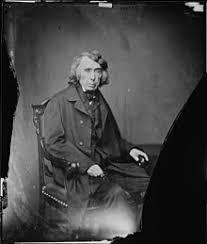
This reactionary-looking fellow is Marylander Roger Brooks Taney, an Andrew Jackson appointee to the Supreme Court. History remembers Justice Taney as the author of the Court’s most infamous ruling in Scott V Sandford (1857).  

Taney had frequently telegraphed his views on slavery and American citizenship, insisting that blacks had no rights white men were bound to respect. Even before his nomination to the bench, a free black had requested documents for overseas travel that Roger Taney, as then US Attorney General, instantly rejected. Taney conceded his legal views long before dawning judicial robes; blacks were not citizens, and never could be. Travel documents for this man of color were denied.

Another important element in this story concerns the Missouri Compromise of 1820. Settled eight years prior to the Jackson Administration, this legislation directed that with the exception of the new state itself, slavery would be forbidden above Missouri’s southern border. Most Americans hoped that this Missouri Compromise Line would endure forever, clearly delineating for posterity new slave states from free.

By the time the Scott case reached the Federal docket, violence and bloodshed had erupted west of Missouri, out on the Kansas prairie. Emigrants recently arrived from northern and southern states, were to vote upon the fate of slavery in the new state’s constitution. A volatile mix of invading, pro-slavery Missouri Ruffians attacked Free-State Jayhawkers near Lawrence, sparking deadly violence across the region. Unrepentant slaveholders demanded their 5th Amendment property rights (meaning slaves) were allowed any place slaveholders settled. At the same time, equally fervent opponents of slavery contended the “peculiar institution” would remain contained where it existed, never to pollute new territories, or America’s future.

Justice Taney took umbrage at these incessant attacks on slavery, and at those Northern rabble rousers who would not respect the law. When the Scott case entered deliberations it appears Taney intended to settle the question for all time, silencing forever those interfering, and self-righteous Yankees. When the Court issued its ruling in 1857, Justice Taney’s opinion rang out with authority, and finality.

  1. Despite Dred Scott residing in free territory for a time, he was still a slave.
  2. As a slave, Dred Scott was not a citizen and had no standing in court.

With those two main points established, Taney could have stopped, but the Chief Justice had some venom to add.

3) Congress had exceeded its authority in legislating the Missouri Compromise in 1820, rendering it unconstitutional. Slavery could not be restricted by boundary lines or by popular vote. Property was protected by law.

Believing he had settled the dispute, Justice Taney had, in fact, only stoked a more massive inferno.

Indeed war exploded within four years of Taney’s decision, blazing on for another bloody four years. In the aftermath, in an interesting turn of symmetry, the Fourteenth Amendment, ratified in 1868, reversed all of Taney’s arguments, provision by provision. 

  1. By virtue of birth in the United States, one was a citizen. 
  2. As a citizen a person was due all rights and immunities, with equal protection under the law. 

This amendment reads as if the Scott Decision acted as a template for reversal.

Fast forward to 2008. 

In a conscious effort to mirror the events of fellow Illinoisan, Abraham Lincoln’s inaugural, Barack Obama’s installation as chief executive deliberately followed the 1861 sequence. The Obamas rode the same train route, breakfasted on the same meal inauguration day, and when the moment came for the swearing in, President Obama selected the same Bible as touched by Abraham Lincoln’s right hand.

In a last twist of symmetry that Bible belonged to Justice Roger B Taney.

Gail Chumbley is the author of the two-part memoir, “River of January,” and “River of January: Figure Eight.” Both are available on Kindle. Hard copies can be ordered at http://www.river-of-january.com.

gailchumbley@gmail.com


He Wrote for the Ages

images.jpeg

For starters, I am not a fan of Thomas Jefferson. In fact, the more I know of this founding father, the less I like him. The Sage of Monticello routinely had young male slaves beaten for no better reason than custom, and lay the foundation for secession in 1798 with his Kentucky Resolution.

Thaddeus Kosciuszko, the Polish hero of the Revolutionary War, once offered to liquidate land holdings in the Northwest Territory to pay Jefferson to free some of his slaves, and Jefferson declined. Disillusioned, Kosciuszko condemned Jefferson as a fraud for once insisting “all men were created equal,” and not practicing that “truth.”

However, the reality remains that Jefferson did indeed, pen those words, and generations of Jeffersonian disciples have insisted those words are enough to maintain his venerated place in American history.

And I agree. His adulators are correct. Jefferson’s words are enough. His phrasing, painstakingly composed in 1776 has ignited the world on the ultimate quest to actualize Jefferson’s “unalienable” assertions. 

Abraham Lincoln took Jefferson’s sentiment to heart, and his devotion moved Lincoln to action. The foundation of the Republican Party rested partly upon removing artificial impediments restraining upward mobility, and Lincoln believed slavery such an obstacle, the most malignant bar to individual betterment. (Duh). In 1859 he stated in a speech, “We proposed to give all a chance; and we expected the weak to grow stronger, the ignorant, wiser; and all better.” And Lincoln made it his aim to realize that betterment, first with Emancipation, then the 13th Amendment.

There could be no better description for America than a people steadily discarding artificial barriers. Women, Native Americans, LGBTQ Americans, Latino Americans: all of us freed to reach our highest potential. Annoying bigotry places a drag on the process, but justice still manages to surge steadily on, inspired by the words of the Declaration of Independence–Jefferson’s words. 

In reality, Jefferson had meant to argue white wealthy Colonials were of equal standing to Great Britain’s landed aristocracy. Despite his original intent, the promise of those words have outlived that specific moment. 

Understandably, Thaddeus Kosciuszko gave up in the face of Jefferson’s outrageous duplicity. And this generation of fanatics desperately promote Jefferson’s original racism. But, kids, we have inherited an obligation to continue this journey, not only for ourselves but to light the way for our children’s children.

Gail Chumbley is the author of the World War Two-era memoir “River of January,” and “River of January: Figure Eight.” Both are available on Kindle, and hard copies at http://www.river-of-january.com

gailchumbley@gmail.com


Beware Of Darkness

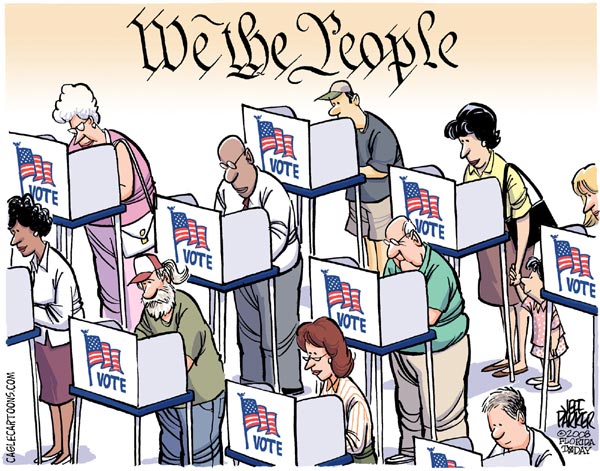
we-the-people

Vote, but don’t vote in fear. Ignore the thugs who intend to intimidate.

If alarm guides your trip to the polls, clarify what frightens you. Whether it’s authoritarianism, climate change, or even attacks on our democracy, pull yourself together and vote with thoughtful purpose.

The former president thrives on doubt, lies and chaos.

While the GOP points to crime, and minorities as a threat, understand this distraction provides cover for greed and incompetence. This crowd is motivated by power, not service to country.

Many high officials have been indicted for conspiring to hack the 2016 Presidential election. This is not theory, it is fact. Of those thirty-five, four convicted conspirators “flipped” and were cooperating with Federal Prosecutors to shorten their sentences. These scoundrels rescinded their agreements and the previous Attorney General supported that effort. At the end almost all were granted a presidential pardon.

That is a concern.

Russia, under Cold Warrior and former KGB operative, Vladimir Putin, has unleashed powerful ‘oligarchs’ to perpetrate cyber sabotage against the United States. Never forget that. This is treason-providing aid and comfort to America’s enemies. At this writing the GOP have declared if they retake Congress they will give Ukraine to Russia.

To silence his critics, Putin has quite publicly dispatched hit squads of assassins, at home in Russia, and abroad. For example, executioners brazenly used military grade nerve agents to silence opponents. Though the Russian leader has denied authorizing any such thing, the former president willfully refuses to accept that, all too, obvious fact.

That is a grave concern.

Friendship extended from that White House to other totalitarian regimes similar to Putin’s. Kim Jong Un, North Korea’s butcher of  not only family members, but masses of his own people, Rodrigo Deterte of the Philippines, who has pursued extralegal measures to kill “criminals,” and Tayyip Erdogan of Turkey who demanded Trump deport a  Turkish journalist, critical of the strong arm regime in Ankara.

The previous president’s family still maintains business ties with the Saudi Prince, MBS, despite the grisly murder of a Washington Post journalist by Saudi assassins.

That is a concern.

Then came January 6th, that violent crescendo of the Trump years. This party is a plague.

Fear is a powerful and toxic impulse to rush the polls on Election Day. However, we must all understand what we fear. Do we focus on the bedlam promoted by that defeated administration, or do we ignore the noise and pinpoint the real threat?

Vote like a boss.

Gail Chumbley is the author of the two-part memoir, “River of January” and “River of January: Figure Eight.” Both books are available on Kindle. Chumbley has also penned two historical plays, “Clay” concerning the life of Kentucky Senator Henry Clay, and “Wolf By The Ears,” and exploration of racism and slavery in America.

gailchumbley@gmail.com

Aftermath

The Constitution was slightly over twelve years old. The rules laid out for presidential elections appeared precise on paper, and in 1800 the front runner, Thomas Jefferson looked to enter the White House with ease. However, though designed by the best minds of that, or any other era, the flaws inherent in the Electoral College system failed to deliver Jefferson his expected victory. Something had gone terribly awry in the electoral process triggering America’s first voting crisis. 

New York Republican, Aaron Burr was chosen as Jefferson’s running mate. The thinking was to balance the ticket with a Virginian at the top, and a New Yorker in the second spot for national unity. Thus the stage was set for a painless triumph over the faltering Federalist Party. However, when the electoral votes were tallied as prescribed by Article 2 in the Constitution, the running mates unexpectedly tied for the top spot.

The fault lay in the statute itself by failing to anticipate such a scenario. Jefferson soon realized Burr would not passively concede the office, and the tie crisis festered until forced into the House of Representatives. In the end the stalemate broke when Alexander Hamilton intervened, persuading the hold-over Federalist majority to choose Jefferson as the lesser of the two evils. (One of the grievances leading to the later duel with Burr).

This was personal. New Yorkers both, Hamilton and Burr had come to detest one another. The former Secretary of the Treasury’s intent was to protect the new nation from his nemesis, and block the supposed scoundrel from assuming the highest office in the land.

Jefferson eventually was sworn into office, and later, in 1804, the Constitution was modified with the Twelfth Amendment, rectifying the design flaws in the original document. 

Twenty years later, in 1824, another impasse materialized that touched off national outrage for decades. The shifting winds of political change found a champion in the person of General Andrew Jackson, the victor of the Battle of New Orleans. Old Hickory had built his reputation as a ruthless Indian fighter, slave holder, and conqueror of Spanish Florida. His feats were celebrated throughout the growing nation, and Jackson’s prospects for election seemed assured. But again, events proved otherwise.

When John Quincy Adams was unexpectedly named President the public outcry was deafening. In defiance of the people’s will, Henry Clay, the former Speaker of the House, used his considerable influence to place Quincy Adams in the White House. When Clay became Adams nominee for Secretary of State, cries of “Corrupt Bargain” echoed across the nation. A furious Andrew Jackson at once began his bid for the presidency in 1828.

Other questionable elections have repeated through the years. In 1876 with the election of Ruther”fraud” B Hayes, and again in 2000 with the Bush V Gore “hanging chad” debacle.

Today America is still sorting out another administration struggling for legitimacy.

The Election of 2016 has left the American public uncertain that their votes actually count. Russian interference through social media, and electronic hacking is an undeniable factor in the outcome. Sinister and new in electoral history, cyber espionage gave America a Chief Executive acutely aware of the dark subversion undermining his victory.

Losing the popular vote by over 3 million, the president-elect claimed those votes were cast illegally, and demanded voting rolls from the states be turned over to a government committee for analysis. Nothing significant came of that effort, and questions continued to swirl around this shady election cycle. 

Somewhere in the chaos the Russian government reaped apparently what it wanted: domestic turmoil. A long-standing enemy of the United States, the former Soviet Union aims to re-elevate its international stature. What better way could Putin’s objectives be met, than hijacking an American election, and produce enough confusion for a sort of sweet revenge.

Deals have been brokered since the beginning of the Republic, but the players have been competing American interests. We may squabble our political beliefs, but that is the messy nature of democracy. Now the arrangements appear to be negotiated by foreign players. This cannot be repeated, we have future American generations to protect.

Update: Putin’s masterstroke is still in play. The squawking loser in 2020 continues what Putin began. Red states throughout the country are undermining election integrity by propagating the “Big Lie.” Contact your Senators to support HR1, “For the People Act.” (202) 224-3121

Gail Chumbley is the author of the two-part memoir River of January, and River of January: Figure Eight.

Available on Kindle

gailchumbley@gmail.com

Go Get ‘Um

5825241068ff3.image

The date was June 5, 1944, and General Dwight D Eisenhower had made the decision to begin the Allied invasion of France the next morning. Christened “Operation Overlord” the massive campaign required disruption inland from the Normandy coast to insure a solid beach-head. The task fell to soldiers of the US 82nd Airborne, the US 101st Airborne,  and members of the 6th British Airborne. The mission was to impair the Wehrmacht’s ability to move their Panzer units toward the five invasion points.

General Eisenhower met informally with soldiers of the 101st, chatting and encouraging, to build morale. He must have felt an enormous responsibility sending these young Americans on such a hazardous and vital mission. While he mingled with the men, Ike suddenly wondered, “Is anybody here from Kansas?” A voice replied from the crowd, “I’m from Kansas, sir.” Ike looked the boy in the eye and responded, “Go get ‘um, Kansas.”

That story always leaves me teary. I don’t cry in movies, poetry doesn’t move me, and books have to be awfully emotional to elicit a sob out of me. But that moment of raw, honest regard, with so much at stake, hits me in the heart.

Washington at Trenton, Grant at the Wilderness, Doughboys in the Argonne, GI’s at the Bulge, Marines at Hue: the devotion to duty chokes me up. Every time.

But today Americans seem somehow lessened, cheapened. There are no Eisenhowers, or Washingtons, or Lincoln’s to describe what we represent. The institutions that inspired countless young people to lay down their lives are now attacked by an ersatz strongman from within. How could this happen? How can citizens of good conscience condone this very real threat? Where is our collective honest regard for our past, present , and future?

Makes me want to cry.

Gail Chumbley is the author of the two-part memoir, “River of January” and “River of January: Figure Eight.” Both are available on Amazon.com

Political Science


We were in the midst of text book adoption some years ago when an unexpected snag brought the process to a halt. 

The Social Studies Departments across our district were asked to pilot an array of textbooks for the Fall of 1994. Publishers had generously provided sample texts, and we spent hours previewing different titles, passing our preferences to our District Social Studies Coordinator.

Government teachers decided, unanimously, that they would replace their current text with the newer edition of the book they had used for some years. To a person, instructors agreed to readopt Magruders American Government; a trusty standard, and the hands-down favorite of most 12th grade teachers across the country. Our staff had ready-made units, lessons, speakers, ancillary materials,, film clips, debate resolutions, etc . . . only requiring the newer book with updated factual information. And their decision appeared to be resolved.

But in the last phase, presentation for final adoption, the Board of Trustees suddenly slammed on the brakes, visibly unhappy with the choice.

 Magruders, as a tradition, had placed a photo of the current first lady inside the first page of their textbook. The old copies may have still been of Mamie Eisenhower by the tattered condition of the old copies. But no longer. The inside photo of this new edition featured First Lady, Hillary Rodham Clinton, and board members, reactionaries to the core, lost their minds.

I taught AP American History at that same time, and thought nothing of reordering Thomas Bailey’s American Pageant, another classic. We had used this text for some time, but needed an updated edition, too. However, in light of the fiasco over Magruders, I too, found my text in the crosshairs.

Wearing an understanding, sympathetic expression the district coordinator said I had to prepare a defense of my book, too. And it wasn’t that I minded touting the virtues of the book, I liked Pageant a lot, but I did mind the time lost in preparing my classroom work. Plus, it was so annoying that we all had to jump for the Board because Mrs. Clinton had the audacity to be the new First Lady.

I supposed, fair was fair, if one book was attacked for fallacious reasons, attack the rest-a convenient diversion to camouflage the real aim of thought suppression.

The central thrust is that Trump era of intolerance had been in the making for quite some years. The irrational politics of 2016 was clearly hardening across the nation years earlier. From School Boards, to City Halls, to library districts, restriction of free thought was under assault. 

Nothing pisses off the far right more than a rational challenge from open-minded, articulate, and educated thinkers.

Gail Chumbley is a retired history educator, and author of the two-part memoir River of January, and River of January: Figure Eight.

gailchumbley@gmail.com