Before They Were Men

L2FwcGhvc3RpbmdfcHJvZC9ibG9icy9BRW5CMlVvUGFfS0Qxb0ZyY1Q3dG1PV05SMFpsUlpsUzFfMTBsZHZBQjB6V1pxWml1dEl3UmtXbTNIcVdMZWc1dG9iUWd2VVdZdmFpZDFwTWE0RlFUWWU5VmVHUUhQcEh1MERXOWVmVjExejJpRXRHS1VHT  jacksonscar  Unknown images


“It’s hard to remember that they were men before they were legends, and children before they were men..” Bill Moyers, A Walk Through the Twentieth Century. 

For Presidents Day I’ve been putting together a lecture series for my local library. These talks surround the childhoods and later experiences of George Washington, Andrew Jackson, Abraham Lincoln, and Theodore Roosevelt.

The thinking behind the series was that early life for all four men presented serious challenges. Complications in health, family tragedies, and economic circumstances appear to have shaped the temperaments and the world view of these future presidents.

It was how each overcame difficulties and setbacks, and how that endurance came to influence each of their presidencies.

This is a brief synopsis of what I found.

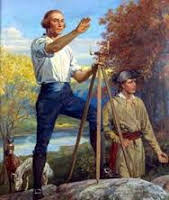
Behind the image mythologized in “The Life of George Washington, by writer, “Parson” Weems, obscures the reality of a more nuanced, and complex Virginia child. Born on February 22, 1732 in Pope’s Creek, George Washington came into the world as the first son of a planter, but from a second marriage. His position in the family line left him without any claim to his father’s estate, or assured public standing. In Tidewater Virginia, society strictly followed the rules of primogeniture, where only the eldest male inherited, and young Washington could claim nothing, aside from the family name. His father, Augustine Washington had two sons from a first marriage, and Lawrence, the eldest, stood to inherit all.

Augustine in fact died in 1743, when George was only eleven years old, the boy not only lost his father, but also lost the formal English education his older brothers had enjoyed. That particular shortcoming forever marked George, leaving him self conscious and guarded through his early life.

To find his way, the youth conducted himself with quiet poise; it was a conscience effort designed to enter the upper echelons of society. Over time, with constant practice, Washington successfully hid his insecurities behind a restrained, and formal persona. So proficient at playing the gentleman, Washington, in fact, became one.

The Revolutionary War that Washington later tenaciously served, cost young Andrew Jackson his family. Born on the frontier, in a region paralleling North and South Carolina, young Andrew arrived into the world without his father. Jackson Sr had died months before, leaving Andrew’s mother, Elizabeth, and his two older brothers destitute.

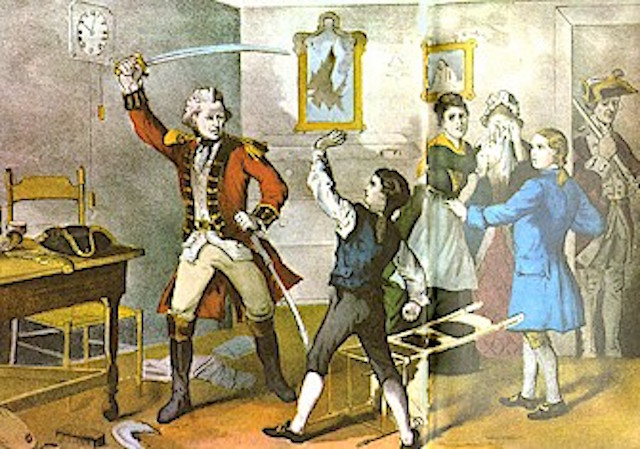
At thirteen Andrew, along with his brother Robert, joined the Patriot ranks as runners, only to be captured and imprisoned by the Redcoats. While a captive an officer of the Crown ordered young Andrew to polish his boots, and the boy refused. Young Jackson claimed he was a “prisoner of war, and demanded to be treated as such.” The officer replied by whipping his sword across Jackson’s insolent head and forearms, creating a lifelong Anglophobe. (In January, 1815, 48-year old Colonel Andrew Jackson meted out his revenge on the Brits at the Battle of New Orleans).

The end of the Revolution found young Andrew alone-the only survivor of his Scots-Irish family. His brother Robert had succumbed to camp fever from his time as prisoner, followed by his mother three weeks later. For the rest of his long life, Andrew Jackson lashed out, perceiving any criticism as a challenge to his honor and authority. He governed with the desperate instincts of a survivor.

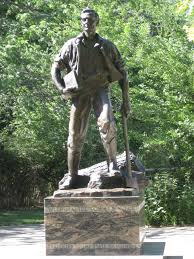
Of a mild, more genial temperament, Abraham Lincoln came to being in the wilds of Sinking Springs, Kentucky, near the settlement of Hodgenville. His father, Thomas Lincoln, was a hard scrabbling farmer, while his loving mother Nancy Hanks lived only until Abe reached the age of nine. Hard work, deprivation and tragic personal losses seemed to permeate Lincoln’s young life, and as he grew Abraham grappled with serious bouts of melancholy.

Exhibiting a quick and curious mind, he struggled to educate himself on the frontier. Largely self-taught, Lincoln grasped the rudiments of reading and spelling, but his father saw schooling as idling away time better suited to work. Young Lincoln had to find tricks to do both, such as clearing trees then reading the primer he kept handy.

His step-mother, Sarah Bush Johnston reported that Abe would cipher numbers on a board in char, then scrape away the equation with a knife to solve another.

By young adulthood Lincoln left his father’s farm, and relocated to central Illinois, and made a life in the village of New Salem. Over time, Lincoln grew remarkably self-educated, studied law and passed the Illinois bar in 1836.

Of all the resentments he felt toward his father, it was Thomas’s clear lack of ambition and self improvement that nettled the son most. Upward mobility was America’s greatest gift, and young Lincoln pursued it with relish.

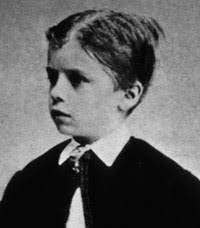
From his first gasping moments Theodore Roosevelt struggled simply to breathe. A child of rank, privilege and wealth, he suffered from debilitating, acute asthma. His parents, Theodore Sr and Mitty Bullock Roosevelt, stood helplessly over his sick bed, fearing that their little boy wouldn’t survive childhood. Later TR recalled how his father would lift him from his bed, bundle him into an open carriage for a long ride through the moist Manhattan night. Small for his age, and nearly blind, young Teedee as he was called, began an exercise regime in a gym, built by his father on the second floor of their palatial home on East 20th Street in New York. Over time, using a pommel horse, the rings, and a boxing speed bag, Theodore Jr visibly grew.

As for his eyes, a hunting trip finally proved to his family that he just couldn’t see. With new glasses, a self made physique and a dogged determination, Theodore Roosevelt brought his indefatigable zest and energy into his presidency.

Today is Presidents Day, 2018, and there is great value in remembering those who have served in this experiment in democracy. All four of these presidents left a distinctive signature of governance, schooled by earlier experience. And all, even Andy Jackson, governed in the spirit of service, believing they could make a contribution to this boisterous, ever-evolving experiment called America.

Gail Chumbley is the author of the two-part memoir, “River of January,” and “River of January: Figure Eight.” Available on Kindle.

gailchumbley@gmail.com

From “Normalcy” to “Bigly”

125926-004-f7b8e7b5


Looking for historic parallels to the outcome of the 2016 election, has left me thrashing about. For past comparisons, it seemed easier to piece parts from several different elections, than pin down any one year.

In 1796, for example, the very thinned-skinned John Adams took office, and outraged by rising criticism coming from his own party, plus more from Jefferson’s growing opposition party, Adam’s shepherded the Alien Act that targeted immigrants. (These newcomers tended to join Mr. Jefferson’s Republican Party). On the heels of the Alien statute came the Sedition Act, that aimed to silence critics from the press.

Or, decades later, Henry Clay’s horror in 1828, witnessing the meteoric rise of demagogue, Andrew Jackson, though Clay knew for certain that he alone was the smartest, and most deserving guy in the room.

Another episode that fits was the seismic swing of competence is 1860–from inept James Buchanan to the majesty of Abraham Lincoln—only to return to another nincompoop in bungling Andrew Johnson in 1865.

But, sifting through all these presidential races, 2016’s fiasco resembles most the election of Warren Harding in 1920.

Much upheaval predated the 1920 contest. The three previous administrations; Theodore Roosevelt, William Howard Taft, and the Democrat, Woodrow Wilson brought about an avalanche of progressive reforms. The first Roosevelt used his “bully pulpit” to preserve millions of acres of public lands, through both the National Park Service, and in designating wilderness protection. TR wielded his “Big Stick” to force mine owners to negotiate with a miner’s union in the 1902 Anthracite Coal Strike, siding with the strikers. “Teddy” further whipped on big business, especially JP Morgan’s untoward interests in the Great Northern Railroad, ultimately breaking up Morgan’s monopolistic power.

William Howard Taft, with a strong background in law, (he later became Chief Justice of the Supreme Court) completed the breakup of John D. Rockefeller’s Standard Oil Trust, and busted up US Steel for good measure. But the lion share of America’s transformation came about during Woodrow Wilson’s two terms, 1912 and 1916.

The Federal Reserve Act, Federal Income Tax, Direct Election of Senators, Prohibition, and Women’s Suffrage all became law during the Wilson Administration. An advocate of good government, including more voters in the electoral process, Wilson championed political reforms, such as the secret ballot, the use of initiative, referendum, and recall, and curbing the influence of political machine bosses; all designed to strengthen democracy. Wilson’s most well-known came in 1917 when the president requested a declaration of war against Germany in 1917. He articulated to Congress that his sole aim in entering The Great War, was to “Make the World Safe for Democracy,” (export the American political system). At the end of that conflict, in 1918, Wilson drew up his visionary Fourteen Point Plan, featuring the League of Nations, a forerunner to the United Nations.

By the time the election of 1920 rolled around, the American public had had enough change. Too much had happened, too much upheaval, all too fast. And an international organization committing the US to a permanent membership found no traction with the populace. To his credit, (stubbornness?) Wilson didn’t give up on his lofty world aims. When the Senate rejected his altruistic Treaty, Wilson responded that they had “broken the world’s heart.” In that same spirit, President Wilson characterized the 1920 election a “Solemn Referendum,” on his League.

For its part, the Republican Party couldn’t agree on any candidate in 1920, when they convened in Chicago. Frontrunner, General Leonard Wood, faced fierce inter-party opponents, and after nine ballots, Ohioan, Warren Gamaliel Harding, an undistinguished, but amiable candidate emerged to gain the nomination. Republican machine handlers forbade Harding to campaign, and told him to essentially say nothing, and do so from his front porch. Considering the candidate’s singular statement using the non-word “normalcy,” staying quiet was probably good advice That following November, the power of inertia won when Harding was elected over Democrat, James Cox, a Wilson man. (a young FDR ran as Cox’s vice presidential candidate)

The Harding administration resumed their version of “normalcy” at once. Two immigration restriction laws were passed by Congress—the Quota Laws of 1921 and 1924. The message quickly spread. Italian anarchists, Sacco and Vanzetti were found guilty of a Boston robbery and murder, despite questionable evidence and a crooked trial. White supremacist, Madison Grant added to the intolerance with his diatribe titled, “The Passing of the Great Race,” and the Klan resumed its reign of terror targeting blacks, despite the hard work of the newly founded NAACP. (Lynching’s spiked; 110 between 1921-22).

The economy once again lapsed back to an unfettered affair, into the hands of laissez faire capitalists. The stock market began a steep rise fueled by “on-margin buying,” (10% down, the balance financed by easy credit from unregulated banks). Wall Street insiders enjoyed a field day employing shady practices that included “painting the tape,” artificially inflating stock prices to record highs, then dumping the same stocks after reaping fabulous profits. Working class investors, assuming the growth was legitimate, bought in, and were left holding the devalued stocks. That free-for-all came to a halt with the Crash of 1929.

Under Harding’s unwatchful eye, federal oil reserves in Teapot Dome, Wyoming, and Elk Hills, California were leased for lucrative kickbacks, to private oilman, Harry Sinclair of Stinker fame. And labor found no friend in the Harding administration, where strikes were viewed as Communist-inspired, and a minimum wage law died with the Supreme Court ruling in Adkin’s V. Children’s Hospital, (1923). Speaking of Communists, following the 1917 Russian Revolution, a Red Scare was underway and Soviet leader, Vladimir Lenin vowed in the Comintern to topple Western, and American capitalism.

Today, despite his personal approval ratings, it appears that the changes brought about in the Obama years are facing a similar type of reaction. The Affordable Care Act, the Obergeffell decision upholding gay marriage, the Black Lives Matter movement, have extended the blessings of liberty to the rest of us. The President’s middle ground treaty, forged with the Iranians, has, so far, avoided any additional armed confrontation in the Middle East, that critics seem keen to nullify.

It’s unfortunate that the working poor will not see any advantage from their hopeful votes for Donald Trump. Those left behind in America’s transformation to a service economy will never realize jobs that, for economic reasons, have shipped overseas. Even if the label says Trump, it also says Made in Somewhere Else—that is the reality of 21st Century manufacturing. Moreover, a national minimum wage for those same hard working poor, looks doubtful with a quick glimpse at Trump’s plutocrat-filled cabinet. The most unfortunate outcome from the campaign, was the free use and acceptance of racist, homophobic, xenophobic, and sexist rhetoric. As before in 1920, the temperament reflected in the new administration emboldened the forces of reaction and hate.

A lot changed for America with the election of our first black president. But the message of the administration spoke of hope and forbearance. Those among us who shared this philosophy looked ahead with optimism. But if the past is a reliable guide, and I believe it is, this recent swing toward the overly male, wealthy, Caucasian, Right cannot, and never has governed well. An administration that plots a course based on exclusion, has never found measurable success. That faction owns a lot, and looks out for their interests. That guiding principle leaves out the rest of us in this roiling mass of diversity that is the real America.

Gail Chumbley is the author of the memoir series River of January and River of January: Figure Eight. Both available on Amazon and at www.river-of-january.com
 

The Running Joke

th

Each school year, by spring break, my history classes had completed their study of the Kennedy years, 1961-1963. We discussed the glamor, the space program, civil rights, his charisma and humor with the press, and most importantly, JFK’s intense struggle with Soviet leader, Nikita Khrushchev.

In a provocative challenge to America, Khrushchev had ordered the building of the Berlin Wall, and construction of nuclear missile sites in Cuba. This second and more dangerous challenge prompted the 1962 Missile Crisis.

We probed further into the delicate diplomacy that, after 13 days settled that perilous moment peacefully.

For years I closed the unit joking, “aren’t you glad Andrew Jackson wasn’t president?” That line always drew a good laugh.

But really high stakes foreign crises is no longer funny. Not in today’s political climate.

America’s seventh president was a mercurial character. He loved blindly and hated passionately. If convinced his honor had been besmirched, the man dueled—sometimes with pistols, sometimes with knives. It all depended upon his mood.

The provocation behind most of these confrontations touched upon Jackson’s wife, Rachel, who had a complicated past.

A murderer, the author of the Trail of Tears, a plantation and slave holder–Jackson was deadly dangerous.

No financial wizard, he went on to destroy the Second Bank of the United States, the central financial institution of the young country. Old Hickory then deposited the government’s money into pet banks, local private, unregulated concerns across the country. Mismanaged, these banks collapsed, propelling America into one the longest, deepest depressions in American history.

Jackson ignored the Court, and he used the military for his own political gain.

The power King Andrew exercised rivaled the Almighty’s.

So the joke regarding the Cuban Missile Crisis of 1962 resonated with high school juniors. JFK’s skillful restraint in that perilous moment would certainly have resolved differently in the hands of the hotheaded, autocratic, Andrew Jackson.

Again, the joke is no longer funny.

Now America is saddled with an impulsive autocrat whose hunger for authority tramples our time honored liberties. He is attacking our communities, and arresting neighbors for his political gain. Moreover, this petty Napoleon shows little understanding of America’s legal tradition–basic high school history,, or civics. Then there are the ill-advised tariffs playing hell with the economy. Like Andrew Jackson, this current “president” carries himself as another absolute monarch.

The pertinent question this tale raises is this; what could this current, petty president, with little impulse control do in the turmoil of a similar crisis?

Tonight, June 21, 2025 we now know. This cannot end well.

Gail Chumbley is the author of the two-part memoir, “River of January,” and “River of January: Figure Eight.” Chumbley is also the author of three plays set in American history, and co-authored a screenplay based upon her books.

gailchumbley@gmail.com