Peer Review Excerpt 2

This post comes from a full stage play titled Peer Review. It was composed during DJT’s first term and serves to illuminate the contrast to earlier presidencies.

SCENE TWO

The stage lightens in a mix of gold and white. A bed and two arm chairs made in the same colors sit center stage, The New York City skyline is projected on the back curtain. The sound of papparazzi and cameras snapping is heard offstage. An elevator dings. After a moment the President enters stage right with two men in suits wearing earpieces. The men walk around the area and bed. The President turns and speaks.

THE PRESIDENT
Call maintenance, that damn elevator shouldn’t stall between floors. That was a good ten minutes, dammit. I’m gone a few weeks and the building goes to hell. There’s nothing in here. Get out.

The men exit. The President removes his jacket, and walks to the dresser. He peers down in a drawer, then finds what he is looking for. A file of yellow and red.

Except this little gem and it’s really something.

He lies on the bed reading and chuckles happily. His cell phone plays “Hail To The Chief.” The President answers.

Where are you? I just got here, great crowd outside. Yeah, I’ll get it done. Hey, I said I’d do it. What do you mean you don’t trust me? Give me a break, That whole Stormy Daniels garbage is . . . No. Don’t hang up. We’ll sit down with the lawyers and renegotiate the whole deal. But then you will join me in DC, and the boy, too. This staying in New York is no good, makes me look bad to the country. Yeah, yeah, I’ll get Reince on it today. Hey, I said I will.

He tosses the phone on the bed and resumes reading.
Huh. Erdogan didn’t tell me this. How does the CIA find this crap out? I need some Putin-Ukraine stuff. Who woul’da thought I’d read something?

He chuckles, and soon grows sleepy. The President drops the open file and closes his eyes. After a moment a spot rises on a figure entering the stage.

He is tall, wearing a 18th Century blue and buff military uniform, knee breeches, white stockings and carries a sheathed saber. His white hair is combed back, and tied with a black ribbon at the nape of his neck. Standing near the bed, he speaks slowly with elegance.

THE GENERAL
I am very fond of New York City. During the War for Independence I maintained camp nearby for much of the duration.

The President sits upright, and reaches for a pillow to shield himself. He squeaks.

THE PRESIDENT

Shit!

THE GENERAL
Congress had directed me to burn Manhattan ahead of invading British Regulars. You see, Congress wished to leave nothing of use for the Redcoats. Destroying the city left me conflicted, and alas, that order I could not obey. As fate would have it, a fire did erupt in the chaos, demolishing vast tracts of the city. A very regrettable situation.

The General poses regally, glancing at the president. He continues.

Sometime later I returned to serve as President here in New York.

He gestures with his saber to the skyline.

Concerning the demands made upon me as I served those first critical years, none resolved easily, nor without great cost. But our fledgling nation teetered on dissolution and we, as the first government under new Constitution, had to stand resolute.

The President lowers his pillow to speak in a forced, but faltering menacing tone.

THE PRESIDENT
I don’t know who you are, or how you got in here, but this is my room, and my 30,000 square foot apartment, in my extremely valuable building. So clear out!

The General appears not to hear, serenely seating himself in an arm chair. He levels his gaze at The President.

THE GENERAL
My colleague said you were tiresome, however, I am staying.

THE PRESIDENT
Who said that? What colleague . . .oh, jeez, him. Well I’m important NOW. So you and that other fossil can beat it back to central casting.

THE GENERAL (Untroubled)

I, too struggled with grandiosity. In my youth I pined for the advantages of wealth and status that surrounded me. Stately mansions dotted the inlets and vast river systems of Tidewater Virginia, the place of my birth. I longed for a life of importance, gentility, and of wealth. I would be an English gentleman residing in elegance upon his landed estate.

THE PRESIDENT
The English are wusses, and you’ve blah blah’d enough. I’m in New York to get away from all that history garbage. That old dump where I have to stay is filled with that crap. So goodbye Rambo.

The General waits, then rises and un-sheaths his blade. The President again grasps his pillow. The General resumes his story.

THE GENERAL
Born the first son of a second family, I fell heir to nothing but my father’s name. Augustine and Lawrence, my older brothers, received all the honors of a gentleman’s life. I loved them, idolized them, especially dear Lawrence, and begrudged him nothing of his inheritance. However, I cannot deny the depth of my anguish as a second class Virginian.

THE PRESIDENT (To himself)

When my Father died I stuck it to my brother. He couldn’t handle money, the guy was a drunk.

THE GENERAL
Another temptation concerned a young matron, the wife of my best friend. Sally was her name, and I loved her very much. Our correspondence, especially while I served in the war against the French was perhaps too forward, and flirtatious. I longed for Sally, but she was not, nor ever could be mine.

The General sighs, deep in thought.

THE PRESIDENT
I never let any marriage license stop me. Mine or any available broad. That’s all they’re good for, arm candy and a roll.

THE GENERAL
We are all too aware of your misogyny, and absence of propriety. Even Mr. Kennedy said he attempted more discretion in his dalliances. I’m reminded of a letter from the Marquis de Lafayette informing me of his wife’s passion for me. Amused, I replied youthful women are inclined to youthful men, not those of graying hair. And still it is so.

The president sits up with his pillow on his lap.

THE PRESIDENT
Younger women love me. They really do. I’ve dated some beauties, too. You should see some of the pageant contestants I’ve bagged-and Playboy bunnies, too.

From the wing a soldier in Continental uniform approaches the General handing him a dispatch. The General reads the parchment, and marks it with a quill pen. The soldier leaves.

THE GENERAL
Sir, I do not believe ‘love’ is quite the term for what you’re describing. unbridled debauchery perhaps is more precise?

THE PRESIDENT

What the hell? How did he . . .?

THE GENERAL
It is the disciplined man who owns his passions. Decorum is what separates us from animals, wouldn’t you agree?

The president sits mouth agape at the soldier. The General continues.

THE GENERAL
Elegant balls were quite popular venues for young people to meet. I don’t mind saying that I may have been one of the finer dancers in the Tidewater. Those evenings were grand; dinners, music, and refinement in abundance. Oh, how I yearned to rise in social rank.

THE PRESIDENT
I hear ya. Those Manhattan snobs, that artsy-fartsy Met crowd, boxed me out. Treat my kids that way, too. Jerks.

THE GENERAL
Envy did little to further my integrity as a gentleman. In the war against the French the royal governor entrusted me to offer land patents to volunteers willing to join the Virginia militia. Over the course of the conflict I made many of those acres my own. You see land was the mark of a gentleman, but I was an imposter. That villainy has troubled me for an eternity. I pray my service to my nation has polished away some of the tarnish.

THE PRESIDENT
Don’t sweat it, business is business. Regulations are a pain in the ass. If you have an opening take it. Never hesitate. I’d a done the same thing.

The soldier-courier again appears on stage carrying more documents and a feather pen. The general agains peruses the contents, and marks the paper. The president raises his hands in a questioning gesture. The courier disappears.

THE PRESIDENT
There is a squadron of Secret Service out in that living room! How does that guy just walk in here?

THE GENERAL
Colonel Hamilton? He is a very clever young man. A great mind, that one. (Pauses) I disagree with your assessment of regulations. Had it not been for the rigor used to organize the army, particularly at Valley Forge, America would not exist. Good order was the key to eventual victory.

THE PRESIDENT
But you were the boss, right? You made the rules. Everyone I brought in has stabbed me in the back, didn’t follow my rules. Bunch of lowlife. Tillerson, Bolton, Mulvaney.

THE GENERAL
Perhaps those staff members possessed standards and realized you were not a leader worth following.

The president stands up outraged, the general stares him back down.

THE GENERAL
Those of my staff earned positions through merit. Tallmadge, Knox, and Hamilton, here, were gentlemen I trusted with my life. The hangers-on, the men who conspired for my command eventually revealed their ineptitude, and villainy. Those characters fell by the wayside.

THE PRESIDENT
A lot of people don’t realize this, but I don’t know American history. How did you win that war?

THE GENERAL
I never confronted the Regulars unless I had an advantage, like at Trenton, though I detested avoiding any fight. (Pauses) I kept the Continental Army together, and out of British hands. I knew the King could not fight forever. And I knew history was watching our every move, and we owed the future to never give up.

THE PRESIDENT
What the hell does that even mean? History watching! I could care less what happened before me, or when I go out.

THE GENERAL
And I am sorry for that, as will be your grandchildren. The family name is disgraced for all time. The rest of us, those whom I am representing, all understand this. Each chief executive found inspiration in taking part in something greater than ourselves. This, (he gestures toward the window) the United States of America has never been attempted before, a people’s government. The world is housed with predictable despots stealing from, and brutalizing the powerless.

THE PRESIDENT
Oh, come on, give me a break, everybody cheats and steals. Especially here in America.

THE GENERAL
Indeed. But we try to be better. We all have tried. President Chester Arthur felt you ought to know that he, too, served the monied interest. But once president, Mr. Arthur left the grift behind. Like the rest of us he found humility understanding all citizens, for all time would weigh his executive stewardship. He treasured America more than money and power.

The president slumps into a chair. He jabs a finger at the general, changes his mind and lowers his hand.

THE PRESIDENT
I didn’t take a salary. My people liked that, makes me look like a good guy.

THE GENERAL
All the while, behind the scenes, you pilfer on a grand scale. (The General glares) The Continental Army did not suffer want and cold at Valley Forge and Morristown for you to overcharge the federal government for lodging Secret Service at your resorts. Nor did they starve so guests at your Washington hotel could be egregiously overcharged.

The general continues to glare for a long moment and slowly cools down.

THE GENERAL
After Yorktown, and the surrender of Lord Cornwallis, hostilities slowly began to quiet. Royal ships, loaded with Redcoats set sail for England and our land stood liberated. Many difficulties remained such as discharging soldiers, and securing their long overdue pay for services nobly rendered.

The general again looks out at the New York skyline.

THE GENERAL
Word arrived that officers, also unpaid, had set into motion a plot to overthrow the slow-moving Congress and make me king. The ring leaders, encamped north of here in Newburg, awaited my arrival to complete the conspiracy.

THE PRESIDENT

King, huh? I like the sound of that.

THE GENERAL
As I had hoped the plot came to nothing, and that is when I resigned my commission and returned home to Mount Vernon.

THE PRESIDENT
Resigned? Went home! What is wrong with you? You had the whole deal on a plate!

THE GENERAL
Why? Because I am an American. We have no need of kings here, and I longed for home, longed for my wife and family. I’d been away for seven years and I yearned for my farm.

THE PRESIDENT
You could’a had the whole country at your feet and you went home to your farm? Gave up power for cowpies and dirt?

THE GENERAL
“’Tis not in mortals to command success. But we’ll do more, Sempronius, we’ll deserve it. When vice prevails, and impious men bear sway, the post of honor is a private station.”

The general sits down on the edge of the bed. The president, in his bed again clutches his pillow closer.

THE GENERAL
It’s a quote from my favorite stage play, Addison’s “Cato.” As Julius Caesar amassed growing power in the Roman empire, Cato the Younger, a lover of Republican virtue, stood in opposition to Caesar’s tyrannical grasp. When Cato could not accept life under extravagance and corruption he took his own life rather than submit to depravity.

The president stifles a yawn, shakes his head to clear it then speaks.

THE PRESIDENT

I liked the musical, “Cats.”

THE GENERAL
This work had a deep impact upon me and upon my generation. Patrick Henry’s “Give me liberty” quote reflects lines from the play, as does poor Nathan Hale’s last words regretting to have “only one life to give for his country.” During our miserable winter camp at Valley Forge I saw to it the play was performed for the men. We too, were confronting an extravagant and tyrannical empire.

The general rises and returns to the window.

THE GENERAL
And that is why I returned home. My duty had been fulfilled, and my services were no longer required.

The courier returns, this time in civilian garb, the general removes his hat, pistol, and sword. He examines the paperwork, scribbles, and the courier departs. The president stands, holding his pillow, watching the courier, then shrugs. He moves back to his bed.

THE PRESIDENT
Now just hold on. You, I mean, you’re the guy who became president, right? The first one?

THE GENERAL

Yes.

THE PRESIDENT
You should’a just grabbed power in the first place. People wouldn’t have cared. I can say or do anything, and my people love me for it. They’re a sad bunch of losers, really.

THE GENERAL
America did not, and does not now, need a king. I only returned to the public arena because my country called. An uprising in Western Massachusetts pitted war veterans against the state legislature in Boston. Vessels exchanged gunfire on rivers over navigation rights-Americans were battling Americans, again.

The general approaches the president who places his pillow over his face.

THE GENERAL
In Philadelphia a convention was set by Mr. Madison, and Colonel Hamilton to strengthen the national government. Though I was weary, short of funds, and reluctant to leave Mount Vernon, I eventually consented to join the assemblage.

The president lowers his pillow and speaks.

THE PRESIDENT

That sounds boring. But farming sounds boring, too.

THE GENERAL
America’s future rested upon what you term as boring. (He pauses) Though stifling hot that Philadelphia summer, with tempers running high, all members resolved to see the convention through. Unrest across this new country lent a sense of urgency, and we could not fail.

The president appears to not listen, fusses with his hair, staring at the ceiling.

THE GENERAL
Listen when I am speaking. Incorrigible halfwit. Leadership requires listening.

THE PRESIDENT
I’m listening. I give myself an A+ on listening. By the way, do you put powder or something on your hair? I worry mine doesn’t look natural in some light.

THE GENERAL
Addle pated oaf! Colonel Roosevelt cautioned me of your conceit. But I will not depart until I have spoken my piece. The Constitutional Convention labored from May, 1787 until September, and in all those sessions only one day concerned the role of the president, Article Two to be precise. And the reason so little time was allocated to this subject? Because I was, whether I wished it or not, the model for the chief executive.

THE PRESIDENT

One day?

THE GENERAL

One day.

The general pauses, then steps over to the bed. He leans over the intimidated president.

Delegates determined the age requirement, the rule for candidates being native born, with four year terms.

THE PRESIDENT

One day, huh. How come so short?

THE GENERAL
Please listen the first time! Because the office was designed for me. I gave up rank, and returned to civilian life, I could be trusted with power. My successor, later wrote, “May none but Honest and Wise Men ever rule under This Roof.” Since that blessing, with one exception, men of political restraint have served as Commander In Chief. Until you. A greedy, self-deluded dunce. Your infamy will never be forgotten, becoming instead a catchphrase for colossal incompetence.

The general rises, adjusts his hat, retrieves his gun and sword, then turns to the president.

THE GENERAL

When my dearest Martha died after my own passing, she was interred beside me, not in a New Jersey sporting green for a tax deduction.

As the general steps offstage an elevator ding is heard again, then a knock on the president’s door. A voice calls out.

SECRECT SERVICEMAN

The elevator issue is fixed, sir. We can go now.

The president adjusts his hair, and straightens his tie. He rushes off stage. A moment later a spotlight catches him hurrying back, picking up the security file, and placing it under his jacket, and again scurries offstage.

The stage goes dark.

END OF SCENE

Gail Chumbley is the author of the two part memoir River of January, and River of January: Figure Eight. She has also authored three stage plays, Clay, Wolf By The Ears, and Peer Review. Chumbley is the co-writer of Dancing On Air a screenplay based on her River books.

If interested in developing any of these pieces reach out at chumbleg.blog

Peer Review One: A Play

Peer Review One

__________________________

10 Minute Play

By Gail Chumbley

SCENE 1

The stage lights rise. Two wingback chairs sit closely on the stage, and a table. Two men, both marines, stand on either side of the stage apron. The sounds of voices are heard off stage. The stage lights shift to blue as a man, The President, steps onstage. The Marines salute, and the president salutes impatiently. The guards disappear in darkness.

THE PRESIDENT
I can hear them. Tourists. Here to see where I, their President lives.

Three girls enter giggling and taking cell phone pictures. The president fusses with his hair.

THE PRESIDENT

And where are you girls from?

The girls move on without noticing him.
Wait! I’m here. Your president. I’m here.

A couple appear looking about, pointing toward “walls,” chatting quietly. The president straightens his tie, and again touches his hair.

THE PRESIDENT
Welcome to my White House. Wanna a picture with your President?

The couple murmurs quietly, indifferently looking around. They turn and stroll offstage. The president follows a few steps.

THE PRESIDENT

You people deaf? What is wrong with you? This is disgraceful. I’m President of the United States, for god’s sake.

A man appears on stage left. He wears a top hat, mustache, pince-nez spectacles and cutaway jacket with tails. He carries a cane. The man approaches the president from behind. He speaks in a patrician voice.

THE MAN

Am I to understand that you are a New Yorker?

The president startles.

THE PRESIDENT
Um, hello. Are you here with a tour group? Bet you want a picture with me, your president.

THE MAN
I ask a simple question, and you reply with a question. I understand you are a New Yorker. Are you or are you not?

The President attempts to walk to no avail. The man stands uncomfortably close.

THE PRESIDENT (Looking around)

I can’t move! My feet are frozen to the floor! Where is my security detail! Where are my marines?

THE MAN
We have all been watching you, and even Mr. Nixon is appalled. Once again, are you a New Yorker? Speak up when I’m addressing you.
THE PRESIDENT

Mr. Nixon? How did you get in here? Are you a re-enactor?

The muted sound of tourists continues off stage.

Yes. Yes. Everybody knows me. I made my fortune in New York real estate, if you must know. I’ve heard many people say I’m the best businessman ever . . .

The man begins to pace and speak at the same time.

THE MAN
From my understanding you are nothing beyond a scoundrel from the wealthy criminal class. I made a career of exposing popinjays like you.

THE PRESIDENT
Well, you’re a nasty piece of work. I am the President of the United States. I won the election by the biggest margin in American hist . . .

THE MAN
Poppycock! We have come to find that result came about due a mere tilt in the electoral count, and foreign interference. Russians, no less. After the revolutionary stirrings in 1905, I feared Russian unrest would spread to the United States. Conditions in mines, shops and factories here were inexcusable. Strikers shot down in the Pullman Rail Strike, vile conditions in Chicago’s meatpacking industry, sweatshops forcing 12 hour work days. Labor agitators pushed for reform, and I agreed. In Russia, Bolsheviks never did extend justice to the working class, only more oppression. They were not, and are not America’s friend, and intend only to destabilize this nation. Through your absence of character, and love of money they have succeeded.

THE PRESIDENT

You are wrong. That’s a lie. A lie.

THE MAN
You foolish pip. Inviting Russians into the West Wing? Unacceptable! Never should foreign adversaries be permitted to enter the inner sanctum, nor rioters in the Capitol. Mr. Lincoln will have more to say on that particular travesty.

The President appears shocked. He mouths “Lincoln.”
You have besmirched America before the world. I’d say you are a compromised pawn of foreign meddlers, and their graft. You give not one whit for America.

THE PRESIDENT
You can’t talk to me like that. My security will be back and you’ll be thrown out.

THE MAN

Sergey Witte.

THE PRESIDENT

What? Who? Just get out!

THE MAN

Hold your tongue! When you are in the presence of a gentlemen, behave accordingly. Witte was a Russian, so you will approve. The Japanese inflicted the most impressive defeats upon the Tsar’s navy in 1904-05. America then had no quarrel with Japan or Russia, however, I was asked to arbitrate peace negotiations. My view of the Russians changed with Witte. What a crude, unmannered man, unlike the thoroughly well- mannered Japanese delegation who comported themselves so gracefully! This so-called “diplomat” grew belligerent during peace talks insisting Russia be awarded more largess from the treaty. That villain stalled and argued for adding more claims, despite losing the war. I gave that knave a piece of my mind.

The man removes his top hat and sets it on a table, and checks his pocket watch.

Good I have time.

THE PRESIDENT
Time? Don’t stay on my account. I’m a busy man. Meetings, briefings.

THE MAN

Sit down this instant.

The president instantly sits. Looks alarmed.

Witte is the point! The Russians only look out for Russia, not you, the bankrupt fool who fell backward into the presidency.

THE PRESIDENT
I’m being pranked. Some a-hole is filming this. Where is the camera? I hate pranks. Meadows is going to hear about this.

The muffled sound of passersby continues. The president sits uncomfortably, and shuts his eyes.

I’m dreaming. That’s it, I’m asleep. When I open my eyes he’ll be gone.

To the man.

I’m opening my eyes now and you better not be here.

The man leans over the sitting president. He opens his eyes face to face with the man. The president startles again.

THE MAN

I am not finished.

The man again paces and speaks.
Bribery does not belong in foreign policy. And America still has a grand future on the world stage. We show strength through integrity–not by shaking down America’s allies for political favors.

THE PRESIDENT

Stop right there, that was a perfect phone call . . .

THE MAN
In foreign affairs we must make up our minds that we are a great people and must play a great part in the world. Nothing less.

The man turns toward an imaginary window. The president attempts to stand, but only succeeds in moving the chair a little. He utters a grunt.

THE PRESIDENT
I have great knowledge of foreign policy. And despite what some people say, I was always against the war in Iraq, and a lot of people weren’t.

The man shakes his head in disbelief. The President continues.
Look, Obama left a foreign policy of one disaster after another. We don’t win anymore. . .We’re going to win big now.

The man looks around the Blue Room.

THE MAN
Talleyrand, Napoleon’s minister once remarked that though President Jefferson loved France, he was still an American first. I do not believe you are first loyal to America, only to your feral, financial instincts.

THE PRESIDENT

TalleyWho? Everyone knows I am the greatest Americ. . .

The man sighs, and with a turn of his hand silences the President.

THE MAN
It appears you have no pets. Quite revealing that-regarding a man. We moved into this house with dogs, cats, and other pets, including a pony. How the boys loved their animals. Our pets were considered part of the family. They and the children’s presence made the White House feel like home.

The man returns his gaze to the president, and smiles.
I would play a bear, and my two youngest would hide under the bed. I pawed and growled, and they giggled and shrieked for joy.

The president is defensive. He speaks.

THE PRESIDENT
Kid’s. The hardest thing about raising kids is time. I know men who leave their businesses so they can spend more time with their children, and I say, ‘Gimme a break!’ My children couldn’t love me more if I spent fifteen times more time with them.

The man watches the president doubtfully.

THE MAN
No pets. Not even for your youngest. And it appears the boy and his mother live separate lives. Your adult children keep their distance, as well. You have squandered a man’s real treasure for an artificial image.

The president wiggle-walks his chair still stuck.

THE PRESIDENT
First of all, I would feel like a phony having a dog. I don’t like dogs. And, so you know, my children love me, and my wife, too. They are so proud of me, so proud. I’m President. And most Americans love me. Those liberals are the problem.

The man snaps, waving his cane.

THE MAN
Is that why thousands of migrant children were separated from their families? Caged? Liberals are not, as you say, the problem!

The man clears his throat, and quietly speaks.

President Grant requested I touch upon the subject of military service. My father did not serve in the War between the States, leaving me a confused boy. I could not understand why. For me soldiering is the highest service a patriot can perform.

THE PRESIDENT
And now you’re going to tell me how great the military is. I really don’t care. Look, Sean Hannity is calling my office.

THE MAN
His decision concerned my mother. Lovely woman, my mother, she hailed from Georgia, and her brothers were serving the Confederacy. You see, my father loved her–simply loved her. He hired a substitute in his place, and aided President Lincoln in other ways.

The man taps his cane and smiles.

Still. I idolized him. He believed so much in public service. He cared about children, orphans living on the streets. Father founded the Newsboys Lodge, the Children’s Aid Society, and the American Museum of Natural History. The last he did for me.

The man strokes his mustache lost in thought.

THE PRESIDENT

On Central Park West?

The man nods.
Been there. Your father had it built? Seems like a big waste of money to me. Bunch of bones and dead animals.

THE MAN
Serving others is our obligation to the less fortunate. To me bad trusts exploited the poor for profits. We regulated fair rail rates for farmers, passed the Meat Inspection Act, and the Pure Food and Drug Act, to make all Americans safer.

The president looks bewildered.

THE PRESIDENT

Why? There’s a lot of money in big pharma.

THE MAN

Not listening.
As president, I never made a decision without wondering what my father would think.

THE PRESIDENT

Yeah, me too.

The president chuckles. The man shakes his head.

THE PRESIDENT
Still, I don’t care. Times have changed. Gotta get what you can when you can.

The man whips around.

THE MAN

Which is why I am here.

The President’s smile disappears.

THE MAN
All four of my sons served in the Great War, and fulfilled their duty. We paid the ultimate cost-our youngest, Quentin, in an aerial fight over Germany. So difficult to lose such a dear, sweet boy.

The man draws close to the president.
And Quentin was neither a sucker nor a loser! He believed in America, they all believed. Quentin held fast to the tenets of our noble land and answered the call.

The man flashes disgust toward the President, then becomes thoughtful.
In 1898, I, too, served as soon as I could. President McKinley named me under-secretary in the Department of the Navy, until I resigned to join the war against Spain. That decision led me to assemble the Rough Riders and ship out to Cuba. Most exhilarating. My father would be proud, of that I’m certain.

THE PRESIDENT
I’d like to do my duty too. But the political establishment trying to stop us is the same swamp responsible for our disastrous foreign policies.

The man frowns, then and continues.

THE MAN
We were on foot in Cuba, a cavalry without horses. We lined up at the base of Kettle Hill, and charged. The moment jolted electric, and my crowded hour began. Lifting my carbine in the air, I rallied from the front, showing the men they had nothing to fear.

THE PRESIDENT
And see, that’s the problem. That is why the military is a chump’s game.

The man shakes his head.
And who needs soldiers? I can do foreign policy, it’s easy. I know because I have a very good brain. I am very rich, people admire me.

The man gives the President an incredulous glance.

THE MAN
Are you deranged? Tossing about words, making no sense? And as for rich, I understand your father earned the fortune, and you have frittered away much of it.

THE PRESIDENT

Wrong. Lies.

THE MAN
Nouveau riche, new money. Gaudy, vulgar, pretentious, and hungry for the validation and acceptance that you will never receive.

The president audibly snores. The man continues to speak over the noise.

When I held office I used my “bully pulpit” in the best sense of the term. Once I believed as you, that the natural world existed to enrich man. But that is false. In my administration Congress approved five new national parks, protected bird sanctuaries, and game preserves. The intrinsic value of our land cannot be found in stock indices or business transactions.

The president snorts
Nowhere else in any civilized country is there to be found such a tract of veritable wonderland made accessible to all visitors, not only the scenery, but wild creatures of the parks are scrupulously preserved.

THE PRESIDENT
Well mister tree hugger I have gutted much of your precious protection and opened land for logging, mining, and drilling. Say goodbye to the Grand Staircase in Utah, well, half of it, anyway. Roads are being cleared as we speak, and off-road vehicles are roaring in. And that goody two shoes, Barack Hussein Obama created the Bears Ears National Monument. I chopped it up for developers. Because that is profit. Profit is real.

THE MAN
You are nothing new, but the only plunderer to reach the presidency. New York City has produced a long line of blackguards such as yourself, criminals like Boss Tweed, and George Washington Plunkitt. Driven by greed and power these men fleeced the public.

The man walks around the chairs still looking about. He speaks.

For the benefit and enjoyment of the people.

THE PRESIDENT

I’d enjoy getting the hell out of here.

He snores louder

THE MAN
Quiet you insolent twit. Those words are inscribed on the arch at Yellowstone Park. Now you shall no longer interrupt.

The man gestures, watching the president who is now unable to speak.
I, too enjoyed a life of affluence. However, with that wealth came obligations to the less fortunate. Doors down from our home on 57th Street the poor struggled in wretched poverty. And much like my father I possessed a troubled conscience.

The man strolls with his cane, and continues.

As Commander in Chief, our charge is to work for the people. All the people. Withholding aid to states you did not carry is a dishonorable breach of that trust.

The man touches the president’s chest with his cane, then resumes his pacing.

My love of justice and fair play may sound naive to you. But your blatant cheating, while pretending you haven’t, is shameless.

The man strikes the president’s chair with his cane. The president sits straighter.
My administration was known as the “Square Deal,” and we, my cabinet and I, kept that promise.

The man taps his cane on the floor again.

My father once counseled me to look after my morals, my health, and my scholarship. And that, I did. And your father? Raised you to love money and value nothing. Had you not been desperate to become president, you might have continued to lead this predatory life of grift and debauchery.

The president fixes his eyes on the man. Angry.

Much like King Midas, or a Greek tragedy, this fatal flaw, your infinite vanity, will now cost you your liberty.

The president struggles, mutely hopping his chair a bit.
You should not have run for office, where dignity and tight scrutiny are the norm. Unable to resist the lure of power, you are the catalyst of your own downfall.

The man puts on his top hat, and gestures. The president bursts free from his chair.

It’s time for me to leave, the others will join you presently.

THE PRESIDENT

Others?

THE MAN
Most assuredly. And the name of that national park is pronounced Yo-sem-i-tee.

As the man stroll off in one direction, the President runs off the other. The stage goes dark.

The Dramatists Guild of America was established over 80 years ago, and is the only professional association which advances the interests of playwrights, composers and lyricists writing for the living stage. The Guild has over 6,000 members nationwide, from beginning writers to the most prominent authors represented on Broadway, Off-Broadway and in regional theaters. To learn more about the Dramatists Guild of America, please visit http://www.dramatistsguild.com

Gail Chumbley is the author of the two-part memoir, “River of January,” and “River of January: Figure Eight.” Both are available on Kindle. In addition Chumbley has written two full-length plays, “Clay,” and “Wolf By The Ears.”

Life Experience

I present history talks here and there, most recently focused on American presidents. The thesis for these programs looks at how each brought their life experiences to the presidency. For George Washington, a man who did his duty, for Andrew Jackson, his iron will, Abraham Lincoln’s push for opportunity, and Theodore Roosevelt’s sense of purpose.

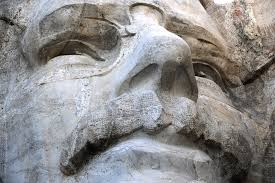
This analysis rests on the old Hamilton/Jefferson dichotomy, particularly views on the proper size of government. Washington supported the supremacy of federal power, crushing the 1794 Whiskey Rebels by force, in Western Pennsylvania. Jackson had an inconsistent record on federal power. He was tough on South Carolina’s refusal to collect a new tariff, threatening to send in the military, as well. Oddly, at the same time, Jackson, without a blush, sided with the state of Georgia in removing the Cherokee and other indigenous people west. Lincoln embraced the Union, waging war, over allowing to let the government fail. Last, Theodore Roosevelt grew the size of government, and placed the federal government as the defender of righting wrongs. Set aside were National Parks, tracts of wilderness and game preserves. TR, protected America’s natural beauty for American’s for all time. Not to forget consumer protections in food and medicine.

For now, I haven’t gone beyond those four individuals, but with that premise as a guide, how do 20th, and 21st Century presidencies stand up to analysis?

Like Washington, Dwight D Eisenhower too, operated from a deep sense of duty. One of seven sons, Ike sought and received an appointment to West Point. A man of conviction, Dwight Eisenhower, as President, sent 101st Airborne to Little Rock, Arkansas to desegregate Central High School. Though not a progressive when it came to civil rights, he still enforced the law. And as a side note, Ike promoted the Federal Aid Highway Act of 1956, creating America’s first interstate freeways system. This piece of legislation came about from Ike’s early days in the army. In 1919, Lieutenant Colonel Eisenhower commanded a cross-country convoy of Army vehicles, Atlantic to Pacific, spending more time pushing rigs out of the mud than making forward progress. A lesson he never forgot.

A child of affluence, John F. Kennedy had to overcome considerable health problems and the expectations of his prominent father. Like Theodore Roosevelt, or Franklin Roosevelt, for that matter, Kennedy spent a lot of his youth ill, and hospitalized. Besides, “Jack” wasn’t meant to be the presidential nominee from the Kennedy clan, it had been his older brother, Joe Jr., his father’s first choice. Sadly Joe Jr. perished in a secret mission when his aircraft exploded over England in 1944. JFK, too, had nearly lost his life in the South Pacific, but survived, inheriting his father’s ambition.

After a brief stint in the Senate, Kennedy faced off against Richard M. Nixon for the White House. Prevailing in the 1960 contest, with his father’s sponsorship, JFK entered office and soon faced down Soviet aggression. This young president weathered a thirteen-day crisis when the Russians were detected building IRBM missile sites in Cuba. The Kennedy Administration successfully negotiated a stand down to Soviet aggression. This President, despite his medical ailments, and injured spine (from the war) most certainly fulfilled his father’s purpose.

As had Lincoln before, Bill Clinton and Barack Obama promoted opportunity. Both men rose from modest beginnings, and possessed keen minds. Clinton had been a Rhodes Scholar, and Obama a constitutional lawyer. Both men pushed for public health insurance, and the Dreamers Act protected children of Mexican nationals providing opportunity for education. Clinton was the first president to address the plight of LGBTQA in the military, (the first chief executive to utter those words). 

And not to be forgotten, opportunity was heavily woven into LBJ’s Great Society objectives.

As for Jimmy Carter, duty seemed to shape his administration. After Nixon’s scandals, and Gerald Ford’s presidential pardon, prospects dimmed in 1976 for the GOP. As president, Carter labored long to warn Americans about dependence on fossil fuels, appearing on television to discuss America’s malaise. However, the country had no interest in belt tightening, and Carter found himself replaced by Ronald Reagan. 

Reagan, HW Bush, and George W Bush are interesting commanders-in-chief. All three were nice, decent men, as well as patriots. A Navy man, Bush senior flew in the Pacific in WWII. Young Bush showed leadership in the aftermath of 911. However, in comparison to the four presidents in my programs these gentlemen aren’t as easy to label. The three were financed by large-monied interests, oil producers, and powerful lobbyist to lift regulations on business. In an interesting side note, Reagan’s own favorite president had been the 30th, Calvin Coolidge. Silent Cal once stated, “The business of America is business,” and Reagan felt the same. 

Each individual brought a unique imprint on the presidency. Extending federal power, or paring down central control. Life experiences shaped the character of each administration. Current President, Joe Biden looks out for middle and working class Americans, as he was raised in that community. Biden, looking out for the rest of us pushed the infrastructure bill and succeeded in lowering health care and drug costs for all Americans.

The last guy made it his duty, purpose, will, and opportunity, as cover for lining his own pockets and launch a coup against America.

Just saying.

Gail Chumbley is the author of the two-part memoir, River of January, and River of January: Figure Eight. Chumbley has also penned two plays “Clay,” concerning the life of Statesman, Henry Clay, and “Wolf By The Ears” an examination of racism and slavery in America.

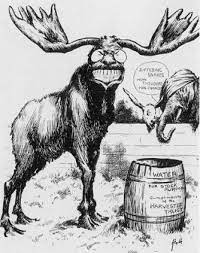
Bull Moose

The only thing new in the world is the history you don't know.  Harry Truman

The story began with a promise. Following his electoral victory in 1904, Theodore Roosevelt vowed to the public he would not run again in 1908. Assuming office in 1901, following the death of William McKinley, then Vice-President Theodore Roosevelt could have run in ‘08. But he had made that promise. 

Selecting an heir, TR tapped the occupation governor of the Philippines, William Howard Taft. TR believed he could happily step aside and pursue private interests with Mr. Taft in the White House. Taft did not want to be president, but his wife did. Though preferring a seat on the Supreme Court, Taft soon caved to his wife and accepted TR’s offer. 

Reform and good government played a large part in Roosevelt’s administration. He challenged unfettered capitalism, pushing for regulations of railroads, and breaking John D. Rockefeller’s stranglehold on the oil industry. One of Theodore’s paramount issues was preserving America’s treasure trove of national parks, and wilderness areas. 

TR loved the West and wished to regulate development where it wasn’t needed. After completing his term, and Taft safely elected, TR went on safari in Africa with one of his sons. By the time Roosevelt returned he learned things were not to his liking in Washington. Taft had made decisions, and endorsed policies Roosevelt had opposed during his administration. 

In short, Taft had the audacity to run his own administration. 

A big issue of contention was conservation of lands and natural resources. Unlike TR, Taft opened up Alaska’s Chugach National Forest to coal mining. Worse, Taft fired TR’s man in the Forest Service, Gifford Pinchot, a spokesman for public land as recreational for the people. Suffice it to say this, and other disputes turned ugly.

The 1912 campaign season began with TR’s new third party, the Progressive or Bull Moose Party. William Howard Taft also announced his run for a second term for the GOP. New Jersey Governor, Woodrow Wilson, received the Democratic nomination in Baltimore. 

Of course the Republican Party split between Republican conservatives, and the Progressives backing Roosevelt. And Wilson became the 28th President of the United States.

What does that moment of time portend for today? Certainly a major Republican split between traditional and reactionary members is in the offing. Much like TR’s progressive agenda, and Taft’s middle-of-the road-conservatism, GOP voters are going to have to decide. 

Clearly this same party is sliding into another major split in 2024. Is neofascism the preference of today’s organization? That one announced candidate has another term coming, and has made plenty of promises too. Will middle of the road conservatives tone him down and redeem the party in their own image? Maybe. But for today the smart money is on that 80-year-old moderate incumbent.

Gail Chumbley is the author of the two-part memoir, “River of January,” and “River of January: Figure Eight.” Chumbley has penned two historic plays, “Clay” about the life of statesman Henry Clay, and “Wolf By The Ears,” exploring the the beginnings of slavery and racism.

gailchumbley@gmail.com

Peer Review #1

Marines manned numerous doorways along the wide hallway, as clusters of tourists wandered through colorful rooms. Upstairs the President listened to the public commotion with satisfaction, not for the house, not for the job, which, in truth, had become tiresome, but for the knowledge he could drop down and set all their bourgeois hearts aflutter. 

After a moment, he made his decision, slipping down an interior stair case, stepping into the Blue Room.

As his hands automatically fluffed his hair, the President sidled up beside a class of wiggly school children snapping cell phone pictures.

“And where are you from?,” the president teased with pleasure, anticipating an excited response. He half closed his eyes, and paused, waiting for the gratifying answer.

But he heard nothing.

Bemused, the President opened one eye, then the other. The chatty children paid him no mind, in fact were moving away, following their guide into the hallway.

“Wait,” he found himself calling. “It’s me, your President. I’m here.”

He repeated, “The President of the United States.”

But the children didn’t hear. He remained alone in the Blue Room, his hair acceptably coiffed.

No further tourists entered, though dozens drifted past the doorway. He didn’t understand and he thought very hard, seeking a rational explanation.

It was at that moment that he heard a voice, quite close, and quite annoyed. 

“Am I to understand you are a New Yorker?” 

The President wheeled around toward the sound. Before him, no more than an arm’s length away stood a mustachioed gentleman, wearing pinz nez spectacles, sporting a shiny top hat. The man’s eyes blazed behind the thick round lenses, and the astonished President detected a trickle of cold sweat trace down the back of his thick neck.

“I say, are you, or are you not, a New Yorker?” The stern man spoke in a nasally, patrician voice.

“Ahh. How did you get in here,” the President stammered. “Where is my secret service protection?”

“Supercilious pup,” the man in the top hat snapped. “They tell me that YOU are from New York, and are president! A common side show huckster, President.”

The President, though alarmed, replied reflexively, “I’m in real estate. I . . .made my fortune in New York real estate.” Only the muffled din of passing tourists kept the President from panic.

“Real Estate!” The man in spectacles scornfully shouted. “I’d say you are just another scoundrel from the wealthy criminal class. In New York, swindlers like you are a dime a dozen. I made a career of exposing rascals like you.” 

The man, attired in a three-piece suit, a watch fob draping his ample waist, bore a deep scowl. “And you found your way into this office of trust. Intolerable.”

Though bewildered, the President, unaccustomed to such personal insults, felt his pique rising. “I was elected President by the largest margin in American Hist . . .”

“Poppycock,” the specter interrupted. “It is my understanding the decision rested upon a mere tilt in the Electoral system, and that outsiders interfered to make certain of your victory.” 

The strange visitor moved closer. “I’d say that you are a compromised pawn of foreign meddlers, and give not one damn for the American people.”

At this point the President had heard enough, and attempted to move his legs. He wanted very much to escape the Blue Room, but his feet remained rooted. 

“I have important things to do, you need to go,” the President’s voice trembled, trying to sound more confident than he felt.

The apparition narrowed his intense eyes, and took another step toward the unnerved President. 

“I claim more authority to this revered House and Office than your mercenary greed could ever comprehend. You belong with Tweed, Plunkitt, Fisk, Conkling, and the rest of New York’s good-for-nothings. Dishonor has followed you to the Presidency, what, with your womanizing, graft, and unsavory business connections.” The fierce apparition fixed an intense, menacing gaze. “You do not belong here, nor your parade of lackeys and opportunists.

The buzz of foot traffic grew louder, and when the President again glanced toward his unwelcome visitor, he found him gone, the Blue Room empty.

Gail Chumbley is the author of the two-volume memoir, “River of January” and “River of January: Figure Eight,” both available on Kindle.

Hard copies are available at http://www.river-of-january.com


Earned Wall Space

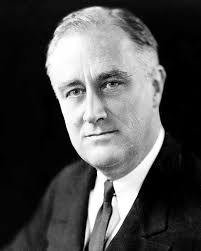
Poking around the basement in my mom’s house I unearthed a framed black and white portrait of Franklin Delano Roosevelt. The picture had been in a stack with other effects from one set of grandparents or the other. Certain this pic would probably end up in a dumpster, I packed it in my suitcase and brought it home. Our 32nd President is on display among other WWII pieces I’ve collected over the years.

What was it about Roosevelt and his times, that earned him premier wall space during the Depression and war years? Today the idea of commemorating a political leader with a  wall display seems odd and quaint.

So again, why did my grandparents include FDR in their home decor?

Admiration may be one reason. FDR appeared bigger than life. The man seemed to have it all: looks, money, and a pedigree that stemmed back to the early Dutch in America. His distant cousin, who also acted as his uncle-in-law, Theodore Roosevelt, still loomed large in American memory. That Franklin Roosevelt wished to carry on the tradition, especially in a time of economic collapse felt assuring.

The laissez faire policies of previous Republican administrations made for widespread fraud, especially on Wall Street. The 1920’s had been a heady time of speculation on the Dow, with banks making reckless loans on high risk investments. When the frenzy crashed and burned in October of 1929, the sitting Republican President, Herbert Hoover, suffered all the blame.

That fact raises another strength of President Roosevelt. The public trusted him. While autocracies generated “cults of personality,” Stalin, Mussolini, and Hitler, this candidate earned his office promising America a “New Deal.” He assured the country that they had not failed, the system had forsaken them, and as their new President he meant to correct those abuses.

The choice to hang Roosevelt’s portrait came from genuine respect, not fear or blind partisanship. The people elected FDR because he meant to be of use to all the American people.

This President brought energy and purpose to the Executive Branch reaching Americans personally in their daily lives. New Deal legislation quickly translated into action with legions of new programs all designed to get folks working again. The public felt a connection to the White House that perhaps hadn’t existed before that time. Mail arrived in daily landslides, mirroring FDR’s earlier political victory. Most letters requested a “hand up,” not a hand out, and that any financial help would be repaid to the government. R.E.P.A.I.D!

FDR brought electricity to rural America, lighting the night and powering radios that broadcast his Fireside Chats. Bridges, schools, and other large engineering projects connected the nation as never before. It’s a sure thing your town or city still bears an imprint of FDR’s time in office.

So it is with respect and gratitude that I have placed Franklin Delano Roosevelt on my living room wall. He set the bar for what a Chief Executive ought to be.

And after all, it’s a family tradition.

Gail Chumbley is the author of the two-part memoir, “River of January,” and “River of January: Figure Eight.” Both titles are available on Kindle. Chumbley has also authored three historical plays: “Clay” on the life of Senator Henry Clay, and “Wolf By The Ears,” concerning the evolution of racism and slavery in America, and Peer Review, where four long ago presidents speak with 47.

gailchumbley@gmail.com

Armageddon

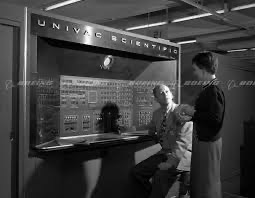
Univac

Remember that episode on Star Trek, “A Taste of Armageddon?” The crew of the Enterprise encounter two planets at war, waged virtually by computer. Simulated clashes determine, by mutual treaty, real fatalities in execution chambers.

That one aired in 1967. 

Technical advancements, devices to improve life, can make tasks so much easier; and these same advancements can just as easily evolve into weapons of destruction. Glidden’s barbed wire made for cheap fencing for farmers. Carnegie’s steel provided the ribs for building upward in cities, and outward on rail tracks. Rockefeller’s oil meant cheap kerosene for lamps to light up the dark. However, these same improvements found new uses when converted to weaponry:concertina wire draped across trenches, heavy armaments, explosives, and gasoline powered vehicles. World War One demonstrated both the might, and bloody futility of modern, industrialized warfare.

The nature of Twentieth Century warfare had literally been forged from 19th Century industry, which in turn gave rise to an assembly line of annihilation.  

How does weaponized technology apply to now? 

The world depends on computers. From Univac, to Commodore 64, to the MacBook, we rely on computers much as we rely on air. The benefits of cyber technology keep us linked together through social media, and new apps that innovate daily. But the dark side of this ever-evolving technology, poses significant danger, and has been weaponized effectively to undermine the stability of America.

As I write, misinformation, via the internet, has contributed to the deaths of nearly one million Americans, and climbing. Troll farms in Russia ruthlessly still hack away, under the guidance of former KGB agent, Vladimir Putin. Russian meddling in our 2016 presidential election, spewed misleading propaganda enough to tip the scales in the outcome. Though developed through advanced mathematics, and supported by other hard sciences, cyber criminals have succeeded in convincing some Americans not to believe in scientific facts. What an irony.

Our enemies have found their way in, a means to weaken and destroy the country from the inside. Through misinformation campaigns and network infiltration, criminals shut down Colonial Pipeline last May, and universities, government agencies, infrastructure systems, and businesses who are under constant threat of being held hostage–paying millions in ransom to rescue their business organizations.

The indispensable nature of computers, like this one in my lap, is a useful, vital tool. But like the technical innovations of the 20th Century, these advances foreshadow danger; cyber space as deadly as a machine gun, and as real as poison gas. Factor in nations around the globe still vying to destabilize America—especially chief competitors, Russia, and the China. 

Nothing has changed since 1914, aside from more sophisticated weaponry. Fifty-four years after Star Trek aired “Armageddon,” computer-generated death is as real as the death toll in the trenches. Threatening fingers typing the right strokes on a keyboard produces chaos and harm from those who wish us ill.  

The Unforgivable Curse

Many of us have read JK Rowling’s Harry Potter books and/or watched the films. The author created a wondrous world of spells, incantations, and even included law and order via three unforgivable curses. 

There are guardrails in this tale, and a bit of a messiah storyline. Harry willingly sacrifices himself, as had his parents and many others before. However, the “Boy Who Lived,” does, and returns to fight and vanquish wickedness. 

Love, too, permeates the storyline, and the righteous power of good over evil. 

But that’s not my take.

As a career History educator I came to a different conclusion; Harry Potter told me that failing to understand our shared past can be lethal. And that was the metaphor I preached to my History students.

Harry rises to the threat and defends all that is good and valuable in his world. If he didn’t, Harry could have been killed and his world destroyed.

It’s so apropos at this moment in our history to grasp our collective story as Americans.

Honest differences within the confines of our beliefs is one thing. Obliterating the tenants of democracy is quite another. 

Americans cannot surrender our country to this would-be dictator, the things that have cost our people so dearly. Freezing soldiers at Valley Forge did not languish to enable DJT to trademark his brand to hotels, steaks or a failed university. The fallen at Gettysburg, and the suffering in Battle of the Bulge was not to pave the way for DJT to get us all killed from a ravaging plague. The girls who perished in the Triangle Shirtwaist Fire, the miners murdered in the Ludlow Massacre, or humiliated Civil Rights workers beaten at the Woolworth’s lunch counter was not for Donald Trump to validate racism and sexism and undo labor laws. 

He doesn’t know our nation’s history, and as George Santayana warned us, we are condemned to sacrifice all over again. 

Vote. 

Gail Chumbley is the author of the two-part memoir, “River of January,” and “River of January: Figure Eight.

gailchumbley@gmail.com