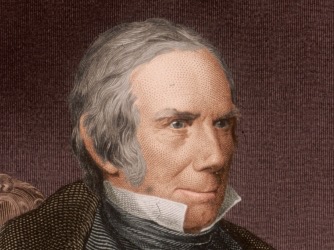
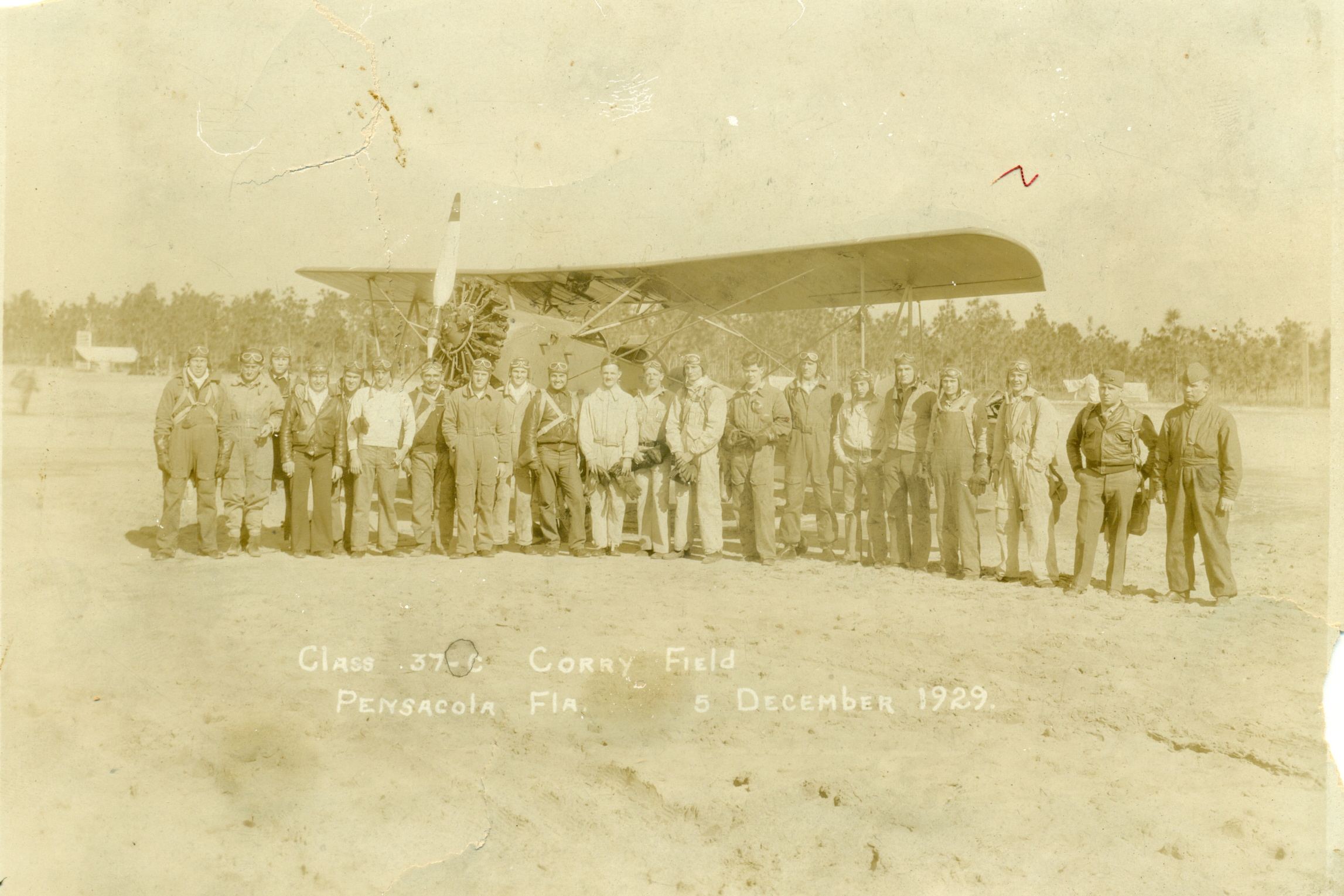
There is plenty of blame to share declaring independence with slavery intact.
#1776 #TriangularTrade #MiddlePassage #LivesForProfits
#Mid
There is plenty of blame to share declaring independence with slavery intact.
#1776 #TriangularTrade #MiddlePassage #LivesForProfits
#Mid

His political career was none too stellar, except for that one moment he seized history.
This dapper-looking fellow is President Chester Alan Arthur, (1881-1885). Arthur was considered a dandy, pursuing an opulent lifestyle filled with fine food, drink, and expensive suits; largely paid for from the public trough.
Arthur came of political age in the post-Civil War Gilded Age, a world of political machines, graft and corruption. When a supporter helped their man get elected, position and profit rained down in return.
This dubious system functioned rather well for victorious elective candidates through countless election cycles. The political universe of Chet Arthur and his band of Republican cronies became expert skimmers from the public trough and the public trust. In the Republican Party this faction was christened Stalwarts, and Stalwarts liked their well-oiled approach to public service very much, indeed.
Arthur, himself, had been named Collector for the New York Customs House during the Grant Administration, and money from this lucrative Customs House flowed to Arthur’s friends and political operatives. His particular patron was the powerful New York Senator, Roscoe Conkling, a master in Senate handiwork.
Opposing this Old Guard of money changers were the crudely titled, Half-breeds. This oddly pejorative moniker (too common in that era) represented a growing group of reformers in the GOP who aimed to clean up the corrupt practice of patronage. Senator James G. Blaine of Maine believed government jobs should be based on merit, not connections, and Blaine promoted the use of Civil Service Exams. In other words, Half-breeds endorsed qualified government workers over payola for their friends. The Stalwarts were horrified.
In the 1880 Presidential Election the Republicans, in a heated convention, split the ticket with candidates of both wings. For President, James Garfield, a Half-breed, and for Vice President, Stalwart, Chester Arthur, crony of Sen. Conkling. The Party felt it had fused the differences between the two factions, and the fat cats believed they could continue to prey. Then came the Garfield assassination.
In July, 1881, President Garfield, a distinguished Union general, and a former member of the House of Representatives, appeared at the Baltimore and Potomac Rail Station in Washington DC. In the crowd waited Charles Guiteau, an unhinged, office-seeking Stalwart. Guiteau approached the President in the crowd, shooting him at close range. Garfield died two months later from his infected wounds.
Guiteau had shouted, after opening fire, that he was a Stalwart, and would now get a government job. He didn’t. In fact, all Guiteau received was a date with the hangman, carried out in June, 1882.
And what of Chester A. Arthur? He assumed the presidency in a charged atmosphere of national grief. So changed was Arthur, that he promoted passage of the Pendleton Act of 1883. This act created the Civil Service Commission, and mandated written exams for classes of government jobs. The Stalwarts were horrified, but politically could do nothing. Garfield had been made a martyr for reform, and Arthur took the high road, making that reform real.
Oh, and by the way, the Mugwumps were another reforming splinter of the GOP. So appalled by the legacy of bribery and corruption, they bolted the party in 1884 for Democrat, Grover Cleveland.
Wonder how the 2020 Election will reshape the current GOP?
Gail Chumbley is the author of the two-part memoir, “River of January,” and “River of January: Figure Eight.” Both books are available on Kindle.
gailchumbley@gmail.com
His was a storied life of potential and opportunity.
With damn good luck and perseverance Mont Chumbley forged a career in the earliest days of aviation. And that he became a pilot at all stood in stark contrast to his rustic, Virginia beginnings.
Born in 1909, young Mont spent his childhood on a farm more 19th Century than 20th. As the eldest son of the eldest son, Mont, as a matter of custom, was expected to follow his father as the next heir of the operation—as had scores of Chumbleys in prior generations. But to the patriarch’s displeasure, the son showed little interest in tending fields.
Instead young Mont discovered other passions; school, sports, girls, and the excitement of town. This lack of enthusiasm for farming generated enough animosity, that the boy had to run away from the farm in 1924.
Mont was 14.
Following a horrifying ordeal in the depths of a West Virginia coal mine, the shaken young teen caught a train back to Virginia, but not the farm. Rather he found sanctuary in his aunt’s opulent home in town. Grateful for his unexpected deliverance, Mont blossomed, graduating from Pulaski High School in 1927, lettering in football and class valedictorian.
Through his academic and athletic achievements, Mont’s opportunities appeared endless, and he knew exactly what he wanted.
While still a little tyke Mont had witnessed a barnstormer set down a biplane in nearby fields. Hearing the roar of the plane’s engine, glimpsing the spinning prop as the aircraft winged above the fields, Mont discovered his calling. Inspired with this childhood memory, Mont set his cap on entering the United States Naval Academy in 1928.
However, he couldn’t crack admission exams, so his hopes for Annapolis vanished, leaving Mont only one option–enlisting as a seaman recruit.
As straightforward as that path appeared, the young man ran into an immediate hurdle; his father had to sign his enlistment papers, and that the old man would not do. If the heir did not want to farm, the father would not help.
This family impasse did not resolve until Mont’s mother stepped in and threatened her husband with legal action. Mont’s mother, sure to her word hired a lawyer and prepared to seek consent from a judge. The father stunned by her defiance knew he was beat, and reluctantly endorsed his son’s enlistment papers, allowing Mont to enter the US Navy in 1928.
A hardy boy, the rigors of Naval training proved no problem for Seaman Recruit Mont Chumbley. He easily adapted to drilling and training, initially pleased with the life he had chosen. What he didn’t expect was his first assignment below deck aboard a Navy collier, (coal-burning vessel). Shoveling endless black filth wasn’t what he had envisioned. Mont aimed for the sky.
The Navy of the 1920’s had no regulations excluding enlisted men from flight, but still the odds were daunting. How the young man earned a spot in Naval aviation beggars belief. Through a series of chance encounters, Mont soon served as a babysitter for the Commander of Schools at Norfolk Naval Station. Through tending this officer’s children, Mont developed a son-like attachment to the Commander, and felt courageous enough to ask for help. That single connection made all the difference, and Mont, now called “Chum” by his fellow enlistees, progressed to flight elimination exercises at Hampton Roads.
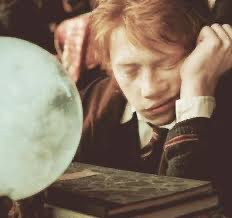
The short version of this tale is Chum survived flight-elimination trials competently handling amphibious Curtiss NC4’s. The next year, he and his compatriots, Class 37C, found themselves soaring over the Gulf in Pensacola, this time in wheeled aircraft. Later his class received their first assignment, shipping out to Coco Solo, Panama.
Life in the Canal Zone was a jungled universe of its own. Military bases dotted the nearly 50 mile stretch of canal, in a mix of both Naval and Army installations. Coco Solo, anchored by the Navy, commanded the Atlantic side, and trained largely in T3M’s, Martin Torpedo Bombers. In simulated war games, the pilots descended until parallel with the sea, then Chum and his fellow pilots would release virtual “payloads” into surface vessels.
In later interviews, an elderly Chum expressed his reservations about the maneuver as far too hazardous for aircraft.
Suddenly, in 1933, Chum up and decided to leave the Navy, though he remained in the Reserves. When asked why, after so much trouble to join, he admitted, “I didn’t much like taking orders.”
Shipping an old Chevy he had purchased in Panama, Chum steamed into New York Harbor in May, 1933. Optimistic and eager to find work, he paid calls on various air carriers from Eastern Transport to National Airways. But no one was hiring. No one. The country and the world, deep in Depression had nothing to offer the young pilot.
Disappointed, Chum rumbled out to Roosevelt Field on Long Island, for a chance meeting with a figure who would change his life.
Howard Ailor, sales representative for Waco Aircraft, took a shine to the young pilot. Repeating the same gloomy job forecast Chum heard elsewhere, Ailor counseled him to make his own luck. The silver-tongued salesman, said what Chum needed was his own equipment, and talked him into buying a brand new Waco C cabin biplane.
And that purchase transformed young Mont’s life.
Next time the Transcontinental Air Race.
Gail Chumbley is the author of River of January, and River of January: Figure Eight. Both titles are available at http://www.river-of-january.com and on Kindle.
gailchumbley@gmail.com

At the start of the Kennedy administration, back in 1961, the story goes that JFK invited in a group of historians to the White House. The new president wanted to chat. What Kennedy asked these scholars was what elements insured a great presidency, and the answer from these learned gents was simple: a war.
Kennedy’s own war experiences in the South Pacific, and the ensuing menace of nuclear armageddon left JFK unconvinced. America’s situation on the world stage was just not as simple as war and peace. The lessons of Nazi appeasement, especially by his own father, Joe Kennedy, compelled the new president to draw a hardline against Communism, and check its growth around the world.
Caught in the eye of that dilemma; to appear tough, while preserving the lives of young Americans, Kennedy attempted a middle ground. Reluctant to fully commit US forces in Southeast Asia, he also engaged in discreet negotiations with the Russians to settled the Cuban Missile Crisis. As a wounded veteran himself, JFK pursued a cautious and flexible foreign policy.
Not all presidencies have demonstrated such restraint.
President Madison succumbed to war cries after mediation with Great Britain looked to have collapsed, sparking the War of 1812. In reality the English had agreed to cease much of the abuse that brought about the war, before Madison’s declaration. Sadly news of accommodations from London did not arrive in time, and two futile years of warfare ensued. At the end of hostilities the United States made no measurable gains from the fight. The only red meat served came compliments of Andrew Jackson in his victory over the British in New Orleans. The war had been over two-weeks by the start of that battle.
Most agree Madison is better remembered as the “Father of the Constitution,” than for his lackluster presidency.
“All of Mexico” resounded across young America in 1844. A toxic, but powerful combination of racism and hubris plunged America into another conflict-the Mexican American War. An unapologetic new president, James K. Polk, publicly stated in his campaign he would lead America into war, though he meant against Britain in his “54, 40, or Fight” slogan. Waged from 1846 to 1848 Polk ordered the invasion of Mexico, and defeat of the Mexican Army.
A third war with the British never materialized, as the US opted to negotiate claims to Oregon. Though not gaining all of Mexico, America still claimed Texas to the Rio Grande, the southwest region known as the Mexican Cession, and all of California. In the aftermath of war, slave holders spilled westward in search of fertile new lands. In turn, national tensions escalated, both politically, and morally, erupting into Civil War by 1861.
No other President extended American power, more than William McKinley, and no president was less eager to do so. As a young sergeant in the Civil War, McKinley had witnessed the truly horrific bloodbath at Antietam Creek, surviving the bloodiest single day of the Civil War. By the time of McKinley’s election in 1896, he faced a growing threat of a new war with Spain, this time over the Spanish possession of Cuba. Events careened out of control when a Navy gunboat, the USS Maine, sent by McKinley to protect American sugar interests, exploded in Havana Harbor in February, 1898. The disaster of The Maine forced the President’s hand, and he asked for a declaration of war from an enraged Congress.
Though fought only from April to August, this conflict gave America island possessions from the Philippines to Puerto Rico. The United States had now officially entered the race to become an imperial power. This war extended fueling ports for the growing US Navy from across the Pacific, to the Caribbean. New markets and resources for American business opened up a fortune in profits. Filipinos, in particular, were left unhappy, switching from Spanish overlords to American authority. A bloody 3-year insurrection, fought in dank jungles, exploded, taking the lives of some 4,000 American combatants.
Sadly, in less than twenty years, the world-wide lust for colonies and riches brought America into the trenches of World War One. Decades-long rivalries for land and resources, particularly by Germany and Austro-Hungary, triggered a ruthless international competition that proved to history how industrialization could bleed young men. Not surprisingly this “war to end all wars” did not benefit Commander in Chief, Woodrow Wilson. In the end, the struggle killed him too.
As World War One ushered World War Two into being, World War Two led to the escalating tensions of the Cold War. First Truman in Korea, then Lyndon Johnson into Vietnam. Perhaps as stepchildren to Imperialism and the Cold War, GW Bush’s blunder into Iraq has assured his low position in history.
The inescapable truth, Mr Trump, is that war does not make a presidency. With the exceptions of Abraham Lincoln, Franklin Roosevelt, and to some degree, Harry Truman, war has sullied more administrations than enhanced. Blind militarism may titillate your base, but you’re a damn fool to believe you can cheat history. Wars take on a life of their own, and as President Kennedy cautioned, “Those who foolishly sought power by riding the back of the tiger ended up inside.”
Gail Chumbley is the author the historic play, “Clay,” and the two-part memoir, River of January, and River of January: Figure Eight. Both books are available at http://www.river-of-january.com or on Kindle.
gailchumbley@gmail.com
River Of January and River of January: Figure Eight available on Kindle till Sunday the December 8th.


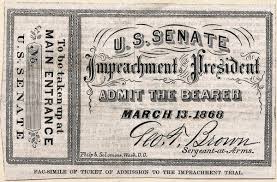
On a cable news program a while back a guest argued that the impeachment of Donald Trump resembled that of 19th Century President, Andrew Johnson. Though the position may be true to the extent that Johnson was under attack from the opposition party, the events that brought about the trial did not center on presidential corruption.
Abraham Lincoln had invited Tennessee Democrat, Andrew Johnson, onto his 1864 ticket as a conciliatory gesture toward the South. As Senator, Johnson had remained staunchly loyal to the Union, though Tennessee had been the final state to secede in 1861. Lincoln made clear with this VP choice that he intended to deal judicially with erring brothers below the Mason-Dixon Line.
During the final year of the war, a philosophical rift widened between President Lincoln and the Radicals in his party. Lincoln believed that Southern States had only attempted to secede, but had failed in that effort, and General Lee’s surrender put paid to the attempt. Since secession had been thwarted, Lincoln argued his pardoning power gave him authority to deal with Confederate leaders.
Countering that argument were Radical Republicans, led by Thaddeus Stevens in the House, and Charles Sumner in the Senate. This faction insisted that when Southern states seceded, they had, indeed, committed political suicide. This, Congress insisted, granted them the power to shape post-war policy.
Per the Constitution, Article One admitted new states.
The mounting dispute between the Executive and Legislative branches erupted in mid-April of 1865, when Abraham Lincoln died at the hands of an assassin. Andrew Johnson inherited the power struggle between the Presidency, and the Congress.
When it came to interpreting the Constitution, Johnson not only agreed with Lincoln over Reconstruction policy, but was also a traditional ‘strict-constructionist’. In other words, Johnson’s understanding of the law did not reach past the Twelfth Amendment. Johnson viewed the 14th and 15th Amendments as beyond Congress’ legal authority.
Vetoing many Radical bills, including legislation for the new Freedmen’s Bureau, Johnson refused to enforce civil rights for freed slaves. Still, as fast as Johnson vetoed such Republican bills, Congress overrode him.
Born in poverty, and illiterate most of his life, Johnson’s malice also included the Planter aristocracy. Keeping somewhat to Lincoln’s view, Johnson enjoyed nothing better than reading letters from Southern leaders pleading for his pardon.
Rubbing nearly everyone the wrong way, Andrew Johnson plainly was not a savvy politician, and became an ever increasing nuisance to the Radical majority. The Republican Party fully intended to punish the white South, and protect the lives of Freedmen.
The inevitable clash came when Congress passed the “Tenure of Office Act” in 1867. This legislation aimed to tie the President’s hands by prohibiting the removal of any members of Abraham Lincoln’s cabinet. Armed with his own knowledge of the Constitution, Johnson knew this bill didn’t pass legal scrutiny, and promptly fired Secretary of War, Edwin Stanton.
The House immediately fired back with eleven articles of impeachment.
Once the inevitable impeachment reached the Senate for trial, equivocating Senators felt the heat from their Radical colleagues. Various hold-outs, uncomfortable with the flimsy case, proved difficult to sway. The central sticking point was that the Act was no more than a trap for a President who refused get out of the Radical’s way. To one Kansas Senator, Edmund Ross, the whole episode was an undeniable setup. Ross believed that there was too much noise, too much turmoil, and not enough evidence.
Sensing reluctance in the ranks, the Republican majority bought more time by taking a ten-day delay on the vote. Members like Ross and other hesitant Senators, were threatened with investigations for bribery if they didn’t toe the line. However, neither stalling, nor threats changed any minds. In the end the vote to convict failed, 35-19, not the 2/3 majority required by law.
Andrew Johnson was broken by the ordeal. He quietly waited out the remainder of his term, replaced by Ulysses S Grant in 1869. (Johnson had been correct. The Tenure of Office Act was found unconstitutional in 1926).
That Andrew Johnson proved unequal to the task of governing goes without question. He was bigoted, petty, and stubborn. But this man was not corrupt, and his impeachment was more a product of tragedy, turmoil, and a power struggle. No overseas hotels, no bowing to foreign dictators, no obstruction of subpoenas. No armed invasion of the Capitol.
Update: Never before has a president been impeached twice. This time Republican obstructionists claim no moral high ground at all, just a gutless blind allegiance to a flawed cult figure.
Gail Chumbley is the author of the two-part memoir, “River of January,” and “River of January: Figure Eight.” Books are available at http://www.river-of-january.com and on Kindle. For more email Gail at gailchumbley@gmail.com

It been over thirty years, but the memory is vividly clear. I leveled a stereo needle onto a record, then an ethereal voice crooned,
“Heavenly shades of night are falling
It’s twilight time
Out of the mist your voice is calling
‘Tis twilight time . . .”
All at once a bedroom door blew open, and my grandmother waltzed into the living room, cigarette balanced in her fingers. She smiled at me as she swirled. “Your grandfather and I danced to this,” she explained, and glided off in her reverie. I watched, amused, enjoying my grandmother’s response to the music, wondering why the melody had her behaving so out of character.
A similar, unexpected episode occurred a few years later, this time concerning my daughter. It was afternoon, after school, when I heard the front door open, and little feet tromp down the hall. While calling out, how was your day? her bedroom door slammed, and deep wailing erupted from her bedroom. Alarmed I opened the door, and found her face down on her bed. She could hardly speak, issuing huge sobs, so I rocked her until she settled down. When I asked her what happened, what upset her, she gasped out that they were studying Native Americans in class, and watched the film, “I Will Fight No More Forever.” This movie depicts the Nez Perce Wars in Idaho. And what had set her off was the patent injustice suffered by America’s first peoples. She had encountered a long ago atrocity, and intuitively understood the grave wrong doing. She was only eight.
Two distinct generations impacted by the power of music and film.
In John Vogel’s superb new book, A Spiritual Exploration Of The Literary And Performing Arts, Volume I: Philosophy, I found some answers. In a lively, brief 100 pages Vogel literally defined magic.
A seeker of truth, the author methodically offers a case for the transformative power of the Arts; how film, the stage, and music calls to us, elevates our spirits, and imparts universal lessons. In clear language Vogel asserts persuasively that, as human beings, we are made better by embracing the sentiment intended for our souls.
This book takes on the task of explaining inspiration through the works of the masters. Vogel considers standards such as the musical Show Boat, assorted characters from Shakespeare, the Greek poet, Homer, and even Jimi Hendrix to provide object lessons. Each example is fleshed out to illuminate the dynamic power of performance- a realm where imagination, intuition, morality and spirituality reside. Particularly poignant to this reader was author’s discussion of a scene from the film Gandhi, and its lesson on personal redemption.
Lively and fascinating, A Spiritual Exploration is also a cautionary tale. Vogel reminds us through the performing arts that a lust for temporal power and wealth is spiritually lethal, as revealed in the tragedy of Macbeth. More timeless examples are offered reiterating that hate produces nothing of value, and worse restricts our humanity; the essential lessons of humility, reason, spirituality, and justice. Moreover, Vogel makes a persuasive case that the Arts are the guardrails of orderly society, imparting the message that through literature and music were a taught to be human.
This is a short read with a long title, made even weightier for the philosophy it imparts. As I read Vogel’s words I intuitively knew that he was right about the sublime power of the unseen.
A Spiritual Exploration is a work that speaks to the timeless and universal.
John Vogel’s book is available at:
Gail Chumbley is a playwright and author of the two-part memoir, “River of January,” and “River of January: Figure Eight.” Both books are available at http://www.river-of-january.com and on Kindle.
gailchumbley@gmail.com

This excerpt comes from River of January, the first volume of the two-volume memoir available on Kindle, and at http://www.river-of-january.com
Two weeks later, a nervous and sleep-deprived Mont Chumbley reported for flight elimination exercises. He joined 125 other candidates; smartly lined up on a long dock, facing the gray, choppy seas of Hampton Roads. From this windy spot would-be pilots underwent demanding instruction in ten-hour heats on various flight maneuvers. Day one: morning-takeoff, afternoon-landings. Day Two: mornings- turns, including the figure-eight, afternoon-climbing and descending turns—all in Curtiss NC4 seaplanes. Their instructors rated them at each step, either passing or failing, with no second chances. The pool of candidates became smaller with each roll call.
Feeling the pressure, the young sailor took special pains to follow protocol. Climbing around on wet pontoons fixed to the underside, Chum examined the biplane as it bobbed on the rolling water. He talked himself through each required procedure, so he wouldn’t overlook any step.
“Oil leaks? Negative,” Chum recited as he performed his pre-flight inspection. “Rudder locks off? Affirmative.”
He continued crawling around the aircraft until he was sure his check was thorough. After the meticulous exterior inspection, he settled into the cockpit.
“Controls? Check. Stick?” He jockeyed the stick left to right then up to down, “Check.” “Ailerons? He wagged the panels, “Check. Gauges?” He examined the calibrations closely. “Check.”
Concluding the pre-flight list, the student-pilot ignited the motor as another crewman propped the biplane’s propulsion blades, quickly, hopping back to the dock.
Chum, still repeating all he was taught, lifted the plane from the rollicking waves and then leveled the wings using the needle ball as he reached altitude. Momentarily surprised with the ease of his lift, Chum relaxed, in control of the little trainer.
“This isn’t that complicated!” the astonished young man marveled. The thrum of the engine seemed calming, and he could practically feel the buoyant pontoons below the fuselage.
“Flying makes sense,” he reflected. “Pull the stick this way, up, reverse the stick that way, down.”
A sense of wonder filled the young man. As if born to fly he intuitively grasped the mechanics. “Flight requires gravity, logic, instinct, and sound equipment.”
The Curtiss biplane read Chum’s mind, rising on a line, descending on an angle, turning on an invisible anchor point. The little aircraft did what he desired.
Of the 126 flight hopefuls, only nineteen succeeded— including Mont Chumbley. The washouts returned to Norfolk to ship out to sea, to labor on the hellacious coal burning tugboats or other maritime duties. Chum gratefully headed for warmer climates—flight training with his class, 37C, in Pensacola, Florida.
Thinking of Commander Seymour Chum had to smile, “Radio school would probably have been too difficult.”
Gail Chumbley is the author of “River of January,” and “River of January: Figure Eight.” Hard copies are available at http://www.river-of-january.com, and on Kindle.
gailchumbley@gmail.com

Amelia Earhart (left)
Skip the ad, and click to full size.
Enjoy!
Gail Chumbley is the author of the two-part memoir “River of January,” and “River of January: Figure Eight.” www.river-of-january.com Both books are also available on Kindle.

The supper club was cavernous. The Cocoanut Grove’s maître d’ cordially welcomed the couple and directed them through a tropical arbor of tall potted palms, sheltered under an enormous Bedouin striped tent. Moorish archways separated a dimly lit lounge from the contrasting bustling dining area and its polished dance floor. From a raised stage, a full orchestra engaged the swaying crowd with a smooth rendition of “South of the Border (Down Mexico Way).” Those not dancing strolled among the tables—greeting friends, laughing, and sipping their cock- tails. Intrepid photographers, dodging harried waiters and pretty cigarette girls, snapped photos of the diners.
Helen shimmered, gowned in flowing black silk, easily melding into her chic surroundings. Chum found himself, once again, bowled over by her beauty. “You take the cake, Helen,” he said, as he pulled out a chair for her. She gave him a puzzled glance as she sat down. “What I mean is,” he clarified, “how does a girl pick beach sand out of her ears in the afternoon and transform into a dreamboat by eight?”
She smiled. “It’s all in the face powder—covers up sand, salt, sunburn, bird droppings . . . the works. You know, Chum, with all this flattery, I think you ought to stick around more . . . maybe reconsider this employment idea.”
Chum disagreed by a shake of his head. “Helen, there are two things in this world I love. One is escorting you to nightspots like this one. And two—”
“Flying,” she finished.
“Right-o. And now that we have cleared up that little matter, would you like to dance with your husband? You see, dancing with you is the other benefit I get from nightclubbing. And I promise I will flatter you more. That’s one of the reasons I married you.”
Chum circled the table and drew back her chair. The bandleader gently snapped his fingers in a leisurely four count, the orchestra striking up “Moonlight Serenade” on the downbeat. A rich trombone solo beckoned the couple toward the floor, quickly accompanied by a melodic blend of clarinets and saxophones.
Chum clasped Helen around the waist, holding her close, her left hand in his right.
“Now this is a box step, honey,” Helen murmured. “Just do what I showed you and keep your eyes up. Don’t look at your feet. Feel the rhythm,” she coached.
“I’ll give it my best.” His eyebrows cinched together as he concentrated. After a few steps he grumbled, “I’d like to see you fly an airplane.”
When dinner ended, Helen leaned closer to Chum, and they quietly spun idyllic visions of their future. Out of the corner of her eye, Helen noticed a well-dressed gentleman making his way toward their table. She sat up.
“Chum?” inquired a tall, dark-haired, opened-faced man.
“Russell!” exclaimed a genuinely pleased and surprised Mont Chumbley. He hopped up, stretching out his right hand. “What do you say, Russell? What brings you to Los Angeles?”
Chum’s words rushed in his surprise. “Helen, this is Russell Thaw, an old friend from my air rac- ing days. Russ, this is my wife, Helen.”
Politely shaking his hand, her mind worked to place his familiar name. Thaw . . . Thaw. Why do I know that name?
“Please join us, Russell.” Chum gestured to an empty chair. “Would you like a drink?”
“Sure, but just for a moment, buddy. I don’t want to intrude on your evening.” Thaw smiled sheepishly toward Helen. “What is it you’re doing with yourself, Chum? Last I heard you were working for Lindbergh at TWA.”
“Quit,” he declared, chuckling. “Teeny Weenie Airlines wasn’t for me.”
Thaw smiled at his friend’s candid reply. But his expression quickly shifted, growing seri- ous. “You need to get back to New York, Chum. The sooner the better. Eastern Airlines is hiring. They’ve got a lock on airmail routes from the government, and Captain Eddie’s hurting for pi- lots. You would do well for yourself. That is, if you want to live back in New York.”
Chum’s relaxed expression sharpened at once. He sat up straighter. He took a long look at Helen, trying to read her expression. Turning back toward Thaw, he replied, “I heard something about that. So Rickenbacker’s honestly hiring? I’d heard he had his choice of pilots.”
“Eastern is still throwing out their nets, and you two”—his gesture included Helen—“should get going and visit the Eastern office. See, time matters. Once you make that seniority list, you’re vested—you are in. The clock is vital, here. Take my advice, Chum—it’s time to get on board, literally.”
Chum sat still for a moment, rolling his cigar in his fingers. He remembered the twelve-hour seniority difference that sent him to San Francisco when he worked at TWA. “You going to ap- ply, Russ? You sound like a pitchman for the company.”
“Naw.” Thaw laughed. I just came from New York, and it is the talk all over Long Island. I fly Harry and the rest of the family around now. We’re heading back day after tomorrow. It’s a good job for me.”
The old friends talked over drinks. Thaw caught Chum up on his life, and the two remi- nisced about long-gone days at Roosevelt Field. Their visitor finally looked apologetically to- ward Helen as he stood up to leave. “Sorry to have interrupted your evening, but it was lovely meeting you. Chum’s a lucky fellow.”
“No, no,” she assured him. “It was my pleasure. I’ve come to realize that my husband has made some awfully nice friends along his way.”
Chum smiled, pleased with her compliment. He stood and shook his friend’s hand in farewell. “Thanks, Russell. First, for coming over to say hello, and secondly, for the job advice. Tell Harry hello.”
“Sure will. It was swell seeing you again, Chum. Helen.” Thaw nodded her way.
The couple watched Thaw as he disappeared into the crowd, swirling around the dance floor. Chum spoke first. “Well, what do you make of that?”
“Make of which that? Running into Russell Thaw or the Eastern Airlines news? And honey, who is Captain Eddie? I’m a little in the dark.”
“Eddie is Eddie Rickenbacker. He’s a pilot and he bought Eastern Airlines a couple years ago.”
“Oh, right. I know who he is. The World War One ace. And I also know who Russell Thaw is,” Helen announced coolly.
“Okay, Helen.” Chum folded his hands, amused. “I’m listening. What’s the dope?”
“Well, it’s legendary. The rumors made the rounds backstage of almost every theater I played in New York.” She moved closer, lowering her voice. “Your friend’s mother”—Helen gestured the direction Thaw left—“was a dancer named Evelyn Nesbitt. And she was quite a no- torious girl—carried a real checkered reputation.”
Chum, surprised, leaned in to hear her better as the orchestra struck up new number. Helen continued. “So this Evelyn met and married a wealthy New Yorker, Harry Thaw.” Chum auto- matically glanced around looking for Russell, intrigued.
“Unknown to Thaw, though everyone else in New York knew, Evelyn had had this torrid af- fair with the architect who designed Madison Square Garden.”
“Jiminy Crickets! Russell’s mother, you say?”
“Uh-huh. True story, cross my heart,” she declared. “So, Thaw Senior finds out his wife’s not-so-secret past of catting around, and shoots the architect, dead as a doornail. Later, at his murder trial, the jury acquitted Thaw of murder,” Helen finished, looking at her husband.
“Holy mackerel, I’d never heard any of that before. Poor Russell. I sure can’t blame him for wanting to keep that story quiet. Wonder if the Guggenheims know?”
“The Guggenheims? You mean the New York Guggenheims? You’ve lost me, Chum, how do they figure?”
“Harry Guggenheim is the guy Russell flew out here. He’s the family’s private pilot.”
“Are you trying to tell me that you know Harry Guggenheim?” Helen sat back, astounded.
“He flies too, honeybunch.” Chum patted her arm. “Harry was another regular out at the field.”
Helen paused for a moment, then asked, “Do you know President Roosevelt?” She was only half teasing.
Chum threw back his head and laughed out loud. “He is a navy man—that much is true. But he likes boats. FDR doesn’t fly airplanes, as far as I know.”
“That’s a relief.” Helen smiled. “Don’t know what Eleanor and I would talk about.”
The couple then fell into a contemplative silence, busily weighing the evening’s tidings. Af- ter a few moments, Chum dispelled the mood. “Ready to head home?”
“Sure, honey. I’m ready,” she replied, reaching for her bag.
Chum rolled down the windows in the Chrysler, the night breeze flowing smoothly inside the car. It was a quiet drive. He eased the sedan into their parking spot and hopped out, circling the car to open Helen’s door.
At their apartment, Helen could no longer contain herself. “Did your friend convince you? Are you going to try and work for Eastern? Are we going home?”
Chum sighed. His shoulders slumped slightly, understanding what she was truly asking. “I’m going to place a call to New York in the morning.”
Gail Chumbley is the author of “River of January,” and “River of January: Figure Eight.” Both books are available on Kindle, and in hard copy at http://www.river-of-january.com
gailchumbley@gmail.com