Earned Wall Space

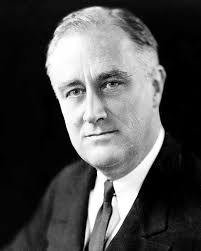
Poking around the basement in my mom’s house I unearthed a framed black and white portrait of Franklin Delano Roosevelt. The picture had been in a stack with other effects from one set of grandparents or the other. Certain this pic would probably end up in a dumpster, I packed it in my suitcase and brought it home. Our 32nd President is on display among other WWII pieces I’ve collected over the years.

What was it about Roosevelt and his times, that earned him premier wall space during the Depression and war years? Today the idea of commemorating a political leader with a  wall display seems odd and quaint.

So again, why did my grandparents include FDR in their home decor?

Admiration may be one reason. FDR appeared bigger than life. The man seemed to have it all: looks, money, and a pedigree that stemmed back to the early Dutch in America. His distant cousin, who also acted as his uncle-in-law, Theodore Roosevelt, still loomed large in American memory. That Franklin Roosevelt wished to carry on the tradition, especially in a time of economic collapse felt assuring.

The laissez faire policies of previous Republican administrations made for widespread fraud, especially on Wall Street. The 1920’s had been a heady time of speculation on the Dow, with banks making reckless loans on high risk investments. When the frenzy crashed and burned in October of 1929, the sitting Republican President, Herbert Hoover, suffered all the blame.

That fact raises another strength of President Roosevelt. The public trusted him. While autocracies generated “cults of personality,” Stalin, Mussolini, and Hitler, this candidate earned his office promising America a “New Deal.” He assured the country that they had not failed, the system had forsaken them, and as their new President he meant to correct those abuses.

The choice to hang Roosevelt’s portrait came from genuine respect, not fear or blind partisanship. The people elected FDR because he meant to be of use to all the American people.

This President brought energy and purpose to the Executive Branch reaching Americans personally in their daily lives. New Deal legislation quickly translated into action with legions of new programs all designed to get folks working again. The public felt a connection to the White House that perhaps hadn’t existed before that time. Mail arrived in daily landslides, mirroring FDR’s earlier political victory. Most letters requested a “hand up,” not a hand out, and that any financial help would be repaid to the government. R.E.P.A.I.D!

FDR brought electricity to rural America, lighting the night and powering radios that broadcast his Fireside Chats. Bridges, schools, and other large engineering projects connected the nation as never before. It’s a sure thing your town or city still bears an imprint of FDR’s time in office.

So it is with respect and gratitude that I have placed Franklin Delano Roosevelt on my living room wall. He set the bar for what a Chief Executive ought to be.

And after all, it’s a family tradition.

Gail Chumbley is the author of the two-part memoir, “River of January,” and “River of January: Figure Eight.” Both titles are available on Kindle. Chumbley has also authored three historical plays: “Clay” on the life of Senator Henry Clay, and “Wolf By The Ears,” concerning the evolution of racism and slavery in America, and Peer Review, where four long ago presidents speak with 47.

gailchumbley@gmail.com
Infinity Clause

In the fall of 1789 recently inaugurated President, George Washington called for a National day of Thanksgiving. Under the previous frame of government, the unworkable Articles of Confederation, such proclamations had customarily been sent to the governors of each state. However, Washington abandoned that practice. As the first US President, Washington instead issued the proclamation to the American People.

This President deliberately bypassed state governments.

The new Constitution, practically wet with ink, had been intentionally addressed to “We The People,” and Washington aimed through his administration to join every citizen, regardless of state, to the national government. This proclamation, seemingly banal, clearly signaled a dramatic reset of power in the new Republic.

Two years prior, in Philadelphia, the framers turned attention to composing a Preamble, otherwise understood as a mission statement. Preambles were not unusual, each state government began with them, but in that hot, humid chamber of Constitution Hall work commenced to define America’s mission. Gouverneur Morris, a delegate from New York, most probably authored the statement, and it was Morris who set out the language.

We the people of the United States, in order to form a more perfect union, establish justice, insure domestic tranquility, provide for the common defense, promote the general welfare, and secure the blessings of liberty to ourselves and our posterity, do ordain and establish this Constitution for the United States of America.

The heart of these guiding principles begin with the phrase “The People,” followed by the active verb, “To Form.”

The Preamble rests upon this infinitive clause, implying America is a work in constant progress. This mission is a founding legacy fixed upon enduring bedrock.

Susan B Anthony sought justice voting in the Election of 1872. Arrested for casting her ballot, Anthony faced a Federal judge, and received a verdict of guilty. The 19th Amendment, ratified nearly fifty years later extended the vote to women. Hounded by settlers from the 17th Century onward, Native Americans sought survival and the tranquility to peacefully co-exist with whites. It’s ironic that indigenous Americans were not citizens until 1924.The United States in 1860, teetered on a knife point of dissolution. President, Abraham Lincoln, could not stand by and watch democracy die under the threat of secession. Preparing for the common defense Lincoln mobilized northern forces to defend the Union. From Jane Addam’s Hull House, a Chicago settlement center for immigrants, promoting the general welfare, to Dred Scott, and Homer Plessy’s struggle to reap the blessings of liberty, each generation stood tall in their historic moments.

To honor the principles of the document, and as heirs of Constitutional law, our charge, like those before, is weightier than our private comfort. We The People have no choice but to continue Gouverneur Morris, and President Washington’s wishes To Form A More Perfect Union.

Modern America’s mini tyrants must not prevail. Make your voice heard at the ballot box on Tuesday, November 8, 2022.

Gail Chumbley is the author of the two-part memoir, “River of January,” and “River of January: Figure Eight.” Both titles are available on Kindle. Chumbley has written two historical plays, “Clay” regarding the life of Senator Henry Clay, and “Wolf By The Ears,” an exploring the roots of slavery and racism.

A Renaissance Man

Nothing short of brilliant, Dale Olson could expound on almost any topic. His knowledge of sports, history, and literature rendered him as a true Renaissance man. He also loved the Simpsons. 

Dale Curtis Olson joined the planet on February 10, 1954. 

Born and raised in Spokane he attended public schools and graduated from Joel E. Ferris in 1972. A graduate of the University of Washington in History and Political Science, he pursued jobs that carried him around the globe. With positions from Antarctica and to Johnson Island, Dale found the world his finishing school. He did not simply tour destinations, Dale relished them, as food for his soul.

His children were his books, and those surrounded him. Still news of his grandnephews and niece arrived welcome to his home. 

Throughout Dale’s long trials with illness he persevered, aided in large part by our brother David. Our gratitude is heartfelt.

Dale was predeceased by our father, David E. Olson, and survived by our mother, Rita Olson. Also his sister Gail Chumbley(Chad) of Garden Valley, Idaho, brothers Stephen (Elizabeth), and David Olson of Spokane. He is remembered by all his nieces and nephews residing from Spokane to Portland, to Salt Lake City.

We will have no service, and in lieu of flowers donations to American Battlefield Trust, https://www.battlefields.org are suggested.

Oh to live on Sugar Mountain

With the barkers and the colored balloons

You can’t be twenty on Sugar Mountain

Though you’re thank that you are leaving there too soon.

Neil Young

The Past Isn’t Past

The above diagram, or other similar images frequently pop up in American history textbooks. The purpose of the image is to represent Southern society in the years up to the Civil War. A quick look reveals that this system was top down and not in any way democratic.

Small scale farmers and poor whites near the bottom pose some interesting questions regarding antebellum (before the war) social class interactions. How much authority did small farmers actually wield in this ordered system? How did customs and rules shape relations between poor whites and slaves? The most pressing question asks why would lower class whites risk all to do battle for the lofty Planter class? After all, these same aristocrats strictly associated within their own circle, and would not give the time of day to any social inferiors.

So again why did the lower rungs answer the call to battle?

One explanation must touch upon race and identity. Small land holders and poor whites, as hard as they struggled to survive somehow believed or wanted to believe they shared more in common with the aristocrats at the top. Identifying with the enslaved below, despite living in similar adversity was unthinkable.

And these sons of the South fought hard. Some 300,000 Confederate soldiers died of shot, disease, or returned home maimed to preserve a culture that held them down.

Let’s put a pin there.

Keeping in mind the above image fast forward to the 2008 victory of Barack Obama. For many of us the election of our first black president marked a high point in racial history, seemingly proof that America had finally faced and redeemed the violent legacy of injustice.

And despite President Obama’s two successful terms in office, (Obama is somewhere among the top ten presidents of all time) the persistent legacy of racial hatred roared back to life as virulent as any year in old Dixie.

Like demons summoned from the dead, the ugly ghosts of white supremacy rose, once again fueled by a latter day white aristocracy. America is witnessing in real time DJT and his plutocrats purposely riling up lower class whites to again man their battle fronts.

A black president, a very popular and effective black president united malicious forces of hubris, greed, and malignant hate.

This toxic furnace of racism has honestly emerged as something of a shock. For those of us who bore witness to the Civil Rights movement, applauded affirmative action policies, and celebrated landmark legislation in housing and voting rights, led us to believe a A More Perfect Union was underway. But we were wrong.

Stunningly wrong.

47”s first administration emboldened a Klan-style march in Charlottesville, where he remarked there were “good people on both sides.” Left unmentioned was the fate of Heather Heyer, a counter protestor, who was deliberately targeted and killed in the melee. In 2021 47 groomed his working class foot soldiers to “stand back and stand by.” When the order came, these emboldened thugs sacked the US Capitol toting Confederate and Nazi flags. Neither Robert E Lee or Hitler ever got that close to our center of government.

In both cases MAGA militia in red caps waving blue flags proved that America has made no racial progress at all. Hate, especially racial hate has been simmering all along. Forget that 47 and his GOP are gutting social safety nets and services (Medicaid and FEMA come to mind) that support many of his minions (and the rest of us). Effectively manipulated MAGA enthusiasts proudly, defiantly, swill the poison of grievance.

Planter society would easily recognize this tried and true method of cultural conditioning. Working class whites once again believe they share the same interests as the ruling elite. After all they are all white. However, that same elite has no further use for those who elected them. And this resurrected aristocracy doesn’t think much of democracy either. Utah Senator Mike Lee publicly said as much.

The 21st Century rallying cry echoes that of an earlier century. The worst white man is still better than the best man of color. (And I don’t mean Joe Biden.)

And that is how those with little to nothing are schooled to preserve those who have everything.

Gail Chumbley is the author of the two-part memoir River of January, and River of January; Figure Eight. Chumbley has authored three stage plays, Clay, a look at the life of Henry Clay, Wolf By The Ears, an examination of racism and slavery, and Peer Review, where Donald Trump meets four former presidents.

gailchumbley@ymail.com

Catch Up

A radical change in imperial policy between Great Britain and her American Colonies marked the beginning of the Revolutionary Era.

Well before the American Revolution an amiable, and profitable arrangement existed between the Colonials and Parliament. This mutually profitable connection quickly terminated after the French and Indian War, 1754-1763. That conflict, though a victory for the British, had cost the Royal Treasury plenty, and the Crown abandoned friendly relations by coercing Americans to share in settling that war debt .

Parliament began by imposing a number of taxes, all designed to force Americans to pay up. The Sugar Act, Stamp Act, and Townshend Duties, among other measures, had been designed to force Americans to cover the royal debt. Once proud to be British, Colonials were shocked to realize the Crown viewed them as a source of revenue, and nothing more.

Colonials had a long running smuggling network, importing cheaper commodities from the French islands, thus evading British tariffs. Those caught and arrested found fast acquittal by colonial juries of their peers, as locals were also customers of the accused. In Boston, tensions soon turned to bloodshed, followed later with tea spilled into the Harbor. The Crown, not amused, soon forbade traditional trials, and transported accused Americans to military courts, in particular to Nova Scotia. Next, British Red Coats were deployed to the New England colonies to impose martial law, and Parliament decreed American’s had to house and feed their own oppressors.  

These matters were met with vehement dissent, Colonials protesting they had no representative in Parliament, and would not tolerate taxation without their consent. “No Taxation Without Representation” and “Resistance to Tyranny is Obedience to God,” rang throughout Colonial America.

Tensions ripened, finally coming to a bloody confrontation in April of 1775, and the rest we mostly remember from school. 

Tasked with scribing a Declaration of Independence at the Second Continental Congress, Thomas Jefferson vented American grievances through his quill. Working alone, Jefferson defended the violent actions carried out by Americans, and took pains to explain the radicalism. . . . “a decent respect to the opinions of mankind requires that they should declare the causes which impel them to the separation.” And for six years the Continental Army persevered.

In 1787, the subsequent creation and ratification of the U.S. Constitution set an enduring national blueprint of settled law. The Framers designed a government derived from the people, meaning we all are equal, and guaranteed representation in shaping law.

That brings this story to today. 

The election of a president from an opposing party is not a radical, nor sudden change of policy. Rather, this cyclic American ritual is as normal as the singing the Star Spangled Banner before a game. American voters have chosen our leaders in this manner since George Washington’s name first appeared on the ballot. 

To all of you who attacked our Capitol, it’s well past time for you to catch up. Put away those symbols of rebellion; of coiled snakes, hangmen gallows, and Viking horns. The Revolution ended two and a half centuries ago. The story of America is well underway.

In point of fact, those January 6th insurrectionists themselves attempted a radical change in American tradition. In pursuit of violence and chaos, these terrorists attempted a savage disruption of our deepest democratic traditions. Now that is unAmerican. In point of fact, we all have political representatives, and a right to a jury of our peers, and nary a soldier is found lounging on the couch.

Grow up and stand down.  

Gail Chumbley is the author of the two-part memoir “River of January” and “River of January: Figure Eight.”

Chumbley has also penned two plays, “Clay” exploring the life of Henry Clay, and “Wolf By The Ears,” an examination of American slavery and racism.

chumbleg.blog

A Scandalous Life

Through open doors down a long hallway, reminiscent of The Shining, a cacophony of noisy televisions competed. Soap operas, news reports, and talkshows spilled from empty uncleaned guest rooms. It was the summer of 1974 that I began a brief stint as a hotel maid in Spokane, Washington. Through the course of that summer I began to notice each maid had different approaches to their routine. Some girls stripped the beds, or beelined for the bathroom, but all, to the last dust mop, first switched on the television. 

And the biggest news that summer, outside of Expo ‘74, was the Watergate hearings. Chairman Sam Ervin, Senator Howard Baker, Congressman Pete Rodino, and others became my new favorite TV personalities. Watergate Burglar, Alexander Butterfield spilled the beans on Nixon’s White House taping system, and John Dean spoke of a ‘cancer on the presidency.” For me these hearings were riveting as I placed fresh towels on the rack, and changed toilet paper rolls.

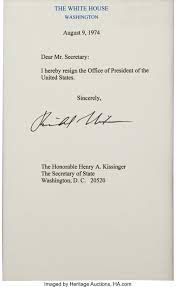
By the end of that summer, August 9, 1974 Richard Nixon resigned the presidency. 

Fast forward 13 years later, and I had just given birth to my second baby, a girl, and she and I cuddled as the television introduced a whole new set of “off the books” operatives. This time the scandal concerned the Reagan Administration’s convoluted plot known as the Iran-Contra Affair. American arms were illegally sold to Iran, our sworn enemy, to continue their war against Iraq. The proceeds from those sales were funneled to anti-Communists fighters battling in Nicaragua. Both efforts violated the Boland Amendment, passed by Congress, explicitly prohibiting American meddling in Central America.

Reagan operatives had hoped that selling Iranians weapons would soften them up because the White House needed a favor. Would the Ayatollah Khomeini help encourage Lebanon’s jihadists to release American hostages secreted around Beirut? The Reagan people gambled that trading illegal arms would secure Tehran’s help. 

While rocking my infant I learned a litany of new names: NSA chief, Robert McFarland, Marine, Oliver North, North’s secretary, Fawn Hall, and the recently deceased mastermind, CIA director, William Casey. My take, as I patted my girl’s little back, was that the Reagan White House had privatized foreign policy in defiance of Congress through renegade agents.

In 1988 Ronald Reagan, in a video deposition, admitted he had done just that, but due to his failing memory, couldn’t recall. 

That brings me to my golden years. I tuned in to the January 6th hearings, as a retired grandma. My husband and I watched and listened to the evidence regarding the violent attack on our nation’s capitol. To say this hearing was electric would be an understatement. Proud Boys, Oath Keepers, Capitol Police Officers, particularly Caroline Edwards, left me spell bound. Representative Liz Cheney owned the evening, making clear the person responsible for the attempted coup-the former guy. 

Donald Trump is the first sitting president in American History to be impeached twice.

So what element ties all three scandals together? For one, the course of a single life-from college kid, to motherhood, to grandmother. And I suppose one could conclude I’ve watched a helluva lot of television. 

But for me the message means something else. 

The modern Republican Party has undergone a long death spiral marked by greed, rot and decay. As Liz Cheney said, “there will come a day when Donald Trump is gone, but your dishonor will remain.”

For nearly 50 years, from 1974 to 2020 the Grand Old Party has cast off its once, principled moorings, slowly imploding before our eyes. As my generation grew from young students to senior citizens the party of Lincoln silently died. 

And like Jack Nicholson’s character in The Shining, there is no redemption, nor any future, only relief these mercenaries can do no more harm.

Gail Chumbley is the author of a two-part memoir, “River of January,” and “River of January: Figure Eight.” Chumbley had also completed to historic plays, “Clay,” regarding the life of Senator Henry Clay, and “Wolf By The Ears,” an examination of slavery and racism in America.

The Little Things

If you love . . .

Protecting a dim-witted, would-be dictator from legal consequences,

Suppressing a woman’s right to self-actuation and privacy,

Expediting white, unqualified patriarchs to the Supreme Court,

Rendering the US Senate inert,

Legislating so the wealthy have no tax burden,

The open targeting of Americans of color to brutality and murder,

The whole-sale destruction of the planet, and the rape of natural resources 

Abetting political misinformation and conspiracies through social media,

Targeting those of differing sexuality 

Pushing religion into American government,

Aligning apportionment and voter suppression to disenfranchise the poor, and people of color,

Withholding health care to the few with means,

The wholesale flood of firearms into civilian hands,

Cruelty dispensed upon desperate immigrants,

Coddling of white offenders over those of color,

Predatory treatment of consumers,

Blocking legislation to meet the dangers of the above list, and otherwise accomplishing nothing,

Vote for today’s Republican Party

Gail Chumbley, frustrated American History Educator.