An SOS

I sent this letter to my Senators. Feel free to use it how you can.

Dear Senator,

I am reaching out to share my growing dread with this current administration. Arbitrary cuts to government programs, gestapo-like assaults upon peaceable communities and the shrinking of America’s international role is chilling.

As a career history educator I know these actions are decidedly harmful to all of us and that he is attempting to gut the rule of law. It’s as if the United States is drifting into a new Dark Ages and few are standing up for tenets of the Constitution, a hard-won, and hard-defended blueprint of government.

Please restrain yourself from the temptation of pursuing unfettered power, and apply the oh-so-needed brakes on this administration; we are counting on you to hold him to account.

I am a child of the Cold War era and recall the fear of air raid sirens and Soviet attack. But today I am more afraid. What is good about the United States is bad to this administration, and quickly ransacked out of existence, criminals are pardoned, and the guilty go free.

This damage does not fully rest on the White House, he could not carry out his pillaging without the silence of Congress. I implore you to have courage and stand up to this feeding frenzy and let us go back to being America, which still is “the world’s last best hope.”

Gail Chumbley

SLC 

Peer Review One: A Play

Peer Review One

__________________________

10 Minute Play

By Gail Chumbley

SCENE 1

The stage lights rise. Two wingback chairs sit closely on the stage, and a table. Two men, both marines, stand on either side of the stage apron. The sounds of voices are heard off stage. The stage lights shift to blue as a man, The President, steps onstage. The Marines salute, and the president salutes impatiently. The guards disappear in darkness.

THE PRESIDENT
I can hear them. Tourists. Here to see where I, their President lives.

Three girls enter giggling and taking cell phone pictures. The president fusses with his hair.

THE PRESIDENT

And where are you girls from?

The girls move on without noticing him.
Wait! I’m here. Your president. I’m here.

A couple appear looking about, pointing toward “walls,” chatting quietly. The president straightens his tie, and again touches his hair.

THE PRESIDENT
Welcome to my White House. Wanna a picture with your President?

The couple murmurs quietly, indifferently looking around. They turn and stroll offstage. The president follows a few steps.

THE PRESIDENT

You people deaf? What is wrong with you? This is disgraceful. I’m President of the United States, for god’s sake.

A man appears on stage left. He wears a top hat, mustache, pince-nez spectacles and cutaway jacket with tails. He carries a cane. The man approaches the president from behind. He speaks in a patrician voice.

THE MAN

Am I to understand that you are a New Yorker?

The president startles.

THE PRESIDENT
Um, hello. Are you here with a tour group? Bet you want a picture with me, your president.

THE MAN
I ask a simple question, and you reply with a question. I understand you are a New Yorker. Are you or are you not?

The President attempts to walk to no avail. The man stands uncomfortably close.

THE PRESIDENT (Looking around)

I can’t move! My feet are frozen to the floor! Where is my security detail! Where are my marines?

THE MAN
We have all been watching you, and even Mr. Nixon is appalled. Once again, are you a New Yorker? Speak up when I’m addressing you.
THE PRESIDENT

Mr. Nixon? How did you get in here? Are you a re-enactor?

The muted sound of tourists continues off stage.

Yes. Yes. Everybody knows me. I made my fortune in New York real estate, if you must know. I’ve heard many people say I’m the best businessman ever . . .

The man begins to pace and speak at the same time.

THE MAN
From my understanding you are nothing beyond a scoundrel from the wealthy criminal class. I made a career of exposing popinjays like you.

THE PRESIDENT
Well, you’re a nasty piece of work. I am the President of the United States. I won the election by the biggest margin in American hist . . .

THE MAN
Poppycock! We have come to find that result came about due a mere tilt in the electoral count, and foreign interference. Russians, no less. After the revolutionary stirrings in 1905, I feared Russian unrest would spread to the United States. Conditions in mines, shops and factories here were inexcusable. Strikers shot down in the Pullman Rail Strike, vile conditions in Chicago’s meatpacking industry, sweatshops forcing 12 hour work days. Labor agitators pushed for reform, and I agreed. In Russia, Bolsheviks never did extend justice to the working class, only more oppression. They were not, and are not America’s friend, and intend only to destabilize this nation. Through your absence of character, and love of money they have succeeded.

THE PRESIDENT

You are wrong. That’s a lie. A lie.

THE MAN
You foolish pip. Inviting Russians into the West Wing? Unacceptable! Never should foreign adversaries be permitted to enter the inner sanctum, nor rioters in the Capitol. Mr. Lincoln will have more to say on that particular travesty.

The President appears shocked. He mouths “Lincoln.”
You have besmirched America before the world. I’d say you are a compromised pawn of foreign meddlers, and their graft. You give not one whit for America.

THE PRESIDENT
You can’t talk to me like that. My security will be back and you’ll be thrown out.

THE MAN

Sergey Witte.

THE PRESIDENT

What? Who? Just get out!

THE MAN

Hold your tongue! When you are in the presence of a gentlemen, behave accordingly. Witte was a Russian, so you will approve. The Japanese inflicted the most impressive defeats upon the Tsar’s navy in 1904-05. America then had no quarrel with Japan or Russia, however, I was asked to arbitrate peace negotiations. My view of the Russians changed with Witte. What a crude, unmannered man, unlike the thoroughly well- mannered Japanese delegation who comported themselves so gracefully! This so-called “diplomat” grew belligerent during peace talks insisting Russia be awarded more largess from the treaty. That villain stalled and argued for adding more claims, despite losing the war. I gave that knave a piece of my mind.

The man removes his top hat and sets it on a table, and checks his pocket watch.

Good I have time.

THE PRESIDENT
Time? Don’t stay on my account. I’m a busy man. Meetings, briefings.

THE MAN

Sit down this instant.

The president instantly sits. Looks alarmed.

Witte is the point! The Russians only look out for Russia, not you, the bankrupt fool who fell backward into the presidency.

THE PRESIDENT
I’m being pranked. Some a-hole is filming this. Where is the camera? I hate pranks. Meadows is going to hear about this.

The muffled sound of passersby continues. The president sits uncomfortably, and shuts his eyes.

I’m dreaming. That’s it, I’m asleep. When I open my eyes he’ll be gone.

To the man.

I’m opening my eyes now and you better not be here.

The man leans over the sitting president. He opens his eyes face to face with the man. The president startles again.

THE MAN

I am not finished.

The man again paces and speaks.
Bribery does not belong in foreign policy. And America still has a grand future on the world stage. We show strength through integrity–not by shaking down America’s allies for political favors.

THE PRESIDENT

Stop right there, that was a perfect phone call . . .

THE MAN
In foreign affairs we must make up our minds that we are a great people and must play a great part in the world. Nothing less.

The man turns toward an imaginary window. The president attempts to stand, but only succeeds in moving the chair a little. He utters a grunt.

THE PRESIDENT
I have great knowledge of foreign policy. And despite what some people say, I was always against the war in Iraq, and a lot of people weren’t.

The man shakes his head in disbelief. The President continues.
Look, Obama left a foreign policy of one disaster after another. We don’t win anymore. . .We’re going to win big now.

The man looks around the Blue Room.

THE MAN
Talleyrand, Napoleon’s minister once remarked that though President Jefferson loved France, he was still an American first. I do not believe you are first loyal to America, only to your feral, financial instincts.

THE PRESIDENT

TalleyWho? Everyone knows I am the greatest Americ. . .

The man sighs, and with a turn of his hand silences the President.

THE MAN
It appears you have no pets. Quite revealing that-regarding a man. We moved into this house with dogs, cats, and other pets, including a pony. How the boys loved their animals. Our pets were considered part of the family. They and the children’s presence made the White House feel like home.

The man returns his gaze to the president, and smiles.
I would play a bear, and my two youngest would hide under the bed. I pawed and growled, and they giggled and shrieked for joy.

The president is defensive. He speaks.

THE PRESIDENT
Kid’s. The hardest thing about raising kids is time. I know men who leave their businesses so they can spend more time with their children, and I say, ‘Gimme a break!’ My children couldn’t love me more if I spent fifteen times more time with them.

The man watches the president doubtfully.

THE MAN
No pets. Not even for your youngest. And it appears the boy and his mother live separate lives. Your adult children keep their distance, as well. You have squandered a man’s real treasure for an artificial image.

The president wiggle-walks his chair still stuck.

THE PRESIDENT
First of all, I would feel like a phony having a dog. I don’t like dogs. And, so you know, my children love me, and my wife, too. They are so proud of me, so proud. I’m President. And most Americans love me. Those liberals are the problem.

The man snaps, waving his cane.

THE MAN
Is that why thousands of migrant children were separated from their families? Caged? Liberals are not, as you say, the problem!

The man clears his throat, and quietly speaks.

President Grant requested I touch upon the subject of military service. My father did not serve in the War between the States, leaving me a confused boy. I could not understand why. For me soldiering is the highest service a patriot can perform.

THE PRESIDENT
And now you’re going to tell me how great the military is. I really don’t care. Look, Sean Hannity is calling my office.

THE MAN
His decision concerned my mother. Lovely woman, my mother, she hailed from Georgia, and her brothers were serving the Confederacy. You see, my father loved her–simply loved her. He hired a substitute in his place, and aided President Lincoln in other ways.

The man taps his cane and smiles.

Still. I idolized him. He believed so much in public service. He cared about children, orphans living on the streets. Father founded the Newsboys Lodge, the Children’s Aid Society, and the American Museum of Natural History. The last he did for me.

The man strokes his mustache lost in thought.

THE PRESIDENT

On Central Park West?

The man nods.
Been there. Your father had it built? Seems like a big waste of money to me. Bunch of bones and dead animals.

THE MAN
Serving others is our obligation to the less fortunate. To me bad trusts exploited the poor for profits. We regulated fair rail rates for farmers, passed the Meat Inspection Act, and the Pure Food and Drug Act, to make all Americans safer.

The president looks bewildered.

THE PRESIDENT

Why? There’s a lot of money in big pharma.

THE MAN

Not listening.
As president, I never made a decision without wondering what my father would think.

THE PRESIDENT

Yeah, me too.

The president chuckles. The man shakes his head.

THE PRESIDENT
Still, I don’t care. Times have changed. Gotta get what you can when you can.

The man whips around.

THE MAN

Which is why I am here.

The President’s smile disappears.

THE MAN
All four of my sons served in the Great War, and fulfilled their duty. We paid the ultimate cost-our youngest, Quentin, in an aerial fight over Germany. So difficult to lose such a dear, sweet boy.

The man draws close to the president.
And Quentin was neither a sucker nor a loser! He believed in America, they all believed. Quentin held fast to the tenets of our noble land and answered the call.

The man flashes disgust toward the President, then becomes thoughtful.
In 1898, I, too, served as soon as I could. President McKinley named me under-secretary in the Department of the Navy, until I resigned to join the war against Spain. That decision led me to assemble the Rough Riders and ship out to Cuba. Most exhilarating. My father would be proud, of that I’m certain.

THE PRESIDENT
I’d like to do my duty too. But the political establishment trying to stop us is the same swamp responsible for our disastrous foreign policies.

The man frowns, then and continues.

THE MAN
We were on foot in Cuba, a cavalry without horses. We lined up at the base of Kettle Hill, and charged. The moment jolted electric, and my crowded hour began. Lifting my carbine in the air, I rallied from the front, showing the men they had nothing to fear.

THE PRESIDENT
And see, that’s the problem. That is why the military is a chump’s game.

The man shakes his head.
And who needs soldiers? I can do foreign policy, it’s easy. I know because I have a very good brain. I am very rich, people admire me.

The man gives the President an incredulous glance.

THE MAN
Are you deranged? Tossing about words, making no sense? And as for rich, I understand your father earned the fortune, and you have frittered away much of it.

THE PRESIDENT

Wrong. Lies.

THE MAN
Nouveau riche, new money. Gaudy, vulgar, pretentious, and hungry for the validation and acceptance that you will never receive.

The president audibly snores. The man continues to speak over the noise.

When I held office I used my “bully pulpit” in the best sense of the term. Once I believed as you, that the natural world existed to enrich man. But that is false. In my administration Congress approved five new national parks, protected bird sanctuaries, and game preserves. The intrinsic value of our land cannot be found in stock indices or business transactions.

The president snorts
Nowhere else in any civilized country is there to be found such a tract of veritable wonderland made accessible to all visitors, not only the scenery, but wild creatures of the parks are scrupulously preserved.

THE PRESIDENT
Well mister tree hugger I have gutted much of your precious protection and opened land for logging, mining, and drilling. Say goodbye to the Grand Staircase in Utah, well, half of it, anyway. Roads are being cleared as we speak, and off-road vehicles are roaring in. And that goody two shoes, Barack Hussein Obama created the Bears Ears National Monument. I chopped it up for developers. Because that is profit. Profit is real.

THE MAN
You are nothing new, but the only plunderer to reach the presidency. New York City has produced a long line of blackguards such as yourself, criminals like Boss Tweed, and George Washington Plunkitt. Driven by greed and power these men fleeced the public.

The man walks around the chairs still looking about. He speaks.

For the benefit and enjoyment of the people.

THE PRESIDENT

I’d enjoy getting the hell out of here.

He snores louder

THE MAN
Quiet you insolent twit. Those words are inscribed on the arch at Yellowstone Park. Now you shall no longer interrupt.

The man gestures, watching the president who is now unable to speak.
I, too enjoyed a life of affluence. However, with that wealth came obligations to the less fortunate. Doors down from our home on 57th Street the poor struggled in wretched poverty. And much like my father I possessed a troubled conscience.

The man strolls with his cane, and continues.

As Commander in Chief, our charge is to work for the people. All the people. Withholding aid to states you did not carry is a dishonorable breach of that trust.

The man touches the president’s chest with his cane, then resumes his pacing.

My love of justice and fair play may sound naive to you. But your blatant cheating, while pretending you haven’t, is shameless.

The man strikes the president’s chair with his cane. The president sits straighter.
My administration was known as the “Square Deal,” and we, my cabinet and I, kept that promise.

The man taps his cane on the floor again.

My father once counseled me to look after my morals, my health, and my scholarship. And that, I did. And your father? Raised you to love money and value nothing. Had you not been desperate to become president, you might have continued to lead this predatory life of grift and debauchery.

The president fixes his eyes on the man. Angry.

Much like King Midas, or a Greek tragedy, this fatal flaw, your infinite vanity, will now cost you your liberty.

The president struggles, mutely hopping his chair a bit.
You should not have run for office, where dignity and tight scrutiny are the norm. Unable to resist the lure of power, you are the catalyst of your own downfall.

The man puts on his top hat, and gestures. The president bursts free from his chair.

It’s time for me to leave, the others will join you presently.

THE PRESIDENT

Others?

THE MAN
Most assuredly. And the name of that national park is pronounced Yo-sem-i-tee.

As the man stroll off in one direction, the President runs off the other. The stage goes dark.

The Dramatists Guild of America was established over 80 years ago, and is the only professional association which advances the interests of playwrights, composers and lyricists writing for the living stage. The Guild has over 6,000 members nationwide, from beginning writers to the most prominent authors represented on Broadway, Off-Broadway and in regional theaters. To learn more about the Dramatists Guild of America, please visit http://www.dramatistsguild.com

Gail Chumbley is the author of the two-part memoir, “River of January,” and “River of January: Figure Eight.” Both are available on Kindle. In addition Chumbley has written two full-length plays, “Clay,” and “Wolf By The Ears.”
The Long Haul

After the 1929 Market Crash the world fell into regional, nearly feudal isolation, and international trade quickly dried up. America, too, focused inward largely due to the nation’s earlier participation in the Great War in Europe.

Across the Pacific the Japanese Empire aimed to take advantage of global disinterest promoting its own national interests. Sold to other Asian countries as the “Co-prosperity Sphere,” hyper-nationalistic Japan intended to expand across the region, especially toward vulnerable, resource rich China.

Great Britain as well, struggled alone in a financial malaise, as did the French across the channel; both nations saddled with debt to American banks from the previous war. Germany, the defeated nation struggled with their own war debt demanded by the British and French.

The shroud of economic depression hung like a millstone over Europe and the rest of the world.

As the financial, and political fallout grew wildly unstable, regimes hunkered down and hoped for better times. However the climate instead became chaotic, bringing anti-democratic demagogues to power.

The Italians were first, producing a Fascist strongman, Benito Mussolini. El Duce, as he was known suppressed political diversity, harnessed economic efficiency, and soon, like the Japanese, pursued colonial inroads into Libya, and later the conquest of Ethiopia.

Germany soon flirted with its own style of fascism, with a meaner, violent credo. In a reaction to impossible debts, and national pride, Adolf Hitler, a feckless dreamer, stood on beer hall tables, and passionately spoke of national betrayal. Hitler revealed his malicious intentions by blaming Bolsheviks, Capitalists, and Jews for the hated Armistice of 1918, and war debt owed to the Allies.

Yet America, unlike the rest of the world, clung with all their might to the national system of Constitutional norms. At the same time Germany elected Hitler in 1932, the U.S. found their champion in Franklin Roosevelt. 

A popular Roosevelt Coalition steered the country through those hard years holding America together. FDR’s New Deal and Fireside Chats broadcasts kept at bay the fears of a nation. That’s not to say there weren’t kooks, to borrow Lindsay Graham’s phrase, but Americans faced the long haul together, believing better days had to be ahead.

The current President is no Franklin Roosevelt. And his autocratic tendencies, strongly echo those in the 1930’s.

In Project 2025 Trump aims to raise tariffs, shut down borders, all done to economically and politically isolate America. Using the same playbook of past despots specific groups are targeted as the problem. The guilty include immigrants, the LGBTQ community, liberals, educators, women, and the rule of law all in the crosshairs. All done to divert and distract while he lines his pockets.

And his tactics, so far have succeeded making half of the electorate real mean.

So, here is the question. Can America survive?

Can Americans remain bound to the framework of our 238 year old republic as it did in the Great Depression? Or will this nation forsake our financial, social, and political traditions and turn to petty retribution and scapegoating?

Will we, as a nation withdraw from the world and exchange our democracy for a strong man who insists he has all the answers?

The signs are clear. When this national crisis has passed will there be enough of us left who stood resolute for our democracy? That is the question of this historic moment. 

Gail Chumbley is a writer and history educator.

Animal House Meets the GOP

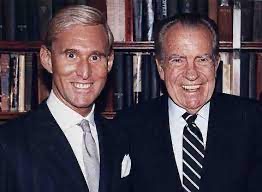
What do you get when you cross Animal House with the GOP? Roger Stone. He holds the dubious distinction of dragging Republican moral decay on, that first festered in the 1970’s. The product of Stone’s current efforts? The January 6th insurrection.

That young Stone cut his teeth orbiting around the Nixon disaster, and later lent a hand to the Reagan campaign, and even later aided the “Brooks Brother Riot” of 2000, his role as a covert agent of chaos lives on. “Conservative Values” a long running catch phrase is no more than an oxymoron, the national party undercut by a list of career dirty tricksters, including Stone.

Think Donald Segretti, of Watergate fame. Segretti hired a girl to run naked at a hotel shouting she was in love with Edmund Muskie, Nixon’s chief rival in 1972. In 1970, even Karl Rove interfered and sabotaged Democratic fund raising efforts by publishing false event information, ie . . . free beer, free food, girls, everyone welcome, etc. Rove’s work turned the event into a fiasco. Then there was Ken Clawson’s Canuck Letter. Clawson, a Nixon operative, published a fraudulent note dropping in phrases like “illegitimate babies,” and “homosexuality,” among Democratic leaders. (Homosexuality still a taboo.) And of course the most famous dirty trick of all, the burglary of the DNC at the Watergate Office Complex.

What this brief evidence has made clear is Republicans can’t win any other way, at least not nationally, without deception and disinformation campaigns. During the Reagan years, men like Oliver North, Admiral John Poindexter, and CIA Director William Casey privatized foreign policy in the Iran Contra Affair. Ronald Reagan haplessly confessed the crimes were real, though he didn’t understand how. The George W. Bush administration outed a CIA operative, Valerie Plame, via Scooter Libby, and Libby was convicted of his crime. But don’t cry for Scooter, Donald Trump pardoned him because it’s true, there is no honor among thieves.

Any pretense of “conservative values” is a myth, carefully advertised by party insiders, but hasn’t existed since President Dwight Eisenhower. 

Stone’s lies to Congress, and to the FBI reveals the state of the party. Any means to win.  Underhanded tactics indicate business as usual.

The harm? My vote doesn’t count, and neither does anyone else’s. The cry of States’ Rights echoing around the country is simply a cover to intensify efforts to deprive the people of good government. Stone, Trump, and the rest of the party has rejected an even playing field; they cannot win in an open, fair vote.  

This blog in no way implies that Dems are blameless, but short of Bill Clinton’s dalliances and others taking bribes, the crimes have hurt the individual, not the American people. Decent folks abandon the GOP daily because of such flagrant misuse of power. 

In a side note, Richard Nixon ran for Congress in 1946 smearing his opponent, Jerry Voorhees as “soft on Communism,” and in 1950 aimed for the Senate, insinuating his opponent, Helen Gahagan Douglas was “pink right down to her underwear.”

We all know who the patron saint of the modern GOP is, and Stone, not to forget Trump, are his most astute disciples.

Gail Chumbley is the author of “River of January,” and “River of January: Figure Eight.” Both titles available on Kindle. Chumbley has written two plays, “Clay,” exploring the life of Senator Henry Clay, and “Wolf By The Ears” regarding the establishment of American Slavery.

gailchumbley@gmail.com

Inheritance

Harry Truman understood the gravity of his duty right off. When FDR died in April, 1945, the newly installed Vice President got the word he was now president. And what a Herculean task he had before him. A world war to end, conferences abroad, shaping a new post-war world, and grappling with the human rights horrors in both Europe and in the Pacific. Add to all of that, he alone could order use of the newly completed Atomic Bomb.

On his White House desk, President Truman placed a sign, “The Buck Stops Here.” With that mission statement Harry Truman stepped up to his responsibilities despite the formidable challenges he faced.

Did Truman inherit the worst set of circumstances of any new president? Maybe? But it is open to debate.

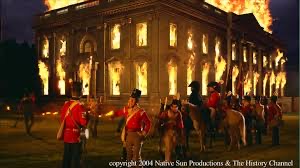
America’s fourth President, James Madison, found himself  in one god-awful mess. His predecessor, Thomas Jefferson had tanked the US economy by closing American ports to all English and French trade. Those two powerful rivals had been at war a long time, and made a practice of interfering with America’s neutrality and transatlantic shipping. Despite Jefferson’s actions the issue of seizing US ships and kidnapping sailors never stopped. By 1812 President Madison asked for a declaration of war against England that, in the end accomplished nothing but a burned out White House and defaced Capitol.

Following the lackluster administrations of Franklin Pierce, then James Buchanan, Abraham Lincoln stepped into a firestorm of crisis. Divisions over the institution of slavery had reached critical mass, and Lincoln’s election was enough for Southern States to cut ties with the North. So hated was Lincoln, that his name did not appear on the ballot below the Mason-Dixon. And the fiery trial of war commenced.

The Election of 1932 became a referendum on Herbert Hoover, and the Republican presidents who had served since 1920. Poor Hoover happened to be in the White House when the economic music stopped, and the economy bottomed out. And that was that for Hoover. His name remained a pejorative until his death. 

Franklin Roosevelt prevailed that 1932 election, in fact won in a landslide victory. Somehow Roosevelt maintained his confident smile though he, too, faced one hell of a national disaster. 

In his inaugural address the new President reassured the public saying fear was all we had to fear. FDR then ordered a banking “holiday,” coating the dismal reality of bank failures in less menacing terms-a holiday. From his first hundred days the new President directed a bewildered Congress to approve his “New Deal.” 

The coming of the Second World War shifted domestic policies to foreign threats as the world fell into autocratic disarray. FDR shifted his attention to the coming war. When President Roosevelt died suddenly, poor Harry Truman was in the hot seat. But that is where I want to end the history lesson.

If any new President has had a disaster to confront, it is Joe Biden. Without fanfare or showboating Biden, too, has stepped up to the difficulties testing our nation. 

Much like Truman and Lincoln before, 46 is grappling with a world in chaos, and a divided people at home. In another ironic twist, like Madison, Biden witnessed, a second violent desecration of the US Capitol.

To his credit, though his predecessor left a long trail of rubble, Biden understands the traditional role of Chief Executive, while clearly many Americans have forgotten, or worse, rejected. Biden is addressing the issues testing our country, not only for those who elected him, but those who did not. An American President can do no less.

Gail Chumbley is the author of the two-part memoir “River of January,” and “River of January: Figure Eight.” Both titles are available on Kindle. She has completed her second play, “Wolf By The Ears.”

gailchumbley@gmail.com

Insulting The Past

The first time a parent challenged my teaching in history class, took place my first year. The topic concerned the creation of the Constitution, and the era of the Early Republic. I introduced the three branches, and separation of powers, census, representation, and that type of basic information. Definitely the bare bones of Civics.

During that lesson I explained how Electors were determined, and role the Electoral College played in choosing the president. End of lesson. The following day the topic moved to ratification and the addition of the Bill of Rights. From out of nowhere a hand shot up, and an upset student blurted, “My dad says you’re a liar!”

Yep, a liar. 

That was my baptism into the sliding scale of historic facts, and that initial chill of suppression stopped me in my tracks. Following that episode, censorship never strayed far from my thoughts. It was the beginning of a caution that lasted the whole of my career.

Fast forward 30 years in history education, when a similar event repeated.

The topic this time concerned the Reagan Revolution, and the events surrounding those years. 

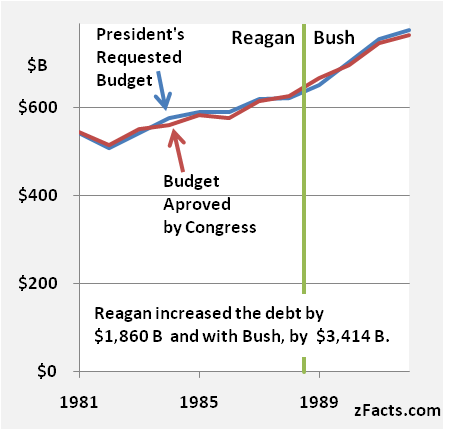
Students learned about the Evil Empire, “Mr. Gorbachev, Tear Down This Wall,” Perestroika, Glasnost, Reaganomics, Laffer Curve, Trickle Down, etc . . .

Foreign policy topics covered Central America and the Middle East, particularly Nicaragua and Iran. Reagan officials were selling weapons to America’s enemy Iran, using the funds to put down a Marxist insurgency in Nicaragua. A privatized foreign policy if you will.

The calls came the following day. “How could I teach such nonsense in a public school! My student came home and shared her notes, textbook and graphs. This is not right, Ronald Reagan is the beloved champion of conservatism!”

The principal called me in and wanted to know what caused the dust-up. Flustered, I didn’t know where to start. Quickly I explained the general outline of the unit, and, well, he didn’t have the time to listen to the details. And he shouldn’t have. He hired me to do that job.

The episode sort of blew over, though that parent did call me at home a number of times over that summer. Weird behavior for sure, like the dad couldn’t let it go. 

For me the matter became philosophical; either educators prepare kids for the path, or parents attempt to manipulate that path for their kids.

Touchy parents revising America’s story to force their current politics on schools does nothing less than highjack education. Talented people leave the classroom endangering the US’s most essential institution. Worse, the exertions and sacrifice of those who came before, are papered over to suit today’s furor.

America’s lifeblood is our shared story, it’s what defines us as a distinct people. We must understand those central principles from our past to move forward as a healthy nation.

To those students whose parents challenged the historic record, it’s unfortunate they cannot let go just a little, and trust public education. This is our kids birthright.

And know this-I wasn’t lying.

Gail Chumbley is the author of the two-part memoir, “River of January,” and “River of January: Figure Eight.” Both titles are available on Kindle. Chumbley has also written three stage plays, “Clay,” regarding the life of Senator Henry Clay, “Wolf By The Ears,” an exploration into American slavery, and Peer Review where 47 meets four earlier presidents.

A Dreamer

You may say I’m a dreamer, but I’m not the only one, I hope someday you’ll join us, and the world will live as one.

John Lennon

A professor of History and Government, President Woodrow Wilson fervently believed America could fulfill its promise as the world’s beacon of democracy, a “City Upon a Hill.” After WWI, this President aimed to reform old monarchial Europe, and lead the world to a new, enlightened destiny. But perhaps his ambitions were too lofty to be realized in a cynical world of power and greed.

Participants convened at the Bourbon Palace of Versailles on June 28th, 1919 to design a new future for . . . really the entire world. Wilson attended in person, which for an American President was a first. He posed, all smiles with the French president, Georges Clemenceau, the English Prime Minister, David Lloyd George, and Italy’s, Vittorio Orlando.

Considering the devastation from the recent war, these leaders had their work cut out for them.

After the Armistice had been signed the previous year, Wilson prepared for his journey by completing a new framework to rebuild a better world. Titled the Fourteen Point Plan, the President outlined a path to enduring peace. The intent was clear: Freedom for all. Free trade, self-government, transparency in treaties, a reduction in weaponry, and most importantly, an international peace-keeping body, The League of Nations. This proposed League had been crafted to resolve international conflicts through open diplomacy. For Wilson, mechanized warfare had proven pointless, so much so, that modern warfare had become a zero sum game.

Naturally many attendees were self-appointed representatives from oppressed ethnic groups around the globe. All had gathered to endorse the American President’s call for free governments, freely chosen.

The Chinese, for example, lobbied for colonial possessions formally held by Germany be returned. China was ignored. Young Ho Chi Minh, a student in Paris, attempted to see President Wilson to discuss the liberation of his home, French Indochina, (Vietnam). But Ho never got trough the gilt doors of Versailles.

The multitudes under British colonial rule, clamored for freedom, as well. Egyptian, East Indian, and Muslim peoples embraced Wilson’s vision of self determination. Zionists, Palestinians, even the Sinn Fein in Ireland looked for release from British subjugation.

Returning home to the White House, the President received a cable that his deputy remaining at Versailles, a Colonel Edward House, had agreed, in Wilson’s absence, to drop the League provision. Wilson flipped his wig and back he sailed, to resurrect his League as a non-negotiable part of the final agreement.

And though the League of Nations was indeed established, the US never joined. After all the horse-trading with his counterparts in Paris, Wilson could not convinced Republican Senators to ratify his treaty. Stunned, the President took his crusade to the American people, via a whistle stop tour. Exhausted by exertion and poor health, Wilson finally collapsed, followed quickly by a massive stroke.

Without the United States participation the League invariably failed. And a broken Woodrow Wilson died shortly after leaving office.

Perhaps President Wilson was foolish to think old world autocrats would give up any power and authority to colonial possessions. Clemenceau and others had viewed him as hopelessly naive. And maybe Wilson’s critics were correct. The man had a stubborn, self-righteous streak, that ultimately was his undoing.

Open government, free elections, and international commitment to fair play. Was Wilson merely a dreamer?

Gail Chumbley is the author of the two-part memoir, “River of January,” and “River of January: Figure Eight.” Both titles are available on Kindle.

gailchumbley@gmail.com


Armageddon

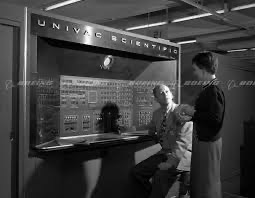
Univac

Remember that episode on Star Trek, “A Taste of Armageddon?” The crew of the Enterprise encounter two planets at war, waged virtually by computer. Simulated clashes determine, by mutual treaty, real fatalities in execution chambers.

That one aired in 1967. 

Technical advancements, devices to improve life, can make tasks so much easier; and these same advancements can just as easily evolve into weapons of destruction. Glidden’s barbed wire made for cheap fencing for farmers. Carnegie’s steel provided the ribs for building upward in cities, and outward on rail tracks. Rockefeller’s oil meant cheap kerosene for lamps to light up the dark. However, these same improvements found new uses when converted to weaponry:concertina wire draped across trenches, heavy armaments, explosives, and gasoline powered vehicles. World War One demonstrated both the might, and bloody futility of modern, industrialized warfare.

The nature of Twentieth Century warfare had literally been forged from 19th Century industry, which in turn gave rise to an assembly line of annihilation.  

How does weaponized technology apply to now? 

The world depends on computers. From Univac, to Commodore 64, to the MacBook, we rely on computers much as we rely on air. The benefits of cyber technology keep us linked together through social media, and new apps that innovate daily. But the dark side of this ever-evolving technology, poses significant danger, and has been weaponized effectively to undermine the stability of America.

As I write, misinformation, via the internet, has contributed to the deaths of nearly one million Americans, and climbing. Troll farms in Russia ruthlessly still hack away, under the guidance of former KGB agent, Vladimir Putin. Russian meddling in our 2016 presidential election, spewed misleading propaganda enough to tip the scales in the outcome. Though developed through advanced mathematics, and supported by other hard sciences, cyber criminals have succeeded in convincing some Americans not to believe in scientific facts. What an irony.

Our enemies have found their way in, a means to weaken and destroy the country from the inside. Through misinformation campaigns and network infiltration, criminals shut down Colonial Pipeline last May, and universities, government agencies, infrastructure systems, and businesses who are under constant threat of being held hostage–paying millions in ransom to rescue their business organizations.

The indispensable nature of computers, like this one in my lap, is a useful, vital tool. But like the technical innovations of the 20th Century, these advances foreshadow danger; cyber space as deadly as a machine gun, and as real as poison gas. Factor in nations around the globe still vying to destabilize America—especially chief competitors, Russia, and the China. 

Nothing has changed since 1914, aside from more sophisticated weaponry. Fifty-four years after Star Trek aired “Armageddon,” computer-generated death is as real as the death toll in the trenches. Threatening fingers typing the right strokes on a keyboard produces chaos and harm from those who wish us ill.  

Anyway Anyhow Anywhere

The deal is, coming out victorious World War Two, the certainty of America’s omnipotence shaped foreign policy. The US armed forces proved they could expertly parachute behind enemy lines, storm contested beaches, and plant the flag of American freedom at the close of every engagement. US pride meant we only mobilized decent men, and armed them with top notch war materiel, and enough Hershey Bars to treat the world. 

Those lessons of the 1940’s mislead later military planners. The assumption that Americans could do no wrong, and intervening into other nations, an imperative. However, what worked in one moment wasn’t necessarily viable later. America’s entrance had saved the world, but that particular episode ended in September, 1945, and the US moved forward looking backward.

Five years later the Korean conflict exploded, and after three years of fighting, ended where it began, the 38th parallel. That stalemate ought to have signaled a reassessment of America’s role abroad, but the Sergeant Stryker school of war had engrained itself too deeply into foreign poIicy.

I am a child of the Vietnam era. In my head the kaleidoscope of Lucy’s eyes plays, and televised images of soldiers knee deep in rice paddies, flicker in black and white. Protesting students with raised fists, black armbands affixed, occupying college offices, all to the soundtrack of kick ass rock and roll. In fact, the most enduring feature of the Sixties, for this boomer, is that pulsating electric guitar played by the hands of masters.

From 1959 to 1975 Washington dispatched advisers, munitions, and finally by ’65 ground forces to Vietnam. The French had failed to hold their Indochinese possession against the Communists, as they had failed against the Germans in 1940. America would bail them out once again.

But our intervention was premised on dated strategies. Vietnam was not a stand and fight war.

What Vietnam taught policy makers, (for a millisecond) is that patience is a most powerful foe. The NVA and Vietcong played the waiting game with grit and timeless certainty. 

the Our nation was not the first on the scene in Saigon, but certainly the last western power. As for Afghanistan, the dynamic remains. Leaving 10 years ago, or 10 days ago, the outcome would have been the same. The post-911 Middle Eastern conflicts were truly good for the people of those nations, but not for the United States.

Just check with the Brits and Russians. They left too.

Gail Chumbley is the author of the two-part memoir, “River of January,” and “River of January: Figure Eight.” Both titles are available on Kindle.

gailchumbley@gmail.com