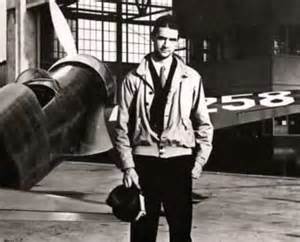
West Palm Beach, 1934

th
Howard Hughes

“Night is a great time to fly—very peaceful. And things here are pretty quiet. Yeah, you got yourself a pilot.”
Refueling in Raleigh and again in Savannah, the young man managed to land the new model at the West Palm airstrip on time, taxiing to the numbered hangar about 7:30 AM the next morning.
“Who are you?” asked the tall, thin, dark-haired client. “Where’d that plane come from? You couldn’t be here all the way from New York?!”
Too groggy to argue Chum replied, “Howard Ailor sent me down with your plane. Flew here overnight.”
“Not possible” the client insisted. “That’s not the plane I ordered. This one has to be used.”
“Sir, I was asked to fly this Waco down from Roosevelt Field. It’s new, not used, and it’s yours.”
“I’m calling my head mechanic over—he’ll know if it’s new or not,” the tall man challenged. “What’s your name young man?”
“Chumbley, sir. Mont Chumbley.”
“You must be one hell of a pilot, Chumbley, if you’re not trying to put one over on me. I’ve never known any flyer that could have made that trip from New York. My name’s Hughes. Howard Hughes, but I guess you knew that. I just don’t believe you got here overnight. What time did you leave last night?”
“About ten, sir. Only stopped to refuel and eat. Can I get a lift to the train station? I need to get back to New York,” the sleepy pilot requested.
As though he wasn’t listening Hughes replied, “I don’t believe this. Ailor is pulling something here. It’s impossible that you flew here that fast.”
“Sir—Mr. Hughes, I don’t mean to be rude, but I have a business to run at Roosevelt Field. I need to get home. I’m not making any money here. Your issue is with Mr. Ailor. I delivered the plane, and now I need a lift to the train station.”
Hughes began walking toward his hangar as if Chum hadn’t spoken. He heard Hughes shout, “Get Rusty out here to look this Waco over, and get Ailor on the phone in New York.”
For the next two days Hughes and Ailor wrangled back and forth, via telephone, between Florida and New York. Chum impatiently hung around the hangar waiting for some kind of resolution.
“This engine’s used. I won’t buy the plane,” Hughes finally informed the young pilot. “But Chumbley, you sure know your way around a propeller. I’m going to keep you instead.”

Gail Chumbley is the author of River of January

A New April

Image

Right now, in classrooms across America, and overseas, thousands 17-year-olds are preparing for the AP US History exam. They, and their instructors are obsessed with cause and effect, analyzing, and determining the impact of events on the course of America’s story.  Moreover, they are crazed beyond their usual teen-angst, buried deep in prep books, on-line quizzes, and flashcards. As a recovering AP teacher, myself, I can admit that I was as nuts as my students, my thin lank hair shot upward from constant fussing.

My hair fell out too, embedding in combs and brushes, as I speculated on essay prompts, that one ringer multiple choice question, and wracking my brains for review strategies. The only significance the month of April held was driving intensity, drilling kids on historic dates; Lexington and Concord, the firing on Fort Sumter, the surrender at Appomattox Courthouse, President Wilson’s Declaration of War in 1917, the battle of Okinawa, MLK’s murder, and the Oklahoma City bombing, That was what April meant in April.

To quote John Lennon, “and now my life has changed, in oh so many ways.”  Today April holds a whole new definition. My husband rises first in the morning, putters in the kitchen, fetches coffee, tends to the dog, and is back in bed, back to sleep. Big plans for my morning include writing this blog, making some calls related to book talks, a three mile walk through the Idaho mountains, then working on Figure Eight, the second installment of River of January. What a difference!  Nowadays, getting manic and crazy is optional. My hair has grown back in, standing up only in the morning, and the only brush with AP US History occurs in my dreams; the responsibility passed on into other capable hands.

This month, at least here in the high country, has been especially beautiful. We have already enjoyed a few 70 plus degree days, and the green is returning to the flora. Our sweet deer neighbors are no longer a mangy grey, emerging from the trees wearing a warm honey coat. With a little snow still on the peaks, the sky an ultra blue, and the pines deep green and rugged, I think sometimes this must be Eden.

My years as a possessed, percolating history instructor provided a gift of passionate purpose that enriched me more than depleted.  But, now . . . I wouldn’t trade this new phase of my life for all the historic dates in April.

Gail Chumbley is the author of River of January also available on Kindle.
Living Life Forward

It was the night of February 9, 1964, a Sunday, when my older brother and I had to make a crucial decision.  We were both over stimulated, frantic, not one of our four feet remaining long on the floor. The house vibrated with our excitement and the weight of our impossible dilemma. For starters our birthday was the following day–the 10th, (though we’re not twins–he’s a year older). Still, that pre-birthday fuse had already ignited and by the 9th the two of us were banking off the walls.

The quandary we faced that Sunday night was whether to watch “Davy Crockett at the Alamo,” starring Fess Parker on Disney (The Alamo!), or the Beatles on Ed Sullivan. This was that first historic Beatles broadcast, live on American television, and we agonized between the two choices.

In 1964 there were no video players, no DVD players, no home computers, or dvr’s, in fact televisions were the size of Volkswagen’s and transmitted in glorious, flickering black and white. This difficult decision counted because there was no rewind, there were no do-overs. One gain meant one loss.

We liked Davy Crockett an awful lot.  We had watched all the previous episodes, and Davy biting the dust in San Antonio was the much anticipated grand finale. But, oh, the Beatles! And the adoration was real, palpable, an injection of adrenaline without the needle. We worshiped at the warmth of our bedroom radios, perpetually tuned in to our local AM radio station. Reverent silence accompanied replays of “She Loves You,” and “I Want To Hold Your Hand.”

What could two grade schoolers, sick with anticipation do with such a weighty conundrum?  It was 1964 and we had to choose.

Before the proliferation of electronic media, this little girl of the 1960’s viewed momentous events as they beamed across the screen. MLK’s elocution at the Lincoln Memorial, President Kennedy’s inaugural address, his assassination, and the escalating war in Southeast Asia–all experienced as reported at that moment.

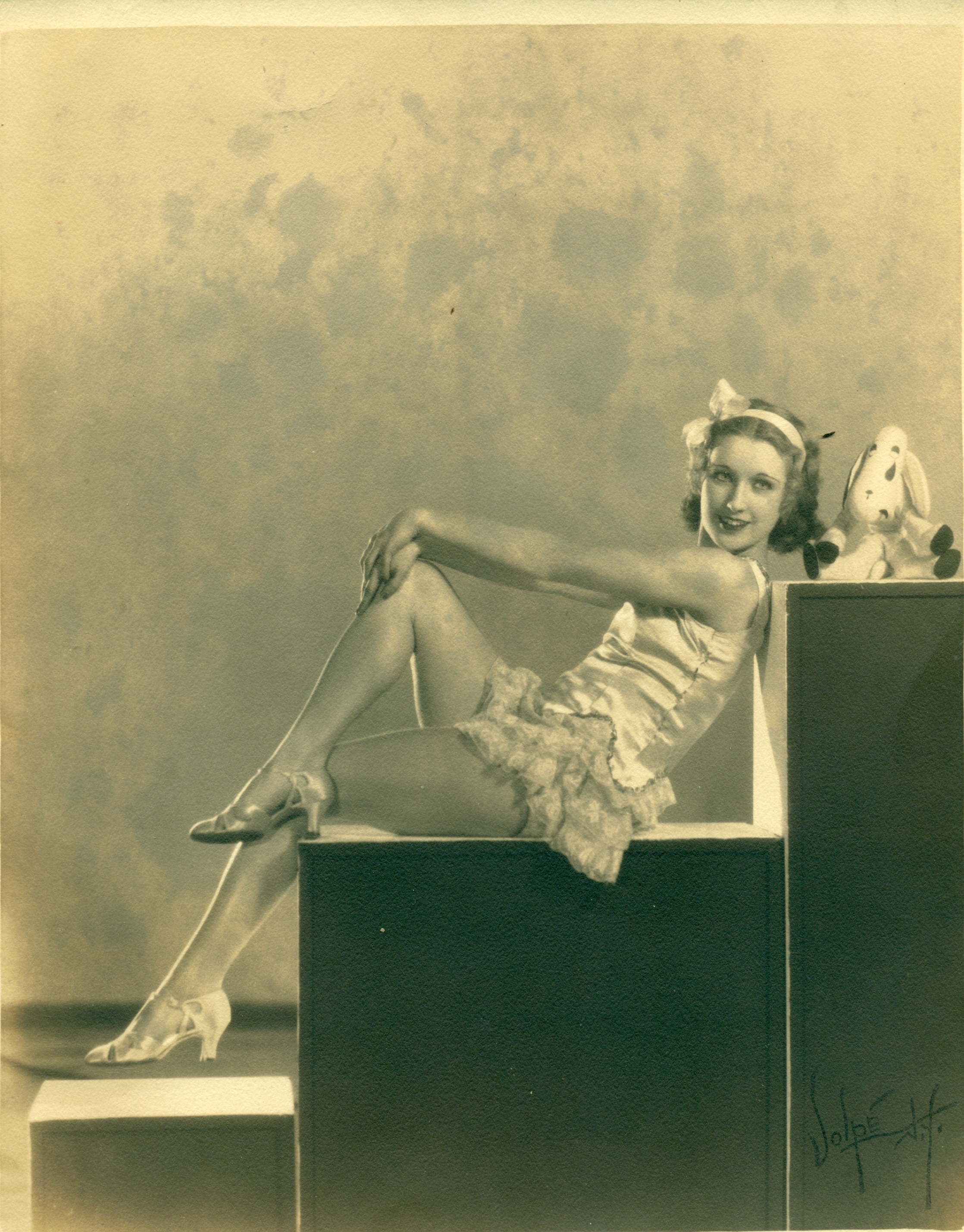
In an earlier era, when Chum flew in his air race, and Helen danced in Rio at the Copacabana, there were no camcorders or Iphones. His signature landing and Helen’s near disastrous opening night grew silent as the applause subsided, then faded in time. Much like my brother and myself in 1964, they lived life forward, one opportunity at a time.

Silent photos and written records are all that remain verifying Chum’s aerial dash through darkened skies, and Helen’s energetic dance routines. They lived life forward, embracing events as they unfolded–experienced once, then gone. I would love to see footage of Chum’s Waco airplane lifting off at dusk, or watch Helen spring across the stage. But those wishes are pipe dreams, never to happen. No vintage film or recording, (except one I found by accident) exist in the historic record. The best I can do for myself, and for readers, is try to recreate the magic of the first time around in the pages of my River of January.

Oh, by the way, I’ve never seen “Davy Crockett at the Alamo.”

ImageGail Chumbley is the author of the memoir, River of January. Also available on Kindle.

Smoke Gets in Your Eyes

th

She is bent over a small Mercury outboard, hoisting the little motor in and out of the water. Her hair is wrapped in a kerchief, much as it had been when she wired mine sweepers at the Bremerton shipyards during the war. Ailene has a cigarette in her pressed lips, Humphrey Bogart style. Her black and white knit shirt has a small pocket on the left sleeve, over her bicep, and tucked inside is a pack of cigarettes–her brand, Kent. At the end of her day on the lake, my grandmother regularly downed a couple of high balls of Canadian Club, on the rocks.

My life with my grandmother has aided tremendously with the writing of River of January.  and the sequel, The Figure Eight. She, like Helen and Chum held lifetime memberships in the “Greatest Generation,” so her attitudes, word choices, and music preferences shape my thinking while I write.  Sadly she died in January, 1990, of lung cancer no less, taking a piece of me with her.

As for smoking and drinking, Chum appears as one of the few alum from that era who tended to nurse a beer, rather than chug, and chewed his cigar more than drawing a lung full. Helen, however, much like my grandmother, relished her bourbon every evening, garnished by a lit Chesterfield, and proceeded to enjoy a whale of a good evening.

Smoking and drinking blended into American culture in the 20th Century, unlike the prior or later era’s that demonized the practices. As I researched River, sifting through voluminous piles of documents, I encountered alcohol and tobacco ads placed next to those for baby formula and Ivory Soap, among other consumer goods. Liquor ads filled theater playbills on both sides of the Atlantic, nearly always featuring a shiny, sleek bottle bearing some stylish label. The message rang clear, drinking and smoking represented the height of sophistication, glamor, and sex appeal. Both my grandmother and Helen’s mementos, verified the truth that the party never stopped.

Casablanca, the celebrated 1942 film has struck me as the epitome of romantic culture in the late 30’s on into the war years. The gowns, the cosmopolitan style of understated and clipped dialog, and a perennial sense of righteous duty embraces that era. Americans lived hard and played hard, performing extraordinary feats while hungover at the least, or still intoxicated. These remarkable Americans handled drill presses, explosives, welding equipment, and other heavy industrial machinery, not to forget the operating end of an M1 rifle in a fox hole.

Out dancing, working a graveyard shift, partying, or fighting–all done with a cigarette resting, smoldering on virtuous, patriotic lips.

Gail Chumbley is the author of River of January, a memoir. Also available on Kindle.