A Surreal Landscape

In a scene from Hitchcock’s The Birds locals are gathered in a cafe eating and chatting. An attractive blonde is on the telephone explaining that children at the local school were dive-bombed by attacking crows. An elderly lady in a beret and smoking cigarettes lectures the other diners that crows don’t behave in such an aggressive manner and that there has to be another explanation. The woman identifies herself as an ornithologist and holds forth explaining crows and even seagulls do not do such things. Immediately after her expert testimony all hell breaks loose outside the cafe window, with masses of birds swooping down on passersby. The scene is chaotic and bloody leaving no doubt these attacking birds are in fact lethal. As the nightmare scene ebbs, the camera catches the bird expert, her head bowed in grief and bewilderment, stunned everything she knew and believed no longer applied to any bird in her understanding.

That woman resembles this lifetime American history educator. I’m a fairly decent generalist in subjects ranging from PreColumbian America through today, give or take minutia. But I too, am stunned by the surreal landscape of what I believed about democracy has been easily undone by a vulgar man-child and a compromised and opportunistic Republican Party.

It feels like all my understandings of my country no longer apply. The epic and fraught-filled struggle of forging the Constitution, the furnace of Civil War, the reforms of the Progressive Age, the promise of the New Deal, and Great Society are gone, rapidly destroyed by sinister design. A totalitarian despot has seduced a once noble political party rendering the valiant patriotism of those whom came before moot. Simply writing this lament is difficult, as all I once believed and explored is no longer valid.

An online troll explained it as “no one cares about that anymore.”

That means the principled determination of General Washington to serve our nation doesn’t matter. The misguided genocide of the Five Civilized Tribes upon the Trail of Tears doesn’t matter. With nearly 700,000 deaths, the crucible of Civil War no longer matters. Those brave GI’s on Omaha Beach, (including my own grandfather) and at the Battle of The Bulge no longer matters. Those brave students who occupied lunch counter stools in the face of racial violence did so for nothing. Those boys who perished in the Vietnam War are irrelevant. In point of fact no veteran matters anymore.

American history and all the sacrifice of our forefathers and mothers doesn’t count.

That 47 can fly in a foreign “gift” aircraft with a classified budget is a good thing to do with our tax money. That he remodels a room in the White House in a golden gilt is a good thing. Who really cares if former medicaid recipients suffer.

Suck it up buttercup, these are the new rules of Trump’s America.

That he has done away with investments in the Arts and Humanities is a positive. That he has placed incompetent sycophants from Fox News in high Federal positions is good. Forget he stole top secret intelligence documents. The country elected him anyway. That he has drastically shifted the tax burden onto the middle class and off of the super wealthy is how God wants it, just ask today’s Christians.

That old white men rape girls is a good thing. 

The GOP bows at his feet and gleefully ratifies every stab-wound of domestic legislation is now to be celebrated, so pop a cork. In fact destroying America for profit is now simply wholesome and righteous. 

America’s heroes, like Sergeant Alvin York in the Argonne Forest, or Colonel Joshua Lawrence Chamberlain at Gettysburg endured their generations difficulties so that Trump can plow up Mrs Kennedy’s rose garden for a putting green. Suffragette Alice Paul who went on a hunger strike and endured the torture of forced feeding did so that the current president can manipulate votes is just fine. The murders of JFK, Dr King, Harvey Milk, or the murder of Minnesota State Senator Melissa Hortman is merely a part of the 24/7 news cycle.

Indeed nothing of our past story matters because Mr 47 has disqualified all of it to make money, and more money because that’s all that matters today. Plus of course he is a convicted felon and is terrified of going to jail where he belongs.

So when you see this disoriented American History educator with her forehead in her hand, much like the bird expert in the movie, please understand the gravitational pull of her entire life’s work is today rendered null and void. 

Gail Chumbley is the author of the two-part memoir “River of January,” and “River of January: Figure Eight,” co-writer of the screenplay, “Dancing On Air” based on those books. She has penned three stage plays on history topics, “Clay” on the life of Senator Henry Clay, “Wolf By The Ears” examining the beginnings of American slavery, and “Peer Review” where 47 is confronted by specters of four past presidents.

Connecting the Dots

Political polls have waned in recent years as reliable measures of public sentiment. The complex world of cyber communications has rendered accurate assessments nearly impossible to measure. Apart from the unexpected twists and turns of daily events, the American public seems to have decided their choices well before election day. The 2024 choice for chief executive began in the fall of 2016 with the release of the Hollywood Access clip between host, Billy Bush and guest, Donald Trump.

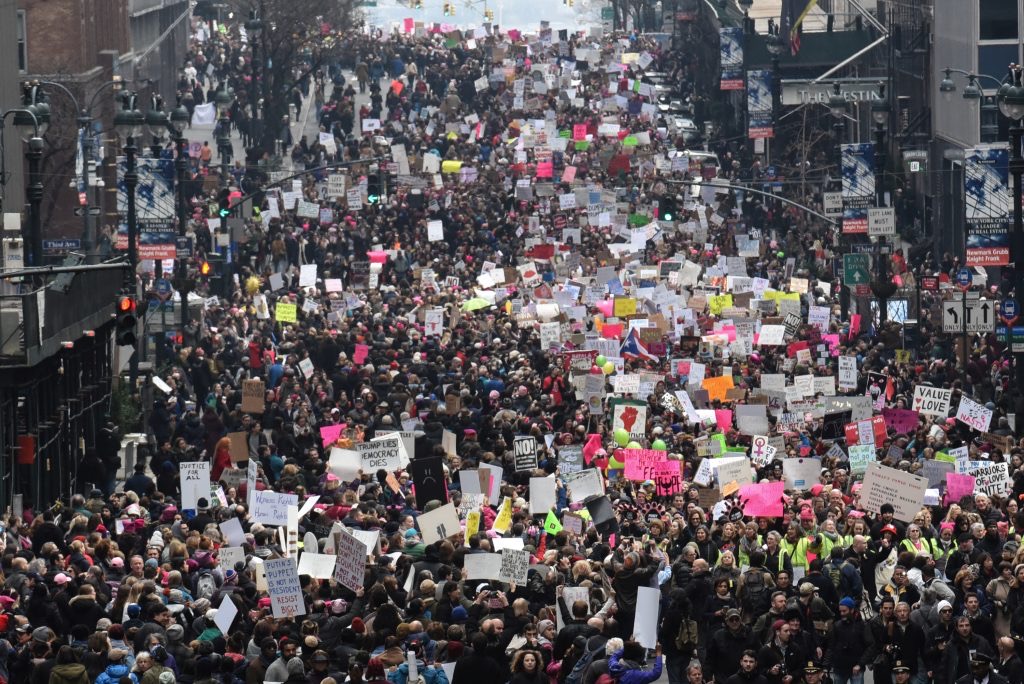
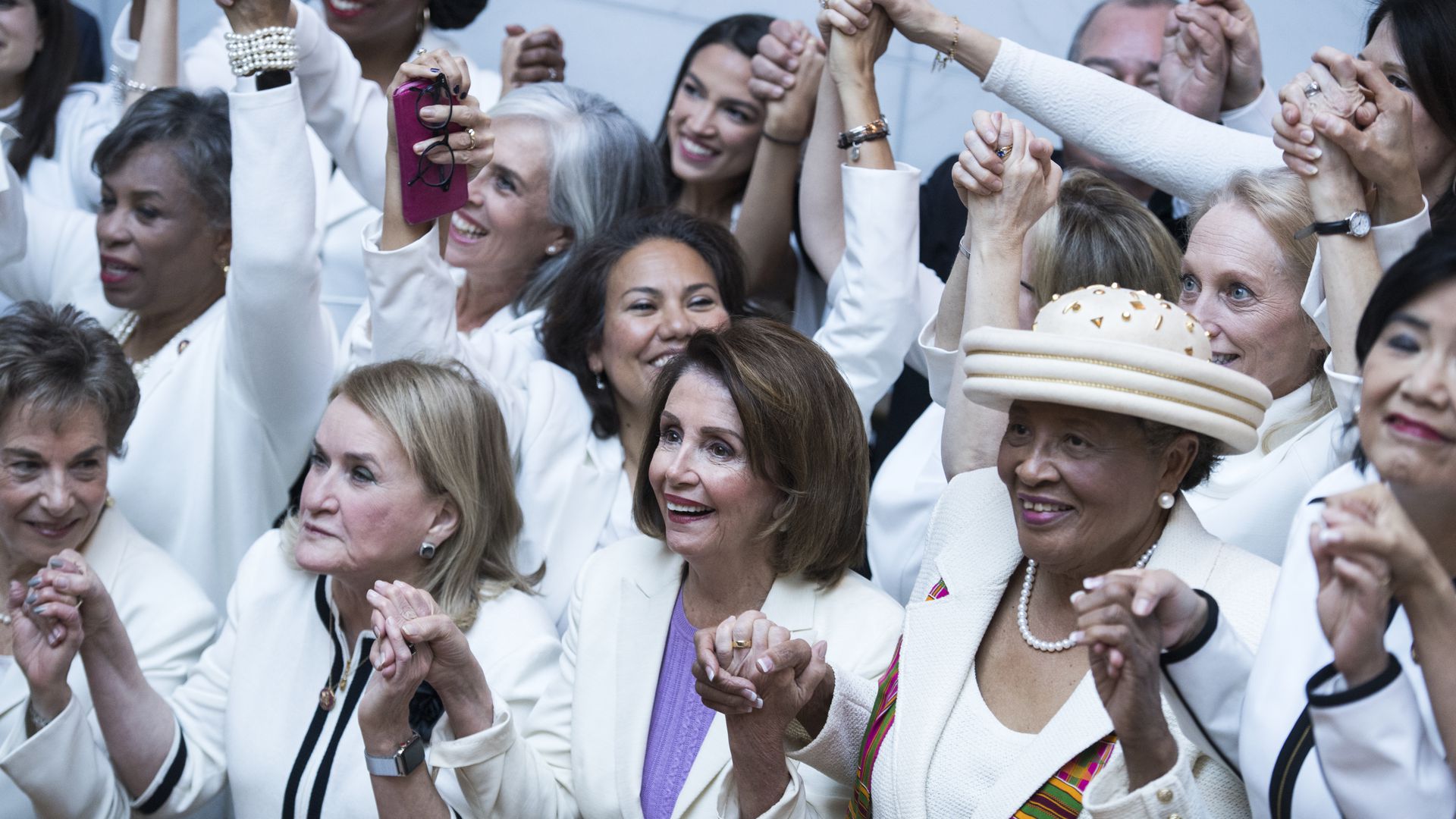
The vulgar misogyny revealed in that tape offended every thinking woman across the country. Following Trump’s surprise victory outrage spilled over as women from every point across the nation protested that an unfit and unacceptable man had reached the highest office in the land. Two months later approximately 500,000 women traveled to Washington DC to protest Trump’s ascendence to office, while sister marches gathered across all 50 states, with more around the world, numbering somewhere around 4 million women.

Not long after this historic march the “Me Too” movement gathered momentum. From prominent celebrities such as Mira Sorvino and Ashley Judd, to everyday women, all shared their #MeToo story across the internet. Clearly sexism and predatory male behavior had touched all of our lives, at one point or another, and women were through with bad behavior.

A flurry of political activity followed the March as well. According to Time Magazine women seeking elected office jumped to a 350% increase from 2016, with many winning seats in state legislatures, governorships, and federal offices. Vice President Harris was not the first woman to seek the vice presidency, but she is the first elected to office. Other women came forward with stories directly linked to Trump. E. Jean Carrol, and Stephanie Clifford, among others, spoke out to expose the neanderthal behavior of the 45th president. From their courage Mr. Trump has been convicted of sexual assault and financial fraud.

Not long after his election Trump packed the Supreme Court with inexperienced and disingenuous judges who overturned hard-won medical protections for American women. In 2022’s Dobbs V Jackson Women’s Health Organization fifty years of reproductive rights were gone almost at once. Roe V Wade died, along with an increased number of women and girls, especially in those states with new draconian medical restrictions. The viability of fetuses, life threatening complications for the mother, and victims of incest and rape found no physician willing to risk medical assistance.

More than Trump’s kissing up to tyrants like Putin, more than the January 6th coup attempt, more than inflation or immigration, or his serious legal problems, none have impacted more Americans than predatory male offenses and the right for a woman to direct her own life.

No poll can measure the deep-seated outrage women collectively feel at this moment, two days before the 2024 presidential election. To examine each episode separately from 2016 to now doesn’t fit a pollster’s brief questionnaire—but linking them together over a period of time does, much like connecting the dots on paper reveals a persuasive picture. 

Outside of some fluke or other Trump antics, Kamala Harris will prevail on Tuesday.

Postscript, 11/9/24. Little did we realize the number of women suffering from Stockholm syndrome across America.

Gail Chumbley is a history educator and writer.

Beyond The Symbols

Patriotic symbols, music, and the Pledge of Allegiance recited at a solemn ceremony can be deeply moving. A simple presentation of the flag at a formal function can be awe-inspiring. The lone, austere notes of Taps played at a military funeral elevates a moment into sacred reverence.

The sounds and symbols of American devotion are powerful.

Still, as commanding as recitations, patriotic colors, and America the Beautiful can feel, deeper symbols in our shared history can reveal so much more.

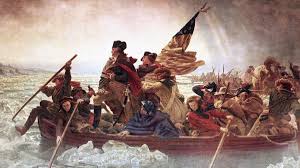
In his book, Washington’s Crossing, historian David Hackett Fischer introduces his volume with a discussion of Emmanuel Leutze’s famous painting of the same name. Fischer guides the reader through elements in the painting, noting passengers figure by figure as they frantically navigate the frozen Delaware River on that long ago Christmas night. 

Why is this particular work especially moving? Because at that juncture, December 25, 1776, the Revolutionary War looked to be flaming out after barely a start. Defeat had dogged Washington’s Continentals after being chased off of Long Island, and driven out of New York City the previous summer. As Washington planned his surprise Christmas attack, victorious Redcoats had settled into winter camp in New York City.

Humiliated, Washington knew he had to strike hard and he had to win.

Viewing his situation with the “clarity of desperation” the General ordered an assault on Hessian (German mercenary) held Trenton, New Jersey. The Continental army would have to use the element of surprise fighting against a better armed and better fed opponent. Risky to the extreme, Washington knew we, meaning America, for all time, was dependent upon his actions that night.

As for the painting, the artist depicts freezing soldiers huddled in a boat with more watercraft in the backdrop. From the starboard side, (to the right of General Washington) sits an oars-man, distinctly Black, putting his back into his strokes, ploughing through dangerous ice floes. Behind him, facing forward at the bow, is another swarthy figure, perhaps a Native American. He is desperately kicking ice with his left boot while handling a sharpened pole to break open a passage through the impossible crust. To the foreground an immigrant (a Scot by the look of his hat) studies the river’s surface closely as he pulls forward to port, while another behind him, in fisherman gear, studies the treacherous water. Others are made up of rustics, one at the tiller, along with a wounded passenger.

General Washington centers the painting as he is the central figure of the drama. Behind the General is Major James Monroe, and another rugged frontiersman by the looks of his garb. Both men are grasping a 13-star (Betsy Ross) flag, in a grip that elicits an attitude of determination and desperation, with perhaps a bit of warmth. Below both flag bearers sits a WOMAN, yes, a woman pulling her oar with an analytic eye upon the clotting water.

Black, Native, white, immigrant, the highborn, the humble, men and women, yesterday, today, and the future: all of our American lives balanced on the gamble played that night in 1776.

The point I believe Leutze is trying to convey is that we all don’t have to be the same. No one has to agree on the details of our beliefs to ride on that boat. The truth is Americans all have and had different realities and ambitions: differing views of liberty. Still, all onboard had to carefully respect each other’s space and not overturn that fragile vessel, Liberty, for we must stay afloat and row in the same direction. It is in all our interests to do so.

And that metaphor of America, that boat, tested our resolve on one of the nation’s most critical nights. Inspiration doesn’t come any better than from Leutze’s allegorical Washington’s Crossing.

Gail Chumbley is the author of the two-part memoir, River of January, and River of January: Figure Eight. Chumbley has also penned two stage plays, Clay, and Wolf By The Ears, concerning the life of Senator Henry Clay, and an in-depth examination of the beginnings of American slavery. Gail is currently working on another piece, Peer Review, best described as Dickens A Christmas Carol meets presidential history.

Give And Take

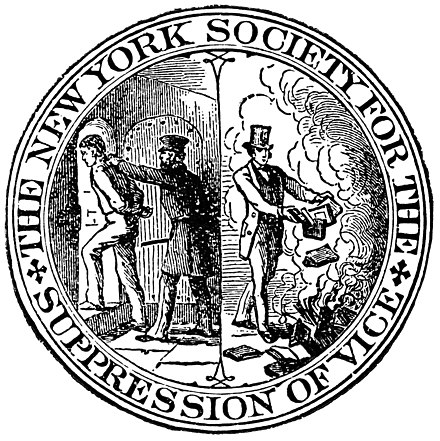
“I should say that the majority of women (happily for society) are not troubled by sexual feelings of any kind,” wrote William Acton in an 1857 medical tract. Some fifteen years later Acton’s evidence-free assumption was echoed by Postal Inspector Anthony Comstock, the founder of The New York Society for the Suppression of Vice. Comstock’s organization had been formed to monitor and enforce morality in public behavior, emphasizing in particular, the conduct of women. Any discourse on women’s sexual behavior, according to Comstock was “obscene, indecent, lewd, and immoral,” period. (Chauvinism appears to be timeless). Galvanized by his puritanical convictions, Mr. Comstock set about cleansing the moral conduct of the people of New York. (Note the Society’s Seal, above, depicts book burning, as a legitimate means to his ends.)

Finding momentum statewide, Comstock took his crusade to Washington DC, where he convinced the US Postmaster General to battle unacceptable behaviors on a national scale. Soon Congress complied with passage of the Comstock Act in 1873. This law declared that any correspondence touching on women’s birth control, contraception, and abortion were prohibited from the US mail.

Among Comstock’s many opponents, and there were more than a few, reformer and free-thinker, Ezra Heywood defied the law, publishing articles and books supporting women’s rights, and defending female sexual freedom. Mr. Heywood most notorious work, Cupid’s Yoke, insisted marriage an act of equality and balance between a man and a woman, quickly attracting government attention, when he was promptly arrested for his writings. In court, Heywood continued to argue that women were capable of controlling their own lives, and bodies, insisting the Comstock Act was destroying the liberty of conscience. Further, Heywood insisted women ought, and must have a voice in determining the size of their own families. Apparently just expressing such thoughts was enough to prove obscenity, and Heywood headed to jail for his persistence.

In the early 20th Century another movement targeted morals, this time in the film industry. Postmaster General, Will Hays, threatened Hollywood studios either to establish standards in motion picture content or the government would do the job. Known as the Hays Code, the studios prohibited profanity, nudity, violent sexuality, race mixing, and lustful kisses on the screen. In an interesting side note the film that sparked the controversy was 1934’s release of Tarzan. Maureen O’Sullivan’s Jane swimming naked alongside Johnny Weissmuller’s Tarzan sparked the scandal. Twenty Yale students, for example, stepped in front of a theater screen to halt the movie in New Haven, Connecticut.

Mr. Hay’s code remained in effect from 1934 until 1968, when the Supreme Court ruled films are art, and thus protected by the First Amendment. In place of the code, the Motion Pictures Association instead instituted the rating system we are accustomed to today. 

The specter of the Comstock Law, and the Hays Code still casts a long shadow over American culture. Instead of concentrating on public policy, and other issues; power grids, global warming, gun violence, and infrastructure, (plus many more) politicians push their private notions of morality upon the rest of us.

Women’s sexuality and healthcare are not obscene matters, nor are they open for public debate. A fixture of the 19th, and early 20th centuries was the norm known as coveture. By definition coveture meant the husband acted for his wife in all areas of life. She could not vote, nor own property in her own right, and her children belonged to her husband. She belonged to her husband. No wonder Mr. Comstock and Mr. Hays found such success in their efforts.

Those artifacts of another less enlightened age are over. Exploiting the pendulum of political opportunity, giving and taking rights from women, will no longer wash. The overturning of Roe, the war on medical aid in pregnancy, the patchwork of state reproduction laws, (14 states ban abortions from the moment of fertilization*) implies something deeply sinister. Women cannot be trusted to think for themselves, possess no self-agency like minors, or the severely mentally ill.

Absurd.

Attempting to regulate 50.4%** of the US population, (there are 100 women to every 97 men) has caused irreparable political harm to those behind today’s archaic, and reactionary movement.

See you all at the polls.

*Axios, Dec. 15, 2023

**www.census.gov

Gail Chumbley is the author of the two-part memoir, “River of January,” and “River of January:Figure Eight.” Chumbley has penned three stage plays, “Clay” about Statesman Henry Clay, “Wolf By The Ears,” an exploration of slavery and racism, and “Peer Review,” on Presidential character.

The only thing new in the world is the history you don’t know. Harry Truman

Infinity Clause

In the fall of 1789 recently inaugurated President, George Washington called for a National day of Thanksgiving. Under the previous frame of government, the unworkable Articles of Confederation, such proclamations had customarily been sent to the governors of each state. However, Washington abandoned that practice. As the first US President, Washington instead issued the proclamation to the American People.

This President deliberately bypassed state governments.

The new Constitution, practically wet with ink, had been intentionally addressed to “We The People,” and Washington aimed through his administration to join every citizen, regardless of state, to the national government. This proclamation, seemingly banal, clearly signaled a dramatic reset of power in the new Republic.

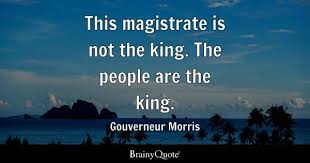
Two years prior, in Philadelphia, the framers turned attention to composing a Preamble, otherwise understood as a mission statement. Preambles were not unusual, each state government began with them, but in that hot, humid chamber of Constitution Hall work commenced to define America’s mission. Gouverneur Morris, a delegate from New York, most probably authored the statement, and it was Morris who set out the language.

We the people of the United States, in order to form a more perfect union, establish justice, insure domestic tranquility, provide for the common defense, promote the general welfare, and secure the blessings of liberty to ourselves and our posterity, do ordain and establish this Constitution for the United States of America.

The heart of these guiding principles begin with the phrase “The People,” followed by the active verb, “To Form.”

The Preamble rests upon this infinitive clause, implying America is a work in constant progress. This mission is a founding legacy fixed upon enduring bedrock.

Susan B Anthony sought justice voting in the Election of 1872. Arrested for casting her ballot, Anthony faced a Federal judge, and received a verdict of guilty. The 19th Amendment, ratified nearly fifty years later extended the vote to women. Hounded by settlers from the 17th Century onward, Native Americans sought survival and the tranquility to peacefully co-exist with whites. It’s ironic that indigenous Americans were not citizens until 1924.The United States in 1860, teetered on a knife point of dissolution. President, Abraham Lincoln, could not stand by and watch democracy die under the threat of secession. Preparing for the common defense Lincoln mobilized northern forces to defend the Union. From Jane Addam’s Hull House, a Chicago settlement center for immigrants, promoting the general welfare, to Dred Scott, and Homer Plessy’s struggle to reap the blessings of liberty, each generation stood tall in their historic moments.

To honor the principles of the document, and as heirs of Constitutional law, our charge, like those before, is weightier than our private comfort. We The People have no choice but to continue Gouverneur Morris, and President Washington’s wishes To Form A More Perfect Union.

Modern America’s mini tyrants must not prevail. Make your voice heard at the ballot box on Tuesday, November 8, 2022.

Gail Chumbley is the author of the two-part memoir, “River of January,” and “River of January: Figure Eight.” Both titles are available on Kindle. Chumbley has written two historical plays, “Clay” regarding the life of Senator Henry Clay, and “Wolf By The Ears,” an exploring the roots of slavery and racism.

Why We Try

2017 Women’s March

When I first began this essay it ripened to nearly five hundred words to share one idea. Why I am a life-long Democrat. 

The original essay discussed the New Deal, the creation of the United Nations, the Marshall Plan, the GI Bill, and how strengthening Labor Unions evoked a sense of common purpose; how the economy boomed, and the middle class flourished.

Now all I want to impart is that Ronald Reagan was wrong. Big government is not the problem. Big government checked by regulations works remarkably well. 

I am a Democrat because with all its flaws, we stand equal in the eyes of Constitutional Law.* People made the Constitution, and we must preserve it. In general, States’ Rights is no more than a distraction perpetrated by selfish insiders who legislate their own interests. Residents are convinced through a wink and a nod, that the enemy (Big Government) must be defied, using catch phrases like “our values,” and “real conservative.”

In truth, the Federal Government can do more for all of us than any individual state, or any individual citizen can do for themselves. As I write, Idaho’s governor has asked for, and been granted federal funds for drought aid. Talk about biting the hand that feeds the State.

I am a Democrat because I’m inspired by the nobility of America’s past champions; the persistence of General George Washington, the compassion of Abraham Lincoln, the purpose of Alice Paul, and the articulate vision of Barack Obama. I am a Democrat because James Madison instructed us to create “A More Perfect Union.” Without that persistence, compassion, purpose, and vision America cannot continue as “the world’s last best hope,” as Lincoln also described us.

At bottom I am a Democrat because I know not one of us is perfect. We just keep trying. 

*Just heard the headline regarding the reversing of the Roe decision. Time to gather 4,600,00 of my best friends (2017 Women’s March) and organize.

Heartfelt Objections

We couldn’t find a seat on the Washington Metro. In truth, we couldn’t see the Metro station, just a mass of humanity.

This gathering challenged the notion of enormous. The moment was historic.

Dumb luck came to our aid. A city bus hissed to a stop at the curb, and my friend and I hopped aboard, joined by a couple hundred of our new best friends. The atmosphere crackled with joy, solidarity and diesel fumes. I nearly busted out with “99 Bottles of Beer on the Wall.”

The driver seemed to catch our enthusiasm and peppered us with questions about the Women’s March. What time, where, how long would it last? She smiled realizing her shift would end before the speakers began, and I still wonder if she made it.

Nearly five hundred thousand of us convened on the National Mall, and expressed our heart-felt objections concerning the newly elected president. We marched as one.

By the way, no one violently attacked the halls of government. Though, if memory serves, I did flip off the Trump Hotel.

In October, 1969, 250,000 opponents of the Vietnam War descended upon Washington DC. In an event called Moratorium Day no one violently attacked the halls of government.

In the swelter of a 1963 Washington summer, Dr King convened the “Poor People’s” March on Washington. 250,000 Americans petitioned their government for a voting rights bill. No one even considered attacking the halls of government.

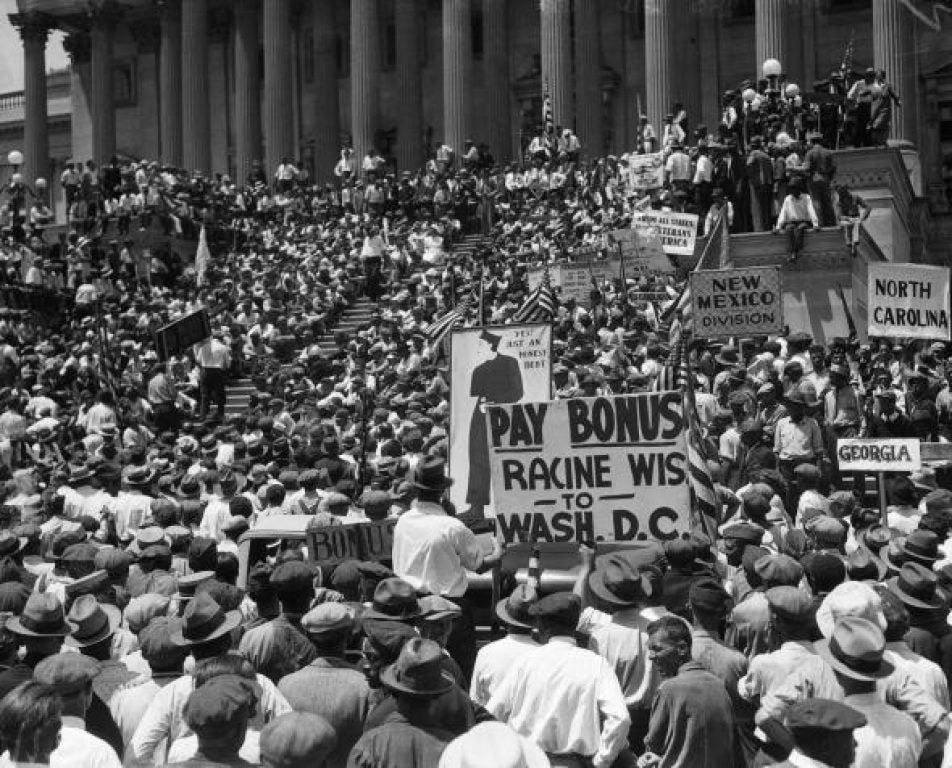
In the Spring and Summer of 1932 during the depth of the Great Depression, somewhere around 20,000 desperate men, some with their families in tow, marched on Washington DC as part of the Depression-era Bonus Army. For their trouble the marchers were attacked by Douglas McArthur, and an army detachment, who instead, burned out the shanties of the desperate. Again, no one attacked the halls of government.

On March 3, 1913, the day before the inauguration of Woodrow Wilson, nearly 10,000 women paraded down Pennsylvania Avenue promoting women’s suffrage. Though they were attacked by angry men along the route, not one woman attacked the halls of government.

Nearly 10,000 American’s joined Jacob Coxey’s Army in May of 1894. An extended economic depression caused mass unemployment, and the “Army,” demanded a public works bill to create jobs. Though the marchers reached the Capitol, and Coxey, himself leaped up the stairs to read his public works bill, the police opened up some heads, and the crowd dissolved. No one entered the Capitol.

Public protest is as American as baseball. The difference lies in our use of free speech. On January 6, 2021 a mindless, misguided, and dangerous mob hijacked the right to assemble, instead escalating into a violent attack on our center of government. There is no middle ground; this was an attempted coup to seize power.

We were correct in 2017, as were those in 1894, 1932, 1963, and 1968. Marchers were seeking “the blessings of liberty” within the rule of law. None of us ignored nor defiled the spirit of protest.

And that sense of heart-felt objection, to that president proved accurate.

Gail Chumbley is the author of the two-part memoir, “River of January,” and “River of January: Figure Eight.” Both titles available on Kindle.

gailchumbley@gmail.com

The Unforgivable Curse

Many of us have read JK Rowling’s Harry Potter books and/or watched the films. The author created a wondrous world of spells, incantations, and even included law and order via three unforgivable curses. 

There are guardrails in this tale, and a bit of a messiah storyline. Harry willingly sacrifices himself, as had his parents and many others before. However, the “Boy Who Lived,” does, and returns to fight and vanquish wickedness. 

Love, too, permeates the storyline, and the righteous power of good over evil. 

But that’s not my take.

As a career History educator I came to a different conclusion; Harry Potter told me that failing to understand our shared past can be lethal. And that was the metaphor I preached to my History students.

Harry rises to the threat and defends all that is good and valuable in his world. If he didn’t, Harry could have been killed and his world destroyed.

It’s so apropos at this moment in our history to grasp our collective story as Americans.

Honest differences within the confines of our beliefs is one thing. Obliterating the tenants of democracy is quite another. 

Americans cannot surrender our country to this would-be dictator, the things that have cost our people so dearly. Freezing soldiers at Valley Forge did not languish to enable DJT to trademark his brand to hotels, steaks or a failed university. The fallen at Gettysburg, and the suffering in Battle of the Bulge was not to pave the way for DJT to get us all killed from a ravaging plague. The girls who perished in the Triangle Shirtwaist Fire, the miners murdered in the Ludlow Massacre, or humiliated Civil Rights workers beaten at the Woolworth’s lunch counter was not for Donald Trump to validate racism and sexism and undo labor laws. 

He doesn’t know our nation’s history, and as George Santayana warned us, we are condemned to sacrifice all over again. 

Vote. 

Gail Chumbley is the author of the two-part memoir, “River of January,” and “River of January: Figure Eight.

gailchumbley@gmail.com