A Surreal Landscape

In a scene from Hitchcock’s The Birds locals are gathered in a cafe eating and chatting. An attractive blonde is on the telephone explaining that children at the local school were dive-bombed by attacking crows. An elderly lady in a beret and smoking cigarettes lectures the other diners that crows don’t behave in such an aggressive manner and that there has to be another explanation. The woman identifies herself as an ornithologist and holds forth explaining crows and even seagulls do not do such things. Immediately after her expert testimony all hell breaks loose outside the cafe window, with masses of birds swooping down on passersby. The scene is chaotic and bloody leaving no doubt these attacking birds are in fact lethal. As the nightmare scene ebbs, the camera catches the bird expert, her head bowed in grief and bewilderment, stunned everything she knew and believed no longer applied to any bird in her understanding.

That woman resembles this lifetime American history educator. I’m a fairly decent generalist in subjects ranging from PreColumbian America through today, give or take minutia. But I too, am stunned by the surreal landscape of what I believed about democracy has been easily undone by a vulgar man-child and a compromised and opportunistic Republican Party.

It feels like all my understandings of my country no longer apply. The epic and fraught-filled struggle of forging the Constitution, the furnace of Civil War, the reforms of the Progressive Age, the promise of the New Deal, and Great Society are gone, rapidly destroyed by sinister design. A totalitarian despot has seduced a once noble political party rendering the valiant patriotism of those whom came before moot. Simply writing this lament is difficult, as all I once believed and explored is no longer valid.

An online troll explained it as “no one cares about that anymore.”

That means the principled determination of General Washington to serve our nation doesn’t matter. The misguided genocide of the Five Civilized Tribes upon the Trail of Tears doesn’t matter. With nearly 700,000 deaths, the crucible of Civil War no longer matters. Those brave GI’s on Omaha Beach, (including my own grandfather) and at the Battle of The Bulge no longer matters. Those brave students who occupied lunch counter stools in the face of racial violence did so for nothing. Those boys who perished in the Vietnam War are irrelevant. In point of fact no veteran matters anymore.

American history and all the sacrifice of our forefathers and mothers doesn’t count.

That 47 can fly in a foreign “gift” aircraft with a classified budget is a good thing to do with our tax money. That he remodels a room in the White House in a golden gilt is a good thing. Who really cares if former medicaid recipients suffer.

Suck it up buttercup, these are the new rules of Trump’s America.

That he has done away with investments in the Arts and Humanities is a positive. That he has placed incompetent sycophants from Fox News in high Federal positions is good. Forget he stole top secret intelligence documents. The country elected him anyway. That he has drastically shifted the tax burden onto the middle class and off of the super wealthy is how God wants it, just ask today’s Christians.

That old white men rape girls is a good thing. 

The GOP bows at his feet and gleefully ratifies every stab-wound of domestic legislation is now to be celebrated, so pop a cork. In fact destroying America for profit is now simply wholesome and righteous. 

America’s heroes, like Sergeant Alvin York in the Argonne Forest, or Colonel Joshua Lawrence Chamberlain at Gettysburg endured their generations difficulties so that Trump can plow up Mrs Kennedy’s rose garden for a putting green. Suffragette Alice Paul who went on a hunger strike and endured the torture of forced feeding did so that the current president can manipulate votes is just fine. The murders of JFK, Dr King, Harvey Milk, or the murder of Minnesota State Senator Melissa Hortman is merely a part of the 24/7 news cycle.

Indeed nothing of our past story matters because Mr 47 has disqualified all of it to make money, and more money because that’s all that matters today. Plus of course he is a convicted felon and is terrified of going to jail where he belongs.

So when you see this disoriented American History educator with her forehead in her hand, much like the bird expert in the movie, please understand the gravitational pull of her entire life’s work is today rendered null and void. 

Gail Chumbley is the author of the two-part memoir “River of January,” and “River of January: Figure Eight,” co-writer of the screenplay, “Dancing On Air” based on those books. She has penned three stage plays on history topics, “Clay” on the life of Senator Henry Clay, “Wolf By The Ears” examining the beginnings of American slavery, and “Peer Review” where 47 is confronted by specters of four past presidents.

American Expatriates and Celebrities

In the long history of the world, only a few generations have been granted the role of defending freedom in its hour of maximum danger. I do not shrink from this responsibility–I welcome it.  John F Kennedy, 1961

To American expatriates abroad and celebrities remaining at home,

Armed with your fame and recognizable voice all of you hold a public leadership role whether you choose to have one or not. Brave, out-spoken spokesmen for Democracy are a bit short on the ground and America needs her sons and daughters to rise up in defense. 

No one runs us out of our home.

This is not a normal time, nothing about this administration is normal and leaving the country or remaining silent sends a message of throwing in the towel. You are abandoning the rest of us to hold the frontlines the best we can, but your face and words are needed. Too many in the press, in politics, and in the sports world are caving to accept this unacceptable lout out of fear or resignation. That behavior must end.

Charlie Chaplin, Adolph Zukor, and Douglas Fairbanks Jr  sold war bonds during the First World War, Gable and Stewart enlisted in the service to fight Nazi tyranny. Carole Lombard lost her life in a plane crash after raising $2 million dollars for the war effort. You owe it to Dalton Trumbo, Ring Lardner and those of The Hollywood Ten who stood fast for freedom when caught in the fear of America’s Red Scare. Lena Horne, Pete Seeger and Zero Mostel, among others, faced blacklisting through the perilous period of McCarthyism. This is exactly the same ‘once in a generation’ moment testing our commitment to our democratic principles.

Leaving the country or remaining silent sends the terrible message of surrender. And leaving is selfish. Giving up on resistance essentially says to hell with the United States. This is the time when we need you most to stand tall. Liz Cheney hasn’t cut and run, nor has Adam Kinzinger. And he hates them the most because they know he’s an absurd phony. They also know they will never give up on America and neither should you. 

Now that is a valiant example of patriotism. We can do no less.

Those of the future are depending on all of us to make this perilous moment right and to pass on an unsoiled America for generations to come. Moreover, our posterity will learn who stood fast in this momentary struggle for liberty and those who abandoned America in its time of need.

This is merely one chapter in the story of America and we are still a young nation. The United States is founded upon the will of the people and this administration is not your will or mine. Today’s corrupt collaborators who have prostituted our republic for momentary gain will fall by the wayside. These sycophants will share this wannabe dictator’s fate.

And that petty bag of stupid will fail, it is in his DNA. That’s what he’s always done. And there will be a lot of rebuilding ahead of us and your encouraging presence will be critical. No one runs us out of our country, nor do we forsake our duty in time of America’s need. We are not a servile people and do not bow down to anyone. Our rights according to Mr. Jefferson are derived by our Creator, and no one man can take them away. 

America has come so far in realizing A More Perfect Union. The expansion of the vote, black males, women, white and black, Native Americans, and for 18-year-olds. Other gains include people with disabilities, women in the military, reproductive rights, marriage equality, and the election of America’s first black President. And all of us at home have witnessed much of this affirming progress.

So come home, we really need you in our time of peril. We need your voice, your humor, music and the public demonstration of your persistence. That goes for the rest of you with a public profile. You are still here, and we need you to step up. Do not be afraid. Stand fast and speak truth to power.

Be loud. 

Gail Chumbley is the author of the two part memoir River of January, and River of January: Figure Eight. She has also authored three stage plays, Clay, Wolf By The Ears, and Peer Review. Chumbley is the co-writer of Dancing On Air a screenplay based on her River books.

Connecting the Dots

Political polls have waned in recent years as reliable measures of public sentiment. The complex world of cyber communications has rendered accurate assessments nearly impossible to measure. Apart from the unexpected twists and turns of daily events, the American public seems to have decided their choices well before election day. The 2024 choice for chief executive began in the fall of 2016 with the release of the Hollywood Access clip between host, Billy Bush and guest, Donald Trump.

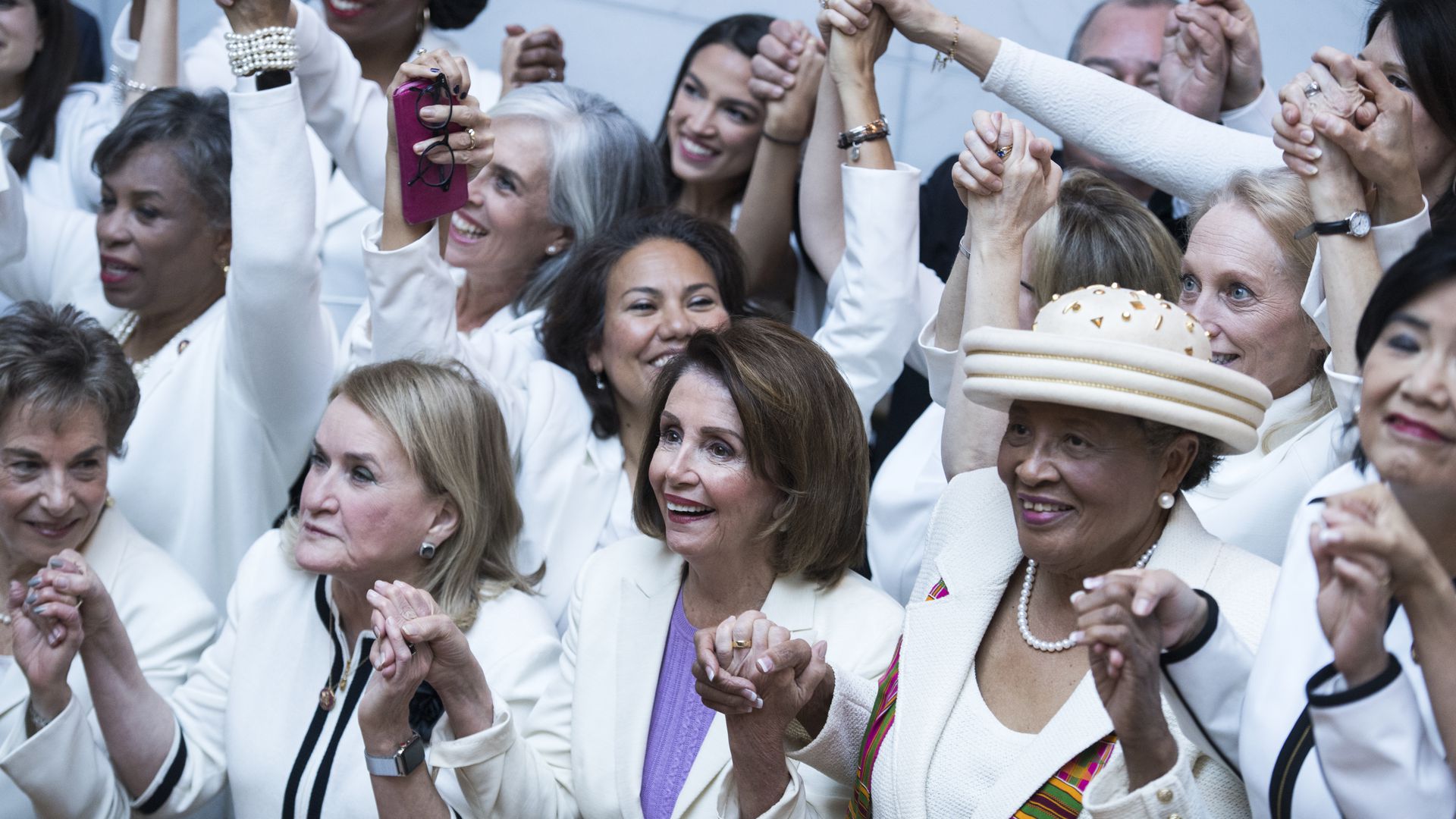
The vulgar misogyny revealed in that tape offended every thinking woman across the country. Following Trump’s surprise victory outrage spilled over as women from every point across the nation protested that an unfit and unacceptable man had reached the highest office in the land. Two months later approximately 500,000 women traveled to Washington DC to protest Trump’s ascendence to office, while sister marches gathered across all 50 states, with more around the world, numbering somewhere around 4 million women.

Not long after this historic march the “Me Too” movement gathered momentum. From prominent celebrities such as Mira Sorvino and Ashley Judd, to everyday women, all shared their #MeToo story across the internet. Clearly sexism and predatory male behavior had touched all of our lives, at one point or another, and women were through with bad behavior.

A flurry of political activity followed the March as well. According to Time Magazine women seeking elected office jumped to a 350% increase from 2016, with many winning seats in state legislatures, governorships, and federal offices. Vice President Harris was not the first woman to seek the vice presidency, but she is the first elected to office. Other women came forward with stories directly linked to Trump. E. Jean Carrol, and Stephanie Clifford, among others, spoke out to expose the neanderthal behavior of the 45th president. From their courage Mr. Trump has been convicted of sexual assault and financial fraud.

Not long after his election Trump packed the Supreme Court with inexperienced and disingenuous judges who overturned hard-won medical protections for American women. In 2022’s Dobbs V Jackson Women’s Health Organization fifty years of reproductive rights were gone almost at once. Roe V Wade died, along with an increased number of women and girls, especially in those states with new draconian medical restrictions. The viability of fetuses, life threatening complications for the mother, and victims of incest and rape found no physician willing to risk medical assistance.

More than Trump’s kissing up to tyrants like Putin, more than the January 6th coup attempt, more than inflation or immigration, or his serious legal problems, none have impacted more Americans than predatory male offenses and the right for a woman to direct her own life.

No poll can measure the deep-seated outrage women collectively feel at this moment, two days before the 2024 presidential election. To examine each episode separately from 2016 to now doesn’t fit a pollster’s brief questionnaire—but linking them together over a period of time does, much like connecting the dots on paper reveals a persuasive picture. 

Outside of some fluke or other Trump antics, Kamala Harris will prevail on Tuesday.

Postscript, 11/9/24. Little did we realize the number of women suffering from Stockholm syndrome across America.

Gail Chumbley is a history educator and writer.

Beyond The Symbols

Patriotic symbols, music, and the Pledge of Allegiance recited at a solemn ceremony can be deeply moving. A simple presentation of the flag at a formal function can be awe-inspiring. The lone, austere notes of Taps played at a military funeral elevates a moment into sacred reverence.

The sounds and symbols of American devotion are powerful.

Still, as commanding as recitations, patriotic colors, and America the Beautiful can feel, deeper symbols in our shared history can reveal so much more.

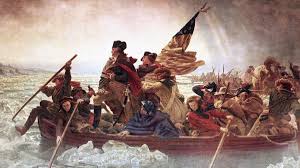
In his book, Washington’s Crossing, historian David Hackett Fischer introduces his volume with a discussion of Emmanuel Leutze’s famous painting of the same name. Fischer guides the reader through elements in the painting, noting passengers figure by figure as they frantically navigate the frozen Delaware River on that long ago Christmas night. 

Why is this particular work especially moving? Because at that juncture, December 25, 1776, the Revolutionary War looked to be flaming out after barely a start. Defeat had dogged Washington’s Continentals after being chased off of Long Island, and driven out of New York City the previous summer. As Washington planned his surprise Christmas attack, victorious Redcoats had settled into winter camp in New York City.

Humiliated, Washington knew he had to strike hard and he had to win.

Viewing his situation with the “clarity of desperation” the General ordered an assault on Hessian (German mercenary) held Trenton, New Jersey. The Continental army would have to use the element of surprise fighting against a better armed and better fed opponent. Risky to the extreme, Washington knew we, meaning America, for all time, was dependent upon his actions that night.

As for the painting, the artist depicts freezing soldiers huddled in a boat with more watercraft in the backdrop. From the starboard side, (to the right of General Washington) sits an oars-man, distinctly Black, putting his back into his strokes, ploughing through dangerous ice floes. Behind him, facing forward at the bow, is another swarthy figure, perhaps a Native American. He is desperately kicking ice with his left boot while handling a sharpened pole to break open a passage through the impossible crust. To the foreground an immigrant (a Scot by the look of his hat) studies the river’s surface closely as he pulls forward to port, while another behind him, in fisherman gear, studies the treacherous water. Others are made up of rustics, one at the tiller, along with a wounded passenger.

General Washington centers the painting as he is the central figure of the drama. Behind the General is Major James Monroe, and another rugged frontiersman by the looks of his garb. Both men are grasping a 13-star (Betsy Ross) flag, in a grip that elicits an attitude of determination and desperation, with perhaps a bit of warmth. Below both flag bearers sits a WOMAN, yes, a woman pulling her oar with an analytic eye upon the clotting water.

Black, Native, white, immigrant, the highborn, the humble, men and women, yesterday, today, and the future: all of our American lives balanced on the gamble played that night in 1776.

The point I believe Leutze is trying to convey is that we all don’t have to be the same. No one has to agree on the details of our beliefs to ride on that boat. The truth is Americans all have and had different realities and ambitions: differing views of liberty. Still, all onboard had to carefully respect each other’s space and not overturn that fragile vessel, Liberty, for we must stay afloat and row in the same direction. It is in all our interests to do so.

And that metaphor of America, that boat, tested our resolve on one of the nation’s most critical nights. Inspiration doesn’t come any better than from Leutze’s allegorical Washington’s Crossing.

Gail Chumbley is the author of the two-part memoir, River of January, and River of January: Figure Eight. Chumbley has also penned two stage plays, Clay, and Wolf By The Ears, concerning the life of Senator Henry Clay, and an in-depth examination of the beginnings of American slavery. Gail is currently working on another piece, Peer Review, best described as Dickens A Christmas Carol meets presidential history.

Give And Take

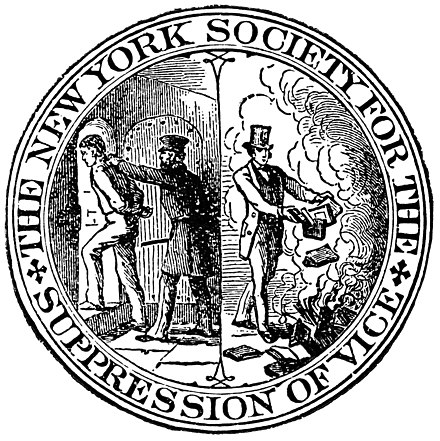
“I should say that the majority of women (happily for society) are not troubled by sexual feelings of any kind,” wrote William Acton in an 1857 medical tract. Some fifteen years later Acton’s evidence-free assumption was echoed by Postal Inspector Anthony Comstock, the founder of The New York Society for the Suppression of Vice. Comstock’s organization had been formed to monitor and enforce morality in public behavior, emphasizing in particular, the conduct of women. Any discourse on women’s sexual behavior, according to Comstock was “obscene, indecent, lewd, and immoral,” period. (Chauvinism appears to be timeless). Galvanized by his puritanical convictions, Mr. Comstock set about cleansing the moral conduct of the people of New York. (Note the Society’s Seal, above, depicts book burning, as a legitimate means to his ends.)

Finding momentum statewide, Comstock took his crusade to Washington DC, where he convinced the US Postmaster General to battle unacceptable behaviors on a national scale. Soon Congress complied with passage of the Comstock Act in 1873. This law declared that any correspondence touching on women’s birth control, contraception, and abortion were prohibited from the US mail.

Among Comstock’s many opponents, and there were more than a few, reformer and free-thinker, Ezra Heywood defied the law, publishing articles and books supporting women’s rights, and defending female sexual freedom. Mr. Heywood most notorious work, Cupid’s Yoke, insisted marriage an act of equality and balance between a man and a woman, quickly attracting government attention, when he was promptly arrested for his writings. In court, Heywood continued to argue that women were capable of controlling their own lives, and bodies, insisting the Comstock Act was destroying the liberty of conscience. Further, Heywood insisted women ought, and must have a voice in determining the size of their own families. Apparently just expressing such thoughts was enough to prove obscenity, and Heywood headed to jail for his persistence.

In the early 20th Century another movement targeted morals, this time in the film industry. Postmaster General, Will Hays, threatened Hollywood studios either to establish standards in motion picture content or the government would do the job. Known as the Hays Code, the studios prohibited profanity, nudity, violent sexuality, race mixing, and lustful kisses on the screen. In an interesting side note the film that sparked the controversy was 1934’s release of Tarzan. Maureen O’Sullivan’s Jane swimming naked alongside Johnny Weissmuller’s Tarzan sparked the scandal. Twenty Yale students, for example, stepped in front of a theater screen to halt the movie in New Haven, Connecticut.

Mr. Hay’s code remained in effect from 1934 until 1968, when the Supreme Court ruled films are art, and thus protected by the First Amendment. In place of the code, the Motion Pictures Association instead instituted the rating system we are accustomed to today. 

The specter of the Comstock Law, and the Hays Code still casts a long shadow over American culture. Instead of concentrating on public policy, and other issues; power grids, global warming, gun violence, and infrastructure, (plus many more) politicians push their private notions of morality upon the rest of us.

Women’s sexuality and healthcare are not obscene matters, nor are they open for public debate. A fixture of the 19th, and early 20th centuries was the norm known as coveture. By definition coveture meant the husband acted for his wife in all areas of life. She could not vote, nor own property in her own right, and her children belonged to her husband. She belonged to her husband. No wonder Mr. Comstock and Mr. Hays found such success in their efforts.

Those artifacts of another less enlightened age are over. Exploiting the pendulum of political opportunity, giving and taking rights from women, will no longer wash. The overturning of Roe, the war on medical aid in pregnancy, the patchwork of state reproduction laws, (14 states ban abortions from the moment of fertilization*) implies something deeply sinister. Women cannot be trusted to think for themselves, possess no self-agency like minors, or the severely mentally ill.

Absurd.

Attempting to regulate 50.4%** of the US population, (there are 100 women to every 97 men) has caused irreparable political harm to those behind today’s archaic, and reactionary movement.

See you all at the polls.

*Axios, Dec. 15, 2023

**www.census.gov

Gail Chumbley is the author of the two-part memoir, “River of January,” and “River of January:Figure Eight.” Chumbley has penned three stage plays, “Clay” about Statesman Henry Clay, “Wolf By The Ears,” an exploration of slavery and racism, and “Peer Review,” on Presidential character.

The only thing new in the world is the history you don’t know. Harry Truman

They Were Wrong

“Slave owners and white racists were afraid that the world they had always known was slipping away from them. Fear was a great motivator—fear of change, fear of losing power, fear being that they were wrong. The roots of white anxiety over threats to enslavement and to legalize white supremacy ran deep.”

John Meacham, And There was Light. Random House, 2022, page 55.

Reading this passage last night stunned me. A myriad of thoughts rushed at once, promptly crystallizing into one central truth; racial dynamics in America have not changed. Not. One. Bit.

Meacham’s book, a biography of Lincoln, focuses on the shaping events that made Lincoln arguably America’s greatest President. However, those same circumstances left the Southern slave power angry, and lethally dangerous. This metastasizing rancor ultimately exploded into Civil War, and to Lincoln’s 1865 murder.

The Missouri Compromise triggered the first alarm below the Mason-Dixon Line. That slavery could be limited through any federal legislative act left slavers touchy and suspicious. Sensitive to any criticism Southern owners  (as Mr. Meacham pointed out), viewed any outside opposition to their standing as a dishonorable insult.

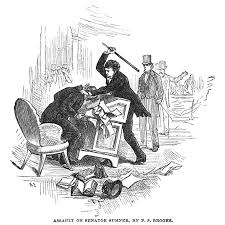
Congressmen and Senators frequently squared off years before soldiers manned battle lines. A Massachusetts Senator suffered a severe beating on the Senate floor for an anti-slavery address. So volatile became the rhetoric that the House chamber finally adopted a “gag rule” prohibiting any mention of slavery in any deliberations.

As Northern abolitionists grew more strident, Southerners grew more militant. A flash of arms became only a matter of time.

Any abolitionists tracts, or books, such as Uncle Tom’s Cabin quickly landed in the trash bin, tossed out by local Southern officials.

The politics of race entered houses of worship with church leaders twisting the Bible inside out to oppose or justify slavery. Today the Southern Methodist and Southern Baptists churches are evidence of the war before the war.

After the guns silenced, into the Reconstruction era the newly emancipated found protection only through Yankee bayonets. Outraged and unrepentant Southern whites waged guerrilla warfare with violence and terror. The Ku Klux Klan, the Knights of the White Camelia, and the White League galloped through the night spreading fear and intimidation to any black-man who dared claim the blessings of liberty. 

Contrasting the 21st Century to the 19th provides strikingly similar dynamics.

In 2008 Barack Obama became 44th President of the United States, and white power interests again lost their minds.

Though at first it appeared that America had turned a positive corner in race relations, Senator Mitch McConnell quickly reacted decreeing the GOP would not work with the new president. Soon after the Congressional Republicans sunsetted a clause in the 1965 Voting Rights Act. Signed into law by Lyndon Johnson, the act protected black voters from discrimination at the polls. McConnell’s handy work placed the onus on the voter to prove they were illegally denied. (Much like the old poll tax and literacy tests days.)

Once again white supremacist perceive their alpha-position slipping away, and they, too, are suspicious and lethally dangerous. The hate group names have changed, but not the mission. Proud Boys, Oath Keepers, neo-Nazi’s, MAGA, and Christian Nationalists gallop now through the internet on the dark web, surfacing to attack as was done on January 6th, 2021.

The signs are all there, fear of a changing America, fear of being wrong, and fearful of losing control.

Those who witnessed the dissolution of the Union believed their blood-soaked sacrifice had settled for all time the issue of race in America. But that is clearly false.

But then is now. Now is then. Eras are intricately and forever intertwined. This nation has remembered nothing and again defaulted to the same old norms of hate and boastful ignorance.

And though those same feelings run deep, and they are still wrong.

The only thing new in the world is the history you don’t know. Harry Truman

Chumbley is the author of the two-part memoir, River of January, and River of January: Figure Eight. She has penned two stage plays, “Clay,” exploring the life of Henry Clay, “Wolf By the Ears,” a study of racism in America, and “Peer Review,” where 47 is confronted by four past presidents.

Earned Wall Space

Poking around the basement in my mom’s house I unearthed a framed black and white portrait of Franklin Delano Roosevelt. The picture had been in a stack with other effects from one set of grandparents or the other. Certain this pic would probably end up in a dumpster, I packed it in my suitcase and brought it home. Our 32nd President is on display among other WWII pieces I’ve collected over the years.

What was it about Roosevelt and his times, that earned him premier wall space during the Depression and war years? Today the idea of commemorating a political leader with a  wall display seems odd and quaint.

So again, why did my grandparents include FDR in their home decor?

Admiration may be one reason. FDR appeared bigger than life. The man seemed to have it all: looks, money, and a pedigree that stemmed back to the early Dutch in America. His distant cousin, who also acted as his uncle-in-law, Theodore Roosevelt, still loomed large in American memory. That Franklin Roosevelt wished to carry on the tradition, especially in a time of economic collapse felt assuring.

The laissez faire policies of previous Republican administrations made for widespread fraud, especially on Wall Street. The 1920’s had been a heady time of speculation on the Dow, with banks making reckless loans on high risk investments. When the frenzy crashed and burned in October of 1929, the sitting Republican President, Herbert Hoover, suffered all the blame.

That fact raises another strength of President Roosevelt. The public trusted him. While autocracies generated “cults of personality,” Stalin, Mussolini, and Hitler, this candidate earned his office promising America a “New Deal.” He assured the country that they had not failed, the system had forsaken them, and as their new President he meant to correct those abuses.

The choice to hang Roosevelt’s portrait came from genuine respect, not fear or blind partisanship. The people elected FDR because he meant to be of use to all the American people.

This President brought energy and purpose to the Executive Branch reaching Americans personally in their daily lives. New Deal legislation quickly translated into action with legions of new programs all designed to get folks working again. The public felt a connection to the White House that perhaps hadn’t existed before that time. Mail arrived in daily landslides, mirroring FDR’s earlier political victory. Most letters requested a “hand up,” not a hand out, and that any financial help would be repaid to the government. R.E.P.A.I.D!

FDR brought electricity to rural America, lighting the night and powering radios that broadcast his Fireside Chats. Bridges, schools, and other large engineering projects connected the nation as never before. It’s a sure thing your town or city still bears an imprint of FDR’s time in office.

So it is with respect and gratitude that I have placed Franklin Delano Roosevelt on my living room wall. He set the bar for what a Chief Executive ought to be.

And after all, it’s a family tradition.

Gail Chumbley is the author of the two-part memoir, “River of January,” and “River of January: Figure Eight.” Both titles are available on Kindle. Chumbley has also authored three historical plays: “Clay” on the life of Senator Henry Clay, and “Wolf By The Ears,” concerning the evolution of racism and slavery in America, and Peer Review, where four long ago presidents speak with 47.

gailchumbley@gmail.com