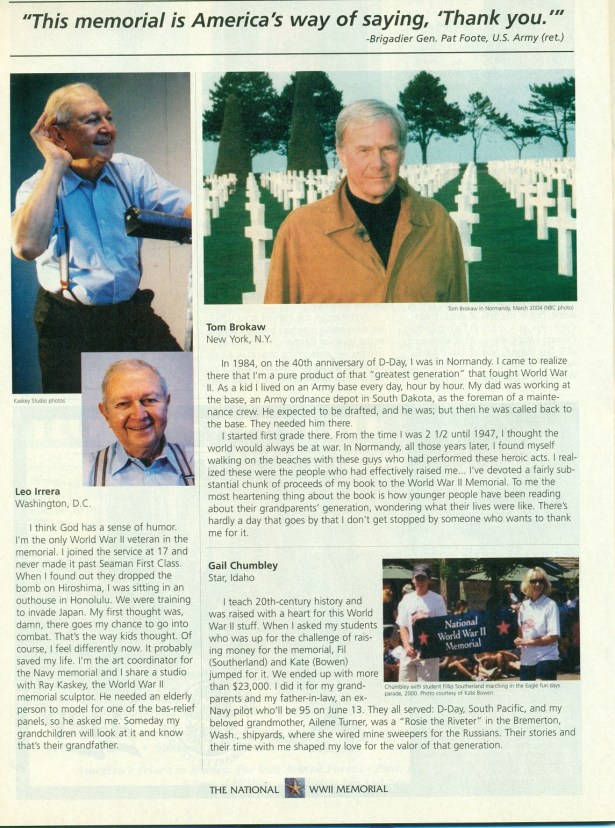
You know, that time the kids and I appeared in the Washington Post Sunday Magazine.
Gail Chumbley is the author of River of January, a memoir. Also available on Kindle.
Look for volume two, “River of January: The Figure Eight,” due out this Fall.
You know, that time the kids and I appeared in the Washington Post Sunday Magazine.
Gail Chumbley is the author of River of January, a memoir. Also available on Kindle.
Look for volume two, “River of January: The Figure Eight,” due out this Fall.
River of January‘s Free Kindle Weekend!
Enjoy a read on the house compliments of Kindle. Available from Saturday morning through Monday night.
When you’re done tell a friend, and say something nice on Amazon Reviews!
Gail Chumbley is the author of the memoir, River of January. Also available on Kindle.


Preaching in 1630, Massachusetts Bay Governor John Winthrop, declared the new Puritan settlement a godly utopia, “A City on a Hill.” Since that time Winthrop’s assurance of purpose and perfection has shaped the narrative that is American history. For over two centuries the United States pushed forward striving to make real those founding aspirations. Many Americans, either in groups or as individuals have fought the good fight to extend liberty for all: the most notable example being the abolition of slavery. Yet the path toward realizing the dream of heaven on earth has been many times interrupted with progress’s nemesis—armed warfare.
As Revolutionary War zeal subsided in the late 1700’s, a series of remote camp meetings sparked a movement called the Second Great Awakening. (Yes there was a First) The popularity of these rousing evangelical revivals lit an impassioned fire that called Americans, mostly Northerners to eradicate sin in the shiny new republic. Determined reformers such as Charles Grandison Finney, Frederick Douglass, and Elizabeth Cady Stanton labored tirelessly to rid America of her shortcomings; drunkenness, degrading of women, punitive treatment of the mentally ill, racial inequality . . . in order for the country live up to its charge as a “called nation.”
Despite the diversity of causes and legions of faithful supporters, slavery alone came to dwarf all other movements and to ultimately divide the country. Early instances of violence in the effort to end slavery offered a taste of the violence to come in the Civil War; Abolitionist-editor, Elijah Lovejoy was shot dead in the doorway of his newspaper office, while another anti-slavery editor, William Lloyd Garrison found himself tarred and feathered repeatedly by those who hated his militancy. Zealot John Brown hacked to death five pro-slavers in an episode known as “Bleeding Kansas.” In these instances, “the writing on the wall” had truly been composed in blood.
When hostilities began in April, 1861 the energy of a nation fixated on the course of each battle, fear and resolve ebbing and flowing with each outcome. The shape of America’s future waited in the balance. Finally, after four ghastly years of bloody fighting, Southern hopes of an agrarian, slave-ocracy died, and as President Lincoln so eloquently phrased it, America found “a new birth of freedom.”
Left unaddressed were those other reforms, forgotten in the war. The mentally ill remained behind bars, incarcerated alongside dangerous criminals. Women were legally considered wards of their husbands, with no more standing than dependent children. Countless young children toiled endlessly in textile mills and coal mines, exploited by owners, deprived of any chance for an education. And the legions of former slaves faced a new form of slavery, Jim Crow and sharecropping.
Reform again gathered momentum in the late 19th Century. Aiming once more for that ‘city’ aspiration, the Progressive movement took shape, carried on by a new generation of the faithful, imbued with a sense of social justice to confront the many wrongs left unaddressed from an earlier time, and new issues related to urban growth. Notables from this post bellum movement include; Jane Addams, one of the founders of American Social Work, writer Upton Sinclair and his shocking expose’ The Jungle a condemnation of the meat industry, and John Dewey who normalized public education with coherent curriculum’s and compulsory school attendance. Dewey believed, as had the founders of America, that the nation relied upon and deserved an educated electorate to safeguard the promise of America into the future.
This movement found a great deal of success in improving the country and the lives of its citizens. Building safety reform came on the heels of the Triangle Shirtwaist Fire in 1911. The Jungle brought about the establishment of the Food and Drug Administration, while political reforms included the secret ballot, limiting “Bossism,” and other forms of political corruption.
Then, in 1914 Europe went to war. By 1916 Progressive President, Woodrow Wilson committed America to join in, asking for a declaration against Germany, sending American soldiers into the trenches. And once again, when the guns silenced progressive reforms disappeared as if they had not existed. On the imaginary road to “Normalcy,” the wealthy and powerful misused the country as a personal piggy bank, plundering and cheating with no legal check.
After a decade long litany of economic abuses tanked the Stock Market in 1929, the nation once again turned toward progress, this time on an unparalleled scale. The advent of Franklin Roosevelt and his wife, Eleanor, to the White House marked a revitalization of reshaping America to benefit all Americans. The New Deal remembered for its alphabet agencies, aimed to recover the devastated economy and ward off future abuses that had nearly destroyed the well being of the Republic.
America’s entrance into World War Two bucked the pattern of a reactionary pushback. FDR remained at the helm, until Harry Truman took the reins of government, continuing the tradition of affirming change. GOP President Dwight David Eisenhower kept a moderate hand on the tiller, particularly in the realm of Civil Rights, enforcing the Brown V. Board of Education decision to desegregate public schools.
But with JFK’s murder, the wheels once again came off social progress. As much as LBJ tried to give America all he could; The Civil Rights Act of 1964, The Voting Rights Act of 1965, the Highways Beautification Act, Head Start, Medicaid, and many more pieces of his Great Society legislation, Vietnam eroded all the good.
That endless nightmare of a stalemate in Southeast Asia worked at cross purposes for bettering society. The daily body count, student protests, war atrocities, such as the My Lai massacre, or the shock of the TET Offensive in 1968 sapped America’s desire to do anything but find a way out of the jungle.
Promoting the general welfare came nearly to a complete halt by 1980. The advent of the Reagan Revolution, and subsequent downsizing of the federal government left the vulnerable largely on their own. School lunch programs were cut, the mentally ill let out on the streets of America, while the armament industry threw the nation into deep deficits.
On this Memorial weekend it might be good to consider the potential of America when at peace. Trapped today in an endless cycle of war, this nation struggles to find her soul, to embrace together the light of our national promise. Two military presidents, our first, General George Washington and our thirty fourth, General Dwight D. Eisenhower pleaded with America in their farewell remarks to avoid war as the worst use of our best abilities. Both men, forged in the adversity of difficult wars, recognized the wasteful distraction and deadly allure of war. Washington cautioned against “entangling alliances, and Eisenhower “the military-industrial complex.”
Ultimately, those who know war grasps what is truly lost. Every weapon produced in a munitions factory most certainly casts a wrench into the wheels of human progress. Winthrop meant his reference from the book of Matthew to inspire an example to the world. Forcing Americanism by the barrel of a gun is born to failure, achieving nothing lasting but resentment abroad, and stagnating injustice at home.
Gail Chumbley is the author of the memoir, River of January, also available on Kindle.

You’re on vacation! Kick back and read River of January on Kindle!

101 years ago today, Serb teenager, Gavrilo Princip shot and killed the heir to the Austro-Hungarian throne, on the heir’s fateful visit to Sarajevo. That one deadly act, carried out over a century ago, set into motion a series of events which ultimately resulted in the unimaginable bloodbath of World War One.
Last Wednesday while presenting my memoir, “River of January,” to a library group, an unexpected gasp came from a listener in the seats. My brain flew into immediate damage control “What I had said, (did I cuss?) Was the projector working behind me? Were my pants zipped? After only a heartbeat the cause dawned on me.
It was a 1928 snapshot of Mont Chumbley, the story’s central figure, beaming across the screen. He was uniformed in the garb of a Navy Seaman Recruit, proudly shouldering his rifle. He looks dignified in his pose, pleased at successfully becoming a part of the United States Navy—but his achievement had also left his family back on the Virginia farm in deep crisis.
Young Mont, “Chum” had required his father’s permission to join up, and the father had adamantly refused to go along with the idea. To modern ears, such as the listener Wednesday night, this obstruction seemed unpatriotic, a father ought to be proud; a military career today is considered noble and honorable. But not back in 1928.
The line that earned that unexpected gasp came after a direct quote from Chum. “Back then, in Norfolk there were signs in the parks saying, ‘Dogs And Sailors Keep Off The Grass’.”
We forget, but after the 1918 Armistice, America was truly sorry it had committed to war against Germany. The universal feeling was fighting in Europe had been a monumental mistake, and one that would never, ever be repeated. The country doggedly pursued isolation for twenty years until Japanese Zeros hit the Pacific fleet at Pearl Harbor in 1941. Between 1919 and 1941 military budgets were annually slashed, recruitment limited, and the military faced near elimination by a nation and Congress bent on going it alone.
The Treaty of Versailles that officially ended the war, along with its League of Nations was soundly defeated by a non cooperative US Senate. The Washington Naval Treaty of 1921 strictly limited the number of ships each maritime nation could possess, and the Kellogg-Briand Pact, an agreement between the US and France literally outlawed war. The public also grew convinced that American bankers and arms producers had only pushed for war to increase their profits. Companies like Dupont Chemical, and the banking House of Morgan were dubbed “Merchants of Death.”
Internationalism was dead, Fortress America was born.
That was the political climate surrounding Mont Chumbley’s ambition to join the Navy and learn to fly airplanes. Understandably his family fervently opposed this decision, and his father did all he could to block his son’s hopes for a military career. Mont’s aunt said it best, “The military is a refuge for scoundrels.”
And even after enlisting, young Mont learned his chances of getting into a cockpit were slim to none in light of draconian budget cuts inflicted on the Navy.
America’s enthusiasm for foreign involvement, the military, and war had fallen into fanatical disfavor. The meat grinder that had been World War One left our nation outraged and remorseful . . . America would never make that same mistake again.
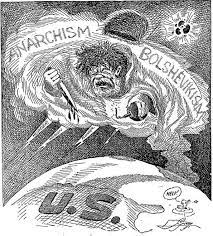
Foreign oppression has, more than once, moved American policy makers at home to react with oppression. From the French Revolution to today, overseas upheavals frighten those in power enough, to prompt the same repression at home.
For example:
Immediately after World War One, the US endured a period of destabilizing fear–America’s first Red Scare. The U.S., bitter over entering the Great War, grew intolerant of unorthodox political views and worked to silence dissent. Radicals, both homegrown and immigrants from Europe, felt the wrath of political crackdowns. Anarchists, such as emigres, Emma Goldman, and Alexander Berkman, found themselves on trial, then deported back to Russia, while a home grown Socialist, Eugene V. Debs ended up in prison. Scores of other political agitators were targeted by the Justice Department for printing radical views, and voicing public opposition.
Why the oppression?
The reaction began following the bloody 1917 Revolution in Russia. The murder of the last Romanov Tsar, with his family, paved the way for the world’s first Marxist-Leninist government, the USSR. Vladimir Ilyich Ulyanov, (Lenin) seized the reins of the Bolshevik Party, and abolished all political opposition, outlining the aims of this new workers utopia, to overturn Capitalism worldwide.
The response in the U.S. came quick and harsh. Labor organizers, the leftest union, The Wobblies, and any other radical group deemed un-American was quashed. The U.S. government viewed dissent as treason, and Congress shaped specific legislation to silence protest. First passed and signed into law came The Espionage Act, in 1917, shortly followed by the Sedition Act the next year. No public speech, publications, nor use of the U.S. Mail to criticize government policy would be tolerated. Period.
In two test cases, the Supreme Court upheld the constitutionality of both laws. The majority ruled in the first case that nonconformists and draft-resistors presented a “clear and present danger” to the US. In the second opinion the Court ruled much the same, but this time with an important dissent. Justice Oliver Wendell Holmes, wrote, ” . . . the ultimate good desired is better reached by the free trade in ideas . . .”
Still, non-conformists and dissidents endured government suppression.
The courts, the government, and public opinion merged to outlaw what they feared–an all-powerful, biased social/economic system, much like the restraint simultaneously underway in the Soviet Union.
This was not over.
After Hitler’s death in April, 1945, and the ending of WWII in Europe, Soviet leader, Joseph Stalin kept his Red Army in East Germany and Eastern Europe, nixing a promised democratic Polish government in favor of his puppet Communist regime in Warsaw. And that was just for starters. A frightening Cold War ensued between the Soviets and the West, that by 1963 witnessed the construction of an actual partition, aka, an Iron Curtain.
In America a political fever seethed, and Congress responded. Establishing HUAC, the House Un-American Activity Committee, to sniff out citizens who leaned to the left, ruining careers and lives in the process. This second Red Scare elevated the careers of Senator Joe McCarthy, and Congressman Richard Nixon.
This post originally intended to discuss the War on Terror. The objective to cast light on the American Taliban; those promoting God, Guns, and Gasoline. But now, with Russia up to its old tricks, all of us again, have a decision to make. Will Americans excuse Putin, grow complacent and emulate his corrupt oligarchy? That path is wide open, visited upon us via the former guy. He proudly rubbed shoulders with that murderer, and publicly praised Putin’s integrity.
But, at this very moment, another, clearer choice stands before the American public. President Zelensky has conducted a master class on the real cost of freedom. The Ukrainian people have lain down their lives to remind us we, are the original heirs of freedom.
In that spirit, this upheaval in the Ukraine is one we must emulate here at home. When Putin attacks Ukraine, he attacks us all. We are Americans, it’s time to take a stand for our liberty. This is not a drill.
Gail Chumbley is the author of “River of January,” and “River of January: Figure Eight.” Both titles are available on Kindle. Gail has authored two historic plays, “Clay,” concerning the life of Senator Henry Clay, and “Wolf By The Ears,” examining the foundation of American Slavery.
gailchumbley@gmail.com
 Gail Chumbley