But I Had Other Plans!

HospitalI

This post comes from last year. Not much of a throw back Thursday, but a powerful reminder for those of us affected by cancer.

gail chumbley's avatarGail Chumbley

I clearly remember the day my husband told me he had throat cancer.  The news was so impossible to believe that I honestly wanted to reply, “No, Chad, you don’t, we don’t have time for cancer.”  I tend to resist any emergency that I can’t package up and manage, or eliminate by a force of will.

As he stood in the kitchen, his hands resting on the sides of the sink, tears filled his eyes.  I read in those tears that he had given up and accepted his medical condition, and that made me mad.  We weren’t going to lay down and admit that the big scary C-word would take center stage in our lives.  It wasn’t convenient–medical procedures would be scheduled when I had to work, or had other commitments to fulfill.

I couldn’t see past the treatments, the financial burden, or the fear a cancer diagnosis leaves in…

View original post 159 more words

Blame Jefferson

imagesIn the film A More Perfect Union, James Madison, played by actor Craig Wasson asks Benjamin Franklin, (Fredd Wayne) if the Commonwealth of Pennsylvania had good government. Franklin barely takes a breath before replying, “Alas no. It is controlled by one faction or another.” That line–whether authentic or not, seems to resonate in the historic record.

The bloody struggle over slavery, followed later by the violence of the civil rights movement, provides the clearest examples of state governments hiding agendas behind the 10th Amendment, and it’s political progeny–the States’ Rights doctrine.

How did this misunderstanding begin? And why so quickly after the ratification of the tightly-scrutinized Constitution in 1787?  How did controversy emerge almost at once challenging the authority of the Federal Government in relation to the state?

The answer lies in the industrious pen of Virginia Planter, Thomas Jefferson.

Now, whether Mr. Jefferson intended to condemn the nation to perennial disarray is open to debate, as we only have his letters and other writings to peer into his 18th Century thoughts. But the fact that he was serving as ambassador to the French Court during the productive Philadelphia Constitutional Convention speaks volumes to his resentment for being left out of the monumental proceedings. The final document, had  Jefferson been in attendance, would have read much differently, if finished at all.

Once the American ambassador returned to America from his overseas post, he got busy undermining the newly established sovereignty of the Federal Government. As his philosophy took shape, Jefferson emerged the outspoken defender of states’ rights, heading an alliance of like-minded political leaders, forming America’s first opposition party: the Democratic Republicans. The essential philosophy of these primarily Southern Planters was to challenge the role of the new central government in their internal affairs. As a sectional ruling class these planters had no intention of taking orders from any entity beyond their local legislatures (which these men dominated). Sadly this states’ rights ethos born in the late 18th Century has surfaced for better than two centuries. Local power has protected itself at all costs, and this sophistry finds vilifying the Federal government useful.

In my home state the cry has once more raised in support of the 10th Amendment and States’ Rights. Why again have shrill voices denounced the role and power of the Federal Government? (and certainly the Feds are not perfect, red tape, outright mistakes, and conflicting policies have certainly made Washington look bad). Yet, there is a sense that the Government of the United States is inherently bad, and that local government just isn’t.

We as American citizens and residents of our states should question the motivation behind thickly spread political propaganda. Are local pubahs so in love with their political rhetoric they can’t work within the federal system? Is insider cronyism and privilege driving legislative decisions? Are those locally elected too limited in their understanding of the federal system, and too steeped in their political theories to develop sound state policies?

Here in Idaho, the itch to develop public lands for grazing, lumber or mining rights runs high. Rural folk, possessing scant understanding that public lands near their homes belongs to all of us and agitate for less restricted use. Unfortunately these demands for local control usually means gaining access to federally regulated resources on those public lands, with cattle, cross cutting, and excavating for various ores. The U.S. government, at the same time has the obligation to manage those resources, with an eye to safeguard the land for future generations.

Jeffersonian philosophy runs close to the surface out here, and rose loudly with the election of Barack Obama. Outraged disapproval grew clear when school districts around the state asked teachers not to broadcast President Obama’s message to students. Idaho’s kids didn’t need to hear from this mistake of a president! Even our Congressional delegation has to keep up the anti-government charade, and these politicians ran to serve in Washington DC–the highest level of government! Talk about compartmentalized thinking!

This divisive States’ Rights doctrine doesn’t work well for “We The People.” Local community and political leaders can too easily blur what they want, over what is best for the people of the state. Idaho has cut funding to Medicare and Medicaid, while losing one federal court challenge after another, paying thousands of dollars to stop Gay Marriage, Obamacare, and an unconstitutional Ag-Gag law to stifle farm animal abuse. That money could better be channeled to improving education, overcrowded prisons, and mental health support. Sometimes I think political leaders here forget what this state would lose in aid if not for the rest of America’s tax dollars. It’s like they’re glad to open the checks but feel no reciprocal responsibility to America.

The ideal of localized power favored by Jefferson’s theoretical reasoning just hasn’t worked out in reality, not even for him. Following the purchase of Louisiana in 1803, members of his own party lambasted the President for using powers the Chief Executive did not legally possess.

As for me? I’ll take the collective wisdom of the nationalistic framers of the Constitution, which included George Washington. Those 40 men understood what kind of union they intended to shape. Article IV of the the document couldn’t be much clearer;

This Constitution, and the Laws of the United States which shall be made in Pursuance thereof; and all Treaties made, or which shall be made, under the Authority of the United States, shall be the supreme Law of the Land; and the Judges in every State shall be bound thereby, any Thing in the Constitution or Laws of any State to the Contrary notwithstanding..

 

Cocolalla

73115959-SLD-004-0017

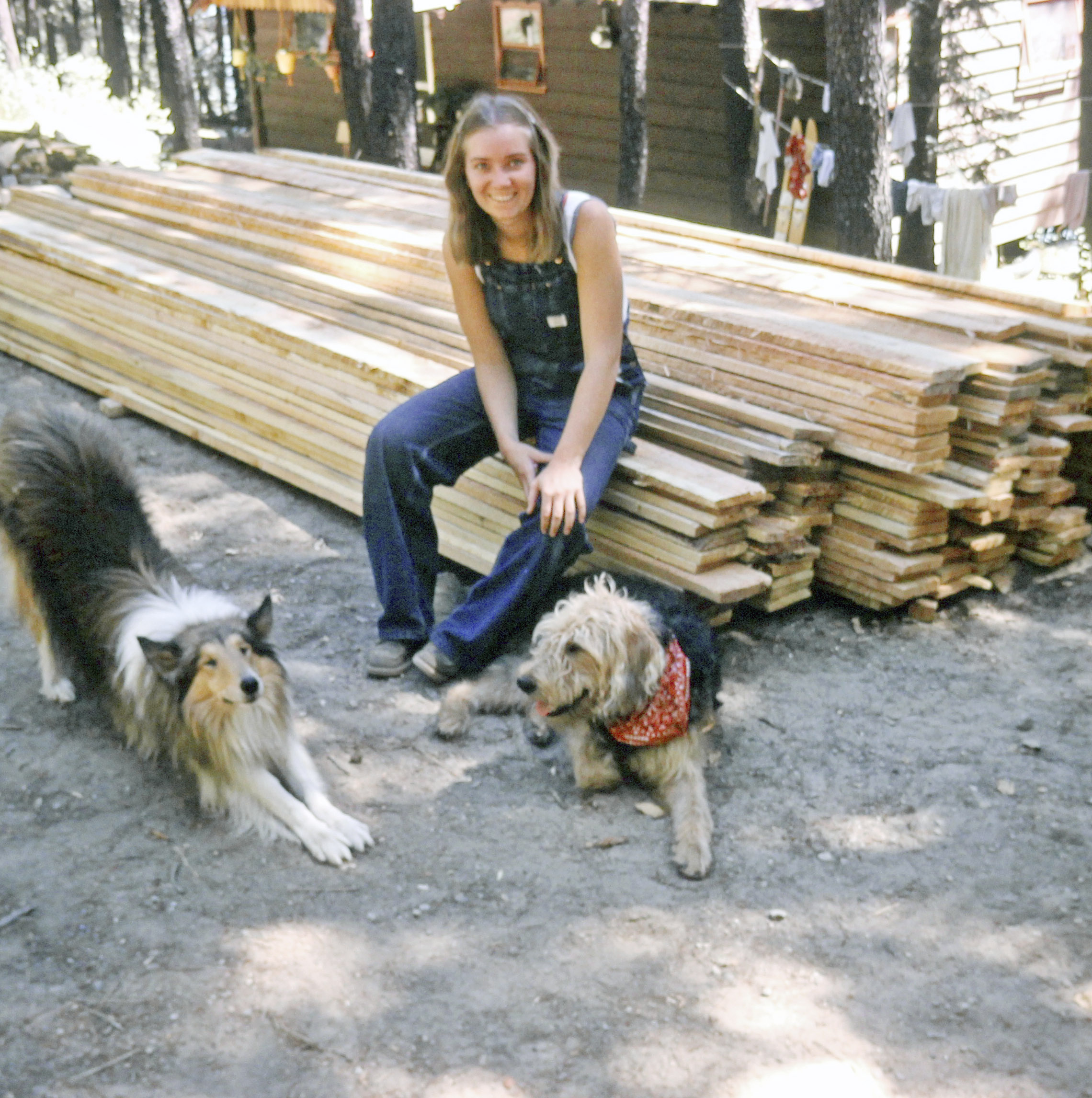
We had two cabins on a small lake in Northern Idaho.

Located between Lake Coeur de Alene, and the Pend Oreille, our little acre overlooked tiny Cocolalla, with large windows where we could watch the waves lap up on the beach. The original structure we astutely named the Little Cabin, later followed by the larger Big Cabin. This bigger cottage had been built with all the amenities of home; running water–hot and cold, a tub and toilet, a full kitchen, and electric heat.

Those early weekends in the Little Cabin hold many good memories. All of us crammed into that tiny wood box, the unfinished walls festooned with a lifetime of greeting cards, a big enameled wood stove, and a porcelain basin for washing dishes. Grandpa got his hands on a tall steel milk can and commandeered it for enough drinking water to get us through the weekend. As for entertainment, Grandma had an old radio that blasted the most impressive static, interspersed with Roy Orbison or Andy Williams fading in and out.

Once the Big Cabin was completed and my grandparents moved in, the smaller cabin was demoted to storage. It also housed a set of bunk beds, a fold-down couch, and one double bed; useful for my brothers who were just getting bigger. Now, in addition to greeting cards, the cabin stored every variety of water equipment. Fishing poles, life jackets, oars, and an outboard motor clamped to a metal barrel, with stacks of beach towels the size of blankets.

As I recall, a constant grit of sand coated the linoleum floor.

The property was my grandparents retirement dream, but a dream they happily shared with the rest of us. I knew, even then, that I was always welcome, always.

My grandpa was an early riser, a product of a lifetime as a mailman. He didn’t want to tiptoe around a little kid sleeping on his sofa at five in the  morning. At bedtime my grandmother and I made our way to the Little Cabin in the dark by flashlight. Under the covers of  the double bed, I would chafe my feet deep under the sheets to warm my toes. As we grew settled and peaceful she would begin to reminisce, talking to me for hours in that darkness. I learned of her life in those moments, warm in that cozy bed, listening to her voice, breathing the scent of the evergreen forest.

She told me of my biological grandfather, her first husband, who had left her bereft and penniless after my mother had been born. Despite the Depression, he liked to gamble away their money. My Grandma had to leave him and she struggled to find work as few jobs existed. Forced to farm out her daughter, my mother, in various homes, her the guilt still haunted her. Clearly it still broke Grandma’s heart that she was forced to separate from her little girl for months at a time. I could hear a wound that could never heal.

As the night grew deep, crickets and bullfrogs began to chorus. Flanked next to her, and pressed against some greeting cards, I prayed I wouldn’t spoil the magic by having to go potty. She kept, beneath the bed, a Chase and Sanborn coffee can that I hated to use. It felt cold and left rings on my little bottom. Still, considering options, the can was more appealing than a journey to the outhouse. Using that creepy outhouse in the daytime was bad enough, but at night unthinkable.

Finally poking her lightly, I would tell her. And she never hesitated. Showing no impatience at all, Grandma seemed to make my problem her own, reaching for the flashlight and finding that rusty can. She held the light on me so I could aim properly, then back into the warm bed. No recriminations.

She loved me.

I loved her.

Today my husband and I live in the woods. We don’t have a lake, but a river runs near and we can hear it on very quiet nights. I relax in my cozy bed in the darkness and listen to the crickets and bullfrogs, while breathing in a scent of pine. A sense of complete security, of love, of acceptance returns, synonymous with the love of my grandmother. She was home for me, and though gone these many years, my mountain cabin still echoes with her voice.

Gail Chumbley is the author of the two-part memoir “River of January,” and “River of January: Figure Eight.” Both are available at http://www.river-of-january.com and on Kindle.

gailchumbley@gmail.com

Waiting is the Hardest Part

Funny, but this blog still resonates a year later.

gail chumbley's avatarGail Chumbley

My son forwarded a Huffington Post story featuring the rejections endured by prominent authors.  I know that he meant it as a kindness, that everybody struggles in the book business.  Still, despite his good intentions, the story brought me down.  The business end of publishing always leaves me with a chill.

Writing, though sometimes a struggle, has been an affirming experience for me, delving into a story of risk and adventure.  I’ve been in the cockpit in an air race, suffered through butterflies waiting to go on stage in Paris, London, and Buenos Aires.  Now that the story is with the editor, I have to face the next battle–getting noticed by a publisher.  That arena is about money, markets, and deal-making.  And though I understand there are other options for getting River of January out there, those alternative routes are just as mystifying.

For any of us trying to get…

View original post 67 more words

What I Heard

images

Ken Burns has done it again–hit another historical piece of film over the wall. I’ve enjoyed Burns work for decades, beginning with “The Civil War,” through “Baseball,” to “Jazz.” He has consistently combined solid historical research with the subtle beauty of an artist. But in his new “Mark Twain” biography I made a discovery I once believed impossible. I watched the film without any historical analysis or comment.

For the first time since publishing “River of January,” I watched simply from a writer’s perspective. In the film, scholars discussed how Clemens didn’t find his unique American voice until well after “The Innocence Abroad,” and “The Prince and the Pauper” were published. Twain’s masterpiece, “Huckleberry Finn,” came after years of hesitation until that singular voice could no longer be kept tethered.  The author reached deeply from his childhood–a bigoted world of ignorance, poor grammar, and slang with a twang. He defaulted to what he knew best, his inner core and colorful life.

That resonated with me in my own struggle for voice. I have come to realize that a personal truth has to come off the page to remain in the manuscript. If the story line, or flow of dialog doesn’t resonate, it has to go. There must be a truth to tell. The obstruction of a badly worded sentence, or contrived  idea hangs uneasily in my psyche. I have to write what I know to be authentic. It’s a weird dynamic too, and takes concentration to pull off. I put myself in the scene–whether it’s a cockpit, or a dressing room. From that bit of time travel I can survey the setting, describing it both physically and emotionally. I understand the importance of familiarity.

In another tidbit from the documentary, Ken Burns examined Clemens daily writing regimen.

At his home in Hartford (I’ve been there, it’s so cool) Twain worked in an upstairs room, away from everyone, committing his tales to paper. Each evening Clemens gathered his family and friends to listen to  his day’s bounty. I found that intriguing–not as a historian, but as a writer. (Twain had many notables among his friends, President Ulysses Grant for one.)

Samuel Clemens made writing his day-job, and used his household as an audience. Something I find I am unable to follow. However, my ears were carefully adhering to that writing schedule revelation, contemplating his patterns.

I too, need quiet and solitude, but don’t produce the same way. My engine needs to rev up before any writing session. I think and think and think (like Winne the Pooh) then inspired fire up the old laptop. The historic record can spark my thought processes, and the Chumbley archives also can prompt a productive writing session. All in all, a “fits and starts” style best describes my method. Both “River of January” and the new one “Figure Eight,” have come to life through my haphazard style.

Mark Twain can stand alone as a historic figure, apart from his brilliance as a man of letters. He belonged to a political group known as the “Anti Imperialist League,” opposing unrestrained immigration, especially from China and the Philippines. He disapproved of  John D. Rockefeller and other greedy Robber Barons, making no friends among the elite. All that I all ready know, and taught for years. The astounding thing is I watched the program hearing only the literary journey of an American lion.

A Mouse In My House

Image

I could hear a mouse under the bed. Crisp little maneuvers, poking around the books and pictures stored down there. Now, I am not afraid of mice, that’s more of a snake issue, but still, this little varmint rooting around wasn’t exactly relaxing.

I woke my husband, and he didn’t complain or resent my waking him so late. He doesn’t like home invasions any more than I do. Instead he hopped up and found a mouse trap on the porch, slapped peanut butter on the trip latch, then just as promptly hopped back into bed and fell asleep.

Now, sleep wasn’t so easy for this girl–conking out after such a creepy discovery. I rolled to my side listening as that little critter resumed his inventory of my stuff.  My stomach tensed some, waiting for the steel of death to suddenly snap. It might as well have been a grenade with the pin pulled out. I simply couldn’t  twiddle my thumbs waiting for that deadly crack.

That huge comfortable couch in the living room soon beckoned to me. I grabbed my pillow and extra blanket, bedding down away from that condemned rodent. And though my eyes were closed, my mind remained wide open, still anticipating that sudden snap. Extra pillows seemed fitting, and I piled on those that were in reach. While fussing around, trying to get comfortable, I heard that final smack, and thought that maybe sleep could now finally find me.

My mind wandered, just drifting here, floating there, eventually focusing on my second installment of River of January, The Figure Eight.” I’m a little stuck in 1938–big things happened all at once and I need to get a grip on my approach. Helen was stuck in New York at that moment and Chum was flying around the Midwest. She needed to do something besides nothing, so I researched a little of what was happening on the stage. Well, I found some memorable plays, movies and concerts while she was waiting for him. And those events were the destination of my sleepy thoughts.

Bam, right between the eyes–the thesis of my entire work hit me. It was me doing the hopping now, and I leaped off the couch, fired up my laptop and pounded away. Holy smoke-a-roonies! I thought inspiration came while trying to think, not while trying sleep. And I loved the direction my absent thoughts took me. But, alas, no . . . I am not spilling the beans here on that midnight epiphany. For that readers must wait for the second book. 

For now remember River of January is for sale. (click the title, it takes you right to the webpage)

I owe that dead little vermin so much!

Who Was Big?


Image

My son just text me with bad news. His kitty, Dusty died at the animal hospital about an hour ago. And on Memorial Day of all days!

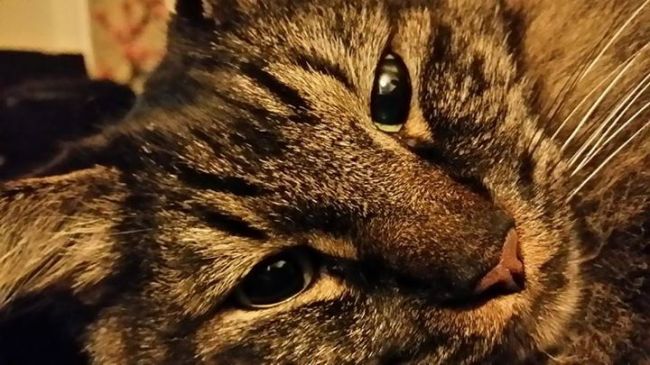
He was a huge Maine Coon Cat, and had character in abundance. The poor fella was so enormous, (not fat, mind you) that he couldn’t fit into the nooks of his carpeted kitty tower. It wasn’t for lack of effort either. Leveraging into those little tunnels and rooms provided him with a constant daily challenge. Dusty, you see, didn’t understand his bigness. His lack of personal awareness was part of his charm.

When Dusty wanted in your lap, which was often, the sitter became immediately aware of his bulky girth. And more than his physical size was the size of his gentle heart.

That gi-normous lug was also the family’s goodwill ambassador. A thudding leap accompanied by a throttling chainsaw of a purr welcomed all visitors to his home. Forget the meow though. His tiny little squeak reflected more his self-awareness. A sweet little kitten trapped inside the body of the Incredible Hulk.

Though ole Dusty wasn’t with us long, he leaves big paw prints on all of our hearts. Of all the massive bones in his massive body, not a one was mean. He was a good kitty. Clint and David, and the rest of us who loved him will keep his memory alive long after this Memorial Day.

Who Was Big?

Dusty Was.

Good Times Bad Times


Image


This is not a blog about Led Zeppelin. I have shamelessly used this title and image to get your attention. I am sort of sorry, but not really.

This blog however does concern the song title, “Good Times, Bad Times.”

At a book publishing seminar I attended a while back the speaker warned that marketing books was much more difficult than writing books. I didn’t believe her, or more accurately I couldn’t allow myself to believe her. At the time I was slinging rubbish into my manuscript and worse, knew my style was bad.

A couple of years later here we are–River of January is complete and I am finding that wise facilitator’s words haunting me. I think we are doing everything right, talking about the work whenever and wherever I can find a platform. Book stores, libraries, service clubs, book clubs, pushing the story on friends–you get the picture, Those who have read River, for the most part, ooze with enthusiasm and push me to complete part 2, The Figure Eight. And I am trying to get back into that writing zone, communing with Helen and Chum, by studying their mementos, listening to Chum’s taped interviews, and brushing up on the historic background of their lives. But there is this big problem in my attitude toward the second manuscript . . . plunging into the marketing angle again, when I have only sold around two hundred books with the first one.

My husband is a good cheerleader, claiming that everything with the book is good, and that we will meet our goals. We will sell books, and the public will respond in a positive manner. I think he might be right, the whole package is gorgeous: cover, interior design, pictures, font, paper color and yes, even the style and especially the story.

So Good Times must certainly follow this funk in the process of publication, and leave behind the episodes of Bad Times.

So once again consider River of January. It’s a pretty good read, even if I say so myself.

El Dorado


Image

In the far west lay the Kingdom of Idaho. It is a vast, lovely realm; rich in scenic wonder, mountainous regions covered in timber, and a verdant plain of abundant fertility. The kingdom, in truth, a land of ceaseless beauty and bounty.

And the people are free in this land. And if a subject ever questions that truth, they only need ask Idaho’s barons who, every two years, remind them of their autonomy.

By regularly invoking the peasants liberty, these insulated aristocrats have much to gain.

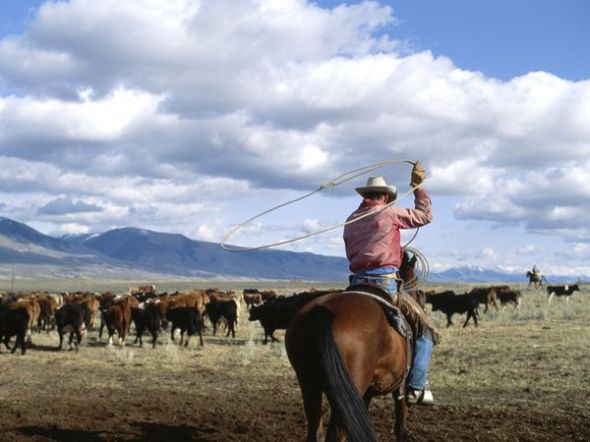
The lordly use many devices to sway the masses. These powerful figures often array themselves in the garments of Idaho’s historic past–recognizable symbols of western freedom. Stetson hats, Tony Lama boots, lasso and horse in hand parading potent images of liberty to the populace. These cagey barons cleverly propagandize, through these symbols, the peasants good fortune in living in such a utopia.

And the powerful do not suffer challenges from the foolish–other non-barons holding competing beliefs. In fact, the most strident pretenders are set up for mockery, and honest contenders are marginalized and disenfranchised. These barons know what is best for their Kingdom.

Meanwhile the realm decays. The highways and byways, prove perilous, pocked in ruts and potholes. The young are packed into schools in overwhelming numbers, to be promoted through the education system with no regard for learning. The vulnerable, the sick, and others outside the barons’ understanding have no voice in this Kingdom of Idaho.

Still the barons persist in flourishing the images of freedom to placate the peasants in the domain. Indeed these humble folk predictably embrace this idealized portrait of their land, and reassured, most gleefully continue to support the Kingdom’s seated nobility.

The subjects residing in this beautiful realm live satisfied that they are, indeed, the freest, and luckiest, and the most independent folk around.

Their leaders, flourishing the domain’s revered symbols every two years, remind them so.