Category Archives: Writing
Eyes of the Beholder

Is he trying to hold her hand? I have stared, examined, and analyzed this snapshot a zillion times and wonder what Grant is thinking about Helen.
Pictured above was the Vaudeville team of Garrett & Thompson–a team of hoofers out of Los Angeles touring Depresson-era America. Cracking jokes, singing, and of course blending in Helen’s ballet talent, the two traveled from here to there earning scarce cash to get by.
River of January is not a romance novel (not that there is anything wrong with those). However the story does include the twenty-something search for love, finding flirtations along the path to adulthood. Grant Garrett became Helen’s first passion–the team leader, writer, and choreographer. She was very young, just eighteen, when she fell under the spell of her partner.
Since the publication of the book, I’ve asked readers their views on this chapter, on Grant Garrett. One young lady admitted she had a “crush” on Grant. A man-friend dismissed the dancer as a “cad.” Many others simply want to know what became of this debonaire song and dance man. (I smile and reply “Book Two).
His letters reveal much on his growing ardor concerning Helen. He fell hard for her and desperately wanted to make her his wife. But that never happened. What does that say about Helen? What does that reveal about the smitten suitor? Was it love? Was it for the moment? Was he actually a cad?
That is the beauty of releasing a book. It immediately becomes the property of the reader, and in more ways than a purchase. All whose eyes rake the pages decide for themselves the quality and nature of the characters, and their intentions.
As for me, I too have a crush on Grant. His letters entertained me all through the research for this creative nonfiction work. A handsome face, and razor sharp sense of humor, and an eagerness for success are hard for this writer to resist.
Now for my pitch: If you have read River, please comment on the smooth operator pictured above. I’d love, LOVE, to hear your opinions on his character.
My Rock, My Refuge, My Library

It wasn’t yet 10:00am, but parking spaces were filling up fast. The library would open soon.
Be-bopping up the sidewalk, dressed completely in black, ear buds stuffed under his knitted cap, came the happiest Goth in high-tops. A young mother followed behind, a stack of books awkwardly balanced under one arm, and a wiggly baby in the other. The time was 9:58.
Older folks, hipsters, Lexus drivers, the tattooed poor–all queued together for their morning stop at the public library. How remarkably American.
When the doors finally did slide open, this society of seekers disappeared inside, striding with purpose to stake their domain. A no-nonsense aura filled the air as each card holder claimed their chair, booth, or computer to commence their business.
If ever there existed a reflection of perfect democracy it is America’s neighborhood library.
Visits make a lot sense. The facility is clean, climate controlled and the interior is well lit for reading and research.
More, public libraries offer a multitude of services for the community. The unemployed gets out of the house, and can search job openings on the internet, maybe check out a DVD or two at no cost. For the housing insecure, the interior offers sanctuary, a chance to safely close one’s eyes or relax and catch up on some reading. Mothers toting little ones make use of programs such as story-time, organized games and crafts, providing a diversion from hours at home.
My own elderly parents used to check out their book limit every two weeks. The librarian knew them well, suggested titles, and bagged up their books. They, too, waited in the parking lot. When those doors glided apart, canes in hand, they hobbled inside, joining the democratic wave claiming library privileges.
It was Benjamin Franklin who modeled this fixture in America’s beginnings. Franklin knew national longevity demanded literacy, and in that spirit he established the first lending library in Colonial Philadelphia. A true visionary, Dr. Franklin set the course for public good by founding these centers of learning. If he could see what I saw in that library parking lot, Franklin would rest a gratified patriot.
Next to public schools, a library card is the ultimate equalizer–from the richest to the poorest among us. No amount of status or money can elbow us out. My access is equal to yours.
To politicians fearful of books on the shelf, you strike a blow not only against the First Amendment, but to all the connecting tissue of American society. A misguided, self-righteous streak exposes a dark agenda which should give us all pause. Attacking libraries attacks us all.
Gail Chumbley is the author of two books, “River of January,” and “River of January: Figure Eight.” Both titles available on Kindle. Chumbley has also authored two stage plays, “Clay,” and “Wolf By The Ears.”
gailchumbley@gmail.com
The Last Waltz
Spokanzians take note! “River of January” meets the Spokane South Hill Library.
When: Monday evening, 6:00 PM
Where: 3324 So. Perry
Please join Gail for this engaging presentation.
Gurrrrr
I presented “River” tonight in Spokane. Small crowd. Nearly knew them all–a bit of a family reunion. How do I get this amazing book out there??
A New April

Right now, in classrooms across America, and overseas, thousands 17-year-olds are preparing for the AP US History exam. They, and their instructors are obsessed with cause and effect, analyzing, and determining the impact of events on the course of America’s story. Moreover, they are crazed beyond their usual teen-angst, buried deep in prep books, on-line quizzes, and flashcards. As a recovering AP teacher, myself, I can admit that I was as nuts as my students, my thin lank hair shot upward from constant fussing.
My hair fell out too, embedding in combs and brushes, as I speculated on essay prompts, that one ringer multiple choice question, and wracking my brains for review strategies. The only significance the month of April held was driving intensity, drilling kids on historic dates; Lexington and Concord, the firing on Fort Sumter, the surrender at Appomattox Courthouse, President Wilson’s Declaration of War in 1917, the battle of Okinawa, MLK’s murder, and the Oklahoma City bombing, That was what April meant in April.
To quote John Lennon, “and now my life has changed, in oh so many ways.” Today April holds a whole new definition. My husband rises first in the morning, putters in the kitchen, fetches coffee, tends to the dog, and is back in bed, back to sleep. Big plans for my morning include writing this blog, making some calls related to book talks, a three mile walk through the Idaho mountains, then working on Figure Eight, the second installment of River of January. What a difference! Nowadays, getting manic and crazy is optional. My hair has grown back in, standing up only in the morning, and the only brush with AP US History occurs in my dreams; the responsibility passed on into other capable hands.
This month, at least here in the high country, has been especially beautiful. We have already enjoyed a few 70 plus degree days, and the green is returning to the flora. Our sweet deer neighbors are no longer a mangy grey, emerging from the trees wearing a warm honey coat. With a little snow still on the peaks, the sky an ultra blue, and the pines deep green and rugged, I think sometimes this must be Eden.
My years as a possessed, percolating history instructor provided a gift of passionate purpose that enriched me more than depleted. But, now . . . I wouldn’t trade this new phase of my life for all the historic dates in April.
Gail Chumbley is the author of River of January also available on Kindle.
A 1040 Kind of Day

Lola is not a good traveler. She slept all day in the backseat of the car, and decided to impersonate a hood ornament at the foot of the bed all night. Lola is our little dog, and we were driving to Spokane for a book talk at Aunties Books.
Needless to say, I was pooped. If I got four hours of sleep I’ll jump the Snake River Canyon on a Vespa. Finally around 9:00 A.M. I gave up and dragged myself out of bed, careful not to wake the poor thing as she was exhausted from posing all night.
Chad and I threw ourselves together and with my folks went to lunch at the Kalispel Casino in West Spokane. My 81-year-old father steered his sedan into one of about a billion handicapped parking spots. The Kalispel Indians clearly know their clientele.
We fell into the cane and wheelchair race to the front double doors, and stepped inside the vast, carpeted lobby. Immediately my ears picked up the ching-ching of the slot machines, and my nose, the scent of cigarette smoke. It was good to be back in the world of hedonistic excess.
Ahead of us, about a dozen people were queued up before a kiosk where a lone employee frantically tapped on her computer. Without looking up from her keyboard, she repeated the casino’s policies and benefits to each patron at the counter. I figured that the folks waiting patiently and politely, listening to her officious chatter had forgotten more about casino gambling than she knew. Still, to her benefit, she kept the line moving quickly and no one fell from their walkers, or canes, collapsing onto that smoky carpet.
Soon, resting my elbows on that granite counter, the receptionist rapidly tapped on the computer keys with her acrylic nails, explaining, “It’s tax day, so I am applying 1040 points to your card.” She continued to add more points for this and for that until I had about a million points. She then ended her spiel by concluding, “You must use up these points by tomorrow at this time, or lose them.”
First of all, I had no idea what reward the points represented. It sure didn’t go to money in the slots, (I tried that angle right away). Second, we were only visiting for maybe an hour, and the phantom points, representing some unknown prizes, were superfluous anyhow.
After eating in the buffet, my husband, my mother, and yours truly, headed for the bling-bling, ching-ching of the casino floor. Now that experience added another layer to this make believe universe. We were searching for those slots that promised extra spins until winning. Scouting the islands of “Double Diamonds,” and “Pirate Heaven,” my husband located a cluster of “penny” machines. I place penny in quotes because it takes a dollar’s worth of pennies to play each spin. Clever casino slot machine designers! And I won on that thing. I won. I had no idea how I’d won because the icons of Thor, Freya and the rest of those Norse big shots appeared to have been thrown together with no order at all. But I didn’t argue with the falling-change sound effects racking up the dough.
But the biggie of the day came as we were about to head to the parking lot. We turned a corner of blinking, noisy electronic poker machines to an extraordinary tableau. On the end, nearest to me sat an elderly woman. Her legs were crossed, she wore a red pantsuit and full makeup. Her dark hair was neatly arranged and a cigarette hung from her lips at a jaunty angle. One upholstered stool down from her, sat an obese younger man in a t-shirt and sweats, both stretched over his shapeless girth. I couldn’t make out his face because it was covered in an oxygen mask, connected to a case-style tank. They paid no attention to each other, though both were certainly on two ends of lung disease.
An art house Fellini movie wouldn’t have touched this patchwork of weirdness.
We returned to my folks house, where I wisely took a nap. At six we arrived at Auntie’s Bookstore, where I gave my talk on River of January. With my feet firmly grounded in reality, I signed books for my friends, some strangers, and my wonderful former students who came from their colleges to see their old teacher.
It was a taxing day in many ways, but it was a good day, too.
Books are available at www.river-of-january.com
Vision and the Bottom Line
It was early September, and the high school was holding our annual open house. The idea behind this yearly ritual was to prove to the parents that we teachers were educated, human, and approachable. I must confess that I hated coming back to work after a long day, but when it was over I was always glad I came.
One evening stands out distinctly among the others. Blabbing away about some Civil War general, or Cold War president, the last bell rang, closing the evening program. One father wanted to continue the history discussion, despite the PA thanking the public for attending. In a clear cockney accent he called out across the rising crowd, “William Wallace (Braveheart) was actually an English nobleman!”
“Oh. I never heard that before,” I hollered back, thinking people sure love salacious rumors. But I was wrong about the parent as a rumor-monger, and over the course of the school year we became good friends.
Now, I’m not going to reveal names because I don’t have his permission, but he was hiding away in our little corner of Idaho. And as we became further acquainted I found out, to my astonishment, that my friend worked as a tour director for a famous, very famous, and venerated guitarist. Yup, that’d be the one.
My friend explained to me that his path was set early 1960’s London, when, as a young man he stumbled into the growing music scene. He became a driver for a new English band, which over time introduced experimental symphonic touches to their music. (A-choo Moody Blues, gesundheit!). When my friend motored around with Justin Lodge and the boys, they played clubs out of their beat-up van. He recalled rolling that old van onto a Channel ferry for engagements on the continent. As he reminisced about his early days, his voice grew sentimental and affectionate describing his starving days with an emerging English band.
Telling his story, still in his cockney dialect, my friend’s tone suddenly turned cooler. Explaining how the group finally signed their first record contract he came to realize that that event marked the end of the magic. Once the “suits” took over the music business the wonder evaporated, the energy deflated.
It’s Friday morning here in the beautiful mountains of Idaho. We have five hundred copies of River of January in the back of my car. We have sold a few, and buyers have emailed me about how much they enjoyed the read.
Writing this book felt a lot like love. Finishing the manuscript and holding the volume in my hands was a powerful moment. So where does the heart turn the work over to the bean counters who are only interested in money? I can’t seem to bring myself to Barnes and de-Noble-ize my work.
Book publishing is a fixture of the real world, and I understand that fact. But is it still possible to “mom and pop” creative projects in a corporate universe? Can business savvy folks appreciate the beauty and the passion expressed by a hungry band or in my book, River? Do they even give a damn? Surrendering control of the fruit of my intensity to cold, indifferent hands feels like negligence and abuse.
This writer can’t seem to shake the message of that transplanted Englishman from the East End. Is turning over my passion to decision-makers seated around generic oval tables the beginning or the end of creativity?
Consider purchasing River of January today. www.river-of-january.com
Batten Down the Hatches!

Let the Good Times Roll-
Party like it’s 1999-
and
Have Some Fun Tonight!
River of January is available for sale!
Buy it now-$17.99 plus $4.00 shipping- http://www.river-of-january.com
Make sure you provide your name so I can immortalize the inside cover with my chicken scratch!
What’s My Motivation?
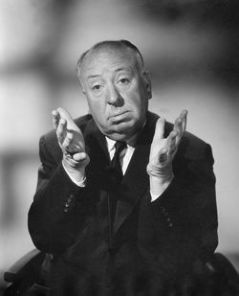
Alfred Hitchcock answered his actors succinctly when they posed the above, titled question. The film maker glibly snapped, “your salary.” Witty, yes, charming, of course–it’s vintage Hitchcock. But he held a director’s secret, he understood his own vision and the contribution each player made to the overall story.
In the midst of promoting River of January, I have been trying to find moments to scratch out ideas for the sequel. The effort isn’t as easy as I hoped. Attempting to work out the characters choices and actions has become puzzling and complicated. It’s not difficult to track what they did and when they did so, but the why is shrouded in speculation. This mystery is annoying, because I am the writer and need to fully understand the ‘why’s” behind the protagonists behavior. And, well, honestly I sometimes don’t know why I do what I do, today. The human heart frequently confounds reason.
So, Hitchcock’s snide retort isn’t very helpful to my current situation. The passionate nature of the characters in River have dropped a monumental job on my thinking processes. I assumed that prior patterns of behavior in the first book, continued into the second. But the archives indicate another story.
The first act in book one, is only a prelude to the intensity of book two, and I need to get a handle on these people before they push me over the edge.
So, what was their motivation? I’ll let you know when I know.
 Gail Chumbley