Indie Everyday

A4904C51-3483-49D0-8D64-E022F045510C

With apologies to Nathanial Hawthorne, this shirt is my version of the Scarlett Letter.  “Hello, my name is Gail, and I’m an Indie author . . . the process is hard, but very gratifying (even while pulling weeds in the garden).

This weekend I invite you to pick up River of January, and the sequel, River of January: Figure Eight.  If in Boise, check out Rediscovered Books, in Salt Lake, Sam Weller’s in Trolley Square, and Spokane’s Aunties Books. Also available on Amazon.com.

Gail Chumbley is the author of the two-part memoir, River of January.

Ouch?

bonvoyagecard10001So I just read a scathing review of my first book, “River of January.” This reader really hated it, and made a real effort to express her distaste. To say she went out of her way to revile the story doesn’t do justice to the term ‘condemnation,’ and continued to blast me as the author.

So how exactly does a writer react to such a scorcher of a reprimand?

I’d like to get upset and obsess over the two measly stars and every berating word in the post. But I can’t seem to throw myself on that grenade. And much as I’d like to feel mortified and humiliated, I don’t. All that reacting is just too much work–takes too much energy. Besides, if the aim of a book is to elicit an emotional response, then, I suppose, my book has found a kind of success.

Three years ago this review would have destroyed me, almost as if someone had pointed out that my beautiful new baby is actually ugly, and that I’m a blind fool. But as a writer I’ve let go of that kind of perfectionism, and any illusion that I fart roses.

This true story is what it is, and I happen to think it’s damn good, and count myself lucky that it came into my life.

So what now?

I turn on my laptop and compose this blog. Writing is what I do. And some will connect to my  voice and identify with this quandary. Others have already clicked cancel.

I suppose that’s why cars come in different colors.

Gail Chumbley is the author of the two-part memoir River of January and River of January: Figure Eight.


Freddie Trenkler, War Refugee

Comic skater, Austrian Freddie Trenkler, a cast member in the Sonja Henie Ice Shows, drew countless laughs, and more than a few gasps with his slapstick and death-defying style. This young man, only 27 years old, his identity concealed behind grease paint and rags, ironically shared much in common with his vagabond alter ego.

It was early in the Second World War, and the German war machine blazed across Europe; blitzkrieg overwhelming the Low Countries and France. Freddie’s homeland had fallen much earlier–Nazi occupation of Austria bloodlessly completed in 1938 (think “Sound of Music”). It appears that the Jewish Trenkler had escaped to America, tragically leaving his family to suffer a calamitous fate.

The investigation of papers, pictures, letters, and other mementoes I used in writing River of January, and River of January: Figure Eight, revealed that many of the talented skaters who performed in the Henie productions arrived in America desperate war refugees, who had escaped certain death at the hands of the Nazi’s.

Enjoy this clip of Henie, Trenkler, and the company of ice skaters, (one of whom is Helen Thompson, a subject in both books). However, keep in mind the desperation and harrowing narrative that Trenkler and many others carried to the ice.


Trenkler0001

Goody Goody


In the memoir, “River of January,” Helen, a beautiful and talented dancer, set sail in 1936 to Rio de Janeiro, Brazil. She eagerly  looked forward to a two week performance at the famed Copacabana Hotel, with an additional two week option to play in Buenos Aires.

On her sheet music for the number, Goody Goody–one of the many songs prepared for this engagement–Helen penciled in her dance steps among the musical notes and rests.

No film survives of Helen Thompson’s April, 1936 performances in South America, but I found this little gem from the same year. (Personal point . . . I think Helen was a better dancer than the girl in this clip).

Happy Friday.


Gail Chumbley is the author of River of January and River of January: Figure Eight and on Amazon.com.

The Pitch

Long rows of rectangular tables, draped and decorated, filled the hall. Cellophane covered baskets, revealing festive gifts sat inches apart, attracting hopeful bids from the browsers wandering about the silent auction. Attendees seemed to understand the drill, strolling from basket to basket, pen in hand, increasing the previous bid. And the purpose behind this auction? The IEA Children’s Fund; a statewide account to help Idaho kids with food, clothing, supplies, shoes, and any other need disadvantaged students face.

I squeezed in between colorful, refugee-sewn bags and wallets, and a boxed WiFi yoga program, complete with a mat and ready-to-use internet software. My books sat displayed below eye level, requiring some adjustments to attract possible buyers.

Both “River of January,” and “River of January: Figure Eight” are rich with archival images. However, space limitations left the usual eye catchers tucked in a satchel, under my chair. Though dismayed at first, I remembered that the books have photo galleries inside, and my tactic instantly shifted. “Are you a reader?” I begin. And what’s cool about teachers is that 99.9% told me ‘yes.’ (Of course they are, we teachers are the champions of literacy.) Then I whipped out the photos in book one.

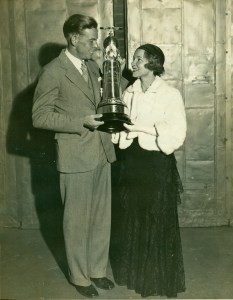
I begin . . . “River of January is a true story, a memoir, that I have written in a novelized style. Here is my main charter, a pilot, who won an air race in 1933. Here he is receiving the winning trophy from actress Helen Hayes at the premier of her newest movie, Night Flight co-starring Clark Gable.” (The listener looks mildly interested. I go on.)

helenhayes0001


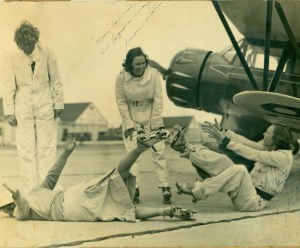
The girl in the middle, laughing, was his girlfriend, she was a pilot too. On the left is Amelia Earhart, the president of the female flying group called The 99’s.”  (I hear an audible WOW. We’re getting somewhere.)

Image

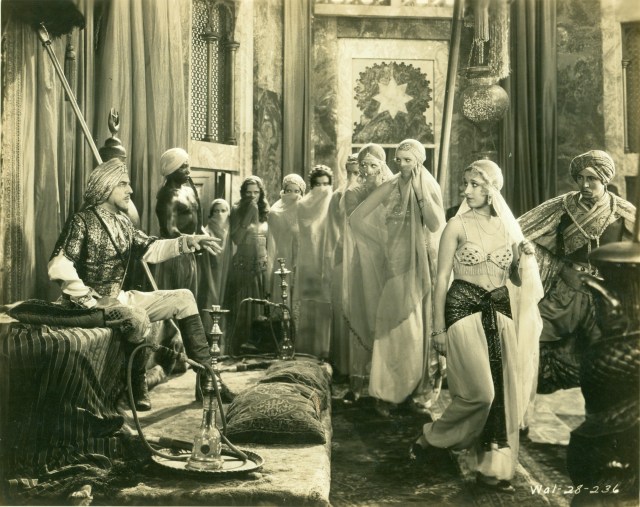
“And this girl is the other main character, and she was a show girl, dancer, and actress. The picture is a clip from a 1931 movie she appeared in called Women of All Nations. Not much of a film, but she had a closeup. Oh, that’s Bela Lugosi in the turban.” (Now I hear a ‘that’s amazing.’)

Women0001

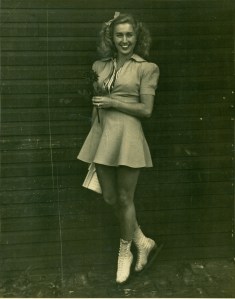
“Yeah,” I agree. “And it’s only the first book. In book two, he ships out to the Pacific, and she becomes a professional ice skater in a Sonja Henie Ice Show.”

helenskates0001

(I reach for the second book, “Figure Eight.”). Here he is with the head of Eastern Airlines, Captain Eddie Rickenbacker. You know, the WWI flying ace?” Now they want to know the price, and would I take a debit card?

Rickenbaker0001

“Would you like me to sign the books?” They would. And I thank the purchaser, and ask for feedback on Amazon.

What is nice is that all teachers share an innate sense of wonder. My natural fascination with the story easily connected to like-minded listeners among the professional educators circling that hall.

And that’s my pitch. I let the two main characters sell the memoir because they were nothing short of amazing.

Plus I , too, happily made a donation for each book sold to the IEA Children’s Fund.


Gail Chumbley is the author of the two-part memoir, “River of January” and “River of January: Figure Eight.” Both books are available at www.river-of-january.com, or on Amazon.


Tell Me a Story


Drawing inferences; the ability to examine evidence and attach meaning, was the bedrock of my history classes. Believe it or not, forming conclusions from documents isn’t intuitive for everyone, and more often than not, an acquired assessment skill.

Context is huge . . . the medium, (photo, painting, film clip, political poster, diary entry, news story) allows a document to fit into a broader story. And that same critical thinking skill is what I had to use in my books, “River of January,” and “River of January: Figure Eight.”

Please examine the following images from the archive and make them fit into a narrative.

Happy Friday


Gail Chumbley is the author of the two-part memoir, River of January, and River of January: Figure Eight. Visit her website at www.river-of-january.com or order on Amazon.com

Christmas in Algeria, 1932

Dearest Mother,
I have read your letter and I want you to know that Miss has given us that warning already. We never go out alone. Earl Leslie and the other boys keep a close eye on us. There, that should relieve your concern.
North Africa is very strange, but I like it here. Una bought a guidebook and we have, as a group, toured Tunis and Algiers on foot. The buildings are a mix of the past here. The book calls the style “Ottoman-French. I guess that means both Middle Eastern and European.
Every morning we wake up to a public call to prayer. The people are mostly Muslim and the calls are part of their customs. I think it sounds soothing—usually the sound of the caller lulls me back to sleep. Curious, isn’t it?
The heat here is dry, and the sun blinding white. We stroll through the narrow streets (in groups) where the sun can’t reach us, making for darker, cooler shade. Nameless women veiled from head to toe pull their children along dressed all in white. It’s such an exotic world.
Silly as this sounds, I tried to buy you Christmas gifts in the market, but found nothing. You’ll have to settle for a telegram, because this is a Muslim country and they don’t celebrate Christmas. And, Mother, please have a happy Christmas.
We girls have all decided to do our own gift exchange and sing Christmas carols. We’ve hung paper chains on a palm tree in the lobby of the Algiers Hotel! The hotel managers gave us permission.
Merry Christmas Mother. I love you and Eileen very much. The young man I mentioned is not serious. His name is Elie, (Jewish, I know) and he has kindly showed us all around tourist sites.
Helen

River of January, page 165-166.

Indie writer, Gail Chumbley is the author of the memoir, River of January and River of January: Figure Eight. Available at www.river-of-january.com and on Amazon.com.

Oh, To Be Young

Kindle patrons! River of January is on sale this weekend! From Friday through Sunday night, the adventure is yours for 99 cents. What a barg! Download the book, give it a read, and leave a short review.

Enjoy this sneak peek.
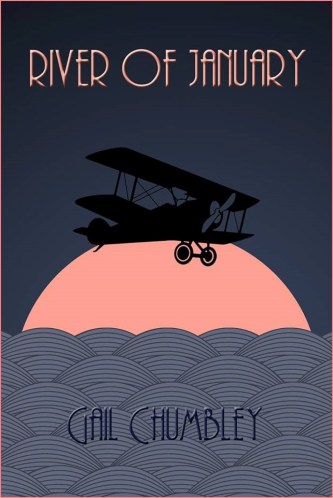
rojcover

“Hello, Chumbley here—hello?”

“Morning Chum,” flashed an urgent voice. “This is Richard Ross, and I am awfully glad I caught you at the office! We have a horse posted in the third race and need to get to Baltimore, fast.”

“Havre de Grace Race Track?”

“A horse in the third.”

“Wait, where are you calling from?” the young man asked.

“Newark. We’ll be waiting at the airfield for you to arrive.”

“Horse track, huh?  Roger that. I’ll gas up the Waco and be over soon.”  Jogging to the hangar

“Hello, Chumbley here—hello?”

“Morning Chum,” flashed an urgent voice. “This is Richard Ross, and I am awfully glad I caught you at the office! We have a horse posted in the third race and need to get to Baltimore, fast.”

“Havre de Grace Race Track?”

“A horse in the third.”

“Wait, where are you calling from?” the young man asked.

“Newark. We’ll be waiting at the airfield for you to arrive.”

“Horse track, huh?  Roger that. I’ll gas up the Waco and be over soon.”  Jogging to the hangar Chum reflected, “This trip sounds like fun, especially if I make a couple of bucks.”

Taxiing down the runway, the flyer lifted off—his trip was just a short hop west—and Chum presently approached the New Jersey landing strip. From his windshield he could see three figures moving outside an office building near the tarmac.

“Must be Ross,” Chum mumbled. Touching down, the pilot slowed and turned the plane toward his passengers. But he noticed they were running toward the Waco. Ross was shouting something and waving his arms.

“We need to go, now, Chum!” the pilot finally heard above his roaring engine. Chuckling, as they clambered aboard, the flyer again turned and taxied down the same airstrip, quickly lifting off toward the southeast. His three passengers breathlessly discussed the upcoming race card. Thoroughly entertained by their excitement, Chum listened.

“That number six will be tough to beat,” and “I paid a call to those stables and I wasn’t that impressed.”

This flight wasn’t long either, but apparently too lengthy for the impatient stockbrokers. As Chum circled the county airfield, Ross reached up and patted his shoulder. “Not here, Chum. It’s too far from Havre de Grace. Land the plane at the track, put it down on the infield!”

Stunned, the pilot clarified, “At the horse track?”

“Yes sir! There’s no one better than you to pull off a landing like this one!”

As he doubtfully turned his plane around, dangerous images passed through Chum’s mind—in particular, the incident in Elmira. He understood, as every pilot understood, that potential disaster rode along with him on every flight.

Chum worried:  What are the chances of cart-wheeling the plane? Can I regain lift if I come too close to the viewer stands? Will I be arrested?

Ross read Chum’s alarm and assured the pilot, “I trust you. The field is long enough for a good flyboy like you to manage. And we’ll pay for any mishap or damage.”

“How ’bout my broken neck?” the pilot half-joked.

The broker snickered.

Chum shrugged, lowered the nose of his Waco, and touched down firmly, bouncing on the grass, and smoothing out as the plane slowed. By the end of the infield, the Waco stopped, facing the viewing stands. Safe. No snags. Leaning over the yoke, he inhaled deeply realizing he’d held his breath through the approach, the landing, and the braking.

Movement in his peripheral vision caught his notice. Four race officials were rushing from under the track’s white railing. The men waved their clipboards and arms over their heads, rushing toward his Waco.

Chum caught the crowd’s mixed responses to his sudden appearance. Some in the crowd stood stunned, mouths hanging open, while others cheered, jumping and clapping as though his arrival was scheduled entertainment.

The pilot burst into laughter. “Now, there’s the sensible crowd!” he chortled, watching as the panicked stampeded out the exits. Chum turned to tell his passengers to look at the stands, but saw that Ross had popped open the cabin door, and was dropping down from the plane.

“Take it easy, fellas. Take it easy,” Ross shouted to the officials. “This pilot is the best. He does this kind of landing all the time!”

The police quickly arrived and Ross, now joined by his two associates, stood outside, as if guarding the plane. The broker talked fast, and to Chum it appeared as if the authorities were calming down, physically stepping back from the wealthy New Yorker.

Maybe they realize he’s a big shot, the pilot concluded. After some tense moments the police, track managers, and officials unexpectedly shook hands with the New York businessmen, and strolled off the grass.

Hoisting himself back up into the cabin, Ross smiled. “No jail for us today, Chumbley. The track manager—the palooka in the blue blazer—only asked that you move your plane to the center of the infield, and that we stay until today’s race card is finished.”

Finally unhooking his safety harness, Chum stretched, climbed out of the Waco and shook his head in disbelief. He mumbled, “Tough treatment for men who live for horses.”

Chum reflected, “This trip sounds like fun, especially if I make a couple of bucks.”

Taxiing down the runway, the flyer lifted off—his trip was just a short hop west—and Chum presently approached the New Jersey landing strip. From his windshield he could see three figures moving outside an office building near the tarmac.

“Must be Ross,” Chum mumbled. Touching down, the pilot slowed and turned the plane toward his passengers. But he noticed they were running toward the Waco. Ross was shouting something and waving his arms.

“We need to go, now, Chum!” the pilot finally heard above his roaring engine. Chuckling, as they clambered aboard, the flyer again turned and taxied down the same airstrip, quickly lifting off toward the southeast. His three passengers breathlessly discussed the upcoming race card. Thoroughly entertained by their excitement, Chum listened.

“That number six will be tough to beat,” and “I paid a call to those stables and I wasn’t that impressed.”

This flight wasn’t long either, but apparently too lengthy for the impatient stockbrokers. As Chum circled the county airfield, Ross reached up and patted his shoulder. “Not here, Chum. It’s too far from Havre de Grace. Land the plane at the track, put it down on the infield!”

Stunned, the pilot clarified, “At the horse track?”

“Yes sir! There’s no one better than you to pull off a landing like this one!”

As he doubtfully turned his plane around, dangerous images passed through Chum’s mind—in particular, the incident in Elmira. He understood, as every pilot understood, that potential disaster rode along with him on every flight.

Chum worried:  What are the chances of cart-wheeling the plane? Can I regain lift if I come too close to the viewer stands? Will I be arrested?

Ross read Chum’s alarm and assured the pilot, “I trust you. The field is long enough for a good flyboy like you to manage. And we’ll pay for any mishap or damage.”

“How ’bout my broken neck?” the pilot half-joked.

The broker snickered.

Chum shrugged, lowered the nose of his Waco, and touched down firmly, bouncing on the grass, and smoothing out as the plane slowed. By the end of the infield, the Waco stopped, facing the viewing stands. Safe. No snags. Leaning over the yoke, he inhaled deeply realizing he’d held his breath through the approach, the landing, and the braking.

Movement in his peripheral vision caught his notice. Four race officials were rushing from under the track’s white railing. The men waved their clipboards and arms over their heads, rushing toward his Waco.

Chum caught the crowd’s mixed responses to his sudden appearance. Some in the crowd stood stunned, mouths hanging open, while others cheered, jumping and clapping as though his arrival was scheduled entertainment.

The pilot burst into laughter. “Now, there’s the sensible crowd!” he chortled, watching as the panicked stampeded out the exits. Chum turned to tell his passengers to look at the stands, but saw that Ross had popped open the cabin door, and was dropping down from the plane.

“Take it easy, fellas. Take it easy,” Ross shouted to the officials. “This pilot is the best. He does this kind of landing all the time!”

The police quickly arrived and Ross, now joined by his two associates, stood outside, as if guarding the plane. The broker talked fast, and to Chum it appeared as if the authorities were calming down, physically stepping back from the wealthy New Yorker.

Maybe they realize he’s a big shot, the pilot concluded. After some tense moments the police, track managers, and officials unexpectedly shook hands with the New York businessmen, and strolled off the grass.

Hoisting himself back up into the cabin, Ross smiled. “No jail for us today, Chumbley. The track manager—the palooka in the blue blazer—only asked that you move your plane to the center of the infield, and that we stay until today’s race card is finished.”

Finally unhooking his safety harness, Chum stretched, climbed out of the Waco and shook his head in disbelief. He mumbled, “Tough treatment for men who live for horses.”


Book Two, River of January: Figure Eight is available at http://www.river-of-january.com or at Amazon.com


Steal This Clip


A wonderful video for a wonderful story. Feel free to share with contacts.

“River of January,” and “River of January: Figure Eight,” are both available at

http://www.river-of-january.com

Also found at Amazon.com


Gail Chumbley is the author of the two-part memoir, River of January

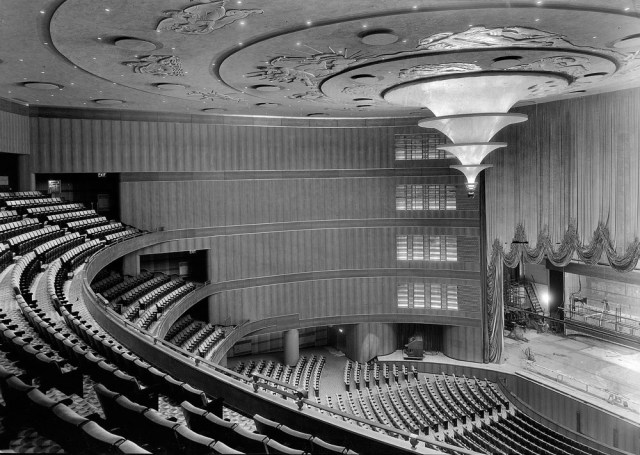
From The Top Balcony

centertheatreint

A gentleman called the house last week asking to speak to me. Since I was out, my husband began chatting with the caller, and once again, as has so many times before, something magic happened related to my books.

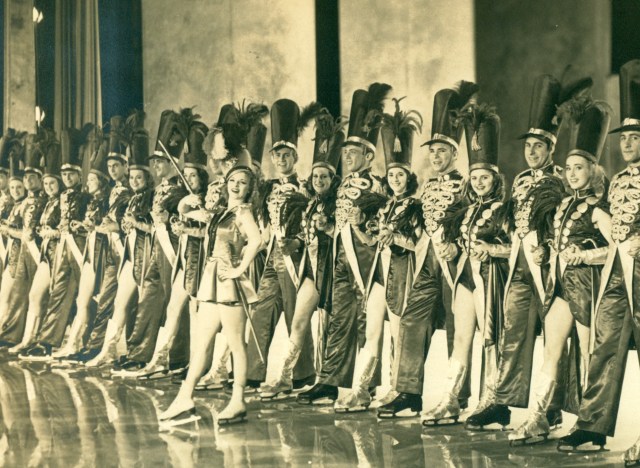
This man had discovered “River of January: Figure Eight,” through a series of clicks on social media, and found enough information to phone our home. He had hoped to gather more about the professional Ice Shows at Center Theater during the war in New York. The reason he asked was that his aunt had skated in the productions, (created by Sonja Henie, and choreographed by ballet mistress, Catherine Littlefield) and that his aunt was still living!

On Sunday night, following my own conversation with the nephew, I had the honor of speaking to Gertrude, “Trudy” Schneider, now a young 93 years old. This grand lady, residing in Canada, apologized that she had only known Helen Thompson, my central character in the memoir, from the theater dressing room. Though Trudy skated evenings with Helen, she attended school during the day, as she was only sixteen years old. That made sense since Helen was close to thirty when she began the show, and a mother by that time.

Trudy further detailed her life story, adding that she and her family, with relatives already in America, came to the country from Vienna in 1939. Under Nazi occupation, Austria was not a safe place for Jews any longer, and so she, her parents, and one brother made their way to the US. A skater since childhood, she had been ‘discovered’ skating at Madison Square Garden, and promptly signed by the Center Theater front office. Her parents weren’t thrilled about their daughter working, but according to her nephew, Trudy earned $45.00 a week, making her income vital.

I also found out that one of my favorite character’s in “Figure Eight,” Vera Hruba, a Czech skater,  advised Trudy to always remember her false eyelashes. According to Hruba that was all a girl needed.

As our conversation progressed she seemed to recall more details about her experience at the theater, including how a typical rehearsal transpired. Catherine Littlefield, the  choreographer mentioned above, would climb to the top tier of the fourth balcony and critique the final run-through from her lofty perch. Trudy implied an aura of imperial omnipotence in Miss Littlefield’s seating choice, judging the performance from on high.

Conversing with Trudy felt like time travel; that I had reached back and touched 1943 New York. When I find this book business overwhelming–when I wonder why I bothered to take on the project, a “Trudy” moment presents itself.

Then I remember.

ithappens100012

Helen Thompson (Chumbley) first girl on right, Trudy Schneider, second girl from right.

Gail Chumbley is the author of River of January, and River of January: Figure Eight, a memoir in two volumes.