Talk Back Wednesday

rojcover10

You’ve read the book, now share your reflections or questions.

Finish this sentence, ‘Chum’s greatest personal asset had to be . . . ‘

or

‘Helen traveled across the US and around the Atlantic world because?’

Post your responses and we’ll talk.

I would love to hear from you,

Gail

Much Obliged

Peacock0002

Thank you for taking part in “River of January’s” free Kindle Weekend! Enjoy the story with my compliments.

Stay in touch. As you finish the book, drop me a line, add a review on Amazon.com, and be sure to tell a friend.

For more, visit the photo gallery at www.river-of-january.com

Book Two, “The Figure Eight” is in progress.

This Week, 1935

IMG_0191

The old pilot’s time with us grew to mean a great deal to me, personally, but made it that much harder to let him go at the end.

Chum’s last years brought him out west to Boise. It was much easier for my husband to care for him than the semi-regular flights to Miami, sorting out some kind of preventable crisis. Once his father settled in here, they were together every day at the assisted living facility. I believe their time together gave both of them a lot of comfort.

As for Me? I just loved to sit and talk to my father-in-law. If he had felt more spry I would have dragged him into my history class for my own version of “Show & Tell.” I mean, really! William Howard Taft was in the White House the year Chum was born! His life was a damn book. (see River of January)

On one particular Sunday we drove over for a visit, and brought him Mexican food . . . Chum’s favorite. I was anxious to talk to him because we had rented “The Aviator” the night before, the film about Howard Hughes, and Chum had worked for the millionaire at one time.

Me: So we watched a movie about your old buddy, last night–Howard Hughes.

Chum: Ha. He kept the Kleenex business in the black.

Me: (Oh, geez! How could he know that?) And your old girl friend, Kathryn Hepburn.

Chum: Yeah. Katy. She was a nice girl.

Me:(Katy? A nice girl?)

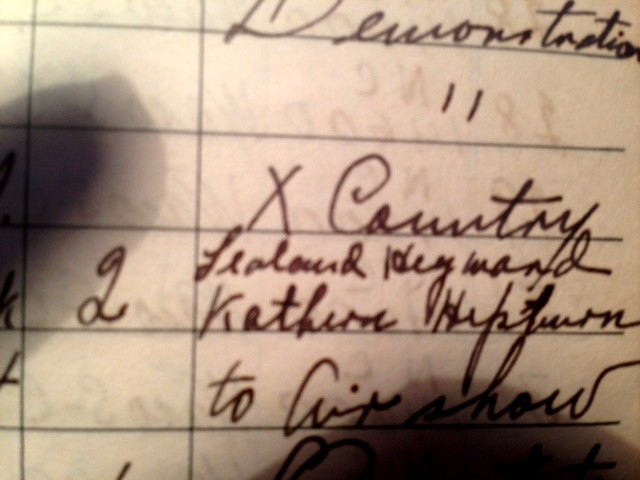
Chum: Her boyfriend, that theater producer, Leland Hayward–I taught him flying lessons, and she came along.

Me: Yeah. (Yeah)

And here it is folks, if you didn’t see at the top. The old history student has to whip out the proof. Have a nice weekend.

  IMG_0192

Gail Chumbley is the author of River of January. Available on Amazon.

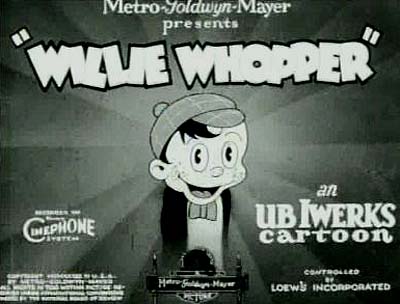
Air Race, Willie Whopper Cartoon, 1933

willie_whop1

https://www.youtube.com/watch?v=S66wOkha0aU

A vintage piece of celluloid from the Golden Age of Aviation. This cartoon has it all: racism, sexism, the boy hero, the hairy villain, and a hot girl (Earhart, sexy?). Reminded me of the pod races in Star Wars. This whimsical cartoon premiered  the year Chum won his air race, “The Darkness Derby.”


River of January is available on Amazon.com and www.river-of-january.com

A New April

Image

Right now, in classrooms across America, and overseas, thousands 17-year-olds are preparing for the AP US History exam. They, and their instructors are obsessed with cause and effect, analyzing, and determining the impact of events on the course of America’s story.  Moreover, they are crazed beyond their usual teen-angst, buried deep in prep books, on-line quizzes, and flashcards. As a recovering AP teacher, myself, I can admit that I was as nuts as my students, my thin lank hair shot upward from constant fussing.

My hair fell out too, embedding in combs and brushes, as I speculated on essay prompts, that one ringer multiple choice question, and wracking my brains for review strategies. The only significance the month of April held was driving intensity, drilling kids on historic dates; Lexington and Concord, the firing on Fort Sumter, the surrender at Appomattox Courthouse, President Wilson’s Declaration of War in 1917, the battle of Okinawa, MLK’s murder, and the Oklahoma City bombing, That was what April meant in April.

To quote John Lennon, “and now my life has changed, in oh so many ways.”  Today April holds a whole new definition. My husband rises first in the morning, putters in the kitchen, fetches coffee, tends to the dog, and is back in bed, back to sleep. Big plans for my morning include writing this blog, making some calls related to book talks, a three mile walk through the Idaho mountains, then working on Figure Eight, the second installment of River of January. What a difference!  Nowadays, getting manic and crazy is optional. My hair has grown back in, standing up only in the morning, and the only brush with AP US History occurs in my dreams; the responsibility passed on into other capable hands.

This month, at least here in the high country, has been especially beautiful. We have already enjoyed a few 70 plus degree days, and the green is returning to the flora. Our sweet deer neighbors are no longer a mangy grey, emerging from the trees wearing a warm honey coat. With a little snow still on the peaks, the sky an ultra blue, and the pines deep green and rugged, I think sometimes this must be Eden.

My years as a possessed, percolating history instructor provided a gift of passionate purpose that enriched me more than depleted.  But, now . . . I wouldn’t trade this new phase of my life for all the historic dates in April.

Gail Chumbley is the author of River of January also available on Kindle.

Living Life Forward

It was the night of February 9, 1964, a Sunday, when my older brother and I had to make a crucial decision.  We were both over stimulated, frantic, not one of our four feet remaining long on the floor. The house vibrated with our excitement and the weight of our impossible dilemma. For starters our birthday was the following day–the 10th, (though we’re not twins–he’s a year older). Still, that pre-birthday fuse had already ignited and by the 9th the two of us were banking off the walls.

The quandary we faced that Sunday night was whether to watch “Davy Crockett at the Alamo,” starring Fess Parker on Disney (The Alamo!), or the Beatles on Ed Sullivan. This was that first historic Beatles broadcast, live on American television, and we agonized between the two choices.

In 1964 there were no video players, no DVD players, no home computers, or dvr’s, in fact televisions were the size of Volkswagen’s and transmitted in glorious, flickering black and white. This difficult decision counted because there was no rewind, there were no do-overs. One gain meant one loss.

We liked Davy Crockett an awful lot.  We had watched all the previous episodes, and Davy biting the dust in San Antonio was the much anticipated grand finale. But, oh, the Beatles! And the adoration was real, palpable, an injection of adrenaline without the needle. We worshiped at the warmth of our bedroom radios, perpetually tuned in to our local AM radio station. Reverent silence accompanied replays of “She Loves You,” and “I Want To Hold Your Hand.”

What could two grade schoolers, sick with anticipation do with such a weighty conundrum?  It was 1964 and we had to choose.

Before the proliferation of electronic media, this little girl of the 1960’s viewed momentous events as they beamed across the screen. MLK’s elocution at the Lincoln Memorial, President Kennedy’s inaugural address, his assassination, and the escalating war in Southeast Asia–all experienced as reported at that moment.

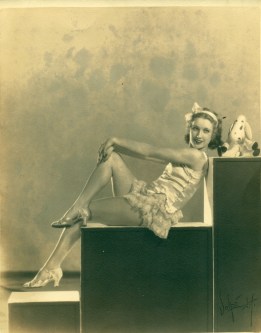
In an earlier era, when Chum flew in his air race, and Helen danced in Rio at the Copacabana, there were no camcorders or Iphones. His signature landing and Helen’s near disastrous opening night grew silent as the applause subsided, then faded in time. Much like my brother and myself in 1964, they lived life forward, one opportunity at a time.

Silent photos and written records are all that remain verifying Chum’s aerial dash through darkened skies, and Helen’s energetic dance routines. They lived life forward, embracing events as they unfolded–experienced once, then gone. I would love to see footage of Chum’s Waco airplane lifting off at dusk, or watch Helen spring across the stage. But those wishes are pipe dreams, never to happen. No vintage film or recording, (except one I found by accident) exist in the historic record. The best I can do for myself, and for readers, is try to recreate the magic of the first time around in the pages of my River of January.

Oh, by the way, I’ve never seen “Davy Crockett at the Alamo.”
ImageGail Chumbley is the author of the memoir, River of January. Also available on Kindle.

Before War Was Cool

Image

The protagonist in River of JanuaryMont Chumbley, or “Chum,” as we called him, pined to join the Navy in 1927.  In fact Chum knew that the Navy was his destiny from the time he witnessed a barn-stormer, (stunt pilot) fly miracles across the rural Virginia sky.  What the boy didn’t count on in his hopes was the resistance he met from his own family.

The Chumbley’s were not alone in their disgust with the military.  All of America suffered from a giant hangover after the Great War (World War One), convinced Americans that their participation had been a horrible mistake.  Though not fully true, the US still viewed itself as a simple republic, not an empire builder bound for global influence.  That policy came later, after World War Two, in the Cold War.

President Wilson staked his own presidency on his Treaty of Versailles and League of Nations, which would have bound the country to Europe in a forerunner to the United Nations.  The public, through their Senators voted the Treaty down, killing it as dead as the soldiers who would never come home.  Books were written after 1919 that discredited war as nothing but a fools errand.  “Johnny Got His Gun” was one such novel, and Erich Maria Remarque‘s “All Quiet on the Western Front” was another.

Folks stateside strongly regretted sending Doughboys across the Atlantic to battle the Kaiser and his evil Hun army.  By the year Chum pushed to join the Navy, the US had negotiated a treaty with the French, called the Kellogg Briand Pact, which outlawed war as an alternative in international conflict.  (“Don’t plant that mine, if you can’t do the time?”  Seriously?)

The Nye Commission, a House investigating committee was charged to find out why America joined the war.  In the end these law makers judged money was the culprit.  War manufacturers, such a poison gas producers the Dupont Corporation and financiers,The House of Morgan, were condemned for their roles in fanning the flames while counting their profits.

It was in this cultural/political atmosphere that Chum wanted to join the Navy.  When his father and aunt objected, they simply parroted the opinion of a nation that believed the military was only for scoundrels and suckers.  If Chum succeeded in enlisting he would draw shame on the family’s name.

Now, I am a child of the Vietnam era and understand the power of public opinion concerning war.  Too many young men came home to condemnation for rendering their duty to their country.  Many were already angry from their combat experiences, especially if they were drafted in the first place.  War protestors vented their fury on those boys who did nothing more than complete their mission.

Still for many young people, such as Chum in the 1920’s, the service still offers training and opportunity.  Perhaps it would benefit us all to remember to separate the advantages of military training, from the poor use of young people deployed for uncertain, poorly planned political agendas.

Chum did meet his service obligations, later after Pearl Harbor.  But he would agree, I think, that he gained more from his service in the Navy, than he returned.

Servicemen have never been suckers, and decision makers must never lightly treat them as such.

Ethical Story-Telling

One of the toughest obstacles I faced writing River of January, was assuming I knew the family story best.  These people were real and left a rich paper trail of their dramatic lives.  I was lucky enough have recorded interviews, stories graciously shared by family members, and volumes of letters, mementos, and photographs. The internet, too, has been helpful.

Still, I struggled with the presumptuous notion of interpreting Helen and Chum’s lives through my understanding.  After agonizing for a good year over the arrogance of committing their lives to paper, I experienced a moment of clarity.

These two deserve to be remembered.  If that task was placed in my novice hands, so be it.

I have since spent the last three years learning how to write, because this story must be told, their adventures pieced together into a more coherent picture.

I hope to share more regarding the events that led to this book in future blogs.