Beyond The Symbols

Patriotic symbols, music, and the Pledge of Allegiance recited at a solemn ceremony can be deeply moving. A simple presentation of the flag at a formal function can be awe-inspiring. The lone, austere notes of Taps played at a military funeral elevates a moment into sacred reverence.

The sounds and symbols of American devotion are powerful.

Still, as commanding as recitations, patriotic colors, and America the Beautiful can feel, deeper symbols in our shared history can reveal so much more.

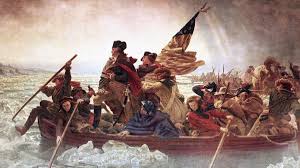
In his book, Washington’s Crossing, historian David Hackett Fischer introduces his volume with a discussion of Emmanuel Leutze’s famous painting of the same name. Fischer guides the reader through elements in the painting, noting passengers figure by figure as they frantically navigate the frozen Delaware River on that long ago Christmas night. 

Why is this particular work especially moving? Because at that juncture, December 25, 1776, the Revolutionary War looked to be flaming out after barely a start. Defeat had dogged Washington’s Continentals after being chased off of Long Island, and driven out of New York City the previous summer. As Washington planned his surprise Christmas attack, victorious Redcoats had settled into winter camp in New York City.

Humiliated, Washington knew he had to strike hard and he had to win.

Viewing his situation with the “clarity of desperation” the General ordered an assault on Hessian (German mercenary) held Trenton, New Jersey. The Continental army would have to use the element of surprise fighting against a better armed and better fed opponent. Risky to the extreme, Washington knew we, meaning America, for all time, was dependent upon his actions that night.

As for the painting, the artist depicts freezing soldiers huddled in a boat with more watercraft in the backdrop. From the starboard side, (to the right of General Washington) sits an oars-man, distinctly Black, putting his back into his strokes, ploughing through dangerous ice floes. Behind him, facing forward at the bow, is another swarthy figure, perhaps a Native American. He is desperately kicking ice with his left boot while handling a sharpened pole to break open a passage through the impossible crust. To the foreground an immigrant (a Scot by the look of his hat) studies the river’s surface closely as he pulls forward to port, while another behind him, in fisherman gear, studies the treacherous water. Others are made up of rustics, one at the tiller, along with a wounded passenger.

General Washington centers the painting as he is the central figure of the drama. Behind the General is Major James Monroe, and another rugged frontiersman by the looks of his garb. Both men are grasping a 13-star (Betsy Ross) flag, in a grip that elicits an attitude of determination and desperation, with perhaps a bit of warmth. Below both flag bearers sits a WOMAN, yes, a woman pulling her oar with an analytic eye upon the clotting water.

Black, Native, white, immigrant, the highborn, the humble, men and women, yesterday, today, and the future: all of our American lives balanced on the gamble played that night in 1776.

The point I believe Leutze is trying to convey is that we all don’t have to be the same. No one has to agree on the details of our beliefs to ride on that boat. The truth is Americans all have and had different realities and ambitions: differing views of liberty. Still, all onboard had to carefully respect each other’s space and not overturn that fragile vessel, Liberty, for we must stay afloat and row in the same direction. It is in all our interests to do so.

And that metaphor of America, that boat, tested our resolve on one of the nation’s most critical nights. Inspiration doesn’t come any better than from Leutze’s allegorical Washington’s Crossing.

Gail Chumbley is the author of the two-part memoir, River of January, and River of January: Figure Eight. Chumbley has also penned two stage plays, Clay, and Wolf By The Ears, concerning the life of Senator Henry Clay, and an in-depth examination of the beginnings of American slavery. Gail is currently working on another piece, Peer Review, best described as Dickens A Christmas Carol meets presidential history.
The Clarity of Desperation

With only days until Christmas 1776, General Washington watched the snow fall and the ice thicken as his suffering army melted away. Earlier that year, in July, that same Army had been humiliated by the Red Coats, chased off Long Island, pursued through Manhattan, barely escaping across the Hudson River into New Jersey. 

The General had been flanked by overwhelming British forces and his inexperienced Patriot army simply panicked and ran. Furious at their conduct Washington threatened to lead another assault himself, however, cooler heads prevailed as his staff convinced him otherwise. 

Amongst King George’s red coated regulars were legions of Hessians, hired guns from the German kingdom of Hesse-Cassel. Their presence on the field infuriated the Americans, as if the King couldn’t bother to keep the conflict British. These mercenaries were especially brutal, taking a psychological toll on Washington’s volunteer army by making use of flashing, saber-like bayonets. 

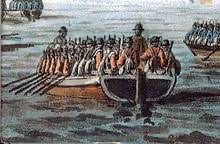
But Washington had a few cards of his own to play. Contemplating retreat while still on Long Island General Washington had ordered Colonel John Glover, a New England mariner, to collect enough vessels to ferry his surviving soldiers west to Manhattan, then over the Hudson into New Jersey. With campfires blazing to fool the redcoats, Washington successfully evacuated his army waiting to board for the last boat.

The inexperienced American army was preserved.

Still, demoralized, and outgunned, the Continental Army appeared defeated and despondent. The general consensus among all was the war was hopeless, a lost cause, the Patriots esprit de corps vanished. 

By winter, Washington’s command appeared to be unraveling. Inadequate food, too few supplies, and support sapped the army’s endurance. Worse the Brits, flush with currency, settled into cozy New York accommodations and enjoyed the hospitality of the city’s loyalists community. 

With circumstances conspiring against him-the weather, scarcity of supplies, and outgunned by enemy Hessians, Washington had to act as he faced a critical moment. Writing to his cousin, Lund, the General poured out his anguish. 

. . .your immagination can scarce extend to a situation more distressing than mine—Our only dependance now, is upon the Speedy Inlistment of a New Army; if this fails us, I think the game will be pretty well up . . .

Out of desperation Washington confessed what he termed as the “clarity of despair.” He had to act.

First Washington sent for an operative who sold provisions to the nearby Hessians. This Patriot spy came into camp and apprised Washington on the disposition of King George’s contracted killers billeted in nearby Trenton. These Germans were settled in for a Christmas celebration, assured that the Americans were all but defeated. 

In his second order, Washington commanded Colonel John Glover, once again, to requisition every boat the yankee seafarer could find. Between the intelligence report and vessels secured, his men were mobilized for a surprise Christmas morning assault on Trenton. 

Once again, Glover pulled off a miracle amphibious operation. And once again, General Washington was the last man on the last boat. In two files the suffering Continental Army marched, braving more than just the weather.

His forces arrived by first light. 

The unsuspecting Hessians were throughly routed in the surprise assault, that in the end provided the Patriot cause with a desperately needed victory.

The revolutionary cause again breathed life. 

So as you enjoy the warmth of the season, remember those who struggled before that the people could have a new nation. On Christmas in 1776 Washington’s army marched through the inky, icy cold, hungry, fretting for their families, yet committed to the long game of founding a nation. 

We have done this before. Much like General Washington our desperation makes our choices clear. Recent scholarship estimates that during the Revolutionary War only 1/4 of the American population supported independence. There are more of us holding to Constitutional norms today. Stay the course this moment isn’t the last.

Merry Christmas.

Gail Chumbley is the author of the two-part memoir, “River of January,” and “River of January: Figure Eight.” Both titles available on Kindle. Gail has recently completed a stage play, Clay, on the life of Henry Clay, Peer Review, where four former presidents meet 47, and Wolf By The Ears, an examination of the events leading to chattel slavery.

A Learning Curve


George Washington came of age immersed in the culture of Tidewater Virginia. To join the higher echelons of society there were set requirements, in particular vast property holdings.

This lust for land had crossed the Atlantic with the first ships from Great Britain. Only gentlemen of the highest social station possessed “parks” to use the British term; bucolic sanctuaries where aristocrats, and their guests could hunt, and fish, with enough acreage left for tenancy. Landed Cavaliers to Virginia immediately assumed a sense of equality to any aristocrat residing in Old England. (The “All Men Are Created Equal,” passage in the Declaration of Independence affirms Jefferson’s sentiment.)

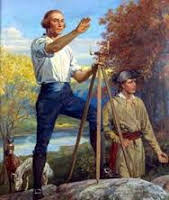
Washington’s older, half-brother, Lawrence, the heir of their deceased father’s estate, had the land, the title, the rank, and the education that George could never realize. But, Lawrence did try to help the twenty-year-old establish himself. Lawrence first tried to secure a naval commission for his younger brother. But that didn’t work out.* With no money or prospects, young Washington settled on a career as a land surveyor, a noble calling for the time. 

Making use of his father’s instruments, and with  help from a neighbor, Lord Fairfax, George gained an appointment to the Virginia Militia, and a chance to put his vocation to use.

The year was 1754 and a fateful clash awaited the untested soldier-surveyor.

Virginia’s original charter claimed virtually all western lands, north by northwest of the colony, theoretically to the Pacific. At roughly the same time the French too, had staked claim to that same interior region. At a site known now as Jumonville Glen, in the Ohio River Valley, Washington and his party detected then attacked an encampment of French Canadiens. In the melee a Native scout with Washington, called Half King, killed a Frenchman, who, as it turned out was a diplomatic courier. That was, and still is, an international no-no. 

In retaliation soon after, French reinforcements from Fort Duquesne, (Pittsburgh) pressed down on Washington’s party, where the untested and panicked militia officer made a colossally poor decision. In the ensuing “Battle of Fort Necessity,” Washington was easily whipped and forced to surrender when his hastily erected stockade filled with rain, making defense impossible. 

Thoroughly humiliated, Washington surrendered to the French on July 4, 1754. In the capitulation treaty, young George unwittingly admitted he had allowed a French diplomat to be assassinated at Jumonville Glen. His lack of education was exposed. Washington couldn’t read French and didn’t know what he had signed. His humiliation was complete, his blunder igniting the French and Indian War. 

Fast forward forty years to 1794 and a return to the site of old Fort Duquesne, the scene of Washington’s infamous disgrace. For Washington much had changed. As Commander of the Continental Army, Washington had nobly defeated the British in the Revolutionary War, and became the first President of the United States.

The once awkward Virginian was fully redeemed in the eyes of the new nation. Despite his rough start, Washington had grown up. Still, his misadventures decades earlier still stung. Despite universal accolades, the nods and winks of those who remembered Jumonville Glen remained.

As for old Fort Duquesne? The settlement had become the growing commercial center of Pittsburgh. 

And it was in the proximity of Pittsburgh, near the site of his former humiliation, that President Washington faced a new conflict.

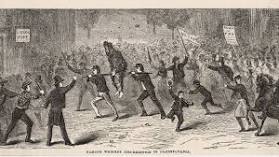
The new Congress has passed an excise bill on distillers of whiskey, as a means for the federal government to settle war debt. Secretary of the Treasury, Alexander Hamilton had proposed this tax on spirits as a way for the Treasury to settle its financial difficulties. But distillers around Pittsburgh stubbornly refused to pay. In fact Whiskey Rebels rose up, and attacked tax officials who attempted to collect. By summer of 1794, one collector had been tarred and feathered, and another was burned out of his home by a violent mob.

The Revolution was over, and President Washington had had enough. No more domestic violence, especially not from the Ohio Valley. He requested Congress to raise an army, placed Hamilton at the head, and sent them to the site of his earlier disgrace. These agitators melted away like snow in April.

Washington flexed federal power in what was the Constitution’s real first challenge. That Washington felt some sense of personal absolution, considering his military history is understandable.

And what does this episode mean to us in the long run? Don’t piss off George Washington? Maybe. But more importantly the new Constitution was the law, and as chief executive, he enforced that law.

Washington had grown up, and the country needed to do likewise.

*Washington’s mother said no.

Gail Chumbley is the author of the two-part memoir, “River of January” and “River of January: Figure Eight.” Both available on Kindle.

Go Get ‘Um

5825241068ff3.image

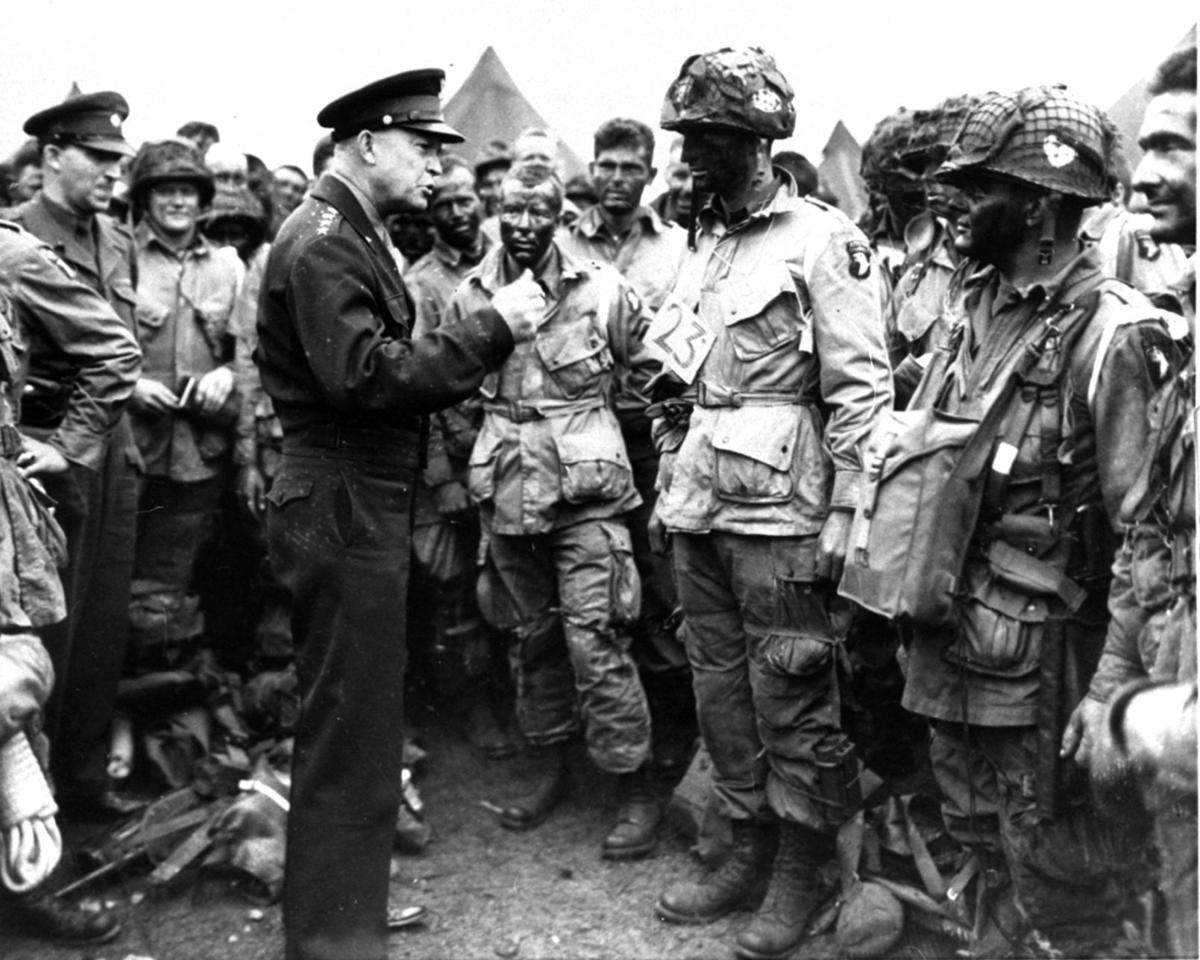
The date was June 5, 1944, and General Dwight D Eisenhower had made the decision to begin the Allied invasion of France the next morning. Christened “Operation Overlord” the massive campaign required disruption inland from the Normandy coast to insure a solid beach-head. The task fell to soldiers of the US 82nd Airborne, the US 101st Airborne,  and members of the 6th British Airborne. The mission was to impair the Wehrmacht’s ability to move their Panzer units toward the five invasion points.

General Eisenhower met informally with soldiers of the 101st, chatting and encouraging, to build morale. He must have felt an enormous responsibility sending these young Americans on such a hazardous and vital mission. While he mingled with the men, Ike suddenly wondered, “Is anybody here from Kansas?” A voice replied from the crowd, “I’m from Kansas, sir.” Ike looked the boy in the eye and responded, “Go get ‘um, Kansas.”

That story always leaves me teary. I don’t cry in movies, poetry doesn’t move me, and books have to be awfully emotional to elicit a sob out of me. But that moment of raw, honest regard, with so much at stake, hits me in the heart.

Washington at Trenton, Grant at the Wilderness, Doughboys in the Argonne, GI’s at the Bulge, Marines at Hue: the devotion to duty chokes me up. Every time.

But today Americans seem somehow lessened, cheapened. There are no Eisenhowers, or Washingtons, or Lincoln’s to describe what we represent. The institutions that inspired countless young people to lay down their lives are now attacked by an ersatz strongman from within. How could this happen? How can citizens of good conscience condone this very real threat? Where is our collective honest regard for our past, present , and future?

Makes me want to cry.

Gail Chumbley is the author of the two-part memoir, “River of January” and “River of January: Figure Eight.” Both are available on Amazon.com

Before They Were Men

L2FwcGhvc3RpbmdfcHJvZC9ibG9icy9BRW5CMlVvUGFfS0Qxb0ZyY1Q3dG1PV05SMFpsUlpsUzFfMTBsZHZBQjB6V1pxWml1dEl3UmtXbTNIcVdMZWc1dG9iUWd2VVdZdmFpZDFwTWE0RlFUWWU5VmVHUUhQcEh1MERXOWVmVjExejJpRXRHS1VHT  jacksonscar  Unknown images


“It’s hard to remember that they were men before they were legends, and children before they were men..” Bill Moyers, A Walk Through the Twentieth Century. 

For Presidents Day I’ve been putting together a lecture series for my local library. These talks surround the childhoods and later experiences of George Washington, Andrew Jackson, Abraham Lincoln, and Theodore Roosevelt.

The thinking behind the series was that early life for all four men presented serious challenges. Complications in health, family tragedies, and economic circumstances appear to have shaped the temperaments and the world view of these future presidents.

It was how each overcame difficulties and setbacks, and how that endurance came to influence each of their presidencies.

This is a brief synopsis of what I found.

Behind the image mythologized in “The Life of George Washington, by writer, “Parson” Weems, obscures the reality of a more nuanced, and complex Virginia child. Born on February 22, 1732 in Pope’s Creek, George Washington came into the world as the first son of a planter, but from a second marriage. His position in the family line left him without any claim to his father’s estate, or assured public standing. In Tidewater Virginia, society strictly followed the rules of primogeniture, where only the eldest male inherited, and young Washington could claim nothing, aside from the family name. His father, Augustine Washington had two sons from a first marriage, and Lawrence, the eldest, stood to inherit all.

Augustine in fact died in 1743, when George was only eleven years old, the boy not only lost his father, but also lost the formal English education his older brothers had enjoyed. That particular shortcoming forever marked George, leaving him self conscious and guarded through his early life.

To find his way, the youth conducted himself with quiet poise; it was a conscience effort designed to enter the upper echelons of society. Over time, with constant practice, Washington successfully hid his insecurities behind a restrained, and formal persona. So proficient at playing the gentleman, Washington, in fact, became one.

The Revolutionary War that Washington later tenaciously served, cost young Andrew Jackson his family. Born on the frontier, in a region paralleling North and South Carolina, young Andrew arrived into the world without his father. Jackson Sr had died months before, leaving Andrew’s mother, Elizabeth, and his two older brothers destitute.

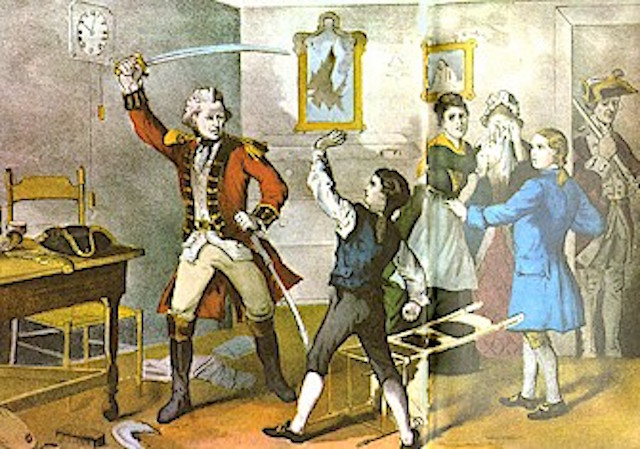
At thirteen Andrew, along with his brother Robert, joined the Patriot ranks as runners, only to be captured and imprisoned by the Redcoats. While a captive an officer of the Crown ordered young Andrew to polish his boots, and the boy refused. Young Jackson claimed he was a “prisoner of war, and demanded to be treated as such.” The officer replied by whipping his sword across Jackson’s insolent head and forearms, creating a lifelong Anglophobe. (In January, 1815, 48-year old Colonel Andrew Jackson meted out his revenge on the Brits at the Battle of New Orleans).

The end of the Revolution found young Andrew alone-the only survivor of his Scots-Irish family. His brother Robert had succumbed to camp fever from his time as prisoner, followed by his mother three weeks later. For the rest of his long life, Andrew Jackson lashed out, perceiving any criticism as a challenge to his honor and authority. He governed with the desperate instincts of a survivor.

Of a mild, more genial temperament, Abraham Lincoln came to being in the wilds of Sinking Springs, Kentucky, near the settlement of Hodgenville. His father, Thomas Lincoln, was a hard scrabbling farmer, while his loving mother Nancy Hanks lived only until Abe reached the age of nine. Hard work, deprivation and tragic personal losses seemed to permeate Lincoln’s young life, and as he grew Abraham grappled with serious bouts of melancholy.

Exhibiting a quick and curious mind, he struggled to educate himself on the frontier. Largely self-taught, Lincoln grasped the rudiments of reading and spelling, but his father saw schooling as idling away time better suited to work. Young Lincoln had to find tricks to do both, such as clearing trees then reading the primer he kept handy.

His step-mother, Sarah Bush Johnston reported that Abe would cipher numbers on a board in char, then scrape away the equation with a knife to solve another.

By young adulthood Lincoln left his father’s farm, and relocated to central Illinois, and made a life in the village of New Salem. Over time, Lincoln grew remarkably self-educated, studied law and passed the Illinois bar in 1836.

Of all the resentments he felt toward his father, it was Thomas’s clear lack of ambition and self improvement that nettled the son most. Upward mobility was America’s greatest gift, and young Lincoln pursued it with relish.

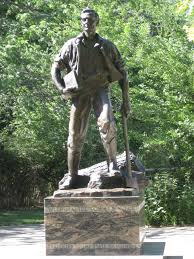
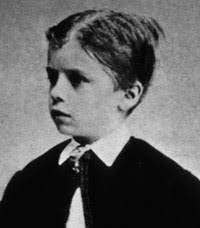
From his first gasping moments Theodore Roosevelt struggled simply to breathe. A child of rank, privilege and wealth, he suffered from debilitating, acute asthma. His parents, Theodore Sr and Mitty Bullock Roosevelt, stood helplessly over his sick bed, fearing that their little boy wouldn’t survive childhood. Later TR recalled how his father would lift him from his bed, bundle him into an open carriage for a long ride through the moist Manhattan night. Small for his age, and nearly blind, young Teedee as he was called, began an exercise regime in a gym, built by his father on the second floor of their palatial home on East 20th Street in New York. Over time, using a pommel horse, the rings, and a boxing speed bag, Theodore Jr visibly grew.

As for his eyes, a hunting trip finally proved to his family that he just couldn’t see. With new glasses, a self made physique and a dogged determination, Theodore Roosevelt brought his indefatigable zest and energy into his presidency.

Today is Presidents Day, 2018, and there is great value in remembering those who have served in this experiment in democracy. All four of these presidents left a distinctive signature of governance, schooled by earlier experience. And all, even Andy Jackson, governed in the spirit of service, believing they could make a contribution to this boisterous, ever-evolving experiment called America.

Gail Chumbley is the author of the two-part memoir, “River of January,” and “River of January: Figure Eight.” Available on Kindle.

gailchumbley@gmail.com