Colonel Clark used to bring his young son down to the dojo where my brothers participated in judo lessons. Judo had been my grandfather’s idea and he faithfully chauffeured the boys, and I sometimes came along too.
My Grandpa Ray always sat with Colonel Clark, if the old gent happened to be present. That meant I sat with Colonel Clark too. The two old men would talk and talk, seated next to one another, though their eyes remained fixed on their boys on the mats. They never seemed to look each other, but remained absorbed in their conversation.
My own distracted attention span only caught snippets of the murmuring discussion. “MacArthur, Wainwright, and Bataan,” came up in their exchanges And despite my youth, I understood something grave, something momentous lay behind the back and forth of these two men.
Later my older brother filled in the substance of what I reluctantly overheard.
Colonel Clark had been left on the Bataan Peninsula with around 12,000 American soldiers when General Douglas MacArthur evacuated the Philippines in 1942. Under the new command of General Jonathan Wainwright the Americans surrendered to superior Japanese force, among them young Clark. The Japanese summarily ordered this defeated army to march some sixty miles through the dense, humid and scorching jungle. The purpose of the Bataan Death March was cruel attrition; death by exposure, heat exhaustion, dehydration, and starvation. American numbers dwindled. When a captive stumbled, or fainted from heat stroke, or dehydration, the penalty was an immediate beheading. Young Clark bore witness to this historic moment of living hell, and he clearly never separated himself from that ordeal.
Bataan had fused forever into his being.
And that that same ordinary old gent who chatted quietly with my grandfather had a young son was a miracle. In light of his wartime ordeal, Clark should never have survived much less sired a child.
The valiant are everywhere.
For example there was George, the high school janitor.
For many years this little old fellow cleaned the litter-strewn halls where I taught American history. Equipped with two hearing aids, this diminutive man pushed an immense dust mop, wider than he was tall.
To a passing eye George moved about nearly invisible. Just a friendly, gentle, and harmless grandfather.
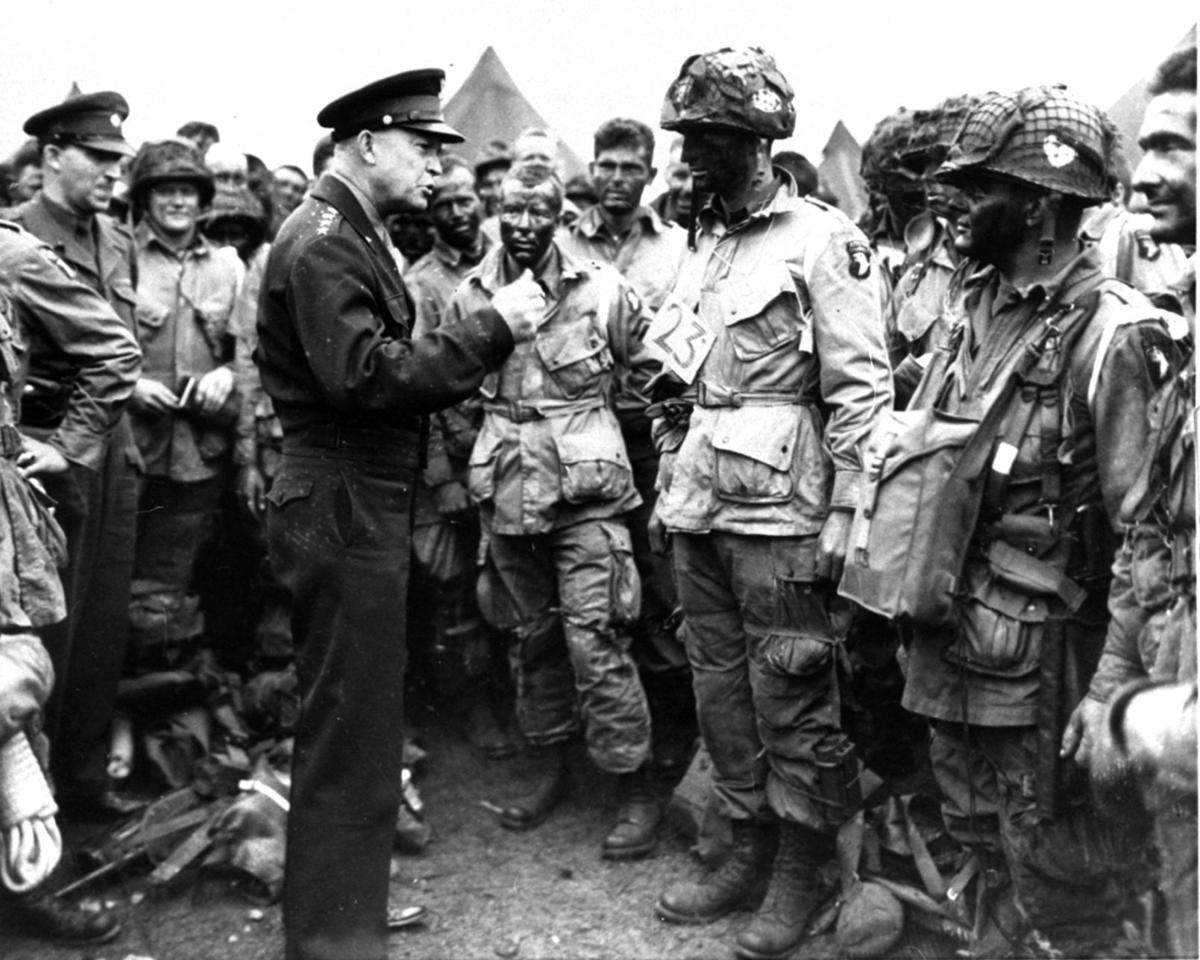
As I pontificated about D-Day, Tarawa, and the Bulge to sleepy Juniors, a foot or so of mop often slid and stopped by the open classroom door. Silent, George hid as I blathered on about the Second World War. A short time later I learned this quiet 80-something had once handled a M-1 Garand, shivering aboard one of those heaving and crashing Higgins boats, churning toward destiny on Omaha Beach. George had been in that first wave in June, 1944.
Humbled to learn our little janitor was a living, breathing hero, I became the student. “So George, what do you remember most about that morning?”
The old warrior rasped in a high, faded voice, “It was awful early, and the water was awful cold.”
So understated.
Another veteran crossed my path at the high school by the name of Roy Cortes. His son, our school Resource Officer brought Roy by to visit with my students. And another narrative of a remarkable life unfolded.
As a teenager Roy was hired by FDR’s Civilian Conservation Corps. In the forests of Idaho Roy Cortes fought fires, built campsites and lookout towers for the US Forest Service. But in late December, 194, after Pearl Harbor, Roy headed straight to the recruiting office, and was sworn into the US Army.
Roy, too, had ferried over from Southampton England, the afternoon of that bloody June day.
“What do you remember most about the invasion, Sir?” a student asked.
The affable elder smiled slightly, then a cloud passed over his expression. “I lost everyone in my outfit. I was real scared. Then I had orders to regroup with other survivors on the beach. You see, that was bad because I’m Mexican-American, and my first platoon got used to me, and the bullying had stopped. Now I had to start all over with the slurs.”
“For days, as we moved inland, these fellas giving me the business. One time this guy says, ‘Mexicans can’t shoot.’ I said that I could. So he said, ‘Ok Manuel, Jose, or whatever your name is. Show me you can shoot.”
“See those birds on that tree branch up ahead? The guy pointed. Shoot one of those.’ I lifted up my rifle and aimed at the branch and pulled the trigger.”
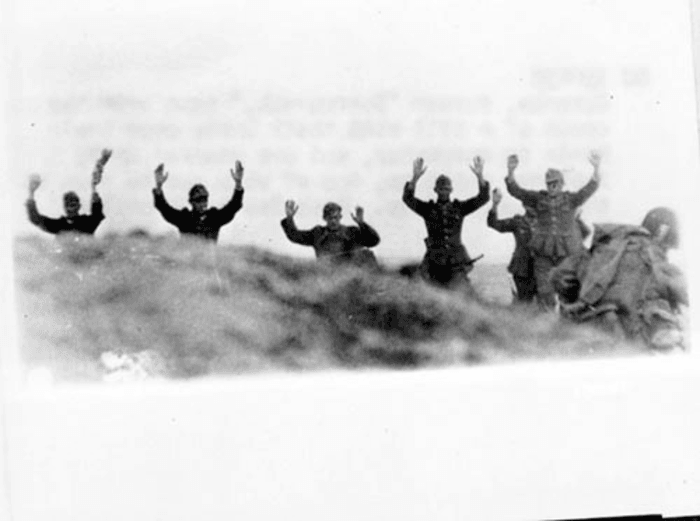
At that Roy again begins chuckling. “I missed the branch, the birds all flew away, and twelve Germans came out of a grove with their hands up.”
Astounded, no one spoke. Then a huge wave of warm laughter filled the classroom. Roy simply smiled and shrugged.
Colonel Clark, George the Janitor, and Roy Cortes. They were just kids whose lives became defined in ways we civilians can never fathom. They were scared, and hot, and cold, and hungry, and suffering, and ultimately lucky enough to come home to America.
They married, raised families, and move on with life.
That’s All.
Gail Chumbley is the author of the two-part memoir “River of January,” and “River of January: Figure Eight,” co-writer of the screenplay, “Dancing On Air” based on those books. She has penned three stage plays on history topics, “Clay” on the life of Senator Henry Clay, “Wolf By The Ears” examining the beginnings of American slavery, and “Peer Review” where 47 is confronted by specters of four past presidents.