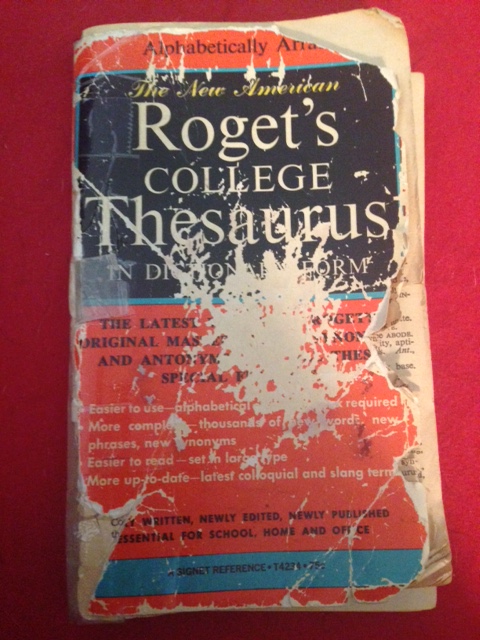
My secret weapon.
Gail Chumbley is the author of River of January, a memoir. Also available on Kindle
My secret weapon.
Gail Chumbley is the author of River of January, a memoir. Also available on Kindle
River of January sets off tonight in Salt Lake City’s Trolley Square!
Join author, Gail Chumbley at Weller Book Works
See you at 7:00pm!
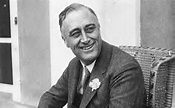
Happy 134th Birthday to President Franklin Delano Roosevelt who, rather than exploit uncertainty in a time of crisis, reassured Depression-era Americans.
Read River of January by Gail Chumbley, a memoir. Also on Kindle
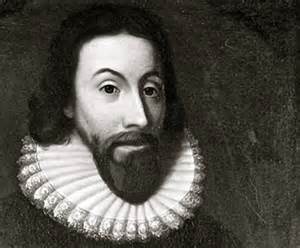
“We must entertain each other in brotherly affection. We must be willing to abridge ourselves of our superfluities, for the supply of others necessities. We must uphold a familiar commerce together in all meekness, gentleness, patience, and liberality. We must delight in each other; make others conditions our own; rejoice together, mourn together, labor and suffer together, always having before our eyes our commission and community in the work of the same body. So shall we keep the unity of the spirit in the bond of peace.”
Governor John Winthrop, Massachusetts Bay Colony 1630
Happy Thanksgiving.
Gail Chumbley is the author of River of January available on Kindle and at River of January

One of my earliest recollections is kneeling on the cold basement floor in our Spokane house, lining up plastic Yankee infantry against an equal number of plastic Confederates. My brother would narrate the battle that was about to break loose, building up the suspense and drama that was destined to follow. But the art and beauty of the exercise was in the meticulous preparations, lines crafted and lovingly placed by my brother, an expression of his deep reverence for the past. And our fascination wasn’t limited to the basement, but rose upstairs to the rest of the house.
Our childhood dinners consisted of meals cooked for quantity, not quality, my mother bending over backward to please her crew of picky eaters. One brother only liked tomatoes, no lettuce. Another wouldn’t eat onions, and I wouldn’t eat potatoes, (I’ll get fat!). My mother should have tossed a loaf of white bread and peanut butter on the table and said to hell with us. But in truth, our dinners weren’t ever about the cuisine. That table was a place of interaction, debate and information. And we, my parents and three brothers talked about all sorts of topics; politics, swing music, classical music, FDR, and JFK. My mother knew every actor and singer ever filmed or recorded, so popular culture also had a rich review over those dry, bland hamburgers. My younger brothers typically listened and chewed, passively soaking up the banter as a normal dinner conversation.
My childhood memories are mainly a potpourri of All-American road trips. Slides of Montana’s Lewis and Clark Caverns, the Little Bighorn Battlefield, Yellowstone Park, and Wall Drug, flash on the screen of my memory. These destinations were of such value to my folks; that they packed up a station wagon, replaced later by a truck and camper, crammed in their four noisy kids, and made many magical history tours. I especially remember standing on Calhoun Hill near Hardin, Montana, wondering how Custer missed the massive Sioux and Cheyenne encampments. Constructed in 1805 on the Pacific coast, Fort Clatsop, Oregon sheltered the Lewis and Clark Expedition. Visiting the site permitted me to physically touch this stockaded sanctuary of another time.
Wonder became permanently hotwired into my temperament.
A degree in American History came as no surprise to anyone. As in medical families, military families, or law enforcement families I followed my childhood path, nurtured in a family that treasured our nation’s history. As though I had been handed Diogenes lamp, illuminating past events became my present-day pursuit. I had to share this passion with others. This journey of discovery was not a solitary enterprise. So earning a secondary teaching certificate set my future into motion, allowing a way to disseminate the fire I felt for the past.
What a ride! I am now at the other end of my teaching career, and can honestly say that I even loved the tough days. I made a living out of being myself, constantly reinforced with a sense of liberation, and vindication. Magic happened after that tardy bell rang. And I knew then as I know now, that there was no cooler place to work than in my classroom. Who needed Hogwarts, I had Lincoln! Service projects came to life behind that door, efforts such as the Veterans Oral History Project in conjunction with the Library of Congress—fund raising for the World War Two Memorial—donations to support local history museums, and the yearly spray of flowers for the Vietnam Memorial each Memorial weekend.
And most gratifying of all was the connection students made to an earlier America. They grew beyond what they could see, feel and touch. They became more than just themselves. I can recall an essay on Richard Nixon where a girl ruled his desire to win at all costs, cost Nixon his place in history. Another student who pointed out that after Washington’s humiliation at the 1754 Battle of Fort Necessity near present-day Pittsburgh, later foreshadowed the President’s crack down on the 1794 Whiskey Rebels in the same location. The student pointed out that Washington would not be made a fool twice in the same place forty years later. Brilliant, brilliant, brilliant.
Those voila moments transcend the past to a present relevance. How Washington used his few military strengths to undermine the military strengths of the British in the Revolution. How Ho Chi Minh used those same strengths to undermine the same American efforts in Vietnam. Likewise how British violation of American trade lead the US into the War of 1812. And later how German violation of American trade lead the US into World War One. The examples are vast and instructive, processed with the same reverence and regard as my brother and his toy soldiers.
Now, in retirement, an entire archive of historic primary sources have fallen into my lap. An original story has come my way detailing a young ambitious couple who challenged the Twentieth Century and left a notable trail. I have been handed a micro-history narrative, to add to the larger picture of America. What an unexpected gift for this history addict!
Writing River of January has fed my soul. It turns out that Chum, my main character, rubbed shoulders with aviators Howard Hughes, and Amelia Earhart, and even actress Kathryn Hepburn. And from his words and records, he barely took notice of their celebrity. Helen, the other main character, knew “Red Hot Mama,” Sophie Tucker, the dashing Frenchman Maurice Chevalier, and a very young Humphrey Bogart in his first film. Those people were her peers and she rolled with that crowd on an equal footing.
This story grips my heart. I’ve was groomed from my parents dinner table to craft such a book. This Saturday missive is perhaps my long overdue expression of gratitude. I am thankful for my hardwired passion for earlier times, and how vital a role the past eternally plays. I am grateful that I value ideals, ideas and vibrant lives over material possessions . . . I will never be poor. I thank the Lord my heart is enriched by remembering what came before.
Gail Chumbley is the author of the creative non-fiction work, River of January

Right now, in classrooms across America, and overseas, thousands 17-year-olds are preparing for the AP US History exam. They, and their instructors are obsessed with cause and effect, analyzing, and determining the impact of events on the course of America’s story. Moreover, they are crazed beyond their usual teen-angst, buried deep in prep books, on-line quizzes, and flashcards. As a recovering AP teacher, myself, I can admit that I was as nuts as my students, my thin lank hair shot upward from constant fussing.
My hair fell out too, embedding in combs and brushes, as I speculated on essay prompts, that one ringer multiple choice question, and wracking my brains for review strategies. The only significance the month of April held was driving intensity, drilling kids on historic dates; Lexington and Concord, the firing on Fort Sumter, the surrender at Appomattox Courthouse, President Wilson’s Declaration of War in 1917, the battle of Okinawa, MLK’s murder, and the Oklahoma City bombing, That was what April meant in April.
To quote John Lennon, “and now my life has changed, in oh so many ways.” Today April holds a whole new definition. My husband rises first in the morning, putters in the kitchen, fetches coffee, tends to the dog, and is back in bed, back to sleep. Big plans for my morning include writing this blog, making some calls related to book talks, a three mile walk through the Idaho mountains, then working on Figure Eight, the second installment of River of January. What a difference! Nowadays, getting manic and crazy is optional. My hair has grown back in, standing up only in the morning, and the only brush with AP US History occurs in my dreams; the responsibility passed on into other capable hands.
This month, at least here in the high country, has been especially beautiful. We have already enjoyed a few 70 plus degree days, and the green is returning to the flora. Our sweet deer neighbors are no longer a mangy grey, emerging from the trees wearing a warm honey coat. With a little snow still on the peaks, the sky an ultra blue, and the pines deep green and rugged, I think sometimes this must be Eden.
My years as a possessed, percolating history instructor provided a gift of passionate purpose that enriched me more than depleted. But, now . . . I wouldn’t trade this new phase of my life for all the historic dates in April.
Gail Chumbley is the author of River of January also available on Kindle.

The protagonist in River of January, Mont Chumbley, or “Chum,” as we called him, pined to join the Navy in 1927. In fact Chum knew that the Navy was his destiny from the time he witnessed a barn-stormer, (stunt pilot) fly miracles across the rural Virginia sky. What the boy didn’t count on in his hopes was the resistance he met from his own family.
The Chumbley’s were not alone in their disgust with the military. All of America suffered from a giant hangover after the Great War (World War One), convinced Americans that their participation had been a horrible mistake. Though not fully true, the US still viewed itself as a simple republic, not an empire builder bound for global influence. That policy came later, after World War Two, in the Cold War.
President Wilson staked his own presidency on his Treaty of Versailles and League of Nations, which would have bound the country to Europe in a forerunner to the United Nations. The public, through their Senators voted the Treaty down, killing it as dead as the soldiers who would never come home. Books were written after 1919 that discredited war as nothing but a fools errand. “Johnny Got His Gun” was one such novel, and Erich Maria Remarque‘s “All Quiet on the Western Front” was another.
Folks stateside strongly regretted sending Doughboys across the Atlantic to battle the Kaiser and his evil Hun army. By the year Chum pushed to join the Navy, the US had negotiated a treaty with the French, called the Kellogg Briand Pact, which outlawed war as an alternative in international conflict. (“Don’t plant that mine, if you can’t do the time?” Seriously?)
The Nye Commission, a House investigating committee was charged to find out why America joined the war. In the end these law makers judged money was the culprit. War manufacturers, such a poison gas producers the Dupont Corporation and financiers,The House of Morgan, were condemned for their roles in fanning the flames while counting their profits.
It was in this cultural/political atmosphere that Chum wanted to join the Navy. When his father and aunt objected, they simply parroted the opinion of a nation that believed the military was only for scoundrels and suckers. If Chum succeeded in enlisting he would draw shame on the family’s name.
Now, I am a child of the Vietnam era and understand the power of public opinion concerning war. Too many young men came home to condemnation for rendering their duty to their country. Many were already angry from their combat experiences, especially if they were drafted in the first place. War protestors vented their fury on those boys who did nothing more than complete their mission.
Still for many young people, such as Chum in the 1920’s, the service still offers training and opportunity. Perhaps it would benefit us all to remember to separate the advantages of military training, from the poor use of young people deployed for uncertain, poorly planned political agendas.
Chum did meet his service obligations, later after Pearl Harbor. But he would agree, I think, that he gained more from his service in the Navy, than he returned.
Servicemen have never been suckers, and decision makers must never lightly treat them as such.
I retired from teaching last May after more years in the classroom than I care to admit. No longer constrained by rules, rules, and more rules, I began friend-ing my former students on Facebook. What once was ethically frowned upon, is now my link to my past career. That being established, I have enjoyed viewing the posts the kids have put up since graduating high school. In something akin to an educational diaspora, these 18 year- old’s are encountering their first experiences away from home. Of course that includes washing one’s own laundry, filling up on starchy food, and getting out of bed for class without mom.
The pictures are charming. Girls, arm in arm, who only a month ago were strangers, now glow, linked together in this new adventure as best friends. The boys seem less inclined to pose. Instead they splay across the floor of a dorm room, stuffing pizza and chips into their smiling mouths.
Still the experiences behind those photos may be the most profound in life. Whether the setting is a dorm, or an apartment, or a cave, the ritual remains the same.
I remember best, parked on the bathroom floor in my dorm room, talking earnestly and laughing many late nights. In my new family of girls, we revealed our essence to one another, creating a link that I cannot replicate today with new acquaintances. Established when I was naively open, without those worldly defenses I have perfected over time, those friendships have endured. Fertilized only with an occasional Christmas card, or a stray email–when we get together, we pick right up where we left off.
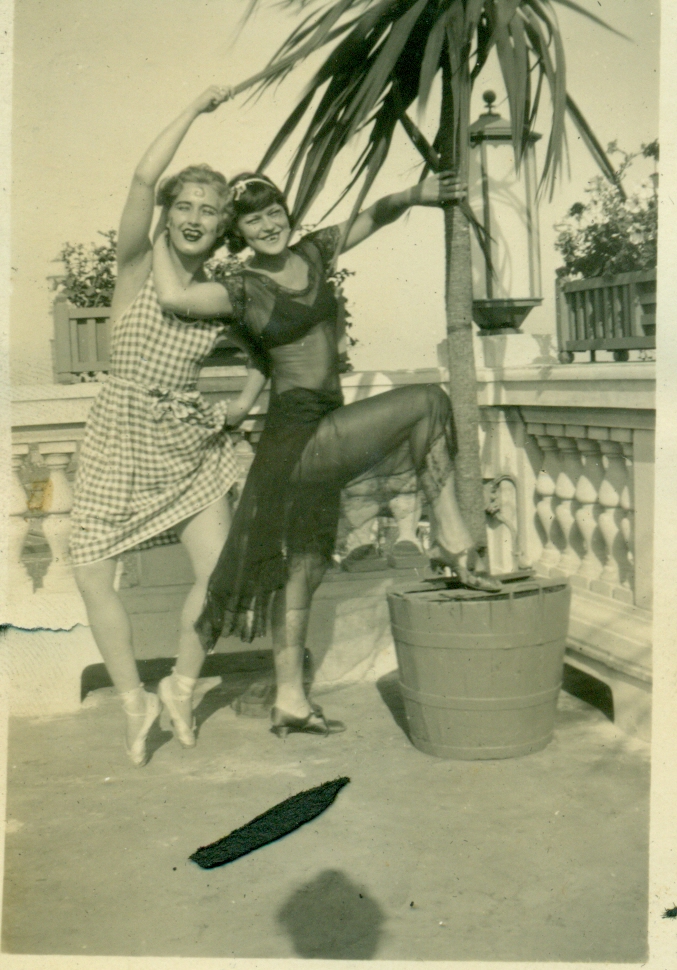
Helen, with no opportunity for college, shared a similar bonding experience with her “new” friends touring Europe. As discussed in my book, River of January, she danced in a ballet company called, “The American Beauties,” who together performed first in Paris, and traveled as far as Algiers from 1932 to 1933. In fact, the girl and her fellow dancers patched together their own version of a Christmas celebration at a hotel in Islamic North Africa. She too, relished the late night yakking sessions, the joy of carrying out pranks, such as the night a group of them short-sheeted the bed of two other, unsuspecting dancers. The picture above is a charming example of Helen purely celebrating life.
Later, these women remained some of the best friends Helen ever had. Traveling to her home in Miami from Los Angeles or New York, the old girls sat around Helen’s little kitchen table, enjoying drinks, reminiscing and laughing. For a short moment, seated at that tiny white table, they again were the same young dancers who had reveled in an extraordinary and memorable learning experience of their own.
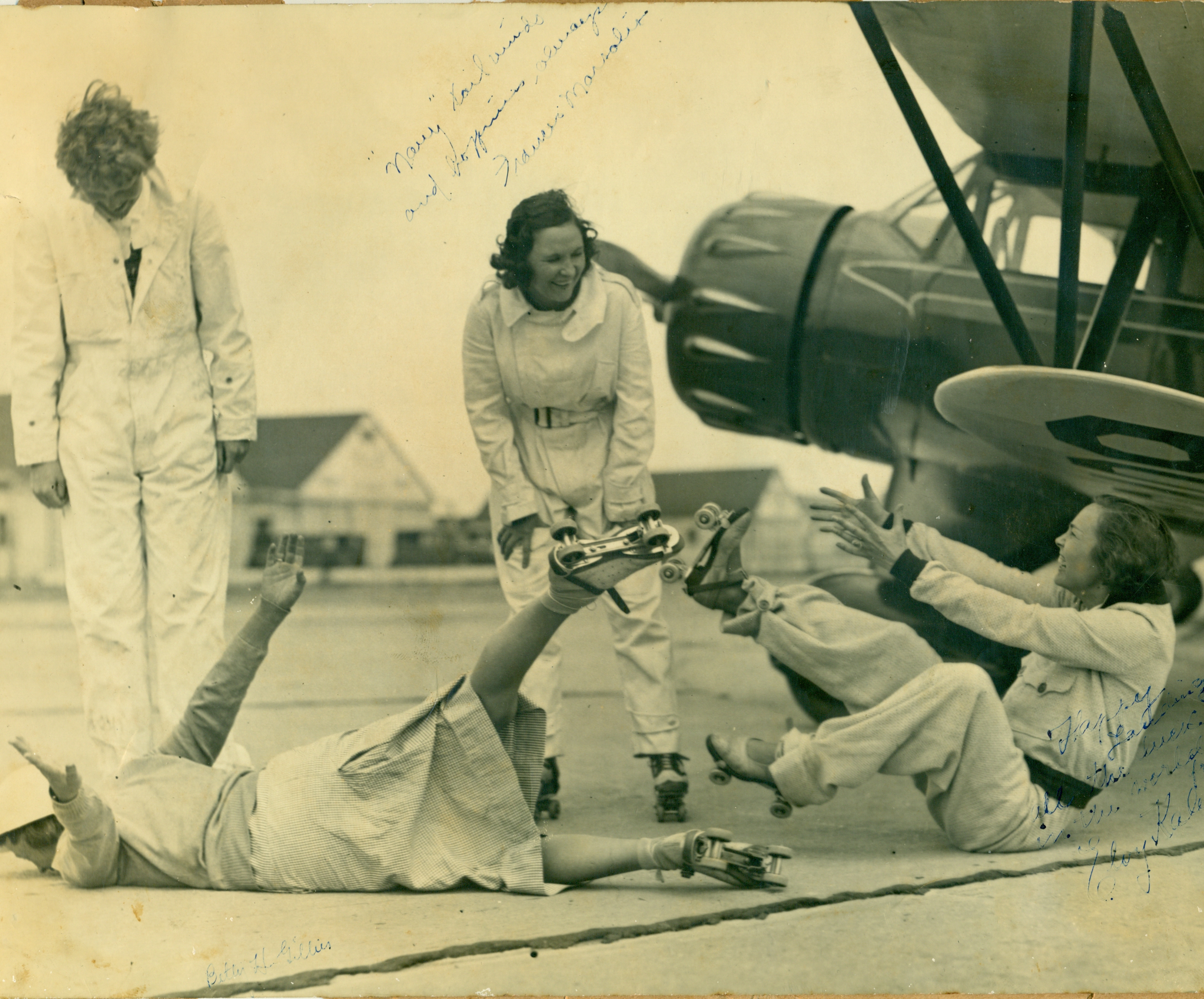
Piecing this story together didn’t come easily. Though I have had the benefit of volumes of letters, telegrams, and pictures, among other sources, I still have struggled to get the story right. The picture posted today provides an example of the most exciting finds I’ve made, but still shrouded with some doubt.
The girl in the center, in front of the Waco airplane, is Francis Marsalis Harrell. From Chum’s thick scrapbook and an interview I conducted with him, I know her to have been his girlfriend. They dated for a about a year after he left the Navy, and I believe he cared deeply for this young lady. What brought me to that conclusion was piecework and conjecture. First, during my interview sessions with Chum he lightly mentioned that his girlfriend used to time his trips into Manhattan from Long Island, but only when he drove female flight students into the city. Second, when he looked through his ancient scrapbook, coming across her picture, he had to get up and walk around on his old legs, getting water from the kitchen and using the bathroom, before we could begin taping again. I remember that clearly.
While researching my book, River of January, I gained a brief education in early aviation history. I learned that there was a group of women who closely gathered in a league known as the “Ninety-Nines.” This association of female aviators was a tight-knit assemblage, drawn together to survive in the male dominated world of flight. These women resolutely broke ground for future generations of women to find their place in the cockpit. These girls were enthusiastic and fearless pioneers.
Returning to the picture again, I found that three of these women pilots, all horsing around on roller-skates signed the photo. Francis signed it “To Navy,” her pet name for Chum. The girl on her belly and the other one on her rear end are Betty Gilles and Elvy Kalep, other Ninety-Niners. So the question for me has been, who is the fourth girl wearing her mechanic’s togs?
One morning, staring at this picture for the millionth time, the scales fell from my eyes and I saw Amelia Earhart. You might see her clearly too and wonder how I missed the obvious, or think I’m nuts for believing it’s her. So I ask myself, “Is the time right? Is the place right? Are there other pictures from this publicity shot?”
The answers are all yeses.

This picture came from a google search of Elvy Kalep.
In the effort to reconstruct the past there exists uncertainty and conjecture. However, thank goodness, also there exists logic and probability.
Boy, this has been fun.
Gail Chumbley is the author of the memoir, River of January. Also available on Kindle

 Gail Chumbley