
Free Shipping through Cyber Monday
Order River of January Now
www.river-of-january.com website
http://www.amazon.com/s/ref=nb_sb_noss?url=search-alias%3Daps&field-keywords=River+of+January
Amazon
Free Shipping through Cyber Monday
Order River of January Now
www.river-of-january.com website
http://www.amazon.com/s/ref=nb_sb_noss?url=search-alias%3Daps&field-keywords=River+of+January
Amazon
The Silver Fleet in a Golden Age!

This photo is a DC3, part of Eastern Airlines “Great Silver Fleet” of passenger liners. The plane is on display in the Air and Space Museum at the Smithsonian. We had suspected that Chum had flown this aircraft, but weren’t quite certain. Finally, I had the chance to look over his logbooks and matched the tail number to this plane. Chum captained this particular aircraft in February, 1946, six months after the war ended. If you find yourself on the National Mall, you can duck into the Air and Space, where you’ll find this beauty still on exhibit.

This couple married 78 years ago today. On Friday the 13th. In New York City. Defying traditional convention. Archaic superstitions were of no interest to this modern couple, that kind of thinking belonged to the past.
Mont “Chum” Chumbley, and his bride, Helen Thompson Chumbley only looked forward, challenging and prevailing over old horse and buggy thinking. Theirs was a new era, a dynamic era, one of flight and of film. And this powerful force of optimism rendered one life time together too brief. So now their spirits carry on in my head, and in the pages of my book, River of January.
To say Helen and Chum were happy together would be shallow pandering–and an insult to the complexity of their distinctive temperaments. Still, their story has power, enduring power, pressing me on, returning time after time to their papers, searching for signposts of truth and direction.
A Flemish Bend, the title of this piece, ironically does have its roots in the distant past. The Bend is a sailors knot, also known as a square or figure eight knot. The same shape in mathematics is the symbol for infinity. The love Helen and Chum shared, as imperfect as it seemed at times, was powerful, and proved to be endless.
I too have been snared in those powerful cords, and for better or worse speak for their remarkable lives, lives too dynamic to have died with their passing.
And I’m grateful. It’s an honor. Happy anniversary Helen and Chum.
Order River of January, and enjoy the journey.
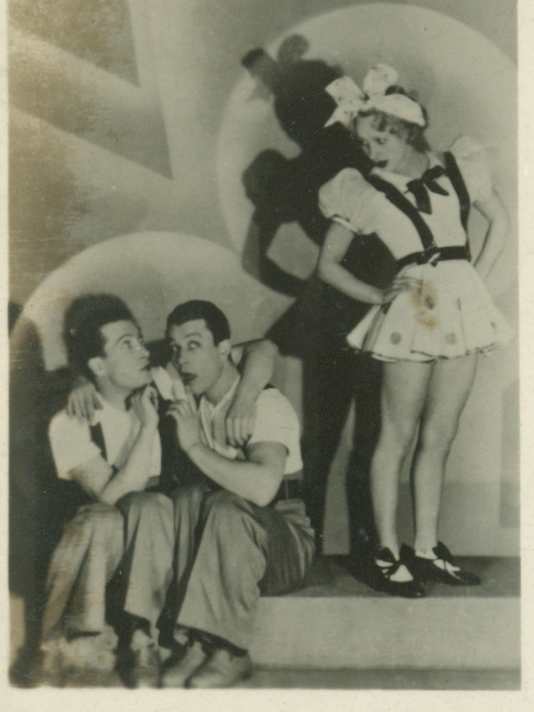
The following is an excerpt from River of January, Crossing The Atlantic
Dear Dorothy,
I am sorry to write to you in a crisis, but I have dreadful news. Please keep what I’m about to tell you a secret—not a word to my Mother or my sister, please. We’ve been fired! I know—it’s horrible. I don’t know what we’ll do. Jans says he can fix it, but I’m not so sure. I may have to come home early. I am writing to you because I can’t say a thing to my Mother—you know how she gets. But I may need a little money to get home. I do promise to pay you back when I get on my feet.
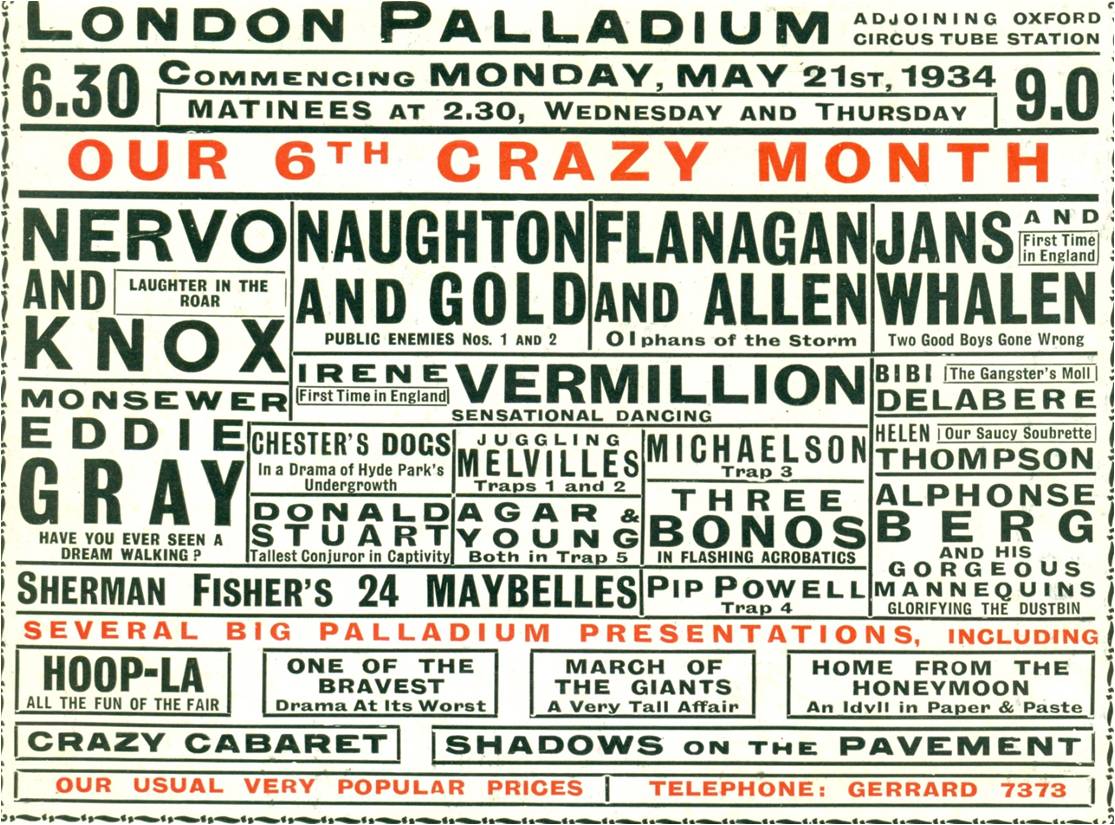
We made our first trip to the Palladium, they lettered my name on the billboard “Helen Thompson, Our Saucy Soubrette” whatever that means. I thought it was cute. Anyhow, we entered the theatre through the back entrance and met a lot of the cast. Such nice people, too. They told us that “The Crazy Show,” that’s what they call it, has been coming back to the Palladium for years. This group of comedians is known, together, as the “Crazy Gang” and made us feel very welcome. They explained that the same crowds return each season to see their old friends in the show.
We felt pretty excited opening night when Jans and Whalen took the stage after the all-cast extravaganza and began their routine. Harry Jans told the one about the soldier who had survived mustard gas and pepper spray becoming a seasoned veteran. No on laughed. The audience hated them. No one booed, and they clapped a little when Jans played and sang, “Miss Porkington Would Like Creampuffs.” Remember that silly song? Other than that polite response, not a snicker sounded in the whole house.
Then I went on stage and performed a widow comedy monologue; black gown, the whole bit, and I bombed too. With all those spotlights trained on me, if it hadn’t been for the coughing and murmuring I would have thought the theater empty. It was horrible— nauseating— I couldn’t believe how miserably we failed. WE LAID AN EGG!
After the show some of the regulars took us out for drinks. I wanted to run back to the hotel and hide. They led us to a nice pub, but I felt so shook up I could hardly light my cigarette. They explained that English audiences often don’t understand American humor. In particular, my widow act seemed more offensive than funny.
“Too many widows after the Great War,” one comedian named Eddie Gray told me. “Not funny to families with loved ones who died in the trenches.”
That never crossed my mind, Dot. It’s been almost 15 years, for goodness’ sake. So we were ready to make the changes the boys in the cast suggested. No prohibition jokes, no dead jokes, more songs, and lighter skits. When we arrived for rehearsal the next morning letters were pinned to the dressing room doors that we were to clean our things out—that the management would no longer honor our contract. By the way, the Times critics gave us a lambasting, too. I got to feel mortified all over again.
So, dear Dorothy, that is how the situation stands. Whalen won’t come out of his room. Jans is ready to murder the guy in the front office, and I may drag out my trunk and mail myself home. Just let me know if you can cover my passage. But, don’t do anything yet.
Thanks oodles and oodles and mum’s the word.
Helen
My Dear Friend Dorothy,
Salvation! We have been kept on the bill, at least for a couple of small bits. So thanks for agreeing to help me home, but Jans did take care of things. I swear, Dot, Harry Jans could coax the English rain back into the gray English clouds.
It all happened so quickly, but this is how events turned. We were shocked, and then worried, as I’m sure you could tell. Then Jans remembered that our contract explicitly stated we were to make $1000 dollars a week regardless of circumstances. He marched into the manager’s office and wouldn’t leave until he received a check for $4000 dollars, or our reinstatement to the show. The manager balked and then Jans reiterated that the contract was clear. My partner gets a little fierce when he’s riled and I think he scared the fellow. The manager said he’d discuss it with his investors.
But that’s not the best part. The whole cast refused to go on until we were back on the billing! Their leader, Teddy Knox, told the manager that one night wasn’t fair, and that until we went on again, they would wait. All of them! Bless their hearts! Guess they are crazy. Later, I caught up with Teddy Knox in the green room and told him how grateful I was. I guess I just hugged him and cried.
So all is well, and Bertha still calm. I will tell her, but will word my letter so that she doesn’t blow her stack. Thanks again, Dot. You are such a swell friend!
Helen
Dear Bert,
We have had quite a hectic week. We opened on Thursday night and were fired Friday morning. Can you believe that? But don’t panic, we’re back on the bill now. It was all a misunderstanding; apparently people in England and people in the States laugh at different things, so we changed our act a bit. Should be all right now. Jans and Whalen are keeping a close eye on me so don’t worry. I will send a money order in my next letter and hopefully more news. Don’t worry Mother. Things here are fine. Love to Eileen.
Love,
Wellen
Helen,
I don’t understand how you could take firing lightly. If there are any further problems you catch the first ship home. You tell Harry Jans that I mean it. Now take care, and make sure you keep me informed of any other issues.
Mother
Dear Mother,
I hope that you aren’t too cross with me. We won’t be gone long, and I will be home very soon. The three of us are back in the lineup. Jans and Whalen play toreadors in the opening number, and I am in a black and white feather costume complete with white boots. The outfits are very snazzy. We sing the show’s theme song, “Come Round London with Me,” then “God Save the King.” We had to rehearse them both, and the audience stands up and sings along when “God Save the King” begins. Can you believe it?
Jans and I finally are doing our own skit. I wear my tap shoes, a short flared skirt with suspenders and a huge pink bow in my hair. On cue I timidly step to center stage (everyone can hear each tap). Under the spotlight Jans, says “Did you come out to sing a song for the nice people?”
I point to my throat and croak out “l-a-r-y-n-g-i-t-i-s.”
Jans answers, “Oh, that’s a shame we all were looking forward to your number.”
I lean over and whisper into Jans’ ear. Jans then says loudly “You want to whisper the words to me, and I sing the song? Yes, yes, a grand idea! I would love to!” He announces “This song is called “Where on Earth could all the Fairies Be?”
I whisper in his ear, he sings a line, next whisper, he sings, and then Jans finishes, arms opened wide belting the out the refrain, “Where on Earth could all the Fairies Be?”
A spotlight quickly hits Jimmy Naughton, (he’s a Brit) planted up in the balcony who calls out in an effeminate voice,
“Oh, my, where aren’t they?” The lights cut to black and the crowd roars with laughter. Cute, huh?
Did you receive the money I mailed?
It won’t be long now,
Little Sister
There were times when I’d be blathering along on some historical subject, and in a sudden epiphany realize, “and it happened today!” One time, displaying a before-and-after photo of the USS Maine in a lecture on the Spanish-American War, it dawned on me that the date was February 15, 1898–that very day. “Oh, that’s today!” sprang from my mouth. Various reactions crossed the many faces of my students. Ranging from, “she really needs a life,” to “that might be mildly interesting, but it’s not.” My kids seemed to exude more sympathy than interest in my sudden, self-induced enthusiasm. “Geez, don’t all hop up all at once,” was my usual sardonic response. Then they would laugh.
December 7th got a nod, September 17th, Constitution Day, and my personal favorite, “The Seventh of March Speech.” That one you ought to look up. Finest speech made in the Senate to my way of thinking. I made a practice of asking a baritone-voiced student to read Daniel Webster’s words if March 7th fell on a school day. There’s May 8th, V-E Day, September 11th, March 5th, Boston Massacre–all acknowledged and more to boot.
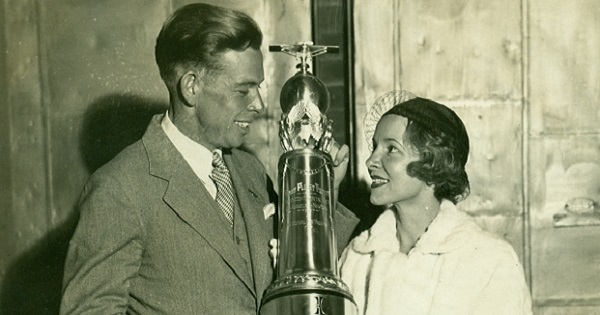
Today I presented a book talk on River of January for a local service club. I shared the story of Chum’s epic, 1933 air race, (that he won) soaring through the night sky from Los Angeles to New York. Chattering happily I flipped to the slide pictured above. This is the actress Helen Hayes awarding Chum his first place trophy at the Capitol Theater on October 4, 1933. The Capitol was premiering Miss Hayes’ new film, Night Flight, and the race was somehow wound up with the movie. Well, that was 81 years ago today. So of course, I grew just as ridiculously excited as I used to in my history classes. “Oh. My. Gosh. That’s today!” And I will commend this group of adults for not judging me as harshly as my eye-rolling students. These fine people laughed–as happy as I felt with the coincidence.
So there it is. Chum won the “Darkness Derby” on October 3, 1933 and Miss Hayes handed over cash and a trophy the following evening in New York.
It was a Wednesday night, October 4th, that Chum’s life dramatically changed exiting that theater. He now had award money, and a trophy that proved his merit as an up-and-coming pilot holding his own in the Golden Era of Aviation.

We had two cabins on a small lake in Northern Idaho.
Located between Lake Coeur de Alene, and the Pend Oreille, our little acre overlooked tiny Cocolalla, with large windows where we could watch the waves lap up on the beach. The original structure we astutely named the Little Cabin, later followed by the larger Big Cabin. This bigger cottage had been built with all the amenities of home; running water–hot and cold, a tub and toilet, a full kitchen, and electric heat.
Those early weekends in the Little Cabin hold many good memories. All of us crammed into that tiny wood box, the unfinished walls festooned with a lifetime of greeting cards, a big enameled wood stove, and a porcelain basin for washing dishes. Grandpa got his hands on a tall steel milk can and commandeered it for enough drinking water to get us through the weekend. As for entertainment, Grandma had an old radio that blasted the most impressive static, interspersed with Roy Orbison or Andy Williams fading in and out.
Once the Big Cabin was completed and my grandparents moved in, the smaller cabin was demoted to storage. It also housed a set of bunk beds, a fold-down couch, and one double bed; useful for my brothers who were just getting bigger. Now, in addition to greeting cards, the cabin stored every variety of water equipment. Fishing poles, life jackets, oars, and an outboard motor clamped to a metal barrel, with stacks of beach towels the size of blankets.
As I recall, a constant grit of sand coated the linoleum floor.
The property was my grandparents retirement dream, but a dream they happily shared with the rest of us. I knew, even then, that I was always welcome, always.
My grandpa was an early riser, a product of a lifetime as a mailman. He didn’t want to tiptoe around a little kid sleeping on his sofa at five in the morning. At bedtime my grandmother and I made our way to the Little Cabin in the dark by flashlight. Under the covers of the double bed, I would chafe my feet deep under the sheets to warm my toes. As we grew settled and peaceful she would begin to reminisce, talking to me for hours in that darkness. I learned of her life in those moments, warm in that cozy bed, listening to her voice, breathing the scent of the evergreen forest.
She told me of my biological grandfather, her first husband, who had left her bereft and penniless after my mother had been born. Despite the Depression, he liked to gamble away their money. My Grandma had to leave him and she struggled to find work as few jobs existed. Forced to farm out her daughter, my mother, in various homes, her the guilt still haunted her. Clearly it still broke Grandma’s heart that she was forced to separate from her little girl for months at a time. I could hear a wound that could never heal.
As the night grew deep, crickets and bullfrogs began to chorus. Flanked next to her, and pressed against some greeting cards, I prayed I wouldn’t spoil the magic by having to go potty. She kept, beneath the bed, a Chase and Sanborn coffee can that I hated to use. It felt cold and left rings on my little bottom. Still, considering options, the can was more appealing than a journey to the outhouse. Using that creepy outhouse in the daytime was bad enough, but at night unthinkable.
Finally poking her lightly, I would tell her. And she never hesitated. Showing no impatience at all, Grandma seemed to make my problem her own, reaching for the flashlight and finding that rusty can. She held the light on me so I could aim properly, then back into the warm bed. No recriminations.
She loved me.
I loved her.
Today my husband and I live in the woods. We don’t have a lake, but a river runs near and we can hear it on very quiet nights. I relax in my cozy bed in the darkness and listen to the crickets and bullfrogs, while breathing in a scent of pine. A sense of complete security, of love, of acceptance returns, synonymous with the love of my grandmother. She was home for me, and though gone these many years, my mountain cabin still echoes with her voice.
Gail Chumbley is the author of the two-part memoir “River of January,” and “River of January: Figure Eight.” Both are available at http://www.river-of-january.com and on Kindle.
gailchumbley@gmail.com

The runaway stole from the house while the father slept. He had a long walk to the train station, praying the old man wouldn’t bother to track him. Reaching town about daylight, Mont pulled open a peeling wood door, while his eyes scanned the depot. An empty waiting room greeted him, save one boy sitting low on a far bench. Mont stared closer and recognized him as a friend from school.
“Marshall” he gasped, smiling as he approached his friend. The schoolmate startled at the sound of his name, and Mont understood.
“Sorry Marsh, I’m worried about being dragged back too.”
“Hey, Mont. Where you off to?” he asked warily.
“Going to sea, Marsh, going east” was his response.
Marshall replied, “I’m going the other way, headed west, get hired by a coal company in Jenkinjones, West Virginia. I’m gonna make some real money.”
Sitting down next to his pal, Mont suddenly began to rethink his own plans. “West, Marsh?” The lure of the sea tugged hard, but having a friend along, not going it alone felt more comforting. “Jenkinjones, huh? Never heard of the place.” The two boys sat silently, cautiously glancing at the station door each time it opened. “Think they might hire me?” Mont finally asked. His friend smiled in response. And the two boys bought tickets for a west bound train headed toward the distant mountains. Destination: the Pocahontas Fuel Company.
Stepping onto the rail platform Mont and his companion silently and soberly blinked at the foreign landscape. The sky appeared decidedly grey, dead. All the erstwhile green foliage sealed in powdery black. Deep gouging and scarring disrupted the terrain. Marshall hailed a defeated looking passerby asking for directions to the coal company office. Without a word in reply the dilapidated man simply gestured up a hill to a large grey wooden building crisscrossed with weathered wooden stairs.
“Sure they’ll take us on?” Mont, with a sudden case of nerves wondered.
“I, I think so. Back home some older fellas said these companies want kids. We can work in spaces grown men can’t reach,” his high voice trembled as well, exposing his fear.
Mont promptly found that the reports were all too true. Not only were boys’ ideal workers, they proved much easier to bully and underpay. On his first day deep in a tunnel of darkness Mont faced his first test.
Standing on a narrow crevice, a veteran miner worked busting up coke with his pick ax. “Webster, hey, over here!” hollered the foreman from the inky dark. As the miner twisted around, the butt of the handle struck Mont hard behind his left temple. The boy’s head exploded in pain as Webster raged profanities in his throbbing ear. Kneeling in the dark, huffing sooty air the boy questioned why he had come to this place. His ear bled for days after.
Mont’s body ached, his fingers bled, painfully stiff and blistered–his knuckles grated raw. Black caked around each nostril, his facial pores embedded with coal dust. Digging around his small suitcase late one night, Mont caught his reflection in the bag’s tiny mirror. “Oh!” he gasped at his reflection, “I look like the rest of them!” In the morning, frightened and distraught, the boy hunted down his only friend. “I don’t like this place. Marsh, they look right through us. The company doesn’t care who comes out or vanishes in those shafts.” Tears sprouted suddenly in his friend’s eyes, Marshall’s wordless answer.
The company used every means to undermine demanding, tiresome union labor. The boy couldn’t help but hear men in the tunnels grumble about the strong arm tactics management used. Pocahontas hired informers, framed labor leaders and evaded safety improvements. Another strategy was importing cheap immigrant workers. The desperate from Europe toiled for less and accepted the dangers without complaint.
“Damn scabs” muttered a burly old timer. “Bosses trying to undo us . . . bring in Dagos, Pollock’s and other riff raff getting our jobs.” “They’re dumb, too” groused another grimy worker. “You tell ‘em something and they just stare.” The boy listened, sympathizing with the outrage, despite how much he hated the coal mines.
Mont studied one new miner, an import from Poland as he made his way into the blackness. Only in the country a couple of weeks, the foreigner headed into the tunnel carrying a short steel girder over his shoulder to use as structure support deeper in. Overhead, a raw electric wire was strung the length of the tunnel that powered coal carts carrying coke to the surface. The Virginia teen watched with interest as that girder just kissed the unprotected power line, knocking the hapless victim flat onto his backside. Mont quietly chuckled, he couldn’t stop himself. Then all the humor vanished, all the bigotry evaporated when the immigrant, attempting to regain some dignity, stood and brandishing the steel beam, deliberately attacked the line and instantly electrocuted himself. Miners rushed from all directions and crowded around the dead man, mouth slack and eyes glazed, sightless.
In a moment of clarity Mont understood that there were worse places to live than in Pulaski and made up his mind to go back to Virginia.
To Read More Buy River of January Today
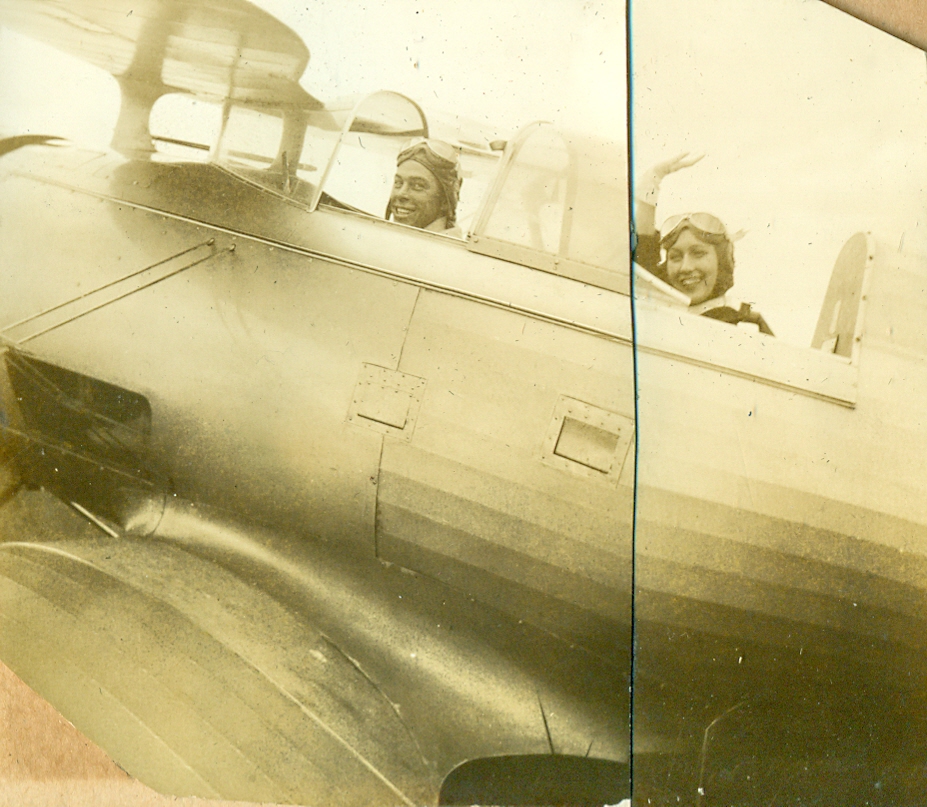 This snapshot taken in Rio, though cute is misleading. The vertical line is the giveaway clue here. The couple took turns snapping each others picture in the single cockpit. Helen followed up with her own editing using real scissors and paste. By the way, this is what joy looks like.
For the rest of the story buy River of January, by Gail Chumbley
A life can be measured in a variety of ways. Most customary are calendar years, but except for birthdays, Driver’s Licenses, Voting, Social Security, and Medicare that approach is hardly an increment that shapes all people. Haphazard events, personal, national, or global can chisel changes as permanent, and indelible as any wrinkle or gray hair.
In River of January my central characters celebrated long lives filled with extraordinary adventures. Montgomery “Chum” Chumbley came of age in an uncertain world of rural isolation. His was a harsh environment of feast or famine, drought or flood, butchering livestock for food, and cruel, sweaty labor. His life offered narrow and limited opportunities–still trapped in the unchanging mold of the 19th Century.
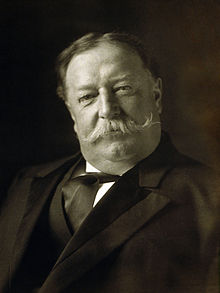
William Howard Taft presided over the White House the year Chum was born. There were no niceties like electricity or indoor plumbing in his world. In fact the White House itself had barely installed electricity, running water, or a shelter for automobiles. Yet, by the time of Chum’s death in 2006, George W. Bush had ordered spying satellites and drones over Iraq, and NASA’s Space Shuttle program was headed into retirement. The last years of his life, Chum used a computer to keep up with his friends, and along with his television, he was current on world affairs.
Taft to Bush, seventeen presidents. He lived seventeen presidents. I’ve only lived through eleven. My parents thirteen so far, and my own kids, five.
How old are you in president years?
I’ve written two separate blogs today. Didn’t like either of them. So I’ll let Helen show us her stuff again.
Helen is in the second scene of this clip. She is the harem girl without the veil. The sheik is played by Bela Lugosi, the original Dracula. Bogart was in this film somewhere, too. It’s the only footage of Helen at eighteen that I can find.

 Gail Chumbley