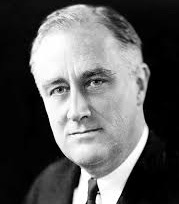
“No matter how long it may take us to overcome this premeditated invasion, the American people in their righteous might will win through to absolute victory.”
President Franklin D Roosevelt
“No matter how long it may take us to overcome this premeditated invasion, the American people in their righteous might will win through to absolute victory.”
President Franklin D Roosevelt
Each year I prepared for two major wars, the finale if you will, of second semester US History. With a combined sense of dread and anticipation, I led the kids through the causes, and progression of the Civil War (with 10th graders), and WWII (with my Juniors).
A lifetime of study in these eras, especially Antebellum America, tells an anxious story, as two passionate belief systems came to blows. Sophomores learned that our nation, a democracy born in such promise, plunged into the abyss over America’s original sin, slavery.
Meanwhile, for Juniors, the failures of the uneasy peace that followed WWI shaped a broader corrosion. The world after 1919 disintegrated into deadly factions, underscored by exaggerated entitlement, racial hate, and lust for revenge.
Much like America’s 19th Century plunge into the breach, the 20th Century also debased human life, sliding into scapegoating, unthinkable cruelty, and massacre. This record is hard to face, let alone study.
Real monsters masqueraded as heads of state; Stalin, Hitler, Mussolini, and the War Lords of Japan. All, to varying degrees, convinced regular people that the “worth” of others was suspect, and targeting civilians an acceptable strategy. Yet, as awful as both conflicts were, it’s hard not to stare, and to hopefully recognize the signs when hate again emerges as a justification for horror.
The heresy of exceptionalism, normalizing violence on the vulnerable, and extremism, unleashed evil on the world. Andersonville Prison, Fort Pillow Massacre, the Rape of Nanking, Bataan, the Warsaw Ghetto, and death camps. More than one a student wondered aloud, how could that happen?
In increments.
These signs are clear again. Those same pre-conditions have resurfaced, right now, here in our communities, states, and nation.
A white nationalist parade in Charlotte that kills one, where there were “good people on both sides.” Normalized daily murders of people of color, and incendiary rhetoric that ends with an attack on the US Capitol, killing five. All offenses excused and minimized by a once great political party, that has forsaken its moral underpinnings.
The only difference between the Proud Boys and the Brown Shirts is the Brown Shirts didn’t wear Carhartt and flannel.
This endless playlist has looped over repeatedly, cursed by the “blind arrogance of now.” But dear reader, now is then, and deluded people do not change with time. The descent into barbarity is more predictable than exceptional.
When reasonable folks are manipulated by the chorus of the Big Lie, the era doesn’t matter. Society inevitably falls into depravity.
Gail Chumbley is a career history educator, and author of the two-part memoir “River of January,” and “River of January: Figure Eight.” Both titles on Kindle.
gailchumbley@gmail.com
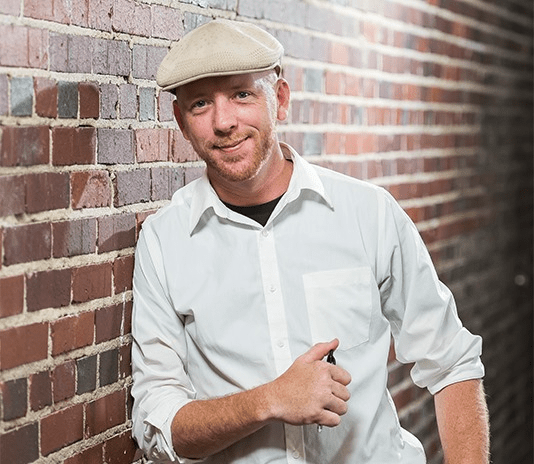
Some of you may know that we signed a film option a while back with Falls Park Entertainment in South Carolina. Brett Kanea, the executive producer, read our script, “Dancing On Air,” then my two books that inspired “Dancing.” Brett found it original and exciting and anticipated producing a successful film. Unexpectedly dear Brett died before any filming began. As you can see he from this pic, he was too young to leave us, and our hearts go out to his family and loved ones.
The morning he first called to discuss the property I thought he was the cable guy expected later that morning. We laughed about that snafu for months after.
Though our future in film is unclear, Brett’s warmth, humor, and confidence lingers on.
Godspeed Brett, the almost cable guy.
Gail Chumbley is the author of the two-part memoir, “River of January,” and “River of January: Figure Eight.” Both are available on Kindle.
gailchumbley@gmail.com
gailchumbley@gmail.com
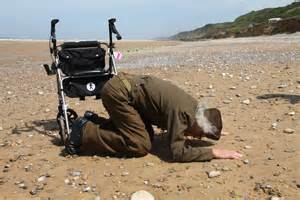
Colonel Clark used to bring his young son down to the dojo where my brothers took judo lessons. Judo had been my grandfather’s idea and he faithfully chauffeured the boys, and I sometimes came along too.
My Grandpa Ray always sat with Colonel Clark, if the old gent happened to be present. That meant I sat with Colonel Clark, too. The two old men would talk and talk, seated next to one another, though their eyes remained fixed on their boys training on the mats. They never seemed to look each other, but remained absorbed in their conversation.
My own distracted attention span only caught snippets of the murmuring discussion. “MacArthur, Wainwright, and Bataan,” came up in their exchanges And despite my youth, I understood something grave, something momentous lay behind the back and forth of these two men.
My brother filled in the substance of what I reluctantly overheard.
Colonel Clark had been left on the Bataan Peninsula when General Douglas MacArthur evacuated the Philippines in 1942. Under the new command of General Jonathan Wainwright some 22,000 Americans surrendered to Japanese invaders, and among them young Clark. The Japanese summarily ordered this defeated army to march some sixty miles through the jungle. And cruelty became the purpose of the Bataan Death March; heat exhaustion, dehydration, and starvation felled many of these exposed suffering Americans. When a captive stumbled, or fainted, the penalty was an immediate beheading. Young Clark witnessed Hell, and he clearly never separated himself from the ordeal, fused forever into his character.
And that that same ordinary old gent who chatted quietly with my grandfather, had a young son was a miracle. In light of his wartime captivity, Clark should never have survived.
The valiant are everywhere.
For example there was George, the high school janitor.
For many years this little old fellow pushed a mop down the litter-strewn halls where I taught American history. Equipped with two hearing aids, this diminutive man pushed an immense dust mop, wider than he was tall.
To a passing eye George appeared nearly invisible. Just a friendly, gentle, and harmless grandfather.
As I pontificated about D-Day, Tarawa, and the Bulge to sleepy Juniors, a foot or so of mop often slid and stopped by the classroom door. Silent, George hid as I blathered on about the Second World War. A short time later I learned this quiet 80-something had once handled a M-1 Garand, shivering aboard one of those heaving and crashing Higgins boats, churning toward Omaha Beach. George had been in that first wave in June, 1944.
Humbled to learn our little janitor was a living, breathing hero, I became the student. “So George, what do you remember most about that morning?”
The old warrior rasped in a high, faded voice, “It was awful early, and the water was awful cold.”
So understated.
Another veteran crossed my path by the name of Roy Cortes. His son, our school Resource Officer brought Roy by to visit with my students. Another narrative of a remarkable life unfolded.
As a teenager he got a job with the Civilian Conservation Corps. After Pearl Harbor, Roy headed straight to the recruiting office, and into the US Army.
Roy, too, had ferried over from Southampton the afternoon of that bloody day. “What do you remember most about the invasion, Sir?” a student asked.
The affable elder smiled slightly, then a cloud passed over his expression. “I lost everyone in my outfit. I was real scared. Soon I had orders to regroup with other survivors. You see, that was bad because I’m Mexican-American, and my first platoon got used to me, and stopped calling me Juan or Jose. Now I had to start all over with the badgering.
For days, as we moved inland, with these fellas giving me the business. One fella said, ‘Mexicans can’t shoot.’ I said that I could. So he said, ‘Ok Manuel. Show me you can shoot. See those birds on that tree branch up ahead? Shoot one of those birds.’ I lifted up my rifle and aimed at the branch and pulled the trigger.” At that Roy again begins chuckling.
“I missed the branch, the birds all flew away, and twelve Germans came out of the grove with their hands up.”
Astounded, no one spoke. Then a huge wave of warm laughter filled the classroom. Roy simply smiled and shrugged.
Colonel Clark, George the Janitor, and Roy Cortes. They were just kids who’s lives became defined in ways we civilians can never fathom. They were scared, and hot, and cold, and hungry, and suffering, and ultimately lucky enough to come home.
They married, raised families, and move on with life.
That’s All.
Gail Chumbley is the author of “River of January,” and “River of January: Figure Eight,” a two-part memoir Also available on Kindle.

The following is an excerpt from River of January: Figure Eight
For three anxious days reports trickled in from the Pacific, dispatches that were spotty, vague, and inconclusive. When details emerged of this first-ever clash in the sky, the United States Navy found much to celebrate and, tragically, as much to mourn.
The particulars surfaced days after the attack, presenting a clearer picture of the Battle of Midway. At a morning briefing, base personnel learned firsthand the events surrounding this aerial showdown. “The Imperial Japanese Navy,” began an officer Chum recognized as Lieutenant Commander Kirby, “in an attempt to eliminate US forces on Midway Island, launched multiple airborne assaults. The number of enemy aircraft carriers present in the attack has convinced the Department of War that the Japanese military intended to occupy the island in order to menace US installations farther west in Hawaii.” Kirby paused, somberly measuring his words. “The Empire of Japan has utterly failed in their effort.” The lieutenant commander smiled faintly. “Of the six Japanese carriers under Admiral Yamamoto’s command, four now sit at the bottom of the central Pacific.”
For a moment, the gathering seemed to hold its collective breath, pondering the lieutenant commander’s words. When the full significance sank in, the men jumped to life, roaring in satisfied approval. After the shouting and fraternal backslapping, the crowd finally stood together in a rousing standing ovation.
Kirby couldn’t help but grin at the enthusiastic response, but quickly quelled the celebration with a brief “As you were.” When everyone was seated again, he continued. “Ahem. Yes, this is good news, good news.” Glancing down at his notes and taking a deep breath, he said, “Gentlemen, this great triumph has come at a grim price for the navy. Fellas, we have lost the USS Yorktown. An enemy sub took the old girl down. She was too disabled from the Coral Sea campaign to maneuver away. Our losses so far are sobering—over three hundred casualties at latest count.”
Kirby’s eyes scanned the crowd. “Among the dead, five squadrons of Devastator torpedo bombers from both the USS Enterprise and the USS Hornet. These bombers were utterly blown from the sky while executing attacks on Japanese vessels. The Department of the Navy verified the few who survived the shelling were slaughtered in the water by the enemy rather than rescued. Initial reports from Honolulu indicate that Wildcat fighters, assigned to protect these torpedo bombers, lost all contact, leaving the Devastators hopelessly exposed to Japanese ordnance. Boys, we lost them all, all of our torpedo bombers and pilots—but one, a pilot from Texas.”
The room fell silent, as if there had been no good news at all, no victory in the Pacific. Kirby concluded the briefing with, “Their brave sacrifice made it possible for the rest to find and sink those Japanese carriers.”
Seated among his fellow pilots, Chum shook his head sadly, reminded of a conversation nearly fifteen years before, when he was just a boy—a Seaman, First Class. After a morning of training—of war games—he and a buddy were perched on stools at the base canteen in Panama. Flying his torpedo bomber yards from service vessels had left him unsettled, and he said to his friend, “We approach in low formation, drop our payload and bank, while dangerously showing our undersides to the enemy. We’d be lucky to keep our asses dry, Win. Makes me wonder what desk genius dreamed up this idea. It’s a suicide mission.”
“A suicide mission,” he repeated, in a hopeless whisper, coming out of his reverie.
“Permission to speak, sir,” came a voice from the rear of the hall.
Kirby responded, “Permission granted.”
“How does a sailor go about transferring to the Pacific, sir? With all due respect to our mission here in New York, I want to whip those Japs bad.” Murmurs of agreement swept across the room.
“Fill out the proper paperwork, son.” The lieutenant commander sounded weary. “Complete with your commanding officer’s signature.”
Gail Chumbley is the author of the two-part memoir, “River of January” and “River of January: Figure Eight.” Available at http://www.river-of-january.com or on Kindle
gailchumbley@gmail.com
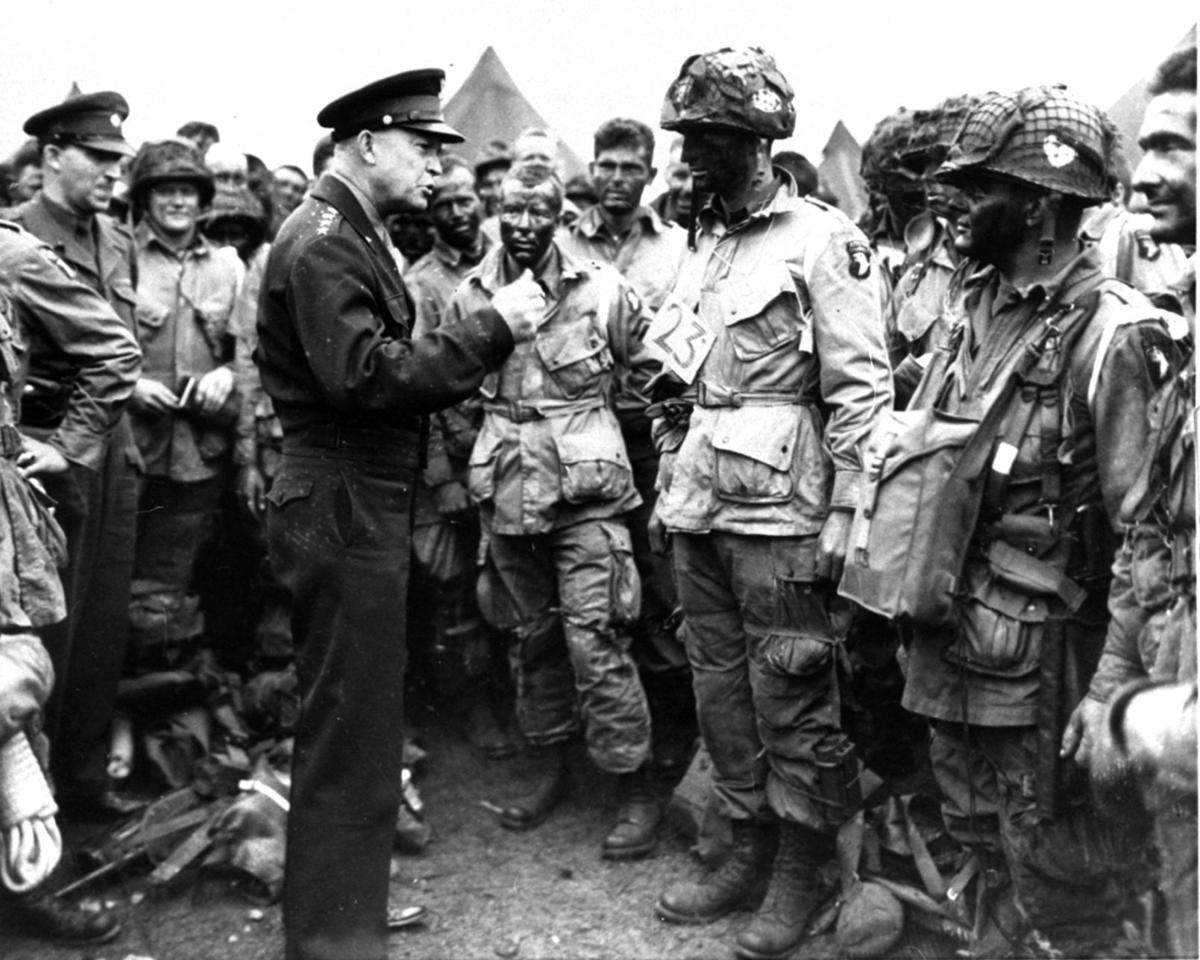
The date was June 5, 1944, and General Dwight D Eisenhower had made the decision to begin the Allied invasion of France the next morning. Christened “Operation Overlord” the massive campaign required disruption inland from the Normandy coast to insure a solid beach-head. The task fell to soldiers of the US 82nd Airborne, the US 101st Airborne, and members of the 6th British Airborne. The mission was to impair the Wehrmacht’s ability to move their Panzer units toward the five invasion points.
General Eisenhower met informally with soldiers of the 101st, chatting and encouraging, to build morale. He must have felt an enormous responsibility sending these young Americans on such a hazardous and vital mission. While he mingled with the men, Ike suddenly wondered, “Is anybody here from Kansas?” A voice replied from the crowd, “I’m from Kansas, sir.” Ike looked the boy in the eye and responded, “Go get ‘um, Kansas.”
That story always leaves me teary. I don’t cry in movies, poetry doesn’t move me, and books have to be awfully emotional to elicit a sob out of me. But that moment of raw, honest regard, with so much at stake, hits me in the heart.
Washington at Trenton, Grant at the Wilderness, Doughboys in the Argonne, GI’s at the Bulge, Marines at Hue: the devotion to duty chokes me up. Every time.
But today Americans seem somehow lessened, cheapened. There are no Eisenhowers, or Washingtons, or Lincoln’s to describe what we represent. The institutions that inspired countless young people to lay down their lives are now attacked by an ersatz strongman from within. How could this happen? How can citizens of good conscience condone this very real threat? Where is our collective honest regard for our past, present , and future?
Makes me want to cry.
Gail Chumbley is the author of the two-part memoir, “River of January” and “River of January: Figure Eight.” Both are available on Amazon.com
“So buddy, I was wondering if you have any plans tonight,” Fred Murphy said as the Mariner throttled to the Alameda dock. “It’s nice to head over to San Francisco when the opportunity presents.”
“What did you have in mind, Murph?” asked Chum.
“Is that a yes? Because there is this place pilots really like—but it’s a kind of a surprise, and you’re gonna have to trust me.”
“You, Fred? Trust you? Should I pack my service revolver?”
“Just trust me, Chum.” Murphy smiled.
That evening, a yellow taxi crawled up the steep incline of Telegraph Hill in the drizzling rain—Coit Tower front and center in the foreground. From his vantage point in the cab, Chum studied the illuminated monument—the raindrops and the wipers making it an abstract, streaky blur one moment, a defined structure the next. Their cabbie downshifted, doubling horsepower for the uphill climb to a line of apartment buildings stacked along Montgomery Street. The taxi stopped at a plain stucco building, the simple design a contrast from the adjoining buildings with ornate wrought iron balconies. Murphy paid the cab fare.
“This doesn’t look like much of a nightclub, Fred,” Chum remarked.
“Trust, remember? Besides, this is the best place in the Bay Area for fellas like us, pal. You just wait—she’s gonna love you.”
“You know I’m married, Fred.”
“Ha! Funny, Chum. So am I.”
The men ducked under the stoop and Fred gave a quick knock on the door. After a moment, a small Asian woman opened the door. She’s smaller than Bertha, Chum thought. The maid maybe?
“Lieutenant Murphy! Welcome back, welcome back,” The woman’s smile transformed in warm recognition. “You have escorted someone new to meet me, I see. Is he as skilled as you, my dear lieutenant?” Chum felt his jaw drop. Murphy laughed.
“Hello, Mother.” Murphy stooped and pecked the woman’s cheek.
Under her wire-framed spectacles, “Mother” shifted her appraising eyes back to Chum. “Welcome to my home, Lieutenant. And you are . . . ?”
Still unsure about why he was there, Chum stumbled over his answer. “Chumbley, ma’am. Lieu . . . Lieutenant Montgomery Chumbley. But please call me Chum.”
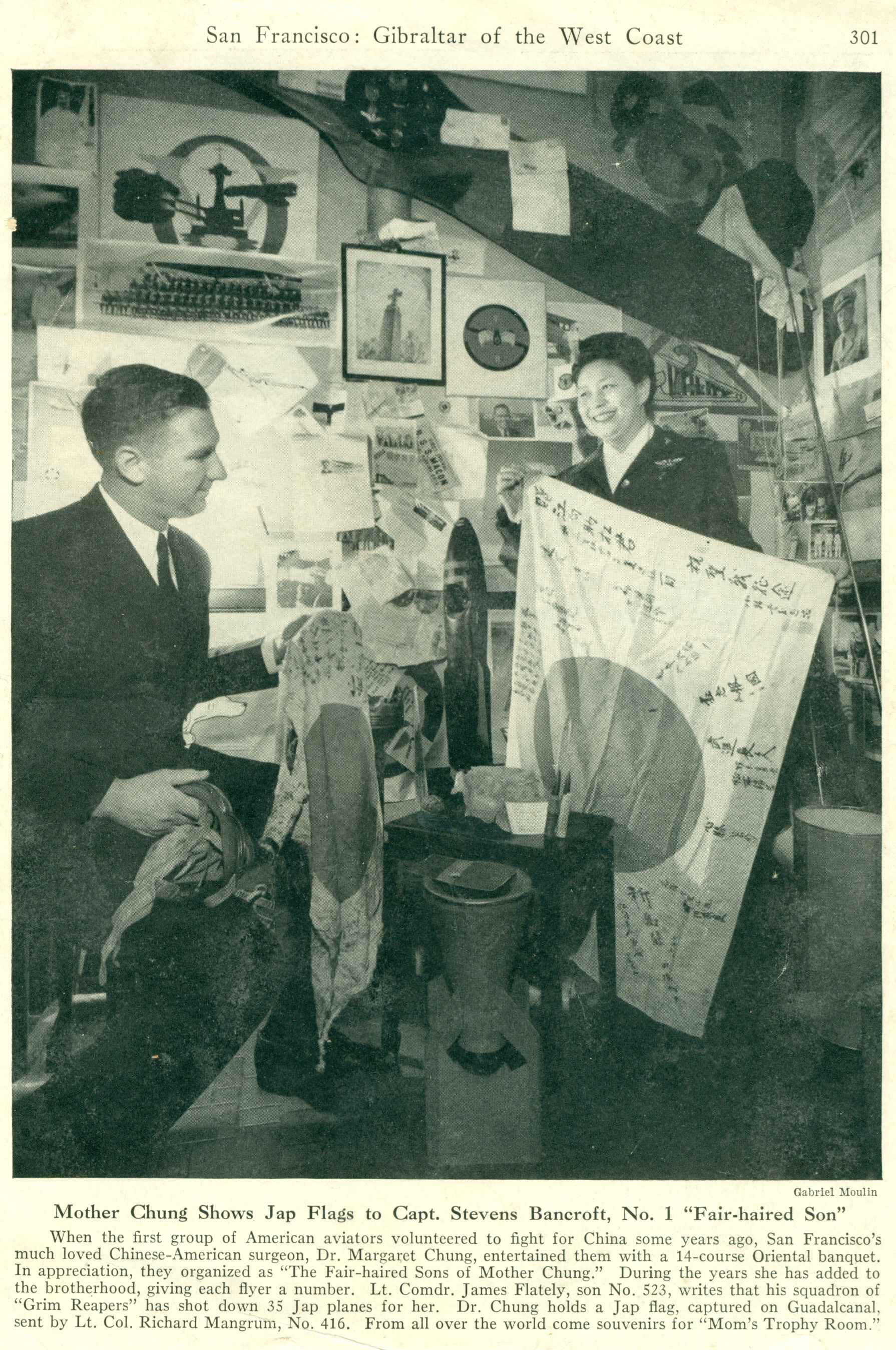
“Delighted to meet you, Lieutenant Chum. I can see that Fred did not prepare you for this visit.” Mother’s eyes returned to Murphy, conveying a light reprimand. To Chum she said, “I am Doctor Margaret Chung, but as you have already witnessed, all my sons refer to me as ‘Mother.’ Lieutenant Murphy has brought you here tonight to not simply meet a nice Chinese lady, but—I would guess—for your formal adoption into my family. Please come in, come in.” Dr. Chung gestured down a long, cluttered hall, and the two pilots complied.
Presented with such a confusion of artifacts, it was hard to know where to look first. Framed glossies of smiling aircrews, salvaged pieces from Nakajimas and Zeros—propellers, pieces of fuselages, wings—graffiti-strewn flags bearing the distinctive rising sun, spent torpedo casings, Hellcat and Corsair unit insignias, and hundreds of news clippings and snapshots of smiling pilots . . . her walls a chaotic collage of air war memorabilia. Dr. Chung studied Chum’s incredulous face as he absorbed the massive collection, visibly pleased with his reaction.
“Please find a seat, gentlemen, and allow me to explain my haphazard museum to our guest,” Dr. Chung said. Chum slumped into a stuffed wingback chair, his eyes still sweeping the memorabilia. “As you already know, Lieutenant Chum, China is presently suffering under the cruel occupation of the Japanese Empire. You need look no further than the barbarism that took place in the city of Nanking to understand my natural revulsion.”
Chum nodded. He had seen newsreels of the butchery in that city.
Dr. Chung’s eyes reflected both tragedy and determination. “I have made it my mission to raise not only awareness but also funds for the suffering people of China. It is men like you, our skilled pilots, who are striking most directly against the foe, and that kind of bravery has made you one of my dearest sons.”
Dr. Chung dropped her gaze and reached over to an end table, picking up a leather-bound ledger. She shuffled through the pages, passing inscribed signatures, finally chancing on a blank space. Holding her fountain pen, Mother began scribbling into the register. “There—done.” She glanced at Chum. “You, Lieutenant Chum, are now officially a member of the Fair Haired Bastards. Ah, let me see”—Dr. Chung silently calculated—“you are son number three hundred and ninety-two.”
She extracted a small card from a drawer in the end table and carefully filled in the blank lines. Finished, the surgeon rose and, with a handshake, presented the card to her new visitor. Chum read:
This is to certify that
Montgomery Chumbley
Is a member of Dr. Margaret Chung’s Fair Haired Bastard’s Club, San Francisco
Margaret J. Chung MD
Her intense eyes softened, her smile gentled. “Remain safe in those dangerous skies, Lieutenant Chum. I don’t want to lose any more of my sons.”
Chum glimpsed over to his co-pilot, then back to his exceptional hostess, grappling for something to say. “Thank you, ma’am. This is an unexpected honor, and I will do my best to defeat our enemy.”
At that, Dr. Chung beamed, offering the boys a beer. More relaxed, the doctor inquired about their aircraft, their primary duties, and what they had seen of the fighting.
“Doctor Chung, ma’am,” Chum said, still inspecting the cluttered walls. “I just have to ask. Who is Fair Haired Number One?
“Ah.” She nodded, producing a wry smile. “An excellent pilot, and he’s from this area—from San Francisco. You may know him, Lieutenant Chum. His name is Lieutenant Bancroft, Stevens Bancroft.”
Of course he is. Chum threw his head back and laughed. “Oh yes, I know him, ma’am.
Gail Chumbley is the author of the two-part memoir “River of January” and River of January: Figure Eight.” Books are available at www.river-of-january.com and on Kindle.
gailchumbley@gmail.com
A civilian pilot learns of war.

Los Angeles
1939
On a sunny morning at the first of September, Chum arrived in the town of Winslow, Arizona, bumping down the landing strip at the airfield. Taxiing off to the side of the field, he observed a crowd collecting close to the control tower. Curious, he rolled to a stop, switched off the Waco, and hopped down. “What’s cooking?” he asked no one in particular.
A boy in greasy dungarees and black high-tops chirped up excitedly. “The Germans invaded Poland, mister. And England and France have declared war!” The boy beamed proudly, satisfied with reporting such important news.
Astonished, Chum stared blankly at the kid—countless considerations flooding his thoughts. Poor Helen. She’s been worried about what would happen. She loved France. I’ll probably be hearing from the reserves. We’re not in yet, but it’s only a matter of time.
While various scenarios dominated his thoughts, Chum refueled his plane. He then carried on with his flight plan, eventually touching down in Albuquerque—his destination. With his Waco S Series plane tethered to the ground, the pilot beelined to the small airport office, anxious for any news. The day had grown hot, but Chum barely noticed. He needed water, but the news came first. Approaching a low, dark building, he heard a voice booming from a radio:
At dawn, with no provocation or declaration of hostilities, the German army has invaded Polish territory, ruthlessly violating the country’s national integrity. Intensive bombing attacks are at this moment raining death and destruction over the cities of Poznan, Wroclaw, and Danzig resulting in considerable casualties among innocent civilians . . .
“Hey, Coop,” Chum called, hailing the manager. “What’s all this about marching Germans?”
“Been waiting on you, Chum,” the man called Coop replied, turning down the news broadcast. “Got a cable here for you from Troy. And that breaking news is all too true, pal.” Coop gestured toward the radio with his thumb.
Mumbling thanks, Chum unsealed the telegram, tuning out the now-muted announcer. He read:
Finish Albuquerque demo. Then to Troy. Big meeting. Perry
“They want you back at the nest, I’d wager,” the manager said with a knowing expression.
“Yes. Yes they do. All hands on deck, as the saying goes.” Chum tried to smile.
“Jerry’s hit Poland hard,” Coop continued. “First their heavy bombers, then the tanks, then the army marching in. Poor Poles. They don’t stand a chance. Radio announcer called the attack blitzkrieg.”
The word didn’t click. “What’s a blitzkrieg?”
Coop replied in a dark voice, “Lightning war.”
Gail Chumbley is the author of the two-part memoir, “River of January,” and “River of January: Figure Eight.” Both books are available at http://www.river-of-january.com, and on Kindle.
gailchumbley@gmail.com
“River of January,” and “River of January:Figure Eight” have garnered some recognition. Find out why today. Click this link www.river-of-january.com, and order your own copies, personally signed by the author.


Award winning history instructor, Gail Chumbley is the author of the two-part memoir River of January and Figure Eight.


World War One, The Great Depression, Vaudeville, Golden Age of Aviation, Amelia Earhart, Golden Age of Hollywood, Rise of Fascism, Waco Aircraft, Professional Ice Skating, Sonja Henie, World War Two, Battle of the Atlantic, Pearl Harbor, War in the Pacific, Cold War, Sun Belt, America as a World Power.
Get the two-part Memoir, River of January and River of January: Figure Eight and connect these fascinating dots. Also available on Amazon.com
If you’ve enjoyed this adventure, leave a review on Amazon.com. Thanks, Gail.
 Gail Chumbley