Peer Review #1

Marines manned numerous doorways along the wide hallway, as clusters of tourists wandered through colorful rooms. Upstairs the President listened to the public commotion with satisfaction, not for the house, not for the job, which, in truth, had become tiresome, but for the knowledge he could drop down and set all their bourgeois hearts aflutter. 

After a moment, he made his decision, slipping down an interior stair case, stepping into the Blue Room.

As his hands automatically fluffed his hair, the President sidled up beside a class of wiggly school children snapping cell phone pictures.

“And where are you from?,” the president teased with pleasure, anticipating an excited response. He half closed his eyes, and paused, waiting for the gratifying answer.

But he heard nothing.

Bemused, the President opened one eye, then the other. The chatty children paid him no mind, in fact were moving away, following their guide into the hallway.

“Wait,” he found himself calling. “It’s me, your President. I’m here.”

He repeated, “The President of the United States.”

But the children didn’t hear. He remained alone in the Blue Room, his hair acceptably coiffed.

No further tourists entered, though dozens drifted past the doorway. He didn’t understand and he thought very hard, seeking a rational explanation.

It was at that moment that he heard a voice, quite close, and quite annoyed. 

“Am I to understand you are a New Yorker?” 

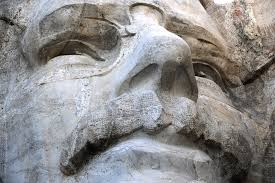
The President wheeled around toward the sound. Before him, no more than an arm’s length away stood a mustachioed gentleman, wearing pinz nez spectacles, sporting a shiny top hat. The man’s eyes blazed behind the thick round lenses, and the astonished President detected a trickle of cold sweat trace down the back of his thick neck.

“I say, are you, or are you not, a New Yorker?” The stern man spoke in a nasally, patrician voice.

“Ahh. How did you get in here,” the President stammered. “Where is my secret service protection?”

“Supercilious pup,” the man in the top hat snapped. “They tell me that YOU are from New York, and are president! A common side show huckster, President.”

The President, though alarmed, replied reflexively, “I’m in real estate. I . . .made my fortune in New York real estate.” Only the muffled din of passing tourists kept the President from panic.

“Real Estate!” The man in spectacles scornfully shouted. “I’d say you are just another scoundrel from the wealthy criminal class. In New York, swindlers like you are a dime a dozen. I made a career of exposing rascals like you.” 

The man, attired in a three-piece suit, a watch fob draping his ample waist, bore a deep scowl. “And you found your way into this office of trust. Intolerable.”

Though bewildered, the President, unaccustomed to such personal insults, felt his pique rising. “I was elected President by the largest margin in American Hist . . .”

“Poppycock,” the specter interrupted. “It is my understanding the decision rested upon a mere tilt in the Electoral system, and that outsiders interfered to make certain of your victory.” 

The strange visitor moved closer. “I’d say that you are a compromised pawn of foreign meddlers, and give not one damn for the American people.”

At this point the President had heard enough, and attempted to move his legs. He wanted very much to escape the Blue Room, but his feet remained rooted. 

“I have important things to do, you need to go,” the President’s voice trembled, trying to sound more confident than he felt.

The apparition narrowed his intense eyes, and took another step toward the unnerved President. 

“I claim more authority to this revered House and Office than your mercenary greed could ever comprehend. You belong with Tweed, Plunkitt, Fisk, Conkling, and the rest of New York’s good-for-nothings. Dishonor has followed you to the Presidency, what, with your womanizing, graft, and unsavory business connections.” The fierce apparition fixed an intense, menacing gaze. “You do not belong here, nor your parade of lackeys and opportunists.

The buzz of foot traffic grew louder, and when the President again glanced toward his unwelcome visitor, he found him gone, the Blue Room empty.

Gail Chumbley is the author of the two-volume memoir, “River of January” and “River of January: Figure Eight,” both available on Kindle.

Hard copies are available at http://www.river-of-january.com


A Fine Day

Washington at the Second Continental Congress

George Washington began life in the formal, orderly Virginia Tidewater. Born the first son of a second marriage, young Washington, an anxious young man admired his two older half brothers, both of whom were blessed with solid social standing and a full Washington inheritance. In particular, George held dear, brother Lawrence, who exemplified what English gentlemen ought to be: English educated and a Captain’s commission in the British Navy.

The younger man suppressed, (poorly) his ardent hunger to be a gentleman, too.

Self-conscious, young George flailed around for a vocation. He first trained as a surveyor, platting out frontier tracts in service of his wealthy patron, Lord Thomas Fairfax. Through the Lord’s position, young Washington studied military science and joined the Virginia militia. Tall and strong, with a talent for numbers and tactics, Washington performed well in both pursuits.

Dispatched by the Royal Governor of Virginia into the wilds of the Ohio River Valley, Washington inadvertently ignited the French and Indian War. Engaging French forces near what is today Pittsburgh, the young militia officer was defeated on July 3, 1754.

Promised rank by a British General, Washington looked to realize his most fervent wish—to become a bonafide English officer and gentleman. However, on Washington’s return to the Ohio Valley, this general was killed in the Battle of the Monongahela. Washington never received his British rank.

Humiliated by the experience, Washington left the militia, embittered, and returned home.

Shortly after Britain’s final victory over the French, Washington inherited Mt Vernon with the death of his beloved Lawrence. As a planter, he sought a planter’s wife, marrying widow, Martha Dandridge Custis. With his grand house on the Potomac, and wealthy bride, Washington’s status in the Tidewater elevated considerably.

Still ambitious, Washington ran for office, serving first in the House of Burgesses, then as a delegate to the First Continental Congress in 1774. 

Under increasingly punitive British demands, Washington and many of his peers grew resentful of colonial treatment. By the time of the Second Continental Congress, Washington cast his public lot, by attending the proceedings in a uniform of buff and blue. Colonel Washington had become a rebel, available to command, if necessary, upon the field of battle.

It was during the Revolutionary War, particularly at the battle of Princeton, that Washington transformed, becoming something else, someone exceptional. As his ragtag troop of soldiers flushed redcoats out of the New Jersey town, he is said to have called out , “It is a fine day for a fox hunt, my boys.”

And in that moment George Washington discovered a cause better than any worldly possession could attain, a cause worth more than life.

Authentic majesty did not reside in Royal recognition or military rank. Rather, nobility lay in an ideal—that America could do something grand, and never before attempted—a government of the people. Washington grasped that outside trappings meant nothing, if unaccompanied by worthy ideals. 

It’s a pity that those who seem to know the price of everything understand the value of nothing. 

Gail Chumbley is the author of the two-part memoir, “River of January” and “River of January: Figure Eight.” Both titles are available on Kindle. Hard copies are available at http://www.river-of-january.com.

gailchumbley@gmail.com
Symmetry

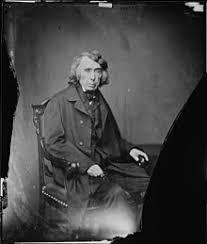
This reactionary-looking fellow is Marylander Roger Brooks Taney, an Andrew Jackson appointee to the Supreme Court. History remembers Justice Taney as the author of the Court’s most infamous ruling in Scott V Sandford (1857).  

Taney had frequently telegraphed his views on slavery and American citizenship, insisting that blacks had no rights white men were bound to respect. Even before his nomination to the bench, a free black had requested documents for overseas travel that Roger Taney, as then US Attorney General, instantly rejected. Taney conceded his legal views long before dawning judicial robes; blacks were not citizens, and never could be. Travel documents for this man of color were denied.

Another important element in this story concerns the Missouri Compromise of 1820. Settled eight years prior to the Jackson Administration, this legislation directed that with the exception of the new state itself, slavery would be forbidden above Missouri’s southern border. Most Americans hoped that this Missouri Compromise Line would endure forever, clearly delineating for posterity new slave states from free.

By the time the Scott case reached the Federal docket, violence and bloodshed had erupted west of Missouri, out on the Kansas prairie. Emigrants recently arrived from northern and southern states, were to vote upon the fate of slavery in the new state’s constitution. A volatile mix of invading, pro-slavery Missouri Ruffians attacked Free-State Jayhawkers near Lawrence, sparking deadly violence across the region. Unrepentant slaveholders demanded their 5th Amendment property rights (meaning slaves) were allowed any place slaveholders settled. At the same time, equally fervent opponents of slavery contended the “peculiar institution” would remain contained where it existed, never to pollute new territories, or America’s future.

Justice Taney took umbrage at these incessant attacks on slavery, and at those Northern rabble rousers who would not respect the law. When the Scott case entered deliberations it appears Taney intended to settle the question for all time, silencing forever those interfering, and self-righteous Yankees. When the Court issued its ruling in 1857, Justice Taney’s opinion rang out with authority, and finality.

  1. Despite Dred Scott residing in free territory for a time, he was still a slave.
  2. As a slave, Dred Scott was not a citizen and had no standing in court.

With those two main points established, Taney could have stopped, but the Chief Justice had some venom to add.

3) Congress had exceeded its authority in legislating the Missouri Compromise in 1820, rendering it unconstitutional. Slavery could not be restricted by boundary lines or by popular vote. Property was protected by law.

Believing he had settled the dispute, Justice Taney had, in fact, only stoked a more massive inferno.

Indeed war exploded within four years of Taney’s decision, blazing on for another bloody four years. In the aftermath, in an interesting turn of symmetry, the Fourteenth Amendment, ratified in 1868, reversed all of Taney’s arguments, provision by provision. 

  1. By virtue of birth in the United States, one was a citizen. 
  2. As a citizen a person was due all rights and immunities, with equal protection under the law. 

This amendment reads as if the Scott Decision acted as a template for reversal.

Fast forward to 2008. 

In a conscious effort to mirror the events of fellow Illinoisan, Abraham Lincoln’s inaugural, Barack Obama’s installation as chief executive deliberately followed the 1861 sequence. The Obamas rode the same train route, breakfasted on the same meal inauguration day, and when the moment came for the swearing in, President Obama selected the same Bible as touched by Abraham Lincoln’s right hand.

In a last twist of symmetry that Bible belonged to Justice Roger B Taney.

Gail Chumbley is the author of the two-part memoir, “River of January,” and “River of January: Figure Eight.” Both are available on Kindle. Hard copies can be ordered at http://www.river-of-january.com.

gailchumbley@gmail.com


Why We Remember

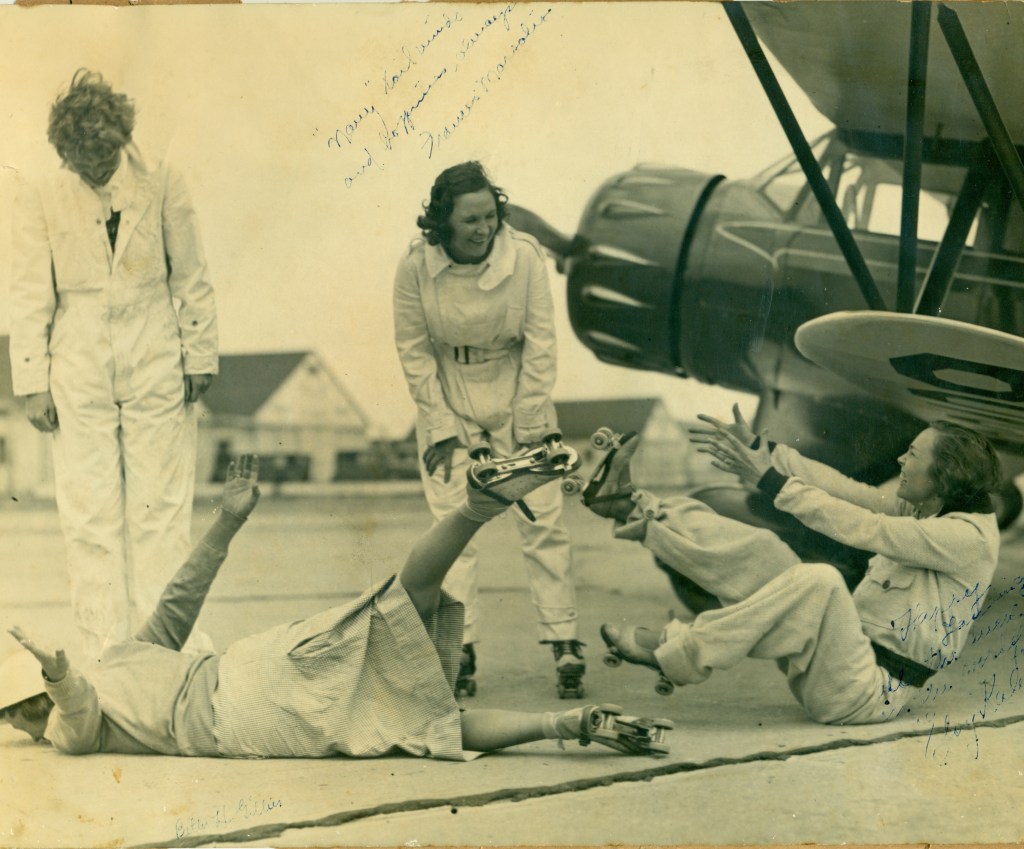
Roosevelt Field Aviators,1933: Elvey Kalep, sitting right, Betty Gillies, on her stomach, Frances Marsalis, standing center, Amelia Earhart, at left looking down. “The Ninety Nines.”

This week’s promotion of “River of January” turned out a glorious success. My central purpose in researching and writing this first installment was to honor what transpired in America before our time. I hope all of the Kindle readers who downloaded the memoir are stirred by this true account, and return for the sequel, “River of January: Figure Eight.”

Gail Chumbley is the author of “River of January” and “River of January: Figure Eight.” Both are available in hardcopy at http://www.river-of-january.com or on Kindle.

New York 1933

Excerpt from “River of January.”

    “You Chumbley?”  

     Chum glanced up from Ailor’s desk, where he was adding up airtime in his logbook. A well-dressed gentleman, clearly from the city, faced him. The caller had quietly stepped through the door, surprising the pilot, intent on his figures. 

     “You found him, sir,” Chum smiled warmly. 

     “My name’s Rosenbaum, Richard Rosenbaum, but I go by Ross. The man extended his hand, as Chum hopped up. “Say, I need a reliable passenger plane for hire, with a good pilot at the helm. Your name was given to me over at the AP office.”

     “Uh huh,” Chum answered casually, privately pleased at the referral. “Where exactly would you need me to fly, Mr. Ross?”  

     But Ross answered something else. “I have a chair on the stock exchange, but don’t hold that against me,” he volunteered—Chum gawked, and Ross laughed, “I know. You’re surprised I have the guts to state my occupation. We Wall Street types aren’t exactly popular with the public these days, are we?” 

     The flyer chuckled at the businessman’s blunt honesty. 

     “Well, I won’t crash the plane, if that’s what worries you. The market crashing is enough for now,” Chum joked back. 

     With the ice broken, Chum and Ross got down to business, discussing rates and various destinations. Sensing Ross could become a first-rate client, he offered, “Would you like to go up for a spin, Mr. Ross or Rosenbaum?”  

     The client laughed again. “Love to— love flying.”

     Twenty minutes later, the plane eased down, trundling to a gentle stop on the airstrip. As he released his safety straps the broker remarked, “Thanks for the test ride. You know, you’re quite the pilot—may I call you Mont?”  

     “Nooo, sir. My friends call me Chum,” the pilot answered. 

     “Well, Chum, I’d like you to plan on a pleasure trip next weekend. The boys and I need to get to Havre de Grace in Maryland. And I will stay in touch.”  

     The two men shook hands again, and Ross, whistling, walked over to his Chrysler Imperial, and motored away. 

     Promptly a week later, while jiggling his office key into the door, Chum heard Ailor’s phone ringing. He burst in, leaving the keys hanging in the lock, and seized the receiver. 

     “Hello, Chumbley here—hello?”  

     “Morning Chum,” flashed an urgent voice. “This is Richard Ross, and I am awfully glad I caught you at the office! We have a horse posted in the third race and need to get to Baltimore, fast.”  

     “Havre de Grace Race Track?”  

     “A horse in the third.”  

     “Wait, where are you calling from?” the young man asked. 

     “Newark. We’ll be waiting at the airfield for you to arrive.”  

     “Horse track, huh?  Roger that. I’ll gas up the Waco and be over soon.”  Jogging to the hangar Chum reflected, “This trip sounds like fun, especially if I make a couple of bucks.”  

     Taxiing down the runway, the flyer lifted off—his trip was just a short hop west—and Chum presently approached the New Jersey landing strip. From his windshield he could see three figures moving outside an office building near the tarmac. 

     “Must be Ross,” Chum mumbled. Touching down, the pilot slowed and turned the plane toward his passengers. But he noticed they were running toward the Waco. Ross was shouting something and waving his arms. 

     “We need to go, now, Chum!” the pilot finally heard above his roaring engine. Chuckling, as they clambered aboard, the flyer again turned and taxied down the same airstrip, quickly lifting off toward the southeast. His three passengers breathlessly discussed the upcoming race card. Thoroughly entertained by their excitement, Chum listened.

     “That number six will be tough to beat,” and “I paid a call to those stables and I wasn’t that impressed.”

     This flight wasn’t long either, but apparently too lengthy for the impatient stockbrokers. As Chum circled the county airfield, Ross reached up and patted his shoulder. “Not here, Chum. It’s too far from Havre de Grace. Land the plane at the track, put it down on the infield!”  

     Stunned, the pilot clarified, “At the horse track?”  

     “Yes sir! There’s no one better than you to pull off a landing like this one!”

     As he doubtfully turned his plane around, dangerous images passed through Chum’s mind—in particular, the incident in Elmira. He understood, as every pilot understood, that potential disaster rode along with him on every flight. 

     Chum worried:  What are the chances of cart-wheeling the plane? Can I regain lift if I come too close to the viewer stands? Will I be arrested?  

     Ross read Chum’s alarm and assured the pilot, “I trust you. The field is long enough for a good flyboy like you to manage. And we’ll pay for any mishap or damage.”

     “How ’bout my broken neck?” the pilot half-joked. 

     The broker snickered. 

     Chum shrugged, lowered the nose of his Waco, and touched down firmly, bouncing on the grass, and smoothing out as the plane slowed. By the end of the infield, the Waco stopped, facing the viewing stands. Safe. No snags. Leaning over the yoke, he inhaled deeply realizing he’d held his breath through the approach, the landing, and the braking. 

Gail Chumbley is the author of “River of January,” and “River of January: Figure Eight.” Available on Kindle and at http://www.river-of-january.com

Free is Good

From the advent of aviation to the stages of Vaudeville–spanning continents by air and sea, comes “River of January.” Enjoy this true, epic story.

“River of January,” part one of a two-part memoir is available, free on Kindle, from Sunday, March 31, through Tuesday April 2.

Click the link below.

River of Januaryhttps://www.amazon.com/River-January-Gail-Chumbley-ebook/dp/B00N1ZLWZI/ref=sr_1_2?keywords=river+of+January&qid=1553962925&s=digital-text&sr=1-2

Gail Chumbley is the author of “River of January” and “River of January: Figure Eight.” http://www.river-of-january.com

gailchumbley@gmail.com

He Wrote for the Ages

images.jpeg

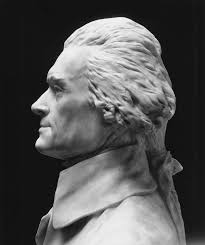
For starters, I am not a fan of Thomas Jefferson. In fact, the more I know of this founding father, the less I like him. The Sage of Monticello routinely had young male slaves beaten for no better reason than custom, and lay the foundation for secession in 1798 with his Kentucky Resolution.

Thaddeus Kosciuszko, the Polish hero of the Revolutionary War, once offered to liquidate land holdings in the Northwest Territory to pay Jefferson to free some of his slaves, and Jefferson declined. Disillusioned, Kosciuszko condemned Jefferson as a fraud for once insisting “all men were created equal,” and not practicing that “truth.”

However, the reality remains that Jefferson did indeed, pen those words, and generations of Jeffersonian disciples have insisted those words are enough to maintain his venerated place in American history.

And I agree. His adulators are correct. Jefferson’s words are enough. His phrasing, painstakingly composed in 1776 has ignited the world on the ultimate quest to actualize Jefferson’s “unalienable” assertions. 

Abraham Lincoln took Jefferson’s sentiment to heart, and his devotion moved Lincoln to action. The foundation of the Republican Party rested partly upon removing artificial impediments restraining upward mobility, and Lincoln believed slavery such an obstacle, the most malignant bar to individual betterment. (Duh). In 1859 he stated in a speech, “We proposed to give all a chance; and we expected the weak to grow stronger, the ignorant, wiser; and all better.” And Lincoln made it his aim to realize that betterment, first with Emancipation, then the 13th Amendment.

There could be no better description for America than a people steadily discarding artificial barriers. Women, Native Americans, LGBTQ Americans, Latino Americans: all of us freed to reach our highest potential. Annoying bigotry places a drag on the process, but justice still manages to surge steadily on, inspired by the words of the Declaration of Independence–Jefferson’s words. 

In reality, Jefferson had meant to argue white wealthy Colonials were of equal standing to Great Britain’s landed aristocracy. Despite his original intent, the promise of those words have outlived that specific moment. 

Understandably, Thaddeus Kosciuszko gave up in the face of Jefferson’s outrageous duplicity. And this generation of fanatics desperately promote Jefferson’s original racism. But, kids, we have inherited an obligation to continue this journey, not only for ourselves but to light the way for our children’s children.

Gail Chumbley is the author of the World War Two-era memoir “River of January,” and “River of January: Figure Eight.” Both are available on Kindle, and hard copies at http://www.river-of-january.com

gailchumbley@gmail.com


A Reasonable Man

Henry-Clay-9250385-1-raw-res-AB.jpeg

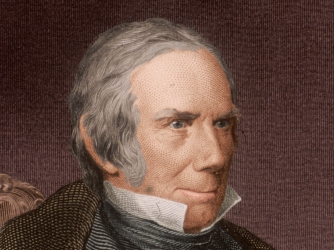
The Senator visualized a clear future for America; a nation of groomed roadways, busy canals, sturdy bridges, and mighty iron railways. He believed America, in order to mature into a truly great nation, required the best in structural innovation. Despite his noble intentions, this practical statesman faced an insurmountable barrier impeding his work–Andrew Jackson.

Henry Clay first arrived in Washington City as a green Kentucky Congressman in 1803. Serving in the House for three years, Clay eventually moved over to the Senate, appointed by the Kentucky legislature to fill an unexpected vacancy.

Early in his legislative career young Clay committed his fair share of blunders. A fierce booster for war in 1812, Clay worked with other young ‘ War Hawks,’ who favored this second brawl against Great Britain. However, by the end of that conflict, Clay realized this do-over against England had generated nothing of real substance.

Fully embracing this epiphany, the young Senator turned his efforts to building America from within. Clay devised a long-range program of development he called The American System. Components of his plan were three-fold: a strong protective tariff to nurture America’s fledgling industrial base, a Second Bank of the United States to administer federal funds, that in turn would underwrite his ‘internal improvements,” (infrastructure projects). For Henry Clay this three-tiered plan would provide the solid foundation a mighty nation-state needed to prosper. And the Senator enthusiastically advanced his crusade in the spirit of a secular evangelical.

Henry Clay’s progressive program found considerable support among his fellow legislators, so much so, The American System seemed on the brink success. 

Unfortunately for Clay, a dashing war hero rose to thwart his vision. Tennessean, Andrew Jackson, the victor of New Orleans, among other military escapades had set his sights on becoming president.

In the beginning Clay thought little of the uneducated, volatile militiaman, believing voters would not take this uncouth hellion seriously. But Clay misread public sentiment. Jackson’s popularity soared among all classes, particularly among poor whites. Jackson successfully won not only a first term, but enjoyed reelection four years later.

Most ominous for Henry Clay, this formidable president did not like him, not one little bit.

Very quickly Congressional appetite for public works dissolved. New Jacksonian supporters filled the House, and to a lesser degree the Senate, leaving Clay hard pressed to pass any of his program. In fact, Jackson made fast work on Clay’s earlier successes by killing the Second Bank of the US, and vetoing countless internal improvement projects. The only portion of the American System Jackson defended was the Tariff, and merely because a separate Jackson enemy threatened to ignore the law.

Henry Clay found himself fighting tooth and nail for every economic belief he championed. And the harder he pushed, the harder the mercurial man in the (White House) blocked him. 

The intractable issue of slavery soon dwarfed all other political and economic conflicts. Clay, a slave owner himself, preached gradual emancipation, finding enemies in both the North and South. Northerners hated him because he was a slave owner, and Southerners because he believed in emancipation. This guy couldn’t win.

Sadly, Senator Henry Clay did not live to see his American System become a reality. But there is a silver lining to this tale. Abraham Lincoln, a staunch Clay-ite shepherded passage of the Pacific Railways Act, the Morrill Act, and a National Banking Act through Congress. These three laws built the Transcontinental Railroad, Land Grant Universities in the west, and funding the Union war effort in the Civil War.

Oh, and Clay’s desire to emancipate slaves became a reality in 1863.

The moral of the story transcends time: America stalls when irrational politics displaces thoughtful, reasonable policies and the legislators who promote them.

Note-I have co-authored a new play celebrating the life of this remarkable, essential American simply titled “Clay.”

Gail Chumbley is the author of the two-part memoir, River of January and River of January: Figure Eight. Both are available on Kindle. Gail is the author of two stage plays, “Clay,” and “Wolf By The Ears.”

gailchumbley@gmail.com

Mrs Stanton

elizabeth-cady-stanton---pioneer-for-womans-suffrage.jpg

I’ve begun initial research on a project concerning this woman, Elizabeth Cady Stanton.  She may be the most essential figure of the American and International Women’s Movement and arguably one of the most forgotten.

Generations of women are far more familiar with Stanton’s colleague,  and dear friend, Susan Brownell  Anthony, but that was by choice.  While Ms Anthony made an early and abiding decision to promote women’s suffrage over any other injustice facing females in the 19th Century, Cady Stanton, a more introspective person,  tended to explore, through study and thought, the profundity of patriarchal injustice.

Mrs Stanton’s analytic temperament often irritated the practical Ms Anthony,  who frequently cajoled Mrs Stanton to get out there and organize.

In a sense Ms Anthony married the suffrage movement, refusing to commit civil suicide by entering into a conventional marriage. Freed from domestic demands, she crisscrossed the nation assembling one of the most massive political movements in American History.  In contrast, Mrs Stanton married a man she passionately loved, raised a brood of seven,  all the while cultivating an interior life; a universe of analysis that evolved, questioning standards and beliefs relegating women to a subservient role.

These differences in style and aims, though the cause of many personal disputes, also somehow worked for these two strong personalities. While Mrs Stanton examined the absurdity of patriarchal traditions, and crafted sound positions on the innate equality between the sexes, Ms Anthony tirelessly toured the country, speaking to anyone who listened on the right of women to vote.

In a real sense Mrs Stanton sojourned through the metaphysical world in a search of truth, while Ms Anthony counted the miles of track to her next speaking engagement.

Happy International Women’s Day

Gail Chumbley is the author of the two-part memoir, River of January, and River of January: Figure Eight, http://www.river-of-january.com

Also available on Kindle.


One Thing Leads to Another


IMG_1500

PanAm Flying Boat 


As many of you . . . some of you. . . well, none of you know, Jeff Bezos is out to get me. So jealous, is old Jeff, that he monkeyed with my book pricing on Amazon, charging upward to $600 for my $15.99 book, “River of January.” But I showed him. I not only took that title down, but the second part of the memoir, “River of January: Figure Eight” as well. Let him agonize that defeat. This blow could bring the company to its knees. 

But, I am not without a trace of mercy. If one, or even two of you were inclined, both books can still be found on Kindle. If a reader’s taste runs toward nonfiction, with a yearning to relive an earlier era; a time of air races, world travel, Hollywood glamour, Vaudeville productions, Sonja Henie ice shows, and World War Two, I’ve got the story for you. Even Jeff understands blockbusters, like “River of January,”  cannot be  forever muzzled.

During this long overdue separation with Bezos, I’ve dabbled in another, new to me, format—writing plays. With my script writing partner, Ray Richmond, (yeah, we have written a script) we’ve committed to highlight historical figures who are important, but lesser known. Our first effort, still in progress, covers the life of Antebellum Senator, Henry Clay, and his herculean efforts to stave off Civil War. I’m not sure that writing plays is any easier than big girl chapter books, but I like the process better. And noble Henry Clay is an inspiring muse.

If anybody out there has wondered what became of Gail, and her endless accolades of Helen and Chum, I am quite well and still preaching the gospel of “River of January.”  

Without the experience of writing these two books, playwriting would never have touched my life. Please watch for more announcements on “Clay,” and if you think “River” and “Figure Eight” is a good reading fit follow the hyperlink.

Together we will shall ‘mean girl’ Jeff Bezos. 

For hard copy books, www.river-of-january.com

On Kindle https://www.amazon.com/s?k=river+of+january&ref=nb_sb_noss_2

Gail Chumbley is the author of the two-part memoir, River of January, and River of January: Figure Eight.

Photo credit, Mary Sederstrom Smith

gailchumbley@gmail.com