Choked Me Up

 In case anyone else is interested, here’s a little editorial piece I wrote about Critical Race Theory for my community. Gail Olson Chumbley, I didn’t expect it to go where it did, but I mean every word of that last part – but I’m sure you already know that because all of us students already do pastedGraphic.png😉

I would like to share something that’s been on my mind a lot lately, and I am hoping that those who are interested can engage in a way that promotes understanding on all sides as well as help dispel concerns. The topic is Critical Race Theory and what it means to have it “taught in schools.”

First, I am a teacher, though not in Kalama school district. I say this because I want to be transparent as well as reassure you that, if you do not agree with what I have to say, I also have no control over what is taught to your children either. I’m just here to chat. I also have my PhD in Educational Leadership and administration license.

——-

So, what is Critical Race Theory? Well, We need to understand what each of these words means in their original context, which is a widely accepted (non-controversial) area of scholarship, specifically legal scholars and practitioners:

Critical = Ask questions and analyze. It doesn’t mean to criticize, but rather is used in the same sense as teaching “critical thinking skills” and encouraging youth to think for themselves – even if their conclusions are different than our own.

Race = People who receive benefits or disadvantages due to race or ethnicity. This is not limited to black and white and does not villainize anyone. Rather, it’s looking at the factors that race MAY play in the way benefits are distributed through different communities.

Theory = A perspective. It isn’t about whether this is an idea, but rather one way of looking at things. Scholars, experts, and practitioners usually use multiple perspectives (theories) to analyze (critical analysis) certain phenomena. Essentially, theories are a framework for asking questions and understanding phenomena, not a conclusion in and of itself.

So, Critical Race theory, in a sentence, is a perspective for considering history, including the systems such as government and legal systems that were built in the context of our history, in a way that asks “What role might race have played here, and how does that inform issues we face today?” It is an intentional effort to ask those questions and seek out answers based on historical events and research.

———

What does this mean for teachers?

For teachers, this is nothing new. Understanding issues of equity is something that is covered in the most basic educator preparation courses, which includes understanding how to help ALL children access equitable learning opportunities regardless of location, income, disability, language, race, gender, orientation, etc. This is a basic and constitutionally guaranteed right (WA state constitution, Article 9, Sections 1 and 2; this is what “without distinction or preference on account of race, color, caste, or sex” and “general and uniform system of public schools” means). I attended a Nazarene university in a very, very conservative area and we were talking about these issues 10 years ago and continue to do so today. I promise you, this is not a new or left-leaning movement.

———-

What does this mean for school districts?

While the State can establish general standards, the actual curriculum and practices are determined at the local district level. Curriculum adoption involves the teachers in that subject area getting together with the district office to look at a variety of curricula and analyze which ones best fit their school’s needs. They then make a recommendation to the school board (including their analysis of the curriculum and why they chose it) who then votes on whether or not to approve the recommended curriculum. You, as citizens, get involved in this process by showing up to school boards (and voting for board members in the first place!) and letting them know how you feel about the curriculum. In sum, ALL stakeholders (students, parents, teachers, community members, board members, administration) have a voice and a part to play when it comes to adopting the curriculum. The ultimate decision, though, lies with the school board on whether or not to adopt a particular curriculum.

Of course, then, individual decisions about how to teach the curriculum, including what to focus on, how to focus on it, and what students are asked to do, are largely in control of the teacher. Teachers do have rights in making these decisions, though you are always welcome to voice any concerns. It is ideal to talk to the teacher first, then the principal or counselor if the issue doesn’t get resolved, and you can also contact the district. The district will then follow through with due process to ensure the rights of parents, students, and teachers are all protected.

————-

What does this mean for students?

Students in classrooms where Critical Race Theory is taught (largely social studies) will learn about history in a way that intentionally includes parts of history that have often been left out. They are NOT told what to think about it by the teacher (or at least shouldn’t be told – that would be grounds for a complaint), but rather would be encouraged to analyze the information and come to their own conclusions. Discourse is an important part of these topics, so they would likely be encouraged to discuss these topics with their peers (and with guidance by their teachers to ensure the class stays productive, on topic, and prevent hostility).

This is a TALL order, especially in classrooms with 30+ opinionated students, so not all teachers will get it right, especially if this is new for them. For many, though, it isn’t – again, I grew up in a conservative area and I feel as though I was exposed to this by my favorite teacher of all time BECAUSE she encouraged us to explore and think for ourselves. She never once told us what to believe, but rather taught us to ask questions, seek out facts to inform our opinions, and then develop and defend our opinions, regardless of what those opinions might have been. My sister and I both had her as a teacher and, 20 years later, we have opposite opinions on just about everything, especially politics. But the one thing we can agree on is that this teacher changed our lives and inspired us both to become teachers ourselves. Countless students across all beliefs and perspectives have named her as their most influential teacher. I truly believe that this type of teaching made us better people as we learned to consider perspectives that may be different from our own, ask questions, and seek out answers that we can defend with solid evidence. Here’s to you Mrs. Chumbley, who students affectionately referred to as “Chumbledore” because she was just that magical for literally generations of students

gailchumbley@gmail.com

A Rare Topic

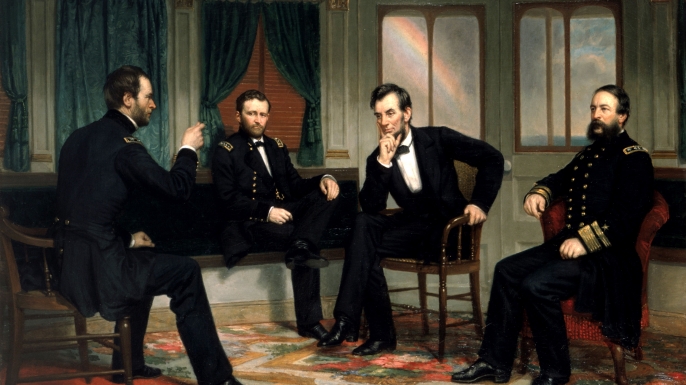
Lincoln, Grant, Sherman, and Gideon Wells aboard the River Queen, 1865

Watching a news host and guest discuss the topic of America’s Reconstruction era, my ears perked up, so rare is this matter presented. 

First of all, Reconstruction was the difficult period following the Civil War. The battles had ended, and the victorious president dead at the hands of an assassin. A new Battle Royale between Congress and the new President, Andrew Johnson, erupted over who would direct the aftermath. 

The thrust of the cable conversation centered on how important this time period remains, and that schools need to teach it. Much like Flo in the insurance ads, I started yelling at the television that I did cover that period, dammit. We all did in my department.

President Lincoln, before his death, had considered the role of newly freed persons as a moral imperative. Subsequent to the Emancipation, he had pushed for passage of the 13th Amendment, as dramatized in the film, “Lincoln.” Throughout the last months of the war Lincoln had revealed his vision of restoring Southern States. Based on the 1860 election records, when 10 percent in the rebellious states swore a loyalty oath, each state could reform their constitutions recognizing the abolition of slavery. President Lincoln believed he possessed the power to pardon, and he would make full use of that Constitutional power. 

Legally speaking, President Lincoln viewed secession as an attempt to leave the Union, and that attempt had failed. The Chief Executive would pardon the ring leaders, and move on to rebuild the nation. But his political opponents, the Radical Republicans, under the leadership of Congressman Thaddeus Stevens, and Senator Charles Sumner, saw the situation differently. 

For these abolitionists punishment was the order of the day. The 1864 Wade-Davis Bill mandated 50% plus of 1860 election rosters took that loyalty oath. To Stevens, Sumner and the like, these Rebel states had committed political suicide. Only after that majority swore the oath, including recognition of the 13th Amendment, would Congress consider readmitting each, as if new states. 

A political fight was brewing as to which branch held the reins to mend the nation, and deal with the lot of Freedmen.

The short answer is Lincoln’s death derailed any compromise. The Radicals held the day, and Southern whites would suffer. And Andrew Johnson was no match for an angry, determined Congress. In 1867 Federal forces occupied the South in political districts. Soon after, the Legislative Branch attempted to impeach the hapless new president. 

Though the 14th Amendment guaranteed citizenship to the newly freed, and the 15th guaranteed the vote, northern opinion drifted into apathy. Enforcing the rights of Freedmen lost popularity, and dropped from the headlines.

The Old South reasserted traditional apartheid rules.

The cost for the newly freed? Desperate people wandered back to the old master. With no protection, lynching became common as domestic terrorists spread fear. Rights of citizenship went unenforced, with sharecropping and the crop lien system replacing legal bondage. 

Perpetual debt chained workers to the land as effectively as if slavery remained legal. 

Poll taxes, vagrancy laws, and literacy tests tyrannized the newly freed, as did threats of violence from the Klan, and the Knights of the White Camelia.

In 1876, Republican Rutherford B Hayes barely won the presidency in a tight election. His campaign officials cut a deal with three Southern electoral delegations. Florida, (of course) South Carolina, and Louisiana. These states agreed to direct their electors to vote Republican, and in return the Hayes people promised to withdraw the bluecoats. Free Blacks were abandoned.

All in all, the promise of liberty lay in ashes.

When the moment arrived for equal justice, the cause died due to a lack of interest.

The cable host and his guest were right.

Gail Chumbley is a history educator and author of the two-part memoir, “River of January” and “River of January: Figure Eight.”

gailchumbley@gmail.com

The Bloody Shirt

Principled soldiers of conscience, the victorious army knew they had served well, defending the Constitution to the last full measure.

May of 1865 witnessed Washington’s Grand Review of the Union Army. Smartly uniformed soldiers filed past crowds, in a river of Union blue. The guns had silenced a mere month earlier at Appomattox, Virginia; the Republic preserved.

A brilliant sun glinted off polished bayonets, and the parade route decorated with miles of silk banners, tattered company colors and patriotic bunting. Rejoicing greeted the passing soldiers in shouts and fluttering handkerchiefs. Flower petals rained down in a fragrant carpet of gratitude. 

The bloody war finally, truly, had ended. 

One year later, near Springfield, Illinois, a group of veterans established a fraternal association, the Grand Army of the Republic. The idea caught fire nationally as other veterans founded their own local chapters; a place men could remember, share, and grieve for lost friends. Soon these war horses got busy extending their service to those they had defended.

First, survivors lent aid to disabled fellow veterans, assistance to widows and their dependents, and orphan homes. Soon preserving battle sites added to the group’s outreach. Before long members began seeking electoral office to further serve the nation.

A story has it General Benjamin Butler, now a Congressman, grew extremely agitated while speechifying, and produced a torn, and bloody shirt he claimed came from the battlefield. Soon the practice of “waving the bloody shirt,” invoking war credentials, became customary for candidates. The saying “vote the way you shot,” launched the careers of numerous politicians. 

Presidents from Ulysses Grant, (1868-1876) through William McKinley (1896-1901) had faced the rebels on the battlefield.*

War memorials and monuments mushroomed, funded with GAR donations. Reunions, benevolent societies, veterans homes, and hospitals kept local chapters busy. In fact, much of GAR efforts were eventually assumed by the Federal Government, particularly pensions for those who had served.

Over time survivors of the Civil War dwindled in number. However, the organization soldiered on until 1956 when it finally faded. Loosely related, though more a coincidence, our last five star general was serving as president when the GAR closed its doors. President Dwight David Eisenhower, who kept a farm in Gettysburg, happened to occupy the White House.

This brotherhood, this Grand Army of the Republic, rose to defend our democracy in the mid-19th Century. This model of valor, and sacrifice shaped the character of the military for years to come. 

But one truth is quite clear, no officer ever advocated for a coup, and there was not one sucker or loser in their ranks.

In 2021 we can do no less.

*Chester Arthur served in the New York Militia, Grover Cleveland did not serve.

Gail Chumbley is a history educator, author and playwright. Her two-part memoir, “River of January,” and “River of January: Figure Eight,” are both available on Kindle.

gailchumbley@gmail.com

Divisions

Balkanize: Division of a place or country into several small political units, often unfriendly to one another.

America’s founders meant education to flourish, as a vital part of our country’s longevity. 

Designed to advance literacy, American public schools also curbed the rougher aspects of an expanding country. Since the earliest days of the Republic, centers of learning not only taught content, but other lessons like cooperation, and self control. Ultimately schools have instilled in all of us a shared baseline of behavior, supported by foundational facts necessary to find consensus.  

Today, technology and social media have endangered our ability to reach common ground. The distracting noise of extremists, splintering, and Balkanizing our nation threatens American institutions. Elections, government agencies, city and state government, and yes, schools are all targeted. Navigating through a culturally diverse society is inevitably stormy, and a closed American mind isn’t helpful.

Public education has traditionally been one of the ligaments that bind us all together as one people. Years ago a president encouraged us to ask “what (we) can do for (our) country,” but that’s over. Today it’s “Sorry losers and haters, but my IQ is one of the highest – and you all know it!”

Patriotism and literacy evolved together hand in hand. In 1787 Congress, under the Articles of Confederation, passed an Ordinance for settling western land. This law devised a survey system, to organize states around the Great Lakes region. This is important because sales of one plat of the survey, (you guessed it,) funded public schools. 

Thomas Jefferson affirmed the practice by insisting, ”Educate and inform the whole mass of the people… They are the only sure reliance for the preservation of our liberty.”

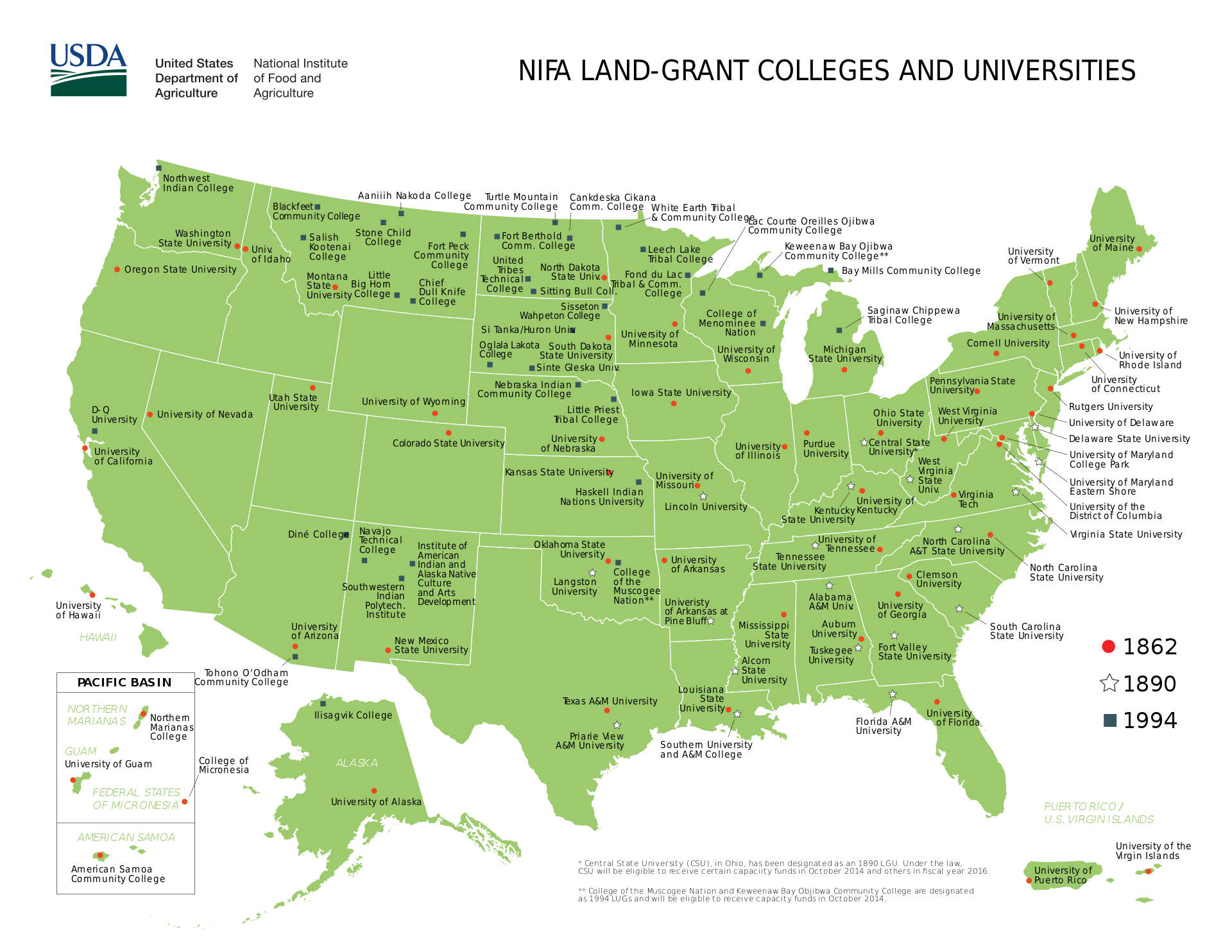
President Lincoln, a figure who deeply lamented his own lack of formal education, pushed to establish land grant universities across the growing nation. The 1862 Morrill Land Grant Act, in particular, financed colleges through Federal funding.These universities today are located in every state of the Union. 

America’s erosion of unity is tied directly to the erosion of public education. Our kids are increasingly sequestered into alternative settings; online, magnet, charter, home, and private schools. Missing is the opportunity to experience democracy at its most basic. Students grow familiar with each other, softening our own edges, renewing the energy and optimism of the nation’s promise. 

We are all taxpayers, but your local public school isn’t supposed to be Burger King, where every citizen can have it “their way.” We have a system that, regardless of money, race, ability, and social class, all have a seat at the table of democracy.

Gail Chumbley is a history instructor and author. Her two-part memoir, “River of January,” and “River of January: Figure Eight,” are available on Kindle.

gailchumbley@gmail.com

Masterpiece

Russia and the US didn’t have much contact in the 19th Century. A rumor had once circulated insisting presidential candidate, John Quincy Adams had procured American virgins for the Russian Czar when a young diplomat in Moscow. Not true, but there it is.

Still, the political tyranny of Russia has been widely understood in America as early as the 19th Century. When Abraham Lincoln condemned racism and intolerance stateside, he remarked that Russia’s oppression was, at least, less hypocritical than practiced in the United States. Lincoln’s Secretary of State, William Henry Seward later had his moment with the Czar when he negotiated the purchase of Alaska from Russia. Seward’s Ice Box, 1867 newspapers scoffed.

Some sixty years later, during World War One, revolutionaries deposed the Czar, and the last Romanov abdicated his throne. Bolsheviks arrested the former Czar, eventually shooting him, and the rest of the royal family in July, 1918. That same year President Wilson dispatched American forces to Archangel, to aid the White Russians to defeat Vladimir Lenin’s Bolsheviks, and stabilize democracy. The Whites failed, surrendering all of the vast Russian landmass into the hands of the Communists.

In the newly founded USSR, Premier Vladimir Lenin established the Comintern, the Communist International, publicly pronouncing the Soviet aim of exporting Communism worldwide, prompting in America our first domestic Red Scare.

In the following years, economic depression shrouded the globe, only dispelled by the horror of World War Two. Josef Stalin, Lenin’s cruel, and ruthless successor, struck a nonaggression pact with equally ruthless Adolf Hitler, dividing Poland as a buffer to buy time for both dictators. It comes as no surprise that neither trusted the other, and in 1941, Hitler launched Operation Barbarossa, invading the Soviet Union, bringing an abrupt, bloody end to that alliance.

After Pearl Harbor, the the Russians found themselves, by default, allied to Britain and the United States. Stalin trusted Washington about as much as he had Hitler, and in return Washington didn’t trust Stalin. Both Churchill and FDR remembered the Russians had cut and run during WWI, and the recent treaty with Hitler. Still, the two leaders went out of their way to appease their new Soviet ally.

In the last months of the European war, Stalin signaled his intentions to dominate by billeting the Red Army throughout Eastern Europe. Western allies acquiesced to Stalin’s aggression, and allowed Red forces to enter Berlin first, where the Communists didn’t leave until 1989.

A second Red Scare hit America much harder than the first. Stalin’s operatives managed to purloin atomic and hydrogen bomb intelligence, successfully delivering them to Soviet physicists to replicate. During the Kennedy Administration, the Berlin Wall sprouted up nearly overnight, and the entire Soviet Sphere of Influence made for an intense, dangerous Cold War. Conflict burned hot in America, the government attempting to flush out possible subversives, and ruining the lives of many innocent citizens. Julius and Ethel Rosenberg were executed for espionage, and Joe McCarthy accused the State Department and Army of harboring Communists. Soviet satellite Sputnik orbited the globe in 1957, the U2 spy plane crashed inside the Soviet Union in 1960, while at school we practiced ‘duck and cover’ drills. Proxy wars increased American foreign aid and deployed US forces to our allies across the free world, from Greece to Vietnam. 

Some of America’s greatest Cold Warriors included President Eisenhower, JFK, Richard Nixon, and Ronald Reagan. President Reagan, in particular, while speaking in Berlin, demanded the Soviets “tear down this wall.” These Chief Executives understood that any agreements with the Kremlin required stringent verification before any closure. America’s Soviet rivals were seasoned operatives, and were, in no way, friends of the west.

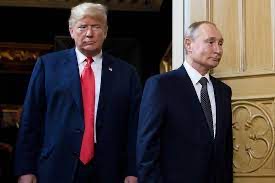
So where does this story leave us? Clearly the Kremlin has not changed. Spy networks, election hackers, and embedded operatives are perpetual threats. Maria Butina, the little Red darling of the NRA, and the GOP is an example of Russia’s recent relentless efforts. So, when an American President smiles and pays court to Vladimir Putin something serious is amiss.  

Update: At a Conway South Carolina campaign stop on February 10, 2024, Trump remarked concerning NATO, “”If we don’t pay and we’re attacked by Russia, will you protect us? No, I would not protect you. In fact, I would encourage them to do whatever the hell they want.”

The Russian government is patient, and that patience has appeared to pay off. Putin’s masterpiece? He elevated a Russian asset to the White House, and convinced GOP voters to look the other way. 

At this writing the entire Republican Party still remains steadfast to their Russian operative as he remains the presidential frontrunner for nomination.

Gail Chumbley is a history educator, and the author of the two-part memoir, “River of January,” and “River of January: Figure Eight,” Both available on Kindle. Chumbley has also penned three stage plays, “Clay,” “Wolf By The Ears, and “Peer Review.” In addition, Gail has co-written “Dancing on Air” a film script centered on a true 20th Century tale of Depression and War.

gailchumbley@gmail.com

The Arrogance of Now

Each year I prepared for two major wars, the finale if you will, of second semester US History. With a combined sense of dread and anticipation, I led the kids through the causes, and progression of the Civil War (with 10th graders), and WWII (with my Juniors). 

A lifetime of study in these eras, especially Antebellum America, tells an anxious story, as two passionate belief systems came to blows. Sophomores learned that our nation, a democracy born in such promise, plunged into the abyss over America’s original sin, slavery.

Meanwhile, for Juniors, the failures of the uneasy peace that followed WWI shaped a broader corrosion. The world after 1919 disintegrated into deadly factions, underscored by exaggerated entitlement, racial hate, and lust for revenge.

Much like America’s 19th Century plunge into the breach, the 20th Century also debased human life, sliding into scapegoating, unthinkable cruelty, and massacre. This record is hard to face, let alone study. 

Real monsters masqueraded as heads of state; Stalin, Hitler, Mussolini, and the War Lords of Japan. All, to varying degrees, convinced regular people that the “worth” of others was suspect, and targeting civilians an acceptable strategy. Yet, as awful as both conflicts were, it’s hard not to stare, and to hopefully recognize the signs when hate again emerges as a justification for horror.

The heresy of exceptionalism, normalizing violence on the vulnerable, and extremism, unleashed evil on the world. Andersonville Prison, Fort Pillow Massacre, the Rape of Nanking, Bataan, the Warsaw Ghetto, and death camps. More than one a student wondered aloud, how could that happen?

In increments.

These signs are clear again. Those same pre-conditions have resurfaced, right now, here in our communities, states, and nation. 

A white nationalist parade in Charlotte that kills one, where there were “good people on both sides.” Normalized daily murders of people of color, and incendiary rhetoric that ends with an attack on the US Capitol, killing five. All offenses excused and minimized by a once great political party, that has forsaken its moral underpinnings. 

The only difference between the Proud Boys and the Brown Shirts is the Brown Shirts didn’t wear Carhartt and flannel.

This endless playlist has looped over repeatedly, cursed by the “blind arrogance of now.” But dear reader, now is then, and deluded people do not change with time. The descent into barbarity is more predictable than exceptional. 

When reasonable folks are manipulated by the chorus of the Big Lie, the era doesn’t matter. Society inevitably falls into depravity.   

Gail Chumbley is a career history educator, and author of the two-part memoir “River of January,” and “River of January: Figure Eight.” Both titles on Kindle.

gailchumbley@gmail.com

Vision

Along Highway 55, northwest of McCall, Idaho, lies a stretch of highway winding through breathtaking mountains. The terrain tinges a powdery blue, set against traces of white from the previous winter, while the Payette River churns beside the roadway. This route isn’t fast, but the scenery more than compensates for the slow pace. 

After a steep descent from the mountain town, the highway straightens and a number of cabins and trailers are visible. Trump signs abound, (not unusual) along with flags emblazoned with Don’t Tread On Me or, the black, blue, and white version of the Stars and Stripes.

One particular double-wide sits near the highway’s edge, where bikes and snowmobiles sit forgotten in the tall grass. Passing that property always catches my eye. Cemented between the gravel shoulder and the dirt driveway stands a mailbox bearing the Confederate flag.

The irony of that dated symbol on a rural mailbox, is that the Confederate mail system had actually broken down by the end of the Civil War. Any Rebel correspondence between battle front and home became haphazard at best. Often soldiers, who were able, walked letters home for their comrades still fighting in the field.

At the same time, the Northern mail system witnessed an important innovation. The grim number of Union dead, posted publicly in northern town squares, grew too long for privacy and decency. Families had been forced by circumstance to endure their devastating losses in the company of an entire community, an unseemly breach of 19th Century etiquette. Congress responded to this situation by requiring mail delivery to be private, sent to each home.

Needless to say, that stenciled mailbox, standing along the highway struck me as absurdly ironic. Those in our state, who peddle in conspiracy and fan contempt for the Federal Government, would collect no mail, nor enjoy any other public-funded service.

An expansion bridge those residents must cross to reach Boise, was constructed by agencies of FDR’s New Deal back in the 1930’s. The forest fires that increasingly threaten that little enclave of homes, are fought through funds from the Department of the Interior. 

More national programs underscore the paradox of that small protest of painted aluminum. Flood control, WIC nutrition, Title 1 Education funds, Medicare and Medicaid, all making life better for those residing in that remote, road-side residence. 

The South lost the Civil War because intractable people and their leaders lacked both organization, unity, and vision. These “dissatisfied fellow countrymen” to use Lincoln’s phrase, understood only grievance and fury. For example, hard-pressed Jefferson Davis in Virginia could not persuade the Governor of Georgia to dispatch fresh reinforcements to stave off Robert E. Lee’s ultimate defeat. 

In the end, the politics of simmering outrage and division is unfocused and unproductive. State leaders who promote incendiary hogwash for short-term gain, leave followers pointlessly aggrieved, and easily manipulated, exactly where agenda-driven politicians want them. And this pressure-cooker style of propaganda and defiance quickly deteriorates into blind violence, destroying much of what Americans wish to preserve. (January 6, 2021 comes to mind.)

So express yourselves, my fellow Idahoans, let your freak flags fly. Though emotions and symbols do not violate federal law. However, if political leaders agitate an overthrow of the system, that is treason. And we all would all lose more amenities than you realize.

Including an empty mailbox.

Gail Chumbley is a history educator and author. Her works include “River of January” and “River of January: Figure Eight,” both available on Kindle. Chumbley has also written three historical plays, “Clay,” “Wolf By The Ears,” and “Peer Review.”

gailchumbley@ymail.com

No Fooling

Secretary of Defense Robert McNamara, 1964

“. . .the best test of truth is the power of the thought to get itself accepted in the competition of the market, and that truth is the only ground upon which their wishes safely can be carried out.”

Oliver Wendell Holmes.

Short run or long run, popular beliefs seem to ebb and flow, ever changing. One idea gains traction in one generation then is cast off with time and deeper understanding. The quality that sustains any belief must rest upon a moral high ground; an affirming principle.

Hear me out.

On April 12, 1861, the opening shots of Civil War thundered over Charleston Harbor. The South Carolina legislature had already voted to secede from the Union, and President Lincoln issued a clear statement in his first inaugural address. Assuring Southerners he had no intention of interfering in state matters, meaning slavery, but warned that any state uprising was his business, and that fateful step rested solely in Southern hands.

The President kept his word. 

Once shots were fired on Fort Sumter, the Union rapidly mobilized to put down the rebellion. 

Lincoln’s policy rang firm and clear. The Union would defend the Constitution against illegal aggression.

A century later President Lyndon Johnson attempted to orchestrate a similar scenario in Southeast Asia. In August of 1964, the American people were told North Vietnamese torpedo boats had fired upon two American destroyers in the Gulf of Tonkin. There was no real evidence of the incident, apart from heavy weather and the distracting fog of war. From that event the United States began feeding ground troops to hold the line against Communism. Officially dated from 1959 until 1975, the Vietnam War expended 58,000 young men, and countless Vietnamese nationals.

Today Vietnam is a Communist country. Johnson’s gung-ho attempt backfired because his policy had been built on a lie. 

Likewise, George W Bush squandered world-wide goodwill after the attack on 911. With America in mourning from the terrorist assault on our soil, this president redirected righteous ire to the nation of Iraq. Afghanistan, where the actual culprits were hiding out, came later. 

In the end, nothing of value came from that lie, except uncorking anarchy in Iraq.

This last January another massive presidential lie duped hundreds into thinking an election had been stolen. No proof of the deception existed, because nothing sneaky happened. To the contrary, abundant truth refuted the the claim. 

A self-absorbed swindler convinced hundreds of followers to act upon his interests. Citizens mobilized themselves and attacked our nation’s Capitol. No proof, no moral high ground, no affirmation of our democratic system, just puppets exploited by a very sick man.

Mr Lincoln understood the power of truth.

Kindred Spirit?

Sen Henry Clay portrait (left of door.)

The word from a Kentucky acquaintance is that Mitch McConnell fancies himself a Henry Clay scholar. That probably means little to most, but Senator Clay (1777-1852) nearly single-handedly held the US together, postponing Civil War for over 40 years.

With a name that epitomizes progress and compromise, it feels odd Mitch McConnell proclaims a kindred spirit in Senator Clay. This earlier Kentucky Senator bent over backwards to protect and promote the vitality of our young republic.

Clay rolled up his sleeves and cultivated coalitions among his fellow law makers to keep the nation from fracturing. He orchestrated the passage of the Missouri Compromise in 1820, the Compromise Tariff of 1833, and the Compromise of 1850; all crafted to maintain the Union. In fact, the Civil War erupted AFTER Clay’s death, as no other Senator possessed the talent and determination to keep Congress talking.

In the interest of full disclosure, yes, Henry Clay owned slaves. And yes, he believed in gradual emancipation, as slavery proved antithetical to economic progress. The Senator’s commitment to America drove his efforts, and Clay worked with all political factions, even those he opposed.

McConnell does nothing, and takes pride in doing nothing. Invoking Senator Clay, who did a lot, is poor cover for an old obstructing politician to presume. Clay did not dig in his heels to impede the opposition party’s efforts to govern.

Henry Clay served his country, McConnell serves himself.

Gail Chumbley is the author of the two-part memoir, “River of January,” and “River of January: Figure Eight,” and the stage play, “Clay.”

gailchumbley@gmail.com