Hi Gail,
Allie McKinney Content Project Operations Manager BiblioLabs 100 Calhoun Street, Suite 200 Charleston, SC 29401

Gail Chumbley is the author of River of January. Also available on Kindle

Hi Gail,
Allie McKinney Content Project Operations Manager BiblioLabs 100 Calhoun Street, Suite 200 Charleston, SC 29401

Gail Chumbley is the author of River of January. Also available on Kindle
A Christmas card from a weary GI to the students of Garfield School.
From France to Spokane Washington, 1944
Gail Chumbley is the author of River of January, a memoir. Available on Kindle.

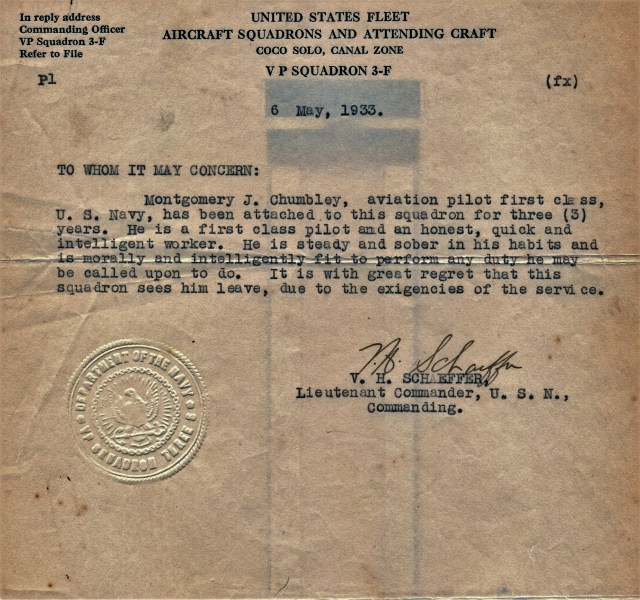
This letter, one of hundreds of documents used in River of January, marks Chum’s first discharge from the Navy in 1933. This letter speaks highly of the young man who five months later would prevail in the “Darkness Derby,” continental air race.
Gail Chumbley is the author of the memoir, River of January. Available on Amazon and Kindle.

Thursday, May 12th River of January meets the Boise Public Library.
Join Gail for a lively, multimedia look at the archive that became the memoir,
The program begins at 7pm in the third floor’s Marion Bingham Room.
“This history could be lost” had she not known the story. Janet Juroch~The Idaho World

You’re on vacation! Kick back and read River of January on Kindle!


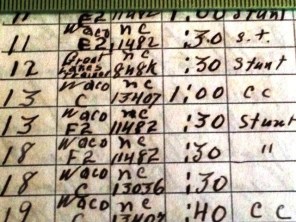
Chum’s logbook for September 13, 1933. Note the comment CC for cross country, then the added notation, stunt.
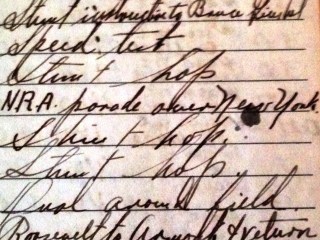
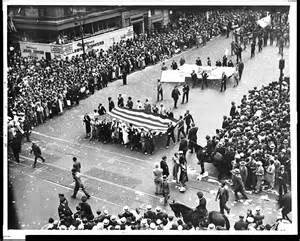
Piloting his Waco C, Chum performed above President Roosevelt’s spectacular National Recovery Act Parade in New York City–the flagship agency of the President’s New Deal.
(Click below for a street level view of the 1933 parade)

Read River of January, a memoir by Gail Chumbley. Also available on Kindle.

“We must entertain each other in brotherly affection. We must be willing to abridge ourselves of our superfluities, for the supply of others necessities. We must uphold a familiar commerce together in all meekness, gentleness, patience, and liberality. We must delight in each other; make others conditions our own; rejoice together, mourn together, labor and suffer together, always having before our eyes our commission and community in the work of the same body. So shall we keep the unity of the spirit in the bond of peace.”
Governor John Winthrop, Massachusetts Bay Colony 1630
Happy Thanksgiving.
Gail Chumbley is the author of River of January available on Kindle and at River of January
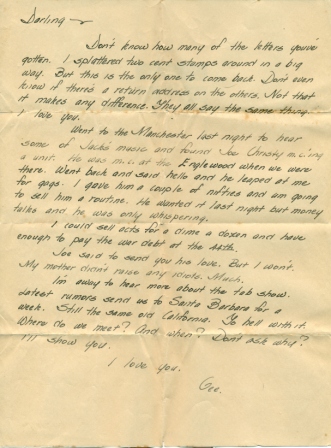
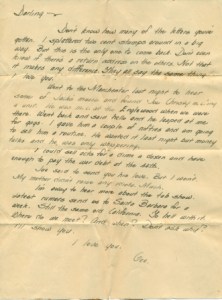
Peppered through the vast family archive used in the writing of River of January, exist three special sets of letters. Though largely filled with conventional chatter and sentimental superlatives, these documents also provide a fascinating peek into another time and place–of a nation suffering through economic free fall, and perched on the threshold of war.
The letters frequently mention the turbulent state of international affairs, from fascist Italy, to the Spanish Civil War; episodes that eventually and inevitably led to the Second World War. Even more ink is expended discussing the difficult economic situation stemming from the fallout of the Stock Market Crash–securing theater bookings, closing business contracts, and aviation training in a downsized Navy. Still, aside from the monumental, most of the content reported simple day to day life, shared with humor and concise observations. From their correspondence these men clearly promoted themselves, vibrantly rising from the faded and yellowing paper.
The first are a series of letters mailed from a Hollywood address, composed by comedy writer, Grant Garrett. (See above). The second collection, posted almost exclusively from Europe, came from the hand of a 28-year-old Belgian entrepreneur, Elie Gelaki. Serious and painfully formal, Elie’s letter reveal a methodical mind, clearly continental in manner with a determined nature. Finally, the last, and largest collection came from Mont Chumbley, Virginia farm boy turned aviator, who looms largest in the memoir. His writing reveals a practical, warm, and straightforward young man who expressed himself in plain language.
Despite definite differences in style, these three writers did share many qualities. All were deeply ambitious, establishing successful careers in the particularly difficult years of the Great Depression. They were clearly literate and educated, in a time when many (at least in America) did not regularly attend nor graduate from secondary school. These letters rise from the ordinary, written with distinctive originality, candor, and technical accuracy.
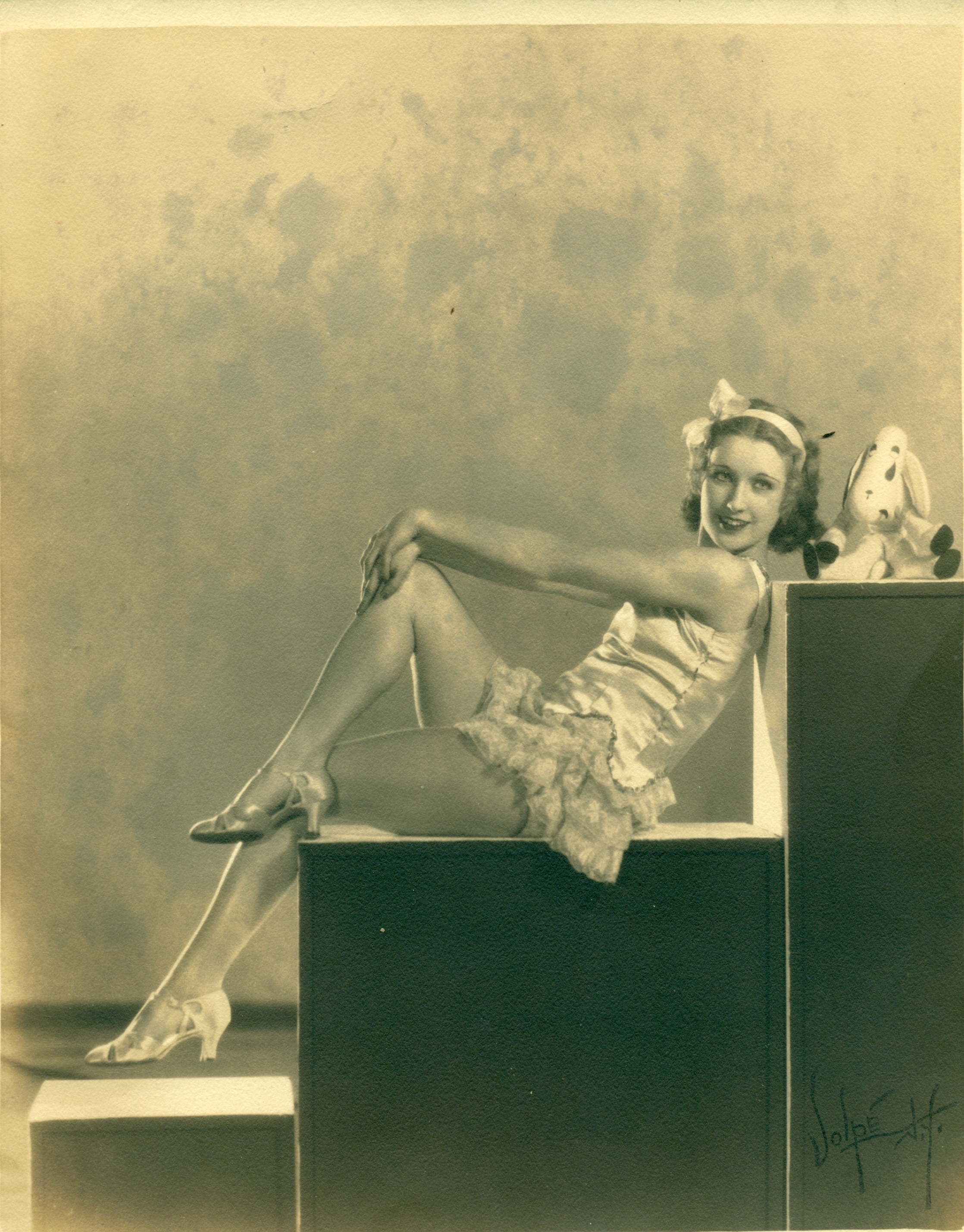
The link that tied this portion of the archive together was the beautiful New York dancer who received each letter, and preserved them all, Helen Thompson.
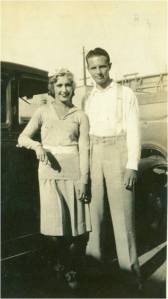
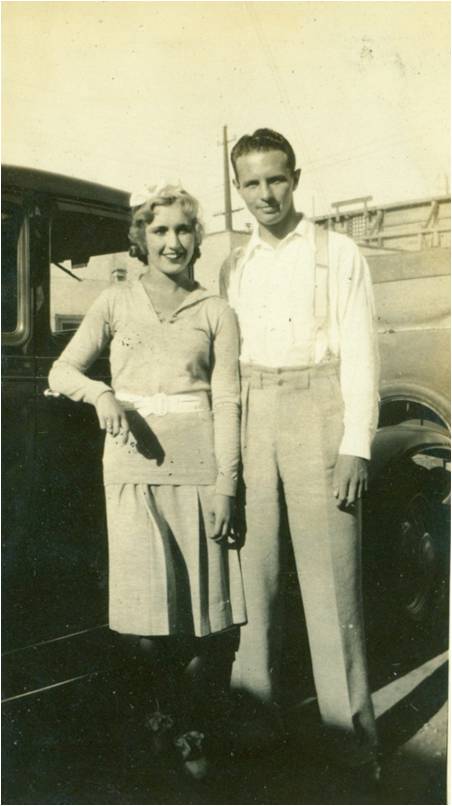
Grant Garrett became Helen’s first heartthrob. A native of Los Angeles, Garrett was a regular script contributor to radio shows and vaudeville acts. A talented singer and dancer in his own right, he interviewed Helen to partner with him for an upcoming tour across the country in 1931. After their junket ended, she returned to New York, and he returned to Hollywood. Now in love, the couple exchanged a series of clandestine letters, (her mother forbade Helen to see him again) with only Grant’s compositions still surviving today.
For a nineteen-year-old girl, Grant was hard to resist. Moody, smart, and funny . . . he was the essence of the tortured poet, a perfect combination of beauty, pain and passion. Of her suitors, Grant was the only one who shared her profession, and their time together forged a strong, and influential bond. Helen’s association with Grant provided something of a professional finishing school for her. From Grant she learned to laugh through tough times, and push through adversity because “the show must go on.”
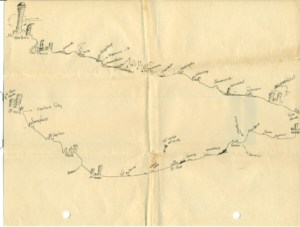
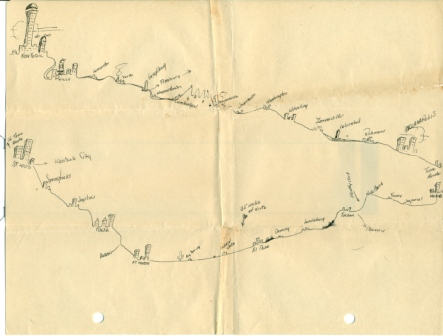
Grant’s whimsical map of a planned Garrett & Thompson reunion tour.
Next time, Belgian, Elie Gelaki.
Read more about Grant Garrett, Elie, and Mont Chumbley in River of January, available in hard copy and on Kindle.

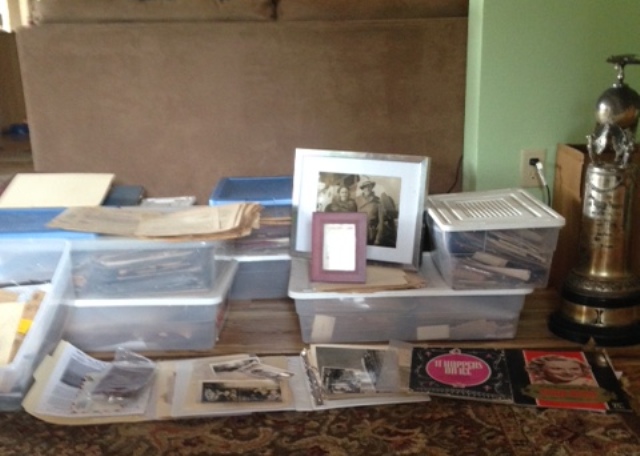
A portion of the archive behind River of January
It was the night of February 9, 1964, a Sunday, when my older brother and I had to make a crucial decision. We were both over stimulated, frantic, not one of our four feet remaining long on the floor. The house vibrated with our excitement and the weight of our impossible dilemma. For starters our birthday was the following day–the 10th, (though we’re not twins–he’s a year older). Still, that pre-birthday fuse had already ignited and by the 9th the two of us were banking off the walls.
The quandary we faced that Sunday night was whether to watch “Davy Crockett at the Alamo,” starring Fess Parker on Disney (The Alamo!), or the Beatles on Ed Sullivan. This was that first historic Beatles broadcast, live on American television, and we agonized between the two choices.
In 1964 there were no video players, no DVD players, no home computers, or dvr’s, in fact televisions were the size of Volkswagen’s and transmitted in glorious, flickering black and white. This difficult decision counted because there was no rewind, there were no do-overs. One gain meant one loss.
We liked Davy Crockett an awful lot. We had watched all the previous episodes, and Davy biting the dust in San Antonio was the much anticipated grand finale. But, oh, the Beatles! And the adoration was real, palpable, an injection of adrenaline without the needle. We worshiped at the warmth of our bedroom radios, perpetually tuned in to our local AM radio station. Reverent silence accompanied replays of “She Loves You,” and “I Want To Hold Your Hand.”
What could two grade schoolers, sick with anticipation do with such a weighty conundrum? It was 1964 and we had to choose.
Before the proliferation of electronic media, this little girl of the 1960’s viewed momentous events as they beamed across the screen. MLK’s elocution at the Lincoln Memorial, President Kennedy’s inaugural address, his assassination, and the escalating war in Southeast Asia–all experienced as reported at that moment.
In an earlier era, when Chum flew in his air race, and Helen danced in Rio at the Copacabana, there were no camcorders or Iphones. His signature landing and Helen’s near disastrous opening night grew silent as the applause subsided, then faded in time. Much like my brother and myself in 1964, they lived life forward, one opportunity at a time.
Silent photos and written records are all that remain verifying Chum’s aerial dash through darkened skies, and Helen’s energetic dance routines. They lived life forward, embracing events as they unfolded–experienced once, then gone. I would love to see footage of Chum’s Waco airplane lifting off at dusk, or watch Helen spring across the stage. But those wishes are pipe dreams, never to happen. No vintage film or recording, (except one I found by accident) exist in the historic record. The best I can do for myself, and for readers, is try to recreate the magic of the first time around in the pages of my River of January.
Oh, by the way, I’ve never seen “Davy Crockett at the Alamo.”
Gail Chumbley is the author of the memoir, River of January. Also available on Kindle.