The New Frontier

MomDad1[1]

These are my folks. Today is their 62nd anniversary, and unlike my last anniversary post, mom and dad are still alive and kicking, arguing about the same trivial nonsense in the same house where I grew up.

Example-Dad:We drove to Minnesota in ’68 in that black Chevy. It’s just before we bought the white one.

                  Mom: (condescendingly) Dave, you had sold that truck already, we drove the white one.

And so it still continues, even into their eighties. It’s that kind of banter that seems to keep them young. And it’s funny, but that is how they endure in my memory, as young parents, with small children. Though I was one of the brood of four, the two of them remain youthful, and optimistic in my mind’s eye, raising their family in the heady years of JFK’s New Frontier.

After their almost teenage marriage, Dad and Mom bought a modest house on a modest street. My dad worked shifts at Kaiser Aluminum, sweating over pots of white-hot molten ore, spewing the kind of heat that would have made Andrew Carnegie happy. If my father could snag a “double,” stay on for an extra shift to earn more cash, he would jump at the opportunity. Dad wasn’t really a workaholic, because he was foremost a family man, and played as hard as he labored. Still, at the same time he sought financial security, and knew ‘all blessings flowed’ from contract negotiations, remaining a proud member of the Steel Workers Union.

In contrast my mother preferred staying home. She still does. Her home has been, and always will be her sanctuary. She is an interesting individual. As a teacher I can state for certain, if there had been aptitude testing for school children in the 1930’s, my mother would have qualified for a gifted and talented program. No joke–if we analyzed the hours the woman has spent reading, her eyes have scanned print more than looking at my dad. Mom’s face is available in both hard cover and paperback, (no e-book format yet). I think that if she couldn’t read, my mother would wither up and blow away.

Well, after some difficulties in those early years, my older brother arrived on February 10, 1954. And they named him Dale for my mother’s uncle. The next year, I showed up on February 10, 1955. It seemed to make some sort of cutesy sense that I should be called Gail. The timing of our precisely dated births convinced my mother, and maybe even my dad, that all God’s children naturally arrived on February 10th. (You’d think birthday parties would have been easier to plan, but my mom says no).

The path they have tread through the years was not exactly paved with gold. My dad’s employer, Kaiser Aluminum semi-regularly initiated lay offs as the metals market waned. But, was he daunted? Not by a long shot–he had a trick or two up his plaid flannel sleeve. My father, at heart, was not a factory drone, he was an outdoors man, a tree expert to be precise, equipped with winches, come-alongs, Swede saws, augurs, and thermoses of bad coffee. Dad just started his own business, a tree removal and yard clean-up enterprise. And though he actually made more money than at the plant, his practical, family-man side, the side that considered his wife and children, sent him back for the medical insurance and a retirement pension.

My dad always knew how smart my mother was, and instead of feeling intimidated, he was proud. Even today the woman can clear the board on “Jeopardy,” faster than Alex Trebeck with his cheat sheet. In the early years of the 1960’s, he convinced her to challenged the Postal Civil Service Exam, which she passed in spades. Instead of resenting Mom going to work, he encouraged her natural smarts and her remarkable abilities as a positive thing.

Now my mom wasn’t as convinced. Like I said before, she liked being a haus frau. However, her talents shined from the beginning, drawing attention from the postal hierarchy, who saw her as management material. So, after the birth of my youngest brother in 1962, mom entered the workplace and blossomed, eventually becoming a supervisor and working, for the most part with air mail at the airport. She memorized every air route, every airport designation, every schedule, with few mistakes. Her memory skills are almost scary. (I don’t know why he still bothers to argue with her).

So today my young, Kennedy-era parents are celebrating their 62ned wedding anniversary. They will eat dinner at 4:00, and chat about some earlier vacation . . . perhaps the Mesa Verde, the Custer Battlefield, or the semi annual holy pilgrimage to Minnesota, the land of his people. Maybe they’ll reminisce about the time I dropped her diamond watch into the toilet, or the chronic illness that plagued my younger brother through his childhood. Maybe they’ll laugh about the sauna they built, proud to have imported the authentic stove all the way from Sweden. After waiting weeks for the package to arrive it finally came by post. Opening the box they read it was made in Bellevue, Washington, five hours away by interstate.

I think their marriage just might be a good one.

Gail Chumbley is the author of the memoir River of January.

The Flemish Bend

HMPlanePic0001

This couple married 78 years ago today. On Friday the 13th. In New York City. Defying traditional convention. Archaic superstitions were of no interest to this modern couple, that kind of thinking belonged to the past.

Mont “Chum” Chumbley, and his bride, Helen Thompson Chumbley only looked forward, challenging and prevailing over old horse and buggy thinking. Theirs was a new era, a dynamic era, one of flight and of film. And this powerful force of optimism rendered one life time together too brief. So now their spirits carry on in my head, and in the pages of my book, River of January.

To say Helen and Chum were happy together would be shallow pandering–and an insult to the complexity of their distinctive temperaments. Still, their story has power, enduring power, pressing me on, returning time after time to their papers, searching for signposts of truth and direction.

A Flemish Bend, the title of this piece, ironically does have its roots in the distant past. The Bend is a sailors knot, also known as a square or figure eight knot. The same shape in mathematics is the symbol for infinity. The love Helen and Chum shared, as imperfect as it seemed at times, was powerful, and proved to be endless.

I too have been snared in those powerful cords, and for better or worse speak for their remarkable lives, lives too dynamic to have died with their passing.

And I’m grateful. It’s an honor. Happy anniversary Helen and Chum.

Order River of January, and enjoy the journey.

Letters From The London Palladium, 1934

HPalladium0001

The following is an excerpt from River of January, Crossing The Atlantic

Dear Dorothy,
I am sorry to write to you in a crisis, but I have dreadful news. Please keep what I’m about to tell you a secret—not a word to my Mother or my sister, please. We’ve been fired! I know—it’s horrible. I don’t know what we’ll do. Jans says he can fix it, but I’m not so sure. I may have to come home early. I am writing to you because I can’t say a thing to my Mother—you know how she gets. But I may need a little money to get home. I do promise to pay you back when I get on my feet.
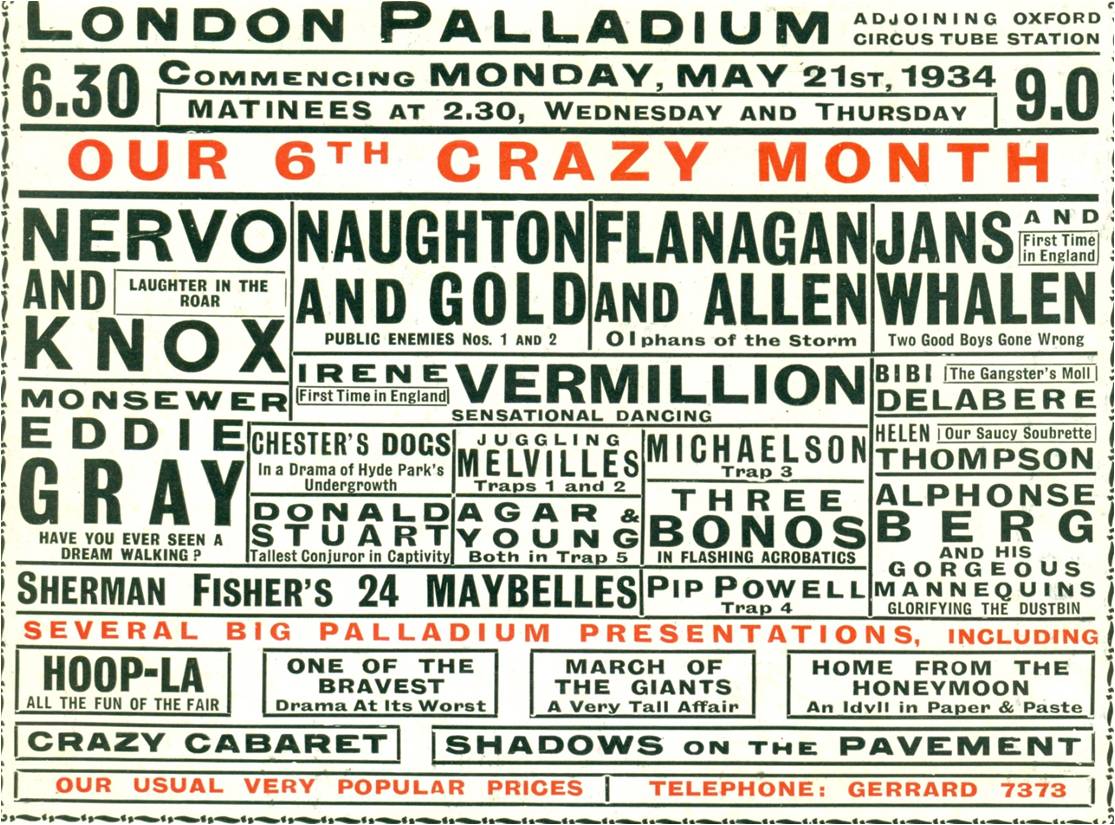
We made our first trip to the Palladium, they lettered my name on the billboard “Helen Thompson, Our Saucy Soubrette” whatever that means. I thought it was cute. Anyhow, we entered the theatre through the back entrance and met a lot of the cast. Such nice people, too. They told us that “The Crazy Show,” that’s what they call it, has been coming back to the Palladium for years. This group of comedians is known, together, as the “Crazy Gang” and made us feel very welcome. They explained that the same crowds return each season to see their old friends in the show.
We felt pretty excited opening night when Jans and Whalen took the stage after the all-cast extravaganza and began their routine. Harry Jans told the one about the soldier who had survived mustard gas and pepper spray becoming a seasoned veteran. No on laughed. The audience hated them. No one booed, and they clapped a little when Jans played and sang, “Miss Porkington Would Like Creampuffs.” Remember that silly song? Other than that polite response, not a snicker sounded in the whole house.
Then I went on stage and performed a widow comedy monologue; black gown, the whole bit, and I bombed too. With all those spotlights trained on me, if it hadn’t been for the coughing and murmuring I would have thought the theater empty. It was horrible— nauseating— I couldn’t believe how miserably we failed. WE LAID AN EGG!
After the show some of the regulars took us out for drinks. I wanted to run back to the hotel and hide. They led us to a nice pub, but I felt so shook up I could hardly light my cigarette. They explained that English audiences often don’t understand American humor. In particular, my widow act seemed more offensive than funny.
“Too many widows after the Great War,” one comedian named Eddie Gray told me. “Not funny to families with loved ones who died in the trenches.”
That never crossed my mind, Dot. It’s been almost 15 years, for goodness’ sake. So we were ready to make the changes the boys in the cast suggested. No prohibition jokes, no dead jokes, more songs, and lighter skits. When we arrived for rehearsal the next morning letters were pinned to the dressing room doors that we were to clean our things out—that the management would no longer honor our contract. By the way, the Times critics gave us a lambasting, too. I got to feel mortified all over again.
So, dear Dorothy, that is how the situation stands. Whalen won’t come out of his room. Jans is ready to murder the guy in the front office, and I may drag out my trunk and mail myself home. Just let me know if you can cover my passage. But, don’t do anything yet.
Thanks oodles and oodles and mum’s the word.
Helen

My Dear Friend Dorothy,
Salvation! We have been kept on the bill, at least for a couple of small bits. So thanks for agreeing to help me home, but Jans did take care of things. I swear, Dot, Harry Jans could coax the English rain back into the gray English clouds.
It all happened so quickly, but this is how events turned. We were shocked, and then worried, as I’m sure you could tell. Then Jans remembered that our contract explicitly stated we were to make $1000 dollars a week regardless of circumstances. He marched into the manager’s office and wouldn’t leave until he received a check for $4000 dollars, or our reinstatement to the show. The manager balked and then Jans reiterated that the contract was clear. My partner gets a little fierce when he’s riled and I think he scared the fellow. The manager said he’d discuss it with his investors.
But that’s not the best part. The whole cast refused to go on until we were back on the billing! Their leader, Teddy Knox, told the manager that one night wasn’t fair, and that until we went on again, they would wait. All of them! Bless their hearts! Guess they are crazy. Later, I caught up with Teddy Knox in the green room and told him how grateful I was. I guess I just hugged him and cried.
So all is well, and Bertha still calm. I will tell her, but will word my letter so that she doesn’t blow her stack. Thanks again, Dot. You are such a swell friend!
Helen
Dear Bert,
We have had quite a hectic week. We opened on Thursday night and were fired Friday morning. Can you believe that? But don’t panic, we’re back on the bill now. It was all a misunderstanding; apparently people in England and people in the States laugh at different things, so we changed our act a bit. Should be all right now. Jans and Whalen are keeping a close eye on me so don’t worry. I will send a money order in my next letter and hopefully more news. Don’t worry Mother. Things here are fine. Love to Eileen.
Love,
Wellen
Helen,
I don’t understand how you could take firing lightly. If there are any further problems you catch the first ship home. You tell Harry Jans that I mean it. Now take care, and make sure you keep me informed of any other issues.
Mother

Dear Mother,
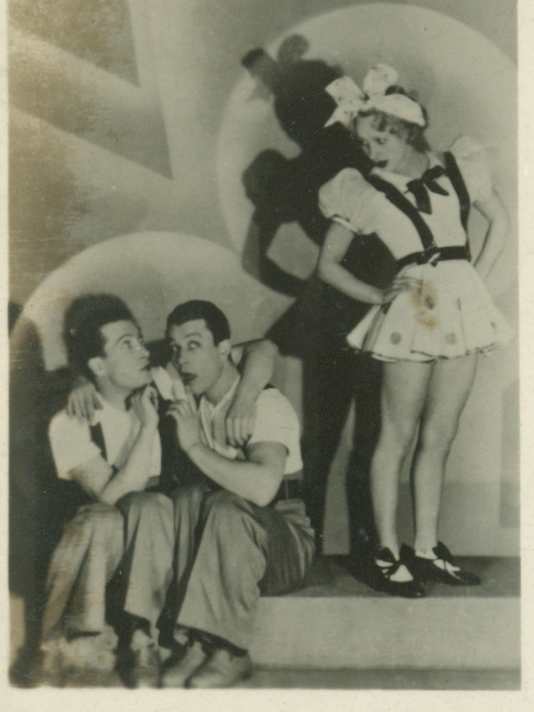
I hope that you aren’t too cross with me. We won’t be gone long, and I will be home very soon. The three of us are back in the lineup. Jans and Whalen play toreadors in the opening number, and I am in a black and white feather costume complete with white boots. The outfits are very snazzy. We sing the show’s theme song, “Come Round London with Me,” then “God Save the King.” We had to rehearse them both, and the audience stands up and sings along when “God Save the King” begins. Can you believe it?
Jans and I finally are doing our own skit. I wear my tap shoes, a short flared skirt with suspenders and a huge pink bow in my hair. On cue I timidly step to center stage (everyone can hear each tap). Under the spotlight Jans, says “Did you come out to sing a song for the nice people?”
I point to my throat and croak out “l-a-r-y-n-g-i-t-i-s.”
Jans answers, “Oh, that’s a shame we all were looking forward to your number.”
I lean over and whisper into Jans’ ear. Jans then says loudly “You want to whisper the words to me, and I sing the song? Yes, yes, a grand idea! I would love to!” He announces “This song is called “Where on Earth could all the Fairies Be?”
I whisper in his ear, he sings a line, next whisper, he sings, and then Jans finishes, arms opened wide belting the out the refrain, “Where on Earth could all the Fairies Be?”
A spotlight quickly hits Jimmy Naughton, (he’s a Brit) planted up in the balcony who calls out in an effeminate voice,
“Oh, my, where aren’t they?” The lights cut to black and the crowd roars with laughter. Cute, huh?
Did you receive the money I mailed?
It won’t be long now,
Little Sister

Picture1

River of January Book 2 Excerpt

Amelia Earhart Plane Fragment Identified : DNews

amelia0001

Bertha eyed the large box with a wary, but inquisitive gaze. “We got this for you. Merry Christmas Mother,” we both hope you’ll like it,” Helen beamed with pride. “Chum?”
Bertha narrowed her eyes, watching as her son-in-law sliced down a cardboard corner with his pocket knife. Revealed inside, a beautiful new Emerson radio, curved corners, blonde wood, featuring inset vertical columns. Mother’s eyes now grew wide as she took in the gift—this radio was the top of the line, as Bertha well knew.
“Oh my heavens,” she exclaimed. “You two must have spent a pretty penny on this!”
Helen grinned happily, her mother seemed honestly pleased, while Chum, hurried to plug the device in, rapidly turning the dial looking for a Christmas broadcast.
Kneeling at a small end table, he twisted the tuner knob—the frequency tone whined and whistled from fuzzy to piercing. Finally, a clear authoritative voice rose, articulating in a clipped urgent cadence. Nineteen hundred and thirty seven has been an eventful year in American news. It was last spring, in May that the Hindenburg, a German dirigible tragically exploded over New Jersey. Celebrated aviatrix Amelia Earhart was lost in July, along with navigator, Fred Noonan in the uncharted expanses of the South Pacific . . .

“No Christmas music, honey?” Helen asked over the broadcaster’s voice.
“That’s really not a surprise,” Chum mumbled, lost in thought.
Bertha quipped, “No Christmas music on Christmas is a surprise?”
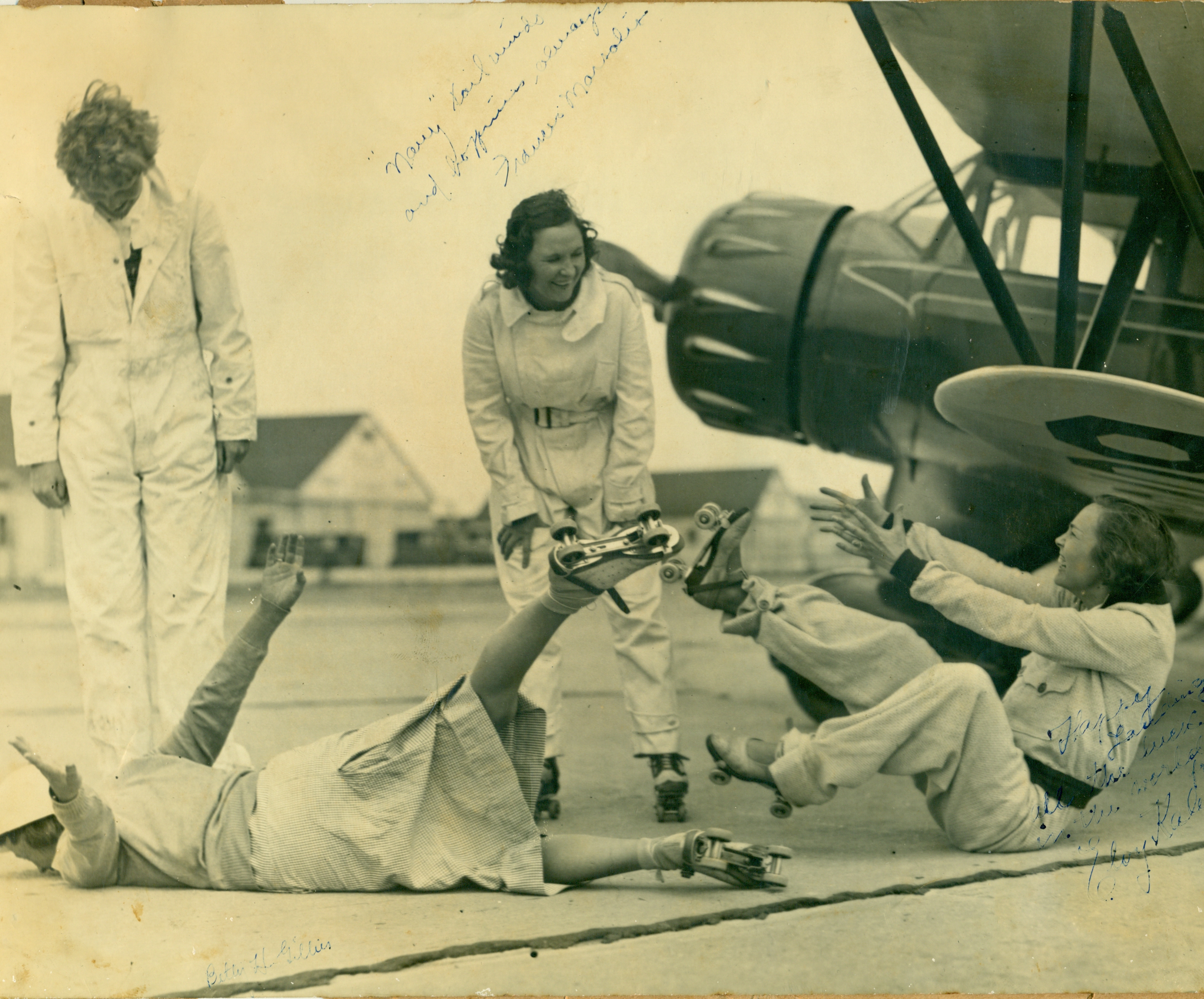
“No. No. Sorry. Amelia Earhart was someone I once knew at the field.
Impressed for once, Helen’s mother pushed for more details. “You knew Amelia Earhart?”
“Oh. Well, yeah I did. She was a friend of a friend.” Suddenly self conscious with all three women staring at him, Chum struggled for words. “You see, Earhart had no training in navigation at all. She could fly just fine, but had to hire navigators to get anywhere. The, eh, other girls—girl-pilots talked about it. They uh, believed it was that husband of hers, George Putnam who inflated her abilities . . . spent money to build up her reputation. Amelia got in over her head on that flight, and the poor kid was killed as a result.
“How do you know this?” This time Eileen piped up, clearly fascinated by his tale.
“Like I said, that Roosevelt Field crew of gals could be a clucky bunch. The other women talked a lot about how shamelessly that husband promoted her career.”
“I’d never heard that before,” Bertha exclaimed, appraising her son-in-law in a new light.
“Me either,” Helen added, not sure she was pleased with his “the other girls at the field” story or not.

Buy River of January Today

Another New York Story

riolist

So caught up in the process of writing River of January I didn’t see much beyond my keyboard and monitor. Focusing intensely on grammar, style, punctuation, research, and every other detail, I failed to see a beautiful New York story take shape before my eyes.

A New York story. The New York of Vaudeville, Tin Pan Alley, Jimmy Walker, and silent films. The New York of Roosevelt Field–Lindbergh lifting off eastward toward Paris, achieving legendary status, and where Amelia Earhart later trundled down that same runway only to meet her mysterious end in the South Pacific.

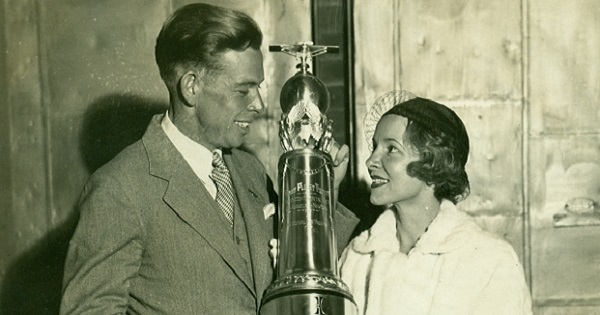
Mont Chumbley, one of two central figures in River worked at that same storied airfield, braking down runway #1, arriving first in the 1933 Darkness Derby. He had braved inky night skies in his quest, worsened by wind gusts and growing cloud cover.  Pushing through from Los Angeles to New York, Chum prevailed, victorious, He received honors for his achievement at the Capitol Theater, 1645 Broadway, when Actress Helen Hayes presented him with his cash winnings, and an over sized silver trophy. Becoming something of a local celebrity himself, many from the city sought him out for passenger transport or flying lessons. On one instruction flight,Chum found actress Katharine Hepburn in the cabin of his plane, joining her boyfriend, Broadway producer, Leland Hayward.

 Helen’s New York consisted of auditions and productions from the Boulevard Theater, to the Roxy, performing for Billy Rose, finally dancing in “The Harry Carroll Revue.” As if a scene from an old movie, she set sail in April, 1932 on the SS Ille de France. This transatlantic voyage carried the girl from New York Harbor for an extended tour across Europe. Two years later, in 1936 she stepped up the passage way of The American Legion, a steamer on the Munson Line destined for Rio de Janeiro. Joining throngs on the top deck Helen gleefully waved goodbye to her family, smiling back from the Brooklyn docks. And speaking of family, Helen’s home address, 325 West 45th Street, was the third floor of the Whitby Hotel smack-dab in the middle of the Theater District. And though refreshed and remodeled today, that apartment building still stands–a direct link to an earlier era, an earlier New York.

Helen and Chum both lived in Manhattan at the same time. But he had his New York story to fulfill, and so did his future bride. That they crossed paths on the sidewalks, subways, theaters, restaurants, and trains before exchanging their first hello is certain. But as proper New Yorkers the two finally met elsewhere, at the Club Copacabana in Rio, a hemisphere away. There these two New Yorkers finally locked eyes, and fell in love.

Eventually, when circumstances allowed, Helen and Chum returned home to exchanged vows at the Church of the Transfiguration, on East 29th and 5th Avenue. This location is better known to New Yorkers as The Little Church Around the Corner.

I’ve finally come to recognize that River of January has become more than the narrative of two lives in the early days of aviation and show business. This story takes place in the magical metropolis of New York–where Helen and Chum found magic of their own.


I Couldn’t Help Myself

c&hrio0001

River of January

This wasn’t my idea. The completion of River of January has been as much a surprise to me as to anyone. I never presumed to be any kind of writer, ever. In fact, I spent my entire career as an American History teacher who told stories, not wrote them. But when River of January came into my life, the story took root, soon dogging my every step. Forget the fact that I didn’t know how to write, or understand the first thing about publishing–River of January made it clear that those deficiencies were my problem.

This project flowed into motion after meeting and coming to admire my story’s central figure. Mont Chumbley, one of two major characters in the River of January, was a real flesh-and-blood man full of irresistible charm. He was also my father-in-law, and as such generously shared hours of gripping storytelling, regaling tales of his fascinating life. His personal anecdotes exquisitely depicted the golden age of aviation, leaving me humbled and honored—in awe of his singular and astonishing career. Delightful episodes included flyers, Amelia Earhart and Howard Hughes, among many other colorful characters that populated Roosevelt Field. Chum became my own Peter Pan, guiding me on a magical journey to an America full of promise and opportunity.

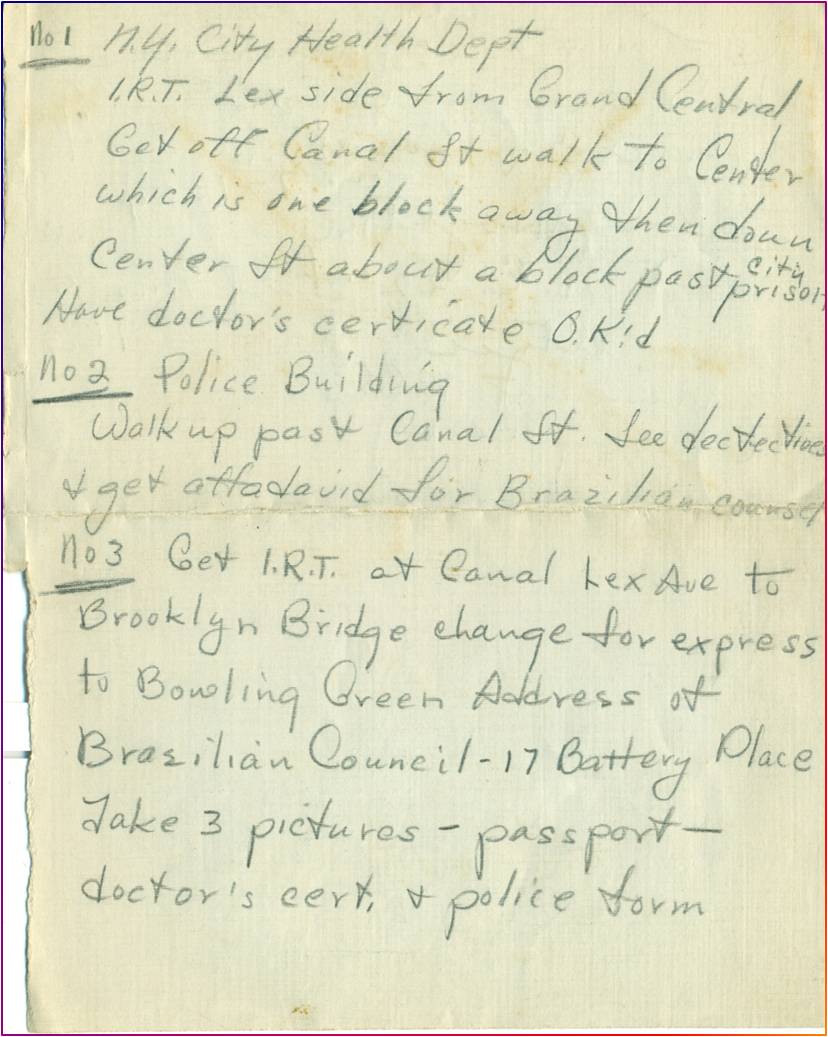
Next a treasure trove of Chumbley memorabilia surfaced that verified his stories. This archive touched not only his life, but that of his wife, Helen Thompson Chumbley. An accomplished dancer, Helen preserved every memento related to her equally remarkable career. Steamship tags, playbills, performance reviews, baggage stickers, and photos of an eager, happy girl costumed in an array of attire for stage productions or film sets. Helen too, aimed to preserve her accomplishments saving pictures, lists of business contacts, and letters home to her mother–all depicting a clear narrative of Helen’s own artistic path. Her passport, for example tells of extended junkets to Europe in 1932, London, 1934, and Brazil in 1936. All journeys illustrated with glossies, more letters home, and snapshots of a young dancer having the time of her life.

Their lives unfolded before me only to shift and refocus with each new piece of evidence. This composition grew so immense that only one book became impossible. Inevitably I had to find a fitting close, and then resume the tale in a second volume. Chum’s early years, for example, required a deeper examination of the aviation industry; complete with the serious obstacles he met attaining his wings. It also became crucial to explore the larger story of America, understanding the national barriers Chum overcame to see through his goals.

The same hurdles held true for Helen. Readers had to be reminded that the decades presented in River of January were years of careless economic boom followed by a devastating bust, leaving her path that much more daunting. Moreover, her mother required financial support in an era with no Social Security or Medicare. The burden fell completely on young Helen and her sister. With talent and fortitude, Helen’s grit loomed large in this story, tinged by a real fear of devastating consequences.

This author had formidable obstacles to overcome, too. The most profound drawback, the greatest obstruction–I had absolutely no idea how to write– not in any vibrant or intimate style. If the truth be told, creating River of January felt much like building a car while driving it down the street. River’s first drafts were so awkward and flat, that my first editor fired me as a lost cause. Mortified, I wanted to crawl under my bed, and never write again. And worse, I couldn’t disagree with this editor because I honestly had no idea what I was doing. Still, the book didn’t care. River wasn’t interested in my shortcomings, and the story refused to go away. Despite feeling an amateur fool, I bravely soldiered on.

Every family has a story waiting to be unveiled. In this instance the flow of narrative arrived from three directions. First, and most significantly, was my marriage to Chad Chumbley, the eldest son of Mont and Helen Chumbley. It was he who initially conveyed there was a tale to tell. With what little Chad knew of his father’s career and his mother’s accomplishments, my husband was certain of an epic waiting to appear.

The abundance of primary documents sealed my fate as my in-laws biographer. And again, though I didn’t recognize the forces at work, sifting through each item from that vast collection boosted the project forward. And this couple saved EVERYTHING! Air show tickets, menus from European eateries, pressed flowers, telegrams, his logbook!

By 2005 we coaxed Chum to come west and take up residence in an assisted living facility. He soon became the most popular, most charming tenant in the place. And it was in his room, 18 months later that we sadly attended his death. A mighty Virginia pine had fallen, and the era of his extraordinary life died with him. For me, that could not stand—Chum’s story deserved to be remembered, and no one else was going to see that job through. Nor could Helen be forgotten. Her qualities of greatness cast as large a shadow as her husband’s. I had no choice but to ignore my doubts and get to work piecing together their lives–from youth to marriage.

Not all members of the family were keen with my project. And I am sensitive to their concerns. But, Chum and Helen lead such astonishing lives, and achieved such great accomplishments, that I decided to forge ahead and make River of January a reality.

Oh, That’s Today!

helenhayes600w

There were times when I’d be blathering along on some historical subject, and in a sudden epiphany realize, “and it happened today!” One time, displaying a before-and-after photo of the USS Maine in a lecture on the Spanish-American War, it dawned on me that the date was February 15, 1898–that very day. “Oh, that’s today!” sprang from my mouth. Various reactions crossed the many faces of my students. Ranging from, “she really needs a life,” to “that might be mildly interesting, but it’s not.” My kids seemed to exude more sympathy than interest in my sudden, self-induced enthusiasm. “Geez, don’t all hop up all at once,” was my usual sardonic response. Then they would laugh.

December 7th got a nod, September 17th, Constitution Day, and my personal favorite, “The Seventh of March Speech.” That one you ought to look up. Finest speech made in the Senate to my way of thinking. I made a practice of asking a baritone-voiced student to read Daniel Webster’s words if March 7th fell on a school day. There’s May 8th, V-E Day, September 11th, March 5th, Boston Massacre–all acknowledged and more to boot.

Today I presented a book talk on River of January for a local service club. I shared the story of Chum’s epic, 1933 air race, (that he won) soaring through the night sky from Los Angeles to New York. Chattering happily I flipped to the slide pictured above. This is the actress Helen Hayes awarding Chum his first place trophy at the Capitol Theater on October 4, 1933. The Capitol was premiering Miss Hayes’ new film, Night Flight, and the race was somehow wound up with the movie. Well, that was 81 years ago today. So of course, I grew just as ridiculously excited as I used to in my history classes. “Oh. My. Gosh. That’s today!” And I will commend this group of adults for not judging me as harshly as my eye-rolling students. These fine people laughed–as happy as I felt with the coincidence.

So there it is. Chum won the “Darkness Derby” on October 3, 1933 and Miss Hayes handed over cash and a trophy the following evening in New York.

It was a Wednesday night, October 4th, that Chum’s life dramatically changed exiting that theater. He now had award money, and a trophy that proved his merit as an up-and-coming pilot holding his own in the Golden Era of Aviation.

1924


images


The runaway stole from the house while the father slept. He had a long walk to the train station, praying the old man wouldn’t bother to track him. Reaching town about daylight, Mont pulled open a peeling wood door, while his eyes scanned the depot. An empty waiting room greeted him, save one boy sitting low on a far bench. Mont stared closer and recognized him as a friend from school.
“Marshall” he gasped, smiling as he approached his friend. The schoolmate startled at the sound of his name, and Mont understood.
“Sorry Marsh, I’m worried about being dragged back too.”
“Hey, Mont. Where you off to?” he asked warily.
“Going to sea, Marsh, going east” was his response.
Marshall replied, “I’m going the other way, headed west, get hired by a coal company in Jenkinjones, West Virginia. I’m gonna make some real money.”
Sitting down next to his pal, Mont suddenly began to rethink his own plans. “West, Marsh?” The lure of the sea tugged hard, but having a friend along, not going it alone felt more comforting. “Jenkinjones, huh? Never heard of the place.” The two boys sat silently, cautiously glancing at the station door each time it opened. “Think they might hire me?” Mont finally asked. His friend smiled in response. And the two boys bought tickets for a west bound train headed toward the distant mountains. Destination: the Pocahontas Fuel Company.
Stepping onto the rail platform Mont and his companion silently and soberly blinked at the foreign landscape. The sky appeared decidedly grey, dead. All the erstwhile green foliage sealed in powdery black. Deep gouging and scarring disrupted the terrain. Marshall hailed a defeated looking passerby asking for directions to the coal company office. Without a word in reply the dilapidated man simply gestured up a hill to a large grey wooden building crisscrossed with weathered wooden stairs.
“Sure they’ll take us on?” Mont, with a sudden case of nerves wondered.
“I, I think so. Back home some older fellas said these companies want kids. We can work in spaces grown men can’t reach,” his high voice trembled as well, exposing his fear.

Mont promptly found that the reports were all too true. Not only were boys’ ideal workers, they proved much easier to bully and underpay. On his first day deep in a tunnel of darkness Mont faced his first test.

Standing on a narrow crevice, a veteran miner worked busting up coke with his pick ax. “Webster, hey, over here!” hollered the foreman from the inky dark. As the miner twisted around, the butt of the handle struck Mont hard behind his left temple. The boy’s head exploded in pain as Webster raged profanities in his throbbing ear. Kneeling in the dark, huffing sooty air the boy questioned why he had come to this place. His ear bled for days after.

Mont’s body ached, his fingers bled, painfully stiff and blistered–his knuckles grated raw. Black caked around each nostril, his facial pores embedded with coal dust. Digging around his small suitcase late one night, Mont caught his reflection in the bag’s tiny mirror. “Oh!” he gasped at his reflection, “I look like the rest of them!” In the morning, frightened and distraught, the boy hunted down his only friend. “I don’t like this place. Marsh, they look right through us. The company doesn’t care who comes out or vanishes in those shafts.” Tears sprouted suddenly in his friend’s eyes, Marshall’s wordless answer.

The company used every means to undermine demanding, tiresome union labor. The boy couldn’t help but hear men in the tunnels grumble about the strong arm tactics management used. Pocahontas hired informers, framed labor leaders and evaded safety improvements. Another strategy was importing cheap immigrant workers. The desperate from Europe toiled for less and accepted the dangers without complaint.

“Damn scabs” muttered a burly old timer. “Bosses trying to undo us . . . bring in Dagos, Pollock’s and other riff raff getting our jobs.” “They’re dumb, too” groused another grimy worker. “You tell ‘em something and they just stare.” The boy listened, sympathizing with the outrage, despite how much he hated the coal mines.

Mont studied one new miner, an import from Poland as he made his way into the blackness. Only in the country a couple of weeks, the foreigner headed into the tunnel carrying a short steel girder over his shoulder to use as structure support deeper in. Overhead, a raw electric wire was strung the length of the tunnel that powered coal carts carrying coke to the surface. The Virginia teen watched with interest as that girder just kissed the unprotected power line, knocking the hapless victim flat onto his backside. Mont quietly chuckled, he couldn’t stop himself. Then all the humor vanished, all the bigotry evaporated when the immigrant, attempting to regain some dignity, stood and brandishing the steel beam, deliberately attacked the line and instantly electrocuted himself. Miners rushed from all directions and crowded around the dead man, mouth slack and eyes glazed, sightless.

In a moment of clarity Mont understood that there were worse places to live than in Pulaski and made up his mind to go back to Virginia.

To Read More Buy River of January Today

What I Heard

images

Ken Burns has done it again–hit another historical piece of film over the wall. I’ve enjoyed Burns work for decades, beginning with “The Civil War,” through “Baseball,” to “Jazz.” He has consistently combined solid historical research with the subtle beauty of an artist. But in his new “Mark Twain” biography I made a discovery I once believed impossible. I watched the film without any historical analysis or comment.

For the first time since publishing “River of January,” I watched simply from a writer’s perspective. In the film, scholars discussed how Clemens didn’t find his unique American voice until well after “The Innocence Abroad,” and “The Prince and the Pauper” were published. Twain’s masterpiece, “Huckleberry Finn,” came after years of hesitation until that singular voice could no longer be kept tethered.  The author reached deeply from his childhood–a bigoted world of ignorance, poor grammar, and slang with a twang. He defaulted to what he knew best, his inner core and colorful life.

That resonated with me in my own struggle for voice. I have come to realize that a personal truth has to come off the page to remain in the manuscript. If the story line, or flow of dialog doesn’t resonate, it has to go. There must be a truth to tell. The obstruction of a badly worded sentence, or contrived  idea hangs uneasily in my psyche. I have to write what I know to be authentic. It’s a weird dynamic too, and takes concentration to pull off. I put myself in the scene–whether it’s a cockpit, or a dressing room. From that bit of time travel I can survey the setting, describing it both physically and emotionally. I understand the importance of familiarity.

In another tidbit from the documentary, Ken Burns examined Clemens daily writing regimen.

At his home in Hartford (I’ve been there, it’s so cool) Twain worked in an upstairs room, away from everyone, committing his tales to paper. Each evening Clemens gathered his family and friends to listen to  his day’s bounty. I found that intriguing–not as a historian, but as a writer. (Twain had many notables among his friends, President Ulysses Grant for one.)

Samuel Clemens made writing his day-job, and used his household as an audience. Something I find I am unable to follow. However, my ears were carefully adhering to that writing schedule revelation, contemplating his patterns.

I too, need quiet and solitude, but don’t produce the same way. My engine needs to rev up before any writing session. I think and think and think (like Winne the Pooh) then inspired fire up the old laptop. The historic record can spark my thought processes, and the Chumbley archives also can prompt a productive writing session. All in all, a “fits and starts” style best describes my method. Both “River of January” and the new one “Figure Eight,” have come to life through my haphazard style.

Mark Twain can stand alone as a historic figure, apart from his brilliance as a man of letters. He belonged to a political group known as the “Anti Imperialist League,” opposing unrestrained immigration, especially from China and the Philippines. He disapproved of  John D. Rockefeller and other greedy Robber Barons, making no friends among the elite. All that I all ready know, and taught for years. The astounding thing is I watched the program hearing only the literary journey of an American lion.