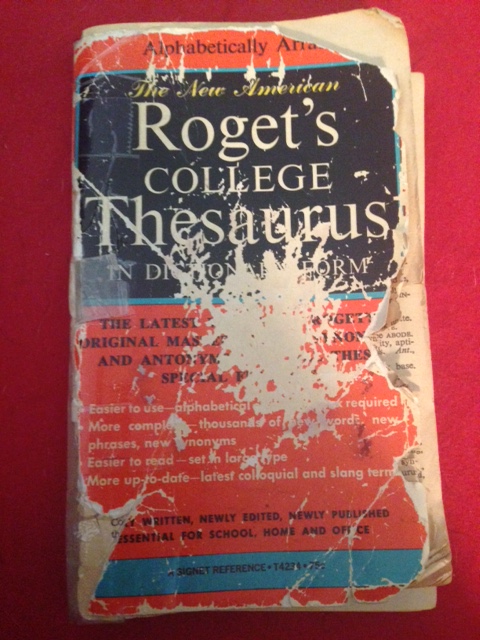
My secret weapon.
Gail Chumbley is the author of River of January, a memoir. Also available on Kindle
My secret weapon.
Gail Chumbley is the author of River of January, a memoir. Also available on Kindle
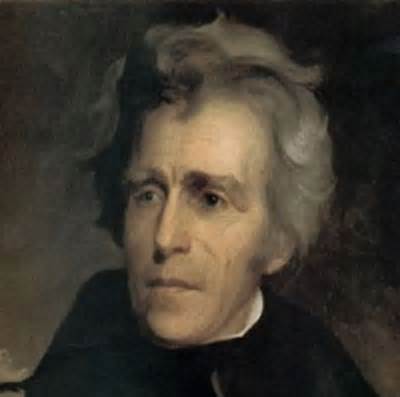
President Andrew Jackson has stopped spinning in his grave. Finally. He hated paper money with all the fiber in his being, and now thankfully for him, no longer tacitly endorses its use. Jackson was a sound money man and believed gold the only genuine medium of exchange . . . weigh-able, bite-able gold; good ole “cash on the barrel-head.” In fact, the President believed so passionately in the principle of gold bullion that he banned any use of paper money for any transaction whatsoever. This same policy, in the end, torpedoed the US economy and triggered the Panic of 1837.
That financial disaster held on for over five chilly years.
But the day has arrived, America has finally heard Jackson’s cries of anguish from the great beyond, and removed his likeness from that raggedy heresy of ersatz value. Still, one has to wonder. What would General Jackson make of runaway slave, Harriet Tubman taking his place on legal tender?
Ms. Tubman, as a woman, and as a slave, lived invisibly in Jackson’s world. The only notice a planter like Jackson would have made was Tubman’s incorrigible practice of stealing another master’s property. For a man of deep passions, of violent loves and hates, her offense would have pissed this president off, and sent him into a dangerous rage. In his world of master and slave, her offenses allowed no mercy, no reprieve.
As for Tubman? She understood a truth that Jackson could never, ever have comprehended—that justice was a force that bore no designation to color, gender, or appraised value. A mighty truth reigned far above the limited aspirations of General Andrew Jackson, killer of banks, Natives, and the hopes of the hundreds he held in bondage.
Tubman’s idea of honorable behavior had nothing to do with white men firing pistols on dueling grounds, and that white social conventions which condemned her to servitude were wholesome and noble. The human condition, as Tubman understood the meaning, held a deeper significance, an importance that required a profounder appreciation. The world of plantations, race hatred, whip wielding overseers, and economic injustice held no real sway, and certainly possessed no honor.
Jackson’s opinions truly hued in only black and white, and that outlook wasn’t limited to skin color. Abstract ideas like ‘humanity’ didn’t resonate in his mind, too ethereal for a man who loved gold coins. Banks were bad, women were ornaments, Indians were fair game, and blacks were slaves. That simple. Of course at the same time, this limited world view gave a figure with Tubman’s vision the edge. If a man of Jackson’s time and station caught a glimpse inside the real thoughts of his “family” members living over in the slave quarters, his mind would have been blown.
So it is with some satisfaction that Harriet Tubman replaces Andrew Jackson on the twenty-dollar bill. But not only because she’s a woman, nor only because she’s black. The star she followed may have literally sparkled in the northern sky, but every footstep she trod signified progress on the road to realizing the immeasurable value in us all.
Gail Chumbley is the author of the memoir River of January

River of January sets off tonight in Salt Lake City’s Trolley Square!
Join author, Gail Chumbley at Weller Book Works
See you at 7:00pm!

You’re on vacation! Kick back and read River of January on Kindle!
In May, 1940, as British and French troops gathered on the beaches of Dunkirk waiting for a miracle, America remained lulled in complacency. Mont Chumbley, the primary figure in the memoir, “River of January: Figure Eight,” continued his sales flights for Waco Aircraft Company. The war came to the US a year and a half later.
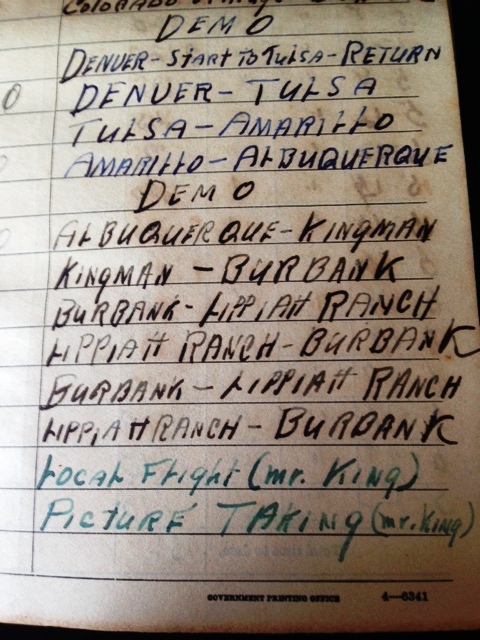
This is Mont Chumbley’s logbook, recorded in early May, 1940. Two fellow pilots appear in this ledger, inscribed nearly 76 years ago. First, HC Lippiatt of Los Angeles, was best known as the largest aircraft distributor on the West Coast. Lippiatt specialized in Waco airplanes, and that fact frequently brought Waco sales representative, Chumbley to Lippiatt’s Bel Air “Ranch.” Another historic figure was Hollywood director, Henry King, best known for films such as “Twelve O’Clock High,” “The Sun Also Rises,” and “Carousel.” Chum explained that he sold King a Waco plane, and in the transaction the two men became fast friends.
For one week in May of 1940, Chum spent time with both airplane enthusiasts.


Henry King (with Tyrone Power & Patsy Kelly) The grand “ranch” of HC Lippiatt
The story behind this logbook entry appears in “River of January, The Figure Eight,” part two of the story, out this summer.
Gail Chumbley is the author of River of January, a memoir. Also available on Kindle. River of January: Figure Eight, part two of the story can be found at www.river-of-january.com
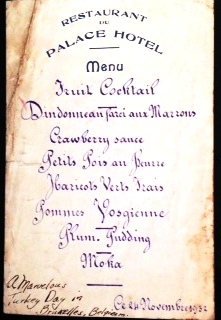
Hand lettered menu from The Palace Hotel in Brussels, Belgium, celebrating an American Thanksgiving, 1932

The dance company all autographed the occasion on the back side.
Note Mistinguett’s signature in the lower left quadrant. Many of these figures appear in River of January
Gail Chumbley is the author of the memoir, River of January, also available on Kindle
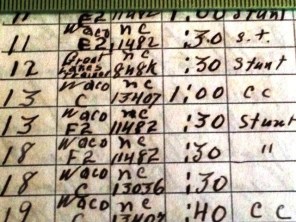
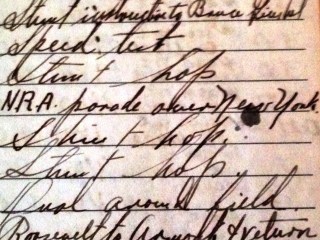
Chum’s logbook for September 13, 1933. Note the comment CC for cross country, then the added notation, stunt.
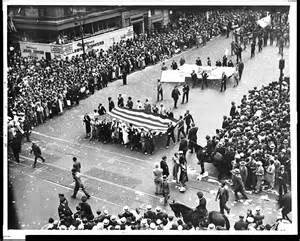
Piloting his Waco C, Chum performed above President Roosevelt’s spectacular National Recovery Act Parade in New York City–the flagship agency of the President’s New Deal.
(Click below for a street level view of the 1933 parade)
Read River of January, a memoir by Gail Chumbley. Also available on Kindle.

New York, 1931
Early for Helen’s Gambarelli audition at the Roxy, the girl and her mother crowded among throngs of other hopefuls. Mothers pulled distracted daughters through the bedlam, while their girls tried to catch words with each other. All the dancers were dressed in rehearsal skirts, tights, and leotards—toe shoes slung over shoulders, or around necks. A pianist, oblivious to the chaos, loudly played echoing chords from the stage. Reaching for her mother’s hand, Helen, shouldered her way to a pair of empty seats to the right of the center aisle.
For the next three hours the two women witnessed extraordinary dancing. Yet while watching her competition perform their hearts out, Helen remained tranquil. She knew her craft—she knew she could compete. She had continued to train with her dance instructor, Mr. Evans regardless of her other obligations.
“Helen Thompson,” a small male assistant, with a receding hairline, read from a clipboard.
Helen rose, glancing at Bertha with a small smile. A little jittery when she stepped onto the stage, the girl’s dedication and discipline overrode her nerves. She posed, arms up, gracefully curved, head back, chin raised to the right, and she struck her regal beginning position. The pianist struck the opening bars, and her talent, training, and passion combined into graceful execution. Helen presented Stravinsky’s Firebird—the tableau in which the Firebird rejoices over the destruction of the evil Kashchei. Her mastery of fluid motion and grace assured Helen’s selection for a spot as a Gambarelli “Beauty,” and she began rehearsals with a new troupe of ballerinas almost immediately after auditions.
Gail Chumbley is the author of the memoir, River of January, also available on Kindle
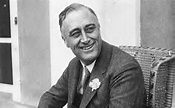
Happy 134th Birthday to President Franklin Delano Roosevelt who, rather than exploit uncertainty in a time of crisis, reassured Depression-era Americans.
Read River of January by Gail Chumbley, a memoir. Also on Kindle
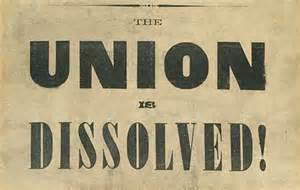
A divided national party . . . voices of extreme rhetoric . . . an ugly, contentious primary season. Does this spell doom for two-party system?
Sounds modern, doesn’t it? But the year was 1860, and the party in question was founded by Thomas Jefferson, and shaped in the image of Andrew Jackson: The antebellum Democratic Party.
On the eve of Civil War, the future of the Union appeared in fatal doubt. Political leaders in the Deep South: South Carolina, Georgia, Alabama, Mississippi, and Florida had all but washed their hands of the centrally powerful United States. Adding to the precarious atmosphere, a faction of Democrats in the North promoted a policy to permit slavery into the western territories under the principle of Popular Sovereignty, or direct vote. Others voices in the northern branch of the Democratic Party believed the Southern States should depart the Union in peace. And these pro-secession advocates became the most worrisome threat for Senate leader, Stephen A. Douglas of Illinois, the leading Democratic candidate for the presidency in 1860.
Douglas found himself in a hell of a spot. He fervently burned to lead his party to the White House and save his nation, dangerously poised on the verge of civil war. As the principal heir to Senate leadership, Douglas had spent over twenty years in Congress working to stave off Southern secession, taking over when Kentucky Senator, Henry Clay, the “Great Compromiser” died. Clay had also spent most of his earlier career drawing up one concession after another in a noble attempt to preserve the nation. Eventually the effort wore him out, and Senator Douglas pick up the cause.
As far as Douglas was concerned, slavery wasn’t a moral issue, but a bump in the road. The issue could easily be decided by the good folks migrating west. Douglas believed if settlers didn’t want slavery, they would decline to establish laws necessary for supporting the “peculiar institution.” He was wrong—dead wrong. Slavery had, by 1860 become an issue impossible to solve. And it was here, underestimating the power of the slave issue, that the Illinois Senator imploded his party and his career.
The new Republican Party had formed six years earlier in Wisconsin, established on one central principle—slavery would not extend into the western territories, period. And this new party grew fast. Composed of splinter groups, this now fully unified party maintained that free labor was an integral component of free market capitalism. The presence of slavery in growing regions of the West would devalue free labor, and undermine future economic growth.
Now, don’t get me wrong, these Republicans did not sing Kumbaya or braid their hair. These men did not believe in equality between the races—they were not abolitionists. Economic principles drove their political platform, (Emancipation came later with the transformation of President Lincoln in the fire of war).
For Stephen Douglas the approaching 1860 election meant vindication for his support of popular sovereignty, and reward for his faithful political service. And Douglas was no political hack. He fully understood the solvency of the Union lay in the delicate art of sectional balance, and his ascendancy to the White House as a Democrat would go a long way to placate the Southern hotheads. But this Illinois Senator failed, once again, to fully comprehend the temper of the nation, or of his own party. The era of seeking middle ground had passed—America’s course had been set toward industrial modernity with no place for an antiquated, barbaric labor system.
Charleston, South Carolina, was selected as the site of the 1860 Democratic convention. Chaos immediately broke loose on the convention floor. While Southern Democrats demanded strict, exact language guaranteeing the extension of slavery in the territories, Northern Democrats and those from California and Oregon pushed for Douglas’ popular sovereignty. This tense deadlock forced the latter faction to walk out and reconvene in Baltimore where party business could move forward.
Southern Democrats moved on as well. In a separate Richmond, Virginia convention Southern Democrats nominated Kentuckian John C. Breckinridge.
In Baltimore, Douglas indeed gained the Democratic nomination, preserving his precious principle of local elections determining the western expansion of slavery. Bolting Democrats in Richmond went further adding an absolute protection of slavery to their platform. Middle ground vanished.
Though a long shot, a third faction of the Democratic Party broke ranks calling themselves the “Constitutional Union Party.” I’m not sure what they stood for, but clearly it wasn’t support for Douglas or Breckinridge. Convening in Baltimore as well, in May of 1860, this coalition nominated John Bell of Tennessee.
So what can we make of this 1860 fiasco today, in 2016? If I could attempt a bit of divination I would suggest that the political party that can present the most united front will prevail in the general election. If current Republican candidates continue to employ such wide-ranging, and scorching tones to their rhetoric, and stubbornly defend the innocence of their loose talk, the party may run head long into oblivion, as did the Democrats of 1860. If the roaring factions, so loudly represented by each GOP aspirant goes too far, the fabric of unity will shred, crippling the Republican’s ability to field serious candidates in the future.
Looking at the past as prelude much is at stake for the unity of the GOP. In 1860 party divisions nearly destroyed the Democratic Party, and launched the nation into a bloody civil war. And though Republicans at that time elected our greatest Chief Executive, Abraham Lincoln, the Democrats suffered for decades, marginalized as the party of rebellion. And even the best lessons left by the past are still forgotten in the heat of passion by those who know better. The Democrats shattered their party unity once again a hundred years later, splintered by the Vietnam War, social unrest, and racial strife. This is truly a cautionary tale for today’s splintering Republican Party.
Zealots do not compromise, and leading GOP candidates are spouting some pretty divisive vitriol. Southern Democrats self righteously rejected the national party certain it no longer represented them, and ultimately silenced the party of Jefferson and Jackson for decades. The lesson is clear for today’s Republicans. By tolerating demagoguery, extremism, and reckless fear-mongering in their field of contenders, the RNC may indeed face a similar demise. Now its true that no party can be all things to all citizens, nor should hardened splinter groups run away with the party.
The American public demands measured and thoughtful candidates—and both parties are expected to provide candidates of merit and substance.
We deserve leaders worth following.
As Senator Stephen Douglas refused to recognize that the political skies were falling around him, and his party, the modern Republican Party must not.
Gail Chumbley is the author of River of January, a memoir. Available on Kindle
 Gail Chumbley