Endurance

14e7ea2b2fd17c16e45990ee1dd21a8edb4ddd40.jpeg


Three early American documents are often lumped together in our collective memory, though each is quite different from the others; The Declaration of IndependenceThe Articles of Confederation, and the enduring US Constitution. Citizens generally know something of the Declaration due to a certain celebration we observe each summer. The Articles of Confederation are a bit more elusive, and not nearly as recognized. The third, the US Constitution is revered, but its beginnings, and purpose is also shrouded in time. 

Here is a quick explanation of each missive, particularly the sequence, and the significance of each.

The Declaration of Independence: July 4, 1776. A product of the Second Continental Congress, this revolutionary document was ratified as an instrument of rebellion, after all other measures to avoid war with England had failed. In reality, the shooting had begun a year earlier in Lexington, Massachusetts, but the Declaration formalized hostilities. Debated and delayed, this document was finally adopted in July of that year. Congress made crystal clear their reasons and resolve to free themselves from King George’s arbitrary rule. Penned by Thomas Jefferson, the Declaration began with a guiding statement about “Natural Right’s” shared by all humanity, and that people had the obligation to free themselves from unjust tyranny. The rest of the epistle read as a legal document condemning the King and his despotism. This document is the first of the three in forging the United States of America. 

The Articles of Confederation: September, 1777. The Articles provided America’s first national charter of government. Approved by the same Second Continental Congress in 1777, the Articles attempted to unify the original states under one government. Through this document, Congress sent diplomats abroad, including Benjamin Franklin and John Adams, to (beg) obtain financial support from European powers. However, at home, this framework failed miserably. More a Confederation of independent principalities, Congress had to plead for money and men from each state, who often said no. There was no power to tax, no centralized currency, and the Articles weren’t even ratified by all 13 states until a month before the war ended at Yorktown. Each state jealously guarded its own interests over any unified cooperation. Congress could do next to nothing to aid General Washington and his army. Chaos ensued after the war ended, as well. Trade wars flared, disagreements among the states spilled over into violence, and rebellions within states promised more turbulence. The ability of America to govern itself appeared doomed. The English were sure America’s failure was imminent, and they could, once again, swoop in.

The United States Constitution: May to September, 1787. Born from an earlier 1786 meeting between Alexander Hamilton and James Madison in Annapolis, MD, the Constitutional Convention was organized and slated for Philadelphia in May. Both founders understood that without persuading Washington to attend this new Convention, any success was remote. Washington, tending his home at Mount Vernon, was hesitant, and tired. However, when news reached the General of an uprising in Western Massachusetts, (Shays Rebellion), Washington agreed to attend. Fifty-five delegates from all the states except Rhode Island, reported to the Pennsylvania Statehouse in Philadelphia. Most were lawyers, sprinkled with many Southern slave holders. Virginian, James Madison came prepared with a plan to replace the feeble Articles of Confederation. Much of Madison’s Virginia Plan became the basis of the Constitution. Designed for endurance, this new charter vested authority in the Central government, and the states. Termed Federalism, powers under this frame of government are shared between both authorities simultaneously. The tooling of the document, employing separation of powers, and checks and balances is brilliant, and worked well until 2016.

Gail Chumbley is the author of the two-part memoir, “River of January,” and “River of January: Figure Eight,” both on Kindle.

gailchumbley@gmail.com
I Want My GOP

This post originally appeared in early 2016. Cassandra award?

th

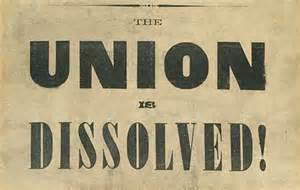
A divided national party . . . voices of extreme rhetoric . . . an ugly, contentious primary season. Does this spell doom for two-party system?

Sounds modern, doesn’t it? But the year was 1860, and the party in question was founded by Thomas Jefferson, and shaped in the image of Andrew Jackson: The antebellum Democratic Party.

On the eve of Civil War, the future of the Union appeared in fatal doubt. Political leaders in the Deep South: South Carolina, Georgia, Alabama, Mississippi, and Florida had all but washed their hands of the centrally powerful United States. Adding to the precarious atmosphere, a faction of Democrats in the North promoted a policy to permit slavery into the western territories under the principle of Popular Sovereignty, or direct vote. Others voices in the northern branch of the Democratic Party believed the Southern States should depart the Union in peace. And these pro-secession advocates became the most worrisome threat for Senate leader, Stephen A. Douglas of Illinois, the leading Democratic candidate for the presidency in 1860.

Douglas found himself in a hell of a spot. He fervently burned to lead his party to the White House and save his nation, dangerously poised on the verge of civil war. As the principal heir to Senate leadership, Douglas had spent over twenty years in Congress working to stave off Southern secession, taking over when Kentucky Senator, Henry Clay, the “Great Compromiser” died. Clay had also spent most of his earlier career drawing up one concession after another in a noble attempt to preserve the Union. Eventually the effort wore him out, and Senator Douglas pick up the cause.

As far as Douglas was concerned, slavery wasn’t a moral issue, merely a bump in the road. The issue could easily be decided by the good folks migrating west. Douglas believed if settlers didn’t want slavery, they would decline to establish laws necessary for supporting the “peculiar institution.” But the Senator was wrong—dead wrong. Slavery had, by 1860 become an issue impossible to fix. And it was this miscalculation, underestimating the power of the slave issue, that the Illinois Senator imploded both his party, and his career.

The new Republican Party had organized six years earlier in Wisconsin, founded on one central principle—slavery would not extend into the western territories, period. And this new party spread quickly. Composed of splinter groups, this now fully unified alliance insisted that free labor was an integral component to a flourishing free market economy. The presence of slavery in sprouting regions of the West would devalue free labor, and undermine future commercial growth.

Now, don’t get me wrong, these Republicans did not sing Kumbaya or braid their hair. These men did not believe in equality between the races—they were not abolitionists. Economic principles drove their political platform, (Emancipation came later with the transformation of President Lincoln through the caldron of war).

For Stephen Douglas the approaching 1860 election meant vindication for his support of popular sovereignty, and reward for his faithful political service. And Douglas was no political hack. He fully understood the solvency of the Union lay in the delicate art of sectional balance, and his ascendancy to the White House as a Democrat would go a long way to placate the Southern hotheads. But this Illinois Senator failed, once again, to fully comprehend the temper of the nation, or of his own party. The era of seeking middle ground had passed—America’s course had been set toward industrial modernity with no place for an antiquated, barbaric labor system.

Charleston, South Carolina, was selected as the site of the 1860 Democratic convention. Chaos immediately broke loose on the convention floor. While Southern Democrats demanded strict, precise language guaranteeing the extension of slavery into the territories, Northern Democrats and those from California and Oregon pushed for Douglas’ popular sovereignty. This tense deadlock forced the latter faction to walk out and reconvene in Baltimore where party business could function.

Southern Democrats moved on without Douglas or his faction. In a separate, Richmond, Virginia convention, Southern Democrats proceeded to nominate Kentuckian John C. Breckinridge.

Back in Baltimore, Senator Douglas indeed gained the Democratic nomination, preserving his precious principle of local voters determining the western migration of slavery. Meanwhile, the Democrats in Richmond took a step further, adding the absolute protection of slavery to their platform. Middle ground had vanished.

Though a long shot, a third faction of the Democratic Party broke ranks with both Douglas supporters, and the Richmond faction. Calling themselves the “Constitutional Union Party,” this coalition nominated John Bell of Tennessee.

So what can we make of this 1860 fiasco today, in 2016? If I could attempt a bit of divination I would suggest that the political party that can present the most united front will prevail in the general election. If current Republican candidates continue to employ such wide-ranging, and scorching tones to their rhetoric, and stubbornly defend the innocence of their loose talk, the party may run head long into oblivion, as did the Democrats of 1860. If the roaring factions, currently represented by each GOP aspirant goes too far, the fabric of unity will shred, crippling the Republican’s ability to field serious candidates in the future.

Looking at the past as prelude much is at stake for the unity of the GOP. In 1860 party divisions nearly destroyed the Democrats, propelling the nation into a bloody civil war. And though Republicans at that time elected our greatest Chief Executive, Abraham Lincoln, the Democrats suffered for decades, marginalized as the party of rebellion. And even the best lessons left by the past are still forgotten in the heat of passion, by those who know better. (The Democrats shattered their party unity once again a hundred years later, splintered by the Vietnam War.) This is truly a cautionary tale for today’s turbulent Republican Party.

Zealots do not compromise, and leading GOP candidates are spouting some pretty divisive vitriol. Southern Democrats self righteously rejected their national party, certain it no longer represented them, and ultimately silenced the party of Jefferson and Jackson for decades. The lesson is clear for today’s Republicans. By tolerating demagoguery, extremism, and reckless fear-mongering in their field of contenders, the RNC may indeed face a similar demise.

Though it is true that no party can be all things to all citizens, malignant splinter groups should not run away with the party.

The American public demands measured and thoughtful candidates—and both parties are expected to field candidates of merit and substance.

We deserve leaders worth following.

As Senator Stephen Douglas refused to recognize that the political skies were falling around him, and his party, the modern Republican Party must not.

Gail Chumbley is the author of River of January, and River of January: Figure Eight a two-part memoir. Available on Kindle

Peer Review #1

Marines manned numerous doorways along the wide hallway, as clusters of tourists wandered through colorful rooms. Upstairs the President listened to the public commotion with satisfaction, not for the house, not for the job, which, in truth, had become tiresome, but for the knowledge he could drop down and set all their bourgeois hearts aflutter. 

After a moment, he made his decision, slipping down an interior stair case, stepping into the Blue Room.

As his hands automatically fluffed his hair, the President sidled up beside a class of wiggly school children snapping cell phone pictures.

“And where are you from?,” the president teased with pleasure, anticipating an excited response. He half closed his eyes, and paused, waiting for the gratifying answer.

But he heard nothing.

Bemused, the President opened one eye, then the other. The chatty children paid him no mind, in fact were moving away, following their guide into the hallway.

“Wait,” he found himself calling. “It’s me, your President. I’m here.”

He repeated, “The President of the United States.”

But the children didn’t hear. He remained alone in the Blue Room, his hair acceptably coiffed.

No further tourists entered, though dozens drifted past the doorway. He didn’t understand and he thought very hard, seeking a rational explanation.

It was at that moment that he heard a voice, quite close, and quite annoyed. 

“Am I to understand you are a New Yorker?” 

The President wheeled around toward the sound. Before him, no more than an arm’s length away stood a mustachioed gentleman, wearing pinz nez spectacles, sporting a shiny top hat. The man’s eyes blazed behind the thick round lenses, and the astonished President detected a trickle of cold sweat trace down the back of his thick neck.

“I say, are you, or are you not, a New Yorker?” The stern man spoke in a nasally, patrician voice.

“Ahh. How did you get in here,” the President stammered. “Where is my secret service protection?”

“Supercilious pup,” the man in the top hat snapped. “They tell me that YOU are from New York, and are president! A common side show huckster, President.”

The President, though alarmed, replied reflexively, “I’m in real estate. I . . .made my fortune in New York real estate.” Only the muffled din of passing tourists kept the President from panic.

“Real Estate!” The man in spectacles scornfully shouted. “I’d say you are just another scoundrel from the wealthy criminal class. In New York, swindlers like you are a dime a dozen. I made a career of exposing rascals like you.” 

The man, attired in a three-piece suit, a watch fob draping his ample waist, bore a deep scowl. “And you found your way into this office of trust. Intolerable.”

Though bewildered, the President, unaccustomed to such personal insults, felt his pique rising. “I was elected President by the largest margin in American Hist . . .”

“Poppycock,” the specter interrupted. “It is my understanding the decision rested upon a mere tilt in the Electoral system, and that outsiders interfered to make certain of your victory.” 

The strange visitor moved closer. “I’d say that you are a compromised pawn of foreign meddlers, and give not one damn for the American people.”

At this point the President had heard enough, and attempted to move his legs. He wanted very much to escape the Blue Room, but his feet remained rooted. 

“I have important things to do, you need to go,” the President’s voice trembled, trying to sound more confident than he felt.

The apparition narrowed his intense eyes, and took another step toward the unnerved President. 

“I claim more authority to this revered House and Office than your mercenary greed could ever comprehend. You belong with Tweed, Plunkitt, Fisk, Conkling, and the rest of New York’s good-for-nothings. Dishonor has followed you to the Presidency, what, with your womanizing, graft, and unsavory business connections.” The fierce apparition fixed an intense, menacing gaze. “You do not belong here, nor your parade of lackeys and opportunists.

The buzz of foot traffic grew louder, and when the President again glanced toward his unwelcome visitor, he found him gone, the Blue Room empty.

Gail Chumbley is the author of the two-volume memoir, “River of January” and “River of January: Figure Eight,” both available on Kindle.

Hard copies are available at http://www.river-of-january.com


He Wrote for the Ages

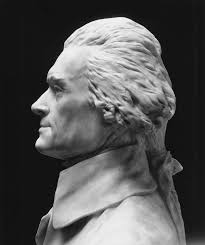
images.jpeg

For starters, I am not a fan of Thomas Jefferson. In fact, the more I know of this founding father, the less I like him. The Sage of Monticello routinely had young male slaves beaten for no better reason than custom, and lay the foundation for secession in 1798 with his Kentucky Resolution.

Thaddeus Kosciuszko, the Polish hero of the Revolutionary War, once offered to liquidate land holdings in the Northwest Territory to pay Jefferson to free some of his slaves, and Jefferson declined. Disillusioned, Kosciuszko condemned Jefferson as a fraud for once insisting “all men were created equal,” and not practicing that “truth.”

However, the reality remains that Jefferson did indeed, pen those words, and generations of Jeffersonian disciples have insisted those words are enough to maintain his venerated place in American history.

And I agree. His adulators are correct. Jefferson’s words are enough. His phrasing, painstakingly composed in 1776 has ignited the world on the ultimate quest to actualize Jefferson’s “unalienable” assertions. 

Abraham Lincoln took Jefferson’s sentiment to heart, and his devotion moved Lincoln to action. The foundation of the Republican Party rested partly upon removing artificial impediments restraining upward mobility, and Lincoln believed slavery such an obstacle, the most malignant bar to individual betterment. (Duh). In 1859 he stated in a speech, “We proposed to give all a chance; and we expected the weak to grow stronger, the ignorant, wiser; and all better.” And Lincoln made it his aim to realize that betterment, first with Emancipation, then the 13th Amendment.

There could be no better description for America than a people steadily discarding artificial barriers. Women, Native Americans, LGBTQ Americans, Latino Americans: all of us freed to reach our highest potential. Annoying bigotry places a drag on the process, but justice still manages to surge steadily on, inspired by the words of the Declaration of Independence–Jefferson’s words. 

In reality, Jefferson had meant to argue white wealthy Colonials were of equal standing to Great Britain’s landed aristocracy. Despite his original intent, the promise of those words have outlived that specific moment. 

Understandably, Thaddeus Kosciuszko gave up in the face of Jefferson’s outrageous duplicity. And this generation of fanatics desperately promote Jefferson’s original racism. But, kids, we have inherited an obligation to continue this journey, not only for ourselves but to light the way for our children’s children.

Gail Chumbley is the author of the World War Two-era memoir “River of January,” and “River of January: Figure Eight.” Both are available on Kindle, and hard copies at http://www.river-of-january.com

gailchumbley@gmail.com


A Reasonable Man

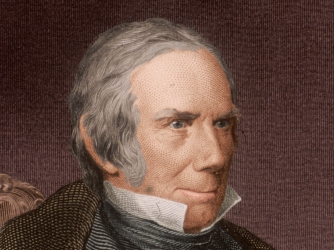
Henry-Clay-9250385-1-raw-res-AB.jpeg

The Senator visualized a clear future for America; a nation of groomed roadways, busy canals, sturdy bridges, and mighty iron railways. He believed America, in order to mature into a truly great nation, required the best in structural innovation. Despite his noble intentions, this practical statesman faced an insurmountable barrier impeding his work–Andrew Jackson.

Henry Clay first arrived in Washington City as a green Kentucky Congressman in 1803. Serving in the House for three years, Clay eventually moved over to the Senate, appointed by the Kentucky legislature to fill an unexpected vacancy.

Early in his legislative career young Clay committed his fair share of blunders. A fierce booster for war in 1812, Clay worked with other young ‘ War Hawks,’ who favored this second brawl against Great Britain. However, by the end of that conflict, Clay realized this do-over against England had generated nothing of real substance.

Fully embracing this epiphany, the young Senator turned his efforts to building America from within. Clay devised a long-range program of development he called The American System. Components of his plan were three-fold: a strong protective tariff to nurture America’s fledgling industrial base, a Second Bank of the United States to administer federal funds, that in turn would underwrite his ‘internal improvements,” (infrastructure projects). For Henry Clay this three-tiered plan would provide the solid foundation a mighty nation-state needed to prosper. And the Senator enthusiastically advanced his crusade in the spirit of a secular evangelical.

Henry Clay’s progressive program found considerable support among his fellow legislators, so much so, The American System seemed on the brink success. 

Unfortunately for Clay, a dashing war hero rose to thwart his vision. Tennessean, Andrew Jackson, the victor of New Orleans, among other military escapades had set his sights on becoming president.

In the beginning Clay thought little of the uneducated, volatile militiaman, believing voters would not take this uncouth hellion seriously. But Clay misread public sentiment. Jackson’s popularity soared among all classes, particularly among poor whites. Jackson successfully won not only a first term, but enjoyed reelection four years later.

Most ominous for Henry Clay, this formidable president did not like him, not one little bit.

Very quickly Congressional appetite for public works dissolved. New Jacksonian supporters filled the House, and to a lesser degree the Senate, leaving Clay hard pressed to pass any of his program. In fact, Jackson made fast work on Clay’s earlier successes by killing the Second Bank of the US, and vetoing countless internal improvement projects. The only portion of the American System Jackson defended was the Tariff, and merely because a separate Jackson enemy threatened to ignore the law.

Henry Clay found himself fighting tooth and nail for every economic belief he championed. And the harder he pushed, the harder the mercurial man in the (White House) blocked him. 

The intractable issue of slavery soon dwarfed all other political and economic conflicts. Clay, a slave owner himself, preached gradual emancipation, finding enemies in both the North and South. Northerners hated him because he was a slave owner, and Southerners because he believed in emancipation. This guy couldn’t win.

Sadly, Senator Henry Clay did not live to see his American System become a reality. But there is a silver lining to this tale. Abraham Lincoln, a staunch Clay-ite shepherded passage of the Pacific Railways Act, the Morrill Act, and a National Banking Act through Congress. These three laws built the Transcontinental Railroad, Land Grant Universities in the west, and funding the Union war effort in the Civil War.

Oh, and Clay’s desire to emancipate slaves became a reality in 1863.

The moral of the story transcends time: America stalls when irrational politics displaces thoughtful, reasonable policies and the legislators who promote them.

Note-I have co-authored a new play celebrating the life of this remarkable, essential American simply titled “Clay.”

Gail Chumbley is the author of the two-part memoir, River of January and River of January: Figure Eight. Both are available on Kindle. Gail is the author of two stage plays, “Clay,” and “Wolf By The Ears.”

gailchumbley@gmail.com

Political Science


We were in the midst of text book adoption some years ago when an unexpected snag brought the process to a halt. 

The Social Studies Departments across our district were asked to pilot an array of textbooks for the Fall of 1994. Publishers had generously provided sample texts, and we spent hours previewing different titles, passing our preferences to our District Social Studies Coordinator.

Government teachers decided, unanimously, that they would replace their current text with the newer edition of the book they had used for some years. To a person, instructors agreed to readopt Magruders American Government; a trusty standard, and the hands-down favorite of most 12th grade teachers across the country. Our staff had ready-made units, lessons, speakers, ancillary materials,, film clips, debate resolutions, etc . . . only requiring the newer book with updated factual information. And their decision appeared to be resolved.

But in the last phase, presentation for final adoption, the Board of Trustees suddenly slammed on the brakes, visibly unhappy with the choice.

 Magruders, as a tradition, had placed a photo of the current first lady inside the first page of their textbook. The old copies may have still been of Mamie Eisenhower by the tattered condition of the old copies. But no longer. The inside photo of this new edition featured First Lady, Hillary Rodham Clinton, and board members, reactionaries to the core, lost their minds.

I taught AP American History at that same time, and thought nothing of reordering Thomas Bailey’s American Pageant, another classic. We had used this text for some time, but needed an updated edition, too. However, in light of the fiasco over Magruders, I too, found my text in the crosshairs.

Wearing an understanding, sympathetic expression the district coordinator said I had to prepare a defense of my book, too. And it wasn’t that I minded touting the virtues of the book, I liked Pageant a lot, but I did mind the time lost in preparing my classroom work. Plus, it was so annoying that we all had to jump for the Board because Mrs. Clinton had the audacity to be the new First Lady.

I supposed, fair was fair, if one book was attacked for fallacious reasons, attack the rest-a convenient diversion to camouflage the real aim of thought suppression.

The central thrust is that Trump era of intolerance had been in the making for quite some years. The irrational politics of 2016 was clearly hardening across the nation years earlier. From School Boards, to City Halls, to library districts, restriction of free thought was under assault. 

Nothing pisses off the far right more than a rational challenge from open-minded, articulate, and educated thinkers.

Gail Chumbley is a retired history educator, and author of the two-part memoir River of January, and River of January: Figure Eight.

gailchumbley@gmail.com


Mixed Emotions

This is a reprint of an earlier post.

th

It’s been uncomfortable to watch the media coverage from Louisiana about the removal of General Robert E Lee’s statue in New Orleans. As a life-long student of the Civil War the idea of removing reminders of our nation’s past somehow feels misguided. At the same time, with a strong background in African American history, I fully grasp the righteous indignation of having to see that relic where I live and work. Robert E. Lee’s prominence as the Confederate commander, and the South’s aim to make war rather than risk Yankee abolitionism places the General right in the crosshairs of modern sensibilities. Still, appropriating the past to wage modern political warfare feels equally amiss.

Robert Edward Lee was a consummate gentlemen, a Virginia Cavalier of the highest order. So reserved and deliberate in his career was Lee, that he is one of the few cadets who graduated West Point without a single demerit. Married to a descendent of George and Martha Washington, Mary Anna Randolph Custis, Lee added stature to his already esteemed pedigree. (The Lee-Custis Mansion, “Arlington House” is situated at the top of Arlington National Cemetery. And yes, this General was a slave holder, however he appears to have found the institution distasteful).

When hostilities opened in April of 1861, the War Department tapped Lee first to lead Union forces, so prized were his leadership qualities. But the General declined, stating he could never fire a gun in anger against his fellow countryman, meaning Virginians.

On the battlefield Lee was tough to whip, but he also wasn’t perfect, despite his army’s thinking him so. Eventually, after four years of bloody fighting, low on fighting men and supplies–facing insurmountable odds against General Grant, the Confederate Commander surrendered at Appomattox Courthouse, Virginia.

Meeting Lee face-to-face for the first time to negotiate surrender terms, Ulysses Grant became a little star-struck himself in the presence of the General, blurting out something about seeing Lee once during the Mexican War.

After speaking with General Grant, in a letter addressed to his surrendering troops Lee instructed, By the terms of the agreement Officers and men can return to their homes. . .

But Robert E. Lee’s story doesn’t end there.

Despite outraged Northern cries to arrest and jail all Confederate leaders, no one had the nerve to apprehend Lee. And that’s saying a lot considering the hysteria following Lincoln’s assassination, and assassin John Wilkes Booth’s Southern roots. The former general remained a free man, taking an administrative position at Washington College, now Washington and Lee University, in Lexington, Virginia. It was in Lexington that exhausted Lee died in 1870, and was  buried.

Robert E. Lee led by example, consciously moving on with his life after the surrender at Appomattox. He had performed his duty, as he saw it, and when it was no longer feasible, acquiesced. He was a man of honor. And from what I have learned regarding General Lee, he would have no problem with the removal of a statue he never wanted. Moreover, I don’t believe he would have any patience with the vulgar extremists usurping his name and reputation for their hateful agenda.

This current controversy isn’t about Robert E Lee at all. It’s about America in 2017.

Gail Chumbley is the author of the two part memoir, River of January and River of January: Figure Eight. Also available on Amazon.

This Land Is Your Land

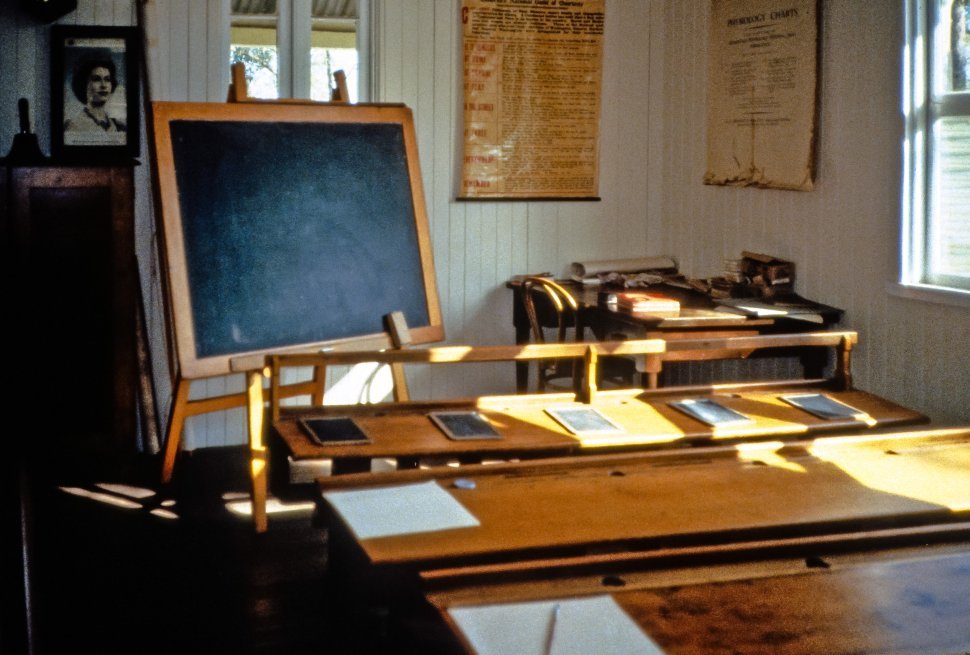
school-room

Below is a letter that I recently sent to the Idaho Senate. The upper house of the legislature was considering a bill to provide vouchers for private education. My thoughts centered on the role public schools play in ensuring an American identity.

Good Morning,

My name is Gail Chumbley, and I am a retired teacher now living in Garden Valley. Those of us who spent our careers working with children know we always remain teachers, and why I write to you this morning.

Public schools were established in early America as a place where children learned the tools of literacy; reading, writing, and computing numbers. The thinking behind these first American schools was to prepare contributing members of society, insurance for the continuity of the community.  Enlightened self-interest guided public instruction, confident that the future rested in good, capable hands.

During the 19th and 20th Centuries schools spread across the growing nation to continue investing in the future, and curriculums added more courses that created citizenship. History provided a sense of belonging and common cause, while Civics added the structure of the political system, explaining the “how” of active participation. Students pledged the flag, sang patriotic songs, and shared in the remarkable story of our shared experiment in self-government.

Today this common foundation of America is crumbling. With so many choices for education, a crazy quilt of competing curriculums, home schooling, online classes, magnet schools, alternative schools, and private schools increasingly fray the fibers of our shared American experience. And this morning you have the option to approve another blow to all of us , vouchers for private schools.

HB590 has threatened not only legal problems, but ethical issues which concern not only our State but our Nation’s unity. Public schools have historically provided a vital link for students; our children find more that bind them together, than tear them apart. The growing exclusivity of “choice,” has had a dire outcome socially and economically.

As educators of America’s past have recognized, our kids deserve to learn what holds them together as a people, and in that understanding ensure Idaho’s and America’s future are left in steady hands.

Please vote no on HB590

Sincerely,

Gail Chumbley

Gail Chumbley is the author of the two-part memoir “River of January,” and “River of January: Figure Eight. Available at http://www.river-of-january, and at Amazon.com

So Simple, So Basic

Napoleons-death-1024x714

Some social media platforms I’ve read lately insist public schools no longer teach this particular lesson, or that particular subject. And since I was a career history teacher, I want folks to understand that that isn’t necessarily the whole story. If your kids aren’t getting what you believe is important, the problem doesn’t lie in the public classroom. But before I delve into the obstacles, I’d like to describe a slice of my history course.

For sophomores we began the year with the Age of Discovery. As part of this unit students mapped various Native Cultures, placing the Nootka in the Pacific Northwest, and the Seminole in the Florida peninsula. Southwestern natives lived in the desert, while the Onondaga hunted the forests of the Eastern Woodlands. From that beginning we shifted study to Europe, with the end of the Middle Ages. In the new emerging era, Columbus sailed to the Bahamas, and changed the world forever. By the end of the first semester, in December, America had defeated the British in the Revolutionary War, and a new government waited to take shape until the second semester began in January.

We covered it all. And did the same for the rest of the material, closing the school year with the Confederate defeat at Appomattox Courthouse, and the trial of Reconstruction. And that was only the sophomore course.

The story of America grows longer everyday, and that’s a good thing. It means we’re still here to record the narrative.

The drawbacks? Curriculum writers, in the interest of limited time, have had to decide what information stays and what is cut. For example, pre-Columbian America, described above, was jettisoned in order to add events that followed the Civil War. In short, where we once studied Native American culture in depth, we now focus on the post-Civil War genocide of those same people. What an impact this decision has left upon our young people!

When I was hired in the 1980’s our school district had one high school. Today there are five traditional secondary schools, and also a scattering of smaller alternatives. The district didn’t just grow, it exploded. To cope with this massive influx of students, administrators reworked our teaching schedule into what is called a 4X4 block. Under this more economical system, teachers were assigned 25% more students and lost 25% of instruction time. We became even more restricted in what we could reasonably cover in the history curriculum. (I called it drive-by history.)

On the heels of this massive overcrowding, came the legal mandates established by No Child Left Behind. Students were now required to take benchmark tests measuring what they had learned up to that grade level. Adult proctors would pull random kids out of class, typically in the middle of a lesson, often leaving only one or two students remaining in their desks. These exams ate up two weeks during the first semester, and another two weeks in the Spring.

If that wasn’t enough, politicians, and district leaders began to publicly exert a great deal of favoritism toward the hard sciences, especially in computer technology. So considering the addition of new historic events, overcrowded classrooms, tighter schedules, and mandatory exams, the last thing history education needed was an inherent bias against the humanities.

Public education was born in Colonial New England to promote communal literacy. Later, Thomas Jefferson, insisted education was the vital foundation for the longevity of our Republic. Immigrant children attended public schools to learn how to be Americans, and first generation sons and daughters relished the opportunity to assimilate. In short, enlightened citizenship has been the aim of public education, especially in American history courses.

So basic, so simple.

If indeed, history classes provide the metaphoric glue that holds our nation together, we are all in big trouble. And the threats come from many sides. When our public schools are no longer a priority, open to all, we are essentially smothering our shared past.

Teachers cannot manufacture more time, nor meet individual needs in overcrowded classrooms. And both of these factors are essential for a subject that is struggling to teach Americans about America.

As Napoleon lay dying in 1821, he confessed his own power hungry mistakes, when he  whispered, “They expected me to be another (George) Washington.” Bonaparte understood the profound power of the American story.

And so should our kids.

Gail Chumbley is the author of the two volume memoir, River of January and River of January: Figure Eight. Both available at http://www.river-of-january.com and on Kindle.

That Kid in Class

101218-A-5917D-118-rev(2)
This piece comes from a former student, Second Lieutenant. Cyrus Cappo, USA, West Point Class of 2017.
It is your right to be outraged, or offended, or annoyed by the anthem protests going on around the country today. And in these days of unprecedented access to the megaphone of social media it is your privilege to voice that outrage to estranged family members and friends from high school and coworkers and anyone else you happen to be Facebook friends with.
“It shows disrespect to the troops!” you might say through gritted teeth while furiously pounding on keys, your heart rate steadily increasing to unsafe levels about men who play sports silently and peacefully protesting their race’s treatment as second-class citizens and a President who reserves more fury for them than actual white supremacists and anti-semites. It would be your right to take such a bold and well-thought out stance, maybe even adding that this “the snowflakes have gone too far, I can’t even be safe from the tyranny of this PC culture watching a football game!”
But maybe, you my hypothetical example, could consider that standing for a flag that means many different things to many people isn’t actually what it takes to support your troops. And shockingly, neither is decorating for the Fourth of July, or sporting neat little patriotic bumper stickers and t-shirts, or even shaking a soldier’s hand to thank him or her for their service.
Bear with me, because I know this is a bit of a stretch, but just maybe supporting the troops means voting for politicians who don’t support never-ending wars without any clear objective, and that actually increase the rate of radicalization and terrorism at the low low cost of over 7000 American lives and the even lower cost of millions of middle eastern civilian lives, while simultaneously destabilizing multiple countries that allow for organizations like ISIS to gain power and a dictator like Assad to gas his own populace. That would be something I could be convinced to be outraged about. Maybe you could donate some of your time and money to organizations that are trying to prevent 22 veterans a day from killing themselves due to PTSD and the complete glut of financial and medical support that veterans receive, or if you own a business, you could even go out of your way to hire a veteran so they don’t become homeless as a thanks for their years of service. Maybe you could write a letter to a soldier who is deployed in the name of protecting, um, something something freedom, or send him or her a care package to make a day that could be their last a little less bleak.
But yikes, that would be hard and inconvenient and require some introspection and research and pure, unadulterated thought, and who has time for that, am I right? Much easier to voice outrage about football players exercising their right to protest, and using their platform of privilege to try and make the country a little bit more equal for all of us. Thank you for your tremendous sacrifice of not watching football this weekend, our country is better for it. Don’t forget to put the flag up and plan your cookout for Veterans Day, I look forward to seeing you the next time you shake my hand to thank me for my service.
Feel free to do any proofreading, this was written in bed and out of total frustration haha, I’m glad you liked it.
Cheers,
Cyrus