Mischlinge

When Mexico sends its people, they’re not sending their best. They’re not sending you. They’re not sending you. They’re sending people that have lots of problems, and they’re bringing those problems with us. They’re bringing drugs. They’re bringing crime. They’re rapists. DJT, June 15, 2015

Government-sponsored horrors aimed at the vulnerable require planning. The target group is first identified, their deficiencies propagandized, then malignant operations begin to remove that group. This age old pattern is a how-to for witch-hunts from 1692 Salem, to Native American extermination, to slavery, and to Joe McCarthy in the 1950’s Red Scare. Other examples in history abound as well, most notoriously the rise of German National Socialism following World War One.

Embittered by the 1918 Armistice, former Corporal Adolf Hitler founded his National Socialist movement in Bavaria. After organizing two para-military gangs, the Brown Shirts and Black Shirts, he led a failed coup attempt in 1923 Munich. This act of revolt landed him in jail, where he penned his infamous tract “Mein Kampf.” The substance of the book raked over grievances, particularly against Jewish people and other “so-called” betrayers of Germany. Hitler was clear in his writing, only genocide would root out Germany’s traitors.

Granted an early parole by a sympathetic judge Hitler quickly resumed leadership of his growing Nazi movement. By January, 1933 he had attained power as Chancellor under German President Paul von Hindenburg. Hitler efficiently made use of his expanding influence in the Reichstag, (German Parliament) to fulfill his unholy mission. Taking incremental steps the Nazi leader began with boycotts of Jewish businesses, then removal of Jewish and other undesirables from employment as civil servants. Soon Jewish students were forced from public schools, permitting only a small quota each year to enroll. By May of 1933 Hitler ordered book burnings of Jewish authors and others he viewed as subversive.

Events accelerated.

When President von Hindenburg died in 1934, Adolf Hitler seized absolute power over Germany. And he wasted no time in dialing up the violence against people he considered vile.

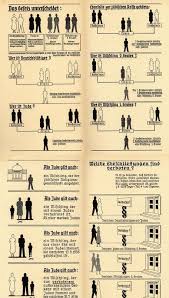
At a 1935 Nazi Party rally in Nuremberg the Fuhrer issued formal classifications of who was Aryan (pure German) and who was Jewish. Known as the Nuremberg Laws, marriages in particular were outlawed between Jewish and Aryan couples. The image above is one document reflecting that Nazi framework, outlining which marriages were permitted by the state and those “verboten” (forbidden).

Hitler insisted these laws were necessary to protect German blood, but the laws also served to isolate not only Jews, but Gypsies, Homosexuals, Jehovah Witnesses, and others. In truth one man defined which human lives were valuable, and those that were expendable.

The ground was prepared for the genocide that would follow.

Dachau was the first extermination camp built in 1933. From that beginning until 1945 the railcars rumbled nonstop to thousands of ash-strewn death camps, while Hitler’s SS liquidated Jewish ghettos of thousands of men, women, and children. By May of 1945 somewhere around 11 million victims perished in a region historians refer to as the “Bloodlands,” including 6 million Jews.

Euphemistically referred to as Racial Hygiene, the Holocaust unfolded gradually and in relative secrecy. However, by the end of the European war and Germany’s defeat the world wondered how this horror could have happened.

We are watching how at this moment.

In Trump’s America that pattern is repeating. The founding of the United States according to Thomas Jefferson insisted that people are born with natural rights, life, liberty, and the pursuit of happiness. But from the George Floyd murder to Trump publicly announcing brown people traffic drugs and are rapists, that assumption has been ignored. This administration has taken racial profiling to a criminal level, as this tyrant harnesses the might of the federal government to carry out warrantless abductions.

Even if American citizens are caught up in sweeps, many insist that this is different, and that those taken deserve it. The pieces of evil are all there.

Racial exceptionalism has been the cause of mass suffering from the Armenian genocide in World War One, to Cambodia’s killing fields in the late 1970’s. The signs are all too familiar.

Trump’s makes no pretense of his intentions stating on 60 Minutes that his ICE goons haven’t gone far enough in terrorizing and kidnapping civilians. The sanctioned ongoing violation of civil and human rights has been grinding away as you’ve read this essay.

The United States was meant to be different–a land with freedom from fear, where people are secure in their places and property. This tradition does not rely on one man’s racism and deliberate cruelty. A cautionary tale is replaying, and we cannot escape that past, nor avoid the sinister outcome.

Mischlinge was used by the Nazi’s as a derogatory legal term. Literally mischlinge means mongrel, a person of mixed blood.

Gail Chumbley is the author of the two-part memoir “River of January,” and “River of January: Figure Eight,” co-writer of the screenplay, “Dancing On Air” based on those books. She has penned three stage plays on history topics, “Clay” on the life of Senator Henry Clay, “Wolf By The Ears” examining the beginnings of American slavery, and “Peer Review” where 47 is confronted by specters of four past presidents.

Never Forget

Martin Niemoller

First they came for the socialists, and I did not speak out—because I was not a socialist.

Then they came for the trade unionists, and I did not speak out—because I was not a trade unionist.

Then they came for the Jews, and I did not speak out—because I was not a Jew.

Then they came for me—and there was no one left to speak for me.

—Martin Niemöller

German pastor and critic of Hitler and a concentration camp survivor.

A Rendezvous

One central  philosophy guided my years of American history instruction. The story had to feel personal to each student, after all it is their country. For the unit on World War Two, I aimed to act as a bridge between my grandparents generation to the kids seated before me. While growing up, my grandparents played a large part in shaping my world view, as the old folks often shared their life experiences. Each had a unique tale on how they committed to fight totalitarianism abroad in the 1940’s, and defend democracy at home. 

All the following accounts involved inconvenience, sacrifice, and interruptions to family life. At that singular moment all they knew was to serve their country, and defeat foreign tyranny. 

A new dark age lay in America’s defeat.

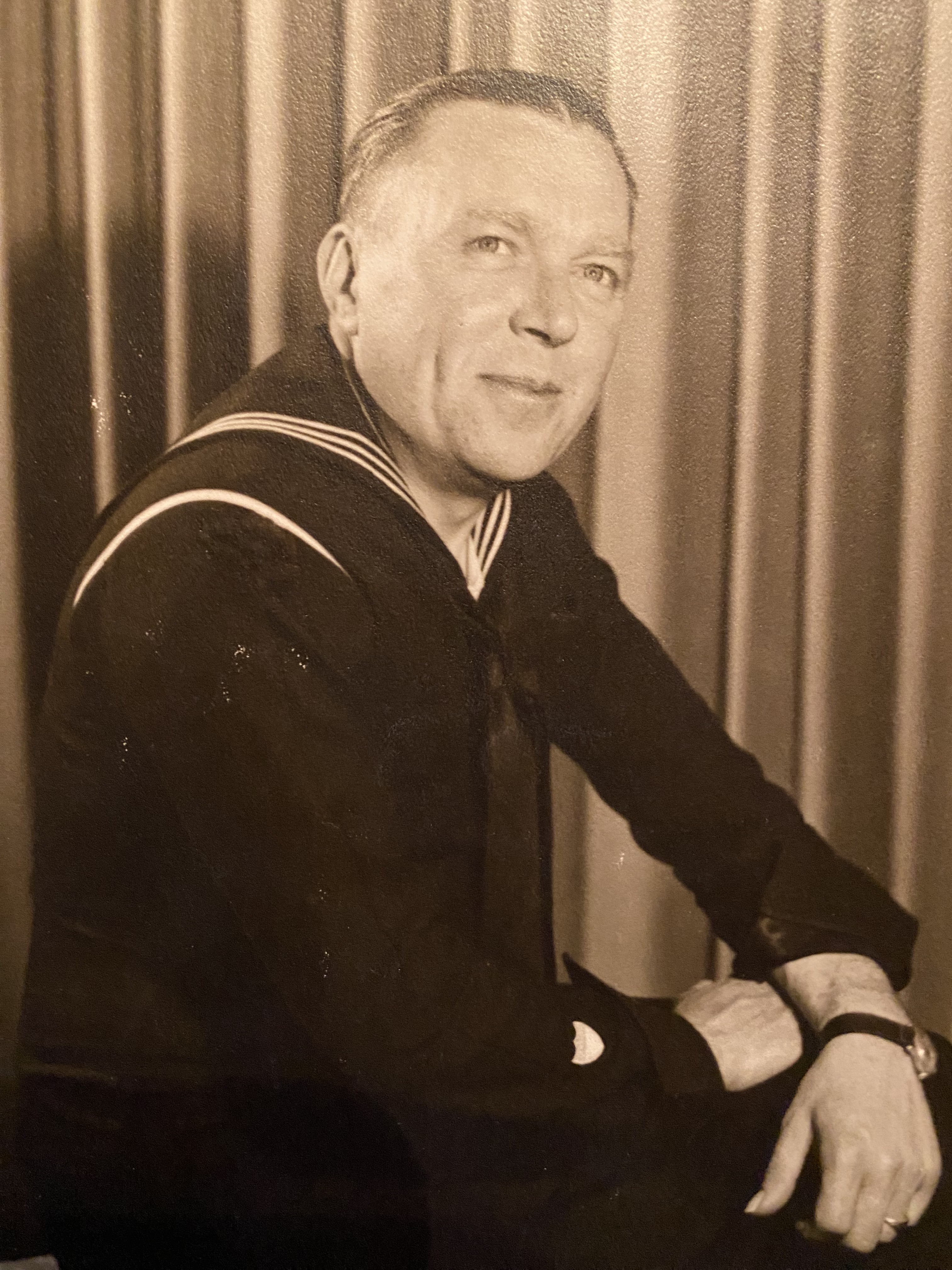
This is Ray Turner, born in 1905 in Hammond, Illinois. This young man migrated west, joining family members in Northern Idaho. Ray soon found his way to Spokane, Washington, where he found work as a postal carrier. Stopping for lunch along his mail route he met a waitress in a downtown cafe, Ailene Peterson, a single mother of one, and after a while they fell in love. Marrying in the fall of 1941, the newly weds, while on a Sunday drive caught a breaking news bulletin on the car radio that the Japanese had attack on Pearl Harbor in Hawaii. Ray turned his automobile around, motored back to Spokane, and joined the Coast Guard the next morning. Stationed out of Willapa Bay in Tokeland, Washington, Ray and the crew of the USS Manzanita patrolled the extensive, rugged Pacific coastline of Washington and Oregon monitoring for Japanese vessels. And it was aboard the Manzanita that Ray remained until August,1945 when he mustered out of the service and returned to Spokane. After a life of grandkids, holidays, and fun on his lake property, he retired from the US Postal Service, passing away in 1974.

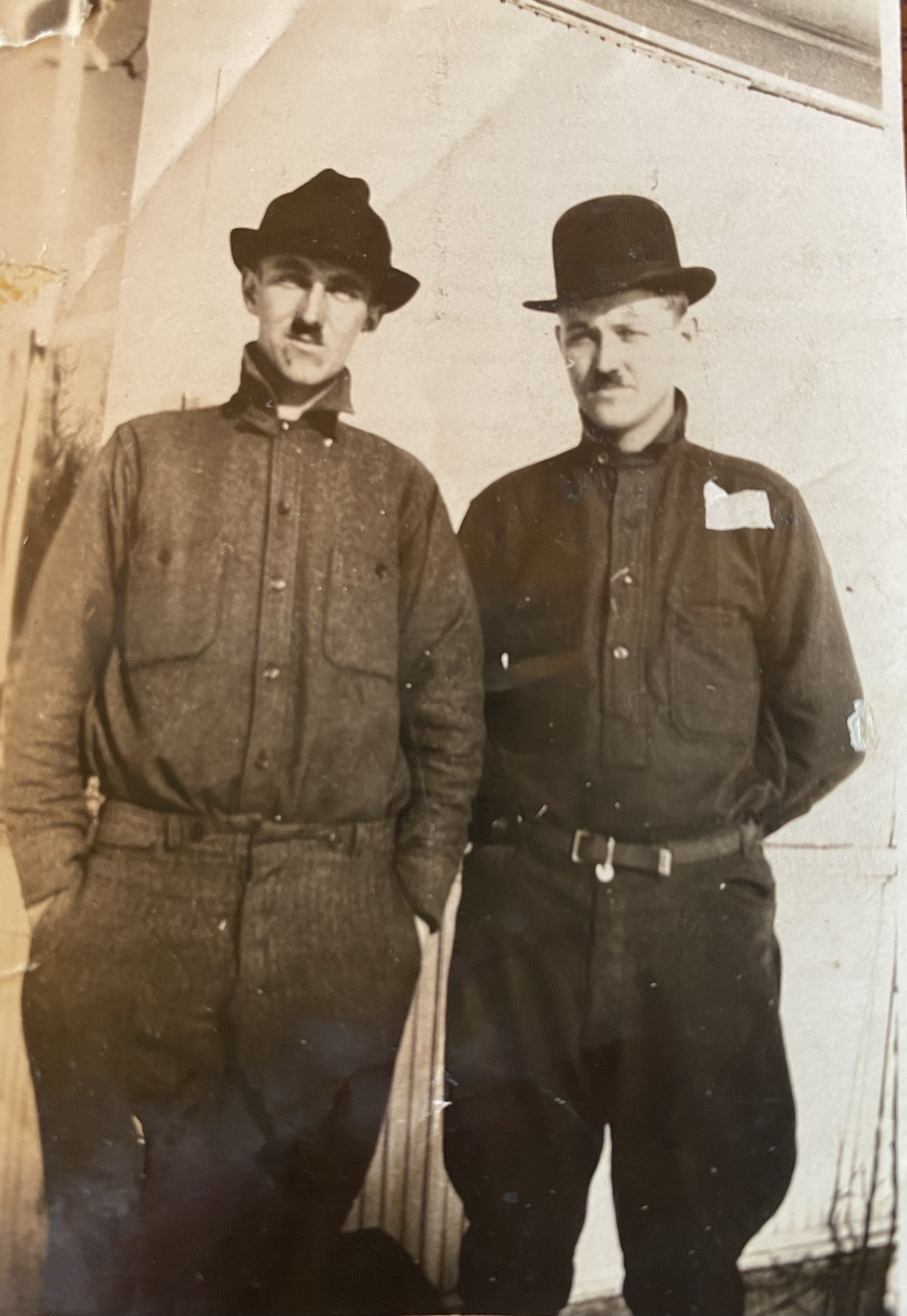
Kurtz Olson hailed from Wing River, Minnesota, born on a frigid day in January, 1905. Kurtz, as the youngest of seven children took up welding as a young man, and made a fair living during the difficult Depression years. This photo, take in the 1930’s, (Kurtz on the left) indicates that Hitler was considered harmless and laughable. That certainly changed in 1939, and after the Pearl Harbor attack brought America into the war, Kurtz packed up his wife and family and traveled west to Tacoma, Washington in search of war work. Kurtz spent his days dismantling scrap metal in a welding yard preparing the steel for conversion to ships, planes, tanks, and other war materiel. After the war Kurtz moved his family to Spokane, where he welded, owned a series of mutts, cut firewood with his son, and grandson’s. Kurtz passed on in 1989. 

IMG_0791

This GI is Joe Tucker, this snapshot taken somewhere in France around 1944. Born in Craig County, Oklahoma in 1907, Joe found himself back in uniform at the ripe old age of 37, much older than the 18 and 19 year-olds in his outfit. Joe had actually been in the army until 1939, receiving his first discharge before the war. Making his way to the Pacific Northwest he too, settled in Spokane where he met and married a widow with three children. His daughter from his first marriage lived in the city, as well, and he wanted to remain near her. Working for the Northern Pacific Railroad, with his new, larger family, Joe joined the Washington National Guard for the extra pay guard duty brought in. After Pearl Harbor the US Government nationalized the Washington Guard, and off he went to war. After training stateside, then stationed in the south of England, Joe found himself on Normandy Beach on June 7, 1944, D+1. Surviving those first days he and his fellow Guardsmen suffered through the Battle of the Bulge, finally winding their way to Germany. On one particular night, Joe stood guard duty somewhere in Germany. He heard his sergeant grouse was the soldier on duty asleep? The reply was no, it’s Tucker, and he’s awake alright. (Joe liked telling that story). Eventually Joe shipped home to reunite with his family in 1945.

From her waitressing job, Ailene Peterson, turned Ailene Turner followed her new husband Ray to the Washington coast. Traveling with her young daughter Ailene looked for war work as well. Born in 1914, in Clinton, Minnesota, Ailene had married quite young, desperate to leave her father’s stump farm in North Dakota. Husband #1, Joe Tucker had failed her, and with her young daughter in tow, sought refuge with family members in Spokane. It was in Bremerton, Washington that she found employment wiring mine sweepers for America’s Russian allies, (she said they were very rude). In later life, Ailene proudly mentioned that her work never had to be redone. She always wired it right the first time. In an operators cab of a crane, Ailene noticed the girls below waving their arms and jumping about. Shutting down the motor she heard them yell that the Japanese had surrendered, and the war was over. Ailene scrambled down from her seat, and joined the victory celebration. She, too, along with Ray returned to Spokane until her death in 1990.

Besides being my grandparent’s, and generously sharing their remarkable stories with me, what else did these people share in common? They put aside their personal lives to step up in defiance of fascism and authoritarianism. They knew that service to America, to our democracy, was their first duty.

Retelling my grandparent’s war-time sacrifices to my history students added a vividness to the coursework that encouraged the kids to do the same with their elders. That, once again is how I bridged the war years to now, making it personal for students. 

President Roosevelt had characterized that moment as America’s “Rendezvous with Destiny,” and those people rose masterfully to the challenge. And despite all the hostility to democracy today, we cannot surrender to those forces, and betray our forebears who stood up to defend our way of life.

Perhaps now is our “Rendezvous with Destiny,” and this time all we have to do is vote for the Democrat over the wannabe dictator.

Once again, a new dark age lay in America’s defeat. 

Gail Chumbley is the author of the two-part memoir, “River of January,” and “River of January: Figure Eight.” Both are available on Kindle. Chumbley has also penned two history stage plays, “Clay,” and “Wolf By The Ears.” She is the co-author of “Dancing On Air,” and feature length screenplay, and is working on “Peer Review,” for the stage, a series of short plays where DJT meets real presidents from the past.

gailchumbley@gmail.com

Behind the Smiles

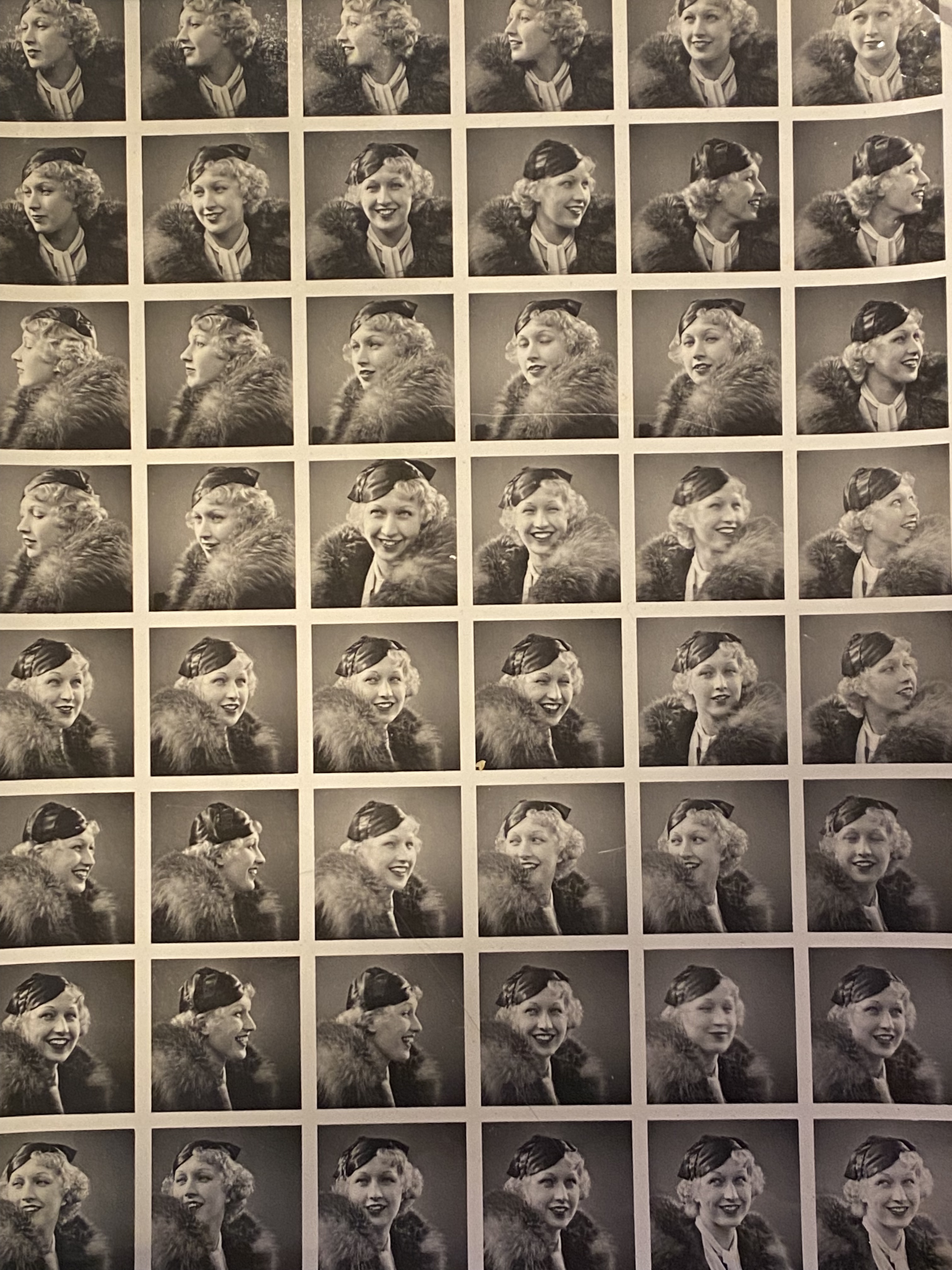
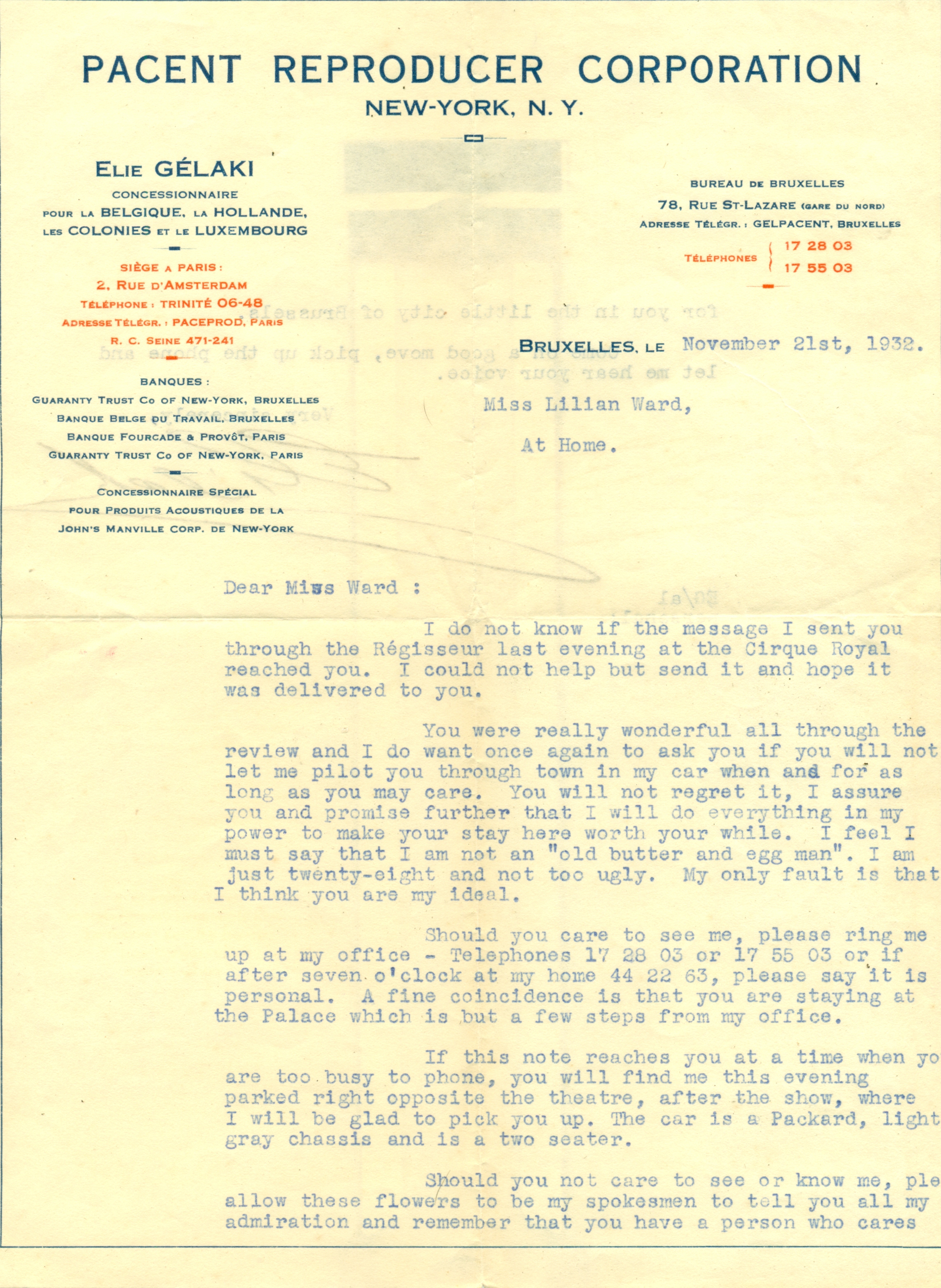
This, of course, is Ann Frank. She sat for this photo montage in Brussels, Belgium, probably just before the war. The studio’s name was Polyphoto International and it was owned by a gentleman named Elie Gelaki.

Six years earlier Elie had established another studio across the Atlantic, in New York City, and evidence indicates he aimed to do the same across Canada, and Japan. Whether those offices actually opened is hard to determine, especially in Japan as war with China had erupted. However, the New York studio did open for business and Elie got to work.

The subject of this session was the reason Elie had traveled to New York. Her name was Helen Thompson and she was a professional dancer. Though at first he had mistaken her name, Elie fell in love with the Helen, eventually following her to New York, seeking marriage. But the wedding never came about.

The 1930’s was a perilous time, especially for people like Ann Frank and Elie Gelaki, both Jewish, living their lives under the growing shadow of Nazism. And though Helen never married the Belgian she worried about his fate as the European war blitzed to life, and of course she knew nothing of Ann Frank until later. You see Helen was my mother-in-law, and though we never met, my husband told me she occasionally shared her anxiety regarding Elie’s fate.

It is evident that behind the smiles, and the momentary pleasure of picture taking, an epic story of three individuals played out in a dramatic chronicle of the 20th Century.

For more of this story read “River of January,” and River of January: Figure Eight” both available on Kindle.

Chumbley has also penned a feature film script based on the books titled, “Dancing On Air,” and in addition two plays on American history topics-“Clay,” and “Wolf By The Ears.”

gailchumbley@gmail.com

Earned Wall Space

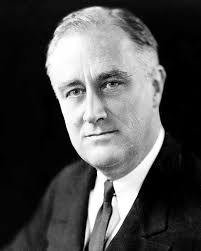
Poking around the basement in my mom’s house I unearthed a framed black and white portrait of Franklin Delano Roosevelt. The picture had been in a stack with other effects from one set of grandparents or the other. Certain this pic would probably end up in a dumpster, I packed it in my suitcase and brought it home. Our 32nd President is on display among other WWII pieces I’ve collected over the years.

What was it about Roosevelt and his times, that earned him premier wall space during the Depression and war years? Today the idea of commemorating a political leader with a  wall display seems odd and quaint.

So again, why did my grandparents include FDR in their home decor?

Admiration may be one reason. FDR appeared bigger than life. The man seemed to have it all: looks, money, and a pedigree that stemmed back to the early Dutch in America. His distant cousin, who also acted as his uncle-in-law, Theodore Roosevelt, still loomed large in American memory. That Franklin Roosevelt wished to carry on the tradition, especially in a time of economic collapse felt assuring.

The laissez faire policies of previous Republican administrations made for widespread fraud, especially on Wall Street. The 1920’s had been a heady time of speculation on the Dow, with banks making reckless loans on high risk investments. When the frenzy crashed and burned in October of 1929, the sitting Republican President, Herbert Hoover, suffered all the blame.

That fact raises another strength of President Roosevelt. The public trusted him. While autocracies generated “cults of personality,” Stalin, Mussolini, and Hitler, this candidate earned his office promising America a “New Deal.” He assured the country that they had not failed, the system had forsaken them, and as their new President he meant to correct those abuses.

The choice to hang Roosevelt’s portrait came from genuine respect, not fear or blind partisanship. The people elected FDR because he meant to be of use to all the American people.

This President brought energy and purpose to the Executive Branch reaching Americans personally in their daily lives. New Deal legislation quickly translated into action with legions of new programs all designed to get folks working again. The public felt a connection to the White House that perhaps hadn’t existed before that time. Mail arrived in daily landslides, mirroring FDR’s earlier political victory. Most letters requested a “hand up,” not a hand out, and that any financial help would be repaid to the government. R.E.P.A.I.D!

FDR brought electricity to rural America, lighting the night and powering radios that broadcast his Fireside Chats. Bridges, schools, and other large engineering projects connected the nation as never before. It’s a sure thing your town or city still bears an imprint of FDR’s time in office.

So it is with respect and gratitude that I have placed Franklin Delano Roosevelt on my living room wall. He set the bar for what a Chief Executive ought to be.

And after all, it’s a family tradition.

Gail Chumbley is the author of the two-part memoir, “River of January,” and “River of January: Figure Eight.” Both titles are available on Kindle. Chumbley has also authored three historical plays: “Clay” on the life of Senator Henry Clay, and “Wolf By The Ears,” concerning the evolution of racism and slavery in America, and Peer Review, where four long ago presidents speak with 47.

gailchumbley@gmail.com

The Long Haul

After the 1929 Market Crash the world fell into regional, nearly feudal isolation, and international trade quickly dried up. America, too, focused inward largely due to the nation’s earlier participation in the Great War in Europe.

Across the Pacific the Japanese Empire aimed to take advantage of global disinterest promoting its own national interests. Sold to other Asian countries as the “Co-prosperity Sphere,” hyper-nationalistic Japan intended to expand across the region, especially toward vulnerable, resource rich China.

Great Britain as well, struggled alone in a financial malaise, as did the French across the channel; both nations saddled with debt to American banks from the previous war. Germany, the defeated nation struggled with their own war debt demanded by the British and French.

The shroud of economic depression hung like a millstone over Europe and the rest of the world.

As the financial, and political fallout grew wildly unstable, regimes hunkered down and hoped for better times. However the climate instead became chaotic, bringing anti-democratic demagogues to power.

The Italians were first, producing a Fascist strongman, Benito Mussolini. El Duce, as he was known suppressed political diversity, harnessed economic efficiency, and soon, like the Japanese, pursued colonial inroads into Libya, and later the conquest of Ethiopia.

Germany soon flirted with its own style of fascism, with a meaner, violent credo. In a reaction to impossible debts, and national pride, Adolf Hitler, a feckless dreamer, stood on beer hall tables, and passionately spoke of national betrayal. Hitler revealed his malicious intentions by blaming Bolsheviks, Capitalists, and Jews for the hated Armistice of 1918, and war debt owed to the Allies.

Yet America, unlike the rest of the world, clung with all their might to the national system of Constitutional norms. At the same time Germany elected Hitler in 1932, the U.S. found their champion in Franklin Roosevelt. 

A popular Roosevelt Coalition steered the country through those hard years holding America together. FDR’s New Deal and Fireside Chats broadcasts kept at bay the fears of a nation. That’s not to say there weren’t kooks, to borrow Lindsay Graham’s phrase, but Americans faced the long haul together, believing better days had to be ahead.

The current President is no Franklin Roosevelt. And his autocratic tendencies, strongly echo those in the 1930’s.

In Project 2025 Trump aims to raise tariffs, shut down borders, all done to economically and politically isolate America. Using the same playbook of past despots specific groups are targeted as the problem. The guilty include immigrants, the LGBTQ community, liberals, educators, women, and the rule of law all in the crosshairs. All done to divert and distract while he lines his pockets.

And his tactics, so far have succeeded making half of the electorate real mean.

So, here is the question. Can America survive?

Can Americans remain bound to the framework of our 238 year old republic as it did in the Great Depression? Or will this nation forsake our financial, social, and political traditions and turn to petty retribution and scapegoating?

Will we, as a nation withdraw from the world and exchange our democracy for a strong man who insists he has all the answers?

The signs are clear. When this national crisis has passed will there be enough of us left who stood resolute for our democracy? That is the question of this historic moment. 

Gail Chumbley is a writer and history educator.

A Dreamer

You may say I’m a dreamer, but I’m not the only one, I hope someday you’ll join us, and the world will live as one.

John Lennon

A professor of History and Government, President Woodrow Wilson fervently believed America could fulfill its promise as the world’s beacon of democracy, a “City Upon a Hill.” After WWI, this President aimed to reform old monarchial Europe, and lead the world to a new, enlightened destiny. But perhaps his ambitions were too lofty to be realized in a cynical world of power and greed.

Participants convened at the Bourbon Palace of Versailles on June 28th, 1919 to design a new future for . . . really the entire world. Wilson attended in person, which for an American President was a first. He posed, all smiles with the French president, Georges Clemenceau, the English Prime Minister, David Lloyd George, and Italy’s, Vittorio Orlando.

Considering the devastation from the recent war, these leaders had their work cut out for them.

After the Armistice had been signed the previous year, Wilson prepared for his journey by completing a new framework to rebuild a better world. Titled the Fourteen Point Plan, the President outlined a path to enduring peace. The intent was clear: Freedom for all. Free trade, self-government, transparency in treaties, a reduction in weaponry, and most importantly, an international peace-keeping body, The League of Nations. This proposed League had been crafted to resolve international conflicts through open diplomacy. For Wilson, mechanized warfare had proven pointless, so much so, that modern warfare had become a zero sum game.

Naturally many attendees were self-appointed representatives from oppressed ethnic groups around the globe. All had gathered to endorse the American President’s call for free governments, freely chosen.

The Chinese, for example, lobbied for colonial possessions formally held by Germany be returned. China was ignored. Young Ho Chi Minh, a student in Paris, attempted to see President Wilson to discuss the liberation of his home, French Indochina, (Vietnam). But Ho never got trough the gilt doors of Versailles.

The multitudes under British colonial rule, clamored for freedom, as well. Egyptian, East Indian, and Muslim peoples embraced Wilson’s vision of self determination. Zionists, Palestinians, even the Sinn Fein in Ireland looked for release from British subjugation.

Returning home to the White House, the President received a cable that his deputy remaining at Versailles, a Colonel Edward House, had agreed, in Wilson’s absence, to drop the League provision. Wilson flipped his wig and back he sailed, to resurrect his League as a non-negotiable part of the final agreement.

And though the League of Nations was indeed established, the US never joined. After all the horse-trading with his counterparts in Paris, Wilson could not convinced Republican Senators to ratify his treaty. Stunned, the President took his crusade to the American people, via a whistle stop tour. Exhausted by exertion and poor health, Wilson finally collapsed, followed quickly by a massive stroke.

Without the United States participation the League invariably failed. And a broken Woodrow Wilson died shortly after leaving office.

Perhaps President Wilson was foolish to think old world autocrats would give up any power and authority to colonial possessions. Clemenceau and others had viewed him as hopelessly naive. And maybe Wilson’s critics were correct. The man had a stubborn, self-righteous streak, that ultimately was his undoing.

Open government, free elections, and international commitment to fair play. Was Wilson merely a dreamer?

Gail Chumbley is the author of the two-part memoir, “River of January,” and “River of January: Figure Eight.” Both titles are available on Kindle.

gailchumbley@gmail.com


Unexpected Inspiration

Dear Helen and Chum

I’ve neglected you since publishing your story, and I regret my doubt-inspired silence.

The delight of researching the both of you, made clear that you lived more life than I’ll ever see in mine. Risk, peril, glamor, and ambition. You put yourselves out there, and is the best story, ever.

I wrote those books wracked through with feelings of inadequacy. Possessing little experience as a writer, I took on both volumes largely on my own and finished them, impatiently pushing the story out to the world, mistakes and all.

Still, I’m not sorry to have narrated your journeys, it’s the most kick ass true story I’ve ever encountered. 

Fear and confusion froze this greenhorn in her tracks. I am guilty of getting in the way of sharing your adventures, and reliving your forever love story. Forgive me. I presumed this 20th century saga belonged to me, but that is not so. Truly, there would have been no books at all, without your daring and triumphs to inspire me.

These books were not a mistake. 

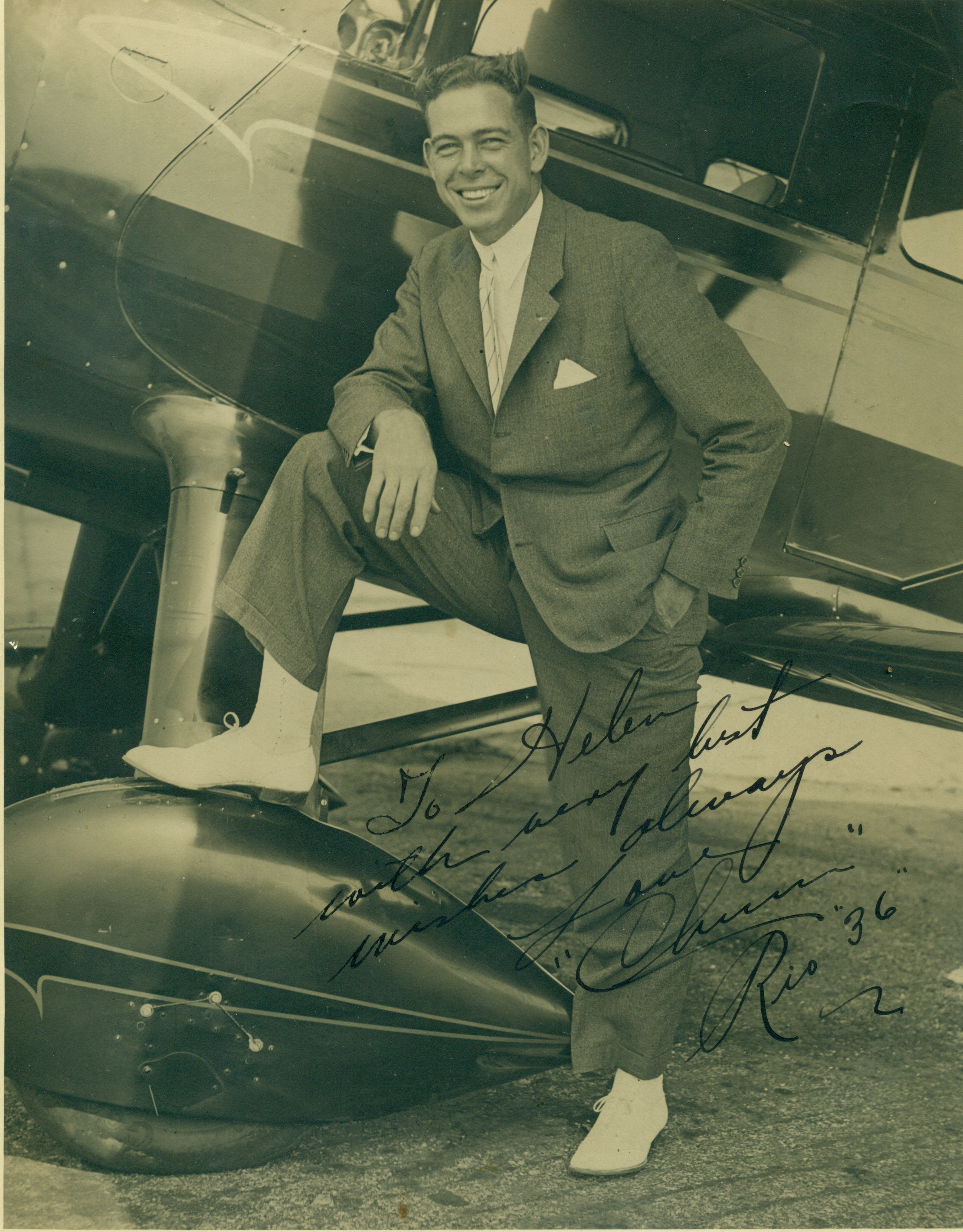
Chum, you squared your shoulders, took a deep breath and strapped into that cockpit, forging a career of monumental consequence. The victor of the 1933 Darkness Derby, you braved the night skies over a sleeping America. Flying your mighty Waco aircraft, you touched down at Roosevelt Field where Lindbergh and Earhart began their storied flights. Later, in defense of democracy, you piloted US invasion orders through a dangerous South Pacific typhoon, tossed and slammed by up and down drafts, to complete your mission.

And to you sweet Helen, though we never met in this life, you inspired the entire effort. It was that first visit to your Miami home when something stirred inside me. A unexpected inspiration. Remember that black and white glossy? The portrait of a sultry platinum blonde? You know the one. Chum had it up in his room until the end.

That photo triggered a spark, a slow burning fire I could not ignore. This story had to be shared. The European tours, dancing, dinner with Maurice Chevalier, cruises across the Atlantic on the SS I’le de France, vaudeville with comedians Jans & Whalen. Then off to Rio de Janeiro you sailed, opening at the Copa Cabana. And after your marriage to Chum, and the war broke out you took up ice skating, performing nightly for Sonja Henie’s productions at Rockefeller Center. My God! What a life.

“River of January” is done, as is the sequel, “River of January: Figure Eight.” Preserved in the pages is magic, whether in the sky, on the sea, under the footlights, and revolving across shimmering ice. This story crackles with your energy.

This won’t be neglected any longer. I’m getting out of your way.

With Love, and Eternal Admiration,

Gail

Gail Chumbley is the author of the two-part memoir “River of January,” and “River of January: Figure Eight.” Both titles are available on Kindle.

gailchumbley@gmail.com

Pickaxe To Nerve Agent

Josef Stalin was the embodiment of evil. Moreover, if one figure set the standard for Russian despots, it was Stalin. His reign of domestic brutality and foreign terror set the tone for a long, dangerous Cold War. Czarist Russia had set a particularly high bar for authoritarianism, but Uncle Joe inflicted monstrosities that would make Ivan the Terrible cringe.

After Russia withdrew from WWI, through a series of moves, the Bolsheviks, headed by Vladimir Lenin prevailed in gripping the reins of power. Through the aid of Leon Trotsky, a brilliant intellectual, and Josef Stalin a seasoned street fighter, the Bolsheviks founded a peoples state, loosely framed around the teachings of Marx.

During the next few years The US provided relief to the starving of Europe from Great Britain to Vladivostok. But aid made no difference to Lenin. In 1919 the Comintern was established in Moscow, professing the aim of Communist takeover of the world.

In 1924 Lenin died, and a fresh struggle for power ensued. When the snow storm settled Stalin was in command and Trotsky exiled.* Conditions in Stalin’s USSR flowed a crimson red. The Kremlin’s secret police cracked down on the people, through arrests, murders, and spying. By 1934 the NKVD began a purge that included the liquidation of middle class Ukrainian farmers resulting in the deaths of millions.

And those policies were domestic.

At the same time, spying took center stage in Stalin’s foreign policy. English and American assets were turned including left-leaning Americans disillusioned by the Depression, and England’s Cambridge Five, headed by Kim Philby. Philby held a high clearance in British intelligence. The use of such double agents allowed Stalin to essentially shoot fish in a barrel.

Atomic weaponry literally mushroomed on the scene, raising the stakes in East West relations. America lost it’s mind in the Red Scare, and Soviet agents burrowed deeper undercover.

That was then. But it is also now. Excluding reformer, Mikhail Gorbachev, Russian leadership emulates the tone set by Josef Stalin. Infiltrating the National Rifle Association, political misinformation, cyber hacking, and buying off scoundrels with generous loans, Vladimir Putin is an apt pupil of old Uncle Joe.

On January 6, 2021 as white supremacists broke past Capitol barriers, vandalizing and assaulting law enforcement, the winner of that moment was Vladimir Putin. Destabilizing America has been the object of the struggle since the Russian Revolution. 

Dear GOP, you are indeed Putin’s puppets.  

*Trotsky was murdered in August, 1940. An operative bludgeoned him to death outside Mexico City with a pickaxe. Putin critic, Alexei Navalny is currently in a Russian jail, weakened by a nerve agent that was meant to silence him.

Gail Chumbley is an author, and history educator. Her two-part memoir, “River of January,” and “River of January: Figure Eight,” are both available on Kindle.

gailchumbley@gmail.com

Masterpiece

Russia and the US didn’t have much contact in the 19th Century. A rumor had once circulated insisting presidential candidate, John Quincy Adams had procured American virgins for the Russian Czar when a young diplomat in Moscow. Not true, but there it is.

Still, the political tyranny of Russia has been widely understood in America as early as the 19th Century. When Abraham Lincoln condemned racism and intolerance stateside, he remarked that Russia’s oppression was, at least, less hypocritical than practiced in the United States. Lincoln’s Secretary of State, William Henry Seward later had his moment with the Czar when he negotiated the purchase of Alaska from Russia. Seward’s Ice Box, 1867 newspapers scoffed.

Some sixty years later, during World War One, revolutionaries deposed the Czar, and the last Romanov abdicated his throne. Bolsheviks arrested the former Czar, eventually shooting him, and the rest of the royal family in July, 1918. That same year President Wilson dispatched American forces to Archangel, to aid the White Russians to defeat Vladimir Lenin’s Bolsheviks, and stabilize democracy. The Whites failed, surrendering all of the vast Russian landmass into the hands of the Communists.

In the newly founded USSR, Premier Vladimir Lenin established the Comintern, the Communist International, publicly pronouncing the Soviet aim of exporting Communism worldwide, prompting in America our first domestic Red Scare.

In the following years, economic depression shrouded the globe, only dispelled by the horror of World War Two. Josef Stalin, Lenin’s cruel, and ruthless successor, struck a nonaggression pact with equally ruthless Adolf Hitler, dividing Poland as a buffer to buy time for both dictators. It comes as no surprise that neither trusted the other, and in 1941, Hitler launched Operation Barbarossa, invading the Soviet Union, bringing an abrupt, bloody end to that alliance.

After Pearl Harbor, the the Russians found themselves, by default, allied to Britain and the United States. Stalin trusted Washington about as much as he had Hitler, and in return Washington didn’t trust Stalin. Both Churchill and FDR remembered the Russians had cut and run during WWI, and the recent treaty with Hitler. Still, the two leaders went out of their way to appease their new Soviet ally.

In the last months of the European war, Stalin signaled his intentions to dominate by billeting the Red Army throughout Eastern Europe. Western allies acquiesced to Stalin’s aggression, and allowed Red forces to enter Berlin first, where the Communists didn’t leave until 1989.

A second Red Scare hit America much harder than the first. Stalin’s operatives managed to purloin atomic and hydrogen bomb intelligence, successfully delivering them to Soviet physicists to replicate. During the Kennedy Administration, the Berlin Wall sprouted up nearly overnight, and the entire Soviet Sphere of Influence made for an intense, dangerous Cold War. Conflict burned hot in America, the government attempting to flush out possible subversives, and ruining the lives of many innocent citizens. Julius and Ethel Rosenberg were executed for espionage, and Joe McCarthy accused the State Department and Army of harboring Communists. Soviet satellite Sputnik orbited the globe in 1957, the U2 spy plane crashed inside the Soviet Union in 1960, while at school we practiced ‘duck and cover’ drills. Proxy wars increased American foreign aid and deployed US forces to our allies across the free world, from Greece to Vietnam. 

Some of America’s greatest Cold Warriors included President Eisenhower, JFK, Richard Nixon, and Ronald Reagan. President Reagan, in particular, while speaking in Berlin, demanded the Soviets “tear down this wall.” These Chief Executives understood that any agreements with the Kremlin required stringent verification before any closure. America’s Soviet rivals were seasoned operatives, and were, in no way, friends of the west.

So where does this story leave us? Clearly the Kremlin has not changed. Spy networks, election hackers, and embedded operatives are perpetual threats. Maria Butina, the little Red darling of the NRA, and the GOP is an example of Russia’s recent relentless efforts. So, when an American President smiles and pays court to Vladimir Putin something serious is amiss.  

Update: At a Conway South Carolina campaign stop on February 10, 2024, Trump remarked concerning NATO, “”If we don’t pay and we’re attacked by Russia, will you protect us? No, I would not protect you. In fact, I would encourage them to do whatever the hell they want.”

The Russian government is patient, and that patience has appeared to pay off. Putin’s masterpiece? He elevated a Russian asset to the White House, and convinced GOP voters to look the other way. 

At this writing the entire Republican Party still remains steadfast to their Russian operative as he remains the presidential frontrunner for nomination.

Gail Chumbley is a history educator, and the author of the two-part memoir, “River of January,” and “River of January: Figure Eight,” Both available on Kindle. Chumbley has also penned three stage plays, “Clay,” “Wolf By The Ears, and “Peer Review.” In addition, Gail has co-written “Dancing on Air” a film script centered on a true 20th Century tale of Depression and War.

gailchumbley@gmail.com