The Patriotic Long Game

When reflecting on my career as a public classroom teacher I hold on to many fond memories. The subject, American History, provided a lot of fascinating stories to share with teenagers coming of age in America. The kids came from varying backgrounds and abilities but once the door closed we focused on a subject that linked us together as one people.

One memorable lesson concerned the Second Continental Congress and adoption of the Declaration of Independence. Together we unpacked the document, followed by guided questioning to clarify the contents. Thomas Jefferson lists the extraordinary circumstances that brought about the decision to split with Britain. Part of the substance listed the abuses of the King and measures colonials had to take to be heard. Toward the end of the lesson I asked the class who they thought Jefferson might be addressing with his lengthy explanation. One boy cautiously raised his hand, an astonished expression on his face, and in a surprised voice he answered  “me.”

Indeed.

Toward the end of the academic year the kids were assigned to sit down with an elder and interview the person about their recollections of life in an earlier time. Students had studied a lot of decades which prepared them for those recordings. In a particularly powerful interview a boy contacted his uncle, a Vietnam veteran, and asked him to tell about his tour of duty in that bygone war. This veteran had not spoken of his service to anyone since returning in the late 1960’s. And although this poor man wept through the recording he apparently cleansed his soul for after decades of self-imposed isolation the uncle began to join family get-togethers.

My student said it was a miracle.

Lessons from the past such as these are vital to understanding America’s present. Though the course required a great deal of writing and analysis, a sense of accomplishment filled the room with an aura of confidence, and national belonging.

Today, over a decade has passed since my retirement, and much has changed in American classrooms. Rather than sanctuaries of learning classrooms have become battle fronts in the culture wars. A small, but loud minority has succeeded in chipping away at the foundation of public education, ironically something Mr. Jefferson promoted as vital to freedom. Sadly those misguided assaults imperil our nation’s ability to survive intact. 

The underlying cause appears to concern social class, power, and money. To educate all requires tax dollars, dollars fewer want to pay. Further, education implies looking toward the future, providing hope that the promise of America will pass on to new generations. Making money now and keeping it is more important than any investment in other people’s kids. Besides the upper classes can afford to educate their children, and believing they must shelter them from the lower classes. That attitude runs counter to America’s motto: E Pluribus Unum, Out of Many, One. Education is a promise that opens up a world of possibilities. That power and possibilities the well-heeled wish to hoard.

Take, for example, Betsy DuVos appointed by Trump 1.0. She took the job as Secretary of Education for the sole purpose of defunding and dismantling public schools. This is not hyperbole. As Secretary of Education, she made no secret of her contempt for public education. In her official role she pushed for school vouchers, charter schools, private institutions, all designed to ensure gated-community education. Stripping down federal education statutes and funding marked her time in Washington.

With Trump 2.0 even the Department of Education is gone. Critics attacking public education lack serious understanding of our public system, and that threatens our national viability.

History could not be more clear regarding the obligation to America’s youth. After the Revolutionary War as land opened up in the Great Lakes area, Congress passed the Northwest Ordinance (1787). This law organized a numbered survey grid mandating revenue from section 16 of the survey be earmarked for public education.

In the years after the Civil War waves of immigrants from Eastern and Southern Europe flooded upon America’s shores. To aid the newcomers settlement houses, such as the Neighborhood Guild in New York City, and Chicago’s Hull House, children attended classes to learn to be American. Too bad we can’t rally the same enthusiasm for all our kids today.

Now self-appointed curriculum experts pack local school board meetings, demanding removal of books, blaming and bullying over-worked teachers which isn’t helpful. Understandably many educators leave after only a few years, while the rest bravely persevere. What our teachers need is meaningful support as they shoulder the duty of classroom instruction plus all the distractions of behavior problems, lockdown drills, bomb threats, and active shooter protocols.

This is an issue of national self interest. There is nothing sentimental or saccharine about how it takes a village. It does take all of us. We all bear responsibility to all of our kids, for they cannot do this for themselves.

Leave teachers alone and let them continue to weave that same magic I experienced for all of our students. We have and will continue to turn potential into reality.

Whether a parent or an educator, or a retired senior, we are depending on you all to protect the patriotic long game.

Gail Chumbley is the author of the two-part memoir “River of January,” and “River of January: Figure Eight,” co-writer of the screenplay, and “Dancing On Air” based on those books. She has penned three stage plays on history topics, “Clay” on the life of Senator Henry Clay, “Wolf By The Ears” examining the beginnings of American slavery, and “Peer Review” where 47 is confronted by specters of four past presidents.


National Longevity

Titled the National Defense Education Act of 1958, this federal legislation aimed to set more rigorous standards for American public schools, and low rate loans for college students. Curricular revisions set out by the act focused primarily on math and science so America could maintain its technological preeminence across the globe.

Spurred by the launch of the Soviet-made satellite, Sputnik, panicked lawmakers believed American schools faced the danger of falling woefully behind our Russian adversaries, and the U.S. had to catch up.

Sputnik had followed a series of Cold War crises focusing on Communist threats at home and Communist aggression abroad.

Labor activist, Gene Dennis served five years in prison for his public association in the American Communist Party, while Josef Stalin kept the Red Army in East Germany, and blocked the Autobahn (freeway) into the free sector of West Berlin. Through Soviet agents the Russians had absconded with America’s hydrogen bomb secrets, and in 1953 Julius and Ethel Rosenberg were executed as Soviet spies..

Perhaps today this lone Soviet satellite would alarm no one, nor trigger such alarm, but at that perilous moment the Russians were the first to launch a hostile electronic eye in the sky. Understandably when newspapers screamed “Do you want a Soviet moon orbiting America?” President Eisenhower, and the American public answered in unison a decisive no.

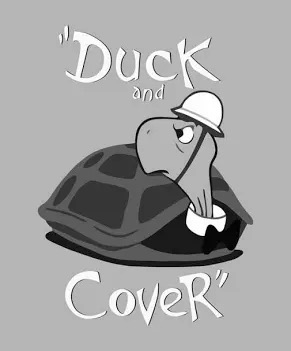
In my Spokane elementary school we practiced “duck and cover” drills to offer the veneer of protection in the event of a nuclear attack, and endured Wednesday noon air-raid tests that blared throughout the city’s neighborhoods, as they did in every American city in that era. Inside the lobby of my grandparents apartment building yellow and black Civil Defense signs pointed residents to a basement bomb shelter, to hopefully ride out a nuclear holocaust.

Though termed a Cold War, fear and anxiety simmered, permeating every aspect of national life.

Urgency filled the halls of Congress, members certain Soviet schools were producing higher level mathematicians and physicists. American schools, in the minds of legislators had to buckle down to compete in the Atomic Age. 

The crucial piece of this narrative concerning the launch of Sputnik? The United States came together as one and and met the challenge.

Our leaders wished to protect and preserve America for generations to come, and the best means of doing so centered on public schools. The United States would continue forward and American children educated so that one-day as adults, they would assume their places for a new generation..

To educate inherently implies a future–that learning is a vital investment and tomorrow will come. Education is an act of faith in America and continuity.

Sadly that period of purpose and unity is long gone.

The Department of Education is no more, universities are under siege, and public schools underfunded. No longer are students encouraged to buckle-down for their own personal, national, or existential longevity. There is no vision of a future for many of our kids.

Facts, understanding, and open inquiry is viewed as subversive.

Today’s blaring sound isn’t an air raid siren. A bellowing of conspiracists and deniers, plus the politicians who coddle them undermine our ability to effectively meet this generation’s challenges.

The dangerous years of the Cold War were scary. National defense colored every facet of our lives, especially in the classroom. JFK encouraged us to “do for our country,” and we were inspired by the challenge. Today is far less certain. Poverty, hunger, and the wealth gap smothers hope and squanders our greatest asset, our children, and that loss dims America’s longevity.

On a personal note New Math became the bane of my existence. Even today algebra and the like trigger stress and self doubt. That being said I did my best because I knew I had a future in a country that cared.

Gail Chumbley is the author of the two-part memoir, River of January, and River of January: Figure Eight. In addition Chumbley has penned two plays: Clay regarding the life of Senator Henry Clay, Wolf By The Ears, an examination of racism and slavery, and Peer Review where 47 converses with four past presidents.

Worth Reading

I submitted this short note to my State Senator. Feel free to copy and send to yours.

This email is in regard to the library controversy. As an educator the notion of deciding what is acceptable portends bad things to follow. Using one incident of a child’s book isn’t a full picture. Not one of us read the same thing, and that is true for children. I shudder to contemplate legal censorship as a slippery slope to authoritarianism. I know the far right is attempting to control our community, and that should be enough of a red flag to stop this bill in its tracks. Our libraries are one of the last institutions that bind us together as Americans and Idahoans. To speak plainly the bill is just a bad idea and isn’t workable. If the titles under scrutiny become public, those books sell like hotcakes. It has been since the days of Lady Chatterly’s Lover, or currently The Absolutely True Diary of a Part-Time Indian by Sherman Alexi.

As stated by Isaac Asimov “Any book worth banning is a book worth reading.”

Sincerely,

Gail Chumbley

Why We Try

2017 Women’s March

When I first began this essay it ripened to nearly five hundred words to share one idea. Why I am a life-long Democrat. 

The original essay discussed the New Deal, the creation of the United Nations, the Marshall Plan, the GI Bill, and how strengthening Labor Unions evoked a sense of common purpose; how the economy boomed, and the middle class flourished.

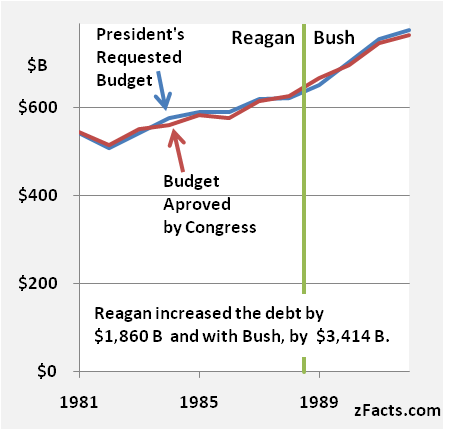
Now all I want to impart is that Ronald Reagan was wrong. Big government is not the problem. Big government checked by regulations works remarkably well. 

I am a Democrat because with all its flaws, we stand equal in the eyes of Constitutional Law.* People made the Constitution, and we must preserve it. In general, States’ Rights is no more than a distraction perpetrated by selfish insiders who legislate their own interests. Residents are convinced through a wink and a nod, that the enemy (Big Government) must be defied, using catch phrases like “our values,” and “real conservative.”

In truth, the Federal Government can do more for all of us than any individual state, or any individual citizen can do for themselves. As I write, Idaho’s governor has asked for, and been granted federal funds for drought aid. Talk about biting the hand that feeds the State.

I am a Democrat because I’m inspired by the nobility of America’s past champions; the persistence of General George Washington, the compassion of Abraham Lincoln, the purpose of Alice Paul, and the articulate vision of Barack Obama. I am a Democrat because James Madison instructed us to create “A More Perfect Union.” Without that persistence, compassion, purpose, and vision America cannot continue as “the world’s last best hope,” as Lincoln also described us.

At bottom I am a Democrat because I know not one of us is perfect. We just keep trying. 

*Just heard the headline regarding the reversing of the Roe decision. Time to gather 4,600,00 of my best friends (2017 Women’s March) and organize.

Insulting The Past

The first time a parent challenged my teaching in history class, took place my first year. The topic concerned the creation of the Constitution, and the era of the Early Republic. I introduced the three branches, and separation of powers, census, representation, and that type of basic information. Definitely the bare bones of Civics.

During that lesson I explained how Electors were determined, and role the Electoral College played in choosing the president. End of lesson. The following day the topic moved to ratification and the addition of the Bill of Rights. From out of nowhere a hand shot up, and an upset student blurted, “My dad says you’re a liar!”

Yep, a liar. 

That was my baptism into the sliding scale of historic facts, and that initial chill of suppression stopped me in my tracks. Following that episode, censorship never strayed far from my thoughts. It was the beginning of a caution that lasted the whole of my career.

Fast forward 30 years in history education, when a similar event repeated.

The topic this time concerned the Reagan Revolution, and the events surrounding those years. 

Students learned about the Evil Empire, “Mr. Gorbachev, Tear Down This Wall,” Perestroika, Glasnost, Reaganomics, Laffer Curve, Trickle Down, etc . . .

Foreign policy topics covered Central America and the Middle East, particularly Nicaragua and Iran. Reagan officials were selling weapons to America’s enemy Iran, using the funds to put down a Marxist insurgency in Nicaragua. A privatized foreign policy if you will.

The calls came the following day. “How could I teach such nonsense in a public school! My student came home and shared her notes, textbook and graphs. This is not right, Ronald Reagan is the beloved champion of conservatism!”

The principal called me in and wanted to know what caused the dust-up. Flustered, I didn’t know where to start. Quickly I explained the general outline of the unit, and, well, he didn’t have the time to listen to the details. And he shouldn’t have. He hired me to do that job.

The episode sort of blew over, though that parent did call me at home a number of times over that summer. Weird behavior for sure, like the dad couldn’t let it go. 

For me the matter became philosophical; either educators prepare kids for the path, or parents attempt to manipulate that path for their kids.

Touchy parents revising America’s story to force their current politics on schools does nothing less than highjack education. Talented people leave the classroom endangering the US’s most essential institution. Worse, the exertions and sacrifice of those who came before, are papered over to suit today’s furor.

America’s lifeblood is our shared story, it’s what defines us as a distinct people. We must understand those central principles from our past to move forward as a healthy nation.

To those students whose parents challenged the historic record, it’s unfortunate they cannot let go just a little, and trust public education. This is our kids birthright.

And know this-I wasn’t lying.

Gail Chumbley is the author of the two-part memoir, “River of January,” and “River of January: Figure Eight.” Both titles are available on Kindle. Chumbley has also written three stage plays, “Clay,” regarding the life of Senator Henry Clay, “Wolf By The Ears,” an exploration into American slavery, and Peer Review where 47 meets four earlier presidents.

Distraction By Design

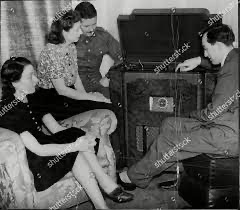
On October 30, 1938, radio listeners tuned into Mercury Theater on the Air, a CBS radio program.  The broadcast, scripted and narrated by actor Orson Welles, dramatically detailed a moment by moment invasion of Earth by Martians. To the folks who tuned in late to the program the events were construed as real, that indeed the planet had been attacked, followed with authentic panic erupting onto American streets.

Welles, and Mercury Theater producers intended the script to sound like breaking news, and real it had been received. Bedlam broke out, threaded through with stories of injury, and of suicides. The whole episode left Welles and his producers with a lot of explaining to do.

The following day, CBS Radio and young Welles, (23 at the time) made an on-air apology for the chaos. Eventually the story died down, relegated to an interesting moment of Depression-era America.

Much like October, 1938, mass hysteria has again let-loose upon the country. Only this time the  alarm, and distraction is by design, jolting anew on a 24-hour news cycle. Cannibals, sex trafficking politicians, lizard people among royal families of Europe, and poisonous contrails find gullible believers who hang on every fearful word. 

And the heaviest assault is lobbed directly at main stream media.

How? Don’t believe any of what you see and hear, unless endorsed by the Right-wing echo chamber. In a real world of Covid, climate change, and other pressing issues, the blaring noise of the propaganda machine has sabotaged progress creating more avoidable problems.

Unlike Orson Welles, the profitable rot pumped continually through cable, books, and the internet is disseminated without a self conscience blush, let alone any apologies for damages done and lives lost. American consumption of news has degraded far below any sort of accuracy or structured analysis.

Sadly, a large segment of society cannot separate the wheat from the chaff. Consider those who died consuming ivermectin, hydroxychloroquine, and even bleach. Misinformation and fear is lethal.

As the unvaccinated “do their own research,” and die, the insanity refuels every second across media platforms. Makes one long again for a time when truth and responsibility mattered, and mass-hysteria with all its dangers was to be avoided. 

Gail Chumbley is the author of the two-part memoir, “River of January,” and “River of January: Figure Eight.” Both titles are available on Kindle. In addition Gail has also penned two stage plays, “Clay” on the life of Senator Henry Clay, and “Wolf By The Ears,” examining the normalization of racism in America.

gailchumbley@gmail.com

If you liked this, share.

The Die was Cast

The threat of disunion appeared long before either the Civil War, or the insurrection on January 6, 2021. The architects laying the chaotic cornerstone? President John Adams, and his Vice President, Thomas Jefferson.

David McCullough in his celebrated biography, John Adams, portrayed this Founding Father as a brilliant man, and that is true. However, his self righteous streak succeeded in undercutting his talent and better judgement. As the second president of the United States, John Adams, proved to be a prickly, and thin-skinned chief executive. A dour Yankee, Adams could not tolerate public criticism, and as many later presidents, came to view the press as an adversary—enemies of the government.

In a rage over newspapers excoriating his administration, Adams shepherded the Sedition Act through Congress in 1798. Opposition editors soon found themselves in the President’s cross hairs, and some were actually jailed. The Alien Act, also passed in 1798, aimed to delay new voters, by lengthening time for naturalization, as immigrants were certain to vote against Adams and his Federalist Party. (Hmm. The press, immigrants, and voting rights. Imagine that).

Jefferson, (still Adams’ Vice President), promptly took action to counter Adams’ wrong-headed legislation.

Launching a full out, but anonymous denunciation of the Adams Administration, Vice President Jefferson published tracts vilifying Adams, and emphasized the sovereignty of the states guaranteed under 10th Amendment.

Returning from France, where he had served as American ambassador, Jefferson had been appalled by the powerful Federal Constitution created in his absence. As a ‘natural aristocrat,’ and slave master, Jefferson was unwilling to cede power to any higher authority than himself, and his fellow patricians. Instead the “Sage of Monticello,” asserted the right of states not to obey laws they didn’t like.

Two state legislatures agreed to debate Jefferson’s counter measures, Virginia and Kentucky. Penned secretly by Jefferson, and Madison, these resolutions insisted the states were the final arbiters of what was legally binding. A new term emerged from this controversy—Nullification.

The die was cast, the seeds of disunion sown. In the years following, nullification intensified, fertilized particularly in 1832 by John C. Calhoun, a South Carolina Senator. That that state became the first to secede in 1861, sparking the US Civil War, is no coincidence.

The traitors who invaded the halls of Congress last January took their cue from Jefferson, as if they, too, battled the evils of John Adams. Scapegoating the media, immigrants and the Federal government has left a long, bloody stain on American history. As I write, the States of Georgia, and Texas among others, are attempting to limit voting rights once again. Texas has also taken a nullifying stance, limiting a woman’s right to her own body, despite Federal protections.                        

No government has a self-destruct button, none. John Adam’s pique, and Thomas Jefferson’s reaction stamped an incompatibility that still, today, inflames American politics. 

Gail Chumbley is the author of the two-part memoir, “River of January,” and “River of January: Figure Eight.”

gailchumbley@gmail.com

It’s Only Fair

In his 1975 book, “The Russians,” author Hedrick Smith tells a story about a domestic fire in Moscow. He noticed passersby strolling along without a glance, despite urgent smoke and water damage. Neither Tass, nor Pravda covered the story–for Soviets, there was no bad news. This lack of public reaction, Smith concluded came from weary resignation. Citizens had long ago given up on honesty from Party authorities.

In stark contrast, an informed electorate founded the American system; information an essential component of our democracy. Cynical will not do. Without facts reported by a free press, it is game over.

Recognizing the influence of television as a news source, Congress, in 1949, codified equal time when broadcasts touched on public policy. The Fairness Doctrine the second of its kind (the first governed radio) was enforced by the Federal Communications Commission (FCC) mandating broadcasters to present equal sides of public information, or lose their license to operate.

And that doctrine governed news coverage until killed by the smiling, ever popular Ronald Reagan in 1987. His personal charm camouflaged the catastrophe his administration lobbed against journalism and, in turn, our democracy.

In 1968 when the most revered news anchor of his day, Walter Cronkite, returned from assignment in Vietnam, he broke with precedent by publicly admitting Vietnam a lost cause. Later the anchor conceded Woodward and Bernstein were probably on to something with Watergate. Cronkite’s statements spelled the end for both the war, and the Nixon Administration.

The modern GOP hasn’t cared much about the equal time component since Richard Nixon crashed and burned in 1974. From his earliest days “Tricky Dickey” gained attention as a ruthless Communist-hunter, first in the House, as a Senator, and then as Vice President. Following his 1960 loss to JFK, Nixon loathed the press and like Trump saw the media as “The Enemy of the People.” In Nixon V The New York Times, the White House challenged publication of the Pentagon Papers, and lost, then in US V Nixon, ruled the release of the disastrous tapes proving Nixon’s Watergate coverup.

Nixon and other Republicans believed reporters, the networks, and the media, in general, was out to get them.

Before his own 1973 resignation in a separate scandal, Vice President Spiro Agnew did not mince words concerning the press. Agnew referred to the media as the “Nattering Nabobs of Negativity.” Soon the press found there was quite a bit to natter on, when Agnew pleaded guilty to bribery and resigned.

Today, the far Right has capitalized on the end of the Doctrine, manipulating facts, and generally reporting misinformation, without even a blush.

In some respects the end of the Fairness Doctrine has set a course for gutting American democracy.

To hear about it now, the fiasco of January 6, 2021, according to the right-wing media, was no more than a pleasant tour group visiting the nation’s capitol. That violence we all witnessed, is just a misunderstanding. Bear spray, tear gas, and baseball bats used against the D.C police didn’t actually happen. The “Liberal” press exaggerates.

Perhaps before 1987 Americans actually wanted to know whether or not a national fire was raging.

Gail Chumbley is the author of the two-part memoir, “River of January,” and “River of January: Figure Eight.” Both titles are available on Kindle.

gailchumbley@gmail.com