“A Modell of Christian Charity”

th

“We must entertain each other in brotherly affection. We must be willing to abridge ourselves of our superfluities, for the supply of others necessities. We must uphold a familiar  commerce together in all meekness, gentleness, patience, and liberality. We must delight in each other; make others conditions our own; rejoice together, mourn together, labor and suffer together, always having before our eyes our commission and community in the work of the same body.  So shall we keep the unity of the spirit in the bond of peace.”

Governor John Winthrop, Massachusetts Bay Colony 1630

Happy Thanksgiving.

Gail Chumbley is the author of River of January available on Kindle and at River of January

“It’s A Beautiful Cover”

So it’s only four minutes of fame. I’ll take it.

GC


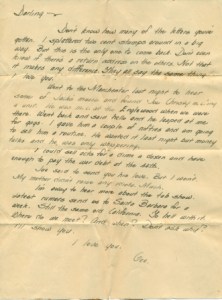
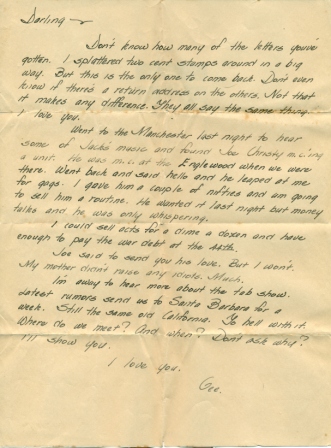
Darling, I love you, Gee

GrantLetter0001

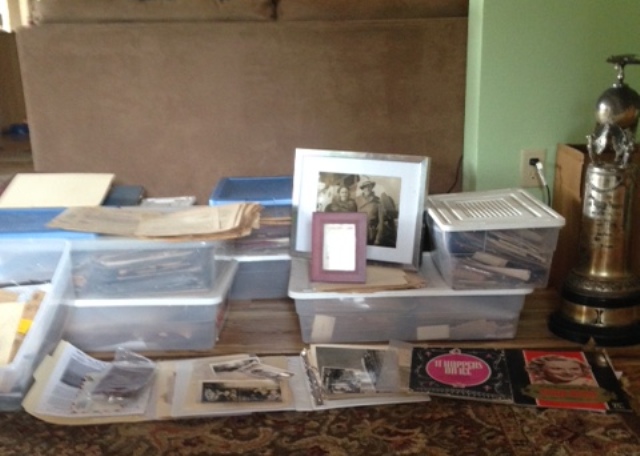
Peppered through the vast family archive used in the writing of River of January, exist three special sets of letters. Though largely filled with conventional chatter and sentimental superlatives, these documents also provide a fascinating peek into another time and place–of a nation suffering through economic free fall, and perched on the threshold of war.

The letters frequently mention the turbulent state of international affairs, from fascist Italy, to the Spanish Civil War; episodes that eventually and inevitably led to the Second World War. Even more ink is expended discussing the difficult economic situation stemming from the fallout of the Stock Market Crash–securing theater bookings, closing business contracts, and aviation training in a downsized Navy. Still, aside from the monumental, most of the content reported simple day to day life, shared with humor and concise observations. From their correspondence these men clearly promoted themselves, vibrantly rising from the faded and yellowing paper.

The first are a series of letters mailed from a Hollywood address, composed by comedy writer, Grant Garrett. (See above). The second collection, posted almost exclusively from Europe, came from the hand of a 28-year-old Belgian entrepreneur, Elie Gelaki. Serious and painfully formal, Elie’s letter reveal a methodical mind, clearly continental in manner with a determined nature. Finally, the last, and largest collection came from Mont Chumbley, Virginia farm boy turned aviator, who looms largest in the memoir. His writing reveals a practical, warm, and straightforward young man who expressed himself in plain language.

Despite definite differences in style, these three writers did share many qualities. All were deeply ambitious, establishing successful careers in the particularly difficult years of the Great Depression. They were clearly literate and educated, in a time when many (at least in America) did not regularly attend nor graduate from secondary school. These letters rise from the ordinary, written with distinctive originality, candor, and technical accuracy.

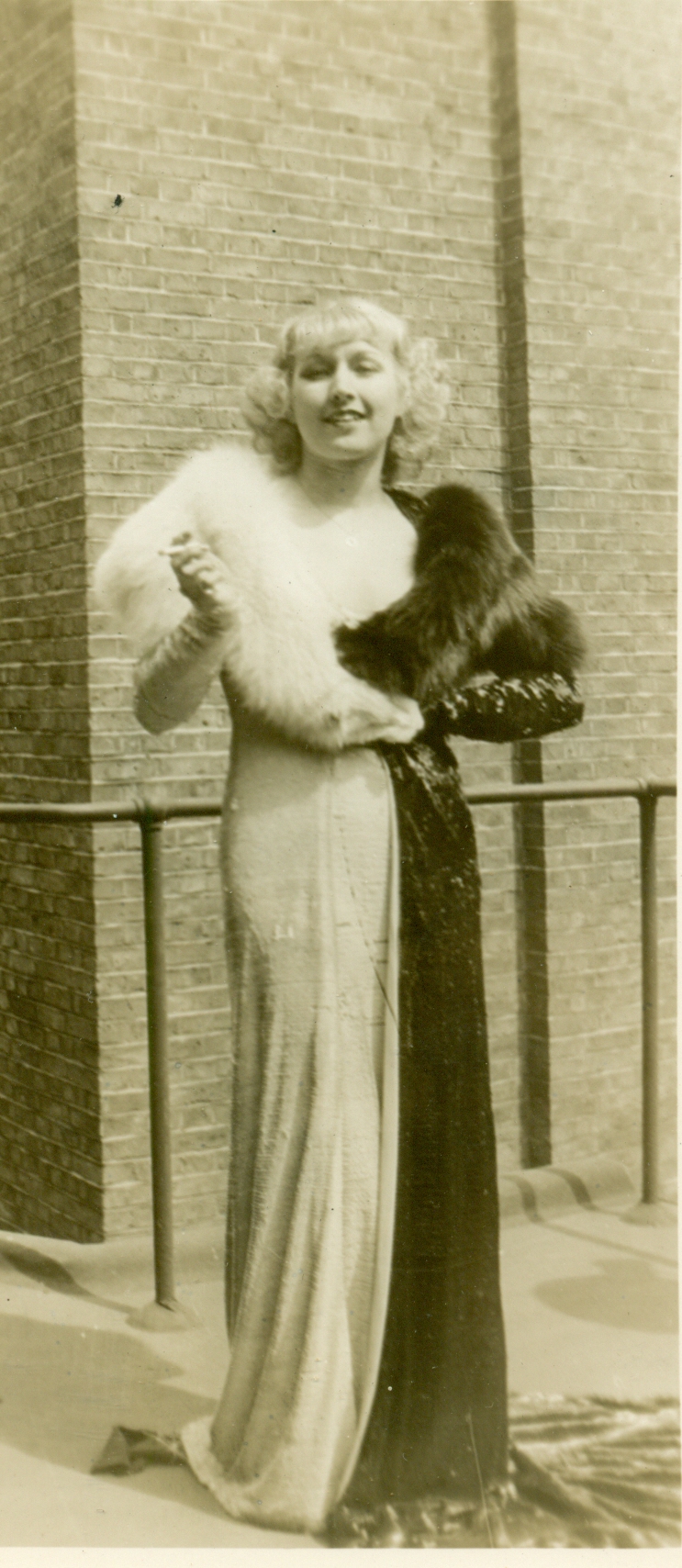
The link that tied this portion of the archive together was the beautiful New York dancer who received each letter, and preserved them all, Helen Thompson.

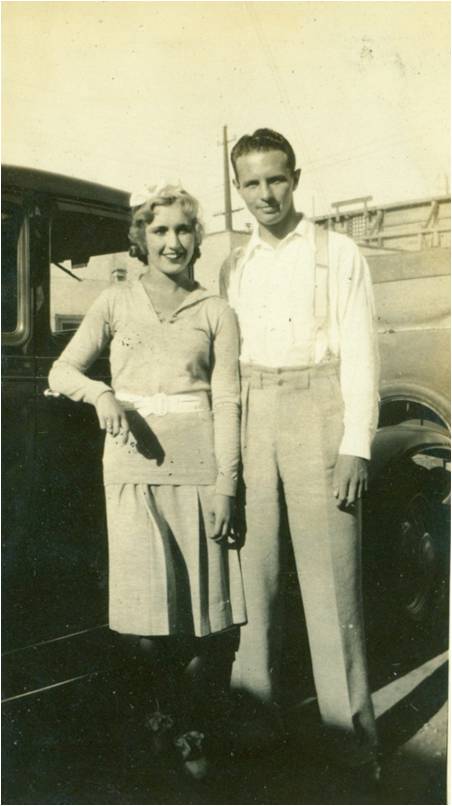
Garrett&Thompson

Grant Garrett became Helen’s first heartthrob. A native of Los Angeles, Garrett was a regular script contributor to radio shows and vaudeville acts. A talented singer and dancer in his own right, he interviewed Helen to partner with him for an upcoming tour across the country in 1931. After their junket ended, she returned to New York, and he returned to Hollywood. Now in love, the couple exchanged a series of clandestine letters, (her mother forbade Helen to see him again) with only Grant’s compositions still surviving today.

For a nineteen-year-old girl, Grant was hard to resist. Moody, smart, and funny . . . he was the essence of the tortured poet, a perfect combination of beauty, pain and passion. Of her suitors, Grant was the only one who shared her profession, and their time together forged a strong, and influential bond. Helen’s association with Grant provided something of a professional finishing school for her. From Grant she learned to laugh through tough times, and push through adversity because “the show must go on.”
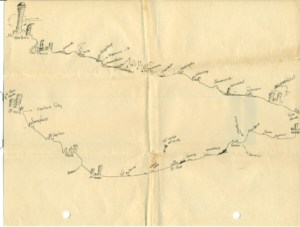
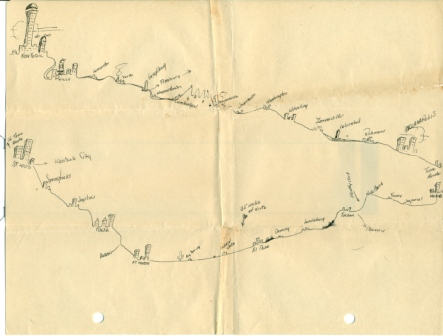
GrantMap0001

Grant’s whimsical map of a planned Garrett & Thompson reunion tour.

Next time, Belgian, Elie Gelaki.

Read more about Grant Garrett, Elie, and Mont Chumbley in River of January, available in hard copy and on Kindle.

West Palm Beach, 1934

th
Howard Hughes

“Night is a great time to fly—very peaceful. And things here are pretty quiet. Yeah, you got yourself a pilot.”
Refueling in Raleigh and again in Savannah, the young man managed to land the new model at the West Palm airstrip on time, taxiing to the numbered hangar about 7:30 AM the next morning.
“Who are you?” asked the tall, thin, dark-haired client. “Where’d that plane come from? You couldn’t be here all the way from New York?!”
Too groggy to argue Chum replied, “Howard Ailor sent me down with your plane. Flew here overnight.”
“Not possible” the client insisted. “That’s not the plane I ordered. This one has to be used.”
“Sir, I was asked to fly this Waco down from Roosevelt Field. It’s new, not used, and it’s yours.”
“I’m calling my head mechanic over—he’ll know if it’s new or not,” the tall man challenged. “What’s your name young man?”
“Chumbley, sir. Mont Chumbley.”
“You must be one hell of a pilot, Chumbley, if you’re not trying to put one over on me. I’ve never known any flyer that could have made that trip from New York. My name’s Hughes. Howard Hughes, but I guess you knew that. I just don’t believe you got here overnight. What time did you leave last night?”
“About ten, sir. Only stopped to refuel and eat. Can I get a lift to the train station? I need to get back to New York,” the sleepy pilot requested.
As though he wasn’t listening Hughes replied, “I don’t believe this. Ailor is pulling something here. It’s impossible that you flew here that fast.”
“Sir—Mr. Hughes, I don’t mean to be rude, but I have a business to run at Roosevelt Field. I need to get home. I’m not making any money here. Your issue is with Mr. Ailor. I delivered the plane, and now I need a lift to the train station.”
Hughes began walking toward his hangar as if Chum hadn’t spoken. He heard Hughes shout, “Get Rusty out here to look this Waco over, and get Ailor on the phone in New York.”
For the next two days Hughes and Ailor wrangled back and forth, via telephone, between Florida and New York. Chum impatiently hung around the hangar waiting for some kind of resolution.
“This engine’s used. I won’t buy the plane,” Hughes finally informed the young pilot. “But Chumbley, you sure know your way around a propeller. I’m going to keep you instead.”

Gail Chumbley is the author of River of January

Familiar Faces

OregonTalk.php

The Oregon City Library is a beautiful building.  A legacy of Andrew Carnegie’s committment to philanthropy, the library looks as it did a hundred years ago. All in all a perfect spot for a talk on “River of January.” The best part was seeing former students from way back, and friends from home. Big Thanks to Maureen Cole, and the staff of the old OC Library. And a thanks to my boys for the help and cheering section.

Night Flight

Night Flight

 “Night Flight,” an MGM drama premiered October 6, 1933 at New York’s Capitol Theater.

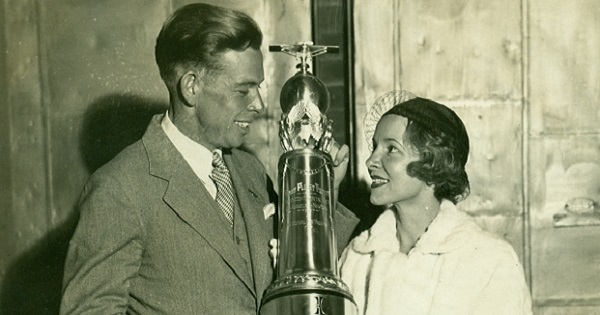
Star Helen Hayes presented Chum his hard-won first place trophy as a part of the evening’s program.

Read River of January.

helenhayes600w

Buy River of January by Gail Chumbley, also available on Amazon.