Head and Heart

th


“Believing with you that religion is a matter which lies solely between man & his god, that he owes account to none other for his faith or his worship, that the legitimate powers of government reach actions only, and not opinions, I contemplate with sovereign reverence that act of the whole American people which declared that their legislature should make no law respecting an establishment of religion, or prohibiting the free exercise thereof, thus building a wall of separation between church and state.” Thomas Jefferson, January 1, 1802

President Jefferson did not mince his words. He drew a clear distinction between what is personal and sacred, and what remained secular and public. History had taught Jefferson that invoking the Almighty usually ended in bloody holy wars, rendering effective civil government unworkable. Of all the founders, President Jefferson grasped the importance of detaching faith from law.

If you follow my blog you already know I’m not a big fan of Jefferson. His actions, as well as his writings on race alone, provide a legacy of duplicitous thinking. For example the practice of beating young slaves daily was of no matter to the master of Monticello. But on the issue of natural rights, his Lockean take on the social contract– Jefferson’s views ring with authority.

This morning the Idaho Legislature killed a bill in committee that would “Add the Words,” (protecting the LGBT community) to the Human Rights Act in Idaho. Following three days of impassioned testimony from supporters and detractors, HB2 fell in a 13-4 vote. A significant amount of testimony came from various churches on both sides of the issue. The fearful tended toward the shrill, impassioned by their emotions. One fellow, in particular, ranted that his wife shouldn’t have to share a public bathroom with a transgender individual. He was so riled up the committee chair admonished him to control himself. His answer, “Well Praise the Lord.”

Now the Gay community in Idaho didn’t seek this fight. These folks have done their best get along in society. The term ‘closeted’ comes to mind here. The threat of eviction, job termination, and outright violence has demanded a covenant of silence. However, over time, the preponderance of social, economic, and political mistreatment has galvanized this movement for simple justice. These citizens have had enough. They ask for equal protection under the law in explicit, measurable language to deter the countless harms endured, that were so eloquently enumerated in this week’s testimony.

As a student of American History I understand this disconnect between contending factions. We are a nation founded under the tenants of the Enlightenment. Jefferson actually lifted John Locke’s language when he described ‘natural rights’ which he articulated as ‘certain unalienable rights.’ And at the same time America is one of the most religious nations in the world. Always has been. The trick is remembering to separate these two competing voices of law and of faith. Even my debate students were taught to keep God out of the tournaments. Once invoked, the open exchange of ideas is over. God has spoken.

For the longevity of the American Creed, our law makers must use their heads when shaping legislation. When kneeling to pray, worship with all of your  heart. I do.

But please leave those competing, conflicting, diverse, religious convictions at the door of the halls of law. Contending voices achieve nothing but a counter productive cacophony of discord.

And next time . . . Add the Words.

Gail Chumbley is a retired history teacher and the author of the nonfiction work, River of January
Hear Me For My Cause

th


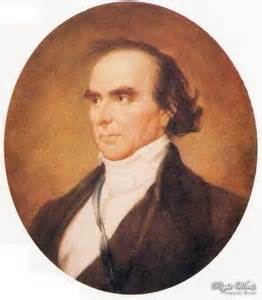
I wish to speak to-day, not as a Massachusetts man, nor as a Northern man, but as an American, and a member of the Senate of the United States. It is fortunate that there is a Senate of the United States; a body not yet moved from its propriety, not lost to a just sense of its own dignity and its own high responsibilities, and a body to which the country looks, with confidence, for wise, moderate, patriotic, and healing counsels. It is not to be denied that we live in the midst of strong agitations, and are surrounded by very considerable dangers to our institutions and our government. The imprisoned winds are let loose.

The above words were powerfully delivered by Senator Daniel Webster on the 7th of March, 1850. The occasion concerned the Fugitive Slave Act, a piece of explosive legislation forcing the return of runaway slaves to the South. Webster truly fell on a political sword to keep our nation whole. Notable in his grand eloquence was his specific reverence, and deference to the chamber Webster addressed, the august United States Senate.

I found myself quite uncomfortable viewing the State of the Union on Tuesday night. Each year, this duty is clearly defined for America’s Chief Executive. Article 2, Section 3 of the U.S. Constitution mandates that the President shall . . . give to Congress Information on the of the State of the Union . . . The word is “shall,” not “may.” So it was with personal distress, that we all witnessed such bad behavior from the right side of the aisle.

Beginning with the President’s first State of the Union message in 2009, and the appalling “you lie” heckler, conduct from the opposition has deteriorated. Senator Webster’s expressions of propriety and dignity have been replaced by frat boy behavior, apparently condoned by party leadership. Texting, chatting, applauding inappropriately is, well, just embarrassing to this student of America’s distinctive political legacy.

As a teacher, that blatant disruptive rudeness would have sent you to the hall. And speaking of classrooms, why should any student show respect for any institution when elected role models behave so badly, so publicly. I’ve seen you at 16, you’re the boneheads in the back row, working overtime to shift the attention from the focus of the lesson to your own self important, corrosive conduct. To validate the lowest kind of public behavior is the last example our students need in this divisive era. Demonstrate honorable behavior, show some restraint, if only for the great legislative leaders who served and sacrificed before you. Conduct yourselves with the dignity your office represents.

If, indeed, the majority party aspires to national leadership you must be a party worth following. Last night represented and celebrated the best thinking on the part of our nation’s Framers. This condoned pack mentality to publicly belittle the sitting President, does not serve your future aims.

As the first president, elected in 1860 from your emerging party once stated,  “All members of Congress swear their support to the whole Constitution—to this provision as much as to any other. “

In his 7th of March Speech, Webster explained to his listeners the urgency of his words. The Senator continued,

I speak to preserve the Union.
Hear me for my cause

Gail Chumbley is a retired History educator, and author of River of January. Available on Amazon

September Song

 th

This was our first book talk of the new year. We left the house around noon to travel to a small senior facility with an equally small number of residents. I held low expectations of selling any books, but hoped to brighten up the day for a few folks. We had earlier decided to focus on retirement homes because River of January touches on many events that this elderly generation finds familiar.

Finally securing a couple of extension cords my projector flickered on, illuminating an empty wall, and the power point show began. The nurses aides rolled in some residents in their wheel chairs, where they remained quietly seated for the duration. Two other people wandered in at the same time and began a turf war over the ‘good’ chair. The gentleman didn’t move, nor did he say a word, but he meant to sit in that chair. The woman who demanded that same seat kept insisting that it was HER chair. Watching the showdown, I was reminded of how ornery my kids could get, fighting over preferential seating, either in front of the television, or riding in the car. In this instance, the feisty woman prevailed, and the old guy had to settle for the love seat. Once he settled into the cushions, he promptly fell asleep–for the whole presentation.

Two other fellows seemed to enjoy the pictures and the talk. As images of Helen Hayes and Maurice Chevalier flashed on the wall, I caught both respond with slight nods and faint smiles. Another woman sitting apart, back in the corner appeared very sharp, seeming to deliberately separate herself from the her failing comrades. Perhaps I sympathized with her, hiding in that corner, when our victorious friend from the ‘chair wars’ piped up, “I saw this show on tv!”

When I attempted to engage the group with rhetorical questions, they just stared, eliciting next nothing. And in a brief moment of insight I decided that these  people had given enough in life. I was there to bless their day, perhaps make it better for that short time, than it otherwise might have been. All was as it should be, I was in the right place at the right time.

After I finished the program one of the quiet gentleman from his wheelchair tried to speak. His voice was quite weak with age and poor health. He was difficult to understand. Listening hard, reading his dry lips I made out B-24’s. “You flew B-24’s in the war?” I asked. He nodded and smiled. I took his hand, shook it and said, “Thank you sir for your service.” He whispered a couple more unintelligible words, and I smiled in return.

Time is a demon. For these people, idle hours can feel an insufferable burden. Still, sealed up inside their frail bodies exist dramatic stories, from dramatic lives already lived in full.

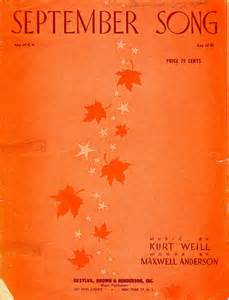
The old standard, September Song captures the beauty and melancholy of those facing a day identical to the day before, until those days run out.

Oh, it’s a long, long while from May to December
But the days grow short when you reach September
When the autumn weather turns the leaves to flame
One hasn’t got time for the waiting game

Oh, the days dwindle down to a precious few
September, November
And these few precious days I’ll spend with you
These precious days I’ll spend with you

I am looking forward to our next retirement home visit in February.

Gail Chumbley is the author of River of January. Visit the website at www.river-of-january.com

At Amazon

West Palm Beach

logbook2An excerpt from River of January for your Sunday evening.
At first he told himself that Howard Hughes’ good wages kept him in West Palm Beach. But Chum also knew his curiosity played a big part in remaining at the field. The famous tycoon was already a legend in aviation, as well as in motion pictures, and the young pilot had long admired self-made men. And though he looked forward to his new job, he was just as eager to watch the millionaire up close.
Over the next few weeks, Chum noticed that Hughes followed the same pattern each day. His driver motored up to the hangar in a Cadillac LaSalle, closely shadowed by another large Oldsmobile. The famed pilot stepped from the backseat, unfolding all six foot four inches of him. At same time, an entourage of followers poured out of the second car, casually circling the celebrity.
Chum also noticed that the aviator only spoke to his head mechanic, nodding frequently while he smoked a cigarette. Then Hughes and company inspected the rest of the facility—the tall tycoon facing the ground, continuing to acknowledge his lead man’s comments.
If he looked up, Hughes sometimes nodded to Chum or to the other men in the hangar. Then with this morning ritual finished, Mr. Hughes and his retinue returned to their waiting cars and drove off to other unknown destinations.
On one especially stifling afternoon, Hughes unexpectedly turned up at the steamy buggy hangar, departing from his usual routine. Caught off guard, the crew quickly picked up their tools and bustled around, appearing busy. Hughes seemed not to notice.
Instead the famed pilot looked at his head mechanic and loudly announced, “These gentlemen and I,” pointing to his cohorts, “are leaving for Los Angeles. Since that plane,” Hughes stuck his thumb toward the Waco still on the tarmac, “was used, we will travel by rail.” A few of the boys glanced Chum’s way.
“Yes, sir, don’t worry about a thing here, sir,” the foreman answered. Hughes nodded again, and he and his associates left the field in a caravan of black autos.
“Wonder which beautiful actress Hughes is meeting.” A young grease monkey sighed as he twirled a ratchet around his finger.
“Jean Harlow, you think?” said a kid still staring out the hangar doors.
“My money is on Paulette Goddard,” added another, plunking coins into a soda machine.
“Back to work, boys.” The head mechanic laughed. “We’re not going anywhere.”
Chum smiled. Just the phrase, “back to work,” began to amuse him. As far as he could see the commotion was all “make work” instead of real industry. He was becoming restless from boredom.
After Hughes’ dramatic exit, the crew mostly loitered around the hangar, sweating in the muggy heat—listening to the radio, smoking, sipping cokes, and playing cribbage. After a week of this meaningless inactivity, the young pilot, staring blankly into an immaculate engine, abruptly resolved, “As soon as I’m paid, I’m gone.”
Three monotonous days later, Hughes and his party surprisingly reappeared at the field. The aviator had apparently changed his plans at the rail switching station in Jacksonville and never turned west. Still, Hughes’ return made no noticeable impact, and the days continued to drag on: Cokes, cigarettes, cribbage, and heat.
While he was perched on a ladder examining another pristine Lycoming engine, Chum heard his name from across the facility.
“Over here,” Chum called back, “Up on the ladder.”
“Telephone call, buddy,” a mechanic hollered. “In the hangar office.”
“Thanks, JJ,” he yelled, climbing down.
The voice on the line hollered, “Chum? That you, sport?”
Chum paused, trying to place the echoing but familiar voice. “It’s me, boy, Hugh Perry.”
Recognition lit Chum’s eyes,
“Hey Mr. Perry, good to hear your voice. How are things up north?” Perry worked as the executive of sales for Waco Aircraft in Troy, Ohio, the company that manufactured his airplane.
“Well, now, I’m real good Chum, and business is pretty good. In fact, that’s what I’m calling about.”
Chum felt his pulse quicken. “What can I do for you sir?”
“You know, you did so damn good in that race and, well, would you be interested in working for us, Chum?”
Feeling his spirits begin to soar, Chum had to ask, “What would the job entail, Mr. Perry? Would you want me in Troy?”
“No, no, wouldn’t do that to you, Chum, Troy is no place for a dapper gent like you,” Perry chuckled. “We have this new model and there is some interest for it in South America. Smiling, Chum sensed the skies were opening and the archangels were tuning up a hallelujah chorus.
“That sounds real attractive, Mr. Perry. I think I would be interested in a job like that,” even his voice smiled.
“And here I thought you would be all star-struck, slumming it with Howard Hughes,” Perry laughed. “But when this position came up, your name was the first to come to mind. I thought I would give you first refusal.”
“I’m glad you did Mr. Perry, and your timing is pretty good, I was thinking about a change anyway. Guess I miss my Waco,” Chum laughed. But before hanging up, the young pilot suddenly wondered, “Mr. Perry, what equipment are the South Americans interested in?”
“Keeping up with our new aircraft are you, kid?” Perry sounded pleased.
“I guess I have, sir.”
“Well, the Brazilians are very eager about a new fighter plane we’ve developed.”
“A fighter?” Chum repeated, baffled.
“I know, I know—don’t understand what they would need it for either.”
Chum quieted in thought, wondering who could possibly threaten Brazil. “You still there, kid?”
“Yeah, Mr. Perry, I’m here. Just strange to imagine any South American trouble that would require machine gun strafing.”
Shaking off that concern, Chum again became enthused. “You shipping the demo model to Roosevelt Field?”
“At the moment the plane’s with the Navy. They want to test it, too,” Perry explained. “Our agreement was three months for those flyboys to check it out. We’ll ship it down to Rio de Janeiro after the military is done with it.”
Chum hung up the office telephone, and stood motionless, absorbing this implausible change of fortune. Chum slowly walked out of the office, stopping to appraise the entire, immense working space.
Mechanics continued to poke around the equipment, the lead man in the far corner looked over a clipboard, a cigarette, ash dangerously angled, wedged between his right hand fingers. Silently, the young pilot made his decision and headed out the open hangar door, leaving behind Ailor’s Waco Cabin, still parked to the side of the facility, and away from Howard Hughes and his West Palm interests. With a sense of elation, he cheerfully hiked the three miles to his hotel, collected his belongings, and caught a taxi to the train depot.
Restored, and back in control for the first time since the air race, Chum looked forward to returning to New York.

Gail Chumbley is the author of River of January. The book is available at www.river-of-january and on Amazon.com


Brussels, November, 1932

HVienna0001

From the new memoir, River of January . . .

Booked at the Palace Hotel in Brussels, the show’s new variety lineup fused seamlessly. First the star, Mistinguett, with the ballet troupe opened the evening program. Helen, unable to dance both with her friends and in her solo, chose the latter. Happily, it became a crowd favorite. Though she would have liked to dance with the company, Helen knew the ovations she garnered were well worth watching the opening from the wings. Next on the bill was synchronized dancing from American Earl Leslie and his line of hoofers, followed by the other company entertainers and their specialties.
The program closed with the full cast in a colorful, peacock-inspired, extravaganza. It featured Mistinguett center-stage, supporting a headdress of colossal feathered plumes of blue, turquoise, and purple, shimmering above her blonde hair. Her “Beauties” were costumed in silvery tutus, sequined halters, and tight, sparkling caps, each sprouting over sized silver feathers, flanking their star from both sides.
The male dancers, in black tuxedos, peeked out between each feathered girl. Under the dazzling lights, the symmetrical tableau moved patrons to their feet, applauding and shouting for more.
For a second night more flowers appeared, and this time a note accompanied the gift on Lillian’s dressing room table. As she again picked up the vase and turned toward the trash bin, Carmen stopped her, “At least read the note first, Lillian.”
“Yeah Lil, c’mon!” the other dancers chanted.
“Who wrote it?” asked Grace.
“Is it signed?” wondered Carmen.
Rolling her eyes, the dancer huffed dramatically, then slit open the note with a nail file and read in a flat, monotone:

You were really wonderful in your solo specialty and all through the review and I do want once again to ask you if you will let me pilot you through town in my car when and for as long as you may care. Should you not care to see or know me, please allow these flowers to tell you of my admiration, and remember that you have a person who cares for you in the little city of Brussels.

“But I didn’t have a solo,” Lillian exclaimed. “The only one who had a solo was…”
The girls stood silently, and then all eyes shifted to Helen. Lillian laughed once—a bit annoyed, and handed the vase to her friend, saying, “I believe these belong to you.”
Banter erupted again, now aimed at Helen.
“Jeepers girl, he admires you!” and “Wonder who it is that cares for you in this little city, kid?”
Helen took their teasing in stride, curtsying and blowing kisses. But when the dancers began chatting about the imminent cast party, Helen lowered herself onto a rickety stool and read on. “I feel I must say that I am not an ‘old butter and egg man’ … I am just twenty-eight and not too ugly … My only fault is that I think you are my ideal.”
Her eyes lingered on the words “my ideal.” Unexpectedly charmed, Helen appraised this communiqué with new eyes, and decided to follow the mysterious sender’s written instructions on how and where to meet him.
She dressed quickly and quietly to avoid any friendly needling. Helen hurried out the dressing room, heaving open the steel stage door into the quiet alley behind the theater.
Stepping to the corner of the building, she peeked around to the snow-lined, busy street. Helen carefully studied the faces of the bundled up after-theatre crowd crunching by, and scrutinized moving and parked automobiles. From her vantage point, She soon spied a grey Packard, emitting white-blue exhaust from a quietly idling engine. Scanning the note again, Helen felt certain that the young man would be waiting in that car. Her stomach faintly roiling, she stepped forward, trying to distinguish the driver through his frosty door window.
Helen realized, “Oh, he looks nice,” and shyly continued to approach his vehicle. The driver stepped out of his door, all smiles.
“You must be Lillian,” he beamed, “I am Elie. Elie Gelaki,” he added, bowing to kiss Helen’s gloved hand. She noticed that the young man’s voice formally articulated his clear English.
She bashfully smiled and felt her face grow warm. “Actually, I’m Helen,” she clarified. “I do hope that I am the one the message was meant for…”
Elie Gelaki unexpectedly gazed at her forcefully. “I meant you.”
The two stood self-consciously beside the running automobile.
“Why don’t I take you inside this café? It is quite cold tonight.”
“That would be lovely, Mr. Gelaki,” Helen smiled, more relaxed.
The young man gently took hold of her arm, explaining, “I’m Elie, and this street is quite icy.” He courteously escorted the dancer into a nearby coffee house.
“So you are the Helen Thompson on the bill, not Lillian Ward,” he said after they were seated. “I am sorry about the confusion. I hope it was of no embarrassment to you.”
“No more than usual,” the dancer laughed. “My friends spend more time teasing each other than dancing.” She paused, changing the subject. “Tell me about yourself, Elie.”
“I am a native of Palestine. But now I live here, in Brussels, with my mother and two sisters. My dear father has been for dead for some time.” He noticed Helen suddenly frown. “Did I say something offensive?”
“No. I’m sorry. My father died some years ago, too.” Helen’s own grief abruptly gripped her heart. After Floyd Thompson died, after his funeral, she knew something truly good had vanished forever from her world.
Her frown turned into a sympathetic smile. His face glowed in reply
Elie changed the subject. “I have recently founded a new photo company. I call it Polyfoto International,” he stated proudly. “At this time I am expanding my interests in Europe, across North America, and on into Asia.
“What type of photography do you specialize in?” Helen politely asked.
“ I will accompany you into my studio and photograph your lovely face. Then you will know,” Elie responded.
While he chatted about his life and work, Helen studied the Belgian. He wasn’t terribly tall, and had a clear complexion, subtly suggesting a childhood of freckles. His thick hair ranged from light brown to dark blonde and he combed it back off of his forehead. Elie gazed at her from olive green eyes speckled with glints of brown and gold. Though he seemed a serious man, he smiled broadly as he spoke in his appealing English, and his laughter was deep and friendly.
“Would you consider joining me for lunch tomorrow?” he asked. “I would be happy to guide you on a personal sightseeing tour of the city afterward.”
“Love to,” she answered promptly, drawn toward this young man. Elie thanked her with a happy grin.
The troublesome doubt dawned on her later, as she tiptoed into her dark hotel room.
“He’s Jewish,” she whispered to herself. “My mother would just die if she knew I was seeing a Jew.”
Yet, despite all the prejudice against Jewish people, she liked Elie and decided to give the young man a chance. He seemed nice, and she wanted to see the sights around Brussels.

River of January is available on Amazon and at www.river-of-january.com

The New Frontier

MomDad1[1]

These are my folks. Today is their 62nd anniversary, and unlike my last anniversary post, mom and dad are still alive and kicking, arguing about the same trivial nonsense in the same house where I grew up.

Example-Dad:We drove to Minnesota in ’68 in that black Chevy. It’s just before we bought the white one.

                  Mom: (condescendingly) Dave, you had sold that truck already, we drove the white one.

And so it still continues, even into their eighties. It’s that kind of banter that seems to keep them young. And it’s funny, but that is how they endure in my memory, as young parents, with small children. Though I was one of the brood of four, the two of them remain youthful, and optimistic in my mind’s eye, raising their family in the heady years of JFK’s New Frontier.

After their almost teenage marriage, Dad and Mom bought a modest house on a modest street. My dad worked shifts at Kaiser Aluminum, sweating over pots of white-hot molten ore, spewing the kind of heat that would have made Andrew Carnegie happy. If my father could snag a “double,” stay on for an extra shift to earn more cash, he would jump at the opportunity. Dad wasn’t really a workaholic, because he was foremost a family man, and played as hard as he labored. Still, at the same time he sought financial security, and knew ‘all blessings flowed’ from contract negotiations, remaining a proud member of the Steel Workers Union.

In contrast my mother preferred staying home. She still does. Her home has been, and always will be her sanctuary. She is an interesting individual. As a teacher I can state for certain, if there had been aptitude testing for school children in the 1930’s, my mother would have qualified for a gifted and talented program. No joke–if we analyzed the hours the woman has spent reading, her eyes have scanned print more than looking at my dad. Mom’s face is available in both hard cover and paperback, (no e-book format yet). I think that if she couldn’t read, my mother would wither up and blow away.

Well, after some difficulties in those early years, my older brother arrived on February 10, 1954. And they named him Dale for my mother’s uncle. The next year, I showed up on February 10, 1955. It seemed to make some sort of cutesy sense that I should be called Gail. The timing of our precisely dated births convinced my mother, and maybe even my dad, that all God’s children naturally arrived on February 10th. (You’d think birthday parties would have been easier to plan, but my mom says no).

The path they have tread through the years was not exactly paved with gold. My dad’s employer, Kaiser Aluminum semi-regularly initiated lay offs as the metals market waned. But, was he daunted? Not by a long shot–he had a trick or two up his plaid flannel sleeve. My father, at heart, was not a factory drone, he was an outdoors man, a tree expert to be precise, equipped with winches, come-alongs, Swede saws, augurs, and thermoses of bad coffee. Dad just started his own business, a tree removal and yard clean-up enterprise. And though he actually made more money than at the plant, his practical, family-man side, the side that considered his wife and children, sent him back for the medical insurance and a retirement pension.

My dad always knew how smart my mother was, and instead of feeling intimidated, he was proud. Even today the woman can clear the board on “Jeopardy,” faster than Alex Trebeck with his cheat sheet. In the early years of the 1960’s, he convinced her to challenged the Postal Civil Service Exam, which she passed in spades. Instead of resenting Mom going to work, he encouraged her natural smarts and her remarkable abilities as a positive thing.

Now my mom wasn’t as convinced. Like I said before, she liked being a haus frau. However, her talents shined from the beginning, drawing attention from the postal hierarchy, who saw her as management material. So, after the birth of my youngest brother in 1962, mom entered the workplace and blossomed, eventually becoming a supervisor and working, for the most part with air mail at the airport. She memorized every air route, every airport designation, every schedule, with few mistakes. Her memory skills are almost scary. (I don’t know why he still bothers to argue with her).

So today my young, Kennedy-era parents are celebrating their 62ned wedding anniversary. They will eat dinner at 4:00, and chat about some earlier vacation . . . perhaps the Mesa Verde, the Custer Battlefield, or the semi annual holy pilgrimage to Minnesota, the land of his people. Maybe they’ll reminisce about the time I dropped her diamond watch into the toilet, or the chronic illness that plagued my younger brother through his childhood. Maybe they’ll laugh about the sauna they built, proud to have imported the authentic stove all the way from Sweden. After waiting weeks for the package to arrive it finally came by post. Opening the box they read it was made in Bellevue, Washington, five hours away by interstate.

I think their marriage just might be a good one.

Gail Chumbley is the author of the memoir River of January.

The Flemish Bend

HMPlanePic0001

This couple married 78 years ago today. On Friday the 13th. In New York City. Defying traditional convention. Archaic superstitions were of no interest to this modern couple, that kind of thinking belonged to the past.

Mont “Chum” Chumbley, and his bride, Helen Thompson Chumbley only looked forward, challenging and prevailing over old horse and buggy thinking. Theirs was a new era, a dynamic era, one of flight and of film. And this powerful force of optimism rendered one life time together too brief. So now their spirits carry on in my head, and in the pages of my book, River of January.

To say Helen and Chum were happy together would be shallow pandering–and an insult to the complexity of their distinctive temperaments. Still, their story has power, enduring power, pressing me on, returning time after time to their papers, searching for signposts of truth and direction.

A Flemish Bend, the title of this piece, ironically does have its roots in the distant past. The Bend is a sailors knot, also known as a square or figure eight knot. The same shape in mathematics is the symbol for infinity. The love Helen and Chum shared, as imperfect as it seemed at times, was powerful, and proved to be endless.

I too have been snared in those powerful cords, and for better or worse speak for their remarkable lives, lives too dynamic to have died with their passing.

And I’m grateful. It’s an honor. Happy anniversary Helen and Chum.

Order River of January, and enjoy the journey.

River of January Book 2 Excerpt

Amelia Earhart Plane Fragment Identified : DNews

amelia0001

Bertha eyed the large box with a wary, but inquisitive gaze. “We got this for you. Merry Christmas Mother,” we both hope you’ll like it,” Helen beamed with pride. “Chum?”
Bertha narrowed her eyes, watching as her son-in-law sliced down a cardboard corner with his pocket knife. Revealed inside, a beautiful new Emerson radio, curved corners, blonde wood, featuring inset vertical columns. Mother’s eyes now grew wide as she took in the gift—this radio was the top of the line, as Bertha well knew.
“Oh my heavens,” she exclaimed. “You two must have spent a pretty penny on this!”
Helen grinned happily, her mother seemed honestly pleased, while Chum, hurried to plug the device in, rapidly turning the dial looking for a Christmas broadcast.
Kneeling at a small end table, he twisted the tuner knob—the frequency tone whined and whistled from fuzzy to piercing. Finally, a clear authoritative voice rose, articulating in a clipped urgent cadence. Nineteen hundred and thirty seven has been an eventful year in American news. It was last spring, in May that the Hindenburg, a German dirigible tragically exploded over New Jersey. Celebrated aviatrix Amelia Earhart was lost in July, along with navigator, Fred Noonan in the uncharted expanses of the South Pacific . . .

“No Christmas music, honey?” Helen asked over the broadcaster’s voice.
“That’s really not a surprise,” Chum mumbled, lost in thought.
Bertha quipped, “No Christmas music on Christmas is a surprise?”
“No. No. Sorry. Amelia Earhart was someone I once knew at the field.
Impressed for once, Helen’s mother pushed for more details. “You knew Amelia Earhart?”
“Oh. Well, yeah I did. She was a friend of a friend.” Suddenly self conscious with all three women staring at him, Chum struggled for words. “You see, Earhart had no training in navigation at all. She could fly just fine, but had to hire navigators to get anywhere. The, eh, other girls—girl-pilots talked about it. They uh, believed it was that husband of hers, George Putnam who inflated her abilities . . . spent money to build up her reputation. Amelia got in over her head on that flight, and the poor kid was killed as a result.
“How do you know this?” This time Eileen piped up, clearly fascinated by his tale.
“Like I said, that Roosevelt Field crew of gals could be a clucky bunch. The other women talked a lot about how shamelessly that husband promoted her career.”
“I’d never heard that before,” Bertha exclaimed, appraising her son-in-law in a new light.
“Me either,” Helen added, not sure she was pleased with his “the other girls at the field” story or not.

Buy River of January Today

Another New York Story

riolist

So caught up in the process of writing River of January I didn’t see much beyond my keyboard and monitor. Focusing intensely on grammar, style, punctuation, research, and every other detail, I failed to see a beautiful New York story take shape before my eyes.

A New York story. The New York of Vaudeville, Tin Pan Alley, Jimmy Walker, and silent films. The New York of Roosevelt Field–Lindbergh lifting off eastward toward Paris, achieving legendary status, and where Amelia Earhart later trundled down that same runway only to meet her mysterious end in the South Pacific.

Mont Chumbley, one of two central figures in River worked at that same storied airfield, braking down runway #1, arriving first in the 1933 Darkness Derby. He had braved inky night skies in his quest, worsened by wind gusts and growing cloud cover.  Pushing through from Los Angeles to New York, Chum prevailed, victorious, He received honors for his achievement at the Capitol Theater, 1645 Broadway, when Actress Helen Hayes presented him with his cash winnings, and an over sized silver trophy. Becoming something of a local celebrity himself, many from the city sought him out for passenger transport or flying lessons. On one instruction flight,Chum found actress Katharine Hepburn in the cabin of his plane, joining her boyfriend, Broadway producer, Leland Hayward.

 Helen’s New York consisted of auditions and productions from the Boulevard Theater, to the Roxy, performing for Billy Rose, finally dancing in “The Harry Carroll Revue.” As if a scene from an old movie, she set sail in April, 1932 on the SS Ille de France. This transatlantic voyage carried the girl from New York Harbor for an extended tour across Europe. Two years later, in 1936 she stepped up the passage way of The American Legion, a steamer on the Munson Line destined for Rio de Janeiro. Joining throngs on the top deck Helen gleefully waved goodbye to her family, smiling back from the Brooklyn docks. And speaking of family, Helen’s home address, 325 West 45th Street, was the third floor of the Whitby Hotel smack-dab in the middle of the Theater District. And though refreshed and remodeled today, that apartment building still stands–a direct link to an earlier era, an earlier New York.

Helen and Chum both lived in Manhattan at the same time. But he had his New York story to fulfill, and so did his future bride. That they crossed paths on the sidewalks, subways, theaters, restaurants, and trains before exchanging their first hello is certain. But as proper New Yorkers the two finally met elsewhere, at the Club Copacabana in Rio, a hemisphere away. There these two New Yorkers finally locked eyes, and fell in love.

Eventually, when circumstances allowed, Helen and Chum returned home to exchanged vows at the Church of the Transfiguration, on East 29th and 5th Avenue. This location is better known to New Yorkers as The Little Church Around the Corner.

I’ve finally come to recognize that River of January has become more than the narrative of two lives in the early days of aviation and show business. This story takes place in the magical metropolis of New York–where Helen and Chum found magic of their own.


I Couldn’t Help Myself

c&hrio0001

River of January

This wasn’t my idea. The completion of River of January has been as much a surprise to me as to anyone. I never presumed to be any kind of writer, ever. In fact, I spent my entire career as an American History teacher who told stories, not wrote them. But when River of January came into my life, the story took root, soon dogging my every step. Forget the fact that I didn’t know how to write, or understand the first thing about publishing–River of January made it clear that those deficiencies were my problem.

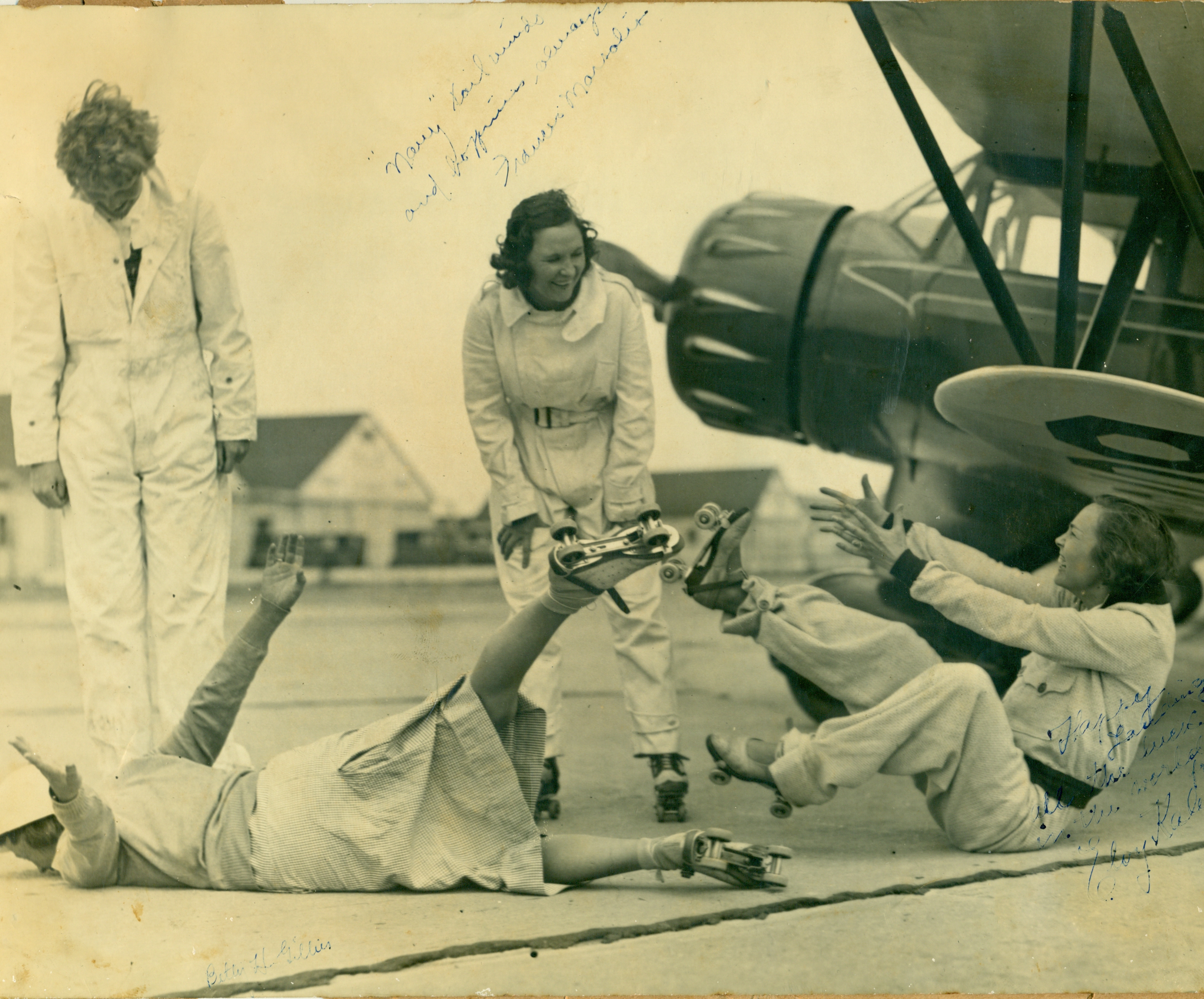
This project flowed into motion after meeting and coming to admire my story’s central figure. Mont Chumbley, one of two major characters in the River of January, was a real flesh-and-blood man full of irresistible charm. He was also my father-in-law, and as such generously shared hours of gripping storytelling, regaling tales of his fascinating life. His personal anecdotes exquisitely depicted the golden age of aviation, leaving me humbled and honored—in awe of his singular and astonishing career. Delightful episodes included flyers, Amelia Earhart and Howard Hughes, among many other colorful characters that populated Roosevelt Field. Chum became my own Peter Pan, guiding me on a magical journey to an America full of promise and opportunity.

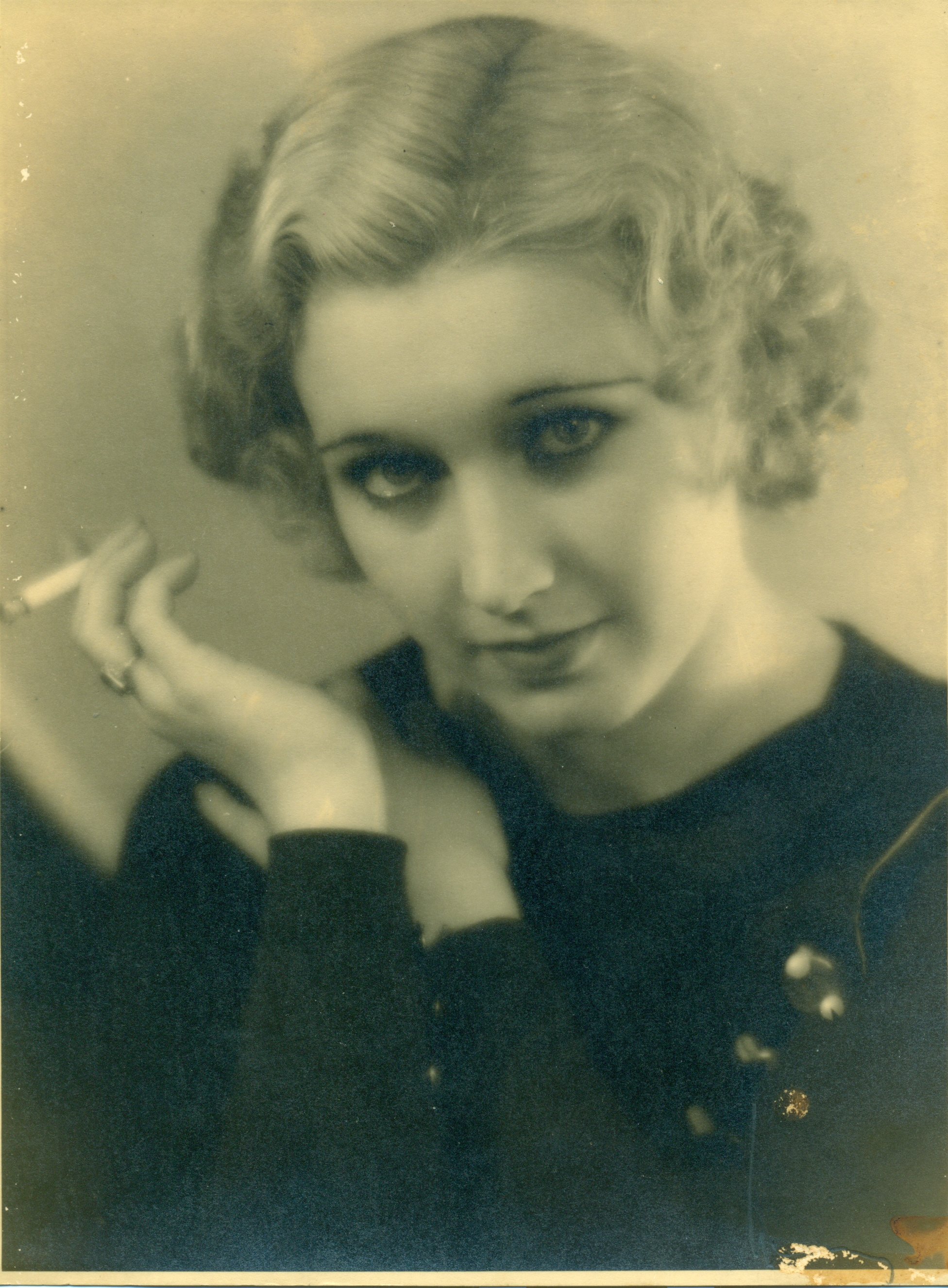
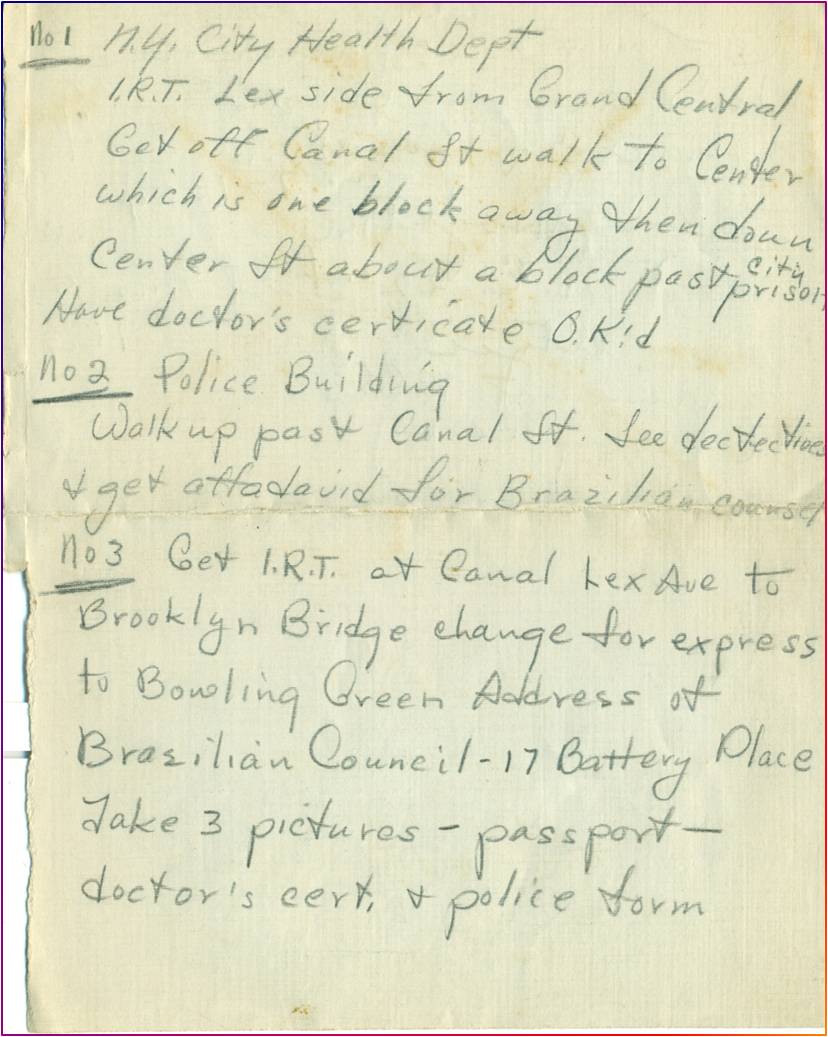
Next a treasure trove of Chumbley memorabilia surfaced that verified his stories. This archive touched not only his life, but that of his wife, Helen Thompson Chumbley. An accomplished dancer, Helen preserved every memento related to her equally remarkable career. Steamship tags, playbills, performance reviews, baggage stickers, and photos of an eager, happy girl costumed in an array of attire for stage productions or film sets. Helen too, aimed to preserve her accomplishments saving pictures, lists of business contacts, and letters home to her mother–all depicting a clear narrative of Helen’s own artistic path. Her passport, for example tells of extended junkets to Europe in 1932, London, 1934, and Brazil in 1936. All journeys illustrated with glossies, more letters home, and snapshots of a young dancer having the time of her life.

Their lives unfolded before me only to shift and refocus with each new piece of evidence. This composition grew so immense that only one book became impossible. Inevitably I had to find a fitting close, and then resume the tale in a second volume. Chum’s early years, for example, required a deeper examination of the aviation industry; complete with the serious obstacles he met attaining his wings. It also became crucial to explore the larger story of America, understanding the national barriers Chum overcame to see through his goals.

The same hurdles held true for Helen. Readers had to be reminded that the decades presented in River of January were years of careless economic boom followed by a devastating bust, leaving her path that much more daunting. Moreover, her mother required financial support in an era with no Social Security or Medicare. The burden fell completely on young Helen and her sister. With talent and fortitude, Helen’s grit loomed large in this story, tinged by a real fear of devastating consequences.

This author had formidable obstacles to overcome, too. The most profound drawback, the greatest obstruction–I had absolutely no idea how to write– not in any vibrant or intimate style. If the truth be told, creating River of January felt much like building a car while driving it down the street. River’s first drafts were so awkward and flat, that my first editor fired me as a lost cause. Mortified, I wanted to crawl under my bed, and never write again. And worse, I couldn’t disagree with this editor because I honestly had no idea what I was doing. Still, the book didn’t care. River wasn’t interested in my shortcomings, and the story refused to go away. Despite feeling an amateur fool, I bravely soldiered on.

Every family has a story waiting to be unveiled. In this instance the flow of narrative arrived from three directions. First, and most significantly, was my marriage to Chad Chumbley, the eldest son of Mont and Helen Chumbley. It was he who initially conveyed there was a tale to tell. With what little Chad knew of his father’s career and his mother’s accomplishments, my husband was certain of an epic waiting to appear.

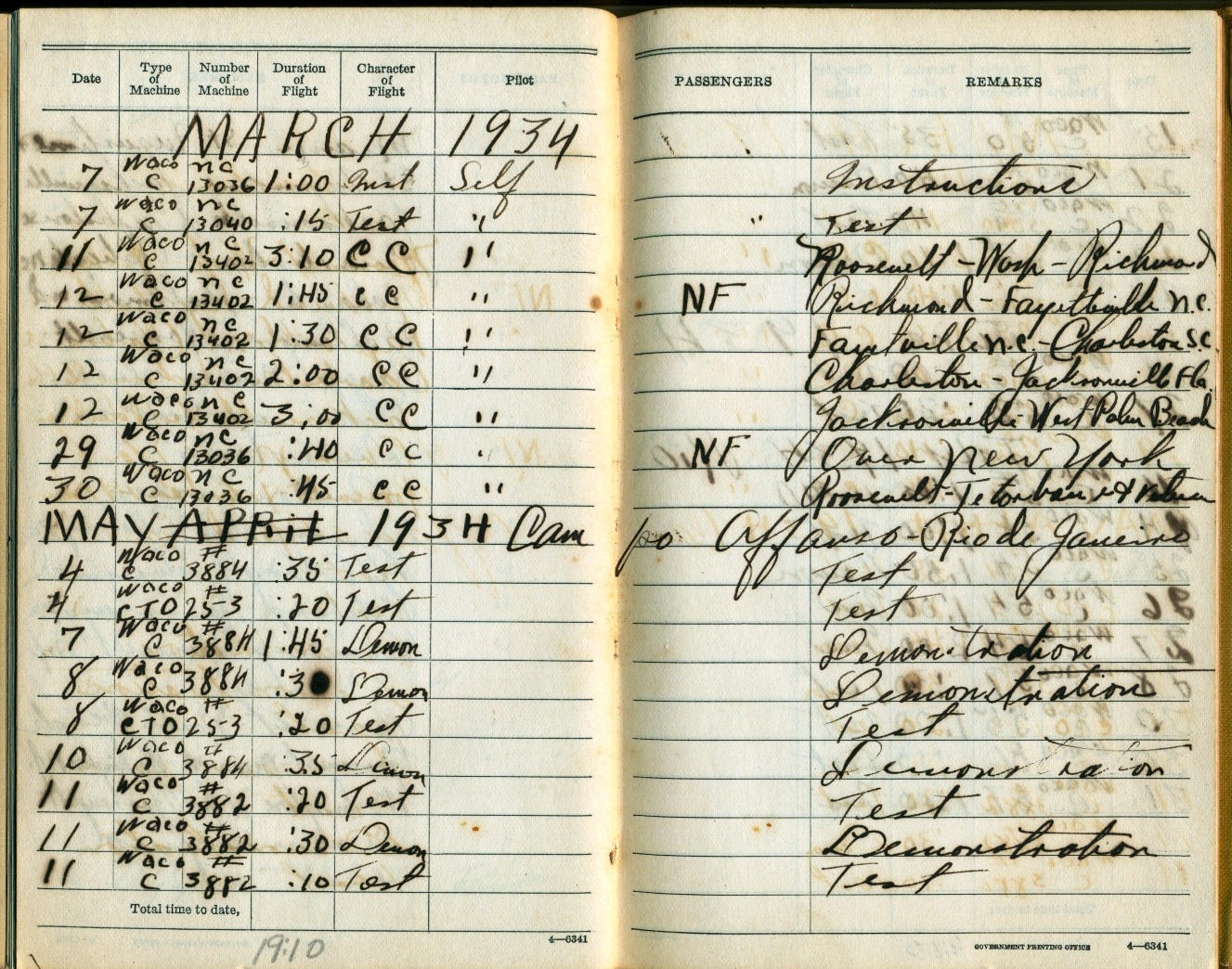
The abundance of primary documents sealed my fate as my in-laws biographer. And again, though I didn’t recognize the forces at work, sifting through each item from that vast collection boosted the project forward. And this couple saved EVERYTHING! Air show tickets, menus from European eateries, pressed flowers, telegrams, his logbook!

By 2005 we coaxed Chum to come west and take up residence in an assisted living facility. He soon became the most popular, most charming tenant in the place. And it was in his room, 18 months later that we sadly attended his death. A mighty Virginia pine had fallen, and the era of his extraordinary life died with him. For me, that could not stand—Chum’s story deserved to be remembered, and no one else was going to see that job through. Nor could Helen be forgotten. Her qualities of greatness cast as large a shadow as her husband’s. I had no choice but to ignore my doubts and get to work piecing together their lives–from youth to marriage.

Not all members of the family were keen with my project. And I am sensitive to their concerns. But, Chum and Helen lead such astonishing lives, and achieved such great accomplishments, that I decided to forge ahead and make River of January a reality.