Peer Review Excerpt 2

This post comes from a full stage play titled Peer Review. It was composed during DJT’s first term and serves to illuminate the contrast to earlier presidencies.

SCENE TWO

The stage lightens in a mix of gold and white. A bed and two arm chairs made in the same colors sit center stage, The New York City skyline is projected on the back curtain. The sound of papparazzi and cameras snapping is heard offstage. An elevator dings. After a moment the President enters stage right with two men in suits wearing earpieces. The men walk around the area and bed. The President turns and speaks.

THE PRESIDENT
Call maintenance, that damn elevator shouldn’t stall between floors. That was a good ten minutes, dammit. I’m gone a few weeks and the building goes to hell. There’s nothing in here. Get out.

The men exit. The President removes his jacket, and walks to the dresser. He peers down in a drawer, then finds what he is looking for. A file of yellow and red.

Except this little gem and it’s really something.

He lies on the bed reading and chuckles happily. His cell phone plays “Hail To The Chief.” The President answers.

Where are you? I just got here, great crowd outside. Yeah, I’ll get it done. Hey, I said I’d do it. What do you mean you don’t trust me? Give me a break, That whole Stormy Daniels garbage is . . . No. Don’t hang up. We’ll sit down with the lawyers and renegotiate the whole deal. But then you will join me in DC, and the boy, too. This staying in New York is no good, makes me look bad to the country. Yeah, yeah, I’ll get Reince on it today. Hey, I said I will.

He tosses the phone on the bed and resumes reading.
Huh. Erdogan didn’t tell me this. How does the CIA find this crap out? I need some Putin-Ukraine stuff. Who woul’da thought I’d read something?

He chuckles, and soon grows sleepy. The President drops the open file and closes his eyes. After a moment a spot rises on a figure entering the stage.

He is tall, wearing a 18th Century blue and buff military uniform, knee breeches, white stockings and carries a sheathed saber. His white hair is combed back, and tied with a black ribbon at the nape of his neck. Standing near the bed, he speaks slowly with elegance.

THE GENERAL
I am very fond of New York City. During the War for Independence I maintained camp nearby for much of the duration.

The President sits upright, and reaches for a pillow to shield himself. He squeaks.

THE PRESIDENT

Shit!

THE GENERAL
Congress had directed me to burn Manhattan ahead of invading British Regulars. You see, Congress wished to leave nothing of use for the Redcoats. Destroying the city left me conflicted, and alas, that order I could not obey. As fate would have it, a fire did erupt in the chaos, demolishing vast tracts of the city. A very regrettable situation.

The General poses regally, glancing at the president. He continues.

Sometime later I returned to serve as President here in New York.

He gestures with his saber to the skyline.

Concerning the demands made upon me as I served those first critical years, none resolved easily, nor without great cost. But our fledgling nation teetered on dissolution and we, as the first government under new Constitution, had to stand resolute.

The President lowers his pillow to speak in a forced, but faltering menacing tone.

THE PRESIDENT
I don’t know who you are, or how you got in here, but this is my room, and my 30,000 square foot apartment, in my extremely valuable building. So clear out!

The General appears not to hear, serenely seating himself in an arm chair. He levels his gaze at The President.

THE GENERAL
My colleague said you were tiresome, however, I am staying.

THE PRESIDENT
Who said that? What colleague . . .oh, jeez, him. Well I’m important NOW. So you and that other fossil can beat it back to central casting.

THE GENERAL (Untroubled)

I, too struggled with grandiosity. In my youth I pined for the advantages of wealth and status that surrounded me. Stately mansions dotted the inlets and vast river systems of Tidewater Virginia, the place of my birth. I longed for a life of importance, gentility, and of wealth. I would be an English gentleman residing in elegance upon his landed estate.

THE PRESIDENT
The English are wusses, and you’ve blah blah’d enough. I’m in New York to get away from all that history garbage. That old dump where I have to stay is filled with that crap. So goodbye Rambo.

The General waits, then rises and un-sheaths his blade. The President again grasps his pillow. The General resumes his story.

THE GENERAL
Born the first son of a second family, I fell heir to nothing but my father’s name. Augustine and Lawrence, my older brothers, received all the honors of a gentleman’s life. I loved them, idolized them, especially dear Lawrence, and begrudged him nothing of his inheritance. However, I cannot deny the depth of my anguish as a second class Virginian.

THE PRESIDENT (To himself)

When my Father died I stuck it to my brother. He couldn’t handle money, the guy was a drunk.

THE GENERAL
Another temptation concerned a young matron, the wife of my best friend. Sally was her name, and I loved her very much. Our correspondence, especially while I served in the war against the French was perhaps too forward, and flirtatious. I longed for Sally, but she was not, nor ever could be mine.

The General sighs, deep in thought.

THE PRESIDENT
I never let any marriage license stop me. Mine or any available broad. That’s all they’re good for, arm candy and a roll.

THE GENERAL
We are all too aware of your misogyny, and absence of propriety. Even Mr. Kennedy said he attempted more discretion in his dalliances. I’m reminded of a letter from the Marquis de Lafayette informing me of his wife’s passion for me. Amused, I replied youthful women are inclined to youthful men, not those of graying hair. And still it is so.

The president sits up with his pillow on his lap.

THE PRESIDENT
Younger women love me. They really do. I’ve dated some beauties, too. You should see some of the pageant contestants I’ve bagged-and Playboy bunnies, too.

From the wing a soldier in Continental uniform approaches the General handing him a dispatch. The General reads the parchment, and marks it with a quill pen. The soldier leaves.

THE GENERAL
Sir, I do not believe ‘love’ is quite the term for what you’re describing. unbridled debauchery perhaps is more precise?

THE PRESIDENT

What the hell? How did he . . .?

THE GENERAL
It is the disciplined man who owns his passions. Decorum is what separates us from animals, wouldn’t you agree?

The president sits mouth agape at the soldier. The General continues.

THE GENERAL
Elegant balls were quite popular venues for young people to meet. I don’t mind saying that I may have been one of the finer dancers in the Tidewater. Those evenings were grand; dinners, music, and refinement in abundance. Oh, how I yearned to rise in social rank.

THE PRESIDENT
I hear ya. Those Manhattan snobs, that artsy-fartsy Met crowd, boxed me out. Treat my kids that way, too. Jerks.

THE GENERAL
Envy did little to further my integrity as a gentleman. In the war against the French the royal governor entrusted me to offer land patents to volunteers willing to join the Virginia militia. Over the course of the conflict I made many of those acres my own. You see land was the mark of a gentleman, but I was an imposter. That villainy has troubled me for an eternity. I pray my service to my nation has polished away some of the tarnish.

THE PRESIDENT
Don’t sweat it, business is business. Regulations are a pain in the ass. If you have an opening take it. Never hesitate. I’d a done the same thing.

The soldier-courier again appears on stage carrying more documents and a feather pen. The general agains peruses the contents, and marks the paper. The president raises his hands in a questioning gesture. The courier disappears.

THE PRESIDENT
There is a squadron of Secret Service out in that living room! How does that guy just walk in here?

THE GENERAL
Colonel Hamilton? He is a very clever young man. A great mind, that one. (Pauses) I disagree with your assessment of regulations. Had it not been for the rigor used to organize the army, particularly at Valley Forge, America would not exist. Good order was the key to eventual victory.

THE PRESIDENT
But you were the boss, right? You made the rules. Everyone I brought in has stabbed me in the back, didn’t follow my rules. Bunch of lowlife. Tillerson, Bolton, Mulvaney.

THE GENERAL
Perhaps those staff members possessed standards and realized you were not a leader worth following.

The president stands up outraged, the general stares him back down.

THE GENERAL
Those of my staff earned positions through merit. Tallmadge, Knox, and Hamilton, here, were gentlemen I trusted with my life. The hangers-on, the men who conspired for my command eventually revealed their ineptitude, and villainy. Those characters fell by the wayside.

THE PRESIDENT
A lot of people don’t realize this, but I don’t know American history. How did you win that war?

THE GENERAL
I never confronted the Regulars unless I had an advantage, like at Trenton, though I detested avoiding any fight. (Pauses) I kept the Continental Army together, and out of British hands. I knew the King could not fight forever. And I knew history was watching our every move, and we owed the future to never give up.

THE PRESIDENT
What the hell does that even mean? History watching! I could care less what happened before me, or when I go out.

THE GENERAL
And I am sorry for that, as will be your grandchildren. The family name is disgraced for all time. The rest of us, those whom I am representing, all understand this. Each chief executive found inspiration in taking part in something greater than ourselves. This, (he gestures toward the window) the United States of America has never been attempted before, a people’s government. The world is housed with predictable despots stealing from, and brutalizing the powerless.

THE PRESIDENT
Oh, come on, give me a break, everybody cheats and steals. Especially here in America.

THE GENERAL
Indeed. But we try to be better. We all have tried. President Chester Arthur felt you ought to know that he, too, served the monied interest. But once president, Mr. Arthur left the grift behind. Like the rest of us he found humility understanding all citizens, for all time would weigh his executive stewardship. He treasured America more than money and power.

The president slumps into a chair. He jabs a finger at the general, changes his mind and lowers his hand.

THE PRESIDENT
I didn’t take a salary. My people liked that, makes me look like a good guy.

THE GENERAL
All the while, behind the scenes, you pilfer on a grand scale. (The General glares) The Continental Army did not suffer want and cold at Valley Forge and Morristown for you to overcharge the federal government for lodging Secret Service at your resorts. Nor did they starve so guests at your Washington hotel could be egregiously overcharged.

The general continues to glare for a long moment and slowly cools down.

THE GENERAL
After Yorktown, and the surrender of Lord Cornwallis, hostilities slowly began to quiet. Royal ships, loaded with Redcoats set sail for England and our land stood liberated. Many difficulties remained such as discharging soldiers, and securing their long overdue pay for services nobly rendered.

The general again looks out at the New York skyline.

THE GENERAL
Word arrived that officers, also unpaid, had set into motion a plot to overthrow the slow-moving Congress and make me king. The ring leaders, encamped north of here in Newburg, awaited my arrival to complete the conspiracy.

THE PRESIDENT

King, huh? I like the sound of that.

THE GENERAL
As I had hoped the plot came to nothing, and that is when I resigned my commission and returned home to Mount Vernon.

THE PRESIDENT
Resigned? Went home! What is wrong with you? You had the whole deal on a plate!

THE GENERAL
Why? Because I am an American. We have no need of kings here, and I longed for home, longed for my wife and family. I’d been away for seven years and I yearned for my farm.

THE PRESIDENT
You could’a had the whole country at your feet and you went home to your farm? Gave up power for cowpies and dirt?

THE GENERAL
“’Tis not in mortals to command success. But we’ll do more, Sempronius, we’ll deserve it. When vice prevails, and impious men bear sway, the post of honor is a private station.”

The general sits down on the edge of the bed. The president, in his bed again clutches his pillow closer.

THE GENERAL
It’s a quote from my favorite stage play, Addison’s “Cato.” As Julius Caesar amassed growing power in the Roman empire, Cato the Younger, a lover of Republican virtue, stood in opposition to Caesar’s tyrannical grasp. When Cato could not accept life under extravagance and corruption he took his own life rather than submit to depravity.

The president stifles a yawn, shakes his head to clear it then speaks.

THE PRESIDENT

I liked the musical, “Cats.”

THE GENERAL
This work had a deep impact upon me and upon my generation. Patrick Henry’s “Give me liberty” quote reflects lines from the play, as does poor Nathan Hale’s last words regretting to have “only one life to give for his country.” During our miserable winter camp at Valley Forge I saw to it the play was performed for the men. We too, were confronting an extravagant and tyrannical empire.

The general rises and returns to the window.

THE GENERAL
And that is why I returned home. My duty had been fulfilled, and my services were no longer required.

The courier returns, this time in civilian garb, the general removes his hat, pistol, and sword. He examines the paperwork, scribbles, and the courier departs. The president stands, holding his pillow, watching the courier, then shrugs. He moves back to his bed.

THE PRESIDENT
Now just hold on. You, I mean, you’re the guy who became president, right? The first one?

THE GENERAL

Yes.

THE PRESIDENT
You should’a just grabbed power in the first place. People wouldn’t have cared. I can say or do anything, and my people love me for it. They’re a sad bunch of losers, really.

THE GENERAL
America did not, and does not now, need a king. I only returned to the public arena because my country called. An uprising in Western Massachusetts pitted war veterans against the state legislature in Boston. Vessels exchanged gunfire on rivers over navigation rights-Americans were battling Americans, again.

The general approaches the president who places his pillow over his face.

THE GENERAL
In Philadelphia a convention was set by Mr. Madison, and Colonel Hamilton to strengthen the national government. Though I was weary, short of funds, and reluctant to leave Mount Vernon, I eventually consented to join the assemblage.

The president lowers his pillow and speaks.

THE PRESIDENT

That sounds boring. But farming sounds boring, too.

THE GENERAL
America’s future rested upon what you term as boring. (He pauses) Though stifling hot that Philadelphia summer, with tempers running high, all members resolved to see the convention through. Unrest across this new country lent a sense of urgency, and we could not fail.

The president appears to not listen, fusses with his hair, staring at the ceiling.

THE GENERAL
Listen when I am speaking. Incorrigible halfwit. Leadership requires listening.

THE PRESIDENT
I’m listening. I give myself an A+ on listening. By the way, do you put powder or something on your hair? I worry mine doesn’t look natural in some light.

THE GENERAL
Addle pated oaf! Colonel Roosevelt cautioned me of your conceit. But I will not depart until I have spoken my piece. The Constitutional Convention labored from May, 1787 until September, and in all those sessions only one day concerned the role of the president, Article Two to be precise. And the reason so little time was allocated to this subject? Because I was, whether I wished it or not, the model for the chief executive.

THE PRESIDENT

One day?

THE GENERAL

One day.

The general pauses, then steps over to the bed. He leans over the intimidated president.

Delegates determined the age requirement, the rule for candidates being native born, with four year terms.

THE PRESIDENT

One day, huh. How come so short?

THE GENERAL
Please listen the first time! Because the office was designed for me. I gave up rank, and returned to civilian life, I could be trusted with power. My successor, later wrote, “May none but Honest and Wise Men ever rule under This Roof.” Since that blessing, with one exception, men of political restraint have served as Commander In Chief. Until you. A greedy, self-deluded dunce. Your infamy will never be forgotten, becoming instead a catchphrase for colossal incompetence.

The general rises, adjusts his hat, retrieves his gun and sword, then turns to the president.

THE GENERAL

When my dearest Martha died after my own passing, she was interred beside me, not in a New Jersey sporting green for a tax deduction.

As the general steps offstage an elevator ding is heard again, then a knock on the president’s door. A voice calls out.

SECRECT SERVICEMAN

The elevator issue is fixed, sir. We can go now.

The president adjusts his hair, and straightens his tie. He rushes off stage. A moment later a spotlight catches him hurrying back, picking up the security file, and placing it under his jacket, and again scurries offstage.

The stage goes dark.

END OF SCENE

Gail Chumbley is the author of the two part memoir River of January, and River of January: Figure Eight. She has also authored three stage plays, Clay, Wolf By The Ears, and Peer Review. Chumbley is the co-writer of Dancing On Air a screenplay based on her River books.

If interested in developing any of these pieces reach out at chumbleg.blog
Meet The Beatles

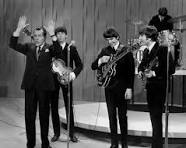
It was the night of February 9, 1964, a Sunday, when my older brother and I had to make a crucial little kid decision. The situation we faced left us over stimulated, careening off the living room walls. Our dilemma concerned whether or not to watch “Davy Crockett at the Alamo” on Disney, or the Beatles on Ed Sullivan. Adding even more adrenaline to the mix, our shared birthday was the next day, Monday, the 10th.

Agony.

In 1964 there were no video players, no DVD players, no home computers, or dvr’s. Our television stood inside a wood frame measuring about the size of Volkswagen Bug and beamed three network channels in glorious, flickering, black and white. This night’s decision was a one-off with no do-overs. Period.

Dale and I liked Davy Crockett an awful lot. We had watched all the previous episodes, and Davy biting the dust in San Antonio was the much anticipated grand finale. But, oh, the Beatles! “Please Please Me” had infiltrated AM radio, and the fever on the airwaves was palpable. 

This was a single decision, and a weighty conundrum for an almost 10, and almost 9 year-old. We had to choose.

In the end we tuned into Ed Sullivan and our world permanently shifted on its axis. George’s opening chords launched into John and Paul’s vocals. “Oh, yeah I’ll tell you something, I think you’ll understand.” The look, the sound, the energy knocked us both for a loop. And the band seemed so delighted with performing, visibly getting a kick out of the reaction of the screaming studio audience, and by extension, all of America. And then that deep bow at the end of the song! Wow.

In fan magazines we learned more about each individual: who was quiet, cute, endearing, and the leader, but those were minor details. That moment, on February 9th all we sensed was joyful wonder. John Sebastian said it best later, singing “how the magic is the music and the music’s in me,” and magic struck on that winter’s night.

The introduction of the Beatles to America reset the course of music world wide, not a small thing. Over the following years the joint efforts of Lennon/McCartney clearly demonstrated genius in both songwriting and brilliant recordings. After their breakup the four musicians pursued other projects: The Plastic Ono Band, Wings, Wilburys, and Ringo’s All Star Band. Each married, had children, remarried, then John was tragically murdered, and George died of cancer.

Now Paul and Ringo attend public commemorations of Beatle music, while their children pop up frequently on social media, each pursuing some latest venture or other. But those facts are details, and rather unimportant details compared to that singular moment on February 9, 1964.

For years I called my brother on our birthday, blasting “Birthday” from the White Album because “it’s my birthday too, yeah.” 

Now a lifetime has passed, and my birthday twin and partner in Beatlemania sadly died. But I remember, I’ll always remember. The gift of that moment survives, when we were both very much alive breathing in the unbounded optimism, energy, and magic when Dale and I first met the Beatles.

Oh, by the way, I’ve never seen “Davy Crockett at the Alamo.”

Gail Chumbley is the author of the two-part memoir, “River of January,” and “River of January: Figure Eight.” Chumbley has also authored the stage play, “Clay” and “Wolf By The Ears.” In addition, Gail co-authored the screenplay, “Dancing on Air” based on her books.

Behind the Smiles

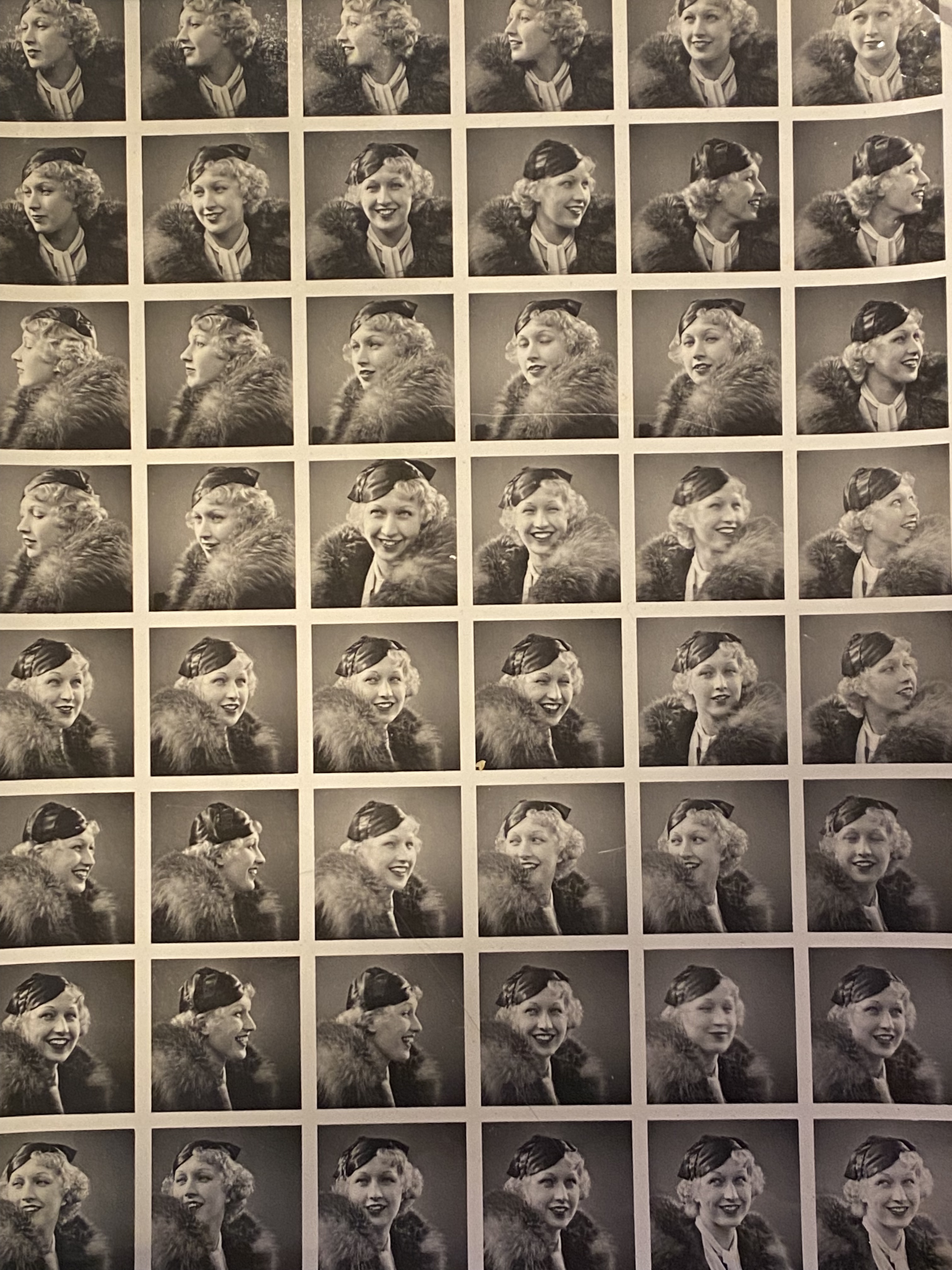
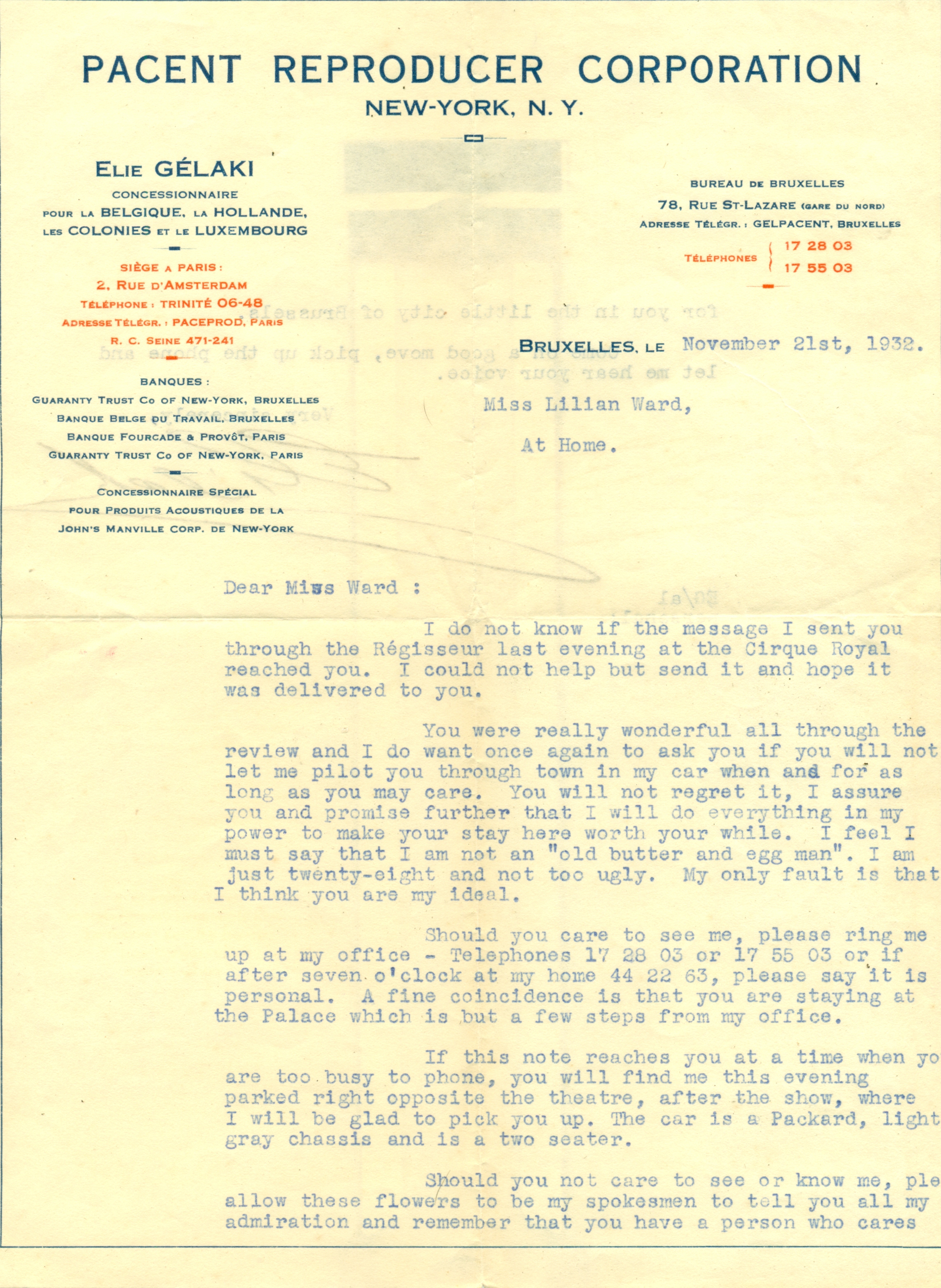
This, of course, is Ann Frank. She sat for this photo montage in Brussels, Belgium, probably just before the war. The studio’s name was Polyphoto International and it was owned by a gentleman named Elie Gelaki.

Six years earlier Elie had established another studio across the Atlantic, in New York City, and evidence indicates he aimed to do the same across Canada, and Japan. Whether those offices actually opened is hard to determine, especially in Japan as war with China had erupted. However, the New York studio did open for business and Elie got to work.

The subject of this session was the reason Elie had traveled to New York. Her name was Helen Thompson and she was a professional dancer. Though at first he had mistaken her name, Elie fell in love with the Helen, eventually following her to New York, seeking marriage. But the wedding never came about.

The 1930’s was a perilous time, especially for people like Ann Frank and Elie Gelaki, both Jewish, living their lives under the growing shadow of Nazism. And though Helen never married the Belgian she worried about his fate as the European war blitzed to life, and of course she knew nothing of Ann Frank until later. You see Helen was my mother-in-law, and though we never met, my husband told me she occasionally shared her anxiety regarding Elie’s fate.

It is evident that behind the smiles, and the momentary pleasure of picture taking, an epic story of three individuals played out in a dramatic chronicle of the 20th Century.

For more of this story read “River of January,” and River of January: Figure Eight” both available on Kindle.

Chumbley has also penned a feature film script based on the books titled, “Dancing On Air,” and in addition two plays on American history topics-“Clay,” and “Wolf By The Ears.”

gailchumbley@gmail.com

Riverside, 1973

Before the 1974 Expo in my hometown of Spokane, Washington, the city’s downtown area was divided by social class. Riverside Avenue ran east to west, crossed by an arterial called Division, that ran north to south. That intersection literally cut the area in half. West of Division the downtown looked like the shopping scene in “A Christmas Story.” Magical tableaus filled each department store window, creating an elegant still-life to allure shoppers. To the east of Division sat run down bars, a rescue mission, and adult-only theaters dotting the grim sidewalks of despair. Consumerism connected both worlds.

In my senior year of high school, I worked at an ice cream shop situated smack dab on the dividing line. Attempting to capture the “good old days” ragtime music looped endlessly in the shop, and we all wore white dresses, and plastic skimmer hats. The clientele largely represented the reality of Riverside. Affluent shoppers, and business owners rolled in for lunch during the day, and the dispossessed wandered in at night.

The lunch rush is where the shop made money, and all waitresses were on the floor. Each day I left my high school around 11:00am arriving about 30 minutes before the onslaught. By noon we rushed table to table, chatting with the regulars, and earning pretty healthy tips.

Weekends were different, unpredictable, and the Saturday night shift catered to a different world. After dark, homeless men asked for water, while others scrounged up change to buy a cup of soup. Heartbreaking.

A late spring night in particular, stands out in my memory.  Warm, with a light breeze, the shop felt like summer, leaving me restless, and anxious for graduation. The glass door facing Riverside opened, and a clutch of young women poured in, chatting and giggling like school girls. Sex workers all.

Preparing for their night, these girls crowded around the ice cream freezer, more like teenagers than high risk ladies of the night. The group was close, sharing a camaraderie that spoke of strong ties. 

In the middle of the party towered a long, bronze, African-American woman. God, she was gorgeous, honestly runway material. Fascinated I watched her among her peers, laughing with the rest, while she gracefully perused the glass covered ice cream selections. 

Honestly, this beauty could out Grace Jones, Grace Jones. 

The starkness of her night’s work vaguely crossed my mind, but I was in the moment. Oblivious, unapologetic, she and her friends had no shit’s to give.

Weeks later I graduated, and at the end of summer headed off to college. The memory of that  lithe beauty and her friends faded. The following summer, when I returned to Spokane, the face of downtown had been completely transformed. The railroad tracks, the bums, the skin flicks, and the girls had all vanished. The exciting facelift for Expo ‘74 displaced the rundown skid row of my childhood.

It’s now that I’m retired that that ice creamery, and the beautiful girl again live in my memory. I know now that I had choices, I had support, and a college education. But those residents of east Riverside, those belles of the street? It is impossible to know how life played out for them. Surely these people of the night were displaced, migrating where rail tracks, and sex workers could ply their trade, out of site, and away from the gentry. 

I hope life turned out better than it probably did for these marginalized folk. But that warm spring night still holds a magical quality; one of beauty and of bleakness. A grim reality of a life I never lead.

Gail Chumbley is the author of the two-part memoir “River of January,” and “River of January: Figure Eight. She has authored two plays, “Clay,” about the life of Senator Henry Clay, and “Wolf By The Ears,” a narrative of slavery in America.

gailchumbley@gmail.com

Unexpected Inspiration

Dear Helen and Chum

I’ve neglected you since publishing your story, and I regret my doubt-inspired silence.

The delight of researching the both of you, made clear that you lived more life than I’ll ever see in mine. Risk, peril, glamor, and ambition. You put yourselves out there, and is the best story, ever.

I wrote those books wracked through with feelings of inadequacy. Possessing little experience as a writer, I took on both volumes largely on my own and finished them, impatiently pushing the story out to the world, mistakes and all.

Still, I’m not sorry to have narrated your journeys, it’s the most kick ass true story I’ve ever encountered. 

Fear and confusion froze this greenhorn in her tracks. I am guilty of getting in the way of sharing your adventures, and reliving your forever love story. Forgive me. I presumed this 20th century saga belonged to me, but that is not so. Truly, there would have been no books at all, without your daring and triumphs to inspire me.

These books were not a mistake. 

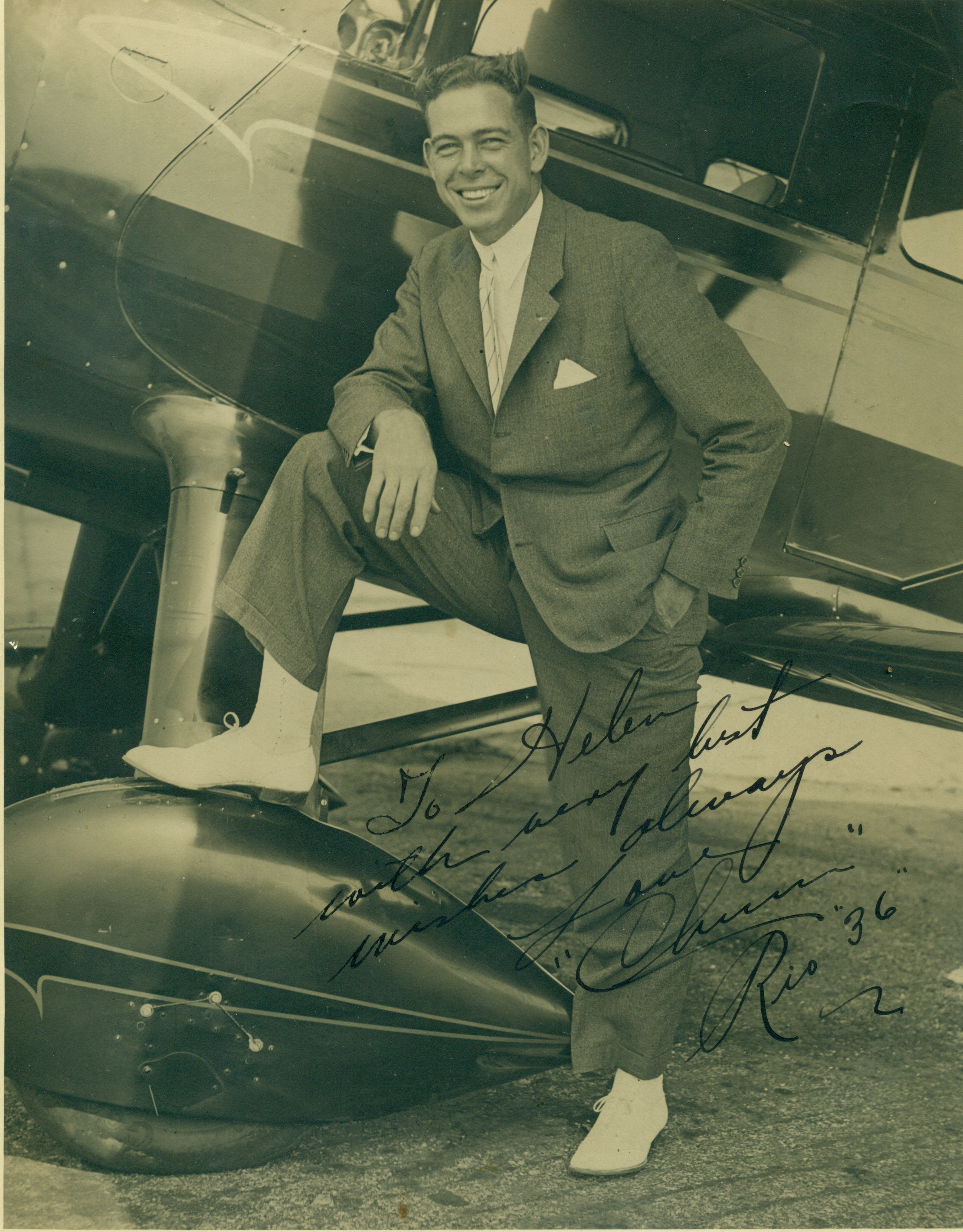
Chum, you squared your shoulders, took a deep breath and strapped into that cockpit, forging a career of monumental consequence. The victor of the 1933 Darkness Derby, you braved the night skies over a sleeping America. Flying your mighty Waco aircraft, you touched down at Roosevelt Field where Lindbergh and Earhart began their storied flights. Later, in defense of democracy, you piloted US invasion orders through a dangerous South Pacific typhoon, tossed and slammed by up and down drafts, to complete your mission.

And to you sweet Helen, though we never met in this life, you inspired the entire effort. It was that first visit to your Miami home when something stirred inside me. A unexpected inspiration. Remember that black and white glossy? The portrait of a sultry platinum blonde? You know the one. Chum had it up in his room until the end.

That photo triggered a spark, a slow burning fire I could not ignore. This story had to be shared. The European tours, dancing, dinner with Maurice Chevalier, cruises across the Atlantic on the SS I’le de France, vaudeville with comedians Jans & Whalen. Then off to Rio de Janeiro you sailed, opening at the Copa Cabana. And after your marriage to Chum, and the war broke out you took up ice skating, performing nightly for Sonja Henie’s productions at Rockefeller Center. My God! What a life.

“River of January” is done, as is the sequel, “River of January: Figure Eight.” Preserved in the pages is magic, whether in the sky, on the sea, under the footlights, and revolving across shimmering ice. This story crackles with your energy.

This won’t be neglected any longer. I’m getting out of your way.

With Love, and Eternal Admiration,

Gail

Gail Chumbley is the author of the two-part memoir “River of January,” and “River of January: Figure Eight.” Both titles are available on Kindle.

gailchumbley@gmail.com

A Shiny Spirit

David Edward Olson came into the world at a difficult time. Depression plagued the US economy, and tyrants emerged overseas. Born on June 15, 1932 the child grew to manhood in rural Wadena County, Minnesota., In defiance of hard times, young David was a happy, shiny spirit; always a welcome visitor to the many homes of his extended family. 

In 1950 the 18-year-old followed his friends into the Minnesota National Guard, which was soon nationalized for duty in the Korean War. A whiz with automobiles, David drove trucks for Uncle Sam, fulfilling his military duty by 1952. While away his parents relocated to Spokane, Washington, and David followed them west.

It was in Spokane, on a blind date, that David met the woman who would change his life, Rita Tucker. Hired on at Kaiser Aluminum in Mead, David and Rita soon married, bought a house and began their family. Coming of age in post war America, the couple embodied American prosperity, enjoying new cars, vacationing via the brand new interstate system, loading up the kids for drive-in movies, and Sunday afternoons cruising the countryside. 

With his children and friends Dave loved to hunt, fish, and cut wood in the forests around Spokane. It was at Cocolalla Lake that Dave taught his, and everybody else’s kids how to play. He spent hours swimming, boating, and pulling skiers across that pristine little lake. Those were the best times.

After retiring from Kaiser, Dave turned his kindness to service for others in the community. For fifteen plus years he volunteered for the Spokesman Review’s Christmas Bureau. Additionally Dave gave his time to the Catholic Charities Food Bank, Meals On Wheels, delivering bakery goods to the Union Gospel, and transporting those in need to medical appointments. 

Every morning for the last twenty years Dave was a regular with his dog-walking companions at Lincoln Park. Leading first his little buddy Toivo, then Padfoot the Pug, Dave met other dog lovers who became his dearest friends through his declining years. And the highlight of his week was Thursday dinner with the Post Office bunch.

David was preceded in death by his parents Kurtz and Mabel Olson, and his sister Marie. He is survived by his wife, Rita, his sister Susan, sons Dale, Stephen (Betsy), and David of Spokane, and his daughter, Gail Chumbley (Chad) of Garden Valley, Idaho. David loved his many grandchildren, and great grandchildren; his pride and joy. 

Gail Chumbley is the author of the two-part memoir, “River of January,” and “River of January: Figure Eight.” Both titles are available on Kindle.

gailchumbley@gmail.com

Cocolalla

73115959-SLD-004-0017

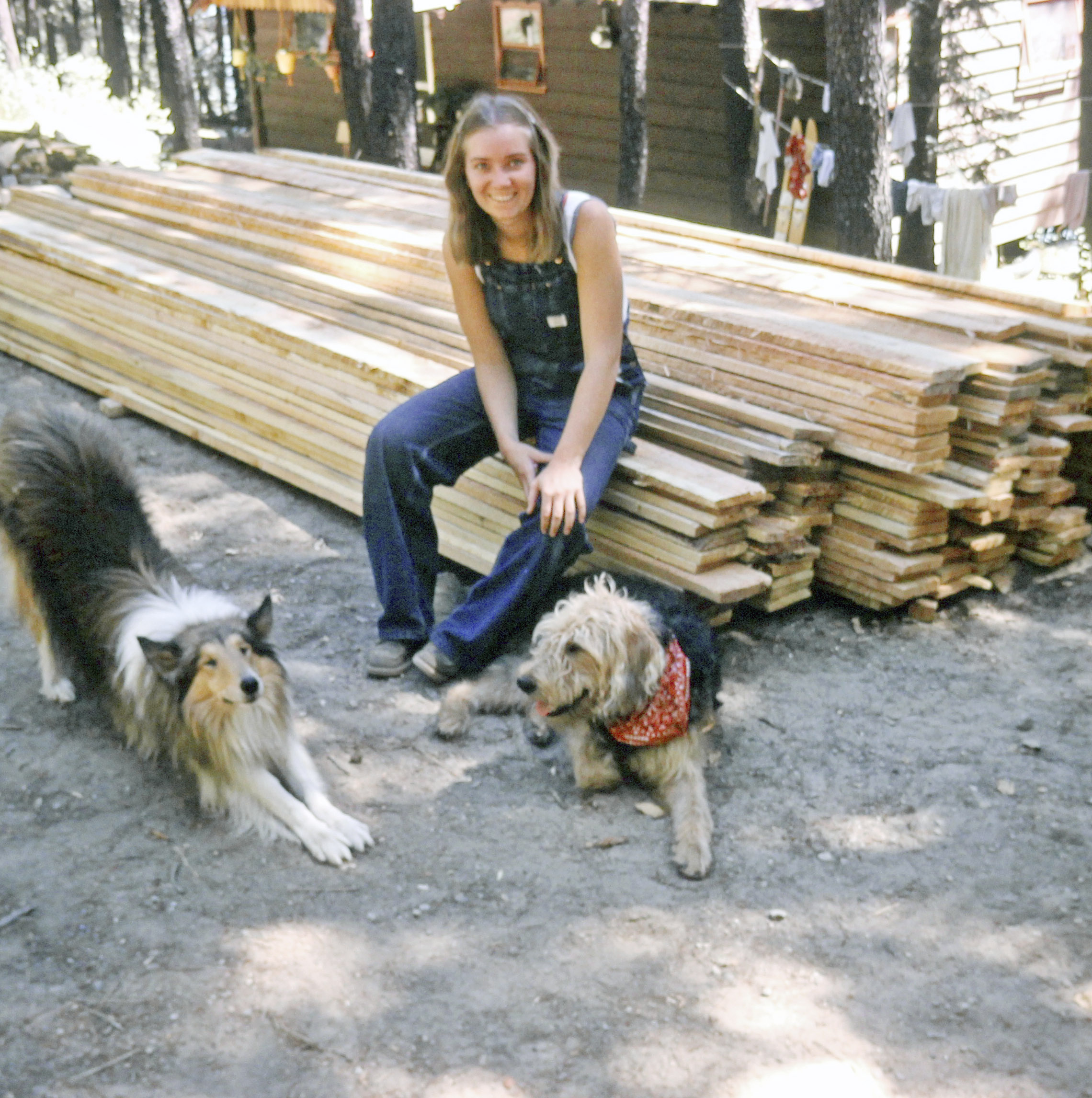
We had two cabins on a small lake in Northern Idaho.

Located between Lake Coeur de Alene, and the Pend Oreille, our little acre overlooked tiny Cocolalla, with large windows where we could watch the waves lap up on the beach. The original structure we astutely named the Little Cabin, later followed by the larger Big Cabin. This bigger cottage had been built with all the amenities of home; running water–hot and cold, a tub and toilet, a full kitchen, and electric heat.

Those early weekends in the Little Cabin hold many good memories. All of us crammed into that tiny wood box, the unfinished walls festooned with a lifetime of greeting cards, a big enameled wood stove, and a porcelain basin for washing dishes. Grandpa got his hands on a tall steel milk can and commandeered it for enough drinking water to get us through the weekend. As for entertainment, Grandma had an old radio that blasted the most impressive static, interspersed with Roy Orbison or Andy Williams fading in and out.

Once the Big Cabin was completed and my grandparents moved in, the smaller cabin was demoted to storage. It also housed a set of bunk beds, a fold-down couch, and one double bed; useful for my brothers who were just getting bigger. Now, in addition to greeting cards, the cabin stored every variety of water equipment. Fishing poles, life jackets, oars, and an outboard motor clamped to a metal barrel, with stacks of beach towels the size of blankets.

As I recall, a constant grit of sand coated the linoleum floor.

The property was my grandparents retirement dream, but a dream they happily shared with the rest of us. I knew, even then, that I was always welcome, always.

My grandpa was an early riser, a product of a lifetime as a mailman. He didn’t want to tiptoe around a little kid sleeping on his sofa at five in the  morning. At bedtime my grandmother and I made our way to the Little Cabin in the dark by flashlight. Under the covers of  the double bed, I would chafe my feet deep under the sheets to warm my toes. As we grew settled and peaceful she would begin to reminisce, talking to me for hours in that darkness. I learned of her life in those moments, warm in that cozy bed, listening to her voice, breathing the scent of the evergreen forest.

She told me of my biological grandfather, her first husband, who had left her bereft and penniless after my mother had been born. Despite the Depression, he liked to gamble away their money. My Grandma had to leave him and she struggled to find work as few jobs existed. Forced to farm out her daughter, my mother, in various homes, her the guilt still haunted her. Clearly it still broke Grandma’s heart that she was forced to separate from her little girl for months at a time. I could hear a wound that could never heal.

As the night grew deep, crickets and bullfrogs began to chorus. Flanked next to her, and pressed against some greeting cards, I prayed I wouldn’t spoil the magic by having to go potty. She kept, beneath the bed, a Chase and Sanborn coffee can that I hated to use. It felt cold and left rings on my little bottom. Still, considering options, the can was more appealing than a journey to the outhouse. Using that creepy outhouse in the daytime was bad enough, but at night unthinkable.

Finally poking her lightly, I would tell her. And she never hesitated. Showing no impatience at all, Grandma seemed to make my problem her own, reaching for the flashlight and finding that rusty can. She held the light on me so I could aim properly, then back into the warm bed. No recriminations.

She loved me.

I loved her.

Today my husband and I live in the woods. We don’t have a lake, but a river runs near and we can hear it on very quiet nights. I relax in my cozy bed in the darkness and listen to the crickets and bullfrogs, while breathing in a scent of pine. A sense of complete security, of love, of acceptance returns, synonymous with the love of my grandmother. She was home for me, and though gone these many years, my mountain cabin still echoes with her voice.

Gail Chumbley is the author of the two-part memoir “River of January,” and “River of January: Figure Eight.” Both are available at http://www.river-of-january.com and on Kindle.

gailchumbley@gmail.com

Humiliated, Angry, and Hurt

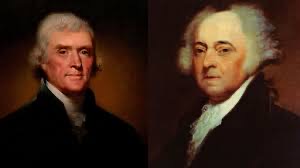
After losing reelection, he left Washington early. Humiliated, angry, and hurt, John Adams boarded a morning coach leaving the Capitol.

The prevailing issue in the campaign of 1800 concerned France, and that nation’s ongoing, and bloody revolution. Moreover, the French had declared war on England, and both belligerents  meddled in American domestic politics to turn public opinion.

As President, Federalist John Adams, had skillfully steered America clear of the European conflict, avoiding the danger of being ensnared between the two superpowers. Proud of his diplomatic accomplishments, Adams still brooded, unhappy with his lack of support from the country. His detractors belittled him, disparaging Adams as a pale substitute to the legendary George Washington.

His political challenger in 1800? The clever and calculating Thomas Jefferson. 

An outspoken critic of the Adams Administration, Jefferson had been hurling plenty of invective toward the sitting President. What had once been a warm friendship between the two men quickly soured. Petulant and  thin-skinned, Adams had lashed out by pushing laws that restricted the free press and cracked down on immigration. Outraged by these policies, Jefferson, and his growing cadre of supporters, challenged the clear violations of the Constitution. 

In only the nation’s third presidential election the moment appeared volatile and uncertain. On one side was the defensive and testy incumbent, and on the other, a political foe intent on replacing him.  

Adding to the turbulence, a political wildcard entered the fray; New Yorker, Aaron Burr.

Burr, like Jefferson, had opposed unpopular and heavy handed Federalist policies, and Jefferson knew the ticket needed an electoral-rich northern state for strength. As party leader, Jefferson assumed Burr understood his lesser place, and only when the electors met did he learned just how wrong he had been. 

In the final tally, poor John Adams not only lost the election, but came in a distant third behind both challengers. Thomas Jefferson garnered 73 Electoral votes, followed by Burr with 73 of his own. Adams came in last with 65. (That tie is another story.)

Humiliated, Adams left Washington DC in a huff, but made no move to challenge the outcome. And though the former President did not greet the President-Elect, and pointedly skipped the inauguration, John Adams did not put his interests above the nation’s. 

He conceded in silence because he valued our country over his own interests. 

There is no precedent for false assertions from the clear loser in 2020.

Gail Chumbley is the author of the two-part memoir, “River of January,” and “River of January: Figure Eight.” Both titles available on Kindle, or at http://www.river-of-january.com.

gailchumbley@gmail.com

A Burst of Joy

He looked an awful lot like Andrew Jackson. A long, craggy, narrow face, a shock of white brushy hair, and an irascible temperament. That was my paternal grandfather, Kurtz Olson. Despite his throwback, no-nonsense, narrow persona I found him endlessly interesting and somehow quite endearing. 

The youngest of seven children to Swedish immigrants Peter and Matilda Olson, Kurtz was born in Wing River, Minnesota in 1905. Though I don’t know much about his early Minnesota upbringing, I do know that he had a mercurial temperament, no attention span, and restless feet. Grandpa frequently uprooted his family, first moving house to house, then state to state, reaching the Pacific coast.

During the worst of the Depression years Grandpa worked as a welder, and scrap metal dealer. My dad like to remind us that with so many people jobless, Kurtz had lots of work repairing and parting out junked automobiles. One of my favorite snapshots from his early years is Grandpa and another man posing with axle grease below their noses. The two were making sport of Hitler, who in the 1930’s was still viewed as an object of jest. Grandpa Kurtz is smirking, knowing he’s naughty, and thoroughly enjoying himself. 

During the Second World War, he and my grandmother moved the family to Tacoma, Washington. With the “Arsenal of Democracy” in full swing, Kurtz had plenty of metal work on the coast. After 1945, he again uprooted and moved his family to Spokane, Washington, where cheap hydro power had opened plenty of post-war employment. 

Still, Minnesota remained the holy land. Always impulsive, Grandpa would hop in his truck and make sudden pilgrimages home, blowing straight through Montana and North Dakota, usually 24 hours or so to reach the open arms of his Minnesota family.

For Kurtz it was as if traveling from Paris to Versailles, but a hell of lot further. 

Unlike my immediate family, where I was the only girl, Kurtz lived in a decidedly female home. My aunt and grandmother typically sat for hours at the kitchen table, reading the Enquirer and movie magazines while talking shit about nearly everyone else in the family. Poor old Grandpa. Those two women tied that poor man into knots, riling him up with nonsense and fantom outrage.

It wasn’t that my Grandfather was unkind by nature, but he was easy to wind up, perceiving the world in black and white, dictated by those two judges presiding at the kitchen table.

Fortunately, despite those women bad-mouthing me, my brothers and the rest of the extended family he liked me. And I liked him.

In a fleeting, incomplete memory I see him waiting under street lights at the Spokane Greyhound bus depot. We all must have been meeting a relative from Minnesota or Seattle. In a burst of joy I remember shouting “Grandpa,” as I sprinted to him, where he scooped me up into a hug. Another vivid moment I recall was his truck pulling up in front of our house, and Kurtz coming to the door wearing nothing but that smirk, and bright red long johns, with laced Red Wing boots. What a character.

Speaking in a NorthAmerican Scandinavian cadence (yah, you betcha) made some of his comments worth remembering.

“First they call it yam, and then they called it yelly, now they call it pree-serfse.”

And Kurtz always had a dog. There had been Corky, Powder and Puff, Samantha, and Cindy among many others. Samantha was an especially smart Border Collie. After finding herself thrown on the floor of Grandpa’s truck one too many times, she figured out how to brace herself on the dashboard. He would roar up to yellow traffic lights, then stand on the brakes to avoid a red light. My god it was perpetual. My guess is he needed a new clutch about every three months, casualties of his Mr Magoo style of driving. At any rate, Samantha his wise co-pilot learned to watch the traffic lights and prepare for impact. 

Pulling up to his house on some forgotten errand I saw my grandpa splitting wood in the backyard. Across the fence, next door, a neighbor dog set up a ruckus barking my way. I called out, “You be quiet over there,” to which my grandfather observed, “He doessent underschand you. It’s a Cherman Shepard.” Then he laughed, and so did I.

My children didn’t know Kurtz. And for that I’m sorry. They missed a true original. I suppose that is my job, and the job of all of us Boomers to share these kind of stories. We bridge the years between that Depression-era, World War Two generation to our Millennial children and our grandkids. They won’t know if we don’t tell the story. And since it’s December, I’ll sign off with this Kurtz Olson Christmas anecdote.

On Christmas Eve in about 1936-37, my grandpa packed up the family for an evening service at the Lutheran Church. Being good Swedes they had placed traditional candles balanced on the boughs of their live Christmas tree. Somehow in the bustle they left some candles lit. By the time they returned the house was gone replaced by a fully engulfed fire lighting up the night.

They lost everything. In an ironic twist my grandfather the welder somehow overlooked the flames of his yule-tree. That incident remained an inflection point in Olson family lore.

Now he’s long gone, as is my dad and other family members. But through the written word he remains as vivid as his humor, his voice, and his presence in my memory.

Merry Christmas. 

Gail Chumbley is the author of the two-part memoir, “River of January,” and “River of January: Figure Eight” three plays on history topics, and a screenplay based on her books.